Connecticut's Top Teachers Lead Classrooms from Ashford to Westport

There will be an Awards Ceremony next month to honor Connecticut’s 2018 Teacher of the Year – Erin Berthold, who teaches at the Cook Hill School in Wallingford – along with Teacher of the Year nominees from throughout the state.  The ceremony is scheduled to take place in Hartford just days after Berthold’s application, representing Connecticut, is due at the National Teacher of the Year selection committee. Berthold’s selection was announced last week at her school.  She is the first Wallingford educator to be selected for the annual award.

“I’m beyond thrilled and surprised,” Berthold told the Meriden Record-Journal.  She is in her 11th year of teaching. “I never really thought I’d win an award for teaching. It’s my job, it’s what I do. Working with six-year-olds is the real reward of teaching.”

The teachers who were earned recognition as finalists in Connecticut, along with Berthold, included LeAnn Cassidy, Social Studies, Memorial Middle School, Regional School District 15; LeAnn Cassidy, Social Studies, Memorial Middle School, Regional School District 15; and Courtney Ruggiero, Social Studies, Bedford Middle School, Westport.  Their teaching will also be honored, along with a dozen semi-finalists.  It is the culmination of a process that touched school districts throughout Connecticut, as local districts shined a spotlight on outstanding teachers in their respective communities.

The process begins with the Commissioner of Education sending Teacher of the Year applications to every district superintendent in the spring, encouraging them to participate in the recognition program.  The Teacher of the Year Program seeks to recognize exemplary teachers and does not try to identify the “best” teacher in the state, according to the Teacher of the Year website.

District teams identify one exemplary teacher from within their teaching populations.  Each district nominee completes the state application in the ensuing months and submits it to the State Department of Education.  Applications are distributed to members of a reading committee, and the results are tabulated to identify approximately fifteen semi-finalists.

Semi-finalists are invited to an interview with the Selection Committee at which they present a prepared presentation and respond to several questions related to education issues and current trends.  Four finalists are chosen from among the semi-finalists.  A committee of 12-18 people then travels to each of the finalists’ schools to observe the teachers in action and to interview teams of parents, teachers, support staff, students, administrators, and Board members. 

Following the site visits, the selection committee travels to a neutral site where they deliberate and vote to determine who will emerge as the next Connecticut Teacher of the Year.  Once that selection is made, the announcement follows shortly thereafter, in early October.

The 2018 Connecticut Teacher of the Year semi-finalists teach in school districts all across the state are:

  • Katie Amenta, English, Berlin High School, Berlin
  • Rebecca Aubrey, World Languages, Ashford School, Ashford
  • Kevin Berean, Technology Education, Amity Middle School, Regional School District 5
  • Martha Curran, English Language Arts, Walter C. Polson Upper Middle School, Madison
  • Cheryl Gustafson, World Language, Somers High School, Somers
  • Brian Kelly, Music-Band, John Wallace Middle School, Newington
  • Kristen Keska, Social Studies, East Hampton High School, East Hampton
  • Yolanda Lee-Gorishti, Science, Crosby High School, Waterbury
  • Jeanne Malgioglio, English Language Arts, Madison Middle School, Trumbull
  • Candace Patten, Social Studies, Southington High School, Southington
  • Colleen Thompson, Music, Simsbury High School, Simsbury
  • Vincent Urbanowski, Mathematics, The Academy of Information Technology, Stamford

The Connecticut Teacher of the Year Program is made possible by contributions made to the Connecticut Teacher of the Year Council, a 501(c)(3) non-profit organization that provides recognition for exemplary teachers and excellence in teaching.

Berthold has taught at Cook Hill for three years and was previously a special education teacher at Yalesville School and Moses Y. Beach School in Wallingford, the Record-Journal reported. Earlier in her career, Berthold taught at Lincoln Middle School in Meriden and Woodhouse Academy in Milford.

The Connecticut Teacher of the Year and Teacher of the Year finalists serve as teacher-ambassadors for public education. They are appointed to various education advisory committees and become consultants to the Commissioner of Education. In addition, they present workshops; speak at education conferences and meetings; address student, civic, college and university, and governmental groups; and operate special programs in accordance with their interests and expertise throughout the coming year.

For Berthold, there is one additional assignment. The National Teacher of the Year application is due to the National Teacher of the Year office, Washington, DC on November 1.  Just two years ago, Connecticut’s Teacher of the Year, Jahana Hayes, a high school social studies teacher at John F. Kennedy High School in Waterbury, was also selected as National Teacher of the Year and was honored at a ceremony at the White House with President Barack Obama.

Lauren Danner, a General Science/Biology teacher and Science Department Leader at North Branford High School was Connecticut’s Teacher of the Year in 2017. Cara Quinn, a sixth-grade teacher at the Sunset Ridge School in East Hartford, was named the 2015 top teacher in Connecticut. In 2014, John Mastroianni, a music teacher at West Hartford’s Hall High School, was selected.


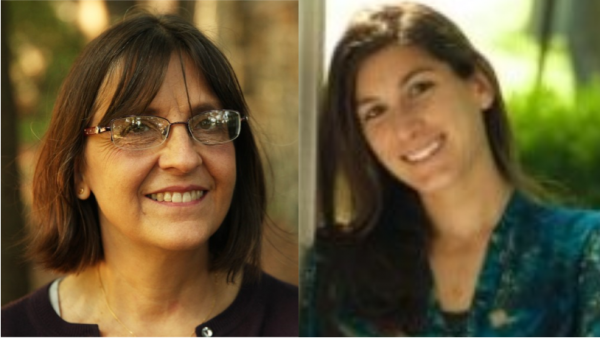
Photos:  (Above) Erin Berthold; (Below)  LeAnn Cassidy, Regional School District 15; Martha Curran, Madison; Courtney Ruggiero, Westport.

Concerns Raised That U.S. Census Count Changes, Funding Cutbacks May Hurt Connecticut

It occurs once every decade – the U.S. Census aims to count everyone in the United States, and is the foundation upon which a plethora of funding and policy decisions are based for much of the decade that follows.  The next nationwide census, in 2020, is already raising red flags, here in Connecticut and across the country. The Connecticut Council for Philanthropy is encouraging local participation in a national webinar about the role that philanthropy in ensuring a fair and accurate count in the U.S. Census in 2020.  The webinar, on October 30, 1:00 – 2:00 pm, is one of the early efforts to raise awareness of potential implications for the census if Congress, in an effort to keep costs in check, makes fiscal decisions that turn out to be penny wise and pound foolish – potentially jeopardizing levels of federal aid to communities and states, including Connecticut, that will last a decade.

"If you underfund the Census, you get an undercount," says Kenneth Prewitt, who directed the bureau during the 2000 Census. "And if you don't count people, they are politically invisible, in effect," he said earlier this year in Time magazine.

Announced plans by the U.S. Census Bureau, that it will be “introducing significant innovations to conduct the 2020 Census,” is spurring concerns even as the planning process is being refined and funding and operational decisions are being made.  The Bureau is focusing on “four key innovation areas… with cost reductions in mind.”  Among them is “re-engineering address canvassing,” a critical first stage in the census counting process.

Policy and administrative decisions, such as the changes outlined in the latest Census Bureau plan, will carry significant implications for census accuracy and outcomes, point out webinar organizers the United Philanthropy Forum and Funders' Committee for Civic Participation (FCCP). It is imperative, the organizations emphasize, that philanthropy take action now to support a fair and accurate count.  Speakers on the webinar will include:

  • Terri Ann Lowenthal, Census Consultant with Funders' Committee for Civic Participation's Funders Census Initiative 2020
  • Debbie McKeon, Senior Vice President of Member Services, Council of Michigan Foundations
  • Daranee Petsod, President of Grantmakers Concerned with Immigrants and Refugees (GCIR)

Officials point out that “Data from the census drive key decisions made by government, business, nonprofits and philanthropy. Unfortunately, the Census has historically missed disproportionate numbers of people of color, immigrants, young children and low-income and rural households.”

In a commentary article earlier this month in CT Mirror, Aparna Nathan and Mark Abraham of New Haven-based DataHaven raised concerns not only about the impact on nonprofit organizations from a less-than-accurate census, but about the across-the-board dangers of a census that does not provide an accurate count – particularly for Connecticut.

The culprit: underfunding. 

In 2012, according to Nathan and Abraham, Congress told the Census Bureau to spend no more for the 2020 Census than they spent on the 2010 Census, and even encouraged them to spend less. Carrying out the same operation as in 2010 would cost a projected $17.8 billion overall, but the 2020 Census Operational Plan aims for $12.5 billion.  Already, a number of dry-runs and field tests have been postponed or cancelled outright, potentially undercutting plans for the census, now littler more than two years away.

“An underfunded 2020 Census is likely to systematically undercount some of the state’s more vulnerable populations and undermine efforts to create a more equitable, opportunity-rich state,” they wrote.  “Since population distributions are used to draw voting districts and determine the number of representatives each state or neighborhood gets in our legislative bodies, undercounting hard-to-count groups means that their vote may count less and their voice might not be heard at the state level or in Congress.”

The U.S. Census Bureau’s 2020 Census Operational Plan, dubbed “A New Design for the 21st Century,” increases reliance on technology to determine its count, considered to be a most cost-effective approach.  But others say technology has its limits, especially among certain populations, and overreliance can lead to an incomplete and inaccurate count.

The document itself acknowledges that possibility, noting that “As the Census Bureau continues to evaluate the 2020 Census operational design, an analysis of the impact on the quality of the census results is required to ensure that innovations designed to reduce cost do not have an unacceptable impact on quality.”

Sizeable immigrant populations throughout much of the state, and refugee populations in Hartford and New Haven, might find themselves questioning the confidentiality and importance of the census, especially in the current climate of fear and anti-immigrant rhetoric, pointed out Terri Ann Lowenthal, a consultant and former congressional staffer who directed the House’s census oversight subcommittee and now lives in Stamford, Connecticut.

Because individuals in urban and immigrant communities tend to respond at lower rates to census inquiries received by mail, the more costly personal visits be census officials are necessary to obtain more accurate population and demographic counts.  If those visits are reduced in order to cut costs, the accuracy of the census itself is likely to diminish, observers say.  Connecticut, which does not have independent counts of its entire population, depends heavily on data derived from the U.S. Census for a host of policy and funding decisions.
Fred Carstensen, Professor of Finance and Economics at the University of Connecticut and director of the Center for Economic Analysis at the school, commented recently that “In the face of its fiscal/budget crisis, an accurate census and vastly improved understanding of demographics is crucial. But in all likelihood, Connecticut will fly blind--and lose significant federal dollars.”

The National Committee for Responsive Philanthropy recently pointed out that "Counting every person in the United States is an extraordinarily complex endeavor – it is the nation’s largest peacetime mobilization of personnel and resources. Even with careful planning, a perfect count is virtually impossible: Some people are missed, some are double-counted, and some do not respond fully. But, because the accuracy of the census directly affects our nation’s ability to ensure equal representation and equal access to public and private resources, achieving a fair and accurate census must be regarded as one of the most significant civil rights and social justice priorities facing the country."


PERSPECTIVE: The Social Media 'Leash' Can Choke Anyone

by Adam Chiara Social media gives everyone access to the most powerful communication tool in history, but that power can also be used against anybody.

Like the proverbial dog on a leash, companies, public figures, and even private citizens can be choked by those who have a massive social following. Those with social power can target anyone online using intimidation or shaming, which can leave us all to be potential victims.

Companies

Let’s look at a recent case: Ann Coulter’s battle with Delta Air Lines. Put aside who was right in the matter; that’s really not the point here. What’s important for is to apply the concept of what happened to future issues.

Coulter did not just complain, which even a celebrity has the right to do. Instead, she chained a leash on the company and tried to choke it. 

After insulting the airline and its employees, she then used a form of intimidation; Coulter tweeted pictures of passengers who had nothing to do with the incident and tried to embarrass them.

That is a threat from a company’s perspective. Coulter gave a clear message — if you anger me, I will even shame your customers.

Companies should of course be held accountable, and social media is one way to do that, but an organization should not be in the position where if something goes wrong, they are forced to act in fear of blackmail.

Yes, this day it was Delta, and they have not made too many friends lately. But tomorrow it could be a smaller company. Maybe a local place that has been a pillar to your community. Do you trust Coulter, or any other person with social power, with the ability to tarnish a business’ reputation indefinitely?
Private Citizens

It’s not just companies who must fear the wrath of an angry person with power. The social media leash can be tied on you by our president.

In 2015, when an 18-year-old college student told the presidential candidate Donald Trump that she didn’t think he was “a friend to women,” Trump made sure to humiliate her on Twitter.

“The arrogant young woman who questioned me in such a nasty fashion at No Labels yesterday was a Jeb staffer! HOW CAN HE BEAT RUSSIA & CHINA?,” Trump tweeted the next day.

The Washington Post reported that she then began receiving calls, emails, and Facebook posts that were threatening and were often sexual in nature.

“I didn’t really know what anyone was going to do,” she was quoted saying in the Post. “He was only going to tweet about it and that was it, but I didn’t really know what his supporters were going to do, and that to me was the scariest part.”

Whether you support Trump or not, understand what he did here. He either intentionally or ignorantly signaled for supporters to intimate this young woman. Why? To send a message — go after me, and I will go after you — only I have more power.

I’m sure there are some who just read that and would argue something along the lines of “she deserved it.” Again, that day it was her, tomorrow it might be your child who is targeted by a public figure.

Cutting the leash

If your tweet isn’t retweeted, does it make a sound?

The answer is no.

The reason why someone with millions of followers has so much power is because they know their post can be amplified. But if that tweet does not get spread, it will be lost in the river of endless content.

So even if you agree with something that was posted, it would be wise to take a moment and think before you share it.

What kind of precedent is this creating?

What if this post was directed toward an institution or person whom I care about?

Is this post advancing a dialogue or is it intended to intimidate or humiliate?

After considering these questions, then you can ultimately decide if you are going to help strap the leash on or not.

____________________________

Adam Chiara is an assistant professor of communication at the University of Hartford. He has worked as a legislative aide in the Connecticut General Assembly, as a journalist, and as a public relations practitioner. He's on Twitter at @AdamChiara. This article first appeared in The Hill. 

Municipal Leaders to Urge Community Involvement at Rell Center Forum

Municipal leaders from Essex, Hampton, Norwich, West Hartford, and Wethersfield will gather to discuss how citizens can make a difference in local communities at a panel discussion, “Better Government Begins at Home: How to Make a Difference in Your Community,” presented by the Governor M. Jodi Rell Center for Public Service at the University of Hartford. The discussion, to be held on Thursday, October 12, at 6 p.m. in the Harry Jack Gray Center’s 1877 Club on university campus, will include:

  • Anne Gruenberg, the President of the Connecticut Association of Boards of Education and a member of the Hampton Board of Education;
  • Norwich Mayor Deb Hinchey;
  • Essex First Selectman Norm Needleman;
  • former Wethersfield Planning and Zoning Commission Chairman Rich Roberts.

West Hartford Town Manager Matt Hart will serve as moderator and lead a discussion about the importance of public involvement in local politics and how residents can take an active role in town governance.  Hart became town manager this summer, moving from Mansfield, where he was town manager since 2006.

Deb Hinchey was elected in November of 2013 and took the oath of office in December of 2013, becoming Norwich’s first female Mayor. Prior to being elected Mayor, Hinchey served on the city council.  She is not seeking re-election this year.  Norm Needleman is serving his third term as First Selectman, and is a successful local business owner.  He is currently seeking re-election.

Attendance at the program is free. More information is available at www.hartford.edu/rellcenter or 860.768.4234.

The program will focus on the many ways that individuals can get involved in local government service.  Some communities, such as Wethersfield, list individuals serving their local communities on the town website, also including vacant positions that need to be filled.

The mission of The Governor M. Jodi Rell Center for Public Service at the University of Hartford is to provide a community and academic forum for the discussion of ethics in government, the importance of civil discourse in politics, and citizen involvement in public service and government.

This fall, Leslie Smith of Hartford was named director of the Rell Center. Smith has taught American government at the University of Hartford since 2000 and directed the Politics, Economics, and International Studies Department’s internship program since 2005.  The Center seeks to encourage students and others to pursue careers in public service and to assist in providing a clearinghouse for student public service internships.


Traffic is for Women, Weather is for Men (Mostly) on Connecticut TV

Rachel Frank is an Emmy award-winning meteorologist, seen regularly throughout FOX61 evening newscasts.  Kaitlyn McGrath is a meteorologist for NBC Connecticut.  As women, they are the exception in Connecticut, where 16 men routinely provide the weather updates on Connecticut television stations. Traffic reporting, however, is a women’s domain in the state.  The news teams at all four television stations in the market – WFSB, WTNH, NBC and FOX - have women handling the traffic reporting responsibilities on their morning newscasts, and observers are hard-pressed to recall a man doing that job.

The latest shake-up of the weather reporting team at WTNH, NewsChannel 8, brought the disparity into sharper focus with half-page newspaper ads and television promos trumpeting the new all-male team of meteorologists, highlighted by the addition of veteran meteorologist Joe Furey, who moved to the station last month from FOX61.  Furey, named co-chief meteorologist, joins Sam Kantrow, Fred Campagna, Gil Simons and Kevin Arnone.

Also starkly absent from the meteorology and traffic reporting ranks in Connecticut – ethnic and racial diversity.

First, the traffic.  Morning newscast viewers see Rachel Lutzger on FOX, Nicole Nalepa on WFSB, Teresa Dufour on WTNH and Hanna Mordoh on NBC.

Nalepa wears many hats at channel 3, also serving as a health reporter and fill-in-anchor for the station.  Before joining the station, she was weekday morning anchor and reporter at WWLP-TV/22News in Springfield, MA, after having graduated Magna Cum Laude with a degree in Communications from Westfield State University. Mordoh earned a bachelor’s degree in Journalism and Criminal Justice from Indiana University and was a news reporter in Indiana and Kentucky before joining NBC Connecticut.

Lutzger also handles traffic reporting each morning for Kiss 95.7, Country 92.5, The River 105.9, WELI and KC101, and afternoons on The River 105.9. A native New Yorker, she first came to Connecticut to attend the University of Hartford. In addition to traffic reporting, Dufour is co-host for CT Style, a daily lifestyle program on WTNH.  She graduated from the University of Connecticut in 2001 with a bachelor’s degree in broadcast journalism, and handled traffic reporting for WFSB before moving over to WTNH.

Connecticut briefly lost its most visible female meteorologist when Frank, an honors graduate of Pennsylvania State University with a bachelor’s degree in meteorology and a native New Yorker, left the station briefly in 2014 for New York City’s WPIX.  She returned to Connecticut and FOX61 later that year.  McGrath’s most memorable career moments, according to the station’s website, were covering everything from severe thunderstorms and flooding, to life threatening heat and an EF2 tornado in Charleston, South Carolina. She earned her degree in Telecommunications/News Broadcasting at the University of Florida, and, earlier this year, a Certificate of Science in Geoscience; Broadcast Meteorology Concentration, from Mississippi State University.

At FOX, Frank is joined on-air by Matt Scott, Dan Amarante and Sam Sampieri. The NBC “First Alert” team includes Bob Maxon, Ryan Hanrahan, Darren Sweeney, and Josh Cingranelli, along with McGrath.  The full-time meteorologists at WFSB are Bruce DePrest, Mark Dixon, Mike Cameron and Scot Haney. At WFSB, the all-male ranks are occasionally joined by reporter Melissa Cole, who serves as a “fill-in meteorologist, lending a hand during major weather events,” according to the station’s website. She studied Meteorology at Villanova University, and initially joined WFSB as a weekend newscast meteorologist.

A national study published this month in the Bulletin of the American Meteorology Society, found that although “the overall percentage of females in the field increased and females were more represented in larger markets, females held fewer influential and desired positions in 2016 compared with previous studies. Females made up 8% of chief meteorologist positions and less than 11% of evening shifts, which was lower than numbers in previous studies.”

According to the American Meteorological Society (AMS), in 2005 about 20 percent of meteorologists nationally were women, up from 10 percent in 1995. In 2010, the Boston Globe reported that “for the first time, all five of the meteorologists on Boston’s early-morning and midday newscasts are women.”  Among them was Dylan Dreyer, now with NBC News and the network’s Today Show.  Commenting on a WeatherChannel program earlier this year with leading female meteorologists now working at national television networks, including ABC News Chief Meteorologist Ginger Zee, the program host observed in a blog post, “Check the numbers on female chief meteorologists around the nation. It’s pretty pathetic.”

In a 2015 article published by Medium, it was reported that an AMS membership survey of its 14,000 members indicated that 2 percent were African-American.

Photos:  Traffic reporters (above, clockwise)  Hanna Mordoh, Nicole Nalepa, Rachel Lutzger, and Teresa Dufour;  Weather reporting teams at NBC Connecticut, FOX61 and WFSB.

New Area Codes Becoming More Prevalent in Connecticut; 475 and 959 Grow in Usage

Do the numbers 475 and 959 sound familiar?  If they don’t yet, they likely will in the relatively near future. There was a time, long ago but not far away, when residents in the entire state of Connecticut shared one Numbering Plan Area, better known as an area code.  All across Connecticut, it was 203.  Then, after about 50 years, it became more complicated.

First, with advances in technology and the exponential growth of communications devices, the state was split into two area codes in 1995, with Fairfield and New Haven counties retaining 203, and the other six counties shifting to the new 860. 

But that quickly proved to be insufficient.  Within the past decade, two “overlay” area codes were added.  Beginning in December 2009, residents or businesses in the 203 area code could be assigned a 475 area code.  And telephone customers in the 860 area could be assigned the 959 area codes as of August, 2014.

Commonly known as an area code, an NPA is the first three digits of a 10-digit North American phone number. In areas that have run out of phone numbers and a new area code has been introduced, some – including Connecticut - have chosen to overlay the new area code over the same area as the old one, instead of splitting the area in half. This avoids anyone having to change area codes, but does require that everyone in that region dial all ten digits for each call.

According to the North American Numbering Plan Administration (NANPA), which has jurisdiction for assigning area codes (Numbering Plan Areas) in Connecticut and beyond, as of June 30, 2017 telephone carriers reported approximately 57,000 numbers have been assigned using the 959 area codes, and nearly ten times that number, 523,000, have been assigned the 475 area code in Fairfield and New Haven counties.  The numbers are assigned to carriers, who then dole them out to customers. 

One of them is the Odyssey Early Learning and Enrichment Program in Norwalk, assigned a 475 number.  The New Haven Public Schools Office of Choice & Enrollment also was provided a 475 number, in the midst of all the 203’s across the city.  In Bridgeport, St. Vincent’s Medical Center Federal Credit Union has introduced customers to their 475 area code phone number.  The Hartford Correction Center began using a 959 area codes in January, and the UConn School of Social Work received a 959 number when they relocated to Hartford this year.

So, don’t be surprised if a new neighbor or a local businesses shares a phone number with an unfamiliar prefix.  It’s the wave of the future, and it’s here now.

It is still possible for the “old” 203 and 860 prefixes to be assigned to new customers by the carriers.  NANPA reports that there remain 200 blocks of one thousand numbers that may still be provided to various carriers for them to assign to customers.

Of course as reliance on land lines continues to diminish and people tend to keep their cellular phone numbers as the relocate across the country, the connection between where a person lives and the telephone area code becomes less meaningful. But for land lines in Connecticut what was once one area code is now four.  At least for the immediate future.


Unhealthy Food Marketing Targets Hispanic Youth, UConn Researchers Find

Hispanic children and youth, particularly youth in Spanish-speaking households, visited food/beverage websites at higher rates than their non-Hispanic counterparts, despite fewer visits to the Internet overall, according to a research study published by University of Connecticut faculty members. “The frequency with which youth in Spanish-speaking households visited popular food and beverage websites compared with primarily English-speaking Hispanic youth raises further concerns due to the potential for these sites to reinforce preferences for an ‘‘American’’ diet among less acculturated youth, which could contribute to Hispanic youth’s worsening diet with greater acculturation,” Maia Hyary and Jennifer Harris point out in the inaugural issue of the journal Health Equity, published in September.

They stress that “Further research is needed to understand why Hispanic youth disproportionately visit food/beverage websites to help inform potential actions to reduce their exposure to unhealthy food marketing.”

The researchers warn that “given higher rates of obesity and diet-related diseases among Hispanic youth, food and beverage companies should not target marketing of unhealthy products to Hispanic youth online.”

Dr. Jennifer L. Harris is Director of Marketing Initiatives at the Rudd Center for Food Policy and Obesity and Associate Professor in Allied Health Sciences at University of Connecticut. She leads a multidisciplinary team of researchers who study food marketing to children, adolescents, and parents, and how it impacts their diets and health. Maia Hyary is a PhD student at the Heller School for Social Policy and Management at Brandeis University and a former Rudd Center Research Associate.

Food and beverage companies often target marketing for nutrient-poor products such as candy, sugary drinks, snack foods, and fast-food restaurants to Hispanic audiences, including youth, the researchers state.  They cite previous research that has documented disproportionate exposure to unhealthy food marketing by Hispanic youth in their communities and on TV, but theirs is the first examination of the phenomenon on the internet.
Sites that were relatively more popular with Hispanic youth than with non-Hispanic youth included ChuckeCheese.com, HappyMeal.com, the Lunchables website, FrostedFlakes.com, and two Spanish language websites (ComidaKraft.com and McDonald’sMeEncanta.com). Among Hispanic children (under 12 years), ChuckECheese.com, FrootLoops.com, HappyMeal.com, TacoBell.com, LuckyCharms.com, and SubwayKids.com were relatively more popular.

Health Equity is a new peer-reviewed open access journal that “meets the urgent need for authoritative information about health disparities and health equity among vulnerable populations,” according to the publication’s website, “with the goal of providing optimal outcomes and ultimately health equity for all.” The journal intends to provide coverage ranging from translational research to prevention, diagnosis, treatment, and management of disease and illness, in order to serve as a primary resource for organizations and individuals who serve these populations at the community, state, regional, tribal, and national levels.


PHOTO:  Dr. Jennifer L. Harris, Maia Hyary

More CT Employers Expect Hiring to Increase for Remainder of Year; Hartford Region Lags State

Employers in Connecticut expect to hire at a modest pace during the fourth quarter of this year, which began on October 1, according to the ManpowerGroup Employment Outlook Survey. From October to December, 18 percent of Connecticut companies interviewed plan to hire more employees, while 7 percent expect to reduce their payrolls. Another 73 percent expect to maintain their current workforce levels and 2 percent are not certain of their hiring plans. This yields a Net Employment Outlook of 11%, which is below the national outlook projection.

“Hiring intentions are stronger compared to Q3 2017 when the Net Employment Outlook was 8%,” said ManpowerGroup spokesperson Betty Gooding. “The hiring pace is expected to remain stable compared to one year ago when the Net Employment Outlook was 12%.”

For the coming quarter, job prospects in the state appear best in Construction, Durable Goods Manufacturing, Nondurable Goods Manufacturing, Wholesale & Retail Trade, Information, Financial Activities, Professional & Business Services, Education & Health Services, Leisure & Hospitality and Other Services. Employers in Government plan to reduce staffing levels, while hiring in Transportation & Utilities is expected to remain unchanged, the survey found.

In an analysis of the largest metropolitan regions in the nation, three in Connecticut brought differing projections, with one slightly higher and the others slightly lower than overall expectations statewide.

In the Bridgeport-Stamford-Norwalk metropolitan statistical area (MSA), employers expect to hire at what is described as a “respectable pace” during this quarter, according to the Survey.  Twenty percent plan to hire more employees, which is offset by the 6 percent that plan to reduce payrolls, while 72 percent of employers expect to maintain current staff levels. Two percent indicate they are not sure of their hiring plans, which yields a Net Employment Outlook of 14% - higher than the expectation statewide.

In the New Haven-Milford MSA, 16 percent plan to hire more employees from October through December and 6 percent that plan to reduce payrolls. The Net Employment Outlook is 10%, just under the state outlook.  And in Hartford-West Hartford-East Hartford, 17 percent of employers plan to hire more employees, 8 percent that plan to reduce payrolls, while 70 percent expect to maintain current staff levels and 5 percent are not sure of their hiring plans. This yields a Net Employment Outlook of 9%.

Nationwide, of the more than 11,500 employers surveyed, 21 percent expect to add to their workforces, and 6 percent expect a decline in their payrolls during the final quarter of the calendar year. Seventy-one percent of employers anticipate making no change to staff levels, and the remaining 2 percent of employers are undecided about their hiring plans. When seasonal variations are removed from the data, the Net Employment Outlook is 17% nationwide.

This marks the 13th consecutive quarter with an Outlook of +15% or stronger, according to Manpower Group.  Compared with this time one year ago, hiring prospects are slightly stronger in the Northeast and remain relatively stable in the other three regions.  The Northeast Region includes Connecticut, Maine, Massachusetts, New Hampshire, New Jersey, New York, Pennsylvania, Rhode Island, and Vermont.  Employers across all sectors report favorable hiring intentions, with those in durable goods manufacturing reporting the strongest intentions in the past 10 years.

For the final quarter of the year, employers in Delaware, North Carolina, Wisconsin, Minnesota, Montana, Oregon, South Carolina and Utah report the strongest Net Employment Outlooks. Among the 100 largest metropolitan statistical areas, the strongest job prospects are expected in Cape Coral, Fla.; Oxnard, Calif.; Charlotte, N.C.; Stockton, Calif.; Deltona, Fla.; Grand Rapids, Mich.; Madison, Wis. and McAllen, Texas.  The Net Employment Outlook is derived by taking the percentage of employers anticipating an increase in hiring activity and subtracting from this the percentage of employers expecting a decrease in hiring activity, taking into account seasonal adjustments.

PERSPECTIVE: The Significance of Investing in Early Childhood Education

by Silvana Alarcon As a Connecticut native and a student at Dickinson College majoring in Psychology and minoring in Education and Spanish, I hope to make an impact in the early childhood education field by focusing on children with special needs. I have taught children how to swim with SwimAmerica and how to build Legos with Play-Well Teknologies, but I wanted to learn more about how children learn inside and outside of classrooms.

This summer I was fortunate to intern with the Partnership for Early Education Research (PEER) at The Consultation Center at Yale University. PEER is research partnership that works with the school districts and early childhood education providers of Bridgeport, Norwalk, and Stamford to support the use of data to inform education for young children. During this internship I achieved more than what I was hoping for: I learned about early education research and met many collaborators who are involved in the early childhood education system of Connecticut.

A specific part of what I learned from my internship at PEER is that the education system is a tall ladder of influential people who affect the children at the base of the ladder. Teachers, principals, district leaders, and state leaders from the Connecticut State Department of Education (SDE) and Office of Early Childhood (OEC) all influence the educational experiences of young children. These students are the future leaders of the nation, and educators and researchers should work together to raise students to be the people we want to see lead the world. Collaborative research can benefit multiple stakeholders by addressing educators’ needs and using readily available data to inform educational policy and practices.

The younger years of children are crucial because the brains of the children grow extremely rapidly between birth and the age of 8. Specifically the brain undergoes rapid cognitive development as well as linguistic and motor development in the first 3 years of life. By the age of 5 children have developed problem-solving skills and pre-literacy skills. Children are constantly learning from the environment and behaviors surrounding them.  Early brain development has a great influence on children’s long-term outcomes [1].

The first teachers in a child’s life are their parents. Parents teach their children how to speak, tie their shoes, and care for their bodies. However, school teachers also have a very important role such as teaching reading, mathematics, and appropriate social interactions. However, the role of a school teacher is different than parents because the teacher is someone outside the home who teaches the students how to connect with the outside world.  The students spend many of their waking hours with the teachers, building a foundation for future learning. Alongside parents, school teachers support children by providing motivation, skills, and lessons.

Effective early childhood education programs can produce positive outcomes because of the skilled teachers, small class sizes, strong curricula, and rich linguistic environments [1]. Early childhood education teachers have a significant role in the transition between the home and the K-12 school environment.

For this reason, it is powerful that PEER focuses its research on the age range of Pre-K to third grade. Because of children’s rapid growth in learning during these early years, I believe that Connecticut needs to focus more attention on educational opportunities, student services and family engagement programs that serve young children.

Collaborative research, which engages stakeholders in identifying research questions that will produce useful results, can help Connecticut provide quality education for children, which would increase the success of the students. I have truly enjoyed learning about the preschool and early childhood education systems, and I am very grateful for PEER and the work it is accomplishing in this area.

___________________________

Silvana Alarcon is a senior at Dickinson College studying psychology and education. She is a native of Norwalk, CT who received education from Kendall Preschool, Columbus Magnet School, and The Montessori Middle School, as well as the Harvey School in Katonah, NY. 

The Partnership for Early Education Research (PEER) is an alliance among early childhood stakeholders in Connecticut that engages in collaborative research focused on children from birth through age 8. By pursuing questions developed in collaboration with its members, PEER aims to produce rigorous, actionable research that can inform early childhood education policy and practice at the local and state levels, increase access to high-quality early childhood education, and reduce disparities in educational outcomes. Funding support for PEER is provided by the U.S. Department of Education’s Institute of Education Sciences (IES) and the Spencer Foundation.


Resources:  Center on the Developing Child (2007) A Science-Based Framework for Early Childhood Policy.


State Population Expected to Grow Slowly During Next Two Decades; Most Growth in Windham, East Windsor, Avon, Oxford, Ellington, As Other Towns Likely to Lose Population

Connecticut’s total population is projected to increase by about 60,714 between 2015 and 2040, a growth rate of 1.7% over the 25 year period.  Simultaneously, some towns in Connecticut are projected to slowly gain population as others diminish, according to an analysis of all 169 towns by the Connecticut State Data Center at the University of Connecticut. The new projections show that multiple towns are approaching a demographic shift due to an aging population, a near net zero overall migration rate, and a relatively low, but stable, birth rate. 

Windham, East Windsor, Avon, Oxford, Ellington, Sterling, Norwich, West Haven, Rocky Hill, and Manchester are expected to experience the largest percentage of increase in overall population between 2015 to 2040.

On the opposite side of the spectrum, the towns of Sherman, New Fairfield, Bridgewater, Sharon, Monroe, Cornwall, Salisbury, Old Saybrook, Washington, and Weston are projected to experience the largest percentage of decline in the overall population from 2015 to 2040, according to the analysis.

The changing demographics by age cohort for towns in Connecticut provides a more complete picture of the overall trends within towns over time. 

The comparison between are largest percentage of population gain (Windham) versus the largest percentage of population decline (Sherman) highlights the shifts in age cohorts within these towns.

Connecticut’s eight most populous towns will see a growing or stable population based on the projections from 2015 to 2040, following an overall trend for several of these towns since 2000.

While Connecticut is projected to gain 1.7%, Maine is projected to lose 0.5%, Massachusetts is projected to gain 10.4%, New Hampshire is projected to gain 6.6%, New York is projected to gain 2.2%, Rhode Island is projected to gain 1.7%, and Vermont is projected to gain 7.1% in population, according to projections produced by each of the respective states.

The Connecticut State Data Center has developed an interactive data dashboard to accompany the projections, which enables users to view demographic changes town by town with data from 1970 to 2040.  When reviewing the age cohort data, long-term trends in demographics shifts within towns, and more broadly across the state when comparing multiple towns, indicate which towns are experiencing stable or declining births by examining the under 5 age cohort, as well as visually presenting the demographic shift between age cohorts as individuals age 55 to 64 age into the 65+ age cohort.