Enfield, Backed by Western Mass., Goes After Amazon HQ2

The State of Connecticut is throwing its muscle behind Hartford and Stamford in their bids to become the home of Amazon’s second headquarters.  The Economic Development Council of Western Massachusetts, however, has issued a letter supporting a bid by the town of Enfield. In addition to Enfield, the cities and towns of Bridgeport, Fairfield, New Haven and Stratford submitted a joint proposal; Danbury also applied.

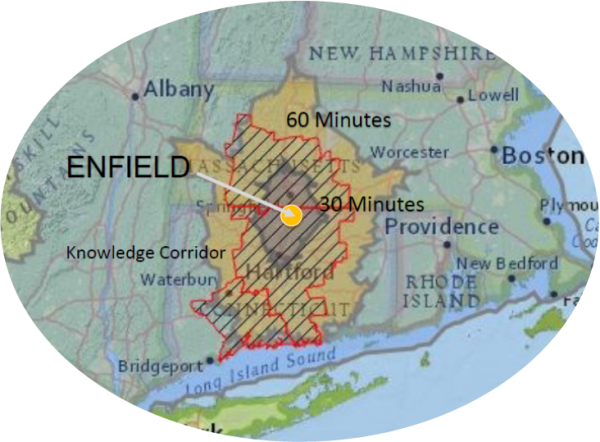
The bid by Enfield is perhaps the most ironic, as the Boston Globe pointed out in a front page article .  The central location being proposed is currently the Enfield Square Mall, which has seen its anchor stores – Macy’s, JC Penney’s and Sears – leave in recent years, followed by numerous smaller retailers.  The proposal is on the agenda of the next town Economic Development Commission, scheduled for Wednesday morning.  The Enfield proposal suggests Hartford, West Hartford, Windsor, Meriden and New Haven and Springfield as "potential satellite campuses" and stresses Enfield's place at the center of the Knowledge Corridor, which runs from Springfield to New Haven.

“It’s a scene repeating itself in dying suburban malls around the country,” the Globe reported, “a sweeping economic disruption known as the Amazon effect.”  Industry analysts have predicted that 20 percent of the 1,200 shopping malls in the U.S. will “meet their demise,” the Globe indicated.

Amazon.com has received 238 proposals from cities and regions across North America.  Amazon said Monday that 54 states, provinces, districts and territories in the United States, Canada and Mexico were represented in the bids. The number of applicants underscores the interest in the contest, which Amazon announced last month. The world’s largest online retailer said it would invest more than $5 billion and create up to 50,000 jobs for “Amazon HQ2”. The deadline for submitting proposals was last Thursday.

"There are no state boundaries for our region's workforce, company supply chains and students," Rick Sullivan, president and CEO of the Economic Development Council, wrote in a letter supporting Enfield.  The town is along the so-called "Knowledge Corridor," the economic region that includes Springfield as well as Hartford and New Haven, and follows the Interstate 91 corridor in Massachusetts and Connecticut.  The corridor is expected to benefit from the introduction of regular commuter rail service, being introduced next year; the Enfield proposal provides Amazon with a map of the new Hartford Line rail route.

The Enfield bid touts its proximity to higher education, Bradley International Airport and major highways, as well as arts and culture. Also highlighted are major businesses located in the community, including Lego, MassMutual, Brooks Brothers, and Eppendorf, according to published reports. The Enfield proposal opens with a stylized newsletter of the future, including facts about Enfield and the region, led by the headline “Internet Retail Giant Pumps Life Back into Dying Mall!”

"With a population of nearly 50,000, Enfield’s 33 square miles are at the center of the New England Knowledge Corridor, Enfield provides quick and easy access to several US Highways, airports and rail systems," the 12-page Enfield proposal explained.  "Tax Increment Financing (TIF) districts are being created in Enfield and surrounding towns to support new development and growth. Abatements and Regional Revenue Sharing are all available to sweeten the deal. Connecticut has the lowest corporate tax rate in the North East."
After having received more than a dozen potential bids, state economic development officials opted to promote Hartford and Stamford as its leading candidates to land the headquarters, developing a website to promote the two regions, under the headline “The Talent You Need.  The Lifestyle They Want.”  The submission noted that "if Connecticut were a country, we’d be the sixth most productive in the world—ahead of Germany, Japan and Hong Kong."
A letter of support jointly signed by the state’s seven-member Congressional delegation and included with the state’s submission did not indicate a preferred location in the state, advocating “full support of Connecticut as the home of your second headquarters.”  A similar letter was signed by legislative leaders of both political parties, along with the co-chairs of the state’s Commission on Economic Competitiveness.  That letter noted that “Connecticut has already made a major commitment to Amazon, with facilities in Windsor and Wallingford, and another planned for North Haven.”

The Hartford bid was supported by the Mayors of Hartford, East Hartford, and West Hartford, along with Chip Beckett of Glastonbury, Chair of the Capital Region Council of Governments.  A joint letter was included in the state’s overall package.  A similar letter supporting Stamford came from that city’s Mayor.

An additional letter of support for the state’s bid was signed by 57 business leaders from throughout the state, accompanied by another from nearly three dozen higher education leaders from public and private institutions.

It was, some have suggested, a show of unity that has been generally lacking during the four months that the state has operated without an approved state budget, the longest such period in the state’s history.

Some communities, most notably the joint proposal by the cities of Bridgeport and New Haven, along with their immediate suburban neighbors, didn’t make the state cut, but submitted proposals nonetheless.  The Enfield proposal touts the entire region, along the I-91 corridor.  Locations in Enfield, including the mall, are suggested, as are other communities north and south of the state line that could host various divisions of an Amazon headquarters, according to reports on the proposal.

Portions of artists renderings included in State of Connecticut proposal advocating for Stamford and Hartford.

With Varied Stories to Tell, State Authors Win 2017 Connecticut Book Awards

The Connecticut Book Awards returned from a five-year hiatus with a rousing ceremony and the selection of winners from among finalists in four categories:  Fiction, Non-Fiction, Poetry and Young Readers.  The competition was coordinated by Connecticut Humanities and the Connecticut Center for the Book, and the awards ceremony was held Sunday at the Mark Twain House & Museum in Hartford. West Hartford author Okey Ndibe was awarded the 2017 Connecticut Book Award for Non-Fiction for Never Look an American in the Eye, published by Soho Press.  The Fiction winner was Robert H. Patton of Darien for Cajun Waltz, published by Thomas Dunne Books.  In the Young Readers, The Weight of Zero, written by Karen Fortunati and published by Delacorte Press, was selected. The Poetry winner was Fugitives by Danielle Pieratti, published by Lost Horse Press.

One hundred nine titles were submitted as candidates for the Book Awards between January 1 and April 19, 2017 and after review against the guidelines, one hundred titles were admitted into the judging process. Books published in 2016 were eligible for the awards.

Each category had five judges with expertise in the literary arts. They reviewed the titles over three months using criteria appropriate to the category.  Seventeen titles made it to the finalist list. Nominated authors must currently reside in Connecticut and must have lived in the state at least three successive years or have been born in the state, or the book must be substantially set in Connecticut.

In accepting the award, Ndibe, a journalist and educator, said that “literature is central to what binds us together as a community.”  Ndibe’s funny, charming, and penetrating memoir tells of his move from Nigeria to America, examines the differences between Nigerian and American etiquette and politics; recalls an incident of racial profiling just thirteen days after he arrived in the US, in which he was mistaken for a bank robber; considers American stereotypes about Africa (and vice-versa); and juxtaposes African folk tales with Wall Street.

Fortunati, who described her debut novel as a “story of hope and resilience” in accepting the award, recently completed Trinity College’s master’s program in American Studies.  She recalled that as part of her studies, she visited the Mark Twain House & Museum, which made the ceremony location especially fitting.

The book’s subject is mental illness, specifically bipolar disorder, and “it explores the shame, stigma and anxiety that often complicate the management of this chronic condition,” Fortunati explains on her website.  “The issue is personal to me having witnessed the impact of depression and bipolar disorder in relatives and friends.  My goal was to write a story of hope for teens who struggle with mental illness.”

Pieratti, who teaches English at South Windsor High School, relocated to Connecticut from upstate New York five years ago.  She said “I have been nurtured by this state since I moved here,” and expressed appreciation to her colleagues in South Windsor.  She has taught at the college and high school level, and was recipient of the Idaho prize for Poetry in 2015.  Her poetry “explores the mundane moments and materials that make up ordinary days and finds there the ambiguities of mystery, shadow, and song,” the CT Center for the Book indicated.

Cajun Waltz, the Fiction winner by Robert H. Patton, is set in southwest Louisiana, a "tale of family, music, love, and picturesque mayhem" that explores “three generations of the volatile clan” as they “grapple with the region’s economic struggles and racial tensions.”

In addition to the award recipients, Gray Jacobik, University Professor Emerita at Eastern Connecticut State University, received Lifetime Achievement recognition in Poetry.

The awards were presented annually between 2002 and 2011, and were re-established by CT Humanities this year.  The nominated books for the 2017 Connecticut Book Awards, by category:

Fiction

  • Back Lash by Chris Knopf
  • I’ll Take You There by Wally Lamb
  • Shadows of Paris by Eric D. Lehman
  • Cajun Waltz by Robert H. Patton
  • Beneath a Shooting Star by Susan Harrison Rashid

Non-Fiction

  • Rare Light by Anne Dawson
  • Never Look an American in the Eye by Okey Ndibe
  • The Lost White Tribe by Michael Robinson

Poetry

  • The Banquet by Gray Jacobik
  • Barrel Children by Rayon Lennon
  • The Meeting House by Marilyn Nelson
  • Fugitives by Danielle Pieratti

Young Readers

  • All Rise for the Honorable Perry T. Cook by Leslie Connor
  • The Weight of Zero by Karen Fortunati
  • Ada’s Violin by Susan Hood
  • The Unexpected Everything by Morgan Matson
  • Good Night, Bat! Good Morning, Squirrel! by Paul Meisel


Images above (L to R): Okey Ndibe, Karen Fortunati, Danielle Pieratti, Robert H. Patton

PERSPECTIVE: #MeToo - Intervening to Change A Culture That Tolerates Sexual Violence

by Laura Cordes Hundreds of thousands of heartbreaking accounts of sexual harassment, assault and rape are pouring forth online from survivors across the country who are using their incredible courage to hashtag, #MeToo.

Nearly 10 years ago, activist Tarana Burke first used “Me Too” to create space and support for women and girls of color. Last week actress Alyssa Milano utilized the hashtag in the wake of multiple accounts of harassment and assault by Harvey Weinstein. It was a call to action for survivors to demonstrate the scope of the problem. Women and men alike are posting at lightning speed in solidarity.

48 hours later #MeToo was tweeted nearly a million times. Facebook reports that 45% of its American users have had friends posting "MeToo" messages.

These numbers are not, however, merely a trending topic, or a social media moment.

Sexual violence - in all its forms - continues to be pervasive, predominately perpetrated by people known to us, and grossly accepted and minimized by the very people and institutions who have the power to intervene and to create communities where such behavior is never tolerated.

These hashtag stories bear witness to the reality that women and girls in particular are subject to harassment, discrimination, unwanted touching and violence at nearly every age and stage of our lives. It happens at work, on the street, in the home, on trains, at school, and on the playground.


As advocates in the anti-sexual violence movement, these stories are all too familiar to us. Last year alone, our member sexual assault crisis services programs worked with over 6,500 child, adolescent and adult victims and survivors of sexual violence across the state. More than 15% were men and boys.

Beyond illustrating the staggering numbers of assaults, the MeToo posts underscore the predatory nature and the patterns of manipulation, coercion, threats, retaliation and violence that perpetrators use to harm others. They wield their power and the illusion of trust to not only target and access their victims but to silence them. They count on others to stay silent too - to be too uncomfortable to say something, to look the other way, or to join them in blaming the victim should they disclose or ask for help.

When survivors speak out, chances are they will not be believed. Most are shamed, shunned, blamed and re-traumatized.

It is no wonder that rape remains the most under-reported crime in this country.

For every Harvey Weinstein, Roger Ailes, Jerry Sandusky and Bill Cosby there is another politician, teacher, coach, salesman, scientist, or bus driver who cat calls, gropes women, threatens job security, coerces vulnerable teens, intimidates or rapes. They are someone’s trusted and loved father, brother, son, friend or spouse. They are people we know, people we trust.

Survivors are people we know and trust, too. They do not owe us their stories, but we owe them compassion, support, and clearer paths to healing and justice.

#MeToo marks a critical moment in our growing national movement to address sexual violence. Driven by survivors, advocates and a growing number of allies, we are unearthing the high rates of sexual violence and increasing calls to hold offenders accountable for the incredible harm that they have caused.

It will take all of our voices to change a culture that tolerates sexual violence. We must commit to do more, to ask our friends and neighbors and family members, the men in our lives to look beyond the fact that sexual violence is a widespread problem, and to take an active role in ending it.

Use your voice to intervene to stop sexist and discriminatory behavior when you see it, to believe survivors, and hold individuals, communities and institutions to a higher standard.

Join us in the belief that sexual violence is preventable, not inevitable.

__________________________________

Laura Cordes is the Executive Director of the Connecticut Alliance to End Sexual Violence.

The Alliance (formerly CONNSACS) is the statewide coalition of nine community based sexual assault crisis services programs whose mission is to end sexual violence and provide high quality, comprehensive and culturally competent sexual assault victim services.

Three Foundations Join Forces to Advance Obesity Prevention Efforts in Connecticut

If an ounce of prevention is truly worth a pound of cure, efforts in Connecticut may hold the key to turning around the nation’s obesity epidemic – especially among children. Connecticut has the 10th lowest adult obesity rate in the nation, according to a study released earlier this year. The state’s adult obesity rate is 26 percent, up from 16.0 percent in 2000 and from 10.4 percent in 1990.  That places Connecticut 42nd among the 50 states.  The childhood obesity rate is 30 percent for 10-17 year olds, ranking 29th among the states, and 15 percent for 2-4 year olds qualifying for federal nutrition assistance, the 12th highest obesity rate in the country.  And that is where the focus of three Connecticut-based foundations will be, as they combine forces to award $194,884 in grants for obesity prevention projects in Connecticut.

The grants are being funded with contributions from the Children's Fund of Connecticut ($139,884), the Connecticut Health Foundation ($30,000), and Newman's Own Foundation ($25,000) and will be administered by CFC's non-profit subsidiary, the Child Health and Development Institute (CHDI).

Funded projects will inform and advance efforts to prevent obesity by improving early feeding practices for diverse socio-economic, racial, and ethnic groups across various early childhood settings.

"Childhood obesity is a wide-spread public health crisis disproportionately impacting racial and ethnic minorities and low-income children. Once obesity sets in it is very difficult to reverse; however, we are still searching for effective ways to prevent it," said Judith Meyers, President and CEO of the Children's Fund of Connecticut.

"New research on infant and toddler feeding practices shows promising results. These grants to improve infant and toddler feeding practices will help us learn more about what works so we can get ahead of the curve."

The competitive application process administered by CHDI yielded the following funded projects:

  • Healthy Eating through Group Well Child Care: $59,904, Yale University

Under the direction of Marjorie Rosenthal, MD, MPH, the project examines the impact of embedding a healthy eating curriculum within group well child care, an evidenced-based model of primary care delivery at the Yale New Haven Hospital Primary Care Center. Expected outcomes include less rapid weight gain for infants in the first six months and improvement in mothers' weight over the first year of her child's life.

  • Barriers to Participation in CACFP in CT: $64,998, UConn, Rudd Center for Food Policy and Obesity

Tatiana Andreyeva, PhD, Associate Professor at the UConn Rudd Center, will lead a study that documents and addresses barriers to participation in the federal Child and Adult Care Food Program (CACFP) among Connecticut child care centers serving infants and toddlers from low-income families. Connecticut has one of the lowest CACFP participation rates in the nation. The project team will use surveys and stakeholder interviews to assess perceived and actual barriers to CACFP participation and assess outreach and recruitment strategies currently used in Connecticut to increase center enrollment in CACFP.

  • Supporting Healthy Eating in Low-Income Toddlers: $64,982, UConn, Allied Health Sciences

Under the direction of Valerie B. Duffy, PhD, RD and Jennifer L. Harris, PhD, MBA, the project will develop and assess a coordinated communications program to deliver consistent messages to low-income parents in East Hartford about best practices for feeding toddlers (1-2 year olds). The messages will be delivered through pediatric clinics, WIC offices, and Family Resource centers in East Hartford. The project will coordinate infant feeding messages and promote responsive feeding across diverse populations and settings.

Funding is also supporting Connecticut Children's Medical Center's Office for Community Child Health to develop and disseminate training for pediatric primary care providers. The training will address key messages to educate parents about best practices in feeding infants and toddlers.

These projects represent the second cycle of funding from CFC in the early childhood obesity prevention arena. Since 2015, CFC has awarded more than $420,000 to advance early childhood obesity prevention.

The work of the first round of grantees helped CFC and CHDI identify public policies that contribute to obesity prevention, test the effectiveness of messages promoting obesity prevention in infants and toddlers, support breast feeding strategies for hospitals, and harness existing medical record data to identify early childhood obesity risks.

The current round of funding was informed by the Robert Wood Johnson Foundation's recently released Feeding Guidelines for Infants and Young Toddlers: A Responsive Parenting Approach, which highlights new areas of research and practice in obesity prevention.  The data-rich State of Obesity: Better Policies for a Healthier America, published earlier this year, was a project of the Robert Wood Johnson Foundation and the Trust for America’s Health.


Philanthropic Giving Levels in Connecticut Among Nation’s Lowest As Percentage of Income

Connecticut ranked 47th among the 50 states in philanthropic giving as a percentage of income, with a “giving ratio” of 2.4 percent, 25 percent lower than the national average, according to a new analysis by the Chronicle of Philanthropy. The giving ratio is the total of a locality’s charitable contributions as a share of its total adjusted gross income. Among the states in the region, Vermont ranked 45th, Massachusetts was 46th, and Rhode Island was 50th.

Nationally, the Chronicle report “How America Gives” highlighted the growing influence of the affluent in charitable giving across the country.  Although charitable donations rose for the third straight year in 2016, reaching $390.1 billion, according to "Giving USA," the Chronicle study indicates the sources of those donations are changing.

Donations from households earning $200,000 or more now total 52 percent of all itemized contributions. In the early 2000s, that number was consistently in the 30s, the Chronicle reported.  The report raises questions about the traditional habit of charitable donations among middle and low income individuals lessening, perhaps as a lingering after-effect of the recession.

Connecticut ranked 20th in total giving, despite having the 29th largest population among the states, with average giving per itemizer of $5,229, which placed the state squarely in the middle, ranking 25th.

The Chronicle provides an analysis of the giving patterns of Americans who earn $50,000 or more annually and who itemize charitable deductions on their income-tax returns. The itemized giving of these taxpayers, in 2015, represents nearly 80 percent of all individual charitable contributions and offers the best possible view into giving at local and regional levels, the Chronicle explains.

Nationally, only 24 percent of taxpayers reported a charitable gift, according to the Chronicle analysis of Internal Revenue Service data. That’s down from 2000 to 2006, years when that figure routinely reached 30 or 31 percent.  The Chronicle’s conclusion: “The number of households making room in their budgets for charitable giving is shrinking.”

In all but six states – including Connecticut – the percentage of those in the $200,000 plus bracket increased in 2015, the most recent year in which data was available. Only in Connecticut, South Dakota, Nebraska, Oklahoma, Texas, and Rhode Island was the percentage of those giving in that earnings bracket less that year, compared with 2012.

In Connecticut, individuals earning more than $200,000 gave 66.4 percent of all Connecticut giving, down 1.7 percent from 2012, according to the Chronicle analysis.  The portion of all givers in this income bracket in Connecticut down 0.2 percent while the giving per itemizer is down 20.6 percent.  In looking at the state’s major metropolitan areas, greater Bridgeport, Hartford, and New Haven, the analysis round that giving rates for taxpayers at four income levels fell below the average for the size group in each of the metropolitan areas.

The Chronicle reports that “Charity leaders say government funding has dwindled as corporate support has grown finicky. At the same time, America’s wealth has become more concentrated among the wealthy.”  The publication noted that “groups traditionally fueled by small gifts are also jumping into big-gift fundraising,” adding that “Middle-class woes and the country’s widening income disparity are undoubtedly partly to blame. But some fear that organizations are contributing to the problem by courting the well-heeled and slighting the small donor.”

The giving percentage varied across the state:  the Fairfield County giving ratio was 2.8%, New Haven County and Litchfield counties 2.1%, Hartford County 1.9%, New London County 1.8%, Middlesex and Tolland Counties 1.7%, and Windham County 1.6%.

Attracting International Start-Up Ventures to CT Takes State's Money and Business' Commitment

Connecticut’s efforts to attract innovative, early stage, start-up companies from around the world will be front and center on Friday at VentureClash, the state’s $5 million global investment challenge.  The mission is simple:  to provide early-stage companies worldwide with an opportunity to grow their business in Connecticut. Connecticut Innovations (CI), the leading source of financing and ongoing support for Connecticut’s innovative, growing companies, is the driving force behind VentureClash, which has attracted companies in digital health, financial technology, insurance technology and the Internet of Things.

The nine finalists, from seven countries, will present in front of a panel of expert judges, at the competition to be held at the Yale School of Management.  The challenge will provide one top winner with a $1.5 million investment. Up to two second-place winners will each receive a $1 million investment, and up to three third-place winners will receive awards worth $500,000 each.

Applications opened in March.  To be eligible, companies must have been in business for at least 12 months, have paying customers or customers who are actively testing the applicant’s product, and be focused in digital health, financial technology (Fintech), insurance technology (InsureTech) or Internet of Things (IoT).

Companies seeking the VentureClash funding must also “be willing to establish a Connecticut presence, which applies to domestic and international applicants,” according to the competition’s criteria.

Tim Armstrong, CEO of Oath, will be the keynote speaker at the event. Oath is a global digital and mobile company that reaches more than one billion global consumers and partners with the world’s leading global brands. Oath owns close to 50 mobile and internet brands, including Yahoo, AOL, HuffPost, TechCrunch, Tumblr and other leading brands as well as global commerce and advertising platforms that support thousands of partners across the globe.

The VentureClash finalists are:

  • Bought By Many – A U.K.-based interactive members-only service, Bought By Many offers targeted insurance opportunities designed to help individuals find the right insurance efficiently and customized to their needs.
  • Buzzmove – Buzzmove is the United Kingdom’s only price-comparison and instant-booking platform for all services related to moving and the right level of insurance needed to cover moving-related services.
  • Davra Networks – Based in Ireland, Davra Networks provides a complete Internet of Things (IoT) platform that allows customers to define, build and bring to market vertical-specific IoT applications while collecting and easily sharing data.
  • EAVE – U.K.-based EAVE is developing the next generation of hearing protection and communication technology utilizing noise cancellation and speech enhancement to eliminate noise-induced hearing loss.
  • FRISS – Based in the Netherlands, Friss uses proprietary analytics software to provide state-of-the-art solutions in the fields of fraud, risk and compliance for the insurance industry.
  • Peek Health, S.A. – Based in Portugal, Peek Health offers powerful three-dimensional preoperative planning software for orthopedic surgery that aims to help the surgeon better treat the patient while reducing costs and surgical times.
  • SCADAfence – Based in Israel, SCADAfence is a pioneer in securing mission-critical industrial networks from cyber threats, reducing the risk of connecting multiple devices in industries like manufacturing, utilities, oil and gas.
  • Tellspec – Headquartered in Toronto, Canada, Tellspec is a data company with the ability to scan food, offering non-destructive real-time food testing for quality control, authentication, safety and nutritional value.
  • Vouchr – Based in Canada, Vouchr is a secure, payment-agnostic tool that allows users to bundle transfers of funds with photos, videos, social networking and gamification.

“VentureClash again attracted an impressive list of innovative, early-stage companies poised for growth,” said Matt McCooe, CEO of Connecticut Innovations. “The fundamental improvement in this year’s competition is the deep involvement of so many corporate partners. Many of Connecticut’s flagship companies engaged in the process to learn about, meet and help us select the competitors in VentureClash. The Connecticut-based companies are looking to CI to act as a tech scout, and to help identify fantastic talent and innovation from across the globe.”

Recognizing that it takes more than money to succeed, officials point out, the $5 million global business competition also includes access to a critical network of customers, investors, mentors and talent.

VentureClash 2017 has partnered with the following organizations for this year’s competition: Aetna; Bank of Ireland’s Startlab; Boehringer Ingelheim; Dream Payments; Fiondella, Milone & LaSaracina LLP; General Dynamics Electric Boat; Health Venture; ISG (Information Services Group); Magellan Health; Medtronic; Microsoft BizSpark Assets; Navigators; Pitney Bowes; RBS/NatWest; Shipman & Goodwin; Sikorsky & Lockheed-Martin; Stanley, Black & Decker; Stanley Ventures; Synchrony Financial; The Hartford; The Jackson Laboratory; Travelers; Updike, Kelly & Spellacy; Webster Bank; Yale University; Yale New Haven Health; and Yale Office of Cooperative Research (OCR).

A year ago, in the inaugural VentureClash, ten companies were selected as finalists from an initial field of 200.  The top prize winner, DreamPayments, was a financial technology company that provides a cloud-based mobile payment platform for merchants and financial institutions.  Based in Canada, the company was looking to expand its operations to the U.S.  In receiving the $1.5 million in funds from CT Innovations, they stated plans to hire up to 10 employee positions in Connecticut and add a business development professional to help assist with its U.S. growth plans.  The company is headquartered in Toronto, with operations also now in Stamford.  The company hired its first U.S. employee in March.

Connecticut Innovations is Connecticut’s strategic venture capital arm, providing funding and strategic support to early-stage technology companies. In addition to equity investments, CI provides grants that support innovation and collaboration through CTNext, and connections to its well-established network of partners and professionals.

To register to attend the 2017 VentureClash finals event, visit: www.ventureclash.com/event.


PERSPECTIVE: Liberating Public Data – Easier Said Than Done

by Sasha Cuerda For the past few years we have been working with the Connecticut Secretary of the State (SOTS) on initiatives related to the business registration data that they process and manage. These are the official data set of record for businesses that are required to register to operate within Connecticut.

However, accessing these data has been historically difficult. The office’s CONCORD system was built and optimized for the important work of managing transactions around business filings and registration. It was not designed as a system to be search or analyzed for data. The data are also old, with data going back centuries, which is both good and bad

When we started on this project we were faced with a significant initial obstacle. We were given raw data on a CD-ROM and a "data dictionary" that consisted of a photocopied database schema. Variable names were not particularly readable and while some of the relationships could be inferred from the table names, there was a lot of information that was missing. Another technical challenge was that most of the values were stored as character strings.  This meant that the validation of data being input was taking place in the application that staff used to input data. We couldn't rely on the database to have done much work to catch "mistakes" that made it through the business systems. Therefore, many of the input errors such as spelling mistakes or typos remained in the data.

For example, we had to determine a solution for the many instances where a business has both a "primary" address and also a mailing address. If you've ever had to fill out a form online where your address is required, you've probably encountered a case where you are presented with a check box that gives you the option to use your primary address as your mailing address.

Checking that box usually results in all of your address data being copied, or sometimes that system will grey out the form fields and keep you from editing them. Regardless, something is happening that captures the fact that both address are the same. Most likely this means that when the data are saved to a database, the same data are entered in both fields. This didn't seem to be the case with these data.

Additionally, we encountered businesses with a primary address and no mailing address, which was easy enough to reconcile (the assumption is that they are the same). But we also encountered the opposite, where a mailing address was present but no primary address. This poses a challenge. Does this mean that the business does not have a physical location? Is it a business on paper only? Or was there a data entry error resulting in the wrong set of address fields being updated? If the registering agent filled out a paper form, did they leave primary address blank? These inconsistencies make seemingly trivial questions, such as how many businesses were formed in town X in time period Y, hard to answer.

Given these issues, the first step in bringing these data into a modern, flexible, search context was to build out the data dictionary and develop an understanding of the values that were present in the data. We conducted informational interviews with staff and contractors, explored the range of values in the data and bit by bit, built a model of how data flowed, what it meant, and how it was structured in the context of the regulations and procedures that business owners go through when submitting information to the Secretary of the State. Once we were confident that our model was accurate and complete enough, we set about building the search system (http://searchctbusiness.ctdata.org/).

The search interface offered by the CONCORD system is quite fast, but suffers from a few significant limitations, primarily that there is limited support for wild card searches (e.g. a search for pizza will not find pizzeria) and that the search is very character/word sensitive.

For example, say you wanted to search for businesses that contain the term "New Haven" in their name. This probably indicates something about where they are located, but it might also be used as a name by housing developers or in a variety of other circumstances. With CONCORD, you'd get roughly 26 pages of results, all for businesses starting with "New Haven". However, you won't find the Advanced Nursing & Rehabilitation Center of New Haven, LLC, Peoples Church of New Haven, League of Women Voters of New Haven, or any number of other businesses whose name features but does not start with New Haven. Moreover, if you want to search for a business whose address is in New Haven, you cannot. These were two problems we wanted to resolve.

The Secretary of the State also wanted to support searching by place and by date of formation. We handled this by building a search index table that would allow us to very quickly find matches and return enough information to the user for them to decide if they wanted to explore a given business in more detail.

In the course of doing this work, we've worked with folks from other state agencies. Given the importance of business activity, a number of state agencies place high value on the business registration data. However, the structure of the live database limited how data could be extracted and analyzed. Our workflow enabled us to support more free-form exploration of the data on their behalf and led to a number of additional projects where we linked these data with other internal datasets.

Recently we worked with a state agency to develop a methodology to link businesses registered with SOTS with internal and third party data. Linking business names is hard to do manually. In some cases, it is possible to handle look ups on an ad hoc basis, but bulk work is very time consuming. Moreover, it is quite common for businesses to use slight variations of their names in different contexts, particularly small businesses. They might be required to add something to their name when registering to avoid name conflicts, but in practice they may advertise themselves with a simpler name.

Businesses also can formally change their name with the Secretary of the State, but those changes are almost certainly not reflected in other datasets and databases. Larger companies are often structured in complex ways for legal purposes; it may attach one name to a company when discussing it in policy terms, but from a legal perspective, that business might exist as groups of distinct entities. All of these issues make matching lists of businesses challenging, so much so that there is a technical term for the problem: entity resolution.

Entity resolution takes two forms, grouping entities that can be functionally considered one "business" for a given context, and linking different representations for the same underlying entity.  We were able to conduct a number of matching runs using business name, address, city, and the name of principals to build out a list of linked entities and eliminating the need to try to manually link hundreds of thousands of entities.

We have more to do with these technologies and with these data. We want to add a map interface to our business search portal, which would enable users to search for businesses within a certain geographic area, making it possible to ask questions like: How many businesses were formed in our main street district since we altered the zoning? Further, since we’ve undertaken this work, more powerful open source solutions have been developed and we would like to optimize our search backend with these new offerings.

Liberating this data has been a fun challenge.  It has demonstrated to us the value in investing in open source solutions and approaches and we have also learned by making these data open, the value it has for many users across the state; not only other state agencies but also economic development organizations, regional planning associations, and chambers of commerce.

_________________________

Sasha Cuerda is Director of Technology at the Connecticut Data Collaborative. He is a software developer with experience building data visualization tools, developing database systems for managing spatial data, and developing data processing workflows. He is also a trained urban planner and geographer. This article first appeared, in a somewhat lengthier version, on the website ctdata.org, the Connecticut Data Collaborative. 


With Continued Funding in Doubt, Gov. Rell, Former Legislators to Reprise Campaign Finance Reforms

Former Governor M. Jodi Rell, who supported and signed Connecticut’s landmark campaign finance reforms into law just over a decade ago, will be the keynote speaker later this month at a day-long conference that will bring many of the key players in that debate together again.  The October 26 event at Central Connecticut State University (CCSU) comes the same week that the state legislature may be voting on a new state budget for the fiscal year that began on July 1, with the continued existence of public financing of state political campaigns – a core component of the reforms - in serious doubt. Among the panelists will be former Senate President Pro Tempore Don Williams, former House Speaker James Amann, former Senate Minority Leader John McKinney, and former House Minority leader Lawrence Cafero. They will be joined by former House member Tim O’Brien, who served on the Government Administration and elections Committee, and Senate Co-Chair of that committee, Sen. Michael McLachlan.

In addition to the legislators, key players in the debate including Karen Hobart Flynn, President and CEO of Common Cause, Jeffrey Garfield, former Executive Director of the Connecticut State Elections enforcement Commission Tom Swan, Executive Director of the Connecticut Citizen Action group, will be part of a second panel.

A week ago, in an op-ed published in Connecticut, Flynn criticized those who would now eliminate public funding of campaigns, known as the Citizens Election Program (CEP), which she described as “a remarkably successful alternative to the corrupt system that earned our state the unfortunate moniker ‘Corrupticut’ in 2004.”  A budget narrowly approved by the legislature and vetoed by Gov. Malloy late last month would have eliminated funding.  It has been estimated that $40 million would be disbursed to statewide office and legislative candidates in 2018, surpassing the $33.4 million distributed to qualifying candidates in 2014.  Recent studies suggest that the program has been effective in reducing special interest money in campaigns.

Flynn added that the law, passed in 2005, “allows candidates and officeholders to look out for the interests of all their constituents rather than being consumed with the needs of their major campaign contributors. It gives talented, motivated citizens who've never had the money or the connections traditionally required for success in politics a chance to seek and win public office with neither big money nor connections.  Now, nearly 80 percent of all candidates for legislative and state offices use the program.”  Qualifying candidates must raise $5,000 to $250,000 — depending whether they are seeking a statewide office or legislative seat — in $100 increments or less in order to receive a grant of public funds from the CEP.

Rell, in signing the plan into law at an Old State House ceremony flanked by legislators from both political parties in 2005, said "This is the bipartisan spirit that people want.  It takes special interests out of elections and is putting elections where they should be, in the hands of the people."

At the time, Connecticut was the first state to pass a public financing system that affects all statewide races including the legislature. The law took effect on Dec. 31, 2006.  Additional reforms were passed by the legislature in 2008, designed to strengthen the 2005 law by expanding the authority of the State Elections Enforcement Commission (SEEC) and enabling the state’s public financing system to operate more smoothly, Gov. Rell’s office said at the time.

The Oct. 26 program is coordinated by the Center for Public Policy and Social Research (CPPSR) at CCSU. The CPPSR has been designated a Connecticut Higher Education Center of Excellence, and is noted for offering innovative academic research and outreach programs which promote a greater understanding of the history, structure, processes, personnel and policies of State government. The center incorporates the Governor William A. O'Neill Endowed Chair in Public Policy and Practical Politics.

The program, "Campaign Finance Reform  in Connecticut," will be held in the Constitution Room of Memorial Hall on the CCSU campus in New Britain, from 8:30 to 1: 30.

Hartford Region Ranks 49th Among 50 Largest Metropolitan Areas in Charitable Giving

The average percentage of income given to charity by residents of the Hartford metropolitan region ranked 49th among the top 50 largest metropolitan regions, according to a new survey by the Chronicle of Philanthropy.  Only residents of the metropolitan Providence, Rhode Island region donated less. Greater Hartford residents, on average, donated 1.9 percent of their income to charity according to the analysis.  The average amount given, among those itemizing gifts, was $2,994.  The total in Itemized contributions among the region’s 1.2 million people was $600 million.

In Providence, $600 million was donated with an average gift of $2,748, or 1.8 percent of individual income.  The Providence region includes 1.6 million people.

Both cities are among the 60 of America's 100 largest metropolitan areas that give less than the national average of 3.1 percent.

The Chronicle used 2015 Internal Revenue Service data on individuals who earn $50,000 or more annually and who itemize charitable deductions on their income-tax returns to create a snapshot of giving in every county and metropolitan area in the country. Only donations of taxpayers who took a deduction are included, the publication noted. The key measure, according to the Chronicle, is the giving ratio: the total of a locality’s charitable contributions as a share of its total adjusted gross income.

The metropolitan regions with the largest average percentage of income to charity:  Memphis (5.6%), Salt Lake City (5.5%), Birmingham (5.4%), Atlanta (4.6%), San Jose (4.6%), Jacksonville (4.2%), Nashville (4.0%), and Oklahoma City (4.0%).

Five years previously, in 2012, Hartford ranked last among the 50 largest metropolitan regions.  The giving rate that year was also 1.9 percent, reflecting an 89.9 percent decline in giving rate since 2006.  Providence was 49th that year.

Overall in 2015, only 24 percent of taxpayers reported on their tax returns that they made a charitable gift according to the new analysis of Internal Revenue Service data. A decade earlier that figure routinely reached 30 or 31 percent, the Chronicle pointed out. Study authors suspect the numbers come from economic fears in the wake of the Great Recession, and a higher cost of living.

Forum on Bankruptcy Planned as Budget Eludes State, Hartford Nears Decision

If the state legislature remains deadlocked on approval of a state budget and the level of municipal aid that would be sent to the City of Hartford, a public forum planned for next Thursday, October 19, may offer a sneak preview of what will come in the days after the headline “Hartford Declares Bankruptcy.” In a program organized by the City of Hartford with support from the Hartford Foundation for Public Giving, the front-burner topic will be “What Does Municipal Bankruptcy Mean and What Can We Learn From Other Cities.”  Insight will be offered by Kevyn Orr, former Emergency Manager for the City of Detroit; Don Graves, former Deputy Assistant to President Obama and Counselor to Vice President Biden; and Mayor James Diossa of Central Falls, Rhode Island.  Moderator for the forum will be Jay Williams, recently installed as President of the Hartford Foundation for Public Giving, and a former U.S. Assistant Secretary of Commerce for Economic Development, and Mayor of Youngstown, Ohio.

The purpose of filing Chapter 9 bankruptcy is to provide a financially distressed government body protection from its creditors while it reorganizes to make itself more fiscally stable.  Opinions differ on its impact and effectiveness.  In Connecticut history, the city of Bridgeport filed for bankruptcy in 1991, but the filing was withdrawn by a new administration after the incumbent Mayor was defeated.  Years later, action by the state legislature to take over fiscal management of Waterbury prevented a possible bankruptcy declaration.

The 90-minute program on October 19 will be held beginning at 8 a.m. at The Society Room on Pratt Street in downtown Hartford.  The conversation continues at a late-afternoon public forum, with the same panelists, at Hartford Public High School.  

Central Falls, the first city in Rhode Island history to declare bankruptcy, in 2011, came out of bankruptcy in a relatively short 13 months.  Described as one of the hardest hit communities in the great recession, with unemployment reaching 16 percent between 2010 and 2012, Central Falls was considered by 2015 as among communities in the state that, although still struggling, were on the rise.

On July 18, 2013, Detroit, Michigan, became the largest municipality in United States history to file for Chapter 9 bankruptcy.  Detroit’s highly visible bankruptcy is today credited by some observers as a key element in the city’s ability to rebound in more recent years, attracting new investment after shedding considerable liabilities through bankruptcy court.  It is even using its bankruptcy as a plus as it goes after Amazon’s second headquarters – a competition that Hartford also looks forward to entering.

Out of nearly 89,500 municipalities in the country, there were just 239 municipal bankruptcy filings between 1980 and 2010, according to the American Legislative Exchange Council.  That number picked up considerably in the aftermath of the recession, including Detroit, Central Falls, San Bernardino and Stockton, CA; and Jefferson County, AL.

Hartford Mayor Luke Bronin said earlier this month that Hartford would seek Chapter 9 protection if additional state aid was not forthcoming by November. The city is seeking at least $40 million more this year — on top of the $260 million the city is already due to receive -also now in doubt due to the state's budget stalemate.  The city, facing a $65 million deficit, is expected to run into cash-flow problems this fall, with shortfalls of $7 million in November and $39.2 million in December, according to published reports.

A week ago, in a newsletter to bond holders and other investors, Municipal Market Analytics noted some of the issues that a Chapter 9 petition could pose not only to Hartford, but to jurisdictions beyond the city’s borders, including steeper interest rates when towns in the region borrow for infrastructure projects, and a possible adverse impact on the state’s bond rating.  The report was speculative, but could have an impact on decisions made at the State Capitol in the coming weeks.