Toll Technology, Revenue Considered in Indiana, Minnesota and (Possibly) Connecticut

“Toll technology advancements significantly altered the tolling landscape, expanded the types of toll facilities being operated and improved customer experience,” a report on tolling feasibility developed for the Minnesota Department of Transportation explained.  “New toll facilities using all-electronic tolling are being implemented in several places across the country to add new roadway capacity, manage congestion and provide a sustainable revenue source for asset lifecycle costs.” The 106-page report, issued in January, concluded that more study is needed — if that’s the direction the state wants to take, the Minneapolis StarTribune reported.  The StarTribune noted that “Minnesota doesn’t have the kind of toll-road system that is common on the East Coast and other regions of the country. The E-ZPass electronic toll system, for example, was first deployed in New York 25 years ago and now serves 17 states, stretching from Maine to Illinois to North Carolina.”
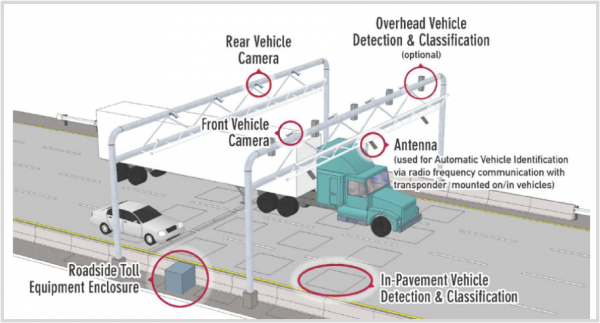
The MnDOT study, initiated at the legislature’s behest, cost $175,000 and recommended a follow-on in-depth study, anticipated to have a considerably larger price tag.  The report stated that “results of the feasibility analysis are a high-level revenue assessment based on numerous assumptions and a more detailed study would be required before any decision is made to implement a specific toll project.” The report was prepared by four consultants – the Minneapolis offices of WSB and HNTV Corporation, and Prime Strategies, Inc. and Lock Lord LLP, both of Austin.

Indiana is also giving tolls a careful look, with the type of in-depth study recommended in Minnesota, and proposed by Connecticut Governor Dan Malloy, who signed an Executive Order authorizing a $10 million study.  Malloy’s proposal is to be considered by the State Bond Commission later this week.  “Without transforming the way the state funds its highways,” Malloy said recently, “we will be unable to pay for the large-scale construction and rehabilitation projects that our state needs to ensure continued safe travel while attracting businesses and growing our economy.”

In Indiana, a strategic plan that could clear the way for that state to add tolls to its interstate highways, including inside the I-465 loop in Indianapolis, is currently being developed by one of the companies utilized by Minnesota.
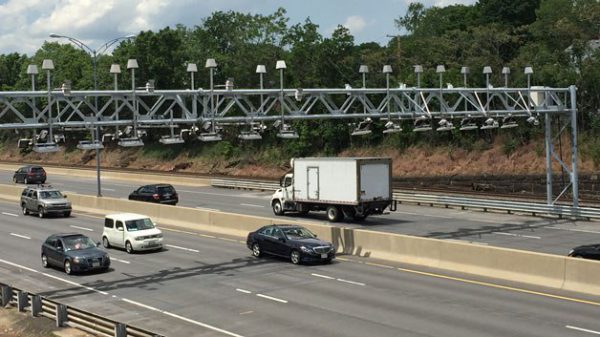
The Indianapolis Star reported earlier this summer that the state signed a $9.6 million contract with HNTB Indiana Inc. to study the impact of tolling and provide project planning if the state chooses to move forward with tolling.  The administration of Gov. Eric Holcomb is required to study tolling under a road-funding plan lawmakers passed in 2017, but a decision has not been made on whether the state will go forward with authorizing a tolling plan, according to published reports.

Under the law, Indiana’s Governor is permitted to draft a strategic plan "if the governor determines that tolling is the best means of achieving major interstate system improvements in Indiana."   That decision has yet to be made.

"He wanted more information to make an informed decision and will use the strategic plan due Dec. 1 as a basis for that," a spokesman for the Governor told the Star. "If after reviewing the plan the governor determines that tolling is not the best option, the state won’t move forward with the remainder of the contract."

The contract with HNTB lays out specific requirements for the consultant if the state chooses to add tolling. For example, the Star reported, HNTB would be required to assist with project start-up for tolls in the Indianapolis Metropolitan Planning Area, which includes Indianapolis and portions of nearly all of the bordering counties.

In Iowa earlier this year, a state DOT report on tolls was received by political leaders with distain.  In an editorial, The Gazette noted the possibility of tolls “is worthy of much more careful consideration than the political class is willing to grant.”  The publication added “Political fecklessness will not solve Iowa’s mounting transportation funding problems. Iowans love driving, we have a lot of roads and somebody has to pay for them.”

“Many Iowans have noticed a pattern in state government, a repetitive cycle of studies, recommendations and inaction. That may serve politicians fixated on their next election, but it does little to solve the very real problems Iowans face.”


https://youtu.be/kQxCVcMUq1s

Video: Connecticut House Democrats

Graphics:  2018 Minnesota DOT Toll Study Report

PERSPECTIVE: “Mamas, Please Let Your Babies Grow Up to Be CPAs” (apologies to Willie and Waylon)

by Bonnie Stewart Farm Aid, an event synonymous with Willie Nelson, will visit Connecticut this year on September 28.  The event makes me think of the great Willie and Waylon (Jennings) country anthem where each chorus pleads “Mamas, don’t let your babies grow up to be cowboys…” The duo continues their advice with “Let 'em be doctors and lawyers and CPAs…”  

Well, all right, they don’t actually sing “and CPAs…”

But they should.  Here’s why…

Parents counseling their children on careers would do well to suggest that of the certified public accountant, as it offers outstanding opportunity, reward, and respect.  There’s never been a better time than today to be a CPA -- except for maybe tomorrow!  And it comes down to – you guessed it – the numbers.

Opportunity

First, we need more CPAs.  Lots more.  Connecticut’s CPA profession is aging.  We expect that 75 percent of CPAs will retire over the next 15 years; at the Connecticut Society of Certified Public Accountants (CTCPA) it’s referred to as “The CPA Silver Tsunami.”  And yes, it’s tied directly to the national demographic phenomenon of Baby Boomers qualifying for Medicaid to the tune of 10,000 per day – every day – until 2029, according to the Pew Research Center.

In its 2018 Salary Guide for Accounting and Finance Professionals, Robert Half, a global staffing firm specializing in accounting and finance professionals, reports “There’s high demand for top talent in public accounting due to a severe shortage of skilled candidates…”  Their “In-Demand Certifications” list puts “CPA” at the top.

Nationally, college accounting enrollment remains at an all-time high – 79,524 in 2016 – but the number of new CPA exam candidates for that year was far lower at 48,044.  At the same time, the U.S. Bureau of Labor Statistics reports that employment of accountants and auditors is expected to grow faster through 2018 than for all the occupations the bureau tracks.

Some CPA firms now start recruiting accounting majors on campus as early as the students’ sophomore and even freshman years, and certainly by the time they are juniors and seniors, these students know where they’ll land well before they don cap and gown and “walk.”  Not every college grad shares such a bright employment outlook.  Hey, even during the 2009 recession, the unemployment rate for the accounting profession was 4.5 percent – equal to full employment.

Reward

CPA expertise is in demand, and people are willing to pay for it.  CPAs earn 10 to 15 percent more than non-CPA accountants.  Recent grads with “up to one year” of experience who are good to very good candidates start at a range of $46k to about $55k annually; for superstars, that jumps up to the low $70k’s.  Senior managers are well into six figures and new partners can earn upward of $250,000 annually and as much as $500,000 or more when you factor in bonuses and other parks. 

Respect

In addition to the compensation, there are intrinsic rewards, such as respect.  Ninety-one percent of business decision makers consider CPAs valuable assets to their organizations.  Many CPAs serve as expert members on the various boards of municipal governments, not-for-profits, and volunteer organizations, where their fellow board members appreciate the talent those CPAs bring to the table.

Forget the so-very-yesteryear, hackneyed Hollywood image of the pocket-protected number cruncher.  Today’s and tomorrow’s CPAs increasingly must understand technology but more so, its application.  A recent Deloitte survey showed 21 percent of organizations currently have blockchain in production, with 25 percent more planning to do so in the next year.  Artificial intelligence, cybersecurity, data analytics, and the so-called “disruptive changes” taking place today and tomorrow will only further heighten demand for CPAs and their analytical skills.

As long as people and their various organizations seek to maximize financial outcomes, manage business performance, make informed investment decisions, plan for their financial futures, and comply with local, state, federal, and international rules, regulations, and taxes, the CPA will be in demand.

“Mamas, please…“

Indeed!

_____________________________

Bonnie Stewart is Executive Director of the Connecticut Society of Certified Public Accountants. The Connecticut Society of CPAs is celebrating more than a century of service to membership and community alike.  Formed by nine CPAs in 1908 at New Haven’s Union League Club, today CTCPA has a current membership of almost 6,000 individuals in public practice, business and industry, government, and education.  Its function is to advocate on behalf of the accounting profession, foster a professional community among CPAs, and provide continuing education opportunities as well as a comprehensive peer review program and a variety of membership services for CPAs in Connecticut.

Struggles Continue for Thousands Who Relocated from Puerto Rico to Connecticut in Storm Aftermath

About 13,000 residents of Puerto Rico and the U.S. Virgin Islands who arrived in Connecticut in the aftermath of the hurricanes Maria and Irma continue to struggle with obtaining basic needs including adequate housing, food, medical care and jobs, according to a survey commissioned by the Hartford Foundation for Public Giving. The vast majority of those who have come to Connecticut, over 70 percent, have extremely low incomes (under $30,000), adding a heavy responsibility on an already over-extended and resource-limited Puerto Rican community in Connecticut, given the extreme levels of need that are present in the community, even before the storms, the Foundation pointed out.

Approximately 1,300 people participated in the survey, which utilized online and in-person questionnaires in English and Spanish and field research.  It was conducted by the University of Connecticut’s El Instituto: Institute for Latina/o Caribbean and Latin American Studies and the Center for Puerto Rican Studies at Hunter College. The objective was to understand the long-term impact of displacement on Puerto Rican households in the Greater Hartford region.

“The Hartford region has one of the highest concentrations of people of Puerto Rican origin outside Puerto Rico and last year’s hurricanes brought thousands more to the region, many of whom will likely stay,” said Scott Gaul, the Hartford Foundation’s director of Research and Evaluation. “The hurricanes were an unprecedented event, but we can anticipate similar crises will happen again. The survey is one tool to help the Hartford region understand the needs of evacuees and the potential long-term impacts of displacement.”

The survey found that while some households surveyed had initially relied on the Federal Emergency Management Agency (FEMA) for funding basic needs, the majority of those affected relied on Greater Hartford’s nonprofit organizations, school districts and family members for support.

During the 2018 Legislative Session, the Connecticut General Assembly  approved $4.4 million in education and housing assistance for displace residents, including $1.5 million in aid to the departments of education, housing and social services.

More than half of respondents (56%) mentioned that it was very likely (36%) or somewhat likely (22%) that kin would relocate from the Caribbean to Connecticut, with most of those relatives and friends staying with respondents.  Those living in Hartford’s outer ring suburbs were relatively less likely (72%) to have kin in the Caribbean than those living in Hartford or its immediate suburbs. And they expect nearly 1,500 additional people to arrive from Puerto Rico in the wake of the hurricane.

In addition, those responding to the survey indicated that they expected displaced kin to remain in Connecticut into the medium and long terms. Nearly a third of respondents (32%) reported that kin would stay in Connecticut for a few months, and a quarter (26%) would remain for a few years.

The survey also found:

  • The most pressing need for respondents hosting displaced Puerto Ricans is lodging, with fully one-third indicating that housing was one the biggest needs they face.
  • Nearly three-fifths of respondents indicated housing was displaced person’s first order need, followed by 16 percent who mentioned it in second order.
  • Food was a first order need for one-fifth of survey respondents’ displaced friends and relatives and second order need for 35 percent.

Survey respondents identified housing issues and insufficient food as the most critical needs they are facing in Connecticut, along with healthcare, in the after aftermath of the crisis. These are needs not only of those who are in the state already, but of those who are very likely to arrive in the short term,” wrote Professors Charles R. Venator-Santiago, Associate Professor, Department of Political Science and El Instituto and Carlos Vargas Ramos, Center for Puerto Rican Studies.

"These needs are adding a heavy responsibility on an already over-extended and resource-limited Puerto Rican community in Connecticut, given the extreme levels of need that are present in the community and pre-dated the crisis created by hurricanes Irma and Maria," the report stated.

Results from the survey are aimed at helping to inform long-term planning and action by funders, nonprofits, municipalities and schools.  The Foundation intends to work with community organizations and leaders in the region to disseminate and act on survey results.

The report indicated that preliminary estimates by the government of Puerto Rico indicate that approximately 70,000 residential properties were totally destroyed, with an additional 300,000 partially damaged residences. As of February 2018, 1.1 million households had applied for disaster aid from the Federal Emergency Management Agency (FEMA).

Connecticut Children's, Yale New Haven Ranked Among Best in Neonatology

Two of the nation’s top 50 hospitals for neonatology are in Connecticut.  Connecticut Children’s Medical Center ranked #25 and Yale New Haven Children’s Hospital ranked #36 in the latest analysis by US News & World Report, which publishes hospital rankings in various medical specialties. Atop the rankings in the pediatric specialty were Children’s National Medical Center (Washington, DC), Children’s Hospital of Philadelphia, Boston Children’s Hospital, Children’s Hospital Colorado, Cincinnati Children’s Hospital Medical Center, Rainbow Babies and Children’s Hospital (Cleveland), UCSF Benioff Children’s Hospital of San Francisco and Oakland, New York-Presbyterian Morgan Stanley-Komansky Children’s Hospital, St. Louis Children’s Hospital-Washington University, and C.S. Mott Children’s Hospital – Michigan Medicine (Ann Arbor).

Fifty pediatric centers were ranked for care of fragile newborns. Breast milk at discharge, patient volume, infection rates in the NICU and other data collected from a detailed U.S. News clinical survey of children's hospitals, produced 85 percent of each hospital's score. The other 15 percent reflects nominations from pediatric specialists and subspecialists who responded to surveys in 2016, 2017 and 2018 and recommended the hospital for serious cases in their specialty.
Yale’s highest ranking among nearly a dozen pediatric specialties was in Pediatric Diabetes & Endocrinology, where it ranked eighth.  Connecticut Children’s is ranked in four specialties, including Pediatric Urology (#30), Pediatric diabetes & Endocrinology (#37), and Pediatric Cardiology & Heart Surgery (#49).  Yale New Haven Children’s Hospital is nationally ranked in nine specialties. (U.S. News includes Yale New Haven Hospital and Connecticut Children's Medical Center in evaluating the performance of Yale New Haven Children's Hospital in Pediatric Cardiology & Heart Surgery and Pediatric Urology.)

Yale New Haven Children’s Hospital admits approximately 125 patients a day. With 208 licensed beds, the hospital has neonatal and pediatric intensive care units, a 24-hour pediatric emergency room and a children's surgery center, according to US News.

Connecticut Children’s reports it has established the largest newborn delivery services network in the state of Connecticut based on the number of hospitals for whom it provides neonatology care.  In addition to Connecticut Children’s two NICUs located in Hartford and Farmington, Connecticut, the Medical Center also provides newborn delivery services at nine hospitals, including five additional NICUs. Hospital partners include Hartford HealthCare (4 hospitals), Western Connecticut Health Network (2 hospitals, as of this month), Ascension (St. Vincent’s Medical Center), Eastern Connecticut Health Network (Manchester Hospital), and Day Kimball Healthcare.

“We’re excited to bring our expertise to more babies in Connecticut,” said Jim Moore, MD, Division Chief for Neonatology at Connecticut Children’s. “My goal is for Connecticut Children’s to develop a truly comprehensive, regionalized, clinically integrated network for newborn care across the state.”

Connecticut Children’s drives innovation across its newborn delivery service locations by sharing best practices and protocols across the network, and ensuring that family centered rounding is done for every patient, according to hospital officials. It also practices “family centered care” - moving patients to the right location for the care they need, but then returning them to their home hospital when they no longer need that higher level of care, officials point out.

“The recognition from U.S. News & World Report is a testament to our dedicated physicians, nurses and staff who care for the sickest children while working tirelessly on advancing research and clinical outcomes at the Medical Center,” said Jim Shmerling, President & CEO at Connecticut Children’s Medical Center. “We continue to expand our care network, making it easier than ever for our patient families to access the care they need, when they need it and most importantly where they need it; close to home.”

Bridgeport, New Haven Among Nation's 50 Most Stressful Cities, Analysis Says

Stress?  Look no further than Bridgeport and New Haven.  Both cities were ranked in the top 50 Most Stressed Cities in America, a new ranking produced by the financial website WalletHub. Bridgeport ranked 33rd and New Haven 41st, based on analysis that considered stress in four areas:  the workplace, finances, family, and health and safety as contributing factors.

The most stressed cities in America, according to the analysis, were Detroit, Newark, Cleveland, Birmingham, Toledo, Baltimore, Wilmington, Milwaukee Gulfport and St. Louis.  Among New England cities, Bridgeport led the list, followed by Worcester (37), New Haven, Boston (52), and Providence (57). 

Bridgeport ranked 17th in the workplace stress category and 23rd in financial stress; 103rd in family-related stress. Bridgeport also had among the lowest average weekly work hours, tied for 176th among the 182 cities included in the rankings.  New Haven ranked 168th in that category.

New Haven was 37th in health and safety related stress; in the mid-50’s in the other categories.

WalletHub evaluated the 150 most populated U.S. cities, plus at least two of the most populated cities in each state, using the four dimensions including 37 relevant metrics.  Those metrics included job security, traffic congestion, unemployment rate, average commute time and income growth in the work stress category.  Financial stress included evaluation of annual household income, foreclosure rate, food insecurity, housing affordability and debt per median earnings.

The family stress category included the separation and divorce rate, number of single parent households, child care costs and other factors.  The ten factors considered as part of the Health & Safety stress category included mental health, smoking, obesity, inadequate sleep, crime rate and hate-crime incidents.

Greensboro, North Carolina, residents spend the fewest annual hours in traffic congestion per auto commuter, 4, which is 25.5 times fewer than in Los Angeles, the city where residents spend the most at 102, according to the data.  Bridgeport and New Haven tied for 36th in the traffic congestion rankings.

Data used to create this ranking were collected from the U.S. Census Bureau, Bureau of Labor Statistics, INRIX, Chmura Economics & Analytics, Indeed, Federal Deposit Insurance Corporation, Renwood RealtyTrac, County Health Ranking, Zillow, Administrative Office of the United States Courts, TransUnion, Department of Housing and Urban Development, Council for Community and Economic Research, Gallup-Healthways, Numbeo, Centers for Disease Control and Prevention, Federal Bureau of Investigation and Sharecare.

Will CT Legislature Reverse Representation Trend in "Year of the Woman"?

The number of women in the Connecticut legislature has dropped with each legislative election throughout this decade, dropping the state from 8th to 21st in the nation in the percentage of women in the legislature. The 2018 election year has been widely declared the year of the woman in politics, a reaction to the MeToo movement and related issues that have risen to the top of many political agendas.  It appears that Connecticut ballots may have a record number of women candidates in November, depending upon the outcome of the August 14 primaries in some legislative districts.

If it turns out that a record number of women are elected to the state’s 187 General Assembly seats (36 in the Senate, 151 in the House) in November, it would reverse a trend a decade in the making.

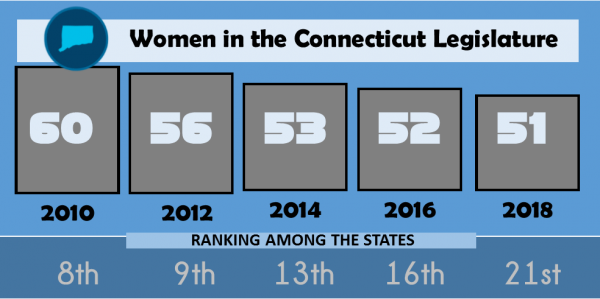
This year, the state legislature saw 42 women serving in the House (21 Democrats and 21 Republicans) and 9 women in the Senate (7 Democrats and 2 Republicans).  The total of 51 seats held by women, 27.3 percent of the 187 seats, placed Connecticut as one of 19 states between 25 and 34 percent.

Leading the nation were Arizona (40%), Vermont (40%), Nevada (38.1%), Colorado (38%), Washington (37.4%), and Illinois (35.6%).   Women make up 25.4 percent of all state legislators nationwide.
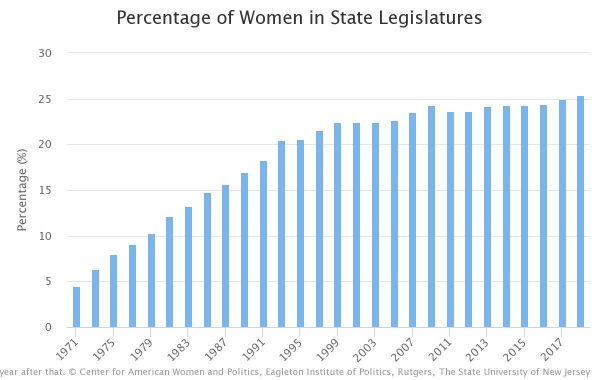
In 2010, there were 60 women in the Connecticut legislature, 52 in the House and 8 in the Senate.  Connecticut ranked 8th among state legislatures in the percentage of women, at 32.1 percent.

Connecticut’s place among the states continued to drop through the decade, from 8th in 2010 to 9th in 2012, 13th in 2014, 16th in 2016 and 21st in 2018.

PERSPECTIVE: Recruitment, Retention, and Reactivation of Connecticut's Hunters and Anglers

by William A. Hyatt R3, or recruitment, retention, and reactivation, is the newest buzz word being bantered about Fish and Wildlife Agencies. At first glance, R3 seems like nothing new. After all, it is just another way of saying that our agencies need to pay close attention to the ever-changing interests and behavior of our customers if we are to remain a vital force for conservation, hunting, and fishing through the 21st century. But, it is something new, really new.

While agencies like ours have always understood the need to recruit new sportsmen and women—witness our tremendously successful Conservation Education/Firearms Safety and Aquatic Resource Education programs—we have not historically recognized the importance of retaining and reactivating participants or understood the impact of “churn” on our customer base. Most of us have grown up thinking that the majority of hunters and anglers purchase a license each and every year. However, recent data have revealed this is simply not the case. In fact, participation rates of two or three years out of five are more the norm (this is “churn”) and many people stop buying a license at some point due to unrelated life events and simply do not return to the sport.

Why is this so important?

I’ve previously written about the amazing contributions hunters and anglers make in supporting conservation through the purchase of licenses and gear. By now, I hope all of Connecticut’s hunters and anglers know that 100% of the money they pay for licenses and permits comes back to our Agency and is used to fund natural resource programs. But, it’s not just about the money!

Conservation of our fish, wildlife, and natural landscape is a quality of life issue that affects not only us, but our children and all subsequent generations. Our collective ability to succeed in conserving critical habitat, public access for fishing and hunting, or just enjoying nature is a function of having both the financial resources and political will to get the job done and done right. Funding provided by sportsmen is our foundation and the large number of hunters and anglers, found across all walks of life in Connecticut, are the engine that makes all of this possible.

Sportsmen spend a huge amount of time in the woods and on the waters learning what they need to know to be successful. In the process, they absorb a great deal of knowledge on how natural systems work and develop an instinctive feel for what is truly needed to conserve fish and wildlife. Along with this comes a passion for wild places and, oftentimes, a lifelong commitment to hunting and fishing traditions and environmental stewardship. In short, these sportsmen become the public’s most knowledgeable, passionate, and effective conservationists. This is why our Agency has invested so deeply in conservation education, youth hunting days, pheasant stocking, trout parks, community fishing areas, free fishing days, and Connecticut Hunting and Fishing Day.

Let’s get back to R3 and the need to do even more.

Going forward to help motivate and inspire, we will make hunting and fishing information more convenient as we deliver interactive maps, posts on social media, and live stream about fish and wildlife (check out our Facebook page at www.Facebook.com/CTFishAndWildlife). We also will be emailing relevant news and information through monthly newsletters and exploring truly innovative methods for contacting and encouraging lapsed sportsmen to get back outdoors.

However, we cannot do this alone. To be successful, we need to call on each of you to be on the lookout for friends and family members who used to hunt and fish but no longer do. We need you to reach out to these folks and help them return to the outdoors. Often all that is needed is an invitation; your excitement and passion will carry the day. Please join me in making a pledge for 2018 to re-introduce someone to hunting, take a kid or a friend fishing, buy someone a license, or invite a nonmember to your club. You will be doing them a favor and also helping future generations and all of Connecticut in the process.

________________________

William A. Hyatt of Glastonbury is Chief of the Bureau of Natural Resources in the state Department of Energy and Environmental Protection.  This first appeared in the Connecticut Angler's Guide.  The Bureau can be reached at (860) 424-3010. The DEEP Bureau of Natural Resources celebrated 150 Years of Natural Resource Conservation in Connecticut in 2016.

Nuclear Attack on NYC Could Impact CT, Report Suggests

The illustration in a recent edition of New York magazine has drawn some attention in Connecticut.  Accompanying an article describing the anticipated aftermath in the tri-state region of a nuclear attack on New York City, the potential path of nuclear fall-out was shown to extend through Connecticut towns including Greenwich, Stamford, Wilton and others, reaching as far north as the town of Monroe. Within two hours of an attack on Times Square, the article described, a plume of radioactive fallout would “unfurl 60 miles beyond the city, lingering for weeks, contaminating food and water supplies.”

The article explains that “In the hours and days after a nuclear blast, a massive plume of fallout would unfurl past the city’s borders and up the Eastern Seaboard, scattering radioactive dust on everything in its path: people, homes, farms, animals, forests, rivers. The most radioactive region of the plume would reach its full length of 20 miles an hour after the explosion, exposing every unsheltered person in the area to toxic levels of radiation; if it were to spread north from Times Square, it would reach as far as New Rochelle. Within a day, this danger zone would shrink to about a mile in length. Within a week, it would have dissipated completely.

A much bigger but less radioactive region of the plume, called the hot zone, would reach its maximum length of 60 miles — extending, say, as far north as Monroe, Connecticut — two hours after the explosion. A week later, the hot zone would still extend 20 miles from the city, and it would take many more weeks for it to disappear altogether. Although radioactivity in the hot zone would likely be too weak to cause any acute symptoms of radiation sickness, it could still subtly damage the human body and increase the chance of cancer.

How far and in what direction a plume of fallout travels depends on the altitude of the mushroom cloud, as well as temperature, wind, and other meteorological variables. Within an hour of an explosion, FEMA’s Interagency Modeling and Atmospheric Assessment Center would begin to track the plume’s movement, providing updates and projections to federal, state, and local authorities. They would use the information to evacuate people in the opposite direction of the plume and warn people in the plume’s path to seek shelter and avoid consuming any exposed water or food.”

Nearly a decade ago, a New York Times story on the subject included this:  Suppose the unthinkable happened…Do not flee. Get inside any stable building and don’t come out till officials say it’s safe.”  That advice, the Times indicated, was “based on recent scientific analyses showing that a nuclear attack is much more survivable if you immediately shield yourself from the lethal radiation that follows a blast, a simple tactic seen as saving hundreds of thousands of lives. Even staying in a car, the studies show, would reduce casualties by more than 50 percent; hunkering down in a basement would be better by far.”

“We have to get past the mental block that says it’s too terrible to think about,” W. Craig Fugate, administrator of the Federal Emergency Management Agency at the time, told the Times. “We have to be ready to deal with it” and help people learn how to “best protect themselves.”

Connecticut's state website focuses on nuclear preparedness related to an emergency at a nuclear power plant in the state.  The Department of Emergency Management and Homeland Security site indicates "While the Dominion Energy- Millstone Station in Waterford is the main focus of emergency planning in Connecticut, the fuel storage site at the former Connecticut Yankee site in Haddam, CT and the Indian Point nuclear power plant in Buchanan, New York, are also included in Connecticut's radiological emergency preparedness and response program."

Communities near those sites are linked, and a calendar of upcoming training is provided.  The United Way also provides information related to evacuation and taking shelter on the agency's website. New Haven conducted an exercise of their host community reception center to prepare for the unlikely event of a nuclear release at the Millstone power plant in 2015; video here:  https://www.fema.gov/media-library/assets/videos/109671

(New York magazine illustration)


Power of Nature to Help Cities and Local Residents Being Revealed in Bridgeport

What would happen if ways to integrate nature into a major urban community were pursued?  In Connecticut, the largest city is Bridgeport, and the Connecticut chapter of The Nature Conservancy (TNC) has been undertaking an effort to find out. Nature offers a lot of benefits to communities, TNC points out. “Trees provide shade and help clean the air. Gardens absorb and filter water, which reduces flooding and runoff into nearby rivers. Healthy dunes and wetlands protect coastlines from storms.”  In addition, the organization points out, “nature can also transform the way people experience their neighborhood.”

With 70 percent of the world’s population predicted to live in cities by 2050, heat and air pollution constitute a major public health concern, TNC points out, underscoring the importance of the organization’s initiatives to plant trees in urban areas across the country, among a series of related undertakings.

“People are at the core of our efforts to identify how neighborhoods are addressing daunting challenges in this formerly industrialized city,” said Drew Goldsman, Urban Conservation Program Manager. “We want to partner with communities to implement natural solutions in Bridgeport that help both people and nature.”

Their Eco-Urban Assessment looked at areas in Bridgeport that have poor air quality, high risk of flooding, and limited access to nearby green spaces and layered it with data on income level, impervious surfaces and asthma rates. The team was able to pinpoint neighborhoods where trees, green stormwater systems and open spaces will make the biggest difference for people and nature.  Air quality and flood risk topped the list of most acute needs.

In collaboration with local partners, the Conservancy is supporting a neighborhood-led greening effort known as ‘Green Connections’ in Bridgeport’s East Side neighborhood. Creating a plan for ways natural resources can shape the future of the community while making immediate changes to the landscape —through tree plantings and green stormwater infrastructure projects— is one of the initiative’s main goals, along with empowering volunteer stewards living in the community to take ownership of these natural areas. All of this helps create safe spaces for the community to gather, provides cooler and cleaner air, and improves wildlife habitat in the city.

According to the Nature Conservancy, Bridgeport currently has a 19% tree canopy cover, for example.  If all open spaces, vacant lots and parking lots could be planted, the city would have a 62% tree canopy cover.  The ramifications would be substantial, impacting various health and quality of life factors.
“Healthier people, cooler temperatures in the summer, cleaner air, reduced flooding, more urban habitat, parks and forests, less sewage overflow, a clean Pequannock River a more resilient coastline and green jobs” are cited as potential benefits.

The national publication Governing pointed out last year that “Streets cover about a third of the land in cities, and they account for half of the impervious surfaces in cities. Impervious surfaces don’t allow water to soak through them, which means they can alter the natural flow of rainwater. City streets collect, channel, pollute and sometimes even speed along water as it heads to the sewers.”

Goldsman indicates that currently efforts are focusing on the city of Bridgeport, but the Eco-Urban Assessment model is available to urban communities that want a deeper understanding of where nature can bring solutions to some of the most pressing urban issues.

“With the Eco-Urban Assessment model, we’re able to help municipalities identify the places and ways we can work together to use nature to improve residents’ quality of life and build more sustainable communities,” said Dr. Frogard Ryan, Connecticut state director for The Nature Conservancy. “From the beginning, we wanted this to be a community-led and TNC-supported program. Residents help us identify areas of other focus that aren’t highlighted by the model and be sure our study reflects what people experience day-to-day.”

K-12 School District Regionalization May Do More Harm Than Good, Analysis Reveals

“Generalizations about regionalization oversimplify a complex topic,” according to a new report on K-12 School District Regionalization in Greater Hartford, which warns that “K-12 regionalization can actually increase costs and harm educational outcomes.” As some school districts in Connecticut have been considering regionalizing their K-12 education services as a way to reduce costs, the 23-page report prepared for the Hartford Foundation for Public Giving raises some red flags, noting that “policies that call for wholesale regionalization based on imposed criteria (e.g., minimum/maximum number of students) can have unpredictable, and often adverse, consequences.”

In an effort to get a clearer understanding of the potential educational and community impacts of school and district regionalization, the Hartford Foundation for Public Giving sponsored the comprehensive analysis to help inform those efforts gathering data on what is known about the effects of K-12 regionalization on education expenditures and educational achievement, based on recent empirical studies.

“The Hartford Foundation is committed to the availability of high-quality, impartial research,” said Scott Gaul, the Hartford Foundation’s Director of Research and Evaluation. “As policymakers continue to consider strategies to reduce the costs of government, the issue of regionalizing services continues to draw attention. This research is intended to provide a clearer picture on the potential benefits and challenges of regionalizing school districts in an effort to support a shared understanding and to support informed decision-making.”

K-12 regionalization generally includes combining school districts, boards of education, and central office staff. This can result in closing schools, eliminating teaching positions, reducing administrative staff, and increasing student-to-teacher ratios, among other consequences, according to the report.  Connecticut, like other New England states, relies mainly on municipalities to provide government services, including K-12 education, to its residents.  In 2017, there were 196 public school districts including town districts, charter school districts, regional districts, and regional education service center districts.

The review of the research, conducted by Connecticut-based Rodriguez Data Solutions, points out that policymakers often promote K-12 regionalization as a way to achieve cost savings, but often fail to consider the consequences for student educational achievement. The report reviewed initiatives to promote K-12 regionalization in several states including Connecticut, Maine, New York and Vermont.  Among the findings:

  • While there is no definitive answer on optimum school size, research on Connecticut suggests that a district with 2,500 to 3,000 students may be both cost-effective and foster educational achievement. This roughly matches the range suggested in research from other locations. In at-risk communities, research suggests that elementary school enrollment should not exceed 300 students, and high school enrollment should not exceed 500.
  • In rural communities, closing a town’s school can cause the social fabric of a community to unravel. Research also suggests that “impoverished regions often benefit from smaller schools and districts and they can suffer irreversible damage if consolidation occurs.”
  • The literature review suggests that deconsolidation of large school districts be considered as an option for cost savings.  In Connecticut, it is estimated that the total savings from the 129 smallest school districts would match the combined equivalent per-pupil savings from the three largest school districts.  Consequently, a significant reduction in statewide education costs requires reducing per-pupil spending in urban areas, not just in small rural districts.

Researchers found that “regionalization may lead to diseconomies of scale resulting from: higher transportation expenses because of longer bus routes, overall increases (leveling up) in staff salaries because of seniority and/or contract renegotiation, and increases in the number of mid-level administrators and administrative support staff.”

Warning of the perils of large, consolidated schools, the report also included the finding that “Students who are involved in extracurricular activities (e.g., band, sports, clubs) have higher graduation rates and it is widely accepted that participation in extracurricular activities decreases as enrollment increases.”

The report also provides a cautionary tale regarding demographics and the impact of school closing decisions:  “While it seems apparent that the closing of school buildings will reduce costs, savings are limited because there may not be buyers, and the facilities still must be maintained by the school district. In already struggling neighborhoods, these now empty school buildings (with boarded windows)

contribute to a downward economic spiral by attracting scavenging, dumping, drug users, and graffiti. The neighborhood children who previously attended the now closed school are then exposed to an increase in crime resulting from the blighted property.”

“Connecticut’s Black and Hispanic children,” the report adds, “are already disproportionately overexposed to crime in their neighborhoods.”

In addition, the report explains, “Students from advantaged (i.e., high socioeconomic status) households have similar educational achievement in both small and large schools. However, the situation is much different for students from low-income communities for whom “… smaller [school] size mediates the association between

socioeconomic status and achievement.” The potential for high educational achievement diminishes for at-risk students when they attend large schools that are disconnected from their communities.”

The report also included an update on the state’s student population.  From 2010-2011 to 2016-2017, the state’s public school enrollment dropped by 25,606 students – a decline in enrollment of 4.5 percent. The analysis found that “most Connecticut school districts have declining enrollments and it is more prevalent in rural areas.”

The report also cited a survey of Vermont voters, who expressed preferences for saving money and maintaining local control of local schools. “Vermont voters had not grasped that saving money may inherently include loss of local control,” the report indicated, concluding that “Vermont voters had conflicting goals, which could also be expected from Connecticut voters.”