Gerrymandering Lessens Compactness, Which Lessens Voting, UConn Study Finds
/The less geographically compact a district is, the lower the voter turnout. That’s the bottom-line finding of a study by a University of Connecticut political scientist, published in the June issue of Election Law Journal. The study suggests that gerrymandering – often criticized for skewing political representation to one party or the other – has additional ill-effects, including the act of voting itself.
 Using a dataset on the compactness of U.S. House districts—with multiple measures generated by geographic information system (GIS) analyses over two redistricting cycles, UConn Associate Professor Jeffrey Ladewig estimated the effects of congressional district compactness on electoral turnout. The conclusion: compactness matters. The study “Appearances Do Matter”: Congressional District Compactness and Electoral Turnout” was led by Ladewig.
“Districts that were less geographically compact had lower voter turnout – measured both from election data and individual survey data – even controlling for district demographic and election characteristics,” the Boston Globe reported in a brief news item about the study.
States determine their district lines for Congressional seats and state legislative seats every ten years, following the U.S. Census. The next Census will be in 2020, with district lines slated to be redrawn for the 2022 elections.
According to Governing magazine, states around the country have a range of criteria in drawing district lines, including: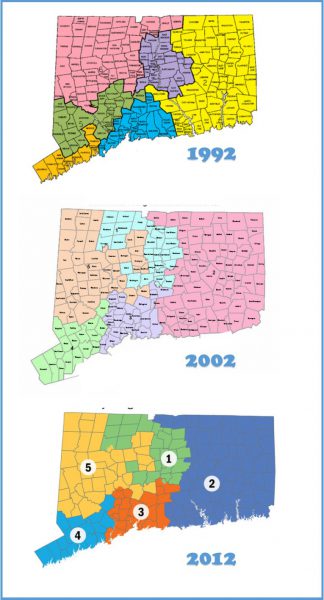
- Compactness: Having the minimum distance between all the parts of a constituency (a circle, square or a hexagon is the most compact district).
- Contiguity: All parts of a district being connected at some point with the rest of the district.
- Preservation of counties and other political subdivisions: This refers to not crossing county, city, or town, boundaries when drawing districts.
- Preservation of communities of interest: Geographical areas, such as neighborhoods of a city or regions of a state, where the residents have common political interests that do not necessarily coincide with the boundaries of a political subdivision, such as a city or county.
- Preservation of cores of prior districts: This refers to maintaining districts as previously drawn, to the extent possible. This leads to continuity of representation.
- Avoiding pairing incumbents: This refers to avoiding districts that would create contests between incumbents.
Connecticut has no guidelines or limitations in drawing Congressional District lines. (Although it does have a process.)
Jeffrey W Ladewig earned his Ph.D. from the Department of Government at University of Texas at Austin in 2002 and his B.A. from the Department of Political Science and the Department of Economics from the University of Wisconsin at Madison in 1993. He teaches courses on the U.S. Congress, the U.S. President, American political economy, and American political parties.
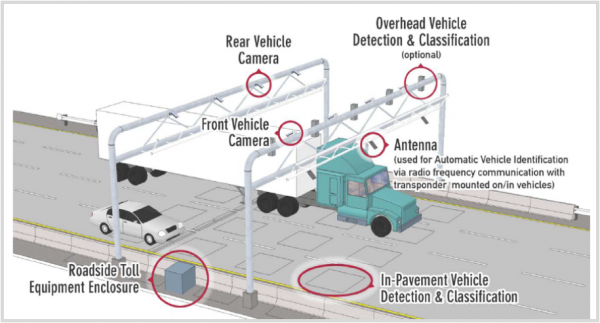
 The Indianapolis Star reported earlier this summer that the state signed a $9.6 million contract with HNTB Indiana Inc. to study the impact of tolling and provide project planning if the state chooses to move forward with tolling. The administration of Gov. Eric Holcomb is required to study tolling under a road-funding plan lawmakers passed in 2017, but a decision has not been made on whether the state will go forward with authorizing a tolling plan, according to published reports.


 In its 2018 Salary Guide for Accounting and Finance Professionals, Robert Half, a global staffing firm specializing in accounting and finance professionals, reports “There’s high demand for top talent in public accounting due to a severe shortage of skilled candidates…” Their “In-Demand Certifications” list puts “CPA” at the top.


 Atop the rankings in the pediatric specialty were Children’s National Medical Center (Washington, DC), Children’s Hospital of Philadelphia, Boston Children’s Hospital, Children’s Hospital Colorado, Cincinnati Children’s Hospital Medical Center, Rainbow Babies and Children’s Hospital (Cleveland), UCSF Benioff Children’s Hospital of San Francisco and Oakland, New York-Presbyterian Morgan Stanley-Komansky Children’s Hospital, St. Louis Children’s Hospital-Washington University, and C.S. Mott Children’s Hospital – Michigan Medicine (Ann Arbor).
 e, infection rates in the NICU and other data collected from a detailed U.S. News clinical survey of children's hospitals, produced 85 percent of each hospital's score. The other 15 percent reflects nominations from pediatric specialists and subspecialists who responded to surveys in 2016, 2017 and 2018 and recommended the hospital for serious cases in their specialty.


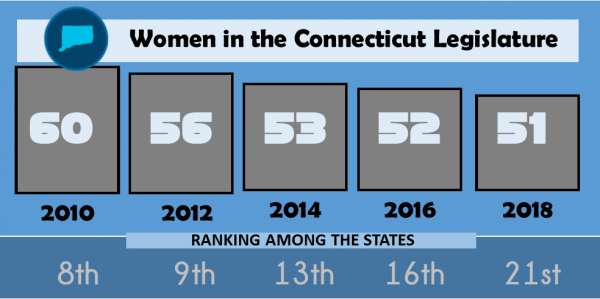 The 2018 election year has been widely declared the year of the woman in politics, a reaction to the MeToo movement and related issues that have risen to the top of many political agendas. It appears that Connecticut ballots may have a record number of women candidates in November, depending upon the outcome of the August 14 primaries in some legislative districts.
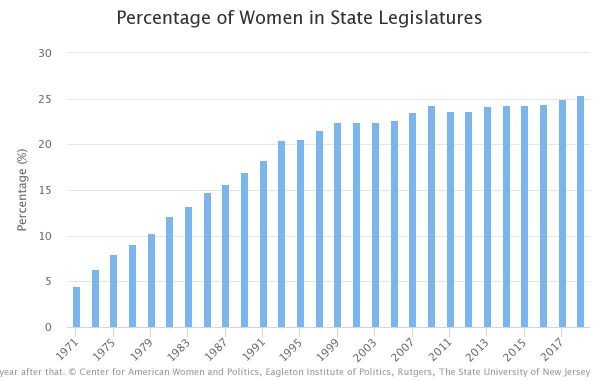
 Leading the nation were Arizona (40%), Vermont (40%), Nevada (38.1%), Colorado (38%), Washington (37.4%), and Illinois (35.6%). Women make up 25.4 percent of all state legislators
 Why is this so important?




 According to the Nature Conservancy, Bridgeport currently has a 19% tree canopy cover, for example. If all open spaces, vacant lots and parking lots could be planted, the city would have a 62% tree canopy cover. The ramifications would be substantial, impacting various health and quality of life factors.