4 Renowned CT Manufacturers to be Inducted into Hall of Fame; Timex, Cheney Brothers, Farrel, Handy & Harman to be Honored

Timex Group USA (Middlebury), Cheney Brothers (Manchester), Farrel Corporation (Ansonia), and Handy & Harman (Fairfield) will be inducted into the American Manufacturing Hall of Fame in Connecticut this fall, in the fifth annual ceremony. The American Manufacturing Hall of Fame (AMHoF) celebrates the innovative history of American manufacturing, raises funds for educational programs and promotes awareness of advanced manufacturing, which is critical to the economy.

The Hall of Fame is affiliated with the Housatonic Community College (HCC) Foundation in Bridgeport, which also serves as fiduciary.  BlumShapiro will serve as the Founding Platinum Sponsor of the ceremony for the fifth consecutive year. The 2018 AMHoF Induction Ceremony will take place on October 9 at the Trumbull Marriott.

The AMHoF has also announced that Robert Klancko is the recipient of its 2018 Leadership Award. Klancko has been a manufacturing leader in Connecticut’s manufacturing community for several decades. He has been a partner in his consulting firm of Klancko & Klancko LLC, and held key managerial positions for 20 years in the brass industry and another 15 years in the utility industry.
Timex began as the Waterbury Clock Company in 1854, and initially gained success with its dollar pocket watches. Renamed Timex in 1941, the renowned world-wide brand has its headquarters in Middlebury.  Cheney Brothers was a center of the silk industry in the late 19th and early 20th century in Manchester.  The 175-acre historic district in Manchester, includes over 275 mill buildings, workers houses, churches, schools and Cheney family mansions.

Founded in 1848, Farrel Corporation is based in Ansonia. During the American Civil War, they produced bayonets and cannon barrel.  Today, they manufacture process equipment for the plastics industry, and employ roughly 100 people.  Handy & Harman leveraged an early market advantage in silver bullion through acquisitions to provide not only bullion but alloys and prefabricated silver bands, wires, and moldings, as well as reclamation services to leading jewelers.

Klancko has contributed tirelessly to the field of technical education since 1972. He served as an educator at both the former Hartford Graduate Center and Waterbury State Technical College, and more recently at Mattatuck Community College. More recently, Klancko worked to educate educators in the Materials Manufacturing Summer Teachers' Institute at Southern Connecticut State University. He has also chaired and co-founded Environmental Studies and Materials Technology Advisory Committees at a number of state public and private colleges.

2017 inductees into the American Manufacturing Hall of Fame were Better Packages, MacDermid Performance Solutions, R.C Bigelow, Stanley Black & Decker and Ulbrich Stainless Steels & Specialty Metals. In 2016, the inductees were Bead Industries, The Benedict & Burnham Mfg. Co.; C. Cowles & Co., Chance Vought & Platt Brothers & Co.

The manufacturing firms added to the Hall in 2015 were Bridgeport Brass, Moore Tool, Inc. and Wheeler & Wilson/Singer, from Bridgeport, and A.C. Gilbert, Brewster Carriage and Auto and Sargent Co., from New Haven.  In the inaugural year of the Hall of Fame, the inductees were Bridgeport Machines, Bullard Machine Tool, Hubbell, Inc., Sikorsky Aircraft Corporation and Warner’s.

The American Manufacturing Hall of Fame is comprised of “a group of passionate citizens and manufacturers who believe it is important to appreciate and understand the proud history of American Manufacturing as a catalyst to take advantage of the distinct opportunities that advanced manufacturing can bring to American lives today and in the future.”  It was launched in Bridgeport at HCC, because the city was a “hub of manufacturing leadership and innovation in America for over a century, the organization’s website points out.

The site highlights that the first practical submarine, the first practical carbon electric light bulb filament, the modern automobile assembly line and the first robot all have their roots in, or were invented, in Bridgeport.

Any company engaged in manufacturing for at least ten years can be considered for induction. Companies considered have made “significant contributions to the field of manufacturing either by innovation, the improvement of a manufacturing process or by creating a product that has advanced humankind.”

Founding sponsor BlumShapiro is the largest regional accounting, tax and business advisory firm based in New England. The HCC Foundation was founded in 1990 to provide financial assistance to the College and its students beyond the fundamentals provided by the State of Connecticut.  Tickets to the induction ceremony event are now available.
2017 Was A No-Growth Year for CT Hotel Industry; 2018 Brings Lower Rates

The Connecticut Lodging Association reports that the state’s hotel and lodging occupancy numbers were flat in 2017, with “little to no growth.”  The state’s occupancy numbers have “considerable room to grow” this year, in comparison to the New England Market.  The membership association also notes that one of the traditionally strongest regions of the state, the Stamford market, declined in 2017, while the neighboring New York market remained stable. “The Stamford market historically has the highest occupancy numbers in Connecticut,” officials point out, noting that “with business travel, leisure and New York City overflow, this market is generally stable and measure equal occupancy to New England’s numbers.  That wasn’t true in 2017, and they warn that “Stamford’s declining trend may be a forecast for other Connecticut markets.”

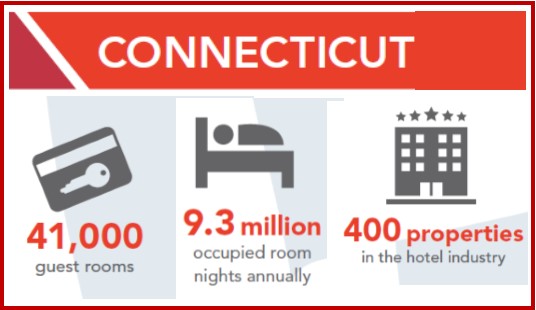
Overall, data for Connecticut compiled by the American Hotel & Lodging Association indicate that the state’s 400 properties in the hotel industry generate 55,000 hospitality jobs and 27,00 hotel hobs, which result in $4.4 billion guest spending at hotels, local businesses and on transportation.  The industry contributes $5.1 billion to GDP.

Connecticut has the highest combined lodging and sales tax in the nation at 15 percent, according to HVS Convention, Sports & Entertainment’s most recent state-by-state study in 2017, one of just five states in double digits along with Maine, Hawaii, Rhode Island and New Jersey.

Adding in local lodgings taxes in many cities nationally — Connecticut law does not allow it — 34 cities have higher combined rates than in Connecticut, HVS determined, none in the Northeast. St. Louis led the nation in 2017 at nearly 18 percent, with New York City highest in the Northeast with a 14.75 percent rate that is only a fraction below that of Connecticut, Hearst newspapers recently reported.

Earlier this month, a survey by BostonHotels.org found that Hartford and Stamford hotels offer the lowest rates for travelers in New England, with hotel stays averaging $107 per night in the Capitol City and $126 in Stamford. Among the other New England cities with low hotel rates are in North Conway, N.H. ($117), Groton ($119), and Lincoln, N.H. ($124).

The survey reviewed hotel rates at 30 popular destinations in New England during August. Hotels in New Haven ranked 19th (most expensive in Connecticut) with rooms averaging $174 a day and Mystic at 21st with rooms costing $168.

The most expensive in New England?  Martha's Vineyard, Mass. ($362), Kennebunkport, Maine ($347), Chatham, Mass. ($324), Portland, Maine ($294) and Provincetown, Mass. ($284). Boston ranked 9th, at $224.


39 CT Companies Among 5,000 Fastest Growing in U.S.: Inc.

A total of 39 Connecticut companies are among the 5,000 fastest-growing private companies in America, according to the 2018 ranking published by Inc. magazine. Leading the way are Southbury-based Current Staffing Solutions (#133), InGenius Prep (#657), a New Haven business, ONE SOURCE Companies of Wallingford (#824) and Votto Vines Importing (#911) headquartered in Hamden. Stamford Technology Solutions (#919) was the only other Connecticut-based company to earn a spot in the top 1000.

Collectively, the companies on this year’s list, according to Inc., amassed $206.2 billion in revenue in 2017, up 158 percent from $79.8 billion in 2014. Last year's list included 34 Connecticut companies.

No company on the 2018 Inc. 5000 list has grown by less than 50 percent over the past three years. To make the even more exclusive Inc. 500 list this year – as one Connecticut business did - a company had to grow by more than 1,000 percent.

Only about 12 percent of American companies achieve one-year revenue growth of 25 percent or more, according to Inc., yet those are the companies that are responsible for half of all jobs created.

Companies on the 2018 Inc. 500 were ranked according to percentage revenue growth from 2014 to 2017. To qualify, companies must have been founded and generating revenue by March 31, 2014. They must be U.S.-based, privately held, for-profit, and independent--not subsidiaries or divisions of other companies--as of December 31, 2017.

Bill Evans is President of Current Staffing Solutions, an industry leader offering a full variety of staffing options.  The company was founded in 2012.  The company website notes that “as a Disability Owned Business, you will find we are not your typical recruiting agency.” Evans was diagnosed with Early Onset Parkinson's Disease.  The company’s 3-year growth, according to Inc.: 2,987 percent.

The goal of InGenius Prep is to “get you in the school of your dreams, and we have a spotless track record.”  The company’s website indicates that the company is led by “Admissions Experts - Former Deans of Admissions and Grads of Top Universities - who will bring your dream schools into reach.”

Among the 39 Connecticut companies, the largest employee growth was at Inspira Marketing, a Norwalk-based “experiential marketing agency that specializes in forging connections between brands and consumers,” which added 631 jobs.  The top revenue generator among the companies based in the Nutmeg state was Carla’s Pasta, with $116.5 million in revenue in 2017.

A total of 24 Connecticut companies earned a slot in the first 3,000: Current Staffing Solutions (133), InGenius Prep (657), ONE SOURCE Companies (824), Votto Vines Importing (911), Stamford Technology Solutions (919), Julia Balfour (1129), Inspira Marketing (1180), MediaCrossing (1189), The Pi Group (1196), GEM Advertising (1258), Port One (1562), Port One (1562), Laurel Road (1801), Alliance All Trades (1919), The Lockwood Group (2042), Health Products For You (2043), Leap the Pond (2333), northeast Private Clint group (2598), The Junkluggers (2743), NEOS (2863), Buyers Edge (2841), Avanta Systems USA, (2897), Charles IT (2934) and i2e Consulting (2975).

The other companies from Connecticut among the top 5,000 are: IMPACT Branding & Design (3127), Metropolitan Interacrtive (3194), Framework Solutions (3216), heartsmart.com (3258), Choice Merchant Solutions (3343), Bizzmark (3693), CME Associates (3745), Kyber Security (3832), Torque Technologies (4451), Carla'sPasta (4567), Frsh Green Light (4596), FCP Euro (4750), Fosina Marketing Group (4840), SCIO Health Analytics (4908), Strategic Sales (4959), and Mediassociates (4979).


(Note:  a previous version of this story inadvertently indicated 59, rather than 39, Connecticut companies, although the list of companies correctly included 39.)


PERSPECTIVE - Both Sides of the Wall: What Being in Mexico Taught Me

by Skylar Haines She loves nonfiction books about animals. She has a group of friends. She laughs and cries. She does her homework and sometimes struggles with silent letters on spelling quizzes. She tucks her hair behind her ears when trying to concentrate. She watches TV before her chores are done.

He plays soccer in the streets and stays out past his mom's calls to come inside for dinner. He knows everything about music, but can't wrap his mind around grammar and sentence structure. He sneaks dessert before dinner. He has a math teacher who changed his life just by believing in him. He makes jokes and gets angry. He takes the long walk home on nice days.  They could be my brother or sister. They could be the kid who sits next to you in class and shares their gum. They could be the neighbor that you drive by each morning. They could be a friend. They could be your child.

Yet, their streets look different than ours, with cracked sidewalks and stray dogs. Homes are turned into storefronts and host traditional embroidery, dulce de leche caramels, and cold grapefruit soda. People sit on the porch and call out to you as you make your way to the line of buses with people going to different jobs and different streets. No matter what street you're on, you'll see crucifixes and Virgin Mary portraits, food carts and hard-working owners, and strangers welcoming strangers with "Bienvenidos" and smiles.

Their schools look different than ours, with torn pages escaping their notebooks, desks missing a leg and chairs that sink too low, broken pencil stubs, and faded writing pressed into the old whiteboards. The bare courtyard has no toys and cracks all along the middle so they stumble while they run. The plaster of the walls peels slowly and teachers try to make do with a few pieces of colored paper and an eraser. Lunch stains are deep in the wrinkled uniform that hasn't been washed since the students started sleeping at the Salvation Army during the week, just so they could get to class consistently.

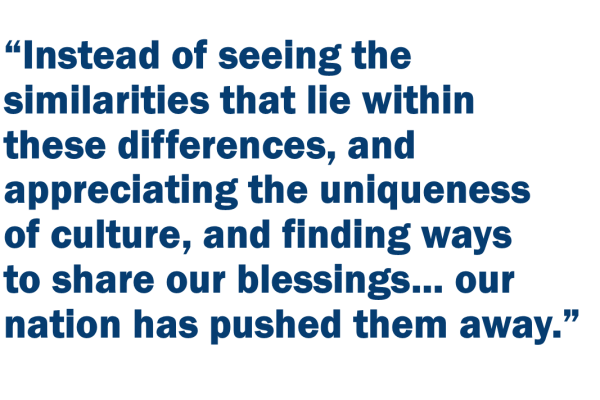
Instead of seeing the similarities that lie within these differences, and appreciating the uniqueness of culture, and finding ways to share our blessings… our nation has pushed them away. They have become a "them", divided from our population out of fear of these differences and blindness to the multitudes of commonalities. If you could talk to Reyna about her dream of being a doctor and how much she loves learning new words, if you could talk to Munir about his favorite songs and how he tells jokes to make friends… then you would see the similarities we share, and yet how many differences they face. However, do not be mistaken, this doesn't stop them.

On our last day at the Serapio School, a government school in the impoverished community, my Mother and I, volunteers teaching English, had to explain that we were leaving. Try explaining that to people who became familia in just one week. As I stumbled through a goodbye that day, Estefania, a fourth-grade student, reached into her Hello Kitty purse and placed something in my palm. A single confetti butterfly, smaller than a penny, that sparkled when it caught the sunlight. Holding that gift and looking at the school's empty concrete courtyard, the streets and people that occupy them, the faces of broken children sitting in disheveled desks- it was a piece of hope, and she knew that.

She didn't have to say a word at that moment, the butterfly was a tangible reminder of all they had taught me. They might remember a few English words or have held onto their pencils and eraser caps from the time I was there, but they taught me something I have held onto for much longer. The children I know find beauty in everything, despite the hardships they deal with each day, and every time I look at that butterfly I am reminded of their resiliency and resounding hope.

That's why I know they can do beautiful things. Being given so little- one ripped uniform, broken pencils without a sharpener, expo markers that have been dry for years- and still holding warmth for others and wonderful visions of a future through it all, cherishing the tiny butterflies in life, that is resiliency. I can only imagine what they could accomplish with just a little bit of support.

In fact, I know. My foundation, "Peace, Love and Art: Hope for the Children of the Serapio School in Mexico" provides creative therapies like art and musical instruments and classes for all the students where they express their culture, backgrounds, and dreams. We also raised money to install a computer lab which allows them to learn and grow. What I am most excited about though, is the letter exchange program.

This school year students from Hebron, Connecticut will be emailing with the students I taught in Serapio, Mexico. This cross-cultural understanding is vital in our world today, especially in younger generations, in order to ensure collaboration, empathy, and peace in our global community in the future. Also, children who have expanded worlds through travel, cultural research, and outreach have more perspective and a better insight into the world and our human interactions… I can truly attest to this. This emphasis on humanity as children reach over divisive boundaries that have been set for centuries, is more important now than ever.

Over 11.6 million Mexican immigrants live in the United States currently. Yet, national dialogue that fuels schismatic rhetoric isolates these people… the people I know, the children I taught, the faces that mean more to me than "Mexican" now. We see this dialogue leading directly to policy under the new administration - the administration that was elected while I was in a nation stereotyped and degraded throughout their campaign.

If you could see them the way I see them, as hard-working individuals that will do anything to provide for their family (like many of us would do), as welcoming neighbors who will open their doors to anyone...and as people. Not Mexicans, not drug-traffickers, not prostitutes, not foreigners, not aliens, not "them"...humans, people, children. These 11.6 million US citizens have names, stories, hopes, and families. The 303, 916 people who were apprehended at the Mexican border in 2017 have names, stories, hopes, and families. As do we.

A line drawn by hands who fear a color other than their own is not a line that should dictate who is human and our hearts should cross that border if our bodies will not. And whenever I see faces of children being torn away at the borders, people being turned away and unwelcome… I see the children I laughed with and learned with in Mexico. The same people who never isolated me for being an American, even on that Tuesday when the whole world woke up to a new president who had called the people I lived with "enemies", "criminals", "terrorists", and "rapists".

I only hope that in the future if we are ever faced with having to flee our nation, that Mexico will forgive us and not treat us with the same degradation and disdain. If we do not extend the decency of providing asylum and even treating them with respect and compassion, then they will never do the same for us. Or they might, because that is how they treat people in Mexico, no matter what. Their culture could teach us a thing or two.

When I share glimpses about my journey in Mexico, my experience of the culture, and all the people who touched me while there, I generally get asked one big question: "Are you afraid of the wall being built?!"

Well, here's my answer: the wall has been up for a long, long time. The real question is, when will we start breaking it down?

________________________________

Skylar Haines is a senior at RHAM High School in Hebron and the founder of “Peace, Love and Art: Hope for the Children of the Serapio School in Mexico”.  She is an active volunteer and advocate for those who are often not given a voice or platform. Her work was recognized by the World Affairs Council of Connecticut, where she received the Global Engagement Award in 2018. She is also the director, reporter and writer of the program “Speaking Through Stories” on the Community Voice Channel in Bolton. Skylar hopes to pursue a career in broadcast journalism that will encourage open dialogue as well as share people’s unique stories and perspectives.


New $1 Coin Series to Be Produced by U.S. Mint; CT’s Himes, Murphy Advocated for Innovation – and CT Company

American innovation is about to be highlighted by the U.S. Mint, but don’t expect to see the results in your loose change. The American Innovation $1 Coin Act will launch the newest numismatic coin program of the United States Mint later this year. The Mint will soon produce and sell $1 collector coins in recognition of American innovation and significant innovation and pioneering efforts of individuals or groups from each of the 50 States, the District of Columbia, and the five U.S. territories.  The new program – passed by Congress and signed into law this year - calls for the minting and issuance of non-circulating American Innovation $1 coins.

The legislation was initially proposed by U.S. Rep. Jim Himes of Connecticut’s 4th District, and in the Senate by Connecticut U.S. Sen. Chris Murphy.

The program’s duration is a 14-year period that begins January 1, 2019.  The coins are to be issued in the order in which the state or territory ratified the Constitution or were admitted to the Union. The law also authorizes a 2018 introductory coin which will be minted and issued in the latter part of this calendar year.

When the bill passed the House, Himes said: “This bill will support jobs and the industry around collectible coins, including here in Connecticut, all without costing taxpayers at all.” Murphy added: “Our country was built on innovation and entrepreneurship, and what better way to celebrate it than through a program that creates jobs and reduces the national debt.”

He noted that the proposed coin series would also support local jobs at Norwalk-based MBI Inc., one of the leading commemorative coin companies in the country.

The introductory coin will bear an obverse common to all coins in the program. It will consist of a likeness of the Statue of Liberty, and the inscriptions of “$1” and “In God We Trust.” The reverse of the introductory coin will be inscribed with “United States of America” and “American Innovators,” and it will include a representation of President George Washington’s signature on the first U.S. patent. The inscription of the year of minting or issuance, mint mark, and “E Pluribus Unum” will be edge-incused into all coins.

American Innovation $1 coins, to be issued at a rate of four new coins per year, will bear a reverse image or images emblematic of a significant innovation, an innovator, or a group of innovators from each of the 50 states, the District of Columbia, and the territories of the United States.  Published reports indicate that the $1 coins would sell for more than face value — up to $1.32 — providing a healthy profit for the federal government since the coins cost less than 35 cents to make.

“Americans tinkering in the shed, programming in the garage, and growing big ideas from humble roots have always had great impact on our economy and future,” added Himes. “We can honor them, inspire a new generation of entrepreneurs and scientists, and help the economy with this coin series.”

MBI markets a wide range of historic coinage, like rare silver dollars and foreign coins from antiquity, according to the company website.  The company also capitalizes on the newly minted designs in circulation, and has already begun marketing the new state innovation dollar series to collectors.  The coins offered by the company, through PCS Coins, would be “protectively encased” in custom-designed “collector panels” prepared for placement in albums.  The coins will also be available from numerous other sources, but will not be issued by the U.S. Mint for general circulation.

The company’s publicity suggests that the Connecticut coin would include a back design honoring the state’s contribution to American Sign Language, but it is unclear if that decision has yet been made.  The company’s coin designs are shown on marketing materials “for illustrative purposes only.”

According to the legislation, the Secretary of the Treasury will select the designs after consultation with each Governor or other chief executive and the U.S. Commission of Fine Arts; and review by the Citizens Coinage Advisory Committee.

Congress created the United States Mint in 1792, and the Mint became part of the Department of the Treasury in 1873. As the Nation’s sole manufacturer of legal tender coinage, the Mint is responsible for producing circulating coinage for the Nation to conduct its trade and commerce. The Mint also produces numismatic products, including proof, uncirculated, and commemorative coins; Congressional Gold Medals; silver and bronze medals; and silver and gold bullion coins. Its numismatic programs are self-sustaining and operate at no cost to taxpayers, according to the Mint.

Avon Library to Explore First Amendment, Freedom of the Press

Thomas Jefferson’s famous quote, “our liberty depends on the freedom of the press, and that cannot be limited without being lost,” is the centerpiece of a lecture series hosted by the Avon Public Library examining freedom of the press in America’s democracy. Anti-media rhetoric from President Trump, which was a constant during his campaign and since, has spurred interest in the topic.  The discussions in Avon, which are free, will be led by local educators and historians and continue into the fall.

Upcoming sessions are:

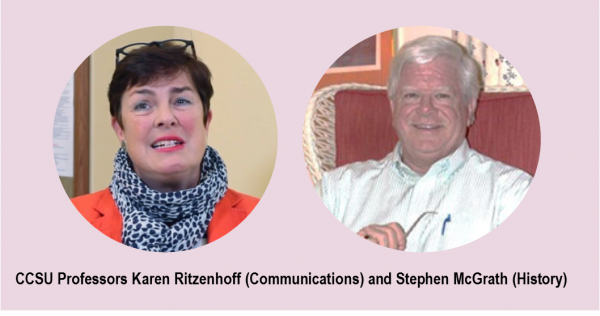
Discovering Katherine Graham  - Wednesday, August 15, 2018, 2:00 pm:  This program will consider relevant sections of Katherine Graham’s Pulitzer Prize winning biography, Personal History (1997) alongside the film adaptation, The Post . It will focus on Graham’s representations of the Newspaper Guild and the pressman’s strike, the Pentagon Papers, the Watergate Affair, and the Vietnam War in light how The Post depicts the struggle to uphold the principles of journalistic integrity when faced with adversity.   The literature discussion will be led by Aimee Pozorski, CCSU English Department; film discussion will be led by Dr. Karen Ritzenhoff, CCSU Communication Department.

“We Hold These Truths”: The Declaration of Independence; A Single Page that Changed the World - Tuesday, August 21, 2018, 2:00 pm:  An interactive and illustrated discussion about the events surrounding the adoption of the Declaration of Independence by the Second Continental Congress will be led by Bev York, Education Director for the Windham Textile and History Museum.  Attendees are asked to review the declaration of Independence prior to the session.

The Bill of Rights for High School Students - Wednesday, September 12, 2018, 3:00 pm:  What can students say and do to exercise the First Amendment right of free speech and freedom of religion in schools?  How has the Supreme Court ruled on these issues, and what avenues of redress are open to students if they think that their rights have been violated?  These and other questions will be explored in this session, led by Stephen McGrath, CCSU History Department.  It is geared for teens, but attendance is not limited.

The Popularity of Alexander Hamilton - Thursday, September 13, 2018, 3:00 pm: An illustrated talk about the inspiring story of the Alexander Hamilton, and his contributions, struggles, and tragic death.  After years of being perceived as having only a supporting role, Hamilton’s star has risen, confirming his belief that “Those who stand for nothing fall for anything.” The discussion will be led by Bev York, Education Director for the Windham Textile and History Museum.


Social Media, the Press, and Us - Monday, September 17, 2018, 6:30 pm:  The everyday reality of media use around the globe is changing rapidly due to the proliferation of smart phones, tablets and multiple screens that allow access to, and immediate dissemination of, the news. This talk will focus on the way social media is not only shaping our human relationships in a digital age but also our understanding of the world around us. How does user-generated content allow for new participatory energies to develop while also deeply affecting cultural identities and generating new types of intimacies. Lecture and discussion will be led by Dr. Karen Ritzenhoff, CCSU Communication Department.

A full description of the upcoming lectures is available, and the library also has resources available through their website, at www.avonctlibrary.info.


Girl Scouts Releases 30 New Badges to Promote Leadership, Prepare for Career Paths

Girl Scouts of Connecticut and Girl Scouts of the USA has unveiled 30 new badges exclusively for girls ages 5–18 that not only enhance the “one-of-a-kind Girl Scout experience,” but also address some of society’s most pressing needs, officials announced.  The new badges will reflect achievements in areas including cybersecurity, environmental advocacy, mechanical engineering, robotics, computer science, and space exploration.  It is the largest number of new badges to be simultaneously announced in recent memory. “Because of Girl Scouts and its safe, all-girl space, girls develop important skills including confidence and perseverance and set themselves up for success and to take action for a better world,” said Girl Scouts of Connecticut CEO Mary Barneby. “Today’s youth are more vocal than ever about the change they want to see, and Girl Scouts are the most equipped with the skills needed to make a real impact.”

Girl Scouts of Connecticut includes over 41,000 members, including girls and adults.  The new programming for girls in grades 6–12 includes:

  • Environmental Stewardship badges, GSUSA’s first-ever badge series focused on environmental advocacy. Girls in grades 6–12 prepare for outdoor experiences and take action on environmental issues. Although Girl Scouts have been advocating for the environment since the organization’s founding 106 years ago, these badges are the first to specifically prepare girls to be environmental advocates who address problems, find solutions, and protect the natural world (funded by the Elliott Wildlife Values Project).
  • Badges that teach girls how to program, design, and showcase robots, completing the suite of Robotics badges GSUSA first introduced for grades K–5 last year.
  • The College Knowledge badge for Girl Scouts in grades 11 and 12, the first badge completely dedicated to college exploration. By showing girls how to research the admissions process, financial aid, and other factors, the badge fills a specific need that girls asked for—and that many do not have support for outside Girl Scouts. 
  • Two Girl Scout Leadership Journeys: Think Like a Programmer (funded by Raytheon) provides a strong foundation in computational thinking and the framework for Girl Scouts’ first ever national Cyber Challenge, coming in 2019. The Think Like an Engineer Journey exposes girls to design thinking to understand how engineers solve problems. As with all Leadership Journeys, girls complete hands-on activities and use their newly honed skills to take action on a problem in their community. The programming aims to prepare girls to pursue careers in fields such as cybersecurity, computer science, and robotics.

Surveys indicate that 76 percent of women today wish they had learned more about leadership and had more leadership opportunities while growing up.  That number indicates  how imperative it is for girls and volunteers to join Girl Scouts, officials point out.  The KPMG Women's Leadership Study of more than 3,000 professional and college women shows that early exposure to leadership has a significant impact on a woman’s perceptions of her ability to lead.

Girls in grades K–5 can now earn badges in:

  • Environmental Stewardship, through which girls learn how to respect the outdoors and take action to protect the natural world (funded by the Elliott Wildlife Values Project).
  • Cybersecurity, introducing girls to age-appropriate online safety and privacy principles, information on how the internet works, and how to spot and investigate cybercrime (funded by Palo Alto Networks).
  • Space Science, enabling girls to channel their inner NASA scientist as they learn progressively about objects in space and how astronomers conduct investigations. (funded by NASA’s Science Mission Directorate and led by the SETI Institute).
  • Mechanical Engineering for Girl Scout Juniors, through which girls in grades 4 and 5 design paddle boats, cranes, and balloon-powered cars, learning about buoyancy, potential and kinetic energy, machines, and jet propulsion. Following last year’s introduction of Mechanical Engineering badges for girls in grades K–3, the addition of these badges for Girl Scout Juniors means that all Girl Scouts in elementary school can now have hands-on engineering experiences.

Content collaborators include Connecticut Science Center, Sikorsky, SWE (Society of Women Engineers), Discovery Museum, New York Academy of Sciences, NASA, Random Hacks of Kindness, The Maritime Aquarium, and Project Oceanology.

https://youtu.be/OSgvY6XCd2g

Transportation Infrastructure in CT Among Nation's Worst; Including Structurally Deficient Highway Bridges

When the Mianus River Bridge on Interstate 95 in Greenwich collapsed 35 years ago, killing three motorists and putting an unprecedented focus on road and bridge infrastructure in Connecticut, it was apparently not preceded by public warnings about the poor condition of the state’s roads and bridges. Today, the warnings are abundant, in Connecticut and elsewhere, including a new ranking which underscores that New England and the Northeast are the epicenter for transportation infrastructure in need of improvement.

The latest comes from a ranking developed by CNBC, which found that 73 percent of Connecticut roads are in bad shape, giving the state a grade of D, while noting that nearly 8 percent of Connecticut's bridges are deficient.  Data from the American Road & Transportation Builders Association (ARTBA)  earlier this year indicated that 332 of the state’s 4,238 bridges were deemed deficient, six fewer than the previous year.    

Connecticut is not the only state in the region with acute infrastructure problems in need of costly solutions.  From the bottom up, the states ranking lowest in the analysis are Rhode Island, New Hampshire, Maine, Connecticut, Maryland and West Virginia (tie), New York, New Jersey, Massachusetts and Mississippi.

The CNBC report said of Connecticut:  “The infrastructure situation in the Nutmeg State is so bad, you could say Connecticut is moving backward. With the state facing a fiscal crisis, Gov. Dannel Malloy had to cancel $4.5 billion in transportation projects last year, proposing instead to restore tolls to the state’s highways for the first time in more than 30 years. That idea, so far, has gone nowhere. As politicians continue to debate, Connecticut roads continue to deteriorate.”

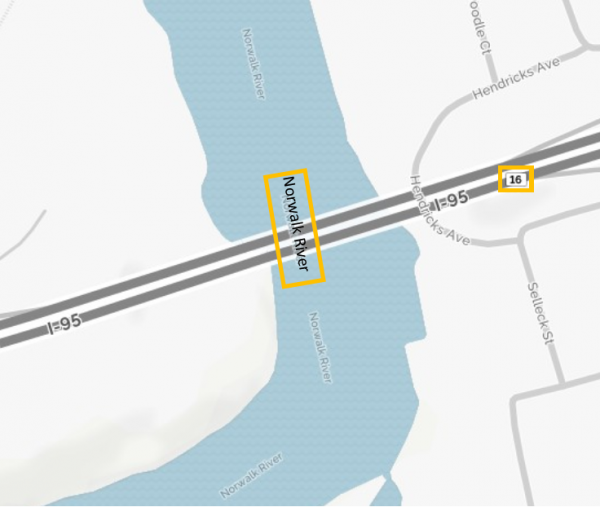
According to data published by ARTBA, Connecticut’s most traveled structurally deficient bridge – and the 60th most traveled structurally deficient bridge in the nation – is on I-95 in Norwalk, over the Norwalk River at Hendricks Avenue, between exits 15 and 16.  Additionally, highway bridges in New Haven, Fairfield and Hartford are also among the 110 most highly travelled and structurally deficient in the United States, the ARTBA indicates. 

The Connecticut Business and Industry Association has noted that the state's Special Transportation Fund faces insolvency by 2020—despite Connecticut having the seventh highest gas taxes in the nation, adding that this fall, voters will consider a constitutional amendment creating a lock box to protect dedicated transportation funding from being diverted to other uses.

According to Ballotpedia, the measure would require that all revenue placed in the state's Special Transportation Fund (STF) be used for transportation purposes, including the payment of transportation-related debts. The state legislature would be prohibited from spending the fund on non-transportation purposes.

The STF is funded by the motor fuels tax, motor carrier road tax, petroleum products gross earnings tax, certain motor vehicle receipts and fees, motor vehicle-related fines, and a portion of state sales tax.

The top five states with the best transportation infrastructure, according to the CNBC analysis, are Texas, Indiana, Georgia, Ohio, and Tennessee.


Study: Working-Class Candidates Less Likely to Run in Public Financing System

A new academic study has found that working-class first-time candidates for the Connecticut legislature became rarer after the state enacted public campaign financing, when compared with candidates in neighboring Massachusetts and Rhode Island. The study, by a Harvard University researcher, found that working-class candidates in Connecticut were less likely to qualify for the state’s public financing for candidates, apparently because of the requirement to raise a large number of small-dollar private contributions to qualify for public financing.

The findings demonstrate that when public financing is available, fewer low socio-economic status candidates run for state legislative office, and “those who do run are not more likely to win and are less likely to utilize public financing.”

The study’s author, Mitchell Kilborn, is a PhD candidate at Harvard University’s Department of Government concentrating in American Politics. His research focuses on inequality in political participation and the interaction between commercial activity and political behavior.  The study was published in the journal State Politics & Policy Quarterly last month.

Candidates running for the office of Governor, Lieutenant Governor, Attorney General, Secretary of the State, State Comptroller, State Treasurer, State Senator or State Representative can participate in the state’s Citizens Election Program. To participate, candidates must agree to abide by certain requirements, including strict contribution and expenditure limits and mandatory financial disclosures.

Candidates must raise an aggregate amount of small-dollar monetary contributions from individuals (“qualifying contributions”) between $5 and $100 in the case of statewide office candidates and between $5 and $250 in the case of General Assembly candidates.

PERSPECTIVE: Homelessness at State Universities Hidden in Plain Sight

The CT Youth Count! is part of a statewide effort to better understand and end youth homelessness by 2020. For the past three years, the Connecticut Coalition to End Homelessness has led this data-gathering and awareness-raising census in which teams of youth and volunteers survey young people in cities and towns, rural areas, within youth-serving organizations, in schools, and at local “hotspots” to collect information on their housing status.

Youth are not identified by name, but the count is an opportunity to gauge how many youth face housing insecurity and homelessness and to share information about available services. The Youth Count is an opportunity for communities to work toward a quicker system of identification when a student is struggling with a housing crisis.

Linkages to services to address acute instances of homelessness were established during the count. The data from the count resides at CCEH to analyze and share with the wider community, state, and federal partners. (The full Youth Count report can be found on the CCEH website, here.)

In the Connecticut State Colleges and Universities (CSCU) system, unstable housing - or the lack of housing altogether – is a barrier to academic success and stability for many students. Faculty, counselors and deans report that students are living in cars and “couch surfing” at friends’ or relatives’ homes while, at the same time, they are trying to attend college because they know that education is their path to a better future. During Town Hall meetings across the state during the 2016-17 academic year, CSCU President Ojakian was approached by many students who said that they were homeless and needed additional support.

CSCU partnered with the Connecticut Coalition to End Homelessness (CCEH) to address this significant barrier to student success. A forum was held at Manchester Community College on September 15, 2017 to address this issue, along with mental health and other needs faced by CSCU students. Several CSCU institutions attended, including Norwalk Community College and Central Connecticut State University.

As a follow-up to that forum, Vice Presidents and Deans of Students Affairs, along with the system office, the Connecticut Coalition to End Homelessness (CCEH) and others, have been exploring how to get more accurate data concerning homelessness and housing insecurity and how to implement a Single Point of Contact (SPOC) system to provide a more comprehensive, consistent and trackable response to homeless students.

CSCU agreed to have 16 institutions serve as sites for conducting the Youth Count survey from January 24 – 31, 2018 (Charter Oak State College did not participate because it is a fully online institution.). Because the Youth Count focuses on youth age 24 and under, the survey instrument was modified to capture CSCU students over the age of 24. The Youth Count, occurs in conjunction with the HUD-required Point-in-Time (PIT) count, an annual census of sheltered and unsheltered individuals and families experiencing homelessness on one night in January. For more details on the PIT or Youth Count methodology, visit CCEH’s website at www.cceh.org.

The [December 4] event focused on important steps to take leading to the count and provided an introduction to the Connecticut Coordinated Access Network (CAN) system of services. Each participating college or university identified leads for the effort and formed local steering committees to begin to articulate how the Youth Count would be conducted in each community. Specifically, each CSCU institution was asked to prepare an implementation plan, including how it would recruit volunteers, work with existing groups, schedule the survey times and places and spread the word to the school and region.

While additional research needs to be done, this preliminary research indicates some important findings on CSCU students and their housing instability. The total number of CT college and university students surveyed was 1,978, with CSCU schools representing the majority with 1,623 surveys completed by CSCU students. Of those surveyed, an average of 17.5% of CSCU students reported recent housing instability or homelessness. For those schools surveying less than 30 individuals, it is more difficult to have confidence in the percentages experiencing a housing crisis.

However, 12 of the 16 CSCU schools surveyed over 30 individuals, with some participating CSCU institutions completing over 100 surveys; including 320 surveys at Housatonic Community College, 290 surveys at Manchester Community College, 243 at Naugatuck Valley, 164 at Three Rivers and 117 at Eastern Connecticut State University.

Of those schools reporting more than 30 individuals surveyed, the schools with the largest percentages of students experiencing a housing crisis are as follows: 38% at Gateway Community College with 42 students surveyed; 21% at Middlesex with 71 students surveyed; 26% at Eastern CT State University with 117 students surveyed; 19% at Housatonic with 320 students surveyed; 14% at Manchester Community College with 290 students surveyed; 13% at Three Rivers Community College with 164 surveys completed; 10% at Northwestern CCC with 88 completed surveys;11% at Asnuntuck with 81 surveys completed; 9% at Naugatuck Valley Community College with 243 completed surveys; 13% at Norwalk Community College with 72 surveys completed, and 38 surveys completed at Tunxis Community College with a 13% rate of housing instability and homelessness.

The University of Connecticut system also completed 289 surveys and showed a rate of 10% of students experiencing housing instability or homelessness.

These percentages highlight the high levels of homelessness and housing instability among students on CT campuses. Although more precise data is needed, this data reinforces the need to create coordinated systems to address homelessness and housing instability on CSCU and other campuses across the state.

The establishment of a Single Point-of-Contact (SPOC) system within the CSCU system will provide a visible campus office that can assist in increasing student awareness, enabling earlier identification and intervention, and augmenting the expertise of administration, staff, and faculty to help these students find housing solutions.

____________________________________

This is an excerpt of the introduction to Homelessness and Housing Instability in Connecticut Colleges and Universities, a report prepared by the Connecticut Coalition to End Homelessness for the Connecticut State Colleges and Universities (CSCU) system and published in July 2018.