UConn Adds Major in Arabic and Islamic Civilizations; Southern Expands Drone Applications to Academic Minor

If you’re wondering about the degree to which Connecticut universities are keeping up with world trends, the University of Connecticut and Southern Connecticut State University seem to indicate the answer is yes. UConn has approved a new major in Arabic and Islamic civilizations, developed to equip students with a working knowledge of the Arabic language, and allow them to explore classical Islamic civilizations, as well as the literature, culture, heritage, and intellectual life of the modern Arab world.

The program, housed in the Department of Literatures, Cultures, and Languages in the College of Liberal Arts and Sciences, stresses the many different aspects of the Arab world, and the different linguistic, cultural, and religious traditions that shaped it.

At Southern, a new interdisciplinary minor in Drone Applications has a decidedly journalistic flavor, but extends to provide a basis for careers utilizing the rapidly unfolding drone technology.

Approved by the UConn Board of Trustees this summer, the Arabic and Islamic civilizations major appeals to students who are studying in many other areas, including the sciences. Some students are native speakers of Arabic or have a Muslim background; others are not sure what it means to be “Arab” or to be “Muslim,” and so come to learn, according to program director and assistant professor of literatures, cultures, and languages Nicola Carpentieri, who spoke recently with UConn Today.

UConn is unusual in offering such a robust program in the language.  “The program is unique in the U.S. in that we delve so much into Arabic literature, poetics, and other cultural aspects such as music, science, art, and architecture,” Carpentieri noted. “That’s what sets it apart.”

“Students in our classes come from all majors, but they are curious and motivated students,” Carpentieri said. “They may have seen bad press about the Arab world. But they’re open-minded, and aware that simplistic divisions are fabrications. We want to shatter the binaries of East and West.”

Students in the program take courses in both classical Arabic, or the formal version of the language used in education and literature, and other dialects, like Media Arabic and Levantine Arabic. It’s especially useful to learn these types of “street language,” Carpentieri points out.

Unlike most other languages, Arabic gives its speakers access to many different nations and cultures, including Egypt, Lebanon, Morocco, Saudi Arabia, Tunisia, and others. In addition, students in the major will learn about the many influences that Muslim conquests had on the Europe we know today.

The Journalism Department at Southern now offers an interdisciplinary minor with the Geography Department in Drone Applications. Students study how drones (small unmanned aerial systems) are employed for geography, environmental sciences, journalism and other industries. This interdisciplinary minor prepares students with the fundamental knowledge, skills and experience in the technological, legal and ethical considerations and applications of drones in various fields.

The minor is aimed at students who are interested in learning about emerging drone technologies and how they can be applied to professional settings. It complements environmental sciences, geography, journalism and communication programs.

The 18-credit minor requires courses such as Basic Drone Technology, Drone Journalism, Introduction to GIS and Remote Sensing or Advanced Drone Journalism.

The coursework focuses on flying drones for the purposes of news gathering in both image and data applications and includes the legal, ethical, and safety requirements for flying drones and reviewing necessary requirements for getting licensed by the FAA.

The drone courses are taught by Assistant Professor of Journalism Vern Williams, who has more than two decades in news photography and served as photo director of the New Haven Register for 15 years, where he supervised the photographic and video coverage of the news. His teaching experience includes work at Southeastern Associated Press Managing Editors Association, University of South Carolina, and Cornell University.

PERSPECTIVE: Legalizing Marijuana Would Jeopardize Safety on Connecticut Roads

By Amy Parmenter A poll by AAA of almost a thousand drivers across Connecticut found earlier this year that 50 percent do not support the legalization of recreational marijuana. Of younger respondents (ages 18-24) opposed to legalization, 40 percent expressed ‘concern that marijuana is a national public health issue’.

As the advocacy organization for all motorists, AAA opposes the legalization of marijuana for recreational purposes because of a broad range of traffic safety concerns including, but not limited to, the following three factors detailed in the testimony below:

  • A significant increase in drugged driving and marijuana-involved fatal crashes
  • An inability to simply and accurately measure impairment
  • The complexities and challenges legalization would present to law enforcement, our courts and state agencies

Increase in Drugged Driving and Marijuana-involved Fatal Crashes
Recent research by the AAA Foundation for Traffic Safety found that in the year following the legalization of recreational marijuana in Washington State, the number of drivers in fatal crashes who had recently used Marijuana more than doubled.

We know drugged driving, and driving under the influence of marijuana in particular, is on the rise across the country.

According to a 2013-2014 survey by the National Highway Traffic Safety Administration (NHTSA), drug use among nighttime weekend drivers increased 25 percent since the previous study in 2007. The drug showing the greatest spike was marijuana, with an increase of almost 50 percent.

This trend is particularly disturbing among our younger drivers.

A AAA poll conducted in 2016 found that, of those between the ages of 18-29, almost 25 percent admitted that within the past year they ‘regularly’ or ‘fairly often’ drove after using marijuana – whereas only about 15 percent admitted to driving drunk during the same time frame.

Inability to Accurately Measure Impairment

While there is the understandable temptation to measure impairment by alcohol and marijuana in the same way, it cannot be done.

Unlike with alcohol, the amount of active THC (the psycho-active ingredient in marijuana) in the blood has NO scientific correlation with a driver’s level of impairment or propensity to crash. Active-THC, is fat soluble and is metabolized differently than alcohol, which is water soluble. To accurately predict driver impairment or crash risk as a function of how much active-THC a person has in their body would require us to measure how much of the drug is in the fatty tissue of the brain—not the blood.

While roadside drug tests may soon be available, even the most accurate of these tests will be of no use in determining impairment. They will only show the presence of THC in the blood.

Challenges to Law Enforcement and Courts 

Because of the inability to accurately determine impairment at the roadside as described above, law enforcement and the court system face unique challenges and complexities when it comes to marijuana that do not exist for alcohol.

One of the most common ways lawmakers in marijuana states have attempted to address traffic safety concerns is to establish an impairment threshold for marijuana, a ‘per se’ standard for it, (similar to the 0.08 BAC standards in every state for alcohol).

After analyzing data from nine states, the AAA Foundation published a report last year in which researchers concluded that ‘to establish a per se standard for marijuana is meaningless as a tool to address impaired driving’.

Additional considerations:

  • This is not the marijuana of previous generations. The concentration of the impairing chemicals in most marijuana range from 25-30% in plant form – 10 TIMES as much as in the 70's and 80's.
  • There have been two systematic reviews of multiple studies on the impact of marijuana on driving. Both determined that, conservatively, marijuana at least doubles the risk of causing a traffic crash.

It has taken many years to change attitudes about drinking and driving, and we must now begin the same process of educating the public about drugged driving.

Legalizing marijuana before we are prepared to manage the potential highway safety consequences, before we have prepared our law enforcement officers with all the training and resources they need to address this issue, endangers the Public Health of our state.

While some people are focused on revenue to be generated, AAA is focused on traffic safety and the unintended consequences of legalization, for which we believe Connecticut and other states are ill-prepared.

Legalization of marijuana will, without question, increase the number of people who use it and get behind the wheel and drive. That puts all of us at greater risk on the road.

______________________________

Amy Parmenter is Manager of Public and Government Affairs for the AAA Allied Group.  This was provided as testimony to the state legislature’s General Law Committee during the 2018 session, when the legislature was considering a proposal to legalize marijuana in Connecticut. It is on behalf of both AAA clubs in Connecticut, the AAA Allied Group and AAA Northeast, which together represent more than a million members.

CT's Rare Disease Report Card Reflects Good Grades, Not-so-Good Grades

Thanks to innovative new treatments, diseases that were once fatal are now being treated as chronic conditions. But these breakthrough treatments will be out of reach for many patients, according to the National Organization for Rare Diseases, because health plans are using deductibles and coinsurance to shift more of the cost of medication onto the patients who rely on those treatments. The national organization, which is headquartered in Danbury and Washington, DC, explains that taken together, those out-of-pocket costs are outpacing wages, and patients are left struggling. To assist patients who find themselves in this difficult situation, several states have passed legislation mandating a limit on out-of-pocket costs for medications. These limits can be applied in different forms, such as a per-drug cap or by mandating a copay-only structure in certain health plans.  Those are just some of the areas of particular interest to NORD, which advocates for patients – and their families – facing the challenges of rare diseases.
What is a rare disease? Any disease, disorder, illness or condition affecting fewer than 200,000 people in the United States is considered rare. It is estimated that 7,000 rare diseases exist, and fewer than 500 have FDA-approved treatments.  Patients with rare diseases are frequently misdiagnosed or undiagnosed. Currently, only 5 percent of rare diseases have treatments, NORD points out.

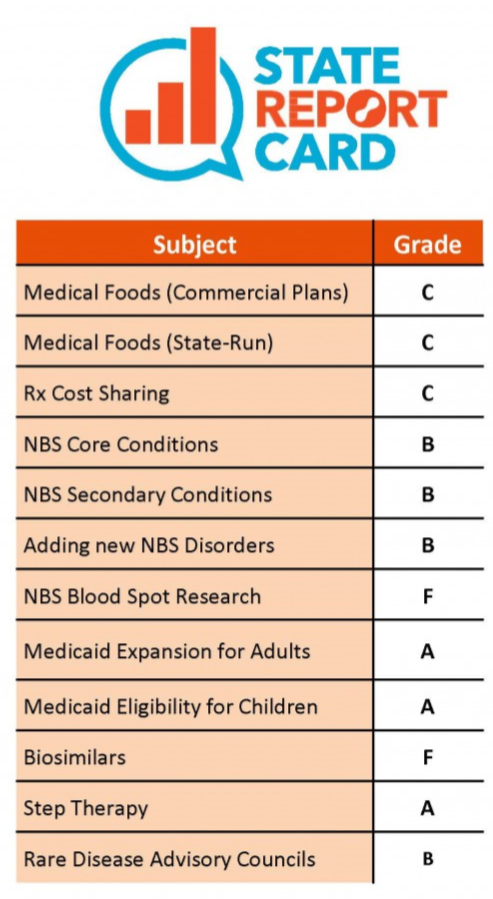
A majority of states are not measuring up on legislative solutions that reduce the burden of rare diseases affecting 30 million Americans, according to a new report released by the the NORD Rare Action Network® (NORD RAN). The 2018 “State Report Card” indicates that progress in several areas of health policy is slow, according to the report.

The third annual edition of the State Report Card rates states on the strength of policies including coverage of medical foods and newborn screening, prescription drug cost-sharing limits, policies supporting biosimilar prescriber communications, protections against step therapy protocols, and the establishment of rare disease advisory councils. New this year, according to NORD, the report also looks at Medicaid Waivers (including proposed work requirements, lifetime limits, drug formulary restrictions, and other proposed changes to benefits), storage and research consent for dried blood spot samples used in newborn screening, and state Right-to-Try laws.

Connecticut earned grades all across the scale - three A's and four B's, as well as three C's and two F's.   Overall, the report found nationally that:

  • Fifteen states earned an F for failing to mandate adequate coverage of medical foods
  • Thirty-six states earned an F for failing to enact prescription drug cost-sharing limits, despite third-party analysis showing these cause little to no impact on overall plan premiums for all beneficiaries
  • Newborn screening has saved tens of thousands of lives, yet more than half of states fail to meet federal recommendations
  • Fifteen states (including Connecticut) earned an A or B for protecting patients against step therapy, a procedure by which insurers (public or private) interfere with and delay appropriate care for patients that ultimately increases costs

“The intent with this report is to share valuable information that will enable advocates to affect change in their state,” said NORD Director of State Policy, Tim Boyd. “Our goal is to provide actionable steps for states that will improve people’s lives, so the report presents findings as well as tools for individuals to act on.”

Under the Affordable Care Act, many people with rare diseases can now access affordable health insurance. However, NORD officials point out, some insurance policies place orphan therapies on the so-called “specialty-tier” of a drug formulary. For drugs placed on this tier, enrollees often must meet cost sharing requirements that can be as much as 50% of the actual cost of the medication.

Later this month, NORD marks its 35th anniversary with a Summit in Washington, DC.  A 501(c)(3) organization, NORD is a patient advocacy organization dedicated to individuals with rare diseases and the organizations that serve them.  NORD, along with its more than 280 patient organization members,  is committed to the identification, treatment, and cure of rare disorders through programs of education, advocacy, research, and patient services.

Manufacturing Day Highlights Changes for Next Generation of Workers

There are 25 Manufacturing Day events planned in Connecticut in 2018, with most taking place this week and many open to the public.  Manufacturers across the country and across Connecticut use MFG Day (October 5 this year) as “an opportunity to inspire and recruit the next generation of manufacturers,” according to organizers, with hundreds of students across the state expected to participate.  Nationwide, more than 2500 events are planned.  Manufacturing Day is observed annually on the first Friday in October.

  • Manufacturing is responsible for $42 billion in economic activity annually, officials underscore.  Among the participants: Associated Spring in Bristol will offer a detailed tour of their plant on Friday midday, to include presentations on careers in manufacturing, to include apprenticeship programs, engineering, and the role of machinists.  Associated Spring is business of Barnes Group Inc.
  • Chester-based CHAPCO, the Small Business Administration’s Connecticut and New England Manufacturer of the Year, will also be offering tours to the public on Thursday which will showcase the company’ s equipment, employees and overall capabilities.  The company has been providing metal fabrication, assembly, product development and engineering services since 1964.
  • Marion Manufacturing Company, located in Cheshire, will offer visitors a “first-hand look at manufacturing in today’s high tech world.”  Marion Manufacturing, which began operations in 1946, was started as a progressive die stamper and remains that today, enjoying a worldwide customer base, company officials indicated.
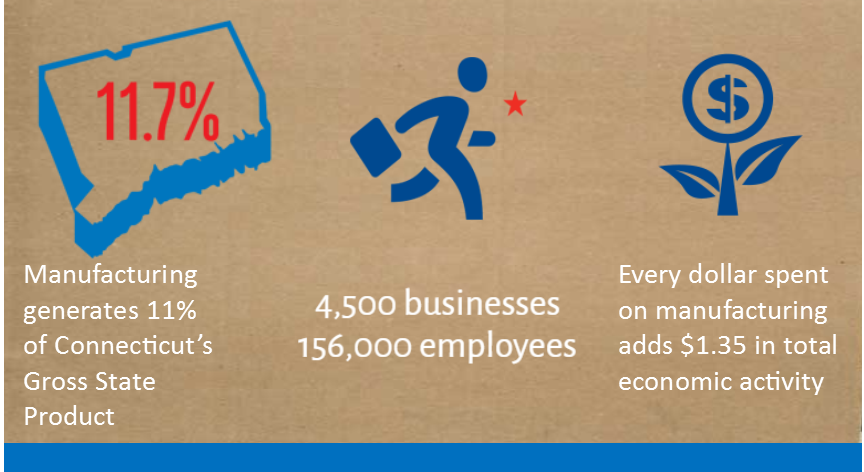
State officials highlight a series of statistics to underscore manufacturing's importance to the state economy:

  • 4,500 businesses and more than 160,000 employees
  • Every dollar spent on manufacturing adds $1.35 in total economic activity
  • Manufacturing generates 11% of Connecticut’s Gross State Product
  • Connecticut manufacturers export $15B+ each year, representing 96% of the state’s exports.

Among the other businesses that will be providing the public with a glimpse of modern-day manufacturing are Dymotek in Ellington (October 5 Interactive tour), HoloKrome in Wallingford (October 5 facilities tour), Click Bond in Watertown (October 18 Open House), Mastercam in Tolland (October 5 tour to include explanations of environmental practices), and Fisher Unitech in East Hartford (October 30).

Organizers point out that Manufacturing Day - which began in 2012 - addresses common misperceptions about manufacturing by giving manufacturers an opportunity to open their doors and show, in a coordinated effort, what manufacturing is — and what it isn’t. By working together during and after MFG DAY, manufacturers will begin to address the skilled labor shortage they face, connect with future generations, take charge of the public image of manufacturing, and ensure the ongoing prosperity of the whole industry.

Manufacturing Day is produced by the National Association of Manufacturers (NAM) and the Manufacturing Institute. The NAM is the nation’s largest industrial trade association, representing small and large manufacturers in every industrial sector and in all 50 states.

The full list of participating manufacturers in Connecticut can be seen here.


https://youtu.be/jcUsrdTbZU0

Advancing Racial Equity in Nonprofits to be Among Themes for National Conference This Month in Hartford

When members of the Alliance for Nonprofit Management, a national association now based in New York City, hold their 20th anniversary conference later this month, they will be gathering in Hartford.  The conference, “Re-envisioning Our Field:  Advancing Racial Equity & Leading Innovation in Capacity Building,” will be held October 10-12 at the Hartford Hilton. The organization’s Board Chair is Anne Yurasek, Principal of Fio Partners, which is based in Chester, CT.  Yurasek has been an organizational development consultant and trainer for over twenty years in the nonprofit and private sector.

The Alliance is the “national voice and catalyst for the field of capacity building.”  The organization’s mission is to “increase the effectiveness of the individuals, groups and organizations that help nonprofits and communities achieve positive social change.”  The Alliance seeks to “create spaces for professional dialogue and learning by amplifying research in the field and promoting its implications for effective practice.”

More than 250 attendees are anticipated, to include consultants, coaches, funders, academics, and executives from across the country. The conference intends to “convene the diverse perspectives that shape and advance our field.”

The conference provides participants with the chance to “convene, dialogue, learn, shape and advance our field for the good of the nonprofits and communities we serve,” official explained.  The theme was selected because now “is a critical time for our field to reflect, to learn together, and to consider how our work should evolve to address racial inequities in our society. From amplifying emerging approaches to reflecting on research and exploring its implications for practice,” participants are urged to “bring your perspectives, experiences, and energy” to the annual conference.

The three-day event includes presentation opportunities with local nonprofits, work-sessions for Affinity & Interest Groups, twenty-plus workshop sessions “curated for capacity builders by capacity builders, and thought provoking plenary sessions.”  Among the session leaders and speakers:

  • Jay Williams, President, Hartford Foundation for Public Giving
  • Sam Cobbs, Chief Program Officer at Tipping Point Community  
  • Oscar A. Chacón, Co-Founder and Executive Director of Alianza Americas
  • Cyndi Suarez, Senior Editor, The Nonprofit Quarterly
  • Cynthia Silva Parker, Interaction Institute for Social Change
  • Trina Jackson, Community Engagement Manager of TSNE/Mission Works 

The Alliance for Nonprofit Management is the result of the 1997 merger of the Nonprofit Management Association and Support Centers of America. The organization is described as unique as a cross-sector professional association of individuals and organizations that are devoted to increasing the effectiveness of the individuals, groups and organizations that help nonprofits and communities achieve positive social change.

The 2017 conference was held in Grand Rapids, Michigan.

PERSPECTIVE: Unhealthy Options Persist in Fast Food; Voluntary Efforts Falling Short

Fast-food consumption is associated with poor diet quality in youth. Therefore, improving the nutritional quality of fast-food meals consumed by children is an important public health objective. In response to public health concerns, several of the largest fast-food restaurants have introduced policies to offer healthier drinks and/or sides with their kids’ meals. However, few research studies have examined the menu items that parents purchase for their children at fast-food restaurants or their attitudes about healthier kids’ meal offerings.

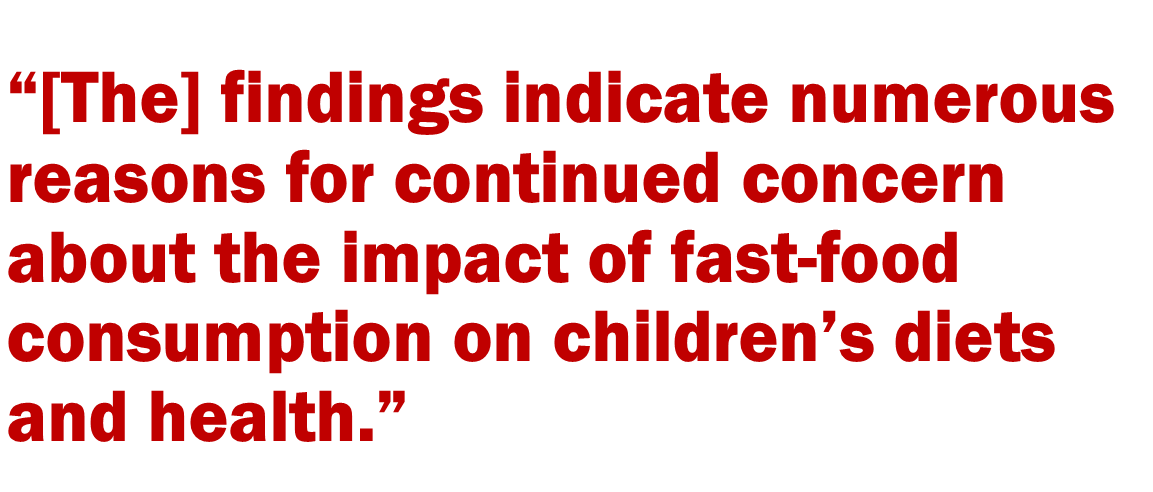
The primary purpose of [a study by the UConn Rudd Center for Food Policy & Obesity] was to document parents’ reported fast-food purchases for their children (ages 2-11) and examine changes over time.  [The] findings indicate numerous reasons for continued concern about the impact of fast-food consumption on children’s diets and health.

In 2016, we identified 10 different fast-food restaurants where at least one-quarter of parents reported that they purchased food for their child(ren) weekly or more often. In addition, more than 90% of parents surveyed reported that they visited at least one of the four largest fast-food restaurants to purchase lunch or dinner for their child (ages 2-11) in the past week, and they purchased food for their child at 2.4 of these restaurants on average.

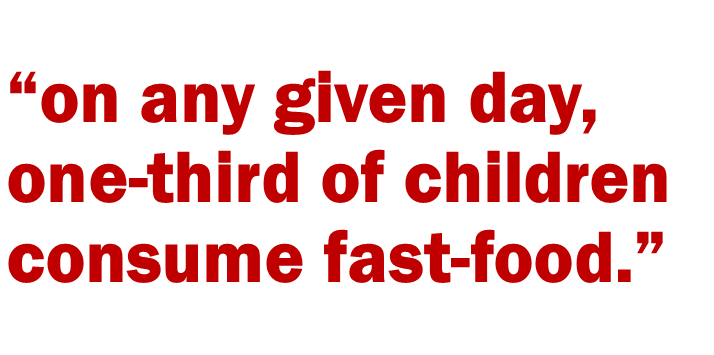
These numbers are high, but they correspond to previous research showing that on any given day, one-third of children consume fast-food… Furthermore, parents’ purchases of fast-food for their children increased significantly during the years examined, with parents reporting increased frequency of visits to most individual fast-food restaurants from 2013 to 2016…
These results also suggest that healthier kids’ meal policies could result in unintended public health consequences if they lead parents to view the restaurants more positively and increase their visits, but continue to order the unhealthy items for their child.

These findings indicate numerous opportunities for restaurants to enhance their efforts to improve the nutritional quality of fast-food consumed by children.

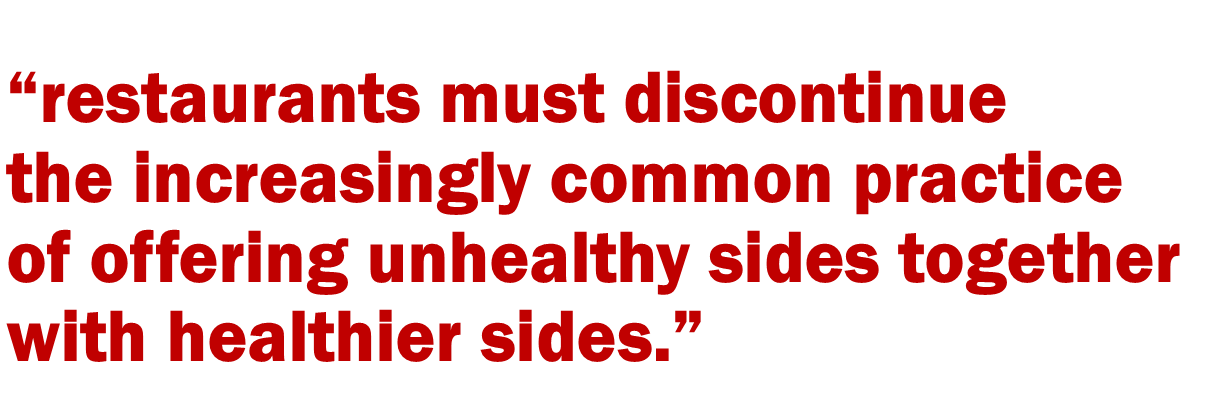
First, restaurants should introduce healthier kids’ meals that are also appropriate and appealing to older children… In addition, restaurants must discontinue the increasingly common practice of offering unhealthy sides together with healthier sides, and/or they should remove unhealthy sides from their kids’ meal menus altogether, as they have pledged to do with kids’ meal drinks…

Finally, since parents often choose restaurants that are convenient and that their kids like (more than for healthy options), restaurants should make the healthier items the most appealing options for children to choose. They should also make the healthier items the easiest options for parents to order, for example, by making them the default for kids’ meals. Given parents’ positive attitudes about healthier kids’ meals, there appears to be a substantial marketing opportunity for restaurants to introduce and promote healthier kids’ meals that appeal to both parents and children…

If restaurants do not implement further improvements voluntarily, advocates should continue to work with state and local municipalities to introduce public policies to improve the healthfulness of kids’ meals. Policy makers should follow the lead of communities in California and Colorado and consider legislation or regulation to require that all restaurants serve healthier kids’ meals…

Unhealthy options, including main dishes, sides, and desserts, remain on kids’ meal menus at most restaurants, and purchases of a kids’ meal plus another menu item for their child have increased. Although future research is required to explain the reasons for these trends, they do indicate that restaurants’ voluntary pledges, as currently implemented, are unlikely to substantially reduce children’s fast-food consumption overall, or increase their selection of available healthier drink and side options.
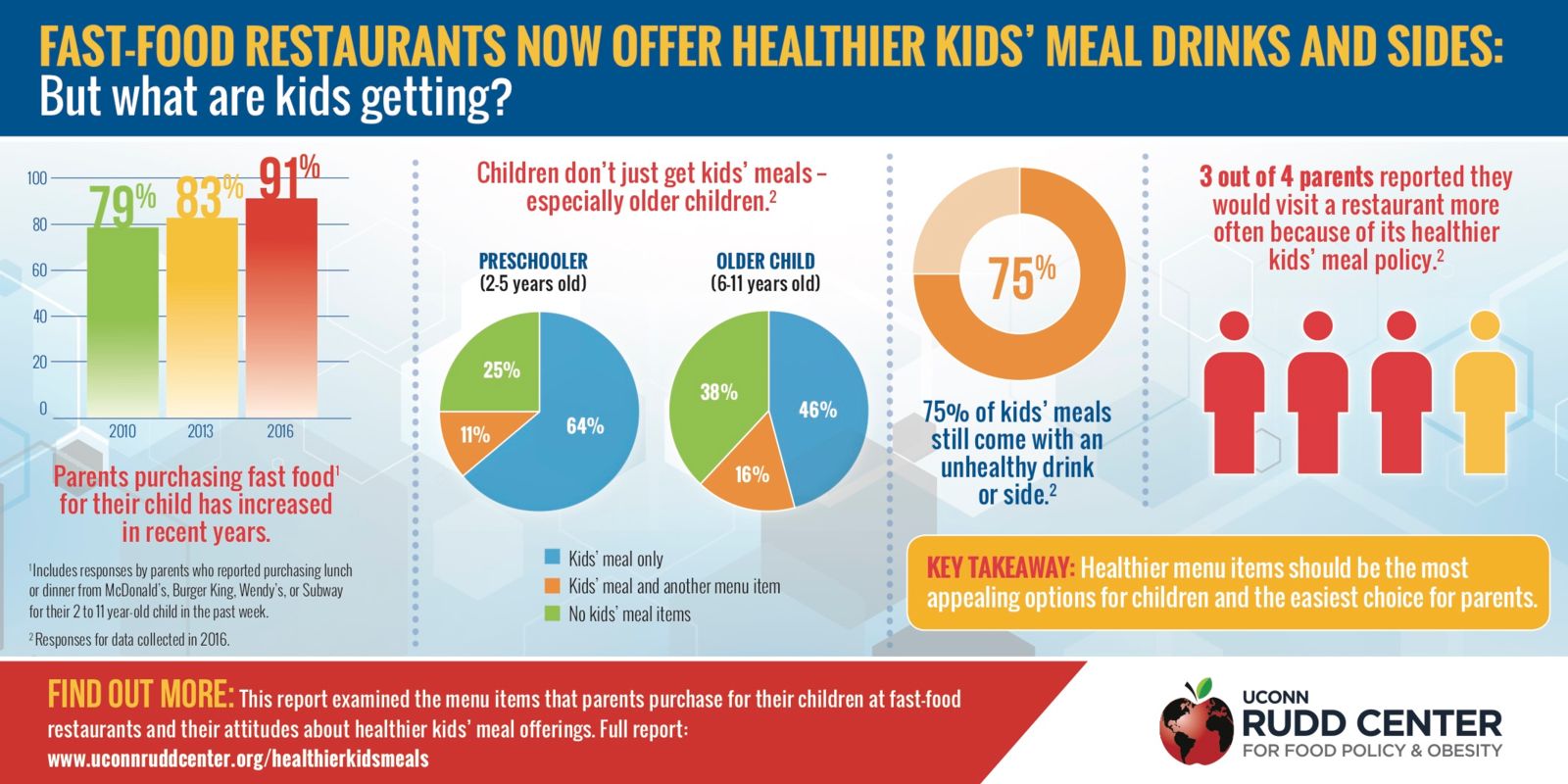
Furthermore, parents’ positive attitudes about restaurants’ healthier kids’ meal policies indicate that such policies could backfire for public health and increase the frequency of purchasing fast-food for their children without increasing healthier purchases. These findings demonstrate that restaurants must implement more effective healthier kids’ meal policies to avoid additional state and local regulations that would mandate healthier options for children.

_________________________

This is an excerpt from Parents’ Reports of Fast Food Purchases for Their Children:  Have They Improved?, published in September 2018 by the Rudd Center for Food Policy & Obesity at the University of Connecticut.  The report’s authors are Jennifer L. Harris, Maia Hyary, Nicole Seymour and Yoon Young Choi.  The full report is available here.


https://youtu.be/2Ng_X4D4SSA

Record-Setting Travelers Championship Nets $2 Million for Charity

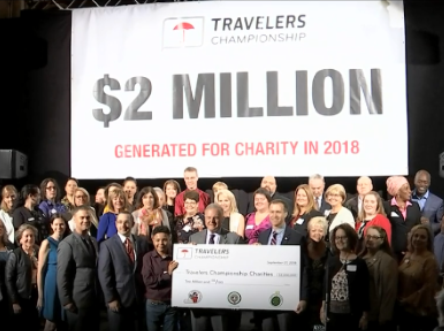
The 2018 Travelers Championship generated $2 million for more than 150 local charities throughout the region, the largest amount for charity generated in the history of Connecticut’s premier sporting event.  The record-setting total includes a $200,000 contribution from three-time Travelers Championship winner and 2018 champion Bubba Watson. Charity representatives joined officials from Travelers and the tournament in Hartford this week for the annual Travelers Championship Charity Celebration, where funds were distributed to each organization.

“This is always a special day because it signifies the hard work everyone puts into the tournament,” said Travelers Championship Tournament Director Nathan Grube. “Through the support we receive from volunteers, fans, players and businesses, we’re able to help charitable groups across the region make the community a better place.”

This year’s effort brings the total amount generated for charity by the tournament to more than $16.7 million since Travelers became title sponsor in 2007. The tournament donates 100 percent of its net proceeds to charity.

“Reaching the $2 million mark is an important milestone, and it will have such a meaningful impact on so many local organizations,” said Andy Bessette, Executive Vice President and Chief Administrative Officer at Travelers. “Bubba’s generosity mirrors our charity-first approach, and follows a similar sentiment that runs through the PGA TOUR and many of its players.”

Watson, who became just the second player to win the Travelers Championship more than twice – he also won in 2010 and 2015 – is representing the United States this week at the Ryder Cup in France. He recorded a video message that was played during the Charity Celebration.

“Wish I could be there. I just want to say thank you to Travelers for their hard work and their dedication to the community and all the charity dollars they’ve raised over the years,” Watson said. “Especially this year; $2 million dollars, what an achievement.”

The Hole in the Wall Gang Camp was the primary beneficiary of this year’s tournament, with three campers also serving as honorary co-chairs. Watson directed his $200,000 donation to Camp, which is naming the trading post at the Travelers Mini Golf Course on its campus in Ashford, Connecticut, as “Bubba Watson’s Trading Post,” in recognition of the 12-time PGA TOUR winner. Back in December, the 2017 Travelers Championship was honored by the PGA TOUR winning the prestigious “Tournament of the Year” award, along with recognition as the “Most Fan-Friendly Event,” “Best Sales” and the inaugural “Players Choice.” Award.  With approximately 4,000 volunteers working over 80,000 hours, the 2017 event generated more than $1.7 million for 165 deserving charities – totals that were exceeded this summer at the 2018 tournament. 

An economic impact study last year found that The Travelers Championship has an annual economic impact on the state of Connecticut of $68.2 million.  The study, conducted by the Connecticut Economic Resource Center, Inc. (CERC), found that the economic impact had more than doubled between 2011 and 2017, due to two primary factors; a much larger total number of spectators, especially the increased number of individuals from outside the state, and increased spending by the tournament in preparing for and administering the increased number of events that occur during the tournament week.

At least 750 charities have benefited over that time. Since the tournament’s debut in 1952, more than $40 million has been distributed to local charities.

Never an effort to reset on its laurels, preparation has already started for the 2019 Travelers Championship, which will be held June 17-23 at TPC River Highlands.


CT Is 6th Oldest State in the Nation, with Projections Pointing to Even Older Population, Economic Ramifications

Considered the 7th oldest state in the nation for the past few years, Connecticut is getting older relative to other states, according to newly released analysis.  The state is now seen as being the 6th oldest in the nation, following Maine, New Hampshire, Vermont, West Virginia, and Florida. The analysis, by S&P Global Ratings, found that the median age of the U.S. increased to 38.0 from 37.2 from 2010-2017. It is projected that by 2030, all baby boomers will be older than 65, and the size of the older population will be such that one in every five residents will be of retirement age.

Connecticut’s median age is 40.9, among a list of “oldest states” that is dominated by New England.  S&P declared that “Northeast States Face A Substantial Old-Age Wave That Is Verging On A Crisis,” highlighting the economic impact of the aging population.

“This aging population has contributed to diminished economic growth, with Connecticut being one of only four states in the country with contracting output. This occurred while its population growth was nearly at the bottom for all states, along with having one of the largest contractions of prime working-age adults,” S&P noted in their analysis.  “The outlook is equally dim. We expect the state's higher concentration of middle-aged and elderly residents compared with young adults and children to worsen.”
Connecticut’s State Department on Aging (SDA), re-established in 2013, is a cabinet-level agency, which developed in August 2017 the state’s 2018-2020 State Plan on Aging, entitled “Growing Older Together”, to serve as a blueprint for the agency’s work. It outlines the activities and strategies the state will pursue to navigate the issues arising from a growing older population.

Citing U.S. Census Bureau data, the report pointed out that “the nation’s population is aging, but not as fast as Connecticut’s.”  At the time, it noted “Connecticut is the 7th  oldest state in the nation, in terms of median age, with the third longest lived constituency.”

The 100-page report described Connecticut as “one of the slowest-growing states. The state’s total population grew by only 11,169 people from 2010 to 2015. Connecticut had just fewer than 3.6 million residents last year” (2016).

It went on to explain that “upon further look, there is a profound distinction among the projected population shift when broken down by age. Between 2010 and 2040, Connecticut’s age 65 years and over population is on pace to increase by 57%. However, its population between the ages of 20-64 is projected to grow less than 2% and the population age 18 and under is projected to decline by 7%.”


The Connecticut Commission on Women, Children and Seniors, in a presentation titled “Connecticut’s Aging Landscape: State Policy Overview” issued last year, also noted the state’s 7th oldest status.  Looking ahead, the report cited data developed by the former Legislative Commission on Aging and the Connecticut State Data Center that shows that by 2020, the vast majority of Connecticut municipalities will have populations that include more than 20 percent individuals age 65 and older.  Only six towns are projected to have less than 13 percent of their populations in that age bracket, reflecting the anticipated aging of the population throughout the state.

By 2050 the number of people in Connecticut aged 85 and older is projected to increase to 260,052, according to an analysis by the AARP Public Policy Institute in 2015. This age cohort will more than double in 2050 when it will represent 6.3 percent of state’s overall population compared to 2.6 percent in 2015.

Suicide Numbers Increasing; Efforts Intensify to Respond, Prevent

The Centers for Disease Control and Prevention (CDC) released a report this year that suicide rates nationally jumped by 25 percent since 1999, a finding that “shocked” even experts who believed the rate had been flat. Each year, more than 41,000 individuals die by suicide, leaving behind their friends and family members to navigate the tragedy of loss, according to the National Alliance on Mental Illness. Connecticut's rate, 9.7 deaths per 100,000, rose 20 percent during that time, and 49 states saw an increase, according to the CDC. Connecticut’s suicide rate, is ranked number 46 in the country.

Suicide is the 10th leading cause of death in the U.S. with one occurring on average every 13.3 minutes. September is National Suicide Prevention Month.

For every suicide, there are 30 people who made the attempt, Dr. James F. O'Dea, vice president of the Behavior Health Network of Hartford Healthcare, recently told the Meriden Record-Journal.  The U.S. Health Resources & Services Administration reports that “approximately 45% of suicide victims had contact with primary care providers within 1 month of suicide.”

“Connecticut suicide rates may have not have increased as much in comparison to other states, but isn’t the real question, ‘Why is it increasing at all?’” Luis Perez, president and CEO of Mental Health Connecticut, told The Hartford Courant earlier this year.

“It’s been well-researched that most people who die by suicide do so because they want the pain to stop — and they don’t see any other way,” Perez said. “Prevention is critical. Knowing the safe and right way to talk to someone who may have thoughts of suicide and letting people know they are not alone, that millions of people struggle with suicide ideation is key.”

According to the state Department of Public Health, approximately 31 percent of victims had a history of treatment for mental illness and 42 percent had previously attempted or thought about suicide or disclosed their intent to commit suicide. The CDC offers 5 steps to help someone at risk: 1. Ask. 2. Keep them safe. 3. Be there. 4. Help them connect. 5. Follow up.

The U.S. government’s anti-bullying website, stopbullying.com, points out that “many issues contribute to suicide risk, including depression, problems at home, and trauma history. Additionally, specific groups have an increased risk of suicide, including American Indian and Alaskan Native, Asian American, lesbian, gay, bisexual, and transgender youth.”  The site indicates that “this risk can be increased further when these kids are not supported by parents, peers, and schools. Bullying can make an unsupportive situation worse.”

Matt Riley, Chief Operating Officer of the Connecticut-based Jordan Porco Foundation, recently told WTNH-TV that suicide is the second leading cause of death for Americans ages 15 to 24. One in ten college students and one in five high school students consider suicide. Young people considering suicide are most likely to talk to peers, so the Jordan Porco Foundation focuses on peer-to-peer outreach and awareness, with a series of successful program initiatives on college campuses in Connecticut and across the country.

In recent years, a new student-driven primary prevention program was piloted to help high school students develop positive coping skills and enhance protective factors in preparation for life beyond high school. Schools and organizations participating included Manchester High School, Immaculate High School in Danbury, Enfield Public Schools, Capital Preparatory High School in Hartford, Institute of Living in Hartford, Jewish Family Services in West Hartford, Wilton High School, Boys & Girls Club of Bristol, and Guilford Youth & Family Services.

Numerous organizations across Connecticut offer Mental Health First Aid, an 8-hour training to teach participants how to help someone who is developing a mental health problem or experiencing a mental health crisis. The evidence behind the program demonstrates that it helps trainees identify, understand and respond to signs of mental illnesses and substance use disorders.  The course is often offered to participants free of charge.

https://youtu.be/TT_HLG5FkKA

https://youtu.be/jl87bmuCTdM

Bender-Fromson to be Honored for Community Involvement; Public Service Career Included Historic Run for Lt. Gov.

In December, the Hartford Public Library’s Caroline M. Hewins Medal will be presented to Sandra Bender Fromson and Howard Fromson, longtime supporters of the library and numerous community organizations. It is the third year the award will be presented to a person (or persons) who have had a transformational impact upon and legacy of service to Hartford, according to library officials. Sandra Bender’s service to her community dates back more than a quarter century, where it flourished in the suburbs, was reflected in organizations across the Capitol City, and was part of an historic election year in Connecticut - the first time two women were candidates for Lieutenant Governor on the same November ballot.  Decades ago, she had a role in a series of unanticipated and groundbreaking political events that contributed  to increased prominence of women at the highest echelons of politics and public service in Connecticut.

Sandra Bender served as Mayor of South Windsor 1975-77, when relatively few women served in that role in Connecticut, rising to prominence in the financial services industry, also very much a male bastion at the time.

Just over a decade later, her business acumen and history of public service put her on a ticket for statewide office.  In 1990, New Haven-area Congressman Bruce Morrison won a primary to be the Democrats choice for Governor, former U.S. Senator Lowell Weicker started his own political party to launch is comeback with a candidacy for Governor, and Republicans nominated another Congressman, John Rowland of Waterbury.
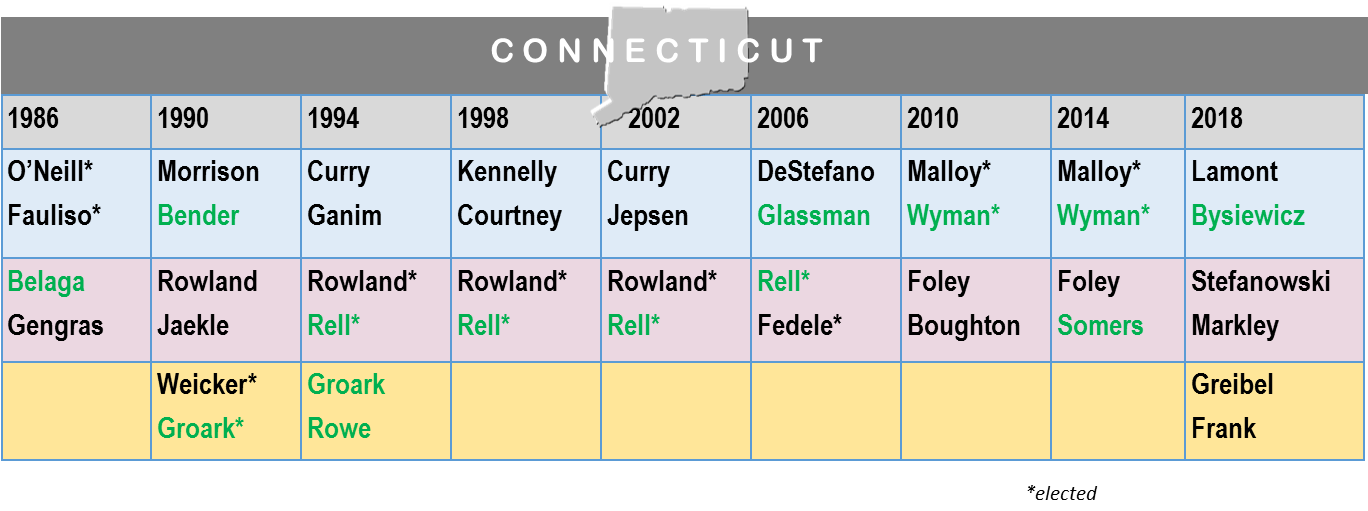

Morrison selected Bender as his running mate, Weicker chose Hartford corporation counsel Eunice Groark, and Rowland decided on then-House Republican leader Robert Jaekle.

That year, the Weicker-Groark ticket was elected with 40.4 percent of the vote, narrowly defeating the Rowland- Jaekle ticket, which received 37.5 percent of the vote.  Finishing third in the unusual three-way race, the Democratic ticket of Morrison-Bender was the choice of only 20.7 percent of voters making their way to the polls on November 6.  Groark, not Bender, became the state’s first female Lieutenant Governor.  Only Ella Grasso, elected Governor in 1974 and 1978, had risen higher in statewide office.

Rowland ran again four years later, facing then-Lieutenant Governor Groark when Weicker chose not to seek re-election.  His choice as a running mate in his second run at the state's top job was a woman - M. Jodi Rell, a member of the state House of Representatives.

The Rowland-Rell ticket’s victory in 1994 meant Connecticut would have its second consecutive female Lieutenant Governor, rather than its second female Governor.

Rell later earned that distinction as well, succeeding to the office when Rowland resigned amidst a scandal and impeachment hearings, announcing on June 21, 2004 that he would step down on July 1.  Rell went on to be elected in her own right in 2006.

Bender-Fromson’s recognition later this year affirms her contributions over many decades to the Hartford Public Library and numerous other organizations.

She is also remembered as the Democratic candidate the first time two women were on the November ballot for Lieutenant Governor of Connecticut.  That occurred again in 1994 and 2014.   At least one woman has been a candidate for Lieutenant Governor or Governor - or both - in every election cycle since 1986, and Connecticut's voters elected Nancy Wyman to serve as Lieutenant Governor in 2010 and 2014, following one term of a man in that role, the only such term since 1990.  This year, Susan Bysiewicz is on the ballot for that office.  A woman has been elected either Governor or Lieutenant Governor in Connecticut in every election since 1990.

The Caroline M. Hewins Medal recognizes an individual who embraces the City of Hartford and its people, who breaks the mold and provides service of a revolutionary kind, who stretches the boundaries of a social or cultural institution with a humanistic approach to public service, and who shows strong guardianship of and advocacy for the basic right of equal access to information and opportunity.