PERSPECTIVE: Patient Protections Fall Short in Proposed Plan for Pre-existing Conditions

Our 33 organizations, representing the interests of the millions of patients and consumers who live with serious, acute, and chronic conditions, have worked together for many months to ensure that patient voices are reflected in the ongoing Congressional debate regarding the accessibility of health coverage for all Americans and families. In March 2017, we identified three overarching principles to guide and measure any work to further reform and improve the nation’s health insurance system. Our core principles are that health care must be adequate, affordable, and accessible. Together, our organizations understand what individuals and families need to prevent disease, manage health, and cure illness. Individuals and families with pre-existing conditions rely on critical protections in current law to help them access comprehensive, affordable health coverage that meets their medical needs. Unfortunately, the arguments of the plaintiffs in Texas v. U.S. – a lawsuit brought by 20 states and two individual plaintiffs – represent a serious threat to these protections. In this case, the plaintiffs argue that the court must invalidate the entire Affordable Care Act (ACA) due to Congress’ repeal of the individual mandate. We are further troubled that the Department of Justice has also declined to defend the constitutionality of many of the ACA provisions that directly protect people with pre-existing conditions.
While we are pleased to see that you share our concerns about the potential impact of Texas v. U.S. on people with pre-existing conditions, as evidenced by your recent introduction of the Ensuring Coverage for Patients with Pre-Existing Conditions Act (S.3388), the safeguards presented in this legislation fall far short of the patient protections encompassed in existing law. This bill as written is far from an adequate replacement for the protections for individuals with pre-existing conditions that are provided under current law.

Current law requires issuers to comply with a set of provisions which work together to promote adequate, affordable, and accessible coverage for people with pre-existing conditions. Specifically, community rating, guaranteed issue, essential health benefits, cost-sharing limits, and the ban on pre-existing condition exclusions protect people with serious health care needs from discriminatory coverage practices. These policies are inextricably linked and removing any of them threatens access to critical care for people with life-threatening, disabling, chronic, or serious health care needs.

Adequacy

Health care must be adequate, covering the services and treatments patients need, including patients with unique and complex health care needs. It is paramount that protections including the Essential Health Benefit (EHB) requirement, the ban on annual and lifetime caps, caps on out-of-pocket costs, and restrictions on premium rating be preserved in all health care plans to which they currently apply.

We were particularly disappointed that S. 3388 fails to include an outright ban on pre-existing condition exclusions. While a consumer with pre-existing conditions can gain coverage, the bill would allow issuers to underwrite plans to exclude any type of care based on medical history or health status. For example, under S. 3388 a patient with a history of cancer may be able to gain coverage, but an issuer would still be allowed to exclude coverage for screenings or treatment for a reoccurrence. Continuing to allow issuers to sell plans that undermine access to comprehensive coverage directly contradicts the presumed intent of this legislation, puts consumers at risk for catastrophic healthcare costs or being forced to delay care, and creates additional confusion for consumers and patients.

Affordability

Our second principle recognizes that illness and disease impacts individuals across the economic spectrum. We believe that everyone – regardless of their economic situation – should be able to obtain the treatment they need to manage, maintain, or improve their health. This means that coverage should be affordable, including reasonable premiums and cost-sharing, and that individuals with pre-existing conditions should be protected from being charged more for their coverage.

Although this legislation protects against higher rates based on health status, we remain concerned that it leaves patients and consumers exposed to higher premiums based on other factors that can be used as proxies for health status, such as age, gender, or occupation. For instance, there is no limit on how much more insurers in the individual market could charge a 50-year-old with heart disease because of his age. Insurers could also charge higher rates to a woman of childbearing age because of her gender. This legislation would exacerbate the affordability challenges facing many Americans today by neglecting to maintain current protections and subjecting patients to even higher premiums should the ACA be completely invalidated.

Accessibility

Lastly, health care coverage must be accessible. All people, regardless of employment, health status or geographic location, should be able to gain coverage without waiting periods or undue barriers to coverage. While we appreciate that the legislation would continue to prohibit insurers from denying coverage to individuals with pre-existing conditions, we are deeply troubled that, absent other quality and financial protection standards, this provision would offer only minimal assurance to consumers.

Conclusion

While we do not yet know the outcome or scope of the ruling in the Texas v U.S. case, failure to preserve key ACA provisions could have catastrophic implications for both the insurance markets and the millions of patients who rely on them. Partially restoring only two (guaranteed issue and some rating protections) of the multiple provisions that currently protect patients is inadequate and would leave many people without the level of coverage they need and deserve. Should the ACA be struck down and this legislation implemented as a replacement, consumers with pre-existing conditions would face significant financial and coverage barriers. In short, for people with pre-existing conditions, the bill would provide access to coverage in name only.

We share your interest in continuing to make health insurance accessible to Americans with pre-existing conditions and appreciate your efforts to preserve certain protections in law, regardless of the outcome of Texas vs. US. However, the “Ensuring Coverage for Patients with Pre-Existing Conditions Act” as currently drafted, falls far short of providing coverage and security to your constituents, including those who are or will face significant health care needs. We urge you and your Senate colleagues to reconsider your approach to S. 3388 and ensure that any future legislation provides protections for people with pre-existing conditions that are the same or better than those included in current law.

Our organizations stand ready to work with you on solutions that serve the patients we represent and would be pleased to meet with you about how this legislation can be improved to meet the needs of people with pre-existing conditions.

___________________________________

This is the complete text of correspondence sent on September 19, 2018 to 16 members of the U.S. Senate, on behalf of 33 organizations including Danbury-headquartered National Organization for Rare Disorders (NORD) and many others with active chapters in Connecticut. Signatories also included Adult Congenital Heart Association, Alpha-1 Foundation, ALS Association, American Cancer Society Cancer Action Network, American Diabetes Association, American Heart Association, American Liver Foundation, American Lung Association, Arthritis Foundation, Chronic Disease Coalition, COPD Foundation, Crohn’s & Colitis Foundation, Cystic Fibrosis Foundation, Epilepsy Foundation, Family Voices, Global Healthy Living Foundation, Hemophilia Federation of America, Leukemia & Lymphoma Foundation, Lutheran Services in America, March of Dimes, Mended Little Hearts, Muscular Dystrophy Association, National Alliance on Mental Illness, National Coalition for Cancer Survivorship, National Health Council, National Hemophilia Foundation, National Kidney Foundation, National Multiple Sclerosis Society, National Patient Advocate Foundation, Susan G. Komen, United Way Worldwide, and WomenHeart: The National Coalition for Women with Heart Disease.

308 Structurally Deficient Bridges Across CT: Average Age 69 Years

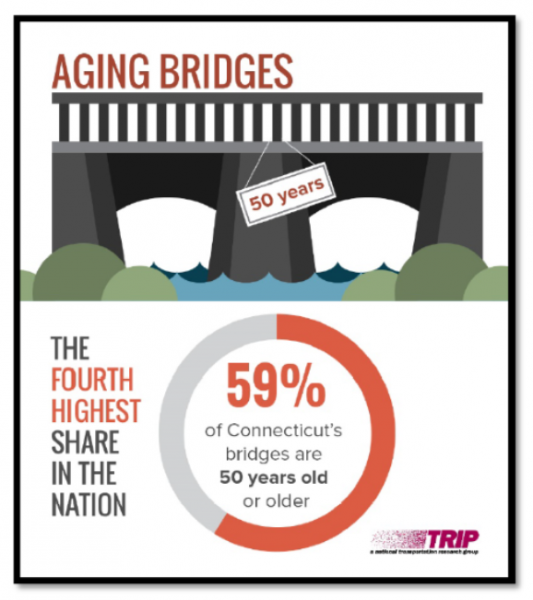
Just last month, it was revealed that more than 1,500 of California’s bridges are structurally deficient, meaning there is significant deterioration of the bridge deck, supports or other major components. More than half – 56 percent – of California’s bridges are at least 50 years old – the eighth highest rate in the nation. Yesterday, it was announced that 59 percent of Connecticut’s more than 4,000 bridges are 50 years or older, the fourth highest rate in the nation. The average age of all Connecticut’s bridges is 53 years, while the average age of the state’s 308 structurally deficient bridges – seven percent of the total - is 69 years.  Structurally deficient bridges in Connecticut are crossed daily by 4.3 million vehicles.
Both reports were done by TRIP, a national transportation research group, based on an analysis of Federal Highway Administration National Bridge Inventory (2017).  The organization did a similar report about Wisconsin, also released this week.  It found that nine percent of Wisconsin’s locally and state-maintained bridges are structurally deficient.

Connecticut has 4,252 bridges (20 feet or longer), compared with 14,253 in Wisconsin and 25,657 in California.

The 20-page Connecticut report indicated that “To retain businesses, accommodate population and economic growth, maintain economic competitiveness, and achieve further economic growth, Connecticut will need to maintain and modernize its bridges by repairing or replacing deficient bridges and providing needed maintenance on other bridges to ensure that they remain in good condition as long as possible.”

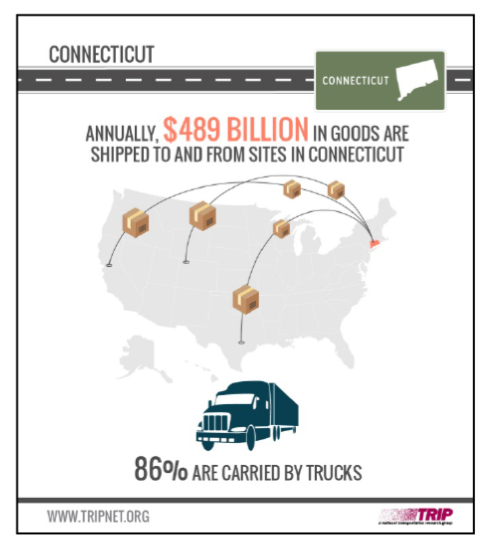
The report also noted that “annually, $489 billion in goods are shipped to and from sites in Connecticut, largely by truck,” adding that “approximately 731,000 full-time jobs in Connecticut in key industries like tourism, retail sales, agriculture and manufacturing are completely dependent on the state’s transportation network.”
Hartford, Fairfield and New Haven counties each have 60 or more structurally deficient bridges, with 65, 61 and 60 respectively.  Litchfield County has 39; New London County has 32.  The report listed Middlesex County with 22, Windham County with 17 and Tolland County with 12.

The report also sounded an alarm for Connecticut, a state seeking to attract and retain businesses to bolster a sluggish economy:  “Increasingly, companies are looking at the quality of a region’s transportation system when deciding where to re-locate or expand. Regions with congested or poorly maintained roads may see businesses relocate to areas with a smoother, more efficient and more modern transportation system.”

Highway accessibility, the report pointed out, was ranked the number one site selection factor in a 2017 survey of corporate executives by Area Development Magazine.

“Without a substantial boost in federal, state and local funding, numerous projects to improve and preserve Connecticut’s bridges will not be able to proceed, hampering the state’s ability to improve the condition of its transportation system and to support economic development opportunities in the state,” the report concluded.

This summer,  CT by the Numbers reported on a ranking developed by CNBC, found that 73 percent of Connecticut roads are in bad shape, giving the state a grade of D, while noting that nearly 8 percent of Connecticut’s bridges are deficient.

Cigna Looks to Invest in Start-up Insurance Ventures, Establishes $250 Million Fund

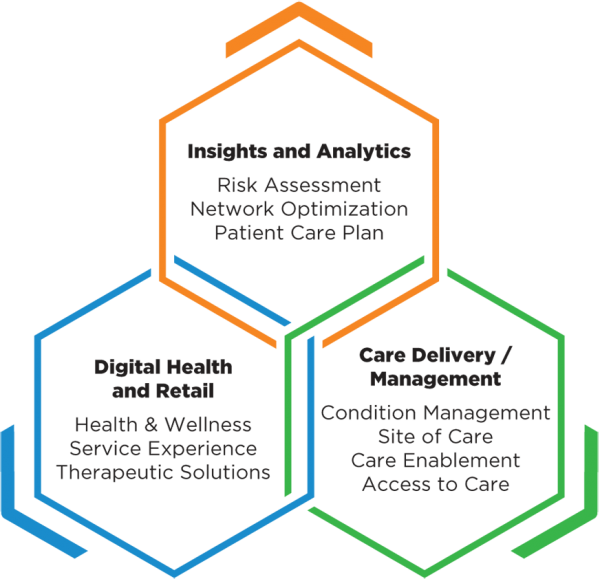
Health services organization Cigna has launched Cigna Ventures, a corporate venture fund with an infusion of $250 million in capital to be invested in healthcare technology startups and early-stage companies. Cigna has committed $250 million of capital to Cigna Ventures, according to officials, to invest in promising startups and growth-stage companies that are unlocking new growth possibilities in health care and will bring improved care quality, affordability, choice, and greater simplicity to customers and clients. Cigna Ventures is focused on companies across three strategic areas: insights and analytics; digital health and retail; and care delivery/management.

“Cigna’s commitment to improving the health, well-being and sense of security of the people we serve is at the front and center of everything we do,” said Tom Richards, senior vice president and global lead, strategy and business development at Cigna. “The venture fund will enable us to drive innovation beyond our existing core business operations, and incubate new ideas, opportunities and relationships that have the potential for long-term business growth and to help our customers.”

Cigna Ventures was created to help Cigna identify, assess and sponsor early-stage innovation ideas that warrant deeper exploration through focused pilot and test-and-learn activities with the goal of realizing meaningful business value.  The initiative’s newly launched website suggests that “Cigna Ventures is the strategic corporate venture capital partner of choice in the health care industry. We work closely with entrepreneurs to accelerate growth and innovation through strategic use of capital and deep partnerships.”

Companies in the portfolio, according to published reports, include Omada Health, a digital therapeutics company treating chronic diseases; Prognos, a predictive analytics company for healthcare; Contessa Health, a home-patient care service; Mdlive, which provides remote health consultations; and Cricket Health, a special kidney care provider.

CIGNA’s interest in the rapidly-evolving health care field is also reflected in the company’s membership, presence, and investment in insurance technology start-ups at Upward Hartford, the co-working and innovation center in Hartford that was the site of the city’s inaugural Insurtech Hub earlier this year, and is now home to the winning participants in Hartford’s first annual insurance accelerator, held in April.

Amidst the start-ups are a number of Hartford’s longstanding insurance giants, including Cigna.

Bloomberg reported last week that overall investment in health-care startups has increased this year. According to the MoneyTree Report from PricewaterhouseCoopers and CB Insights, $10.6 billion was invested in health-care deals in the first half of this year. Two of the seven largest venture-capital rounds in the second quarter involved health-care firms, the report shows.

“Our partnership with Cigna has been about so much more than capital,” said Sean Duffy, co-founder and CEO of Omada. “The ability to collaborate with, learn from, and integrate deeply with a health services company so dedicated to delivering a 21st-century care experience to its customers and clients has enabled us to accelerate innovation, advance our capabilities, and grow our customer base.”

Cigna Corporation and Express Scripts received approval this week from the Antitrust Division of the United States Department of Justice for their pending $50 billion plus merger, which is expected to close by year’s end. “Quality health care and competitive pricing for health care services and pharmaceutical drugs is critical to U.S. consumers,” said Makan Delrahim, the head of the antitrust division, in a statement announcing approval of the deal.

CT Has 10th Lowest Obesity Rate in the Nation, Research Finds

Connecticut has a lower adult obesity rate than most other states, according to new national data, which found that 26.9 percent of adults living in Connecticut have obesity, ranking the state 42nd among the 50 states and the District of Columbia.  The state has slipped slightly from four years ago - the obesity rate was 25 percent and ranking was 9th lowest in the nation in the 2014 edition of the annual survey. The state's top 10 least obsese status was in the new report came in the 15th annual State of Obesity: Better Policies for a Healthier America report  by Trust for America’s Health (TFAH) and the Robert Wood Johnson Foundation (RWJF).  Findings include:

  • Adult obesity rates vary considerably from state to state, with a high of 38.1 percent in West Virginia and a low of 22.6 percent in Colorado. No state had a statistically significant improvement in its obesity rate over the past year.
  • Adult obesity rates are at or above 35 percent in seven states; for the first time in Iowa and Oklahoma, and at least the second time in Alabama, Arkansas, Louisiana, Mississippi, and West Virginia.
  • Six states — Iowa, Massachusetts, Ohio, Oklahoma, Rhode Island, and South Carolina — saw their adult obesity rates increase significantly between 2016 and 2017.
  • Adult obesity rates are between 30 and 35 percent in 22 states and 19 states have adult obesity rates between 25 and 30 percent.
  • Over the past five years (2012 – 2017), 31 states had statistically significant increases in their obesity rate and no state had a statistically significant decrease in its obesity rate.
  • There continue to be striking racial and ethnic disparities in obesity rates. In 31 states, the adult obesity rate among Blacks is at or above 35 percent.  Latino adults have obesity at a rate at or above 35 percent in eight states.  White adults have obesity rates at or above 35 percent in one state. Nationally, the adult obesity rates for Latinos, Blacks and Whites are 47.0 percent, 46.8 percent and 37.9 percent respectively.

The least obese states are Colorado (22.6 %),District of Columbia (23.0%),  Hawaii (23.8 %), California (25.1%), Tie Montana and Utah (25.3%), New York (25.7%), Massachusetts (25.9%), Nevada (26.7%) and Connecticut (26.9%).

“Obesity is a complex and often intractable problem and America’s obesity epidemic continues to have serious health and cost consequences for individuals, their families and our nation,” said John Auerbach, president and CEO of Trust for America’s Health. “The good news is that there is growing evidence that certain prevention programs can reverse these trends.  But we won’t see meaningful declines in state and national obesity rates until they are implemented throughout the nation and receive sustained support.”

Obesity is a problem in virtually every city and town, and every income and social sector.  But its impact is most serious in communities where conditions make access to healthy foods and regular physical activity more difficult, such as lower income and rural areas, including many communities of color.  The national costs of obesity are enormous, officials point out.  Obesity drives an estimated $149 billion annually in directly related healthcare spending, and an additional $66 billion annually in lowered economic productivity. Also, one in three young adults is ineligible for military service, due to being overweight, officials noted.
The report offers 40 recommendations for federal, state and local policymakers; the restaurant and food industries; and the healthcare system.  Among them:

  • Medicare should encourage eligible beneficiaries to enroll in obesity counseling as a covered benefit, and, evaluate its use and effectiveness. Health plans, medical schools, continuing medical education, and public health departments should raise awareness about the need and availability of these services.
  • Food and beverage companies should eliminate children’s exposure to advertising and marketing of unhealthy products.
  • Hospitals should no longer sell or serve sugary drinks on their campuses; they should also improve the nutritional quality of meals and promote breastfeeding.

PERSPECTIVE – Nonprofit Board Members: Take Off Your “Stupid Hats”

by Jack Horak The National Association of Nonprofit Organizations and Executives (NANOE) is a relatively new and modest organization, but that hasn’t stopped it from challenging nonprofit sector dogma at the most fundamental level. A case in point is its suggestion that the “volunteer governing board” model should be upgraded to a “paid board” model.

As NANOE sees it, nonprofits adopting this practice would have a line item for “directors fees” in both their budget and their fund-raising literature – and they would do this proudly to let the world know that they are so committed to the mission that they have raised the money necessary to attract and retain the best talent available to fill seats on their governing boards.

The objective is not simply to start paying current volunteers to attend board meetings, but to induce very talented people to join the board where they will be expected to do real work in return for the money. After all, nonprofits pay their management team in exchange for work, so why not follow the same protocol with board members?

This is a sweeping reversal of sector orthodoxy — which presupposes that directors donate both their time and their money to the organizations they serve. Consequently, it’s no surprise that some of the more prominent sector voices were quick to dismiss NANOE’s message as it was rolled out. See, for example, the March 30, 2017 Chronicle of Philanthropy (New Nonprofit Puts Money over Mission and Ethics) and the April 18, 2017 Nonprofit Quarterly (NANOE’s Approach to Nonprofit Leadership: An Insult to your Intelligence).

The negative reaction is understandable to some extent. NANOE’s paradigm turns conventional wisdom on its head so criticism in defense of the status quo is expected. However, after nearly 40 years as a legal and business advisor in the sector, I respectfully disagree with NANOE’s critics. I suggest that if they take their analysis to a deeper and broader level they will find considerable insight in NANOE’s suggestion, and perhaps conclude, as I have, that the paid professional board model may be the optimal choice for some, but not all, organizations.

Here’s why.

We start with a fundamental question — what is a board of directors – and answer it with some history. The concept (and law) of what we commonly refer to as “charity” emerged in medieval England as part of the law of trusts. A charitable trust is an organization governed by a board trustees who hold and manage assets in their names for the benefit of a charitable purpose.

The trust form was predominant for centuries. While it still works well for organizations with activities limited to grant making, it is poorly suited for operating organizations which have service contracts, payrolls, real estate, borrowed money, licensure requirements, and much more. Consequently, as the sector grew and modernized in the middle of the last century, the trust form was pushed aside in favor of the corporate form because corporations have a bifurcated governance structure specifically designed for operating activities.

Corporations have both a board of directors (our topic), and a group of officers who comprise management (such as the CEO or CFO). Corporate law vests all power and authority of the organization in the board, which then delegates power and responsibility to management to conduct operations, but with the board overseeing management’s performance. In other words, the board of directors is at the top of the chain of command. It is not there for show.

Second, operating a nonprofit has become amazingly complicated over the last fifty years. The complexity has fallen on the backs of management, which must deal daily with everything from public expectations, to the morass of state and federal regulation which touches upon everything from HR policy and plans, credentialing, licensing, financial reporting and other challenges that are simply part of the modern turf. Management cannot take this on without board members rolling up their sleeves and doing some real work. Talented CEOs have told me how they long for a strong board to back them up -while expressing their frustration with the common fare offered by “volunteer board recruitment” efforts that don’t always deliver what is needed.

Finally, there is the “Stupid Hat Syndrome.” I first heard this expression from a successful businessman, famously generous with both his money and his volunteer board service. He coined the phrase to express his frustration after years of observing “some of the smartest and most successful business people he knew join a nonprofit board and immediately put on their Stupid Hat.” In other words, they habitually checked their immense brain power and experience at the door. The Stupid Hat metaphor may be hard edged, but the phenomenon is real and all too commonplace in the sector. It’s the 800-pound gorilla in the corner, and it’s as true as the truism that in general “you get what you pay for.”
In contrast, when you pay someone, even a modest amount, you demonstrate respect for what they have to offer; and in return you can comfortably tell them that they are expected to do real work -show up at meetings, read the circulated minutes and financial reports before the meetings, ask informed questions and offer ideas, chair important committees, have calls and meetings with management between meetings to discuss how things are going, and more as necessary. Paying someone for their service is a commercial exchange of value, not an expense. The brain power, experience and work of talented directors who keep their smart hat on at board meetings is worth the money.

I’ll close by saying that there is a lot more to this question than space permits, and by noting that modern nonprofit corporation law is very flexible and allows for use of committees, advisory boards, and other structures that would keep an organization tightly bound to its community while giving this alternative model a chance in appropriate cases —indeed, NANOE’s New Guidelines for Nonprofits may revealed what could be the wave of the future and we should be willing to give it a chance.

_________________________________

Jack Horak joined The Alliance for Non-Profit Growth and Opportunity (TANGO) in 2016 after a 36-year legal career at the Hartford office of the law firm Reid and Riege, P.C. He was a member of the firm’s Business Law Practice, where he created the firm’s Nonprofit Organization Practice Group. He was the principal author of the Reid and Riege Nonprofit Organization Report, a quarterly publication distributed throughout the United States; and also regularly published articles and editorials on legal and policy issues in Philanthropy Magazine, The Hartford Courant, Connecticut Law Tribune, and the Hartford Business Journal, where he writes a regular editorial column entitled “Rule of Law.”  This column first appeared in InsideCharity and the TANGO newsletter.

Read This: Finalists Announced for 2018 CT Book Awards

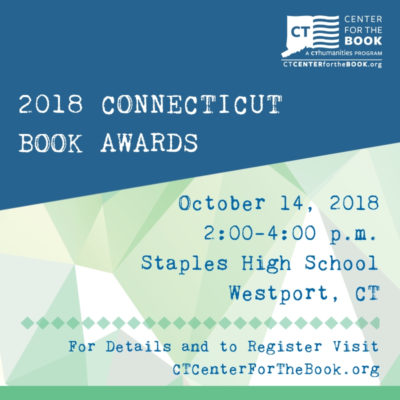
Connecticut Center for the Book, a Connecticut Humanities program, has announced the finalists for its 2018 Connecticut Book Awards. The awards recognize and honor authors and illustrators who have created the best books in or about our state in the past year.  A total of 140 books were submitted this year, up 28 percent over last year, as the returning awards program gains momentum. The annual awards returned last year after a multi-year hiatus, to solid reviews. Between three and five finalists have been selected in each of five categories: Fiction, Nonfiction, Poetry, Young Readers – Young Adult, and Young Readers – Juvenile. Five distinguished judges per category read each entry and reviewed works using rigorous criteria.

Winners will be announced at the 2018 Connecticut Book Awards ceremony on Sun., Oct. 14, from 2:00-3:00 p.m. at Staples High School in Westport.  Okey Ndibe, the 2017 Connecticut Book Award winner for nonfiction, will deliver the keynote speech. He has taught at Brown University, Connecticut College, Simon’s Rock College, Trinity College, and the University of Lagos (as a Fulbright scholar). He is the author of two novels, Arrows of Rain and Foreign Gods, Inc., and a memoir, Never Look An American In the Eye, for which he won the 2017 Connecticut Book Award for nonfiction.

A reception and book signing with this year’s winners, finalists, and Mr. Ndibe will immediately follow from 3:00-4:00; all finalists’ and winners’ books will be available for purchase.  Connecticut Humanities (CTH) is the state affiliate of the National Endowment for the Humanities and administers the Connecticut Center for the Book.  Established by Congress in 1977 to “stimulate public interest in books and reading,” the Center for the Book in the Library of Congress is a national force for reading and literacy promotion.

The finalists:

Fiction

  • Abby Fabiaschi, of West Hartford, Conn., “I Liked My Life”
  • Jane Green, of Westport, Conn., “The Sunshine Sisters”
  • Georgia Hunter, of Rowayton, Conn., “We Were the Lucky Ones”
  • Rene Denfeld, of Portland, Oregon, “The Child Finder”
  • Courtney Maum, of Norfolk, Conn., “Touch”

Nonfiction

  • Virginia DeJohn Anderson, of Boulder, Colo., “The Martyr and the Traitor – Nathan Hale, Moses Dunbar, and the American Revolution”
  • Duo Dickinson, of Madison, Conn., and Steve Culpepper, of New Haven, Conn., “A Home Called New England”
  • David Hays, of Chester, Conn., “Setting the Stage: What We Do, How We Do It, and Why”
  • James C. Scott, of Durham, Conn., “Against the Grain: A Deep History of the Earliest States”

Poetry

  • Gina Athena Ulysse, of Middletown, Conn., “Because When God is too Busy”
  • Jose B. Gonzalez, of Quaker Hill, Conn., “When Love was Reels”
  • John Surowiecki, of Amston, Conn., “Martha Playing Wiffle Ball in Her Wedding Dress”
  • Charles Rafferty, of Sandy Hook, Conn., “The Smoke of Horses”

Young Readers – Young Adult

  • Jake Burt, of Hamden, Conn., “Greetings from Witness Protection!”
  • Karen Romano Young, of Bethel, Conn., “Whale Quest”
  • Sarah Albee, of Watertown, Conn., “Poison”

Young Readers – Juvenile (includes authors and illustrators)

  • Gigi Priebe, of New Canaan, Conn., “The Adventures of Henry Whiskers”
  • Lauren Baratz-Logsted, of Danbury, Conn., “I Love You, Michael Collins”
  • Susan Hood, of Southport, Conn., “Double Take! A New Look at Opposites”
  • Deborah Freedman, of Hamden, Conn., “This House, Once”
  • Andrea Wisnewski, of Storrs, Conn., “Trio, The Tale of a Three-legged Cat”


The awards ceremony and reception are open to the public, and conclude Saugatuck StoryFest, a three-day literary festival and writers’ conference. Tickets purchased online before Sept. 15 are $20; then $25 through Oct. 11. Tickets will also be available at the door for $30.

Fairfield University Seen as "Transformative" Institution, Analysis Shows

When Money magazine ranked the 727 “Best Colleges For Your Money,” 2018 edition, Fairfield University ranked number 160.  But when the focus narrowed to the nation’s “most transformative” schools, Fairfield rose into the top 10, landing at number seven. Fairfield’s ranking as among the most transformative institutions, which is “when a college helps students do far better than would be expected from their academic and economic backgrounds,” recognizes the institution’s commitment to holistic formation and places it as the highest ranking Jesuit university in that category, according to school officials.

In the “most transformative” category, the list is led by Massachusetts College of Pharmacy and Health Sciences (MCPHS) in Boston, Babson College in Wellesley, MA, Bentley University in Waltham, MA, San Jose State University, Mount Saint Mary’s University in Los Angeles, and Manhattan College. 

Money magazine indicates that Fairfield “stands out for its comparatively high graduation rate. The school admits students of all faiths, but the curriculum does require some religious studies for all of the roughly 4,000 undergrads.”

“Of the school's 44 majors, the most popular courses of study include accounting, business, marketing, and the social sciences. The university also places an emphasis on community service and social justice.”

According to the magazine, full price tuition is $65,900; the estimated price with the average grant is $41,400. More than 8 in 10 students with need receive grants.  Early career earnings are estimated at $57,100, and average student debt at graduation is $27,000.

Money’s annual “Best Colleges for Your Money” ranking places Fairfield among the Top 100 private universities in the country.

In the magazine’s overall rankings, Yale University was #15, University of Connecticut ranked #50, Wesleyan University was #111, Connecticut College placed at #245 and Quinnipiac University was #341 on the list of Best Colleges for Your Money.


CT's Blockchain Working Group Strives to Drive State Policy in Emerging Field

It was established in the final hours of the 2018 legislative session, and held its first meeting the following month, back in June.  Special Act 18-8 created Connecticut’s Blockchain Working Group, with little fanfare and less notice.  The objective:  make recommendations to the incoming 2019 legislature that will “help promote innovation and economic growth by reducing barriers to and expediting the expansion of the state's blockchain industry.” While the Task Force was getting started, another blockchain initiative was grabbing headlines.  Seven Stars Cloud announced in early  July that it was planning to purchase the former University of Connecticut campus in West Hartford to develop a $283 million financial technology hub that would attract more than 50 companies, along with a research institute and training center, with blockchain technology being the centerpiece.

Local zoning approvals are pending, and the state has agreed to loan the company $10 million for renovations to the 58-acre property, and to forgive the loan if the company employs 330 people there over five years. In late August, the company changed its name to Ideanomics.

The legislation calls for the leaders of the legislature’s Commerce Committee – Republicans and Democrats – to  jointly appoint and convene a working group to develop a master plan for fostering the expansion of the blockchain industry in the state and recommend policies and state investments to make Connecticut a leader in blockchain technology. It calls for the “master plan” to:

  • Identify the economic growth and development opportunities presented by blockchain technology;
  • assess the existing blockchain industry in the state;
  • review workforce needs and academic programs required to build blockchain expertise across all relevant industries; and
  • make legislative recommendations that will help promote innovation and economic growth by reducing barriers to and expediting the expansion of the state's blockchain industry.

A final report and recommendations is due on January 1, 2019.

The Working Group, which met initially on June 28 in Stamford, is chaired by Nick Kammerman of Westport-based Chateaux.  Members include David Noble (UConn Business School), Don Tirea (Checkmate Inc.), Jamil Hasan (Blockchain Consultant), Kevin Hart (Green Check Verified), Emily Goodman Binick (Blockchain Consultant), Margaret Feeney (Nat West Markets), Bryant Eisenbach (DappDevs), Spencer Curry (Trifecta Ecosystems), Philip Bradford (UConn Engineering School) and Stephen Ehrlich (Crypto Trading Technologies).  Legislators participating in the Working Group are Senators Joan Hartley and L. Scott Frantz and Representatives Caroline Simmons and Dave Yaccarino.  State Economic and Community Development Commissioner Catherine Smith serves as an ex-officio member.

Among the tax treatments the Working Group discussed preliminarily at the meeting, according to the  official Minutes,  were creating “tax incentives for companies that create blockchain products or use them who are currently in the state or coming to the state,” “changing laws to give blockchain industries access to banks in order to pay taxes,” and “figuring out how the state of Connecticut can implement a system to help blockchain/cryptocurrency companies and individuals pay taxes and fees.”

Testifying in support of the legislature this spring, Spencer Curry, CEO and co-founder of Trifecta Ecosystems, explained that “blockchain stands to revolutionize global industries by creating new revenue models and driving costs down on existing revenue models, automating processes with smart contracts, increasing traceability/visibility, and hardening security to malicious attackers.”

Supriyo B. Chatterjee of West Hartford noted that “blockchain has arrived in the Connecticut industries andwith it brings high-vbalue jobs that will contribute significantly to the Connecticut economy.” He pointed out that blockchain will have a “profound effect on the health sciences industry,” as well as the insurance industry and STEM jobs, and will “fundamentally change the distribution of goods and services worldwide.”

Curry went on to suggest that “supporting this technology will benefit Connecticut’s workforce through an infusion of excellent talent from around the world.  If the State does not embrace blockchain technology, it … will only hasten the corporate flight from our state.”  He said that “if the State chooses to empower companies exploring blockchain technologies, then a new wave of prosperity and success awaits these tried and true Connecticut industries,” such as insurance, advanced manufacturing, healthcare, financial, agriculture and military supply chain.

Commissioner Smith, one of the seven people to submit testimony on the bill, told the Commerce Committee at the March public hearing that the department lacks “the in-house expertise to conduct an informed analysis” of “all facets of blockchain technology.” The original version of the bill included $200,000 allocation for the Department of Economic and Community Development to conduct the study.  The Senate amendment eliminated the funding allocation.

Don Tirea of DappDevs indicated that a blockchain initiative that “incentivizes research and development for enterprises and startups, coupled with a highly skilled tech talent pipeline is a recipe for economic revitalization across Connecticut’s historic industries.  He added that embracing blockchain technology would create a “shift in our nation’s perspective of Connecticut’s ability to innovate”

Co-sponsors of the original legislation (Senate Bill 443), which was later amended in the Senate, included Senators Michael McLachlan, Heather Somers, Scott Frantz, and George Logan.  House co-sponsors included Caroline Simons, Michael Winkler, Livvy Floren, Laura Devlin and Linda Orange.

PERSPECTIVE: CT's Small Towns Receptive to Regional Resource-Sharing

by Leo Paul Connecticut’s small towns and cities support initiatives to encourage voluntary regional cooperation to provide programs and services to meet the needs of local residents in a more efficient, cost-effective manner. As Connecticut’s small towns and cities struggle to do more with less, many communities are exploring new opportunities to share resources to meet these growing needs.

Connecticut’s Regional Councils of Government (COGs) have been instrumental in developing programs to assist towns in delivering services more cost effectively through shared services agreements and regional partnerships. These programs include a wide range of services and functions, including:

  • Regional Dispatch Centers
  • Regional Animal Control Facilities
  • Consolidation of Back Office Functions, i.e. IT, human resources, accounting
  • Regional Transfer Stations/Solid Waste Management
  • Regional School Districts
  • Regional Health Districts
  • Group Purchasing of Goods and Services
  • Shared Back Office Functions
  • Regional online permitting, GIS mapping, and property revaluation.

Programs such as the Regional Performance Incentive Program and Intertown Capital Equipment (ICE) Sharing program have been successful in encouraging communities to utilize regional approaches to delivering services and purchasing equipment to stretch limited municipal dollars. The ICE program, for example, provided state support for the shared purchase of capital equipment, an initiative that allowed towns to share the cost of new/replacement equipment needed to perform critical town services, such as plowing, mowing and fire trucks, etc.

Several years ago, town leaders in Litchfield County implemented a program to share heavy equipment. Ten towns in the area benefit from this program, the Litchfield Hills Public Works Equipment Cooperative, which allows the towns to share major equipment for road maintenance. Two street sweepers and one catch basin cleaner were purchased through the program, which was made possible by a $700,000 grant the council received from the state’s Regional Performance Incentive Program.

Unfortunately, funding for RPIP has been significantly reduced over the years and the ICE program has been eliminated. This is unfortunate because regional sharing programs that allow towns to reduce costs without undermining efficiency are certainly a win-win for the towns and taxpayers.

Regionalism is no Silver Bullet

COGs have been successful in fostering collaborate shared service programs because they work with member towns to identify needs and perform feasibility studies to determine how regional approaches will impact costs and service delivery. This approach recognizes that regional approaches don’t always save money or ensure that services will be delivered more efficiently. According to a 2008 study by Dr. Steve Lanza, editor of The Connecticut Economy, “Municipal consolidation or other service-sharing plans offer no silver bullet for the problem of costly, local public services.”

Too often, legislation promoting regionalism is proposed without fully analyzing whether regionalizing certain programs or services makes sense from an economic and/or service delivery standpoint. A prime example of this is the proposal from the state Department of Public Health to consolidate health districts. This was a top down approach to regionalism that failed because it would have consolidated health districts without regard for cost or for the impact on service delivery to residents. COST attended meetings along with representatives from towns, cities, health districts and health professionals and not one person in the room supported the consolidation proposal.

Unless it can be demonstrated through a thoughtful and comprehensive policy analysis that regional proposals will provide significant benefit or savings, the state should not push towns to rush headlong into such arrangements. Fortunately, COGs are actively working with member towns to determine when regionalism and shared service programs make sense and what it takes to get there.

Successful State/Local Partnerships

In promoting regionalization of services, policymakers should recognize the value of strong state/local partnerships in providing critical services to residents in a cost-effective, value added manner. For more than 60 years, the Resident State Trooper program has been a successful model of a strong state/local partnership that allows towns to share resources and provide critical public safety services to our communities. Not only does the program assist small towns in maintaining a public safety presence, resident state troopers are routinely dispatched from their towns to respond to state police matters outside of their community. The program is a win-win for the state and our small towns and residents.

Unfortunately, towns have had to pay an increasing amount to continue to participate in the program and we are concerned that any additional increases in costs will make it too costly for municipalities to maintain their resident troopers. Towns have explored options to create stand-alone police departments or regional police departments, but these programs are much more costly than the resident trooper program. The towns of Roxbury and Bridgewater have entered into an arrangement to share a resident trooper, which has proven beneficial for both communities, which are very small.

In addition to regional and shared service models, towns have been exploring opportunities to consolidate non-educational expenditures and functions within their communities. For example, the Town of Canton recently entered into an agreement with its Board of Education to share a Finance Director. Other towns have consolidated back office functions under the state’s Nutmeg Network, consolidated maintenance, Human Resource, and other functions. COST supports efforts to assist towns and boards of education in consolidating non-educational expenditures and functions.

Barriers to Regionalism

COGs have worked with towns to successfully identify and support municipal opportunities to regionalize services and improve efficiencies and, as mentioned, there are a number of success stories. However, consolidating services can be difficult and towns often require assistance in 1) undertaking feasibility studies to determine whether consolidation is cost-effective; 2) addressing liability issues that may arise due to sharing arrangements; 3) negotiating contracts for shared services; and 4) addressing collective bargaining/union issues that may undermine savings associated with regional efforts.

COST stands ready to work with lawmakers to develop and support common sense proposals that facilitate the ability of municipalities to

  • regionalize certain programs and functions in ways that make sense for the communities involved and for our property taxpayers;
  • maintain strong state/local partnership approaches to the delivery of services, such as the Resident Trooper program;
  • support the consolidation of non-educational expenditures and functions to improve municipal efficiencies;
  • enhance the management of regional school districts; and 5) address barriers to regionalization, including collective bargaining agreements and statutory requirements.

_______________________________

Leo Paul is First Selectman of the Town of Litchfield, and President, Connecticut Council of Small Towns.  This is an excerpt of testimony submitted to the Connecticut state legislature’s Planning and Development Committee at an Informational Forum on Shared Services and Regional Efficiencies held during the legislative session, earlier this year.

DataHaven to Launch Innovation Awards to Recognize Data-based Initiatives in CT

In conjunction with its 25th anniversary celebration this year, New Haven-based DataHaven has announced plan to launch the DataHaven Innovation Awards, which will be open to nominees from throughout the state. Winners will be selected in a number of education and community impact categories. Nomination will be accepted through October 1, and the award recipients will be announced at DataHaven’s 25th Anniversary Celebration on November 19, 2018. DataHaven is a non-profit organization with a history of public service to Greater New Haven and Connecticut. The organization’s mission is to improve quality of life by collecting, sharing, and interpreting public data for effective decision making.

“We are proud to highlight the creativity and ingenuity of those who employ data to make Connecticut a better place,” explained DataHaven Executive Director Mark Abraham. The awards will recognize organizations, groups and individuals who have demonstrated the ability to use data to improve the well-being of Connecticut communities.

The inaugural Data in Education Awards will recognize the outstanding use of data for projects developed within a classroom or educational setting. Nominations will be accepted in two categories, University and Graduate Level and K-12 Level.  Nominees can include teachers, students, school-based organizations, and non-profits working with youth.

The Data for Community Impact Awards will recognize the outstanding use of data to make a positive difference in one or more Connecticut communities. Nominations will be accepted in two categories: Large Organization, with more than 20 employees, and Small Organization, with less than 20 employees.  Nominees can include nonprofits, for-profits, funders, unincorporated groups, and municipal/state agencies.

Liberty Bank Foundation is underwriting the DataHaven Innovation Awards.

DataHaven maintains extensive economic, social, and health data, including information collected through the DataHaven Community Wellbeing Surveys in 2012 and 2015. DataHaven is a formal partner of the National Neighborhood Indicators Partnership of the Urban Institute in Washington, DC.

“We believe that data is a powerful force, uniting our state and helping make life better in Connecticut communities,” says Abraham. “Our statewide survey provides neighborhood-level data in key areas such as health, education, civic engagement and economic opportunity, so that programs and resources can be deployed to change lives for the better. Our goal is still to make life better for our neighbors.”

Presenting sponsors for the organization’s 25th anniversary year are the City of New Haven, Yale University, Yale New Haven Health and The Community Foundation for Greater New Haven.  Nomination forms for the DataHaven Innovation Awards can be found at http://www.ctdatahaven.org/anniversary and are due by October 1, 2018.