Girls With Impact, Girl Scouts Collaborate to Increase Entrepreneurship Among Teen Girls

In an effort to get girls career-ready, Connecticut-based Girls With Impact, the nation’s only tech-enabled entrepreneurship program for teen girls, is launching a partnership with Girl Scouts of Connecticut to enable girls to parlay their cookies experience into their own businesses. “Entrepreneurship is one of the four programmatic pillars that comprise the Girl Scout Leadership Experience,” said Mary Barneby, CEO for Girl Scouts of Connecticut. “We welcome the opportunity to partner with Girls With Impact to provide our older Girl Scouts with a ‘virtual MBA’ in developing their own business plans. We are creating the next generation of female leaders and programs like this give our girls a real edge and help them become more confident and career-ready.”

Girls With Impact CEO Jennifer Openshaw says her goal is to train 10,000 young women as entrepreneurs, equipping them with the skills to start businesses or serve as innovators within corporate America.

Girl Scouts members will be entitled to participate in the Girls With Impact Academy – a 12-week “mini-MBA” program, valued at $2,000, that equips girls with business skills. The program, now in its third year, has helped some past participants to earn full scholarships at top colleges. Sessions are offered throughout the year, with various schedules. The reduced fee for Girl Scouts will be just $450, and scholarships are available.

It is both a skills-builder and confidence builder, critical for teenage girls as they navigate their teens and look forward to careers.  Openshaw points out that only 6 percent of Fortune 500 CEOs are women and just 36 percent of entrepreneurs are women.  Those are statistics she hopes to change.  The after-school, extra-curricular program has seen exceptional results in confidence, empowerment, college prep and career readiness, including STEM areas.

“Girl Scouts is one of our nation’s most powerful leadership training grounds for young women,” said Openshaw. “We’re thrilled to support Girl Scouts as it seeks to modernize and remain relevant for young women in the new global economy.”

Girl Scouts of Connecticut serves over 26,000 girls and over 12,000 adults giving girls the skills they need to empower themselves for life. Through the Girl Scout Cookie Program, the largest girl-led entrepreneurial program in the world, Girl Scouts learn five essential skills that they will carry with them for a lifetime: goal setting, decision making, business skills, money management, and people skills.

Through the Digital Cookie® platform, Girl Scouts are able to take their cookie businesses online, using their own personal website to reach customers across the country, experiencing true enterprise. Barneby called on girls to bring a friend to Girls With Impact and “build your network for tomorrow.” She says the tech delivery enables girls to connect with others nationwide and build that support system so critical to career success.

Girls With Impact, a nonprofit, is the nation’s only entrepreneurship program just for teen girls, delivered live from the home or road. Applications are accepted at  www.girlswithimpact.com.

Institutional Investors, Including Connecticut, Seek to Influence Firearms Industry

A coalition of global institutional and private investors, including the $35-billion Connecticut Retirement Plans and Trust Funds (CRPTF), has announced plans to be guided by a newly developed set of principles developed to encourage a “responsible civilian firearms industry.”  The guidelines, established as part of their “fiduciary responsibility,” aim to encourage the firearms industry to address gun safety issues. Since the 2012 Sandy Hook tragedy, Connecticut State Treasurer Denise Nappier has engaged with companies in which the State invests that manufacture, distribute and sell guns and ammunition, raising the business case for reasonable regulation of firearms and ammunition sales in order to mitigate the potential long-term business risk posed by high rates of mortality that are attributed to the misuse of firearms, according to the Treasurer’s Office.

“The proliferation of gun violence is not only a public health issue but also a business risk issue, both of which are central to our fiduciary role as long-term institutional shareholders,” Treasurer Nappier said.

The launch of the Principles for a Responsible Civilian Firearms Industry by investors with combined assets under management of more than $4.8 trillion builds on the Treasury’s engagement effort.  Among the institutional investors signing on to the new principles are funds in states that have seen headline-raising mass shootings, including Florida and California, in addition to Connecticut.

The principles would apply to public and private companies that are involved in the manufacture, sale and distribution of civilian firearms, officials said.  They are focused on reducing risk, which is a priority for institutional investors who have a fiduciary obligation to invest pension assets prudently and to monitor and manage risks.

Over the past decade, shootings involving multiple victims have been on the rise with 2017 being the worst year on record. It is estimated that in 2017 alone, excluding suicides, more than 15,000 people were killed by guns in the United States including students, teachers, and law enforcement officers, according to Gun Violence Archive, a non-profit organization that tracks media and law enforcement reports of shootings.

This year there have been several shootings resulting in multiple fatalities at schools, bars, religious institutions and other places where large numbers of people congregate.

“We must do better,” Treasurer Nappier said.  “We must continue to speak out, contribute constructively to the public debate over this important issue, and achieve the outcome for which we all strive: the safety of our communities and of all our citizens.”

The five principles serve as a conversation starter for investors to use when engaging companies to be active participants in protecting and enhancing long-term portfolio values by ensuring risks are being appropriately monitored and addressed.  The five principles include:

  • Principle 1: Manufacturers should support, advance and integrate the development of technology designed to make civilian firearms safer, more secure, and easier to trace.
  • Principle 2: Manufacturers should adopt and follow responsible business practices that establish and enforce responsible dealer standards and promote training and education programs for owners designed around firearms safety.
  • Principle 3: Civilian firearms distributors, dealers, and retailers should establish, promote, and follow best practices to ensure that no firearm is sold without a completed background check in order to prevent sales to persons prohibited from buying firearms or those too dangerous to possess firearms.
  • Principle 4: Civilian firearms distributors, dealers, and retailers should educate and train their employees to better recognize and effectively monitor irregularities at the point of sale, to record all firearm sales, to audit firearms inventory on a regular basis, and to proactively assist law enforcement.
  • Principle 5: Participants in the civilian firearms industry should work collaboratively, communicate, and engage with the signatories of these Principles to design, adopt, and disclose measures and metrics demonstrating both best practices and their commitment to promoting these Principles.

“More companies are recognizing that we do not need to work through these issues as adversaries, because we are not.  We share a common interest in their future growth and success, and in promoting the sustainable health of the economic, social and environmental framework within which they exist,” Nappier said.  “Our investments and the future well-being of millions of American pension fund beneficiaries are dependent on responsible corporate governance and citizenship of the portfolio companies in which we invest, but we also can influence it.”

Signatories, besides the CRPTF, include: the California Public Employees Retirement System; the California State Teachers’ Retirement System; the Florida State Board of Administration; the Maine Public Employees Retirement System; the Maryland State Retirement and Pension System; Nuveen, the asset manager of TIAA; OIP Investment Trust; the Oregon Public Employees Retirement Fund; Rockefeller Asset Management; the San Francisco Employees’ Retirement System; State Street Global Advisors; and Wespath Investment Management.

The principles were conceived earlier this year when Harvard University Advanced Leadership Fellow Christianna Wood and Christopher J. Ailman, chief investment officer of the California State Teachers’ Retirement System (CalSTRS), convened a group of asset owners, asset managers, and financial institutions to design pragmatic principles for portfolio company engagement in the firearms industry that both gun manufacturers and retailers could embrace.

“The objective of the initiative was to mitigate reputational and financial risk in the investment portfolio. We believe these principles will help to ensure the long-term financial health of the civilian firearms industry and where possible, allow for continued investment/funding of companies within the industry,” the coalition said.

“These principles are an engagement solution to divestment and meant to stimulate productive dialog within the industry. Working together, we can build and leverage solid relationships as we make progress toward mitigating risks, not only to the civilian firearms industry, but also on behalf of our investments,” Ailman said.

Treasurer Nappier said that the Treasury will use the principles as a foundation for conversation and collaboration with the companies in the gun industry in which the CRPTF has investments.  Nappier will conclude 20 years as State Treasurer in January.  She did not seek re-election, and will be succeeded in office by Shawn Wooden, who was elected by Connecticut voters earlier this month.

State Sets Goals to Improve Oral Health, Already Third in the Nation

Connecticut ranks third for overall dental health in the nation, but there are still people who are at risk in the state, based on age, income, race, ethnicity, or education, among other demographic characteristics. Oral health is essential to overall health and quality of life, according to experts in the field, who point out that oral health is closely linked to physical health and well-being. Having good oral health means being free of gum disease, tooth decay, and tooth loss; as well as oral cancer, infection, and pain, officials note. That is because all may limit one’s ability to chew, bite, smile, and speak properly. Pre-term births and chronic conditions, such as diabetes, heart disease, lung disease, and stroke, are also associated with poor oral health, data indicates. 

Looking ahead to determine the steps to take on a statewide basis, the Connecticut Department of Public Health (DPH) contracted last May with the Connecticut Oral Health Initiative (COHI), to develop and write the state oral health improvement plan. An advisory committee of experts assessed the needs, available resources and gaps related to the oral health of all populations, and formulated focus areas, goals, objectives, strategies, and identified potential partners.

The report, now complete, is the Oral Health Improvement Plan for the State of Connecticut, 2019-2024.  Over 60 interested parties submitted comments, recommendations and data resources. The data in this plan were taken from surveys and studies conducted in Connecticut. Throughout the process, COHI collaborated with DPH's Office of Oral Health, used a "health equity lens" to address oral health disparities, and ensured that the objectives were measurable.

The framework of the plan includes four focus areas - prevention, access and utilization, medical and dental integration, and data collection and analyses. The plan goes on to outline 16 objectives, suggested strategies, and potential partners. It is intended to “guide efforts of state and community programs that are dedicated to ensuring access to oral health services for all residents; regardless of race, ethnicity, education, or class background,” wrote State Health Services Commissioner Raul Pino M.D, M.P.H. in the report’s forward.

The four goals determined through the process that provide the framework for the report’s recommendations:

  1. Reduce the incidence of oral disease among Connecticut populations by use of  evidence-based preventive interventions.
  2. Ensure access to, and utilization of, quality, comprehensive, and continuous oral health care for all Connecticut residents, particularly at-risk populations.
  3. Increase integration of dental and medical health care systems, policies, and programs.
  4. Collect and analyze oral health data to measure outcomes and inform decisions to improve the health of Connecticut residents.

In the prevention area, the report determined four objectives:

  1. Reduce to 35%, the proportion of Connecticut children in third grade who have dental caries (tooth decay) experience in their primary or permanent teeth.
  2. Increase by 10%, the proportion of Connecticut third grade children who receive dental sealants on at least one of their permanent molar teeth.
  3. Reduce to 0%, the five-year rate change in the incidence of Connecticut residents who experienced oral and/or pharyngeal cancer.
  4. Maintain Connecticut’s statute for community water fluoridation

In the access and utilization category, the recommendations included:

  • Reduce to 14%, the proportion of Connecticut third grade children with untreated dental decay.
  • Increase to 31%, the number of Connecticut schools with 50% or greater participation in Free and Reduced Meals (FARMs) in which dental services are provided.
  • Increase by 5%, the proportion of Connecticut children and adults who had a dental visit in the past year.
  • Reduce by 5%, the proportion of Connecticut older adults who attend congregate meal sites who have untreated dental decay.
  • Reduce by 5%, the proportion of Connecticut older adults in long-term care sites who have untreated dental decay.
  • Increase by 5%, the proportion of Connecticut older adults who have dental benefits.

In medical/dental integration, the report set as the state’s goals:

  1. Increase by 10%, the number of Connecticut’s federally-qualified health center (FQHC) locations that offer dental services.
  2. Increase by 5%, the proportion of Connecticut HUSKY Health primary care providers who include an oral health assessment in child wellness visits.
  3. Increase by 5%, the proportion of Connecticut HUSKY Health children under the age of 6 who received fluoride applications by a primary care provider in the past year.
  4. Implement diabetes pre-screening and referral to a primary care provider in at least five Connecticut FQHC dental programs.

The report also called for incremental change in the area of data collection and analysis, including increasing to fifteen the number of data sources and indicators that are collected, analyzed, interpreted, and disseminated; and increasing to three the number of Connecticut agencies and organizations - beyond State Agencies - that implement a health equity checklist to inform oral health policies and programs.

Credit Card Balance? CT Residents Have Nation's Second Highest, on Average

With the holiday gift-giving season on the horizon, the sound of credit cards are being pulled from wallets and numbers being typed into online sites is also upon us. Before those bills even come due, Connecticut residents have a head start in building credit card balances. Connecticut residents have the highest average credit card balance, at $7,258, in the continental United States.  Alaska, at $8,515, is the only state where residents have a higher average balance in the U.S.

Rounding out the top ten are Virginia ($7,161), New Jersey ($7,151), Maryland ($7,043), Hawaii ($6,981), D.C. ($6,963), Texas ($6,902), Colorado ($6,718), and Georgia (6,675).  New York is next at $6,671.

The states with the lowest credit card balances overall are Iowa and Wisconsin, with an average of $5,155 and $5,363, respectively.

Connecticut average credit card balance - $7,258, - is not only second highest in the nation, but the average number of credit cards owned by Connecticut residents is 3.23, which ranks fifth among the states.  The states where people opened the most credit cards were New Jersey and New York, with an average number of 3.49 and 3.34 cards per person, respectively.

On the state’s average income of $70,121, which is second highest in the U.S., the average credit card balance is 10.35 percent of income.  Because of Connecticut’s high average income, the percent of income average is fourth lowest among the states.

The analysis, by the financial website Upgraded Points, used data of average credit card balances from Experian’s State of Credit: 2017, and data of average annual income by state in 2017 from research by the Federal Reserve Bank of St. Louis.

The analysis notes that “for the 58.8 percent of American households that pay off their balances in full, credit card debt is not a problem. But the other 41.2 percent carry some amount of debt every month and must pay interest fees.” In 2017, overall American credit card debt, according to Upgraded Points, broke through the $1 trillion mark and set an all-time high. The last time credit card debt was over $1 trillion was right before the Great Recession in 2008. In 2017, a survey by Pew Research found that only 46 percent of Americans made more than they spent.

The data indicates that states near the coasts tend to have the highest absolute credit card balances. “The only two states in the top 10 that aren’t by the ocean are Texas and Colorado.  States in the Midwest tend to have the lowest average credit card balances. Only three states in the bottom 10 were not in the Midwest: West Virginia, Arkansas, and Mississippi.”


Hartford, New Haven As “Suburbs” of Boston and New York Raises Possibilities - and Pushback

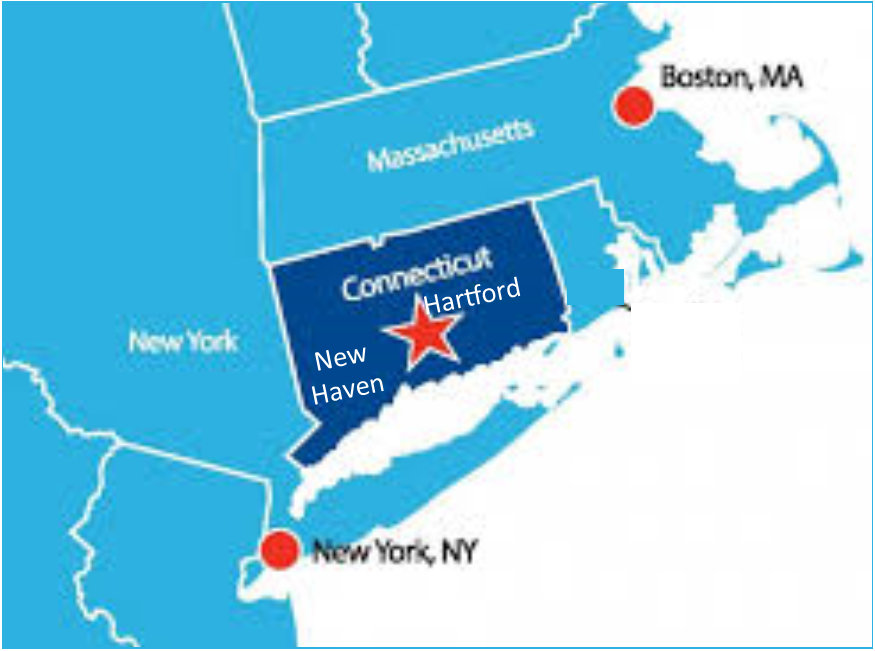
The objective was to provide evidence that Connecticut is on the cusp of a transit renaissance.  But a “thought leader” article by a prominent faculty member at the University of Connecticut School of Business – an acknowledged expert in transportation and its impact on residential property values – has drawn a range of reactions from municipal, business and transportation officials in Connecticut, including some pushback. The article, by UConn associate professor of real estate and finance Jeffrey Cohen, stated that “with high speed, inter-state transportation, it would be much easier for Greater Hartford and New Haven to thrive as suburbs of Boston and New York City.  Imagine how great it would be to hop on a fast train to Logan Airport, JFK or LaGuardia.  The world would be at our doorsteps, and our doorsteps would be there for the world to explore.”

The characterization of two of the state’s largest cities as potential “suburbs” of New York and Boston, seemingly overlooking Bradley International Airport and Tweed-New Haven in the process, has raised questions from officials.
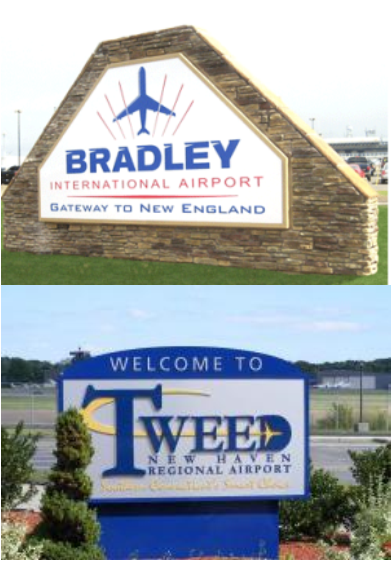

“As the second-largest airport in New England and the recently ranked third-best airport in the country, Bradley Airport offers convenience and efficiency that the airports in Boston and New York cannot match. Enhanced rail connectivity to the airport would be a major win for passengers throughout Connecticut and Western Massachusetts, and we would encourage UConn to consider maximizing the airport in its own state rather than promoting the outsourcing of Connecticut’s economy to its neighbors,” Connecticut Airport Authority Executive Director Kevin A. Dillon, A.A.E, told CT by the Numbers.

“While the Connecticut Airport Authority is supportive of high-speed rail connectivity in Connecticut, it is unfortunate that UConn would not recognize the benefit of promoting and utilizing Bradley International Airport as the primary airport for travelers in the region,” Dillon added.

“With regard to Bradley, Aer Lingus’ commitment to another four years of service between Hartford and Dublin is a huge boon to our economic development efforts and we hope other airlines will take note and pursue additional domestic and international routes,” said MetroHartford Alliance’s Brian Boyer, Vice President of Communications, Marketing, and Media and Public Relations.  “It’s time to continue showing loyalty to our hometown airport as we position ourselves as a global region attracting international companies. With the ease of use at Bradley, brief 90-minute layovers in Dublin en route to destinations throughout Europe, pre-screening on return flights to clear customs before arrival in Hartford and the prospect of attracting new airlines, this flight is a win-win for our community.”

While some officials saw possibilities, as did Cohen, in the potential impact of continued enhancements to the state’s transportation system, they also acknowledged that those changes were not immediate and current assets should be maximized.

“Fast-growing healthcare, pharmaceutical, and technology sectors of the New Haven economy would be well-served with easier access to major markets in New York and Boston, and the international transportation options in those cities as well,” pointed out New Haven Mayor Toni N. Harp. “We know one-hour train service between New Haven and New York is technologically feasible: what we need to complete the project is the collective will to make it so.”

“High speed rail offers tremendous opportunities for New Haven.  Our proximity to New York City is already a great selling point for the region, if the commute time became significantly shorter, then we are that much more attractive as a location.  We should strive for this type of transportation improvement,” said Garrett Sheehan, president of the Greater New Haven Chamber of Commerce.

Sheehan went on to emphasize that “planning for the future of transportation should not take away from the present.  This type of high speed rail is years away.  In New Haven, we have an incredible transportation asset in Tweed-New Haven airport.  It is already located within the city limits and just short drive from anywhere in this region.  The Chamber supports expanding the airport’s runway and investing in Tweed to bring back more flights and destinations.  Even a handful of more flights would be beneficial to the economic growth of our region.”

Cohen, who has received national recognition in his field, praised the CTrail Hartford line - which connects New Haven, Hartford, and Springfield, MA - and CTfasttrak bus line – which links Hartford and New Britain - noting that “we are starting to see residential and business development near the stations, and this is one of the big benefits of transit.”

He added that “Some people in New York are starting to discover the hidden treasure of relatively low-priced real estate, along with the good schools, beautiful parks, and savory restaurants in central Connecticut.”

“An ideal location with easy access to major cities in the Northeast and Mid-Atlantic, we are proud to be at a point where talent and businesses from these markets should consider Hartford as an opportunity for economic growth and development,” the MetroHartford Alliance’s Boyer noted. “Transportation plays an integral role in this growth and with the new Hartford Rail Line and the continued growth at Bradley International Airport as one of the nation’s top mid-sized airports, we look forward to working with our community and prospective businesses to ensure long-term economic growth for generations.”


CT Voter Turnout Appears Highest for a Gubernatorial Race Since 1990

In the early 1990’s, voter turnout in Connecticut’s gubernatorial elections reached 68.2 percent in 1990 and 65.1 percent in 1994.  Turnout hasn’t reached that high level in the state’s quadrennial gubernatorial elections since – until Tuesday. The Office of Secretary of the State is reporting, as of Wednesday night, that statewide voter turnout was 66.9 percent.  If that turnout percentage stands, it would be the highest turnout in a race for Governor in nearly three decades, since 1990.

The strong turnout percentage this year is underscored by the fact that the number of registered voters is considerably larger.  As of Nov. 2 – not including those individuals who registered and voted on Election Day – the number of registered voters in Connecticut was 2,165,045, according to the Office of Secretary of the State.  Back in the ‘90’s, the list of registered voters hovered between 1.7 million and 1.8 million.  This year’s election brought a higher percentage of voters to the polls from a larger list of individuals registered to vote.

Voter turnout – the percentage of registered voters who actually vote – was 56.6 in 1998, 56.5 in 2002 when there were 1.8 million registered voters, and 59.8 in 2006 when the voter rolls reached 1.9 million.

The 1990 race featured well-known, high profile candidates for Governor – former U.S. Senator Lowell Weicker, Congressman Bruce Morrison and Congressman John Rowland.  The race was won by Weicker, running as a third party candidate.  Rowland would go on to win the office four years later, when voter turnout was somewhat lower.

In 2006, when the Connecticut voters considered their choices in a gubernatorial match-up between Gov. Jodi Rell and New Haven Mayor John DeStefano, a U.S. Senate race that featured Sen. Joe Lieberman, Democratic candidate Ned Lamont and republican Alan Schlessinger was also on the ballot drawing considerable interest.  Turnout that year reached 59.8 percent.

In 2010, Democrat Dannel Malloy won his first term as Governor, defeating Republican Tom Foley by the relatively narrow margin of 6,404 votes.  A third party candidate, Tom Marsh, received 17,629 votes.   Voter turnout that year was 57.4 percent.

Voter turnout is consistently higher in presidential election years.  In 2016, for the Donald Trump – Hillary Clinton contest, the voter turnout in Connecticut was 76.9 percent.  It had been slightly higher in 2008, when Barack Obama was on the ballot here for the first time, at 78.1 percent.

The number of people registered to vote also tends to surge in presidential election years.  In 2016 in Connecticut, the voter list included 2.1 million residents.  This year’s voter registration numbers, just prior to Election Day, were closing in on that total.

This story was updated at midnight Wednesday to reflect latest turnout percentage provided by the Office of Secretary of the State, which increased slightly throughout the day as additional information was provided by municipalities.

Progress Cited on Integrating Pedestrian, Bicyclist Safety Into State Transportation Projects

What comes next at the Department of Transportation was on the minds of more than 150 advocates and enthusiasts gathered for the Annual Meeting of Bike-Walk Connecticut  at Central Connecticut State University in New Britain this past weekend.  The fast-approaching close of the Malloy administration may also mean the end of the tenure of DOT Commissioner James Redeker, who has not only walked the walked, but rode the ride in “building and delivering a comprehensive pedestrian and bicycle program.” The accelerated change in attitude at DOT since Redeker took the helm in 2011 was evident in his being warmly introduced as a friend prior to his keynote address – not the adversary that previous vehicle-centric commissioners may have been.  He went on to highlight the department’s work on state projects, and in concert with municipalities, that is steadily transforming Connecticut into a more pedestrian and bike-friendly state.
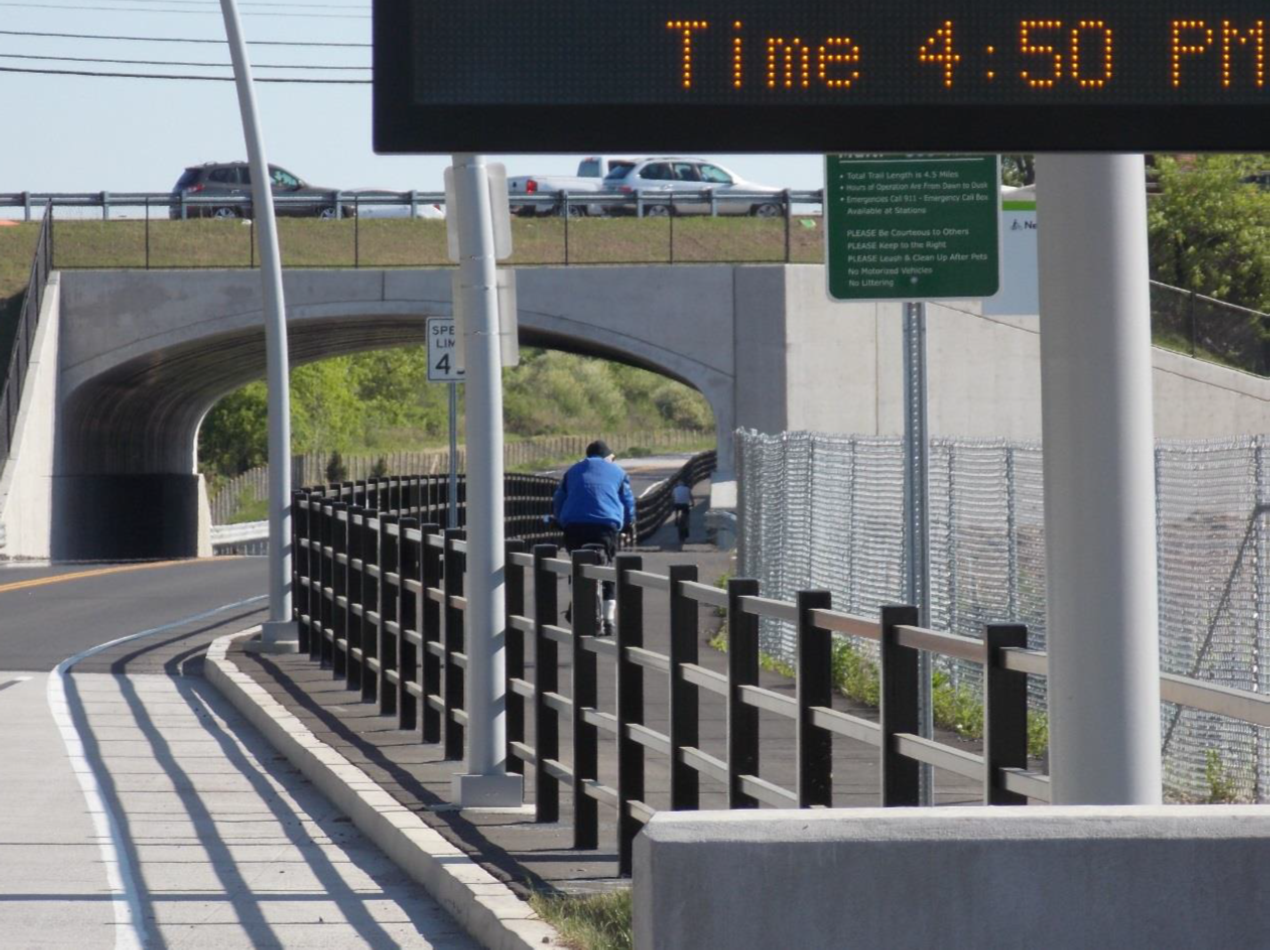


Redeker’s presentation demonstrated why.  Among the highlights:

  • Connecticut has or will be constructing 97 miles of multi-use trails along side road construction or reconstruction through 2021, and 35 miles of sidewalks accompanying road construction.
  • A vendor-in-place resurfacing program has meant that 94 percent of roadways reconstructed have been restriped with wider shoulders, and roadway safety audits have been conducted on 145 miles of roadway and at 917 intersections.
  • Enhanced pedestrian signage and pavement markets at uncontrolled crosswalks have been included in 1200 locations on state roads, with an additional 1500 locations planned for local roads in 2019. In addition 133 locations are planned for upgraded pedestrian controls at signalized intersections by 2020.
  • 125 projects have been reviewed for Complete Streets design in 2017, with an additional 97 projects reviewed thus far in 2018. More than 80 Road Safety Audits have been conducted.

Driving the “absolutely amazing statistics” is a changed policy, Redeker said.  Now, supporting “safe access for all users by providing a comprehensive, integrated, connected multi-modal network of transportation options” is ingrained at DOT.  He noted that integrating trails is occurring regularly on major projects, with the goal of building a statewide trail system.

“Complete streets is now part of the DOT DNA,” Redeker explained.  Responding to some who question the lack of such plans as part of the agency’s manual, Redeker cited the statistics, adding, “look at us for outcomes, not manuals.”  The numbers – and the accomplishments - drew solid reviews in the room.

The agency’s Complete Streets program, established in 2014, established a new unit to review every project specifically for bicyclist and pedestrian needs, and requires project designers to evaluate and prepare a written assessment of pedestrian needs on every project.  A standing committee was also formed to guide and implement policy and practices, Redeker pointed out.

He noted that the changes are evident in large cities and small towns in Connecticut, from Hartford New Haven to Waterford and Washington.  He also highlighted the introduction of roundabouts in Connecticut communities, including Monroe, Seymour and Ellington, and Community Connectivity Grants that have funded 40 small-scale local projects totaling $12 million, with another 40 to be requested for upcoming State Bond Commission agendas, with an estimated cost of $13.4 million.

Upgrades in school warning signs include the replacement of traditional yellow signage with fluorescent yellow-green to enhance visibility was completed in 2015.  Pedestrian warning signs were replaced on state routes in 2017, and are on schedule to be upgraded on local routes in 2019 and include greater use of yield bars on pavement.

Upgrades in school wanting signs include the replacement of traditional yellow signage with fluorescent yellow-green to enhance visibility, and greater use of yield bars on pavement.  Signs were replaced on state routes in 2017, and are on schedule to be upgraded on local routes in 2019. 

Traffic signals are also being replaced along state roadways, with “pedestrian safety our number one concern,” Redeker stressed.  It is an extensive task.  Connecticut has more traffic signals that exceed 30 years old, more than any other New England state and the 10th highest volume in the U.S.

Mention of the state’s “Watch For Me” campaign drew extended applause – the comprehensive initiative seeks to alert the public to the presence of pedestrians and bicyclists, to underscore the importance of assuring safety and police enforcement.


Danbury Leads CT in 5-Year Job Growth; 41st in Ranking of 50 States’ Leaders

When job growth is measured over the past five years, Danbury leads the way in Connecticut. An analysis of changes in employment figures between 2013 and 2018 from the 381 metropolitan areas defined by the U.S. Census Bureau focused on the leading city in each state, and ranked them. The analysis, by the website howmuch.net, found that Danbury - which saw job growth of 6.6 percent - outpaced Connecticut’s largest cities, but that the leading city in 40 of the 50 states had a stronger track-record.

The leading cities in five-year job growth were Lake Charles, LA: 28.3%; Bend-Redmond, OR: 26.6%; Elkhart, IN: 24.0%: St. George, UT: 23.4%; Greeley, CO: 21.1%; Gainesville, GA: 20.9%; Fayetteville, AR: 20%; Boise City, ID: 18.6%; Austin, TX: 18.4%; and Reno, NV: 18.0%.  The analysis notes that the top cities “are truly remarkable job markets at the center of the recovery, perhaps because they were hardest hit by the recession.”

The standing of Austin, Charlottesville and Nashville are noted for “a reputation as fun destinations with music and tech scenes. They are mid-sized cities with universities, hospitals, and large well-known employers. These are the ingredients for long-term economic growth and positive employment numbers.”

“In many ways, Danbury is the forgotten city in Fairfield County up north here,” P.J. Prunty, executive director of the Greater Danbury Chamber of Commerce, told the Danbury News-Times earlier this year. “These statistics show that people are attracted to a city that has opportunity and good employment. It’s growing, and that’s a good thing. People are voting with their feet by moving here.”  Back in April, the Danbury Labor Market Area had the lowest unemployment rate of the nine LMAs in the state. The Danbury LMA outpaced the state and national unemployment rates, the News-Times reported.

Leading the way in the five-year analysis, released this month, are Barnstable in Massachusetts, at 13.7 percent employment growth; in New Hampshire it is Portsmouth at 10.1 percent, in Rhode Island, Providence/Warwick at 7.7 percent; Maine the greatest job growth has been in Portland/South Portland at 7.1 percent.  Vermont is the only New England state with a leading city growing jobs at lower rate than Connecticut’s – Burlington/South Burlington at .8 percent.  Only Alaska and Wyoming are lower, rounding out the 50 states.

Also noted:  “Some places are factory towns with unsustainable growth rates. Others are truly remarkable places to live with thriving, growth-oriented economies, and still others are barely seeing any benefits from the economic recovery.”


Accelerating Efforts to Prevent Suicide in CT as Numbers Climb

The Centers for Disease Control and Prevention (CDC) released a report this year which indicated that suicide rates nationally jumped by 25 percent since 1999, a finding that “shocked” even experts who believed the rate had been flat. Each year, more than 41,000 individuals die by suicide, leaving behind their friends and family members to navigate the tragedy of loss, according to the National Alliance on Mental Illness. Connecticut's rate, 9.7 deaths per 100,000, rose 20 percent during that time, and 49 states saw an increase, according to the CDC. Connecticut’s suicide rate, is ranked number 46 in the country.

Suicide is the 10th leading cause of death in the U.S. with one occurring on average every 13.3 minutes.

For every suicide, there are 30 people who made the attempt, Dr. James F. O'Dea, vice president of the Behavior Health Network of Hartford Healthcare, recently told the Meriden Record-Journal.  The U.S. Health Resources & Services Administration reports that “approximately 45% of suicide victims had contact with primary care providers within 1 month of suicide.”

“Connecticut suicide rates may have not have increased as much in comparison to other states, but isn’t the real question, ‘Why is it increasing at all?’” Luis Perez, president and CEO of Mental Health Connecticut, told The Hartford Courant earlier this year.

“It’s been well-researched that most people who die by suicide do so because they want the pain to stop — and they don’t see any other way,” Perez said. “Prevention is critical. Knowing the safe and right way to talk to someone who may have thoughts of suicide and letting people know they are not alone, that millions of people struggle with suicide ideation is key.”

According to the state Department of Public Health, approximately 31 percent of victims had a history of treatment for mental illness and 42 percent had previously attempted or thought about suicide or disclosed their intent to commit suicide. The CDC offers 5 steps to help someone at risk: 1. Ask. 2. Keep them safe. 3. Be there. 4. Help them connect. 5. Follow up.

The U.S. government’s anti-bullying website, stopbullying.com, points out that “many issues contribute to suicide risk, including depression, problems at home, and trauma history. Additionally, specific groups have an increased risk of suicide, including American Indian and Alaskan Native, Asian American, lesbian, gay, bisexual, and transgender youth.”  The site indicates that “this risk can be increased further when these kids are not supported by parents, peers, and schools. Bullying can make an unsupportive situation worse.”

Matt Riley, Chief Operating Officer of the Connecticut-based Jordan Porco Foundation, recently told WTNH-TV that suicide is the second leading cause of death for Americans ages 15 to 24. One in ten college students and one in five high school students consider suicide. Young people considering suicide are most likely to talk to peers, so the Jordan Porco Foundation focuses on peer-to-peer outreach and awareness, with a series of successful program initiatives on college campuses in Connecticut and across the country.

In recent years, a new student-driven primary prevention program was piloted to help high school students develop positive coping skills and enhance protective factors in preparation for life beyond high school. Schools and organizations participating included Manchester High School, Immaculate High School in Danbury, Enfield Public Schools, Capital Preparatory High School in Hartford, Institute of Living in Hartford, Jewish Family Services in West Hartford, Wilton High School, Boys & Girls Club of Bristol, and Guilford Youth & Family Services.

Numerous organizations across Connecticut offer Mental Health First Aid, an 8-hour training to teach participants how to help someone who is developing a mental health problem or experiencing a mental health crisis. The evidence behind the program demonstrates that it helps trainees identify, understand and respond to signs of mental illnesses and substance use disorders.  The course is often offered to participants free of charge.

https://youtu.be/jl87bmuCTdM

https://youtu.be/TT_HLG5FkKA