Adding Women to Corporate Boards Makes Financial Errors Less Likely

Two years ago, Calvert Asset Management Company, Inc. and the Connecticut Retirement Plans and Trust Funds (CRPTF) announced the successful resolution of their joint shareholder proposal on board diversity filed with Netflix, the world's largest subscription entertainment service. The announcement came as the company named its first female director, Ann Mathers, an entertainment industry veteran who joined the Netflix Board on July 1 of that year.  On behalf of the CRPTF, Connecticut Treasurer Denise L. Nappier has spearheaded Connecticut's initiative to increase the participation of women and minorities as members of Boards of Directors of corporations in which the $24 billion pension fund invests.

New data developed by a team of researchers at the University of Wisconsin-Milwaukee suggests that Nappier got it right, at least in one critical aspect of business.  Companies whose directors include one or more women are 38% less likely to have to restate their financial-performance figures to correct errors than firms with all-male boards, says the team led by Lawrence J. Abbott of the University of Wisconsin-Milwaukee.

Gender diversity may make a board more open to viewpoints that oppose the CEO's and may encourage a more deliberative and collaborative decision-making process, according to the research, published in the American Accounting Association journal Accounting Horizons.

Treasurer Nappier has filed numerous shareholder resolutions on corporate board diversity, in accordance with the State of Connecticut's investment policy and the recognition that companies and firms that demonstrate a commitment to diversity are more likely to succeed in an increasingly global marketplace.

Restatements are necessitated by serious misrepresentations, whether through error or fraud, in corporate financial reports. A woman's presence on a board, the researchers found, does more on behalf of financial integrity than such tried-and-true measures as requiring the board's audit committee to consist entirely of independent directors, one of them with financial expertise, and mandating that it meet at least four times annually. The study finds those measures in combination to reduce the likelihood of restatements by about 20%, about half the effect achieved by having a woman director.

As the findings point out, “Gender diversity can potentially affect the outcome by generating more questioning of the status quo, greater acknowledgment and legitimization of opposition and third-party viewpoints (including those of the audit committee, auditor, or internal audit director) and a slower, more deliberative and collaborative decision-making process...heightening the monitoring effectiveness that may [otherwise] be diminished by groupthink."

The study's findings involved a comparison of companies that had to issue financial restatements with a control group of similar firms with no such reporting problem. The restatement sample consisted of 540 firms in total, with each of the restating firms matched with a control company on the basis of market capitalization, industry, and the ranking of the firm that performed its auditing.

Nappier, inducted into the Connecticut Women’s Hall of Fame in 2011, has served as State Treasurer since 1999, having previously served as Treasurer of the City of Hartford.  She is the first African-American woman to serve as a State Treasurer in the nation’s history.

Tale of Two Lists: Influential Leaders in Greater Hartford

‘Tis the season of making a list and checking it twice. Which will probably be the strategy employed by Hartford magazine next year, after enduring considerable criticism for omitting Latinos from their list and feature article on the “50 Most Influential” individuals in the Greater Hartford region - a prominent, lengthy and well-photographed December edition cover story.

Now, Latinos United for Professional Advancement (LUPA) has issued its list of the 50 most Influential Latinos in the region – a list not only impressive for who’s included, but for the numerous talented and highly placed Latinos who didn’t make the list, an indication of the growing breadth of leadership in the region by individuals of Hispanic heritage.  It is the first such list to be issued by the relatively new organization, aimed at bringing together and advancing the Latino professional community.

At least Hartford magazine will have a place to start when they consider candidates for next year’s cover story.

Yes, such lists are incredibly subjective.  But as LUPA points out, their list “was developed to demonstrate the significant roles Latinos play in the capital region and the influence they have on many facets” of life in the region and the state.  “The Latino population in Hartford is more than 45 percent, according to the U.S. Census Bureau, and in Connecticut the total population growth from 2000-2010 was 168,532 with Latinos comprising 158,764 of that population growth.”

See the LUPA list and the Hartford magazine list.  All good and worthy people, who are making significant contributions to the region.   That's 100 names, no overlap.

Concerns raised by ctlatinonews and others regarding the Hartford magazine list will, one would expect, result next year in other names “making their first appearance, new faces on the Greater Hartford scene that we expect to see more of in years to come,” to quote, in a slightly different context, the Hartford magazine list preamble.


Virtual Technology Drives New Collaboration to Respond to Achievement Gap Challenges

A persistent academic achievement gap, determination to advance an effective response and the emergence of a cutting-edge technology are driving a new collaboration that is aiming to improve education opportunities for students in underserved communities and strengthen connections among students, teachers, parents, and the community. The first steps of the initiative – which brings a leadership donation by the Travelers Foundation together with the just-formed Connecticut Technology and Education Collaborative (CTEC) and the Hartford Public Library – will lay the groundwork for the introduction of “desktop virtualization” technology to support education for Hartford students.

The Travelers Foundation is providing no-longer-needed computers and financial support to CTEC, which includes The Walker Group, Connecticut Center for Advanced Technology (CCAT), GreenShare Technology and SpaceFitters. The CTEC initiative marks the first time that such an effort has been undertaken in Connecticut - designed specifically to bring an evolving cutting-edge technology to K-12 students in the state.  A pilot project launched by CTEC began earlier this year in Windham schools.

The donation by the Travelers Foundation will support repurposing and installing the computers at a number of Hartford Public Library locations. In turn, they will be designated for student use and connected to the Hartford Public School network. This will give HPS students after school access to the applications and files they’ve used during the school day from reconfigured PC’s that operate better than new ones.  Access to their classwork offers the students the means to spend additional time reviewing material, working on assignments, and reinforcing lessons.

The technology enabling these donated computers to perform so well is known as desktop virtualization, which shifts the more intensive processing from the computer itself to a specialized server running in a secure data center in East Hartford, part of a previously established and underutilized state network that was developed to advance educational purposes.

The desktop virtualization technology enables students and faculty to access their school network from anywhere, anytime, using any type of device. It is a transformational technology in education, giving students a new way to access technology and opening up extended learning options for disadvantaged schools and communities.

“Virtual desktops hold tremendous potential for enabling under-served students to gain access to school technology," commented Tony Budrecki, Virtualization Services Director at The Walker Group in Farmington. “Our repurposing of legacy machines donated by Travelers into high performance systems wouldn’t have been possible just a few years ago. It’s a great example of creative philanthropy helping to solve a big societal problem.”

The Connecticut Technology and Education Collaborative is made up of Connecticut-based for-profit and non-profit organizations. The group’s goal is to help level the playing field for access to high-quality, affordable technology in school and from home, through creative public-private collaboration.  The initiative also offers the potential of cost-saving benefits to local schools, as computer network capacity is used more efficiently.


Economic Impact of Arts & Culture in Hartford Region Gains Notice

When the MetroHartford Alliance and the Greater Hartford Arts Council brought business and arts leaders together at the Bushnell Center for the Performing Arts this week, it was the numbers that carried the day, touting the business benefits of the arts and culture industry.  The national study focused on regions across the country using data developed by Americans for the Arts.  In the Greater Hartford region, 123 local arts institutions participated, with more than 800 audience surveys. The top ten stand-out facts about the annual economic impact of arts and culture in the Greater Hartford area, which was defined as Hartford County and Tolland County:

  1. Total Arts and Culture Industry expenditures in the Greater Hartford area:  $230.4 million
  2. Full time equivalent jobs supported: 6,879
  3. Revenue generated to local government: $5,184,000
  4. Revenue generated to state government:  $16,244,000
  5. Spending by Arts & Heritage Organizations;  $148,242,871
  6. Event-Related Spending(total)excluding the cost of admission:  $82,005,472
  7. Average Spending per person: $20.35 ($17.50 from residents of the region; $30.02 from those who reside outside the region)
  8. Total Attendance:  4,028,850  (3,110,272 from within the region; 918.578 from outside the region)
  9. Estimated aggregate value of volunteer hours:  $7,506,865 (7,258 volunteers donated a total of 351,445 hours to nonprofit arts and culture organizations).
  10. Greater Hartford’s arts and cultural community ranks in the top 10% of metro areas across North America.

The findings also noted that of those surveyed:

  • 48% of those attending a cultural event, and who live in the Greater Hartford area, would have traveled to a different community in order to attend a similar cultural experience.
  • 60% of those who live outside the immediate region said the same.

The report concluded, therefore, that if the money wasn’t being spent in Hartford, it would be spent elsewhere.  The report’s overall  bottom line:  arts and culture is “an industry that supports jobs, generates government revenue, and is a cornerstone of tourism.”

The national study included 182 regions include 139 individual cities and counties, 31 multi-city regions, 10 states, and two arts districts and represent all 50 states and the District of Columbia.  Greater Hartford was one of the cities that participated in the survey, which was conducted using 2010 data.

The study results were announced at the MetroHartford Alliance's November Rising Star Breakfast, which  featured Randy I. Cohen, Vice President of Research and Policy for Americans for the Arts, and a local panel that included Catherine Smith, commission of the Connecticut Department of Economic & Community Development; Thomas E. Deller, director of Hartford’s development services and Michael Stotts, managing director of Hartford Stage. The event was sponsored by The Phoenix Companies, Inc. and included remarks from Cathy Malloy, executive director of the Greater Hartford Arts Council.

Coastal Residents Tuned to Radio When Storm Hit; Ratings Soar

The arrival and immediate aftermath of Hurricane Sandy last month brought not only destructive weather, but the return of an old fashioned medium to temporary prominence.  While those with power looked to television, cable news channels, the internet and social media for information, those whose electricity had disappeared, particularly those in the hardest-hit areas, turned to radio. The New York Times is reporting that data from Arbitron, the radio ratings service, indicates that from 7 p.m. to midnight on Oct. 29, when the storm made landfall in the region, an average of just more than a million people in the New York metropolitan area were listening to the radio during any 15-minute period.

That is an astonishing 70 percent increase from the same period the week before. Besides the five boroughs of New York City, the metropolitan market includes five counties in New York, nine in New Jersey and part of one in Connecticut.

The audience increase was astronomical in the pummeled coastal areas. In Connecticut, Stamford and Norwalk had a 367 percent increase during that period; in New Jersey, that figure was up 247 percent in Monmouth County, and up 195 percent in Middlesex, Somerset and Union counties. These numbers increased even though some stations, like WNYC and WINS, lost their AM frequencies (although they continued to broadcast on FM.)

In some cases, as in past major storms, local stations without regular news staffs aired the audio of local television stations that were on the air with non-stop storm coverage.  For those with an abiding affinity for radio, the storm has become the preeminent recent example of the power of radio to provide critical information and reach large numbers of people in an emergency situation.  Some broadcast officials continue to urge the Federal Communications Commission to take action to encourage cell phones to have an FM radio receiver installed, harkening back to the generation for whom transistor radios were as ubiquitous as today’s cellphones.

Family Owned Businesses May Spur State's Economic Recovery

A hint of optimism goes a long way.  At least that’s the hope of Connecticut’s small businesses heading into 2013.  A new survey has found almost two-thirds of respondents project sales and revenue growth next year, which, if realized, could be just the boost the state’s economy needs. That growth is increasingly coming from beyond the state’s borders, the survey found.  While 47% of family businesses surveyed identify Connecticut sales as their greatest source of growth, 42% trace the majority of their revenue to other U.S. states, and 11% to international sales. This represents a significant shift from as recently as 2009, when 59% said Connecticut was their largest customer base and only 2% reported international sales as their greatest source of revenue.

The 2012 Survey of Connecticut Businesses, produced by the Connecticut Business & Industry Association and the University of New Haven’s Center for Family Business, highlights the challenges, concerns, and growth prospects a critical sector of the state’s economy.  Almost half of the businesses surveyed said their workforces will remain stable, while 43% plan on hiring new employees in 2013. In addition, many said they anticipated making significant investments in equipment, IT systems, facilities, and training.

Industries represented in the survey included manufacturing, services, retailing, construction, finance, insurance, real estate, wholesale trade, transportation, communications, and utility services.  Many cited the high cost of doing business in Connecticut as the single greatest obstacle to growth.  A lack of skilled workers, particularly in computer/IT knowledge, engineering and mechanical skills, and management and leadership also were noted as ongoing concerns.

Employment looks brighter in 2013: in addition to 43% of family busi­nesses planing  on hiring new employees in 2013 (compared to 30% in 2012), nearly half (48%) expect no change in their company size in 2013. Only 9% expect a decrease in their workforce in 2013, compared with 13% in 2012.The survey questionnaire was emailed to top executives at 3,000 family companies in August 2012. There were 580 responses, for a response rate of 19.3%, and a +/- 4.15% margin of error.

The average tenure for employees at Connecticut’s family businesses is 20.2 years for family members and 12.7 years for non-family members—both substantially higher than the national average for employees overall (4.6 years as of January 2012, according to the Bureau of Labor Statistics).

Family businesses are vital to their communities and to the economy. The survey found that more than three-quarters of family business owners (77%) consider it important or very im­portant that they leave a positive, lasting legacy, and 53% intend to pass their business on to the next generation.

Overall, family businesses comprise 80%−90% of all businesses in North America, contributing 64% of the nation’s gross domestic product (GDP), employing 62% of the U.S. workforce, and outperforming non-family firms on measures such as operating return on assets.

The 2012 Survey of Connecticut Businesses is part of CBIA’s Family Business Program, an initiative designed to support and grow the state’s thousands of family businesses.  Sponsored by CohnReznick, First Niagara Bank, and Reid and Riege PC, the program features forums and networking opportunities where business leaders can discuss solutions to issues ranging from family governance to succession planning.

Multi-generational homes increasing; CT below national average

The number of multi-generational households - grandparents, parents and children living together under the same roof - has been steadily increasing in recent years, though not as much in Connecticut.  More than 4.3 million, or 5.6 percent, of the 76 million family households in the U.S. today are families living together that include a grandparent, parent and children as well as other family members, according to a study by the U.S. Census Bureau's American Community Survey. The nationwide average of 5.6 percent compares with 3.7 percent of U.S. households that were multi-generational in 2000 and 4 percent in 2010. The American Community Survey conducts small-area estimates on a wide range of statistics about people and housing for every community across the country and Puerto Rico. Among the latest findings:

  • There were more than 76 million family households in the United States. Of these, about 4.3 million (5.6 percent) were multi-generational households.
  • In the Northeast, only New Jersey (6 percent) and New York (6.5 percent) had percentages above the national level.  Connecticut showed 5.1 percent, or an estimated 46,357 multi-generational households.  Massachusetts also had 5.1 percent, as did Rhode Island.
  • Hawaii had the highest percentage of multi-generational households, accounting for 11.1 percent of all family households in that state.
  • More than 85 percent of states where the percentage of family households that were multi-generational exceeded the national average were in the South or West, where more than 85 percent of states in those areas exceeding the national level. Southern states with percentages above the national level included the District of Columbia, Florida, Georgia, Louisiana, Maryland, Mississippi and Texas, all ranging from 5.9 percent to 7.3 percent. Western states with large numbers of multi-generational homes included Arizona, California, Hawaii, Nevada and New Mexico, each ranging from 6.2 percent to 11.1 percent.
  • The state with the smallest percentage of multi-generational households was North Dakota, with around 2 percent.

Among multi-generational households, the majority (64.6 percent) included a householder, a child of the householder and a grandchild of the householder. Thirty-four percent contained a householder, a parent or parent-in-law and a child. Only 1.7 percent contained a parent or parent-in-law, a householder, a child of the householder and a grandchild of the householder.

Among multi-generational households nationally, nearly 65 percent included a head of household, a child and a grandchild. Thirty-four percent of multi-generational households contained a head of household, a parent or parent-in-law and a child, and those households tended to be in the Northeast and West. Only 1.7 percent of multi-generational households contained a parent or parent-in-law, a head of household, a child and a grandchild.

Nationwide, more than 10 percent of Hispanic and American Indian and Alaska Native households were multi-generational, while more than 9 percent of Black and Asian households were multi-generational.

Entrepreneurship is Focus of November Attention in CT and Beyond

November is a terrific month to glimpse the future.  Startup Weekend returns to New Haven the weekend of November 9-11.   And right behind it arrives Global Entrepreneurship Week, November 12-18. Startup Weekend is a global grassroots movement of active and empowered entrepreneurs who are learning the basics of founding startups and launching successful ventures. It is the largest community of passionate entrepreneurs with over 400 past events in 100 countries around the world a year ago. All Startup Weekend events follow the same basic model: anyone is welcome to pitch their startup idea and receive feedback from their peers. Teams organically form around the top ideas (as determined by popular vote) and then it’s a 54 hour frenzy of business model creation, coding, designing, and market validation.

The weekends culminate with presentations in front of local entrepreneurial leaders with another opportunity for critical feedback. Whether entrepreneurs found companies, find a cofounder, meet someone new, or learn a skill far outside their usual 9-to-5, everyone is guaranteed to leave the event better prepared to navigate the chaotic but fun world of startups.  New Haven and Hartford have been host to Startup Weekends in Connecticut.

Right on the heels of that weekend will be Global Entrepreneurship Week, when millions of young people around the world - including some in Connecticut -  join a growing movement of entrepreneurial people, to generate new ideas and to seek better ways of doing things.

Countries across six continents come together to celebrate Global Entrepreneurship Week during Nov. 12-18, an initiative to inspire young people to embrace innovation, imagination and creativity. Students, educators, entrepreneurs, business leaders, employees, non-profit leaders, government officials and many others participate in a range of activities, from online to face-to-face, and from large-scale competitions and events to intimate networking gatherings.

Among the Connecticut locations already signed on to participate in at least one activity during the week are Norwalk High School, Quinnipiac University, RHAM High School in Hebron, and Pathways to Technology Magnet School in Windsor.

Breaches of Personal Health Data Increase, CT in Middle of Pack

An excess of 20 million patient records have been stolen, hacked, lost, improperly disposed of and/or subjected to unauthorized access since the August 2009, according to Healthcare IT News.   The web-based publication compiled data supplied by Department of Health and Human Services (HHS) since the August 2009 Breach Notification Rule requiring HIPAA-covered entities provide notification after a data breach involving 500 or more individuals. A report by Redspin.com, using HHS data, indicates there were 385 reported breaches of protected health information in 2011, that 59% of breaches involved a business associate, 39% occurred on a laptop or portable device, and the five largest incidents resulted in slightly more than half of the data breached.

States with the highest number of patient records estimated to have been subject to data breach (exceeding 176 people per thousand population) include New Hampshire, Utah, Virginia.  The next group of states, with between 87 and 176 people per thousand, includes California, New York, Arizona, Florida, South Carolina, and Tennessee.

Connecticut is in the middle tier of states, with between 16 and 48 people per thousand population having had their healthcare data compromised.

Earlier this year, Attorney General Jepsen announced he is seeking more information from Hartford Hospital about why unencrypted personal information and protected health information of approximately 9,000 patients was stored on a laptop apparently stolen from a third-party vendor.

Back in 2010, a healthcare data breach in Connecticut that exposed medical information for more than 400,000 individuals resulted in action by former Attorney General Richard Blumenthal, reportedly  the first time that a state attorney general  used the new provisions of the HITECH Act of 2009 to sue a healthcare provider for HIPAA violations.  In that instance, an external hard drive containing unencrypted medical records went missing from Health Net of Connecticut. Another interesting aspect, it was reported,was that the  Attorney General sought not only monetary awards but also a court order forcing Health Net to encrypt all portable electronic devices.

In reviewing the causes of the data breaches of health care records nationwide, it is estimated that 50% were as a result of theft, 18% due to unauthorized access or disclosure, 12% due to loss, 9.5% due to a combination of factors, 6% due to hacking and 4.6% due to improper disposal.

The past few years have brought massive reported breaches, such as the 4.9 million records lost by TRICARE Management Activity (a Department of Defense health care program) when backup tapes disappeared, 1.9 million records lost when hard drives disappeared from HealthNet, and 1.7 electronic medical records stolen from the New York City Health and Hospitals Corporation's North Bronx Healthcare Network.


State’s Mature Firms Are Key to Job Growth, Study Finds

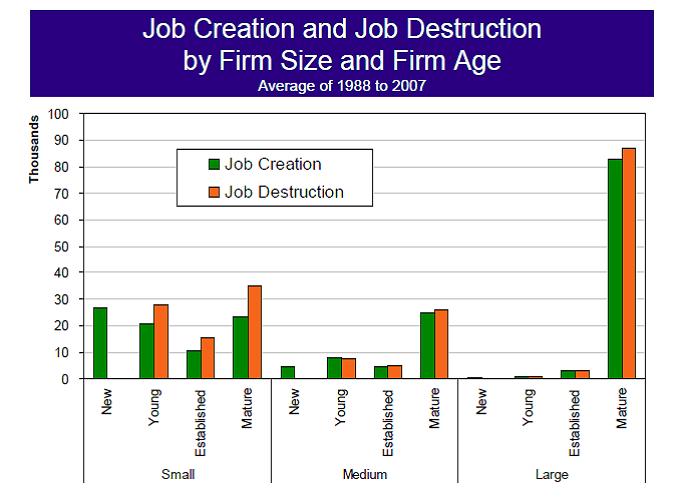
Because new firms, by definition, can’t “destroy” jobs, only create them, analysis of “job creation” often skews towards new rather than mature firms.  But an analysis by economist Manisha Srivastava of the state Department of Labor, writing in The Connecticut Economic Digest, suggests that when one looks a gross, rather than net, job creation - it is the mature companies that lead the way.  In fact, Connecticut has outperformed the national average in gross job creation by mature companies during the past two decades (through 2007).  The research and analysis, presented at a state data conference, suggests that state policy should focus on “helping firms destroy less jobs” as well as assisting them in creating new jobs. Reviewing two decades of data, the study found that Connecticut is six percentage points above the national average on job creation from mature firms – and that most job creation comes from mature firms.  Mature firms are defined as those that have been in business for at least 11 years.

“Connecticut created about 4.35 million jobs between 1988 and 2007.  An almost equivalent number of jobs were also destroyed during the time period,“ the study noted.  But that said, the number of jobs created by mature firms – and thus “the number of employment opportunities for individuals seeking jobs, mature firms outweighed the availability of jobs from firms of all other categories, including small businesses.”

The answer to the question who creates jobs “will change depending on how the question is framed,” the report concluded.  “If the desired metric is net job creation, than new firms create the most jobs.  If the question is simply job creation, then mature firms create the most.”  If a greater percentage of those jobs can be retained, since the numbers are far larger, the impact will likely be as well.

A series of charts and graphs highlighting the report appeared in The Connecticut Economic Digest in May.