GE Expands CT Presence by Acquisition As Headquarters Decision Pending

Even as Connecticut awaits a decision from General Electric as to whether the company headquarters will remain in the state, GE has expanded its Connecticut footprint by acquisition.  In what has been described as the largest industrial investment in the company’s history, GE has acquired the power and grid business of France-based Alstom, with a considerable presence - about 1,000 jobs - in Windsor and Bloomfield. “The acquisition of Alstom is the biggest industrial investment GE has ever made, and it’s critical to the transformation we are making in the company, the new GE website highlighting the deal, and its impact on GE, proclaims.GE Alstom

The sweepstakes for the GE headquarters, in Fairfield for four decades, has seen nearly a dozen governors making a pitch, but published reports indicate that of the frontrunners, Manhattan has surpassed Atlanta, with staying put the other leading possibility.  There is no word on when the company anticipates making a decision, and what the impact might be on the 800 local GE jobs and area businesses, industries and organizations might be.

Just this past August, Alstom dedicated its new 100,000 square foot Clean Energy Lab in Bloomfield, a state-of-the-art research and development facility with a mission of investigating and innovating global solutions for clean power generation.GE-Logo-PNG-02522-470x470

Attending that inaugural celebration were Connecticut Governor Dannel Malloy, Christopher Smith, Assistant Secretary for Fossil Energy at the U.S. Department of Energy, and Catherine Smith, Commissioner of the State Department of Economic and Community Development, as well as the mayor of Windsor and deputy mayor of Bloomfield, along with various officials, partners and customers.

tobey-road-lab-webThe celebration also included a tour of the lab’s research and development projects.  Employees from Alstom’s nearby Windsor, campus, where the b4dc2ef4825511ec3c3bb8ebaa7558d37383fddecompany employs more than 1,000 people, also attended tours of the new facility.

"Alstom's expansion here in Connecticut and the establishment of their new Clean Energy Lab in Bloomfield represents another step in our state's efforts to become a leader in growing the cutting edge, green, sustainable energy jobs that will lead tomorrow's economy," Governor Malloy said in August.

GE’s acquisition of Alstom's energy business brings together two of the world's biggest manufacturers of power plant hardware and is crucial to GE's plans to increase its focus on industrial operations and shift away from finance, Reuters recently reported.  The deal received regulatory approval in the U.S. and Europe earlier this fall, and included some divestment by Alstom in Europe to gain regulatory approval.digital-power-plant_857x482

“GE and Alstom have a rich and similar history, built on engineering, innovation and technology,” the new website points out, “the acquisition of Alstom’s power & grid businesses is an important step in GE’s transformation to a Digital Industrial Company, one that is changing industry with software-defined machines and solutions that are connected, responsive and predictive.

The combination is already drawing notice in the industry.  Today (Nov. 17) in Paris the company introduced its new Renewable Energy business at the European Wind Energy Association’s 2015 Annual Event. GE indicates that the new unit significantly expands GE’s wind portfolio in the wake of the recent acquisition of Alstom’s power and grid businesses.

“With the creation of our new business, GE now has one of the world’s largest renewable energy footprints, and our goal is to help drive the wind industry forward by drawing on the shared expertise of two innovative companies,” said Jérôme Pécresse, President & CEO of GE Renewable Energy.

With more than 300,000 people operating in 175 countries, GE is now described as the world’s Digital Industrial Company.  As for the newly merged company’s presence in Windsor/Bloomfield and Fairfield, the website suggests “Alstom and GE presence in complementary geographies will create more opportunities for customers by increasing local presence & capabilities.”

Where the company’s headquarters will be as that evolution continues remains an open – but apparently narrowing - question.


history

Questions on Synthetic Turf Continue as New High School Field Opens in Connecticut

Construction of a new, synthetic-surface football field to replace the grass field that had developed drainage problems at Bloomfield High School was driven by concern over player safety.  The conditions on the old field, which had not been renovated in more than a decade, had become dangerous and led to player injuries, according to school officials. But the $1.3 renovation of the field and adjacent track, completed this year and which saw students on the field for the first time last month with the start of football season, has renewed questions first raised months ago locally, and which remain in the news nationally.

Back in March, on the brink of Board of Education approval of the new track and field, concerns were raised about the safety of the proposed turf.  Published reports indicate that “some members expressed concerns over synthetic fields having been linked to carcinogens.”  Board Chairman Donald Harris told The Hartford Courant that BSC Group, the company that was hired to install the field, put those concerns to rest.  "We are fully supportive because there are no carcinogenic concerns," he said.group

In recent months, however, questions have continued elsewhere about sand and rubber-pellet based fields, driven in part by a University of Washington women’s soccer coach who complied statistics of players who became ill, and NBC News reporting of her data.  That has spurred members of Congress to call for an independent federal investigation into crumb rubber, citing lingering health questions surrounding the small rubber shreds used as artificial turf.

There have been dozens of studies that have found there to be no elevated health concerns, including a study by Connecticut’s health officials, but questions persist.

Sen. Richard Blumenthal, D-Conn., who has been described as leading the effort, first became concerned about the artificial surface when his children were playing on the crumb-rubber athletic fields.  “I became concerned as a parent, as much as a public official, ten years ago, and at first was somewhat skeptical, but now very firmly believe that we need an authoritative, real study about what's in these fields," Blumenthal told ABC News this month.  He is calling for an independent investigation of the safety of the rubber pellets used in synthetic turf.

EPA Administrator Gina McCarthy, a former Connecticut Commissioner of the Department of Environmental Protection, told ABC News “there is no evidence yet that is making these links, but it doesn’t mean we’re dismissing the concerns.”

The pellets made from ground-up discarded tires are used as turf on more than 10,000 athletic fields and playgrounds around the country, according to the Synthetic Turf Council.

Boston-based BSC Group, with offices in Worcester, West Yarmouth and Glastonbury, was hired to construct the new synthetic turf field in Bloomfield.  The company was founded in 1965, and is a multi-disciplinary firm with expertise in a range of areas including structural engineering, landscape architecture, environmental permitting, ecological sciences and site engineering.  The work at Bloomfield High School renovation included a resurfaced six-lane track, installation of the synthetic turf field and improved drainage.  The football team began play on the field this season.

syntheticIn Connecticut, like elsewhere around the nation, artificial turf fields have become a popular alternative to natural grass fields. The state Department of Public Health (DPH) website points out that “the advantages of these fields include less maintenance costs, ability to withstand intense use and no need for pesticides.”  To address public safety concerns, four Connecticut state agencies collaborated in 2010 to evaluate the potential exposures and risks from athletic use of artificial turf fields, the DPH website explains.

A two year, comprehensive investigation of releases from five fields during active play was conducted by the Connecticut departments of Public Health, Energy and Environmental Protection, University of Connecticut Health Center, and The Connecticut Agricultural Experiment Station. The study was peer-reviewed by the Connecticut Academy of Science and Engineering.  The overall conclusion of the report, according to the DPH website, is that “use of outdoor artificial turf fields does not represent a significant health risk.”

Gary Ginsberg, a toxicologist with the state Department of Public Health who worked on the states risk assessment study, told The Hartford Courant recently that he has no concerns about his own children playing on artificial fields.  “None at all.”

Seven CT Financial Institutions Earn Federal Designation to Assist Low Income Communities

Across the country, there are 963 institutions designated by the U.S. Department of the Treasury’s Community Development Financial Institutions Fund as having earned CDFI Certification.  Seven of them are based in Connecticut’s urban centers, the focus of their financial activities. CDFIs are specialized community-based financial institutions with a mission to promote economic development by providing financial products and services to people and communities underserved by traditional financial inTiny CDFI Fund logostitutions, particularly in low income communities and to people who lack access to financing.  By offering tailored resources and innovative programs that invest federal dollars alongside private sector capital, the CDFI Fund serves mission-driven financial institutions that take a market-based approach to supporting economically disadvantaged communities. The institutions to receive CDFI Certification in Connecticut are in the state’s major cities:CT

CDFIs include regulated institutions such as community development banks and credit unions, and non-regulated institutions like loan and venture capital funds. By building the capacity of a nationwide network of CDFIs, the CDFI Fund works to empower low-income and underserved people and communities to enter the financial mainstream.

Certified CDFIs are eligible to apply for awards through a variety of programs offered by the CDFI Fund. These awards enable CDFIs to finance a wide range of activities—including mortgage lending for first-time homebuyers, flexible underwriting for community facilities, and commercial loans for businesses in low-income areas. Through varying strategies, each CDFI contributes to the cultivation of a healthy and stable local economy, the CDFI website points out.

Speaking last week in Detroit, where CDFI Certified institutions are involved with the city’s rebound, CDFI Director Annie Donovan said “CDFIs have always led the way, demonstrating to mainstream investors that there are opportunities in communities that have been overlooked, or judged to be too risky. If mainstream financial institutions move into markets behind us, we must continue to blaze new trails, to find the next community that is even harder to serve than the last one.”

The Housing Development Fund, Inc. was established in 1989 as a nonprofit organization to finance the development of affordable housing in Stamford, CT. Today, with offices in Stamford, Bridgeport, and Danbury, HDF provides lending and homeownership counseling services to the entire state of Connecticut as well as Nassau, Suffolk, Rockland, and Westchester counties in New York.

Community logoCapital Fund facilitates the flow of capital and expertise into housing and economic developments that “benefit low and moderate income people in the Greater Bridgeport Area.”  It was formed in 2005 from the merger of two loans funds.

The 27-year old Greater New Haven Community Loan Fund’s mission is to create and sustain vibrant neighborhoods and communities. Through its lending and investment, the Loan Fund is the flexible source of alternative financing for affordable housing and community development in the greater New Haven area.

Since 1975 HEDCO Inc. has helped clients and their communities improve, achieve and succeed by supporting their growth and progress. They “build productive partnerships, create new programs that meet the changing needs of entrepreneurs and increase the funds available to help people build and improve their business and non-profit organizations.”

Formerly tlogo (1)he Middlesex Credit Union, Seasons Federal Credit Union was renamed in 2006 after expanding into New Haven County. Over the years, the credit union has “broadened its services beyond simple share savings and small loans to meet the increasingly diverse financial needs of its growing membership.”

The First City Fund Corporation (FCFC), Start Community Bank’s parent company, was formed in 2004 as a result of a challenge of the city of New Haven to New Haven Savings Bank’s conversion to a public company. In the fall of 2012 the bank received certification as a Community Development Financial Institution, (CDFI). There are only 100 CDFI certified banks in the country, and Start Community Bank is the only bank so designated in New Haven.

The work of the Hartford Community Loan Fund is to provide and promote just and affordable financial services that benefit low-wealth residents of Hartford.  HCLF helps borrowers overcome barriers—logosuch as credit history, language, cultural differences, financial literacy, or lack of economic assets--that can isolate people from the financial mainstream.  As the Fund’s slogan indicates, “We Finance Hope.”
Providing access to affordable financial products and services in underserved communities is a vital part of the CDFI Fund’s mission. By building the capacity of a nation-wide network of specialized financial institutions serving economically distressed communities, low- income people are empowered to enter the financial mainstream, the CDFI website emphasizes.

Donovan, in her Detroit speech last week, underscored that “CDFIs do connect their strategies with many community stakeholders, but let’s make sure we aren’t leaving out the important voices of the people who live in the communities we serve. If we are to deepen our impact and increase economic opportunity, we must know and serve our target markets from the bottom up.”


State Economy Stagnating, Residents Have Less Optimism but Fewer Plans to Leave, Survey Shows

Connecticut residents generally view the state’s economy as stagnating, even as a majority consider the state a good place to live and raise a family, and fewer residents say it is likely that they will move out of the state. According to the latest quarterly Connecticut Consumer Confidence Survey, those who view the Connecticut economy as improving has dropped by 10 points between the end of March and the end of September, from one-third of those surveyed (33%) to less than one quarter (23%).

An increasing percentage of state residents consider business conditions as having worsened during the past six months, and fewer think business conditions will improve in the next six months, as compared with the March survey.  Only 22 percent believe that conditions have improved during the past six months, and 74 percent believe business conditions will stay the same or worsen during the next six months (53% stay the same, 21% worsen).CTConsumConfSurveyLOGO

Administered for InformCT by the Connecticut Economic Resource Center, Inc. (CERC) and Smith & Company, the analysis is based on the responses of residents across Connecticut and addresses key economic issues such as overall confidence, reactions to housing prices, upscale consumer purchases, leisure spending and current investments. The research provides a measure of the strength of the Connecticut economy as well as a gauge of select economic factors, officials said.

Reflecting the diminishing consumer confidence in the state’s economy, the percentage who would make a major consumer expenditure has also dropped 10 points since the end of the 1st quarter – from more than 1/3 to just one-quarter (26%).  Nine in ten state residents believe that there are not enough jobs in Connecticut or that jobs are very hard to get, and those percentages have nudged upwards through the year.business condidtions chart

“A higher percentage of respondents have accepted the fact that business conditions “are what they are” and are not going to change soon. This feeling is also reflected in the ‘not improving’ job market,” said Alissa DeJonge, Vice President of Research at CERC.

Nonetheless, those who live in Connecticut are more inclined to stay, according to the survey.  Those who say it is likely they’ll move out in the next 5 years has shifted dramatically between March and September. At the end of the first quarter, in March, there was an even split, 39%-39% on the likely to stay or go question.  The latest data indicates that a 12 point differential has developed, with 46 percent saying it is unlikely (either somewhat unlikely or very unlikely) that they will move out in the next five years, and only 34 percent respond that moving is likely.  The largest segment, one-third of those surveyed, say a move out of Connecticut is very unlikely.

The survey also found that a narrow majority agree that Connecticut is a good place to live and raise a family (51 percent), although the percentage who "strongly agree" has declined by 2 percentage points in each of this year’s quarterly surveys and now stands at 14 percent.

Among other economic indicators, the percentage concerned about being able to afford health insurance has edged up slightly, from 53 percent to 55 percent, those who anticipate refinaQ3 chart 2ncing or purchasing a home in the next six months dropped from by one-third, from 18 percent in the first quarter of the year to 12 percent by the end of the third quarter.   Interestingly, buying a car appears immune to economic outlook – the percentage who anticipate that purchase in the next six months  has been nearly identical in each quarterly survey this year.

“Many feel that they are worse off now than 6 months ago and this downward spiral may continue through the next 6 months,” added Stephen A. Smith, President of Smith & Company. “In addition, many do not feel that the Connecticut economy is improving and over half continue to express concern about their ability to retire comfortably.”  In the survey, 55 percent indicated they do not believe they will “have enough money to retire comfortably,” up from 51 percent in March and 53 percent in June.

As the state moves forward with major investments in transportation, the percentage who believe traffic congestion is severe enough to justify tolls on major highways hasn’t budged all year – only one-quarter agree.  The percentage of those who disagree has decreased slightly – from 56 percent to 50 percent, with 6 percent shifting to the “not sure” category between the first quarter and third quarter surveys.movin out

InformCT is a public-private partnership that currently includes staff from CERC and the Connecticut Data Collaborative.  CERC, based in Rocky Hill, is a nonprofit corporation and public-private partnership that provides economic development services consistent with state strategies, leveraging Connecticut’s unique advantages as a premier business location. Smith & Company LLC is a market research firm.  More information about the survey, and subscribing, can be found at www.informct.org.

Front Seat Passengers Could Be Killed; Repairs for CT Cars May Take Until 2019

Connecticut drivers – likely numbering in the thousands - have been advised not to allow anyone to ride in the front passenger seat of their car, due to the risk of an airbag explosion that could be deadly. A nationwide recall of cars with airbags supplied to automakers by Takata Corp. is being handled differently in different parts of the United States, and it appears that Connecticut and the Northeast have the longest waits – already more than six months in some cases.letter

And the wait may not nearly be over.  Deadlines for repairs to the 19 million vehicles under recall nationwide will run through 2019, according to federal officials.  The NHTSA website indicates that “completion deadlines for fixing the 19 million vehicles under recall will begin in 2017 and end in 2019.”

An April letter sent by Toyota to owners of its affected vehicles in Connecticut read in part “we will send you another notification once sufficient parts have been produced and the remedy can be performed. Until the remedy becomes available in your location, we recommend that you do not operate the vehicle with an occupant in the front passenger seat.”

The potentially fatal malfunction, according to the National Highway Transportation Safety Administration (NHTSA), is that the inflator can causes its air bag to explode. The letter indicated that “in the event of an inflator rupture, metal fragments could pass through the air bag cushion material, striking the vehicle occupants potentially resulting in serious injury or death.”Takata2

Last week, U.S. auto safety regulators fined Takata Corp. of Japan $70 million for lapses in the way it handled recalls of millions of explosion-prone air bags that are responsible for eight deaths and more than 100 injuries worldwide.  It is the largest civil fine in NHTSA history and marked the first time the agency used its authority to accelerate recall repairs. Regulators also ordered Takata to stop making the air bag inflators unless the company can prove they are safe, NBC News reported.

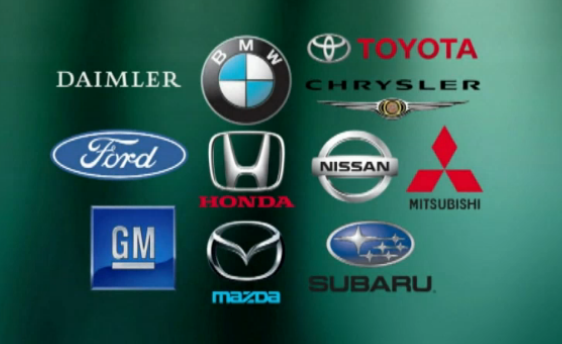
So far, about 23.4 million driver and passenger inflators have been recalled on 19.2 million U.S. vehicles sold by 12 automakers, the network reported. Connecticut Senator Richard Blumenthal responded that the $70 million fine seems like a slap on the wrist and should be larger.  The penalty “provide(s) no meaningful deterrence for continuing reprehensible and irresponsible behavior that costs countless preventable injuries and lives,” Blumenthal said.

Picture8The company, and impacted automakers, are making parts necessary to accomplish repairs available in regions of the country with humid climates first, because humidity has been said to increase the risk of air bag rupture.  Connecticut residents, living in a region not known for its humidity, are not a priority for the repair, and continue to wait for word when repairs for their recalled vehicles can be made.

NBC Connecticut reports that one local Toyota dealer indicates that “If it’s not available we go in and check every week to 10 days with that VIN (vehicle identification number) to see if parts are available,” he said. “We’re kind of at the mercy of not only the supplier but also the manufacturer.”

In the meantime, car companies are left to “apologize for any inconvenience” and affected car owners need to remember that front seat passengers could be in serious danger. The situation may not change for some time, especially for parts of the country including New England. Picture5

Blumenthal has also urged Takata to commit to compensation for victims, but the company has thus far refused to do so.  There have also been calls for compensation for the millions of car owners unable to have someone ride in the front passenger seat.

The website safercar.gov has additional information about vehicles subject to the recall, and those that can now be repaired. Individuals can enter their vehicle’s VIN number to learn if they are eligible for a repair under the recall.

Picture6


Three Connecticut Cities Among Nation’s Top 300 Fastest Growing Economies

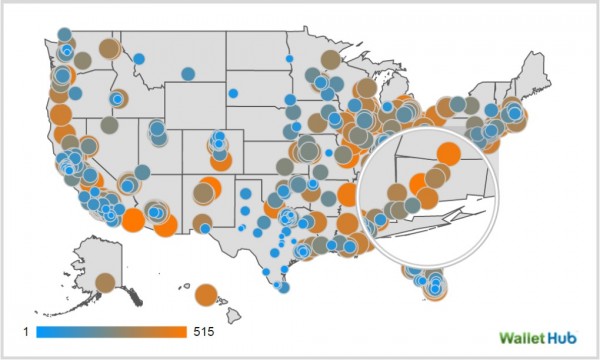
Bridgeport is not only Connecticut’s largest city by population, it is the city which has expanded – in socioeconomic terms – more than any other in the state between 2008 and 2014, according to an analysis released by WalletHub. Bridgeport ranked at number 230 nationally, one of three Connecticut communities – all in Fairfield County – that reached the top 300 across the country.  The others are Stamford, ranked at number 265, and Norwalk, at number 293.Bridgeport_CT

In 2014, the U.S. recorded its lowest population gain since the Great Depression. Growth stood at .73 percent, largely in contrast with the 5 percent of the 1990s, a period of prosperity, WalletHub pointed out.  Demographer William H. Frey of the Brookings Institution attributed the decline to the economic downturn. Not only did the crisis deter job-seeking migrants from flocking to the U.S., but it also discouraged couples from having children, he noted. Meanwhile, population numbers shifted across states, creating short- and long-term effects on local economies, WalletHub indicated.

In order to identify the cities that have expanded most rapidly in socioeconomic terms between 2008 and 2014, WalletHub compared 515 U.S. cities of varying sizes across 10 key metrics, ranging from population growth to unemployment rate decrease.

The other Connecticut cities that ranked on the overall list of cities were New Britain (344), Danbury (355), Hartford (374), New Haven (425), and Waterbury (504).

Eleven of the twelve top-ranked cities – regardless of size - were all in Texas, led by Odessa, Frisco, Midland, Mission College Station, and Killeen.  When the list was broken down by city population, Connecticut did not have a top-100 city in economic growth.wh-best-badges-150x1503

On the list of small cities, Norwalk ranked at 109, New Britain at number 129 and Danbury at number 132.  Among mid-size cities, Bridgeport was ranked at number 110, Stamford ranked at number 123, Hartford was at number 187 and New Haven and Waterbury were at 212 and 239 respectively.  Midsize cities are those with between 100,000 and 300,000 people; small cities have fewer than 100,000 people.

Large cities with the most growth were Austin, Miami, Fort Worth, Denver and Corpus Christi.  At the bottom of the large city list were Mesa, St. Louis, Tucson, Cleveland and Detroit.  Leading the list of mid-size cities were five Texas communities; on the list of small cities Texas had four of the five top-ranked communities exhibiting the most growth.

The factors considered included socio-demographic landscape (population growth, working-age population growth, and poverty rate decrease), and jobs and economic environment (median household income growth, unemployment rate decrease, job growth, ratio of full-time to part-time jobs, and growth of regional GNP per capita).

mapJoan Fitzgerald, Professor of Public Policy and Urban Affairs at Northeastern University, told WalletHub: “It is not an accident that many of the fastest growing cities have thriving high tech and biotech sectors along with financial services and usually a strong health care sector.  But another priority has to be balance.  In many cities, manufacturing loses out over other uses.”

Added Boston University Professor of Economics Kevin Lang: “it is not so much that population growth encourages employment as that employment opportunities encourage population growth.  Of course, this, in turn, creates further employment opportunities.”

Last month, the  Bridgeport, Norwalk and Stamford metro area ranked second nationally among the top ten best places for female entrepreneurs, in an analysis by  Nerdwallet, a personal finance information service geared toward helping consumers make informed financial decisions.  That ranking analyzed the U.S. Census Bureau’s survey of business owners and data from the Small Business Administration to come up with the national rankings. The top ranked city for female entrepreneurs was Boulder.  Joining Norwalk-Stamford-Bridgeport in the top five were Denver-Aurora-Lakewood, Santa Cruz -Watsonville, and Santa Rosa.  Researchers found that seven of the top 10 metro areas for female business owners -- based on business climate, local economic health and financing opportunities -- are in California or Colorado.

The data sources used in the WalletHub analysis included the U.S. Census Bureau, Bureau of Labor Statistics and Bureau of Economic Analysis.


Fledgling "Businesses with Impact" Recognized, Receive Funds to Propel Start-Up

When reSET, the Social Enterprise Trust, whose mission is advancing the social enterprise sector, revealed the winners of its annual Impact Challenge last week, the top award recipient was FRESH Farm Aquaponics, with Movia Robotics, Planet Fuel Beverage Company, Hartford Prints! and Parrot MD rounding out the top five. While the businesses may not be household names, they do represent an increasing number of start-up businesses that are not only seeking a foothold in their respective industries, but are looking to contribute to their community – locally or globally – along the way.reSET

Based in Hartford, FRESH Farm Aquaponics is devoted to providing “the best quality aquaponic food to our community sustainably, teaching a new generation with aquaponics, and engaging the community to develop a local food ecosystem.” The company proclaims “expect from us the best produce available locally, year round in the Hartford County area. You will also see us engaging local schools in pioneering aquaponic experiments from elementary schools to universities.” (see video below)

Planet Fuel is a news-othersustainable lifestyle beverate brand for teens and tweens.  The company's goal is to inspire young people to realize the power of consumer choices to effect social and environmental change.
MOVIA Robotics provides an innovative approach in educating children with autism to "form connections inside the world we live in today." The company uses robots and develops "our own software based on interactions with therapists and children."003

Now in its fifth year, the reSET Impact Challenge recognizes the most innovative and impactful early stage ventures and start-ups from all industries throughout New England.  The event, held at The Society Room of Hartford, saw a record, sellout crowd of 300 in attendance.

Diamond Level - $20,000 + Professional Services Package (1 Winner)

FRESH Farm Aquaponics (http://www.freshfarmct.org)

Gold Level - $10,000 + Professional Services Package (2 Winners)

Movia Robotics (www.moviarobotics.com)

Planet Fuel Beverage Company (http://www.planetfuel.com)

Silver - $5,000 + Professional Services Package (2 Winners)

Hartford Prints! (hartfordprints.com)

Parrot MD (parrotmd.org)

People’s Choice - $1,500 + Professional Services Package (1 Winner)

BookBugs (www.bookbugs.net) 

Investor’s Choice - $1,500 (1 Winner)

Send Help Back Home (www.sendhelptoday.com)

Bronze - $500 (7 Winners)

Asarasi, Inc. (www.asarasi.com)

Beautiful Day / Providence Granola Project (www.providencegranola.com)

BookBugs (www.bookbugs.net)

Daily General Counsel (www.dailygeneralcounsel.com)

Dream See Do (https://www.dreamseedo.org)

Hugo & Hoby (www.hugoandhoby.com)

LOTUS Alliance LLC (www.lotusalliance.org)

logoThe five awards judges - Sherrell Dorsey of Uber and Triple Pundit, Adam Dotson of Ironwood Capital, Claire Leonardi, an advisor to reSET's Social Enterprise Investment Fund and former CEO of Connnecticut Innovations, Anthony Price of LootScout and Paul Witinski of Ironwood Capital - narrowed down more than 100 applicants to 12 honorees.  The People’s Choice winner was selected via more than 1,800 online votes.
Since its inception, reSET’s Impact Challenge has awarded more than $180,000 to scaling entrepreneurs. reSET is a nonprofit organization whose mission is advancing the social enterprise sector. Its strategic goals are threefold: to be the “go-to” place for impact entrepreneurs, to make Hartford known as Impact City, and Connecticut the Social Enterprise state.  In addition to providing co-working space, accelerator and mentoring programs, reSET aims to inspire innovation and community collaboration, and to support entrepreneurs in creating market-based solutions to community challenges. reSET’s goal is to meet entrepreneurs wherever they are in their trajectory and to help them take their businesses to the next level.

reSET’s Impact Accelerator recently was a winner of the U.S. Small Business Administration Growth Accelerator Competition, the only Connecticut growth accelerator to receive the award this year.

https://youtu.be/A03RH_htQ88

Innovative Efforts Receive Spotlight at Inaugural Ceremony Highlighting Energy Efficiency, Conservation

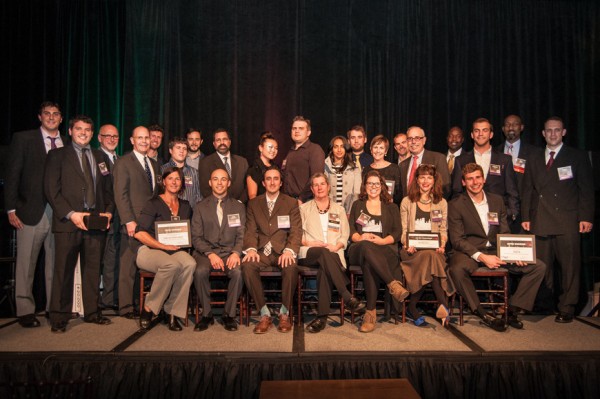
The Stamford 2030 District’s inaugural Change Makers Awards were presented this month, honoring projects and organizations excelling in four distinct areas: innovation in energy, water, transportation and sustainable technology. The awards ceremony captured some of the most innovative local project involving energy efficiency improvements, water retention methods and the promotion of safe multi-modal transportation. The award winners were:

  • 400 Atlantic St. (The Landis Group) for Innovation in Energy;
  • The Mill River Park and Greenway (Mill River Park Collaborative) for Innovation in Water;
  • The Sharrow Network (city of Stamford and People Friendly Stamford) for Innovation in Transportation;
  • Living Wall Project (JM Wright Technical School) for Innovation in Sustainability; and an honorable mention to 9 W. Broad St. Property LLC (Forstone) for its work with the C-PACE program.2030-award-header_edit-800x231

The Stamford 2030 District is a collaborative, nationally recognized, but local community of high performance buildings in downtown Stamford that aims to dramatically reduce energy and water consumption and reduce emissions from transportation, while increasing competitiveness in the business environment and owners' returns on investment.

”We launched this program in October last year and it’s been amazing to see the commitment from the local community to start implementing changes," said Megan Saunders, Stamford 2030 executive director. "We went from zero to 34 members and have benchmarked six million square feet of their buildings. I’m excited to see what we’re able to collectively accomplish in the next year.”

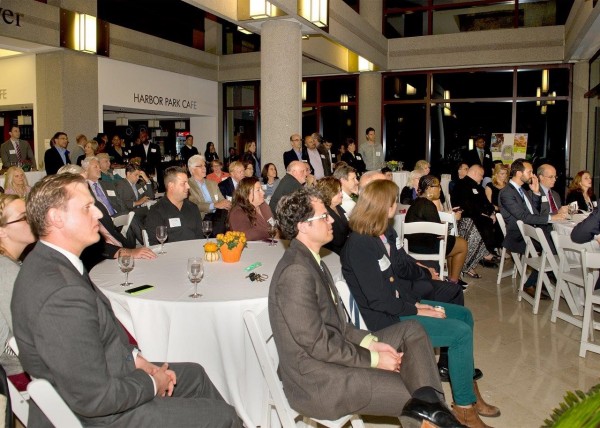
The awards reception featured a keynote address by Brian Geller, founder of the first 2030 District and currently senior vice president, corporate sustainability, Citibank.  The evening also featured a tribute to the Stamford 2030 District’s first year of accomplishments and a sneak peek at next year’s plans.  Stamford 2030 is a collaboration between Connecticut Fund for the Environment, the Business Council of Fairfield County and a coalition of professional and community organizations.

stamford 2030“I would like to congratulate all of the members of Stamford 2030 for joining together to make vital changes for our community," said Stamford Mayor David Martin. "The partners in Stamford 2030 have really stepped up for the success and sustainability of our city and the surrounding area. And they are not alone. For our part, the city is committed to improving storm resiliency and moving forward with the Energy Improvement District. We believe these efforts are tied to our economic development and ability to attract people to Stamford while conserving important natural resources, all necessary for sustained growth and prosperity.”

The Stamford 2030 District is an interdisciplinary public-private-nonprofit collaborative working to create a groundbreaking high performance building district in downtown Stamford. With the Architecture 2030 Challenge providing property performance targets, the Stamford 2030 District seeks to prove that high performing buildings are the most profitable buildings in Stamford. District Members will do this by developing realistic, measurable, and innovative strategies to assist district property owners, managers, and tenants in meeting aggressive goals that keep properties and businesses competitive while operating buildings more efficiently, reducing costs, and reducing the environmental impacts of facility construction, operation, and maintenance.

2030 Districts are also operating in the cities of Seattle, Cleveland, Pittsburgh, Los Angeles, Denver, San Antonio, San Francisco, Dallas, Toronto and Albuquerque.

https://youtu.be/mRMr88y8TMI

https://youtu.be/9s9yyI1_zdg


Multi-State Analysis Finds Big Businesses Dominate in Receipt of State Financial Incentives

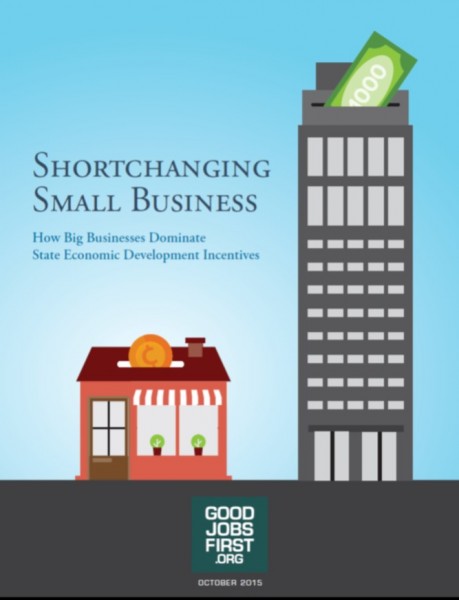
An analysis of more than 4,200 economic development incentive awards in fourteen states finds that large companies receive dominant shares: 70 percent of the deals and 90 percent of the dollars. The deals, worth more than $3.2 billion, were granted by programs that are facially accessible to both small and large companies. That is the key finding of Shortchanging Small Business, a study released by Good Jobs First and funded by the Kauffman Foundation and the Surdna Foundation.

“State economic development incentive programs—even those that are facially neutral as to company size or have very low qualifying barriers—are profoundly biased against small, local and entrepreneurial businesses,” the report stated.  “States, which legally enable and regulate incentives (even those administered by local governments) are failing to walk the talk when it comes to valuing small business job creators.”

The fourteen states where the awards were analyzed are Florida, Indiana, Kansas, Kentucky, Louisiana, Missouri, North Carolina, New Mexico, Nevada, New York, Pennsylvania, Vermont, Virginia and Wisconsin. “Our findings definitively confirm what many small businesspeople have long believed,” said Greg LeRoy, executive director of Good Jobs First and lead author of the study.small business report

Connecticut, which launched a Small Business Express loan and grant program aimed specifically at companies with less than 100 employees, was not among the states analyzed in the study.

Priority for available funding in the Connecticut program is  given to those eligible applicants who (1) are creating new jobs and (2) are within Connecticut’s economic base industries, including but not limited to: precision manufacturing, business services, green and sustainable technology, bioscience, and information technology sectors.

From the program launch in January 2012 thru August 2014, published reports indicate that officials at the Department of Economic and Community Development indicated 1,160 businesses have received loans or grants, and have created 4,171 jobs in the state and retained 12,095 existing jobs.  At that time, a total of $234 million had been bonded in the program.  The average loan was approximately $175,000 per company, with a ceiling of $300,000 for any loan.  The total amount of money disbursed was $159.4 million, in three components: $14 million in revolving loans; $83.9 million in job creation loans and $61.4 million in the matching grant program.

In recent years, Connecticut has also provided significant incentives to larger companies that provide assurances of plans to expand operations and jobs.  The First Five program offers select companies approved by the Connecticut Department of Economic and Community Development (DECD) a package of incentives for creating at least 200 new full-time jobs. In addition to the incentives for the first 200 jobs within five years, participants continue to get tax credits for each net new job created after that.

Participating companies include Cigna, ESPN, NBC Sports, Alexion, CareCentrix, Deloitte, Bridgewater, Charter Communications, Sustainable Building Systems, Navigators, PitneyBowes and Synchrony Financial, according to published reports.

Earlier this year, it was reported that Consumer financial services company Synchrony Financial, headquartered in Stamford, plans to create 200 to 400 new full-time jobs in Connecticut. The state, through the First Five program, is providing financial support for the expansion project, with the company eligible for grants of up to $20 million based on hiring targets, with a $10 million grant for the first 200 new jobs in Connecticut.small biz

In the Good Jobs First study, there is slight variation in the degree of big-business dominance among the states (80 to 96 percent of the dollars) but that is meaningless, the study authors contend, since the programs vary as do the industrial demographics of the states. The key finding, they stress, is how consistently the programs grossly favor big businesses.

The study, based on a close examination of the recipient companies, designates businesses as large or small based on their employment size as well as their total number of establishments and whether they are locally or independently owned.

“As a policy solution, we do not recommend simply reallocating deals and dollars,” said LeRoy. “These tax-break deals often mean little to small businesses. Instead, states should disqualify big businesses and use the savings to better fund public goods that benefit all employers and help small businesses with the persistent credit crunch.”

Short of disqualifying big businesses, the report recommends states spend much less on big businesses by using safeguards such as dollar caps per deal, dollar caps per job, and dollar caps per company.

Among the programs included in the analysis are the Vermont Employment Growth Incentive (VEGI), New York’s Excelsior Jobs Program, and the Wisconsin Economic Development Tax Credit.

Connecticut Businesses Encourage Voluntary Community Service on Company Time

Nearly two-thirds of Connecticut companies surveyed by the Connecticut Business & Industry Association report that they pay their employees for one or two days of volunteerism, another 17 percent offer three or four paid days, and 10 percent offer five or more paid days for employees to engage in community service activities. That data was included in the newly released 2015 Connecticut Corporate Giving Survey.  The survey includes nearly 200 businesses and has a margin of error of plus or minus 7.2 percent.giving report

Among survey respondents, 57 percent say they are more likely to hire candidates who are active in their communities, and one-third say customers do business with them based in part on their reputation for good corporate citizenship.  Just over half, 53 percent, say they encourage or allow employees to volunteer on company time.

Community volunteering is very important for employees who seek a higher purpose in life and look for meaning, says Khadija Al Arkoubi, an assistant professor of management at the University of New Haven: "Companies that allow it improve their employees' engagement and well-being," Arkoubi told Fast Company magazine. "They also develop their soft skills including their leadership capabilities."

The Society for Human Resource Management surveys employers about the benefits they offer. In 2013, about 20 percent said they give their workers a bank of paid time off specifically for volunteering, up from 15 percent in 2009.company time

A UnitedHealth Group study in 2013 found that 87 percent of people who volunteered in the previous year said that volunteering had developed teamwork and people skills, and 81 percent agreed that volunteering together strengthens relationships among colleagues, Fast Company reported. In addition, four out of five employed people who volunteered in the past year said that they “feel better about their employer” because of the employer’s involvement in volunteer activities, according to the publication.

“It is encouraging to see that not only do many businesses provide incentives for employees to volunteer for area charities, but many voluntarily pay them for their efforts,” said Brian J. Flaherty, Senior Vice President of CBIA.  In the CBIA survey, nearly one-third of businesses (31%) said they recognize or reward employees for volunteer service.

CBIA is Connecticut’s leading business organization, with public policy staff working with state government to help shape specific laws and regulations to support job creation and make Connecticut’s business climate competitive.

paid stat