Corporate Headquarters Headed Back to Cities, But Shrinking, Report Says
/The departure of GE’s corporate headquarters for Boston reflects a growing trend for headquarters of major corporations to relocate back to cities, but a recent study indicates they not only move, but shrink, becoming a “reconstituted, smaller version”of their former corporate selves.
Analyst Saskia Sassen, author of The Global City, describes such moves, which often consist of “only the most senior people” in the firm as “executive headquarters.” A feature this month by Crain’s Business Chicago investigates the trend, as it has been evolving in Chicago. Their report points out that “these headquarters make for great headlines, but they don’t n ecessarily result in that many jobs,” according to the website newgeography.
“The notion of the corporate headquarters in the ‘Mad Men’ world when there were hundreds or thousands of people in a building with the company logo . . . those days are gone,” says David Collis, a professor at Harvard Business School who studies corporate headquarters.
The Crain’s article points out that “when Chicago landed ADM in 2013, it got 70 executives and white-collar employees, plus a promise of 100 technology jobs that never arrived. Two years later, Decatur still has 4,200 ADM workers.”
The story points to good news and bad news for Chicago. The bad news, is that a “headquarters ain’t what it used to be. On the other hand, Chicago is winning the battle for them,” and the ripple effect they provide. These smaller executive headquarters, particularly for major global businesses, benefit from being in a global city, the article explains. Chicago has lured a number of these from out of town, noting that agro-industrial firms are increasingly choosing Chicago: ADM, Con Agra, Mead Johnson Nutrionals, and Oscar Mayer in recent years.
The same may be said for GE and Boston, and the city’s technology-intensive environment. Some fear that Chicago's technology startups, the article reports, are particularly vulnerable to leaving for Silicon Valley, attracted by venture capital and a deep talent pool . Boston may be in the running for similar relocations.
A similar phenomenon is occurring in Pittsburgh. After 70 years in a suburban location, Kennametal announced plans last fall to relocate its world headquarters to an urban location. “We’re a global business that’s making changes to stay competitive in a new industrial era,” said the company. “We have more than 13,000 employees in 40 countries serving customers in more than 60 countries every day. An urban location puts us in closer proximity to major universities and the airport and will enable us to recruit more talent.”
The Wall Street Journal reported last year that online travel agency Expedia Inc. announced plans to relocate its headquarters from a Seattle suburb that it called home for nearly 20 years to the city’s downtown.
“In the late 60s and early 70s, CEOs in places like New York City fled the city and moved to the suburbs, leading to the growth of Westchester County, Stamford and Greenwich, Connecticut,” Ed McMahon, a senior resident fellow for the Urban Land Institute, told the newspaper. “In those days, the determining factor was where the CEO of the company wanted to live.”
Now, the Journal reported, “large companies are moving back into the city in an attempt to attract and retain workers—particularly younger workers who are postponing homeownership and favor renting in walkable neighborhoods with easy access to restaurants, shopping and cultural opportunities.”
“Connecticut has really been hammered by the trend away from suburban campuses,” writes Michael Brendan Dougherty in The Week. “Aetna demolished a 1.3 million-square-foot campus in Middletown in 2011. That site is vacant. Pfizer dumped a research campus in Groton after that. The suburbs around Chicago, which once gladly received Sears' corporate headquarters, may be hit next.” It seems that they are.
 The Crain’s article reports that headquarters began shrinking a decade ago, but the trend has accelerated in the past three years, according to Vinay Couto, a consultant in the Chicago office of Strategy&. In recent years, 16 companies have relocated their main headquarters to the city from the suburbs. Seventeen came from outside the metro area. The phenomenon, he points out, is driven by the outsourcing of shared services such as IT, accounting and human resources, as well as by a mindset borrowed from private equity to cut overhead and make every part of a business count toward profitability.
The website Investopedia defines “corporate headquarters” as “a business' most prestigious location,” adding that it may “bring prestige to the city it is located in and help attract other businesses to the area.”
Moving headquarters can also be a way for companies to break from the past and shed employees and positions, Couto says. And the loss of a major headquarters doesn't necessarily stifle job gains. When Boeing moved to Chicago, Seattle's economy kept growing, Kevin Hively, founder of Ninigret Partners, a business and economic development strategy consulting firm in Providence, R.I., told Crain’s. In that case, however, the presence of Microsoft and Amazon helped.


 Also making the list were Evariant of Farmington, a software developer, at number 272, and HP One, a software company in Trumbull at number 307. Biopharmaceutical company Alexion, in the midst of moving its headquarters from Cheshire to New Haven, was ranked at number 349, and etouches, a Norwalk software company ranked at number 357. Rounding out the Connecticut companies on the list is Wallingford oil extraction technology company APS Tecnhology, at number 466.
 rough technology’s continued disruption and proliferation across industries,” said Sandra Shirai, principal, Deloitte Consulting LLP and US technology, media, and telecommunications leader.
 Overall, 283 of the 500 companies were in the software sector, and 67 percent of the 500 companies have received venture capital funding at some point in their company’s history. Topping the list was StartApp, with a growth rate of 21,984 percent from 2011 to 2014. Based in New York and founded in 2010, StartApp provides a free monetization and distribution platform that integrates with applications on mobile devices.

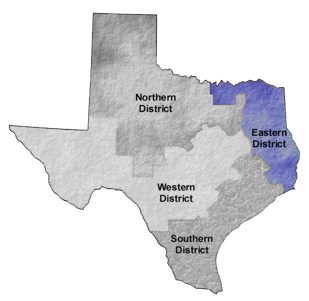 While action to combat the rapidly escalating challenge to businesses of every size has been unable to navigate through a divided Congress, the problem is growing. One jurisdiction in particular is a hospitable home for the legal attacks. Federal court in the Eastern District of Texas is the epicenter of patent troll litigation, and nearly 50 Connecticut companies are among those hauled into court there under dubious circumstances.
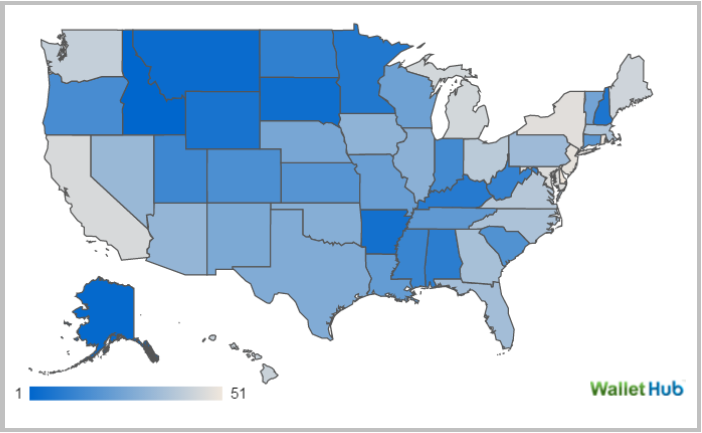
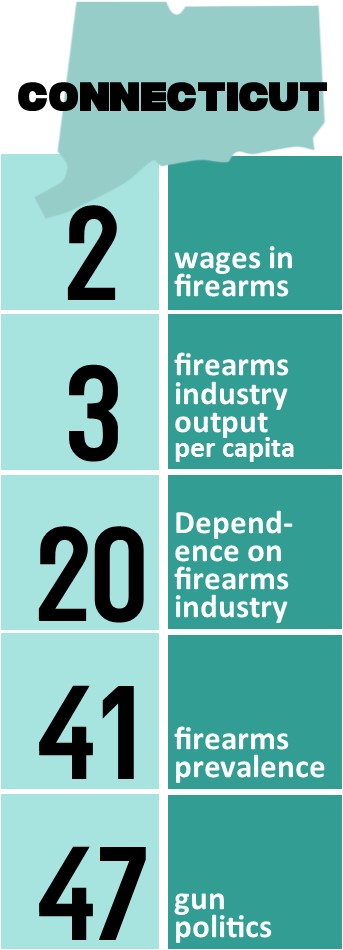 With the gun debate center-stage in the presidential primaries and in Washington, D.C., the website WalletHub analyzed which states depend most on the arms and ammunitions industry both directly for jobs and political contributions and indirectly through firearm ownership. WalletHub’s analysts compared the 50 states and the District of Columbia across three key dimensions: 1) Firearms Industry, 2) Gun Prevalence and 3) Gun Politics and eight metrics.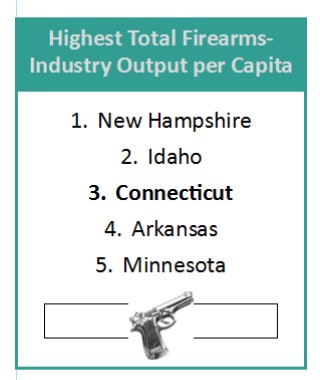



 ast season as the New Britain Rock Cats, the team

 The density of established small businesses per 100,000 residents increased slightly from the previous year, from 1,147.3 to 1,167.4 in 2015. Established small businesses are defined in the study as businesses over the age of five employing at least one, but less than fifty, employees. The rate of small business ownership also grew slightly in Connecticut, from 6.14 percent to 6.34 percent.
 Tennessee is the only state that did not show an increase in established small business activity in 2015 compared with 2014.
 ave the Whale” season-ticket drive resulted in 8,300 season tickets sold, about 3,000 more than the previous year. In the aftermath of the season ticket drive, and heading into the 1996-97 season, the Whalers management said they would remain in Hartford for two more years, in accordance with their lease.
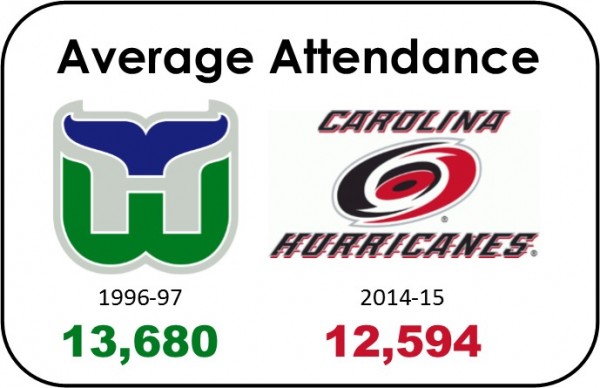 efore management moved the team from Hartford. (To 10,407 in 1993-94, 11,835 in 1994-95, 11,983 in 1995-96 and 13,680 in 1996-97.)