
First-in-Nation Audio Service for Hospitalized Children Launched in Connecticut

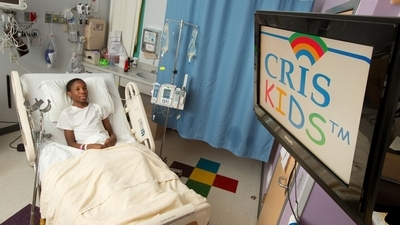
In what may be the first program of its kind in the nation, CRIS Radio and Connecticut Children's Medical Center are working together to offer children who are patients at the hospital a new way to pass their time while receiving medical treatment. Connecticut Children's patients may now listen to CRISKids, a service that provides audio versions of articles published in nearly 20 award-winning children's magazines, through the hospital's in-house television system.  The audio alternative to printed magazines - through an in-house system streamed to each patient TV – can be tremendously comforting for young patients unable to read or turn pages of a magazine due to their condition or medical treatment.

CRIS (Connecticut Radio Information System) is a 34-year-old nonprofit based in Windsor and is Connecticut's only radio-reading service providing audio access to news and information for people who are blind or print-handicapped, including those unable to read due to physical, learning, intellectual or emotional disabilities.

CRISKids, the only extensive line-up of audio versions of children's magazines in the nation and Canada, was launched in December 2011.  More than a dozen titles are available, mostly for children aged 4 to 15, including National Geographic for Kids, Science World, Ranger Rick,  Junior Scholastic, Sports Illustrated for Kids and Scholastic News. CRIS radio
CRIS Board Chairman William H. Austin said that the Board “is excited to form a partnership with Connecticut Children's and thankful for the funding support received to bring this project to life.  Comcast provided technical assistance and a donation of special equipment necessary for the project. Other funders of the project include the Ellen Jeanne Goldfarb Memorial Charitable Trust, and the Ahearn Family Foundation.

"The availability of CRISKidsTM in patient rooms will allow children to enjoy educational entertainment, which is an extremely valuable offering and can be a helpful component of the healing process," said Martin J. Gavin, President and CEO of Connecticut Children's Medical Center.

The CRISKids initiative has received financial support from several foundations, including: Help for the Blind of Eastern Connecticut, Fund for Greater Hartford, The Gibney Family Foundation, and the Hartford Foundation for Public Giving.

CRIS Radio records more than 70 newspapers and magazines to provide audio access to printed material for people who are blind and print-handicapped. The audio recordings can be heard with a special CRIS radio, toll-free through the CRIS Telephone Reader, online streaming live or on-demand at the CRIS Radio website, www.crisradio.org, or with any mobile device, including tablets or smartphones.  CRIS operates with nearly 350 volunteers at its broadcast center in Windsor and four satellite studios located in Danbury, Norwich, Trumbull and West Haven.  The CRISKids program is also available for individual subscription.

Connecticut Children's Medical Center is a nationally recognized, 187-bed not-for-profit children's hospital serving as the primary teaching hospital for the Department of Pediatrics at the University of Connecticut School of Medicine. Named among the best in the nation for several of its pediatric specialties in the annual U.S. News & World Report "Best Children's Hospitals" rankings.


CT AARP Steps Up Focus on Entrepreneurs, Business Development

Next month, AARP and the U.S. Small Business Administration (SBA) are teaming up to host National Encore Entrepreneur Mentor Month, targeted at new business owners age 50 and over and those interested in starting a business.  The goal is to match these “encore entrepreneurs” with experienced business owners and community leaders for advice and assistance, and to link them to the resources they need to successfully start and grow their businesses and create jobs. Consistent with the organizations’ mission, the Connecticut AARP chapter views social enterprise as a valuable opportunity for age 50+ entrepreneurs – also known as “Encore Entrepreneurs” – and active retirees with sharp business and entrepreneurial acumen.  With one in four Americans ages 44 to 70 interested in becoming entrepreneurs, and a large majority planning to work during retirement, small business ownership is described as a solid option.

In addition to planned programs during April, the Connecticut AARP has announced support for legislation proposed by Governor Malloy’s (SB6356) which would help AARP members formalize their commitment to creating public good. The bill is designed to help address a variety of social concerns, through business rather than public funds or philanthropy, that are core to AARP’s mission, such as hunger, economic insecurity, housing and isolation.  AARP has ongoing partnerships with the U.S. Small Business Association (SBA), nationally and state-wide, and with co41592_130564031656_4369100_nmmunity partners in Connecticut including Social Enterprise Trust (reSET) and the Women’s Business Development Center (WBDC).

The bill before the legislature aims to help attract and keep social entrepreneurs and social enterprise investors in Connecticut and provides a heightened level of transparency and protection as compared to other states with similar legislation, according to AARP. Among the beneficiaries:  “Encore Entrepreneurs” seeking purpose beyond profit, community based organizations seeking to partner for social benefits, age 50+ workers seeking employment opportunities in a down economy, and the State by creating a new source of revenue through the payment of up-front incorporation filing fees and annual taxes.

National Encore Entrepreneur Mentor Month is part of a larger effort by AARP and SBA to promote entrepreneurship among individuals ages 50+.  It will consist of events across the country, including two in Connecticut, on April 16 in Waterbury and April 18 in Bridgeport, that will link individuals with local resources and mentor opportunities to help them successfully start and grow a small business.

The initiative includes AARP’s Work Reimagined, a unique new way for experienced workers to advance themselves in today’s tight job market.  Work Reimagined is a social network based jobs program that connects employers seeking experienced workers with qualified professionals searching for new or more satisfying careers.  The site, www.workreimagined.org, leverages the platform of professional networking site, LinkedIn, which is used by more than 15 million people aged 45-64.

AARP’s Work Reimagined and other resources for experienced workers over age 50 are slated to be highlighted in a segment on WTNH’s Connecticut Style program airing Wednesday, April 3, 2013 at 12:30 p.m.

The in-person AARP/SBA workshops in April will feature presentations by SBA, SCORE, reSET (Social Enterprise Trust), The Women’s Business Development Council (WBDC), People’s Bank and local economic development agencies.  Attendees will have the opportunity to ask questions and speak individually with representatives, as well as network with other small business owners and “would be” entrepreneurs. Registration is required.

April 16, 2013 in Waterbury   9 a.m. – 12 p.m. (noon)

Silas Branson Library, 267 Grand Street, Waterbury, CT

To register, call 1-877-926-8300 or register online

April 18, 2013 in Bridgeport   9 a.m. – 12 p.m. (noon)

City Hall Annex, 999 Broad Street, Bridgeport, CT

To register, call 1-877-926-8300 or register online.


CT Girlcott Set to Make History, Opens Make-Up Free Photo Exhibit

March is Women’s History Month, and a number of local organizations in Greater Hartford have come together looking to make some history of their own.   They’ve organized CT Girlcott, a movement of women willing to go makeup free for the month (or part thereof) and to donate the money usually spent on cosmetics to organizations that benefit women and girls in Connecticut and around the world.  The effort also aims to raise awareness around body image and the relationship between women and the makeup they wear. Among the organizers are Charter Oak Cultural Center, YWCA Hartford Region, Harriet Beecher Stowe Center, University of Hartford Women for Change, Women’s Education and Leadership Fund, CT Humanities, and the Permanent Commission on the Status of Women.  A website, www.ctgirlcott.org has been launched highlighting the initiative.

The Charter Oak Cultural Center is hosting a photography exhibition as part of CT Girlcott which features the images of the women leaders who have “dared to bare it all for the camera.” Revealed: Images of Women Leaders Who Bared to Make ChangeGirlcottLogoFINAL opens with a reception on February 28, 6-8 PM, and runs through April 13.  Photographs of over thirty women leaders from the Greater Hartford community will be revealed without their make-up, including many familiar names (and faces).

Girlcott is "a movement of Connecticut women raising consciousness" on behalf of women around the world and the issues currently confronting women in 2013.  Girlcott asks women to “girlcott” (as opposed to boycott) make-up for the month of March and to donate the monies spent on cosmetics to organizations and programs that help and support women and girls in Hartford and internationally. Connecticut Humanities provided funding for the exhibition, which includes the work of photographers Nilofer Haider, Lena Stein, and Nicolette Theriault.

CT Girlcott hopes to encourage conversations among women about body image, definitions of beauty, and what cosmetics are really covering up, and support the flourishing of women and girls in Connecticut, as well as in developing and war-torn countries.  The initiative also seeks to raise awareness about the representation of women in the media, the pressures women live with to look a certain way, the objectification of women, and the impact all of this has on women’s lives and the life of the nation and world.


High Marks for PBS Programming, Affiliate Stations

Connecticut Public Television will celebrate its 50th anniversary at a gala on June 8 at the Hartford Marriott.  CPTV is a locally and nationally recognized producer and presenter of quality public television programming, including original documentaries, public affairs shows and educational programming.  CPTV has built a reputation as a leader in children’s programming, including playing an historic role in bringing Barney & Friends™, Bob the Builder™ and Thomas & Friends™ to public television. The station is an affiliate of PBS, the Public Broadcasting Service, which just released its annual survey on public perception of its programming. The survey confirmed that PBS and its member stations are ranked first in trust among nationally known institutions, and are considered an "excellent" use of tax dollars by the American public.  The yearly study has also called PBS the most fair network for news and public affairs 10 consecutive times. In the most current round of research, PBS KIDS was named the most educational TV/media brand, the safest destination for children to watch television or visit online, and the top provider of content that helps children learn reading, math and essential skills. In each question, PBS KIDS significantly outscored cable and commercial broadcast television.

  • More than 4 in 5 people trust PBS (85% "trust a great deal" or "trust somewhat")
  • Nearly 3 in 4 participants (76%) believe federal funding for PBS is money well spent. 
  • More than 4 in 10 respondents (44%) named PBS KIDS the most educational TV/media brand, significantly outscoring the second most highly rated brand, Disney, which was considered most educational by 12%.
  • Eighty-one percent (81%) agreed "strongly or somewhat" that "PBS helps prepare children for success in school and life."   

PBS received high marks for the effectiveness of its programming for children and adults in terms of handling important topics. A majority of respondents believed PBS programming addressed key subjects – from providing access to the arts and improving literacy to providing access to a variety of viewpoints either “very well” or “well.”

•    Provide people access to arts and culture – 67% •    Promote an understanding of American history – 62% •    Inform people of America’s ethnic and cultural diversity – 60% •    Promote an understanding of science and technology – 60% •    Improve literacy – 59% •    Provide access to a variety of viewpoints – 54% •    Inform people of important political and social issues – 51% •    Inform people about health issues – 51%

• 8 in 10 people (80%) agreed “strongly or somewhat” that “PBS helps prepare children for success in school and life.” This statement was equated with cable television and commercial broadcast television by 37% and 34% of participants, respectively.(3)

• Eighty-four percent (84%) agreed “strongly or somewhat” that PBS “helps children improve their reading and math skills.” Cable and commercial broadcast television received this rating from 40% and 30% of respondents, respectively.(3)

• Eighty-eight percent (88%) agreed “strongly or somewhat” that PBS “is a trusted and safe place for children to watch television.” Only 34% and 36% of respondents agreed with this statement regarding cable and commercial broadcast television, respectively.(3)

• Eight-five percent (85%) agreed “strongly or somewhat” that PBS “is a trusted and safe place for children to visit online,” while this statement was attributed to cable television and commercial broadcasters by only 31% and 34% of the sample, respectively.(3)

• Eighty-three percent (83%) agreed “strongly or somewhat” that PBS is "the innovator" in children’s educational media. 37% percent and 27% of participants also applied this statement to cable and commercial broadcast television, respectively.

The research was conducted in January and February 2012 by the independent, non-partisan research companies Harris Interactive and ORC Online Caravan. Each year, PBS commissions research to measure its performance and value as judged by its most important stakeholder – the American public.  Full results are available at http://to.pbs.org/most-trusted-2012.  

Towns and Cities Look to Varied Housing Options, Community Engagement

Many municipalities across Connecticut and New England are finding that community engagement – proactively, thoughtfully and creatively asking their residents for their attention and ideas about proposed housing and commercial development – pays off big time. That was evident last month at UMass/Amherst when three federal agencies – HUD, EPA and DOT – along with the Funders’ Network for Smart Growth and Livable Communities brought together experts and advocates from the region to discuss the best ways to merge affordable housing creation, transit and livable, sustainable and environmentally sound practices.

A growing number of organizations and government entities – municipal and regional – are using or promoting community engagement because the changing housing market is moving many more communities to increase their efforts at housing creation. A wider array of housing options – smaller, denser, more affordable, energy-efficient, walkable and, if possible, close to transit – are being utilized to meet the needs of empty-nesters, young professionals and families, and workers in a region that, despite a falloff in demand, has seen rental and purchase prices remain very high.video clip

The Partnership for Strong Communities highlighted community engagement strategies it promotes, including its new video about five very different Connecticut communities – Hamden, Old Saybrook, Colchester, Bristol and Simsbury – that have used an array of community engagement methods – charrettes, town meetings, websites and crowd-sourcing among them – to harvest ideas and achieve buy-in for their development plans.

The organization embarked on a search to discover how communities can balance multiple priorities and opinions, and achieve development that most residents can be satisfied with.  Partnership staff drove around the state and filmed interviews with about 30 individuals involved in this work.  The resulting video, along with supporting materials, reflects how five different communities with different goals, used different methods to achieve a single outcome.














