Land of Steady Habits: CT Ranks #37 in Divorce Rate

Connecticut’s divorce rate ranks the state #37 in the nation in the percentage of residents who are divorced.  According to the U.S. Census Bureau’s American Community Survey, 10.6 percent of state residents are divorced, 1.4 percent are separated, and 48.2 percent are married.

The highest divorce rate was in Nevada, at 14.6 percent.  Right behind Nevada are Maine (14.2 percent), Oklahoma (13.5 percent), Oregon (13.4 percent), Arkansas and West Virginia (13.3 percent), Florida and Kentucky (13.2 percent).

The lowest divorcDivorcee rates were in New Jersey, 8.6 percent, New York, 8.8 percent, and the District of Columbia, 9.2 percent.  Utah, Pennsylvania, and Hawaii were tied at 9.5 percent.

The state with the highest percentage of the population married was Utah, at 55.7 percent, followed by Idaho (55 percent) and Wyoming (52.9 percent).  Connecticut has the 31st highest percentage of married people among the states, at 48.2 percent.  The state was in a tie for 11th in percentage of population who were separated.

The U.S. Census data was from calendar year 2012, the most recent data available comparing states, and was reported by Bloomberg Visual Data.

Norwalk’s Rowayton Is Ranked #6 “Happiest Seaside Town” in America

What better time than in the midst of a three-snowstorm-week to learn of the top 10 “happiest seaside towns in America,” and discover  that Rowayton, Connecticut placed at #6 in the list compiled by Coastal Living magazine.  Rowayton – a section of Norwalk – was sandwiched between higher profile communities of Newport and Kennebunkport among the leading happy seaside towns, in the 2013 list.

“This picturesque, sophisticated New England coastal village at the mouth of Connecticut's Five Mile River is straight out of a Norman Rockwell illustration,” the magazine reported.  “No wonder Rosignpicwayton, with its clapboard and shingle homes perched along its rocky shorelines, has lured artists for centuries.  In fact, many New Englanders don't even know this gem, making it all the more dear for those 4,000 or so who call it home.”

The write-up about Rowayton concludes “But art—and beauty—does come at a price. It's one of the most expensive spots in the state (as well as the nation). And yet this village has a low-key sensibility, with pizza joints, ice-cream parlors, and a volunteer fire department.”

Rowayton is in good company, among higher profile locales earning a place amongst the top 10:

  1. Beaufort, South Carolina
  2. HarwichPort, Massachusetts
  3. Sanibel Island, Florida
  4. Sag Harbor, New York
  5. Newport, Rhode Island
  6. Rowayton, Connecticut
  7. Kennebunkport, Maine
  8. Pa’ai, Maui, Hawaiihappy-towns-rowayton-0613-l
  9. LaJolla, California
  10. Pescadero, California

The Rowayton section of Norwalk is located on Long Island Sound, just 45 miles from New York City. Formerly independent, today Rowayton is the Sixth Taxing District of the City of Norwalk. Norwalk is unique among the municipalities of Connecticut in its manner of governance - and the manner in which the various public utilities, cultural assets and tax structures of a half-dozen distinct communities were joined together to form the City of Norwalk in the 1920's, according to the Rowayton Library website.

Picturesque Rowayton lies at the mouth of the Five Mile River, adjacent to Darien.. With a population of under 4,000 in approximately 1,500 households, Rowayton has kept it's village-like character, including its volunteer fire department - the only remaining volunteer department in Norwalk.

With 10 issues published each year, Coastal Living introduces readers to homes, destinations, activities, and people along the Atlantic, Pacific, and Gulf shores of North America. Hawaii, Alaska, coastal Canada and Mexico, as well as the multi-national Caribbean islands and U.S. Great Lakes, are included in the magazine’s scope.  Coastal Living.com is described as “the No. 1 online authority for those captivated by the coast ―and your quintessential resource for celebrating its unique charm, customs, and way of living.”

Hartford as Global City: Immigrant Civic Engagement Initiative Gains Recognition

Hartford is quite an international city, a melting pot of cultures and backgrounds that most assume is the exclusive province of major metropolitan areas such as New York and Boston.  But in language, nation of origin, and cultural traditions, virtually every corner of the globe is represented in Connecticut’s Capitol City, and its surrounding communities.

In fact, Hartford is a popular resettlement city, with about 25 percent of the city’s population recent immigrants.  To respond to the significant need among the various immigrant communities for assistance and guidance in navigating language barriers and cultural differences and more fully integrating into their new home community, a partneHartfordPublicLibraryPicturership of Hartford-based organizations stepped up in a way that has proven quite effective, and is gaining national recognition.

The Hartford Public Library received funding in 2010 for an Immigrant Civic Engagement Project through the Institute of Museum and Library Services (IMLS), to develop a comprehensive program to promote immigrant civic engagement.  The initiative had two goals:globe

  • Facilitate the transition of newly arrived immigrants into the community and build trusting relationships of mutual understanding between new and longtime residents
  • Engage established immigrants in civic integration and facilitate their involvement in broader community building efforts

At the annual conference of the international Association for Research on Nonprofit Organizations and Voluntary Action (ARNOVA), hosted recently by Hartford and held at the Connecticut Convention Center, the leaders of the ground-breaking Hartford partnership were called upon to lead a session to outline their work for those who may seek to emulate it in other communities across the country.

Among the presenters was Richard Frieder, Director of Community Development & Civic Engagement within the Cultural Affairs & Public Programming Department and Center for Civic Engagement of the Hartford Public Library.  Frieder was joined by Homa Naficy, Chief Adult Learning Officer and Nancy Caddigan, Intercultural Liaison of the Hartford Public Library, and Kyle Barrette and Rebecca Thomas of the UConn School of Social Work.

Innovative Approaches, Impactful Outcomes

Their session, called “Innovative Approaches to Community Development in a Challenging Economy and Changing Society,” was well-received by conference participant from across the country.  They focused on “effectiveness, evaluation and programs,” outlining what was done and why – and how it all worked.

  • They described an effort that engages immigrants and “receiving” community members, social service providers and other immigrant advocates, highlighting the importance of building networks of trusting relationships.
  • The initiative provided an opportunity to address immigrant voices isolated from the mainstream, respond to language and economic barriers, and address the lack of engagement in community and civic associations.
  • The program featured “cultural navigators” – some of them bilingual - and community dialogues – held at the Library’s American Place - all aimed at improving the immigrant experience in Hartford.

Most of all, it created bonds between existing members of the community – many of them retired teachers and social workers who volunteered to be “cultural navigators” – and immigrants looking to adcivic engagementjust to their new land.

New connections were developed between city officials, organizations and service providers to the immigrant and refugee community, and both the immigrant community and receiving community became engaged in community building.  There was also outreach to churches, community centers and other neighborhood organizations.

Over three hundred people were involved across all activities of the three year project.

The outcomes were substantial, and included the development of strong relationships, an increased awareness of immigrant issues, integration of immigrant and refugee families within their local communities, and increased social capital for immigrant as well as receiving communities.  In addition, action teams focused on new community projects, municipal and organizational investment in immigrant and refugee issues was enhanced, and a City Commission on Immigrant Affairs was established.Hartford_CT

UConn School of Social Work students, as part of the grant-funded initiative, served as program evaluators, maintaining a rigorous evaluation of outcomes, and an audit trail of activities so that the entire project could be replicated.

At the end of the day, organizers hope that the program has effectively “changed the way that people think about immigrants – and the Capitol City.”  Hartford is a global community.  And it has produced a program that can help immigrants here and elsewhere to settle in and excel.

From Connecticut, Only Hartford Region Reaches Top 50 Best Cities for Job Growth

The rankings of Best Cities for Job Growth don’t place Connecticut’s major metropolitan areas  within reach of the top of the list.47

Among the nation’s large-sized cities, "Hartford-West Hartford-East Hartford" made the top 50, ranking at #47 in the latest list from the website newgeography.com.  Leading the 2013 list were metropolitan San Francisco, greater Nashville, and Salt Lake City.  The rankings used four measures of growth to rank all 398 metro areas for which full data sets were available from the past 10 years.hartford  The Hartford region dropped four slots from the 2012 rankings.

New Haven ranked at #65 among the medium-sized cities, just behind Fresno, California and Scranton-Wilkes-Barre, Pennsylvania.  Leading the list were Boulder, Colorado and Provo-Orem, Utah.  The highest ranked New England community was Framingham, Massachusetts, at #30.  The only other city from the region to reach the list was Springfield, Massachusetts, at #91.  65

Among the leading Small Cities, Danbury was the highest ranked in Connecticut at #111, with Waterbury at #223, and Norwich-New London at  #233, on a list of 241 small cities.  Topping the list were Midland and Odessa, Texas followed by Columbus, Indiana; Cleveland, Tennessee; San Angelo, Texas and Owensboro, Kentucky.

"Large" areas include those with a current non-farm employment base of at least 450,000 jobs. "Midsize" areas range from 150,000 to 450,000 jobs. "Small" areas have as many as 150,000 jobs. The rankings reflect the current size of each MSA’s employment. Only two MSAs changed size categories, with Honolulu, HI moving from “Midsized” to “Large” and Savannah, GA moving from “Small” to “Midsized.”

In the overall rankings, Bridgeport-Stamford-Norwalk was #348, Waterbury ranked #380, and Hartford placed at #229.  All the leading Connecticut metropolitan areas dropped in the rankings in 2013, compared with 2012.

NewGeography.com, based in North Dakota and California, is a site devoted to analyzing and discussing “the places where we live and work.”   It includes “insights on economic development, metropolitan demographics, and community leadership.”  cities

The index is calculated from a normalized, weighted summary of: 1) recent growth trend: the current and prior year's employment growth rates, with the current year emphasized (two points); 2) mid-term growth: the average annual 2007-2012 growth rate (two points); 3) long-term trend and momentum: the sum of the 2007-2012 and 2001-2006 employment growth rates multiplied by the ratio of the 2001-2006 growth rate over the 2007-2012 growth rate (two points); and 4) current year growth (one point). The rankings include all of the metropolitan statistical areas (MSAs) for which the Bureau of Labor Statistics reports monthly employment data.

newgeography.com Executive Editor Joel Kotkin is distinguished Presidential Fellow in Urban Futures at Chapman University in Orange, CA and an adjunct fellow with the Legatum Institute in London. He is author of seven books including his most recent, The Next Hundred Million: America in 2050 from Penguin Press and is affiliated with the Praxis Strategy Group and the Center for an Urban Future.

Concern Over Concussions Changes Playoff, Practice Plans in CT High School Football

Concern over concussions is impacting the high school football playoff calendar, and the practice regimen throughout the season.  The Connecticut Interscholastic Athletic Conference has voted to increase to one week the minimum time between playoff games a high school team can play.  Previously, high school football games could play two games in less than a week, at times with as little as three days between games.  In making the revisions, which eliminated a quarter-final round next season, the CIAC indicated it would “continue to evaluate possibilities for changes to the regular season and postseason schedule for the 2015 season and beyond.”

In addition, the organization’s Sports Medicine Committee approved policy changes that cut back on “permitted allotment of person-to-person contact time in practice” aciacnew-300x230nd are “intended to limit live action,” including:

  • Prior to the start of the regular season a coach may conduct person-to-person contact drills up to 120 minutes during practice plus conduct one full scrimmage or seven-on-seven scrimmage per week under game-like conditions.  If a second scrimmage is conducted the time (60 minutes) must be deducted from the 120 minutes allowed.
  • From the start of the regular season through Thanksgiving a coach may conduct person-to-person contact drills up to 90 minutes per week.
  • During the post season a coach may conduct person-to-person contact drills up to 60 minutes per week.

The Hartford Courant reported that “for the first time, there will be limitations on contact drills in practice throughout the season.”football

Guidelines on the Web

The CIAC website includes an 8-page document developed  by the National Federation of State High School Associations, “A Parent’s Guide to Concussion,” which includes the admonition  (in bold type) “when in doubt, sit them out!”.  The policy was revised and approved in April 2013. CIAC is a member of NFHS, which also offers a free on-line course on the subject for coaches and administrators.

The guidelines indicate that “following a concussion, many student-athletes will have difficulty in school.  These problems may last from days to months…”   The guidelines also explain that “At this time we do not know the long-term effects of concussions (or even the frequent sub-concussive impacts) which happen during high school athletics.”

The CIAC website includes a link to the “Sports Medicine & Concussion” information under two drop-down menu categories on the organization’s website: “CIAC for Students & Parents” and “CIAC for Administrators. “  It is not listed among the “CIAC for Coaches” links.

Regarding the schedule changes, Ledyard head coach Jim Buonocore, who serves on the committee that approved the revisions, told the New London Day, "You had teams playing three games in 10 days, which is not healthy." The Day reported that quarterfinal and semifinal games were played the Tuesday and Saturday after Thanksgiving because the playoffs had to be completed in two weeks. The CIAC didn't want to extend the season another week due to weather concerns, and because it would further interfere with winter sports.

The CIAC has changed its high school football playoff format in 2010, and intends to revisit the issue, balancing the traditional Thanksgiving conclusion of the regular season with the health interests of students on teams reaching the playoffs, the realities of New England winters, and the academic and school sports calendars.

Additional information about concussions and high school sports is available from the Centers for Disease Control and Prevention.

Nation's Mayors Award Hartford, Waterbury for Work Promoting Youth Jobs, Exercise

The mayors of two of Connecticut’s major cities – and their communities – had moments in the spotlight at the just-concluded annual meeting of the U.S. Conference of Mayors (USCM)  in Washington, D.C.

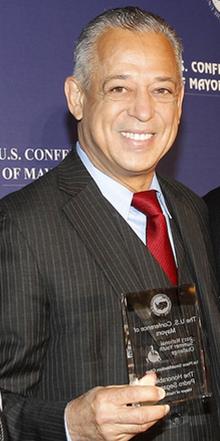
Hartford Mayor Pedro E. Segarra won first place for medium/small cities in the organization’s 1st Annual National SummerYouth Jobs Challenge. The award honors the outstanding achievements in innovative partnerships between cities and local business and non-profit communities to help provide youth with meaningful summer job experiences.

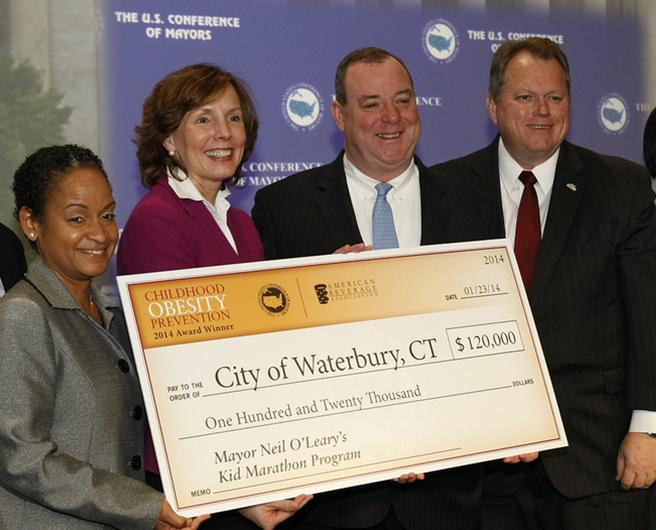
Mayor Neil M. O’Leary accepted a first place award for Waterbury’s Kid’s Marathon Program.  The organization gave six awards to mayors of cities with outstanding programs that encourage healthy weight through balanced diet choices and regular physical activity.  As the top selection, Waterbury receives a $120,000 grant that will support the 2014 Kid’s Marathon Program, a partnership between the YMCA, City of Waterbury, Department of Education, Boys and Girls Club, Police Activity League (PAL) and Connecticut Association of Schools, aimed at introducing the sport of running to youth ages 7-12, over a 12-week period and at no charge to the participants.mayors conf

Approximately 250 mayors, USCM business council members, USCM Workforce Development Council members and other workforce development professionals from major cities across the country attended the annual meeting.  The award was presented to Hartford at Thursday morning’s plenary session, which included remarks by Segarra, Louisville Mayor Gwaterburyreg Fischer, U.S. Labor Secretary Thomas Perez and Wendy Spencer, CEO of the Corporation for National and Community Service.
Since taking office in 2010, Segarra has invested regularly in youth employment programming, leverageing state and foundation funds to further expand work opportunities for young people. In 2013, the Mayor secured $1.25 million that put nearly half of the 2,056 youth in the region to work, officials said.  Additionally, in conjunction with four other regional mayors, he spearheaded an “unsubsidized” youth employment campaign, aligned with the Obama administration’s Youth Jobs + effort, which resulted in an additional 208 employer-paid positions.

Segarra was joined at the mayor’s conference by  Capital Workforce Partners President and CEO, Tom Phillips who was the 2012 President of the U. S. Conference of Mayor’s Workforce Development Council, and whose organization is instrumental in finding worksites and providing career competencies for over 2,000 youth in the North Central Connecticut region each summer.

Among the ten Connecticut Mayors registered to attend the conference in addition to Segarra and O’Leary were Bridgeport Mayor Bill Finch, Stratford Mayor John Harkins, West Haven Mayor Edward O’Brien, Trumbull Mayor Tim Herbst, Shelton Mayor Mark Lauretti, East Hartford Mayor Marcia Leclerc, Fairfield Mayor Michael Tetreau, and Stamford Mayor David Martin.  The U.S. Conference of Mayors is the official nonpartisan organization of cities with populations of 30,000 or more.  There are 1,399 such cities in the country today, and each city is represented in the Conference by its chief elected official.
segarraThe Kid’s Marathon Program is designed to target city youth lacking in physical activity and good nutrition habits.  Students run 1-2 miles, two or three times per week, completing a cumulative 26.2 mile marathon over the course of the program.  They also receive positive and practical guidance on nutrition that helps foster long-term healthy eating behaviors.  In 2013, the program’s first year, 438 students participated, with the culminating 1-mile run occurring at Crosby High School before a crowd of family, friends and supporters.

USCM also recognized Eugene Morton, a Hartford resident who participated in employment opportunities created through Segarra’s youth initiatives. A 2007 graduate of Hartford’s Sports and Medical Sciences Academy, Morton is a Marketing major at Central Connecticut State University with a 4.0 average. In 2013, he took advantage of a summer employment opportunity at St. Francis Hospital and Medical Center and was one of 13 college students who participated in the summer youth employment program offered at St. Francis Hospital and Medical Center in partnership with the Blue Hills Civic Association.

Mayor O’Leary and Waterbury were recognized with the first place award for their collaborative efforts on launching the Kid’s Marathon Program with the Rod Dixon Kid’s Marathon Foundation. The grant awards were divided into small, medium and large city categories, with first place and second place awards given in each category.  Waterbury placed first in the “medium city” category; the second place finisher was Little Rock, AR. The grant program is the result of a partnership between USCM and the American Beverag06-09-12-kids_05-300x229e Association (ABA), to support and/or enhance mayors’ ongoing childhood obesity prevention programs in their cities.    A total of $445,000 in grants was awarded to support both new and existing programs.  Denver, CO and Dallas, TX (large cities) and York, PA and Monrovia, CA (small cities) were the other recipients.

Last fall, the U.S. Conference of Mayors and Partner America awarded Hartford Mayor Pedro E. Segarra their small business advocate of the year award.  The USCM presented Segarra with the award during the Greater New England Minority Supplier Development Council Expo, at the Connecticut Convention Center.  The organization credited Segarra for launching the iConnect storefront revitalization project, quickening the pace of city permit approvals, investing $500,000 in façade improvements and awarding over $100,000 to 16 local artists and small businesses.  At the time, the mayor's office said the city has gained 134 small business and 200 jobs since 2010.

 

A Merger, A Name Change, and A Partnership: Chambers of Commerce Realign

There’s some movement among business associations in the Land of Steady Habits, with economic realities driving a new merger, a name change, and a partnership.

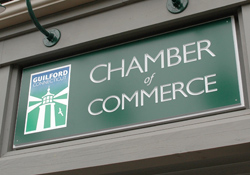
The Guilford and Branford Chambers of Commerce have merged, effective on New Year’s Day.  The new merged entity is called the Shoreline Chamber of Commerce - Guilford/Branford Alliance.  The merger was approved by the Boards of Directors and membership of both organizations in recent weeks.  branford

At a Special Meeting earlier this month, the membership of the Greater Meriden Chamber of Commerce voted to change the organization’s name to Midstate Chamber of CommerceMeriden Chamber President Sean W. Moore, said that “Midstate Chamber of Commerce reflects the inclusivity of this chamber’s membership throughout the central Connecticut region and reaffirms our commitment to ALL of the businesses and communities we serve.”

While not “official” until March 1, members and the communities can start to see changes as soon as next week.  A new website, www.midstatechamber.com, will transition from the existing website in the coming weeks.  The Chamber has more than 550 members.

The Middletown-baschamber_sign_250x175pxed Middlesex County Chamber of Commerce remains by far the state’s largest, with over 2,350 members that employ over 50,000 people.  The organization, led by longtime President Larry McHugh, “strives to be the voice of business in Middlesex County and the surrounding area,” according to its website.

In the Guilford-Branford merger, the plan calls for the board of directors of the two corporations to merge into one board containing up to 37 members. As terms of directors expire, the number of directors will be reduced to no more than 21, with up to 7 selected from Branford, up to 7 selected from Guilford, and up to 7 selected from the entire membership.  The merged organization will have an office in each town.

Guilford has 320 members and Branford has about 350.  The first event of the joint organization will be a Business After Hours networking event on January 28 at Page Hardware & Appliance in Guilford.  It is co-hosted by Bailey, Murphy and Scarano, a CPA firm in Branford.  A logo for the newly merged association has yet to be unveiled.

A statement by the organization pointed out that “this proactive move will allow members to double their audience, double their market and provide enhanced networking opportunities.” The websites of the former Branford and Guilford websites are still active, and announcing the merger.  Among the advantages cited are:

  •  Increased marketing and promotional opportunities through distribution of publications, website visits and email communications
  • Better educational programs for professional development
  • More signature events to attend and potentially sponsor as each town and chamber will continue and maintain this type of event
  • Two Shoreline Locations along with a larger staff to assist business
  • Larger social media presence and website traffic to membership pages
  • Opportunity to re-brand as a member of  a larger more influential 650-member chamber
  • Eventual gain of resources through economies of scale, allowing more money to go directly to member services
  • Enhanced technology for website referrals and member servicesmeridenChamber-Logo

Janet Testa, executive director for the Guilford Chamber, told the New Haven Register that 99 percent of members wanted the merger. She said her organization is always looking for ways to serve its members by “joining forces” with others. Ed Lazarus, president of the Branford Chamber, believes combining the chambers will benefit both communities. “Businesses will be represented the way they’re used to but with a combined staff,” the Register reported.

It is not the first Chamber merger in Connecticut.  In 1989, the North Haven Chamber joined the Wallingford Chamber to form the Quinnipiac Chamber of Commerce.  That business association has grown to more than 700 members.

Last fall the Greater New Haven Chamber of Commerce (GNHCC) and The Quinnipiac Chamber of Commerce announced the formation of a strategic affiliation between the two organizations, “creating a stronger, more streamlined collaboration that will work together to move the region forward.” As of October 15, 2013, the Greater New Havenew haven chambern Chamber and the Quinnipiac Chamber began to “officially collaborate on all aspects of their respective organizations, while continuing to operate as separate business units in separate office locations.”


In 2003, the Central Connecticut Chambers of Commerce was formed around the Bristol Chamber of Commerce, “in an effort to expand the area it benefited and to enable the Chamber to assist more members. This allowed the Chamber to expand from covering just Bristol to the entire Central Connecticut region,” the website points out.  The Central Connecticut Chambers – with a combined membership of approximately 1800 - is composed of several affiliate chambers including those of Bristol, Bloomfield , Burlington, Farmington, Plymouth/Terryville and Wolcott.

In terms of membership numbers, after the Middlesex Chamber and Central Connecticut Chambers, the next largest are the Chamber of Commerce of Eastern Connecticut, with 1,600 members; the Northwest Connecticut Chamber of Commerce, with 730 members; and the Quinnipiac Chamber of Commerce.  The MetroHartford Alliance is #6, with 600 members (although it may now be eclipsed by the newly combined Shoreline Chamber), followed by chambers from Greater Southington  (590 members), Greater Manchester, Greater Meriden and Glastonbury (each with approximately 550 members) and West Hartford, approaching 500 member businesses.


Nonprofit Seeks Support for STEM Mentoring Initiative Focused on Women, Underserved

It is, after all, National Mentoring Month.  It makes perfect sense, therefore, for a fledgling Connecticut-based nonprofit devoted to mentoring young women and students of color to increase their presence in the STEM fields (science, technology, engineering and math) to launch a fundraising initiative.

ManyMentors, a nonprofit that promotes peer mentoring to increase the interest, pursuit and attainment of STEM degrees among underrepresented students, has kicked-off an Indiegogo crowdraising campaign aimed at supporting the development of “the world’s first mobile mentoring app and complementary online platform,” according to the campaign’s website.  mentors logo

Online contributions will also support the ongoing outreach and advocacy activities of ManyMentors in Connecticut, and support outreach activities planned for establishment of student chapters at universities nationwide.  The fundraising initiative runs through February 10, 2014.

The organization’s website notes that “of the 20 fastest growing occupations projected for 2014, 15 of them require significant mathematics or science preparation.”  The nonprofit hopes to “make STEM mentoring more mainstream among middle and high school students, college and graduate students, as well as working professional.”  As their slogan emphasizes, “If they never know, they will never go!”

Keshia Ashe, co-founder and CEO of ManyMentors, gave a well-received TEDx talk in Springfield, MA last fall about the important role of mentors and role models to encourage our young people to pursue degrees and careers in STEM. Keshia Ashe is a University of Virginia alumna, and current Ph.D. candidate in Chemical Engineering at the University of Connecticut. Since the age of 11 she has been actively involved in several youth-serving groups and advisory boards, and has had many opportunities to travel nationally and internationally as a speaker and trainer. mentors app

The ManyMentors program primarily serves middle and high school students located in the state of Connecticut. The organization currently implements onsite mentoring opportunities with local community partners, and is piloting the mobile mentoring with a select number of mentor/mentee pairs.  Supporting organizations of ManyMentors include the CBIA Education Foundation, Granville Academy of Waterbury, and CPEP (Catalysts Powering Educational Performance).

Tiffany St. Bernard, the co-founder and Chief Operating Officer of ManyMentors, is a University of Connecticut alumna, and current Ph.D. student in Genetics at Cornell University. She is passionate about ManyMentors because she has experienced first-hand the positive benefits of having many mentors guide her through academic life, beginning during her years at Tunxis Community College.

Using social networking, ManyMentors aims to connect students from a wide variety of academic and ethic backgrounds with the hopes that these relationships will stimulate, sustain, and support students’ interest in, pursuit, and attainment of STEM degrees.

Among the upcoming activities ManyMentors is sponsoring this year are a series of “STEMinars” at UConn, beginning in February, aimed at “Preparing Tomorrow's Female STEM workforce, Today.”  The sessions are designed to “increase awareness of female STEM workplace issues by being exposed to female STEM professionals mentors photowho will discuss topics such as career placement basics, salary and promotions, communication, creating support groups, being culturally aware, finding a work/life balance, and appreciating the value of staying true to oneself in male-dominated fields.”

ManyMentors is moving forward with three central efforts:

  • Creating partnerships between K-12 students, institutions of higher education and STEM professionals to stimulate and sustain student interest in the STEM fields.
  • Selecting college mentors with a vested interest in sharing their best advice, wisdom, and insight to support the academic, professional, and cultural development of their mentees.
  • Providing ongoing trainings for mentors to share best practices and cultivate a community of STEMentors.

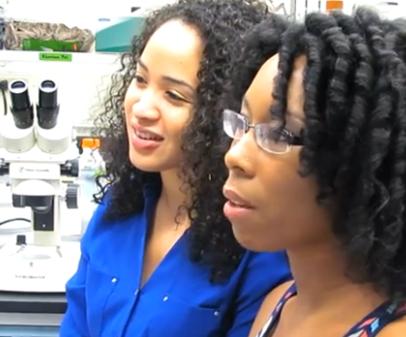
 Photo:  Keshia Ashe (left) and Tiffany St. Bernard

Pay Inequality Gap Widens in Greater Hartford; 8th Largest in U.S. Since 2008

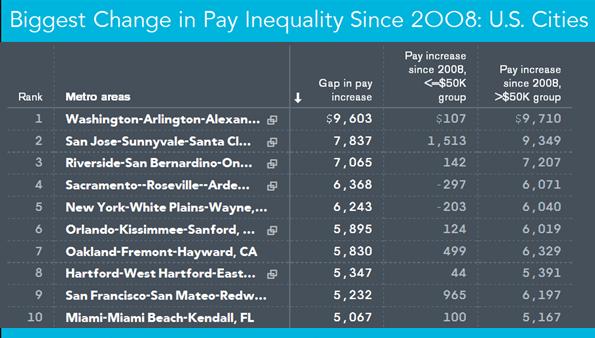
If you thought the earnings gap between the “have’s” and “have-nots” in the Greater Hartford region has been widening in recent years, new data indicates your impression is correct.  The Hartford-East Hartford-West Hartford region ranks #8 among the nation’s metropolitan areas with the largest widening gap in employee earnings, when comparing those making less than, or more than, $50,000. The data was compiled from the U.S. Bureau of Labor Statistics.

Between 2008 and 2013, the gap in the increase in pay between those earning less than $50,000 and those making more than $50,000 was $5,347 – the eighth largest gap in the nation.  The pay increase for the lower paid employees since 2008 was an averpay inequalityage of $44, compared with a $5,391 average increase among those earning more than $50,000.

In analyzing the data, Bloomberg ranked the 49 metro areas with the most employed people on the difference in pay since 2008 between those earning more than $50,000 and those earning $50,000 or less.  Occupations with both annual median pay and total employment numbers were included. On average, more than 500 occupations in each Metropolitan Statistical Area were studied.

The widest gap was in the Washington-Arlington-Alexandria metropolitan area, at $9,603, followed by San Jose-Sunnyvale-Santa Clara at $7,837, and Riverside-San Bernadino-Ontario at $7,065.  Also with a wider gap than the Hartford region were metropolitan Sacramento ($6,368), theearnings gap New York metropolitan area ($6,243), greater Orlando ($5,895) and metropolitan Oakland ($5,830).

The only big city in the U.S. where the gap between highest and lowest earners has narrowed since 2008 is Memphis, TN.

In the survey methodology, annual pay was employee-weighted and included base salary, cost-of-living allowance, guaranteed pay, hazardous-duty pay and incentive pay - commissions, production bonuses and tips. The analysis was released in December 2013, using the most recent data available.

Local Farmland Preservation Leaders Earn Recognition

The Working Lands Alliance, a project of American Farmland Trust, has recognized two individuals and a dairy cooperative of six family farms in Connecticut with Farmland Preservation Pathfinder Awards, and noted the work of two Connecticut legislators in advocating for farmland preservation in the state.

The Alliance is a statewide coalition dedicated to preserving Connecticut’s productive farmland and presents the Pathfinder Awards to recognize individuals and groups who have significantly advanced farmland preservation through leadership, advocacy, planning and education.pathfinder-logo

“Each of these award winners is an outstanding example of what can happen when a group of dedicated people work together to achieve what many may think is an impossible goal,” said Terry Jones, chair of the Working Lands Alliance. “Their success shows what imagination and hard work can do and provide a wonderful example for others to follow.”

“About 1,800 acres of agricultural land has been lost in Connecticut every year for the last 25 years, nearly 62 square miles in all,” said Andrew McElwaine, President and CEO of AFT. “The leaders we recognize with Pathfinder Awards are part of an enthusiastic and diverse group of individuals and organizations working to reverse that trend.”

The winners of the annual awards for 2013, were:

Tom Crider, President, Southbury Land Trust - Outstanding Individual: Under Crider’s leadership over nearly two decades, the Southbury-based Trust has preserved seven family farms and thousands of acres of habitat, including 825 acres of prime farmland at the Southbury Training School.  Working closely with the Southbury delegation, Town officials and his Board, Crider was a critical part of the team advocating for the successful passage of legislation that permanently protects 825 acres of prime state-owned farmland at the Southbury Training School.

The Farmer’s Cow, Mansfield Ceeggs_cartonnter - Outstanding Group: The Farmer’s Cow is a group of six family-owned dairy farms that market their products under a single brand. The Farmer’s Cow has done extraordinary work educating their consumers about the importance of farmland preservation. During the past year, they launched an ice cream flavor appropriately named Farmland Crunch to draw attention to the development pressures on Connecticut’s rich farmland. Proceeds from the sale of each pint are donated to Connecticut Farmland Trust, to support their important work of preserving working farmlands. They also sponsored this year’s Corn Maze adventure at Fort Hill Farm in Thompson with the theme of Saving Farmland, again to educate the public on the importance of farmland preservation. Their member farms have collectively preserved nearly 4,000 acres of active farmland through the state’s Farmland Preservation Program.

George Hall, George Hall Farm, Simsbury - Education Leader: Throughout his long farming career, Hall has been an outstanding mentor and teacher to countless interns and apprentices who come to learn about the importance of farming, the meaning of hard work, and the love of the land.  Using a unique approach to preservation, Hall will also sell the development rights on 12 highly developable acres of farmland in exchange for the rights to 40 acres of farmland he has been leasing; a transaction that will, in the end, provide him little financial gain. Through this example, Hall is demonstrating that securing lands for the future outweigh monetary considerations.

The Working Lands Alliance also presented State Representatives Linda Gentile and Arthur O’Neill its Legislative Leadership Award for farmland preservation efforts.

“We are very pleased this year to recognize two legislators for the role they played in passing legislation to permanently preserve 825 acres of prime farmland at the Southbury Training School and their ongoing interest in farmland preservation,” said Jones.No-Farms-No-Food-R

Rep. O’Neill represents the 69th Assembly District, including the towns of Southbury, Bridgewater, Roxbury and Washington. Rep. Gentile represents the 104th Assembly District, including Ansonia and Derby.

“While the Alliance has successfully advocated for robust investments in the Farmland Preservation Program and the permanent protection of state-owned farmland, much more needs to be done,” said Lisa Bassani, Working Lands Alliance Project Director, American Farmland Trust. “The importance of our work in farmland preservation can be summarized in four words-- No Farms, No Food.”

The Working Lands Alliance was formed in 1999 with the sole purpose of preserving Connecticut’s most precious natural resource – its farmland.  WLA is a coalition whose supporters include more than 600 individuals and 200 businesses and organizations that include farmers, conservationists, anti-hunger groups, planners and local food enthusiasts. WLA is a project of American Farmland Trust. The American Farmland Trust is the nation’s leading conservation organization dedicated to protecting farmland, promoting sound farming practices and keeping farmers on the land.