

Strong Freedom-of-Information Laws Reduce Government Corruption About 20 Percent, Study Finds
/Freedom of Information (FOI) laws in states across the country have reduced the rate at which officials committed corrupt acts by about 20 percent, according to an analysis by Adriana S. Cordis of Winthrop University and Patrick L. Warren of Clemson University. In the immediate aftermath of implementation of strong FOI laws, corruption-conviction rates approximately doubled, suggesting that the regulations made it easier to detect malfeasance. Over time, conviction rates declined, suggesting that overall corruption diminished, the authors say. The changes are more pronounced in states with more intense media coverage, the study noted.
The paper states that “if we consider only state and local convictions per government employee, then the most corrupt states for the years 1986-2009 are Montana, Mississippi, North Dakota and New Jersey, and the least corrupt states are Iowa, Utah, Colorado, South Dakota and New Hampshire.”
Connecticut, which came to be referred to as “Corrupticut” in the wake of political scandals involving former Gov. John G. Rowland, former State Treasurer Paul Silvester, former Waterbury Mayor Philip Giordano and former Bridgeport Mayor Joe Ganci (among others), is not highlighted in the study. The state was among the first to adopt strong FIO laws in the 1970’s. In the aftermath of the killings at Sandy Hook in 2012, state officials have been revising some of those laws, raising concerns among FOI advocates.
The study indicates that 12 states switched from weak to strong FOIA during their two decade sample period: New Hampshire (1987), South Carolina  (1988), Idaho (1991), Utah (1993), Washington (1993), West Virginia (1993), New Mexico (1994), Texas (1996), North Dakota (1998),Nebraska (2001), New Jersey (2002), and Pennsylvania (2003).
“Based on average scores, Connecticut, Indiana, Louisiana, Colorado, and Vermont are among the states with relatively stronger access laws, while South Dakota, Alabama, Arizona, Wyoming and Nevada are among the states with relatively weaker access laws,” the researchers stated.
The authors pointed out that “FOI laws provide clear guarantees regarding the rights of individuals and organizations to access information about government activities, and they make it easier for members of the press and members of the public at large to hold those in power accountable for their actions.”
They conclude that utilizing a variety of econometric specifications, that the short-run effect of a state moving from weaker to stronger FIO laws “is an approximate doubling in the probability that a corrupt act is detected and convicted.” They continue, “corruption conviction rates decline from this new elevated level as the time since the switch from weak to strong FOIA increases.” Cordis stressed to CT by the Numbers that the approximately 20 percent decline in the rate at which officials commit corrupt acts in response to a stronger FOI law is an estimate based on the research.
The paper was published this month in the Journal of Public Economics and has been featured this year on the Social Science Research Network and was highlighted by Harvard Business Review.
 Adriana S. Cordis is an Assistant Professor of Accounting at Winthrop University in South Carolina. Her areas of teaching expertise include managerial and cost accounting, and her research focuses on capital-market and transfer-pricing issues. She also has a long-standing interest in corruption from a public policy perspective. Patrick L. Warren is an Assistant Professor in the Department of Economics at Clemson University. His research has focused on decision making in public sector organizations, auditing and political accountability.
 tates according to their tendency to produce the highest or lowest monthly energy bills.
The analysis points out that “lower prices don’t always equate with lower costs, as consumption is a key determinant in the total amount of an energy bill.” Connecticut’s monthly energy cost for consumers, according to the analysis, is $404, ranking the state 49th out of 51 (the 50 states plus the District of Columbia). Mississippi’s total monthly cost paid by consumers averages $414, while Hawaii’s is $451.
 the highest in the nation. (see breakdown below)



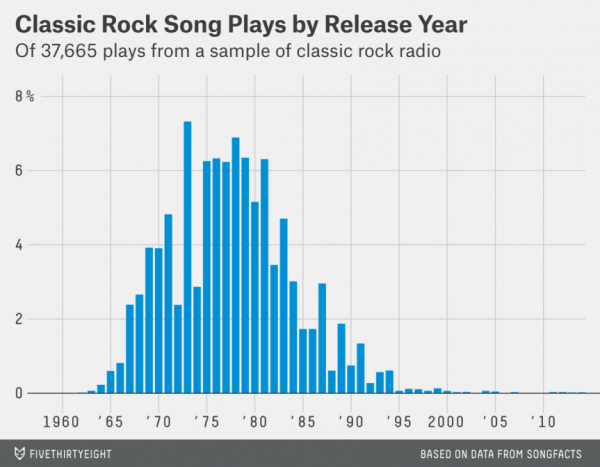
 e New Haven-based station. Lamberti, who has also been on air at Connoisseur’s Fairfield County classic rock station, 95.9 FOX, was on the afternoon drive shift at WDRC-FM.



 ould be the best fit



 vable Communities
 rcent, with less than 2 percent growth for people age 20 to 64 during the same period.


 asier to walk and bike by implementing "complete streets" in cities and towns across Connecticut. Complete streets make it easier and safer for people to get around on foot or by bike, in order to become more physically active.
 ut the
 nd Connecticut Coalition of Mutual Assistance Associations. The project was also supported by the Asian American Studies Institute at UConn, the UConn School of Pharmacy and the UConn School of Social Work. It focused on housing, education, language access, employment, access to public resources, and medical and mental health.
 Healthcare Concerns
 d education, promoting preventative care, actively recruiting APA members in various professional fields, creating diversity in the workforce, translating materials into the most common APA languages, and raising awareness among the APA population regarding their rights.
 ist were the small towns of Woodstock, Cornwall, and Prospect.
The Hearst analysis to determine the state’s best towns for teens, included five sets of numbers: the town’s four-year graduation rates for high schools; the percentage of the population between the ages of 15 and 19; the percentage of teens holding a job; teen pregnancy rates; and arrests numbers for teens charged with drug offenses and driving while intoxicated.


 lvania (#43) are also in the bottom ten. New Jersey has the highest percent of young people in the region, ranked at #30, with 23.2 percent.




















