40 Years Ago, Transportation and Fiscal Austerity Highlighted Inauguration Day

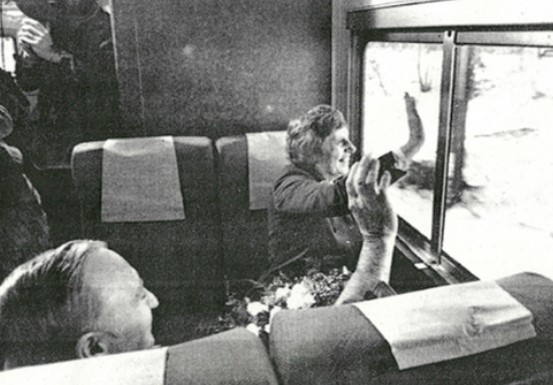
On  inauguration day, Connecticut’s incoming Governor would be “commuting by train to the Capitol for the inauguration to dramatize the need for more mass transit,” local news media reported. The Governor-elect was Ella Grasso, and the year was 1975.  She took the train from her hometown of Windsor Locks into Hartford.

Four decades later, transportation will once again be center-stage on inauguration day, as Governor Dannel Malloy has indicated in the weeks prior to taking the oath of office for a second time that transportation will be a leading issue of his second term. ella train
The Wall Street Journal has reported that a White House economic analysis from July 2014 found that 41 percent of the state’s roads were in poor condition, noting that Connecticut was tied with Rhode Island with the highest percentage of poor roads.  The state is also in the midst of improving the New Haven - Springfield rail corridor, poised to launch a revitalized "Hartford line."

Grasso, according to news reports of the day, also took the opportunity “to emphasize the need for fiscal authority in the face of projected money pr1000px-seal_of_the_governor_of_connecticut.svgoblems for the state.”

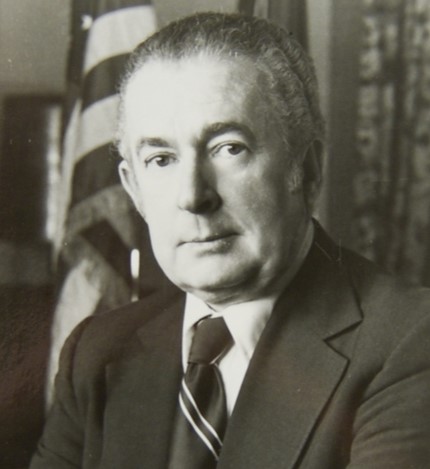
Dollars and sense were also central to the first inaugural address of Governor William A. O’Neill on January 7, 1981.

Published reports indicated “that he favored cutting spending rather than increasing taxes to eliminate a deficit in this year's budget. But he said that balancing spending with existing revenues would be even harder for the fiscal year beginning July 1.”

Speaking before a joint session of the State House of Representatives and Senate, The New York Times reported that Mr. O'Neill said: ''Government at all levels faces increasingly tough decisions, finding itself forced to do more with less. It seems we have only one choice: Curb spending and control taxation.''

O’Neill, who had succeeded to the office just a week earlier upon Grasso’s resignation due to ill health, said 'To maintain a budget balance, we can raise taxes or cut spending even further,'' he said. ''I do not want to raise taxes.''

Later in his term, O’Neill would respond to the collapse of the Mianus River Bridge on I-95 in Greenwich on June 28, 19oneill83, which exposed a poor record of road and bridge maintenance in the state, with creation of a Special Transportation Fund to set aside money to maintain and repair the state's bridges.
That same year, the legislature agreed to eliminate tolls from Connecticut roads, in part due to a horrific accident in January at the Stratford tograssoll station that killed seven people and galvanized public opinion.  The state had collected tolls at 14 locations - eight on the Connecticut Turnpike between Greenwich and Plainfield, three on the Merritt and Wilbur Cross Parkways, and at three bridges in the Hartford area. The tollbooths generated $66 million a year, The New York Times reported that year.
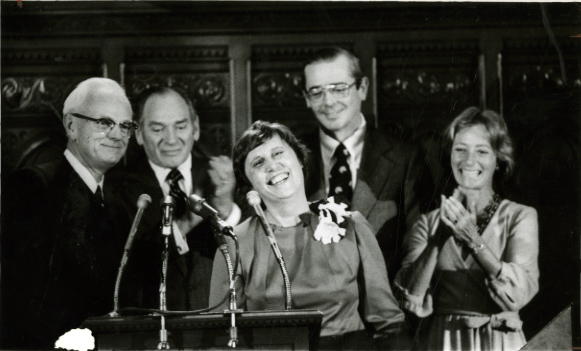
On January 9, 1991, former U.S. Senator and newly elected Governor Lowell P. Weicker said in his inaugural address that “The people of Connecticut have sent us here to do the right thing: to face up squarely to the facts of a state in fiscal trouble.'' Describing the state as ''rudderless,'' he said ''A deficit has taken control of our lives, coloring all else as it climbs beyond comprehension, sapping our confidence, humbling our visions. The past is not worth the best of our courage and creativity. That belongs to the future. 'So let's get this deficit business done, and fast.''weicker

Although he did not propose it on day one, he would soon recommend imposition of a state income tax in Connecticut, which was approved in August 1991 by a reluctant state legislature and signed into law.  Just a few weeks later, Gov. Weicker signed legislation increasing transportation fees by $6 million, clearing the way for dozens of stalled road and bridge projects.  The New York Times reported that the $6 million” will raise the state transportation fund to $63 million” and “insure enough money to pay for road projects for the next six years.”




As Latino Population Increases, Schools See More English Language Learners

A snapshot of America in 2044, based on U.S. Census Bureau data and current trends, will show this:  a nation with a youthful, growing minority population juxtaposed against an aging, slow-growing and soon to be declining white population. New population projections show whites will become a minority by 2044, according to published reports. The new projections from U.S. Census Bureau figures shows two trends for America's population -- a long-term decline for the nation's white population, making up just 49.7 percent of the population by 2044, and a growth of new minorities -- Asians, Latinos and multiracial persons. The populations among the rapidly-growing Latinos, Asians and multiracial populations are all expected to double in size over the next 30 years. Specifically, the rise of Latinos is projected to make up 25.1 percent of the U.S. population in 2044, doubling African-Americans, according to the data projections reported in the Latino Post.  By 2027, more than half of America's 20-somethings will be racial minorities, and in the 2028 presidential election, 40 percent of all eligible voters will be racial minorities._Hispanic_students

In Connecticut, the demographic shift is underway.  The Hispanic percentage of the statewide population in 2013 stood at 14.7 percent, steadily climbing during the past decade.  The Hispanic percentage of statewide population under age 18 in 2013: 22 percent.

When the website ctlatinonews.com selected five “Young Latinos to Watch” this month, two of the five were newly elected legislators.  Aundré Bumgardner was a surprise winner on Election Day.  The Republican, whose family is from Panama and Puerto Rico, will be the youngest State Representative in Connecticut’s legislature.  The 20 year-old won his party’s nomination to run for the state House from the 41st District, which covers Groton and New London.  Rep.-elect Christopher Rosario may be new to the state’s legislature, but he is not new to advocacy, politics  and working on behalf of the Latino community. He will represent his hometown of Bridgeport in the state legislature from the 128th District.   He has been Bridgeport’s youngest department head as Director of Anti-Blight under the Office of Neighborhood Revitalization.

Recent news reports highlight one of the issues that the legislature will be grappling with.  An analysis by CT Mirror found that during the 2013-14 school year, Hartford Public Schools had the most English Language Learner (ELL) students, with 3,550, but Windham had the highest percentage of ELL students at 23.8 percent.  The largest peeducation_student_newsrcentage increases in ELL students, between 2001 and last year, came in Windham (11.8% increase), Danbury (up 9.4%), Norwich (up 9.1%), and New London and West Haven (both up 7.4%).


The increasing number of ELL students in Connecticut is reflected in the current top 20 communities, according to the CT Mirror data, compiled from the State Department of Education:

  1. Hartford 3,550
  2. New Haven 2,709
  3. Bridgeport 2,685
  4. Danbury 2,204
  5. Waterbury 2,114
  6. Stamford 1,870
  7. New Britain 1,659
  8. Norwalk 1,277
  9. Meriden 1,011
  10. Windham 774
  11. West Haven 678
  12. East Hartford 606
  13. New London 588
  14. West Hartford 490
  15. Greenwich 486
  16. Norwich 465
  17. Manchester 351
  18. Torrington 334
  19. Bristol 317
  20. Wallingford 275

The top twelve municipalities with ELL students, by percentage of their student population:demographics_icon

  1. Windham 23.8%
  2. Danbury 20.4%
  3. New London 19.2%
  4. Hartford 16.7%
  5. New Britain 16.5%
  6. Bridgeport 12.9%
  7. New Haven 12.7%
  8. Meriden 12.5%
  9. Norwich 12.4%
  10. Stamford 11.8%
  11. Norwalk 11.5%
  12. West Haven 11.4%
  13. Waterbury 11.4%

The legislature's Latino and Puerto Rican Affairs Commission (LPRAC) is hosting this public policy forum on English Language Learners (ELL) and bilingual education in Connecticut on Tuesday, January 13, at the State Capitol in Hartford.  It will feature classroom teachers, business, professors, and legislators discussing the status of ELL/bilingual education and how to improve outcomes for Connecticut’s non-English speaking children.

Pediatric I.V. Backpack Invented by 11-Year-Old Passes Another Milestone

Eleven-year-old Kylie Simonds of Naugatuck sought to raise $50,000 to manufacture a working prototype of the pediatric chemo back-pack she invented.  In just five months, she has.  Her gofundme campaign, which began on July 22, now stands at $53, 134. Kylie is a cancer survivor, and designed an I.V. backpack for children on chemotherapy, receiving transfusions, or other medical reasons.  Her goal was to improve mobility – to make moving around easier, eliminating the traditional I.V. poles. 1791872_1406591846.6065_multi

Kylie was challenged to come up with an invention through her school (Cross Street School) and the Connecticut Invention Convention, held annually. More than 130 Connecticut schools participate, creating over 10,000 young inventors each year. Kylie's invention was chosen by her middle school teachers, among others, and she attended the Invention Convention, where over 700 of the top inventions were displayed and many selected for awards and recognition.

Kylie's invention received four awards, including the "Patent Award", the highest award at the convention. The Patent Award has allowed Kylie's invention to be submitted to the US Patent & Trademark Office with the sponsor covering all costs.

Her accomplishment was recently noted in the Bulletin of the Connecticut Academy of Science and Engineering, and has been featured in news media stories in Connecticut and beyond.  Last month, she was among ten young people (she was the youngest) honored as “women in tech” at the Women of the Year Awards sponsored by Glamour magazine.

With help from her father, Kylie is now doing R&D to make the prototype.  She has found numerous infusion pumps that will suit this idea but the cost for them is thousands of dollars.  For example, the controller device will need to be customized to be mobile and also small enough to fit in a backpack.  Additionally, the backpack will need to be designed to support both the IV infusion pump and the carry rod.

Kylie, the oldest of three children in her family, underwent 46 weeks of chemotherapy and is in remission from rhabdomyosarcoma, a cancer that affects the soft tissues and connective tissues or bones.IV-Pediatric-Backpack-for-Kids-With-Cancer

“I used to have to use the IV poles and I always tripped over all the wires,” she said. “It was hard to walk around and I always had to have someone push it for me because I was kind of weak when I was in chemo.”

She hopes to begin production of lines of the backpacks for boys and girls, which will incorporate animal features into the design to make them fun for young children.  Next would be researching designs for a backpack line for teens and young adults.

A total of 1,289 people have donated to her fundraising initiative, which remains active, according to the webpage.  Kylie has indicated that all donations in excess of her $50,000 goal will go towards the manufacturing of the “first usable I.V. backpacks.  EVERY PENNY!”


One Percent of Last Year’s Unaccompanied Children Immigrants End Up in Connecticut

One-in-three (36 percent) of the nearly 54,000 unaccompanied children released to sponsors over the past year after their apprehension by U.S. immigration authorities have been placed in homes in three states – Texas, New York and California, according to Office of Refugee Resettlement (ORR) data. Connecticut is now home to 570 of the children, about one percent of the total, who have been temporarily resettled between October 2014 and October 2015, according to totals compiled by Pew Research Center using Department of Health and Human Services ORR data. OLYMPUS DIGITAL CAMERA

Among the New England states, New Hampshire has taken in 35 children, Maine 17, Vermont has 3, Rhode Island 215, and Massachusetts 1,405. The children are placed with sponsors, often relatives, while they wait for their next court appearance in immigration court. These cases can be delayed if asylum is sought, the Pew Research Center report indicated.

Last summer’s surge in the number of children without their parents apprehended at the Southwest border overwhelmed federal resources. Many of the children were making the dangerous journey from Mexico and Central America to the U.S., with sharp increases in apprehensions among children under 12. The issue brought widespread media attention, and strong opposition and support from people throughout the nation, especially in the southwest border states.

At the time, the Connecticut Commission on Children urged Governor Malloy to reverse his denial of a request by the Obama Administration to house children in a state facility.  In a July 21, 2014 letter, Commission Executive Director Elaine Zimmerman wrote:1=20=25

“Recently, the Obama administration asked the State of Connecticut for assistance in hosting a number of these children within our state while their status is processed by the federal government. While we fully support your decision to not host the children at the Southbury Training Facility, or any other facility ill-equipped to house children safely, we believe that there are state, private, institutional, as well as faith-based resources in Connecticut that could respond well, through your leadership, to the President’s request.”

Since last summer, apprehensions of unaccompanied minors crossing the U.S.-Mexico border has decreased dramatically, according to published reports, from 10,508 in June alone to 2,529 in October, U.S. Customs and Border Protection data indicates.

Texas took in the highest number of unaccompanied minors, with 7,409 children placed during fiscal year 2014, which ended on Sept. 30, government data showed. New York and California each took in just under 6,000 children. These three states account for more than half (53 percent) of the nation’s Hispanic population.


immigrantmap

Nonprofits Across CT Have Economic and Jobs Impact, New Database Shows

The interactive webpage was constructed and database developed prior to Election Day as a means of providing information about nonprofit organizations that their supporters could use to reach out to legislative candidates to advocate for the many charitable organizations in their local districts.  With the winning candidates now determined, the database may prove even more helpful in advocating for nonprofit organizations in what promises to be a tight state budget in 2015. The database, developed by Connecticut-based Blueprint for Impact, is an “advocacy tool” providing a range of data and information, broken down on interactive maps by Senate district and by House district.   Nonprofit organizations provide a wide variety of services throughout local communities, including some supported with state funds.  Blueprint-Horizontal

Among the categories of data available are the number of employees working in the nonprofit sector along with the total compensation paid to those employees and the payroll taxes paid and total revenue of nonprofits within each district.

In addition, the site reports on the value of grants made by nonprofit organizations, and the average age of the nonprofits operating in each district. The age of each nonprofit is the number of years since the IRS ruling on tax-exempt status was provided. In Connecticut, there are many nonprofits that have been tax exempt for over 50 years. Older organizations may be more influential in their community.

senate 13The points on the map were organized by NTEE category. NTEE is the National Taxonomy of Exempt Entities, which categorizes nonprofits based on their social purpose.

The mission of Blueprint for Impact is to “help nonprofits use data to rethink, reboot, and scale their social impact. We direct our impact into each of those three aspects.”  Christopher D. Brechlin  is the Founder of Blueprint for Impact, a registered Benefit Corporation based in Hartford, that offers a collection of data tools, services, and expertise specifically for nonprofitsonline-library.

The data used to populate the maps was accessed using the National Center for Charitable Statistics (NCCS) Enhanced Extract of IRS Financial Data, 2013. NCCS allows users to download data processed by the IRS during calendar year 2013 as submitted on forms 990, 990EZ, and 990PF. All data is therefore “as is,” or as it was reported on the forms to the IRS.

Planning Underway for 2015 White House Conference on Aging; Connecticut Has 7th Oldest Population

Next year will be the 50th anniversary of Medicare, Medicaid, and the Older Americans Act, as well as the 80th anniversary of Social Security. It will also be the year when the White House will convene the 2015 White House Conference on Aging. The Conference will be of particular interest in Connecticut, currently the 7th oldest state in the nation based on median age.  The state is undergoing “a permanent and historic transformation in its demographics,” according to the state’s Legislative Commission on Aging (LCA).

The first White House Conference on Aging was held in 1961, with subsequent conferences in 1971, 1981, 1995, and 2005. These conferences have been widely viewed as catalysts for development of aging policy over the past 50 years.

The White House is “fully committed,” to conducting a 2015 conference, and is moving forward developing plans.  Officials intend to seek broad public engagemelogo-WHCOA2015nt and work closely with stakeholders in developing the conference, viewed as “an opportunity to look ahead to the issues that will help shape the landscape for older Americans for the next decade.”

Given the advances in technology and social media in the past decade, the 2015 Conference is expected to use web tools and social media “to encourage as many older Americans as possible to participate,” according to White House officials.

Among the key issues likely to be included are: retirement security; healthy aging; long-term services and supports to help older adults remain in their communities; and preventing financial exploitation, abuse, and neglect of older adults.

According to the Connecticut for Livable Communities report, issued earlier this year by the LCA, the state’s 65 and older population is projected to grow by 57% between 2010 and 2040. During the same period, Connecticut’s 20- to 64-year-old population is projected to grow less than 2%.

“In 2010, there were 4.35 working-age people for each person age 65 and older in Connecticut,” according to the CLCA. “In 2030, there will be only 2.75.”  More than one-third of the Connecticut population is over the age of 50, according to the report, and that proportion continues to rise. Residents born in Connecticut today, the report indicates, can expect to live to be 80.8 years old—the third highest life expectancy in the nation.

Nationally in 2013, there were 44.7 million Americans aged 65 and over and 6 million aged 85 and over.  Over the next 50 years, the number of people aged 65 and older is expected to more than double to 92 million and the number of people aged 85 and older is expected to triple to 18 million.

Among the key areas expected to be highlighted during the Conference, according to the White House website:282f3319af64c02e9f_h7m6bq4iz

  • Retirement security - Financial security in retirement provides essential peace of mind for older Americans, but requires attention during our working lives to ensure that we are well prepared for retirement.
  • Healthy aging will be all the more important as baby boomers age. As medical advances progress, the opportunities for older Americans to maintain their health and vitality should progress as well and community supports, including housing, are important tools to promote this vitality.
  • Long-term services and supports - Older Americans overwhelmingly prefer to remain independent in the community as they age. They need supports to do so, including a caregiving network and well-supported workforce.
  • Elder justice - Seniors, particularly the oldest older Americans, can be vulnerable to financial exploitation, abuse, and neglect. The Elder Justice Act was enacted as part of the Affordable Care Act, aimed at protecting seniors from scam artists and others seeking to take advantage of them.

In 2013, there were 75.9 million baby boomers (people born between 1946 and 1964) accounting for almost one-quarter of the population. Baby boomers began turning 65 years old in 2011.  Between 1980 and 2013, the centenarian population more than doubled from 32,194 in 1980 to 67,347 in 2013.

Between 1990 and 2013, the labor force participation rate of people age 65 and over increased from 12% to 19%.  Among the population age 65 and over, there are 128 women for every 100 men. At age 85 and over this ratio increases to 196 women for every 100 men.

Earlier this year, Cecilia Muñoz, Assistant to the President and Director of the Domestic Policy Council, announced that Nora Super will be leading this effort as the Executive Director of the 2015 White House Conference on Aging.

Additional information can be obtained by contacting: White House Conference on Aging, 200 Independence Avenue SW, Suite 637D, Hubert H. Humphrey Building, Washington, DC  20201, (202) 619-3636, info@whaging.gov. Individuals can also sign up for updates as plans develop, at https://public.govdelivery.com/accounts/USWHCA/subscriber/new?topic_id=USWHCA_1

Concussion Education Plan Due to School Districts on January 1; Advisory Panel Meets Today

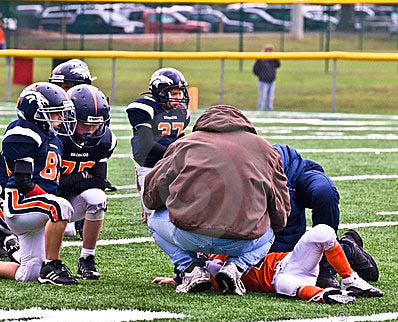
Three weeks from now, Connecticut should have in place a state concussion education plan to be used by local and regional boards of education.  That’s according to a law passed by state legislators earlier this year in response to growing concerns about the potential lifelong effects of concussions on students injured in school sports. Local school boards will be responsible for implementing the plan using written materials, online training or videos, or in-person training.

The Connecticut Youth Concussion Advisory Group, coordinating the state’s effort, has met four times this fall.  Minutes of the most recent meeting, on November 6, were posted to the group’s website more than a month later, just days ahead of the meeting scheduled for Thursday, December 11.  That meeting is to include an update on the Concussion Education Plan, according to the meeting agenda.

Although the law was approved in May, it was highlighted in public ceremonies in September in Westport, the hometown of three mothers who were instrumental in advocating for passage of the law. Each of their sons’ lives were changed by concussions. Ann Sherwood, Pippa Bell Ader and Diana Coyne came together to form the Parents Concussion Coalition, FOX Connecticoncussion3cut reported.

Public Act 14-66 requires the state Department of Education to consult with the state Department of Public Health, the governing authority for intramural and interscholastic athletics, an appropriate organization representing licensed athletic trainers, and an organization representing county medical associations to do the following:

  • By January 1, 2015, develop a concussion education plan to be used by local and regional boards of education. Boards of education will be responsible for implementing such plan using written materials, online training or videos, or in person training.
  • Develop a signed informed consent, which must include a summary of the concussion education plan, and a summary of the local board’s policies regarding concussions. For the school year beginning July 1, 2105, local boards of education must prohibit a student athlete from participating in intramural or interscholastic athletic activities unless the student athlete and a parent or guardian returns such form.
  • Collect and report to DPH all occurrences of concussions, including the nature and extent of the concussion and the circumstances in which the student sustained the concussion.

The law also requires that a training course regarding concussions be developed or approved, and that “a refresher course regarding concussions, including current best practices, and, for football coaches, current best practices around the frequency of games and full contact practices and scrimmages.”  That provision was effective on October 1. 5455a41b65555.image

At the November meeting of the Advisory Group, “there was discussion regarding the pros and cons of mandating a specific time frame between stages of recovery from a concussion versus considering each case individually and relying on the student’s physician,” the meeting minutes reported.  Among materials reviewed were a Concussion Web page, Concussion Education Initiative Course feedback, and an annual review and refresher course.

Regarding data collection, the Advisory Group “discussed what will work best for schools; what is an ideal versus realistic approach.”

The Connecticut Interscholastic Athletic Conference (CIAC) Board of Control is requiring all CIAC member schools (including private and parochial schools not covered by the law) to develop a plan and begin implementation in the 2014-15 school year.

Westport’s Staples High School is among the Connecticut school that now provide concussion protocols on their websites, so that students, parents, coaches and the community are aware of expected practices.  According to the Staples site, “links include concussion education, the concussion care plan that is to bimagee filled out by your physician when a concussion occurs, our procedures for concussion management, and our Return to Play protocol that will be followed by all athletes before returning to competition after sustaining a concussion.”

Connecticut was one of the first states in the nation to adopt a concussion law, in 2010, following Oregon and Washington, which implemented similar statutes in 2009.  The law dealt primarily with training requirements for coaches.

Video 1       Video 2


CT’s First Sensory-Friendly Performance Ready at Hartford Stage

Hartford Stage will host a first-ever sensory-friendly performance of its annual holiday classic, A Christmas Carol - A Ghost Story of Christmas on Tuesday, December 9.  This will be the first time that Hartford Stage has offered this type of performance for the community – and apparently the first such effort in Connecticut. A “sensory-friendly” performance is a theatre production that is modified to accommodate individuals with sensory-input disorders, such as people on the autism spectrum, those with anxiety, and people with a range of cognitive abilities. hartford_stage_company

At the Tuesday night performance, “house rules” will be relaxed – people may need to get up, move around, and leave the theatre in the midst of the performance. There is no expectation that the audience will be completely quiet during the performance.  In addition, a Quiet Room will be available with sensory-friendly toys for anyone who needs a break from the performance.

"Sensory-friendly performances are designed to create a performing arts experience that is welcoming to all families of children with autism or other disabilities which create sensory sensitivities," says Jennifer Roberts, director of education for the theater.  The Hartford Stage website adds, “Our goal is to create an environmacc_sfent where people with autism or sensory needs, along with their families, can enjoy coming to the theatre together and will feel comfortable, supported and free to be themselves.”

Officials point out that while the script of A Christmas Carol will not change, some of the technical elements will be softened to accommodate sensitive ears and eyes. For example, haze will be reduced and strobe lights will be removed from the production. Lights in the audience will be remain lit at a dim level during the entire show to allow safe movement in and out of the theatre.

Abrupt and loud sound effects will be lowered, and there will be a signal to the audience to warn them that a potentially jarring moment is about to happen, so that caregivers can be ready to help those with sensory sensitivities.

The hope is to achieve “a judgment-free, fun experience for the entire family.”  About 150 people, students and their families, are expected to attend the performance.

Hartford Stage has prepared a plot synopsis and social story to help prepare audience members for the experience. They have encouraged families and caretakers to read the synopsis of A Christmas Carol and use the social story to prepare for the whole theatrical experience, from beginning to end.sponsor_tdf

The production, designed for age 9 and up, is about two hours long with a 15-minute intermission.   Theatre Development Fund’s Autism Theatre Initiative served as an advisor for the performance.

[view NBC Connecticut news story on the sensory-friendly performance]

Connecticut Ranks #12 in Child Homelessness Risk and Response, National Numbers at All-Time High

A new report finds 2.5 million children experienced homelessness in the United States in 2013, representing one in every 30 children in the country - an historic high in the number of homeless children. The report by Homeless Children America at the American Institutes for Research, called America’s Youngest Outcasts, documents the number of homeless children nationally and in every state, their well-being, their risk for child homelessness, and state level planning and policy efforts. It used the most recent U.S. Department of Education count of homeless children in U.S. public schools, which was released in September, and on 2013 U.S. Census data.report cover

From 2012 to 2013, the number of children experiencing homelessness annually in the U.S. increased by 8 percent nationally. The number of homeless children also increased in 31 states and the District of Columbia and in 13 of those states, it increased by 10 percent or more.

Connecticut’s child homeless number was virtually unchanged.  The report examined childhood homelessness on a state-by-state level, ranking the states from 1 (best) to 50 (worst). Connecticut’s overall ranking was #12.

The top 11 states were Minnesota, Nebraska, Massachusetts, Iowa, New Jersey, Vermont, New Hampshire, Pennsylvania, Hawaii, Maine and Maryland.

For Connecticut, the report shows there were 5,508 homeless children during the 2012-2013 school year. That is virtually identical - down  by four children - from the 2011-2012 data, and nearly 200 less children than in 2010-11. Connecticut, based on those numbers, ranked #1 in the nation 2012-2013 in the “extent of child homelesnational centersness” category.

The state ranked #17 in policy and planning, based on factors including the number of emergency and transitional housing units for homeless families, and state planning efforts.

The 130-page report, which will be presented to Congress, at a briefing scheduled for February 10, listed six causes of child homelessness nationwide:

  • the nation’s high poverty rate
  • lack of affordable housing across the nation
  • continuing impacts of the Great Recession
  • racial disparitiesstate child homeless map
  • challenges of single parenting
  • the ways traumatic experiences, especially domestic violence, pave the way toward and prolong homelessness

“Without decisive action now, the federal goal of ending child homelessness by 2020 will soon be out of reach,” said Dr. Carmel DeCandia, Director of the Boston-based National Center on Family Homelessness at American Institutes for Research. “Living in shelters, neighbors’ basements, cars, campgrounds, and worse—homeless children are the most invisible and neglected individuals in our society.”

According to the report, research shows that homeless children are hungry and sick more often. They wonder if they will have a roof over their heads at night and what will happen to their families. Many homeless children struggle in school, missing days, repeating grades, and drop out entirely.

Up to 25% of homeless pre-school children have mental health problems requiring clinical evaluation; this increases to 40% among homeless school-age children. Homelessness, especially in young children, may also lead to changes in the brain, which can interfere with learning, emotional self-regulation, cognitive skills and social relationships.

The report also recommends a series of “effective responses” to child homelessness:

  • Safe, affordable housing.
  • Comprehensive needs assessments of all family members.
  • Family-oriented services that incorporate trauma-informed care.
  • Identification, prevention, and treatment of major depression in mothers.
  • Parenting supports for mothers.
  • Education and employment opportunities for parents.
  • Further research to identify evidence-based programs and services for children and families.

The National Center on Family Homelessness, founded in 1988, is described as the nation’s foremost authority on child and family homelessness, using research and evidence-based approaches to prevent and end family homelessness.

childrenheader

2016 US Gymnastics Championships Back in Hartford, All About the Men

Connecticut residents watching the televised coverage of the men’s and women’s gymnastics competitions at the 2016 Olympics from Rio de Janeiro will likely see some familiar faces.  The run-up to the Olympics will come through Hartford that summer, as USA Gymnastics rolls out a new split schedule for the men and women, which will bring the mens’ National Championships to the XL Center, and the women for a pre-Olympic competition. For the first time since 1976, the 2016 U.S. Olympic Team Trials in gymnastics will be held on different days, in different cities.  The women's gymnastics trials has been awarded to San Jose, and the men's trials to St. Louis, to be held in late June and early July.

The trials will follow USA Olympic Gymnastics Trials 2012the U.S. Championships, which will also be held in different cities.  The men’s championships will be held in Hartford, June 3-5, 2016.  The women will also be in town, competing in the Secret Classic – a major pre-Olympic event.  The women will move on to their national championships three weeks later in St. Louis.

Why the new event pairings and tradition-breaking schedule?  It’s all about the men.

In an effort to boost the mens’ team’s chances in the 2016 Olympics, and increase public interest in the team, the competition schedule has been revised.  USA Gymnastics president Steve Penny explained in published reports that the organization moved up the men's trials to give the team more recovery time before the Rio Games. The U.S. men earned the top score in qualifying at the 2012 London Olympics but dropped to a disappointing fifth in the team finals. The men will have about six weeks to prep between the trials and the Olympics, which begin on Aug. 5, 2016, compared with four between the trials and the games in 2012.

Performance and notoriety go hand-in-hand.  Despite having earned a Silver Medal at the 2008 Beijing Olympics, for example, American gymnast Jonathan Horton did not become a household name in the U.S.  That’s not surprising, as the public generally is more focused on the women’s teams competing in the Olympics every four years.Hartford Has It_black-aqua

“People think gymnastics, and they think little girls in leotards, powerful and graceful, and they forget about our side,” Horton recently told the Pittsburgh Post-Gazette. “Right now, there’s this stereotype that we’re not a masculine sport. All of us are trying to change that image that it’s a sissy sport. It’s not.”logo

The Post-Gazette noted that in most other countries where gymnastics skills are cultivated, the men are still more popular than the women. Because of that, Penny noted, there is more depth among the men in international competitions, which has made it tougher for the U.S. team to bring home medals with the same frequency as the women’s team.

Inside Gymnastics magazine reported last year that “in the NCAA, men’s teams are losing funding while women’s teams are being created,” adding that “The reality is - boys’ gymnastics has never been as popular as girls’ gymnastics.”

Only six states sponsor a high school boys gymnastics championship, and only 17 Division I colleges still support men’s gymnastics programs, the newspaper reported. USA Gymnastics is making a concerted effort to reward male gymnasts who are competing in club programs at the high school and college level with recognition for their effort, Penny told the Post-Gazette. “There’s always been more sport opportunities for young men than there were for women. The role models for women always stand out. For men, it’s a more cluttered sports landscape.”

There’s little doubt about the popularity of gymnastics during the Olympics.  After the 2012 Olympic Games in London, there was an analysis of the sports and athlete mentions on Twitter, which revealed that there were more than 150 million Summer Games tweets. According to Twitter, the sport which saw the most Twitter conversation was soccer with well over 5 million Tweets.  Rounding out the top five were swimming, track & field, gymnastics and volleyball.

USA Gymnastics tends to return to cities that have been successful hosts previously for major gymnastics competitions, and that is true for San Jose, St. Louis and Hartford.  The XL Center has hosted the USA Gymnastics national championships twice: in 2010 and 2013.  Neither was an Olympic year.  2016 will be.

2016 Competition Schedule

Men

  • National Championships, Hartford, June 3-5
  • Olympic Trials, St. Louis, June 23-26

Women

  • Secret Classic, Hartford, June 3-5
  • National Championships, St. Louis, June 23-26
  • Olympic Trials, San Jose, July 8-10