CT Organization Leads Efforts to Increase Awareness of Rare Disesases

Rare Disease Day, observed on February 28, is an annual awareness day dedicated to elevating public understanding of rare diseases and calling attention to the special challenges faced by patients and the community. According to the National Institutes of Health (NIH), a disease is rare if it affects fewer than 200,000 people.  Nearly 1 in 10 Americans live with a rare disease—affecting 30 million people—and two-thirds of these patients are children. There are more than 7,000 rare diseases and only approximately 450 FDA-approved medical treatments.  Many rare diseases are chronic and life-threatening.rdd-logo-small

The National Organization for Rare Disorders (NORD), with national headquarters in Danbury and offices in Washington D.C. and Massachusetts, is a federation of voluntary health organizations dedicated to helping people with rare "orphan" diseases and assisting the organizations that serve them. NORD is committed to the identification, treatment, and cure of rare disorders through programs of education, advocacy, research, and service.

Rare Disease Day takes place every year on the last day of February (February 28 or February 29 in a leap year)—the rarest date on the calendar—to underscore the nature of rare diseases and what patients face.

In Connecticut this year, the Morgan Leary Vaughan Fund, Inc. (Morgan’s Fund), an all-volunteer public charity dedicated to Necrotizing Enterocolitis (NEC), will be holding a public awareness event on February 28 in Stratford. The organization’s inaugural event, Illumin8ing Rare, is designed to provide “a moment of reflection and appreciation for all those who have been directly affected by a rare disease,” organizers say, adding “it is an opportunity to celebrate survivors and to share tributes to those who are no longer with us.”nord

Morgan’s Fund mission is to promote public awareness about NEC and the potentially devastating effects it can have on preemies and their families, and to advance research to prevent, dNORD-logoiagnose, treat, and ultimately, cure NEC. Named after Morgan, it celebrates his survival, courage and strength. Morgan and his twin brother were born at 28 weeks, nearly three months early and each weighing less than 2.5 pounds. At four days old, Morgan developed NEC and lost approximately 20 percent of his small intestine. Morgan not only survived but has also thrived since his bout with NEC. The fund is his family’s way of paying it forward.

NEC is an inflammatory disease that leads to necrosis (death) of the intestine. It is predominately due to prematurity and its statistics are startling. NEC is the second leading cause of death in premature infants. NEC is the 10th leading cause of infant death overall. NEC is a rare disease — occurring in approximately 25,000 babies per year in the United States. Despite extensive study, the cause of NEC is uncertain.logo

Earler this week, the UConn School of Medicine Disabilities Interest Group hosted a Rare Diseases Awareness Event on February 25th at the University of Connecticut Health Center, celebrating individuals who have rare diseases and the many researchers and physicians who are fighting to find cures for these conditions.NORD-INFOGRAPHIC-Who-Does-Rare-Disease-Affect-RDD-1-21-15-no-reference

To raise awareness nationwide this year, NORD is coordinating a new social media campaign, #1in10, to highlight the 1 in 10 Americans living with a rare disease.  “It’s astounding that there are just as many Americans living with a rare disease as there are people who are left-handed,” said Lisa Phelps, director of marketing and community relations at NORD. “We are launching this campaign to help raise important awareness for this major public health issue and the need for safe, new treatments.”

To help support the #1in10 campaign, NORD has launched the Instagram account, @rarediseasedayUS.  Instagrammers are invited to tag @rarediseasedayUS in their photos and celebrations to share what’s happening now for Rare Disease Day.  Instragram members are invited to use the official Rare Disease Day hashtags #RDD2015 and #RareDiseaseDay and follow Rare Disease Day on Facebook (/RareDiseaseDay.US) and Twitter (@RareDayUS).

For more information about Rare Disease Day, go to www.rarediseaseday.us. or visit NORD’s website, www.rarediseases.org.

http://youtu.be/DpIt8vH6xC8

Norwalk is First in Connecticut to Approve Concussion Program for All Youth Sports

Norwalk has become the  first community in Connecticut to approve a city-wide concussion program for all youth sports, according to city officials.  The Norwalk Common Council, on the recommendation of its Recreation & Parks Committee, approved the new concussion guidelines this week, modeled after The Concussion Aware and Prepared Program (CAPP). Officials said the guidelines will apply to organized youth sports programs using Norwalk recreation facilities. The guidelines are intended to “plug the loophole that exists” in the current Connecticut Concussion Law which protects only public middle and high school athletes who play for school-sponsored teams, officials said.concussion

“It is important that our children are protected and that parents and coaches have the information they need to keep them safe,” said Norwalk Mayor Harry Rilling. “Norwalk is proud to be a leader in providing these updated guidelines for all leagues who play on our public fields. We aim to make youth sports as safe as possible."

Last month, Connecticut’s Task Force on Youth Athletics and Concussions, staffed by the State Commission on Children, reported the results of their mandated study of  "occurrences of concussions in youth athletics” and issued recommendations for possible legislative initiatives.  The 21-member Task Force noted that “there exists within the State of Connecticut the need for guidelines in the arena of non-scholastic youth athletics,” indicating that private clubs and public recreation teams are examples of “non-scholastic” youth athletics.concussion_tf

The Norwalk Guidelines apply to any youth up to age 19 who participates in any organized sporting or athletic event or activity either conducted by the City of Norwalk or permitted to take place on any property or facility owned by the City of Norwalk. Activities including practices, training, performances, scrimmage, games and other organized competitions involving athletic activities such as sports and dance. With a population of just over 85,000, Norwalk is Connecticut’s sixth largest city, and has the third largest population in Fairfield County.

Former Norwalk Junior Lacrosse and RCA Soccer Coach, Katherine Snedaker, now Executive Director of the non-profit, PinkConcussions.com , and advocacy organization Sports CAPP.com which developed The Concussion Aware & Prepared Program, said, “our mission with these new guidelines is to help youth sports leagues update their policies with best practices, and increase safety for our kids while lowering personal liability for our coaches and city.”  The Concussion Aware and Prepared Program, which uses free online materials from the United States Centers for Disease Control and Prevention (CDC), is designed to provide up-to-date information regarding concussions for youth coaches and their staffs, parents and youth players and is available in English and Spanish.

photo-150x150“Hopefully this program will be a model for the rest of state,’’ Snedaker said. “Parents will now know their young children will have some of the same protections that benefit public middle and high school athletes.”  In Norwalk, the newly approved guidelines had received support for the Norwalk Youth Football and Cheer, Norwalk Junior Soccer Association, Norwalk Cal Ripkin Baseball, Norwalk Little League and Norwalk Junior Lacrosse, according to the SportsCAPP website.


The Sports CAPP program recommends five components that should be included in every concussion program. They are:

The new guidelines for school programs in Connecticut approved by the State Board of Education (SBE) in January, will go into effect July 1, 2015, requiring that:

  • Prior to taking part in athletic activities high school athletes and their parents or guardians will be required to read materials, watch videos, or attend in-person training regarding the school district’s concussion plan.
  • Parents and guardians must sign an informed consent form that includes a summary of the district’s concussion plan.
  • Coaches must complete training to recognize the signs and symptoms of concussions and learn how to get appropriate medical treatment for students.

The new State Department of Education “Concussion Education Plan and Guidelines for Connecticut Schools” indicates that “concussions can cause a wide range of functional short- or long-term changes affecting thinking (memory and reasoning); sensation (touch, taste and smell); language (communication , expression and understanding); or emotions (depression, anxiety, personality changes, aggression, acting out, and social inappropriateness).”  It points out that “athletes should rest their bodies and brains until they are no longer experiencing any symptoms of concussion.  Physical and cognitive exertion, such as homework, playing video games, texting, using a computer or watching TV may worsen symptoms.”

Under the state guidelines for schools, coaches must immediately remove any student participating in athletic activity who exhibits symptoms or behaviors consistent with a concussion or who is diagnosed with a concussion. Parents or legal guardians must be notified as soon as possible and no later than 24 hours after such removal. Before a student can return to any team activities, a licensed health care professional trained in evaluating concussions must provide written clearance.


http://youtu.be/Sno_0Jd8GuA

http://youtu.be/OFQcZHkLPuk

Will Olympic Footprint Extend into Connecticut? State Officials Offer Possibilities to Planners; April 2 Public Forum in Springfield

Should Boston be selected in 2017 by the International Olympic Committee (IOC) to host the 2024 Olympic Summer Games, Massachusetts may not be the only northeast city to host Olympic events. Published reports indicate that venues outside the Bay State are being actively considered, and Connecticut’s Capital Region Development Authority (CRDA) is among the organizations reaching out to express interest.  Network coverage of the 2024 Olympic Games would come from NBC Sports - which has facilities based in Stamford, Connecticut - under an agreement between the network and the IOC signed last year.  Boston 2024

The official Boston 2024 website indicates that “there may be opportunities for preliminary rounds of certain events in other states.” The Boston Globe has reported that bid organizers have “held high-level conversations” with cities in addition to Boston about hosting events, including New York and Washington.  There are no indications that talks with Connecticut officials are underway.

Connecticut officials – and residents – may have an opportunity to weigh in when Boston 2024 holds a community meeting in Springfield, MA, on April 2 - one of 20 such sessions being held around the state of Massachusetts over the next few months, and the nearest location to Connecticut.  The community meetings begin in Lowell on March 11.  There does not appear to be a requirement that speakers be Massachusetts residents.

Rhode Island Gov. Gina Raimondo told the Associated Press earlier this month that she has spoken with Massachusetts Gov. Charlie Baker about collaborating and plans to put together her own team to explore how Rhode Island could benefit from Boston's bid.

CRDA, in a January letter to Boston 2024 officials, suggested that a number of Connecticut facilities “could serve for official events, whether preliminary or final; or for practice sites for teams and individuals competing in the Games.”  State officials suggested the Connecticut Convention Center and XL Center in Hartford, Rentschler Field in East Hartford, and the Connecticut Tennis Center in New Haven as facilities that could be considered by leaders of the Boston 2024 bid “as you advance your thinking and planning.”

The Globe recently reported that “by following the IOC’s guidelines and taking advantage of existing world-class facilities in other cities, Boston 2024 organizers believe they can avoid the white crda-logo-2-72053-1elephant venues and out-of-control costs that have plagued Olympic hosts for decades.”  Recently adopted IOC guidelines are aimed at reducing costs by host cities and are more amenable to having some events take place outside the immediate Olympic perimeter.

The Globe pointed out that at the most recent Summer Games in London, sailing was held 142 miles southwest of the host city and organizers staged mountain biking an hour’s drive from London. Soccer matches took place at stadiums in several cities, including Cardiff, Coventry, Glasgow, Manchester, and Newcastle, prior to finals in London.

The correspondence from CRDA Executive Director Michael Freimuth includes information about each of the Connecticut venues, and an invitation to “visit the facilities to assess them as a means to meet the demands of the Olympics.”  No word thuConnecticut-Tennis-Centers far on whether such a tour has been scheduled.  Possible sports at the Connecticut venues, as suggested by CRDA, include badminton, table tennis, wrestling, martial arts, and weightlifting.  Basketball, volleyball and soccer could be additional possibilities, along with tennis.   The Connecticut Tennis Center is described as the fourth largest tennis venue in the world, with seating capacity of 15,000.  Within the past week, options for major renovations or reconstruction of Hartford’s XL Center have been announced, with a decision on how to proceed due later this year.

The Boston 2024 website also notes that “many national Olympic and Paralympic teams will arrive months in advance of the Games to acclimate and train; they may lease facilities at high schools and colleges around the region.”

NBC owns the exclusive U.S. media rights for an unprecedented 11 consecutive Summer and Winter Olympics, a run which began with the 2000 Sydney Games and continues through the 2020 Summer Olympics.  In January 2013, the networkNBC-Sports-Logo-Small3-432x235 opened a state-of-the-art 300,000 square foot facility headquartered in Stamford, Connecticut on a thirty-three acre campus. The facility brought NBC Sports, NBC Sports Network, NBC Olympics, NBC Sports Digital, and NBC Regional Networks all under one roof.  In May 2014, NBC Universal agreed to pay a reported $7.75 billion for the exclusive broadcast rights to the six Olympic Games from 2022 to 2032.

International Olympic Committee president Thomas Bach, of Germany, called Boston’s 2024 Olympic bid “very strong” in an interview that aired during NBC’s Super Bowl XLIX pregame show earlier this month.  Boston could face formidable opposition from cities including Paris, Berlin, Rome and Hamburg and when the 102-member IOC votes to choose the host city. The deadline for cities to file bids is September 2015.


Local Election Officials Less Responsive If They Think You’re Latino, Study Finds

The answers vary, depending who is believed to be asking.  In an academic study, researchers have found that individuals thought to be Latino by local election officials receive less responsive and accurate answers to basic questions seeking information about voting.  It is described as the first large-scale field experiment investigating bureaucratic behavior that provides “causal evidence of discrimination on the basis of ethnicity or race by election officials.” The authors, Ariel R. White, Noah L. Nathan and Julie K. Faller, Ph.D. candidates at Harvard University, have published the results of their 2012 study, “What Do I Need to Vote? Bureaucratic Discretion and Discrimination by Local Election Officials,” in the February 2015 issues of American Political Science Review.  The graduate students contacted more than 7,000 elections officials in 48 states (Maine and Alaska were not included) – and asked two questions via email of the people who are responsible for both implementing voter-ID laws in many states and providing election-related information to voters.study

“We find that officials provide different information to potential voters of different putative ethnicities,” the authors explained.  “Emails sent from Latino aliases are significantly less likely to receive any response from local election officials than non-Latino white aliases and receive responses of lower quality. This raises concerns about the effect of voter ID laws on access to the franchise and about bias in the provision of services by local bureaucrats more generally.”

The field study, in which fundamental voting-related questions were emailed to election officials, was designed to “isolate the effect of ethnicity on real-world performance” of election officials.  It indicates that the officials are less likely to respond to informational inquiries from individuals thought to be Latino.  Emails from Latino names are roughly five percentage points less likely to receive a reply to a question about voter ID requirements than those from non-Latino whites, the Boston Globe reported.

The experiment was designed to determine if “street-level bureaucrats discriminate in the services they provide to constituents.”  The results provide “strong evidence” that they do.  The study concluded that “the responses that Latino emailers received to voter ID questions were less likely to be accurate and were more likely to be non-informative.”  The results “suggest that bias from street-level bureaucrats can occur even when there are not clear strategic reasons for officials to discriminate on the basis of ethnicity.”amerian political science review

The study, just prior to the 2012 election, also indicated that “we find no evidence that whether local officials are elected or appointed, partisan or nonpartisan, or members of specific political parties influences the extent of bias.”

Significantly, given recent court decisions that have rolled back oversight of elections in certain jurisdictions around the country, the study authors indicate that “consistent with the claim that enhanced monitoring reduces discrimination, we find no evidence of bias against Latinos in jurisdictions subject to federal regulation under the Voting Rights Act.”

“These findings have important implications for debates about voter ID laws, and indeed for any changes to voting requirements or election administration,” the authors emphasize in the study’s conclusion.  “Our results indicate that changes to existing voting regulations are likely to differentially increase information costs for Latino voters because public officials are less responsive to their requests for information.”

The 14-page study report also suggests that:

  • There is “some evidence that officials respond at lower rates to Latinos, even when asked a question”
  • “Public officials can be biased even in exceptionally low cost interactions” such as when only a single word answer (“No”) is necessary
  • “If minority voters are less able to acquire information about ID requirements and more likely to be asked for ID at the polls, this could manifest in lower voting rates. This may be greatest where officials are not monitored to prevent discrimination.”

The researchers suggest that future research could “expand the use of experimental methods to examine the presence of bias in service delivery in many other aspects of local administration in the United States” – from” trash collection and snow plowing to the management of welfare offices.”  They raise the question as to whether “similar ethnic or racial biases may affect the quality of services delivered in these other arenas.”

emails


Connecticut's Mechanical Engineers Honored for Driving Innovation, Advancing Technology

A quick glance at the program book for the evening suggested this was not your typical awards ceremony.  The “detailed schedule” in the program featured a level of precision not often seen – the specific time that each speaker would reach the podium was listed… 8:17 Hartford Steam Boiler, 8:23 United Technologies Aerospace Systems, 8:34 Westinghouse Electric, and so on. This was the Awards Banquet of the Hartford Section of the American Society of Mechanical Engineers (ASME) – a night highlighting Connecticut’s longstanding role as a state of innovation and preeminent engineering expertise, and the people on the front lines – so the exactness was understandable.photo 2

A standing-room-only gathering of engineers from some of the region’s largest corporate names, joined by nearly 50 engineering students from area colleges – honored lifelong achievement, recent initiatives to advance new technologies and significant contributions to the field.  The ceremonies were held at the Society Room in Hartford.

Among the corporations presenting awards were Alstom, Belcan Engineering, Firstlight and Power, Hartford Steam Boiler, Pratt & Whitney, United Technologies Aerospace Systems, Westinghouse Electric.  Awards were also given to four veteran engineering faculty members at Central Connecticut State University, University of Hartford and University of Connecticut.

Congresswoman Elizabeth Esty (D-5th District), recalling that her father and grandfather were engineers, said in opening remarks that among the nation’s challenges is a “failure to invest consisphoto 3tently and robustly in research.”  Describing Connecticut as “the home of innovation in engineering,” Esty said that engineers provide “the inspiration to solve the world’s problems.”

The annual event, held days ahead of National Engineers Week, is part of an effort “to raise public awareness of the profession’s positive contributions to improving society and quality of life,” and highlight “the importance of a technical education and a high level of math, science and technology literacy.”

The Hartford Section of ASME, with approximately 800 members, is among the largest in the nation.  Connecticut has two other ASME sections, geographically focused in New Haven and Fairfield County.  The not-for-profit professional organization’s mission, in part, is to “serve diverse global communities by advancing, disseminating and applying engineering knowledge.”  That mission was evident as the work of each award recipient was highlighted.

Amy Ericson, Alstom U.S. Country President, noted that her company has 93,000 employees in 100 countries – and that Windsor, Connecticut is their largest U.S. location.  “We’re very committed to the United States, and to Connecticut,” she said.  The three Alstom honorees – Manager of Performance Design Engineering Danny Gelbar, Head of Global Performance Scott Herman and Consulting Engineer Rahul Terdalkar – recalled Alsom’s predecessors, ABB and Combustion Engineering, well-known names in Connecticut’s heritage.  They also looked ahead to the impact of innovations developed in Connecticut.  Alstom equipment can be found in one of every two U.S. power plants, 40 percent of all power grids and the nation’s busiest rail transportation systems.

ASMEAmong the faculty award recipients was Dr. Alfred A. Gates, Professor of Engineering at Central Connecticut State University, whose two decades at the university have been a steady stream of technical innovation and teaching.  Gates noted that CCSU has just become the first university in the United States to receive a Certificate of Authorization (COA) from the Federal Aviation Administration  to “fly unmanned aircraft in the wire zone,” within feet of electric lines.  The FAA has closely regulated such authorizations to assure public safety, conducting a comprehensive operational and technical review on each application.  Approval, after a nearly year-long review, reflects Gates record of skill and accomplishment in engineering and testing such devices.

The University of Hartford’s Leo T. Smith, a member of the engineering faculty since 1978, and UConn School of Engineering professor Nejat Olgac, a faculty member since 1981, were also honored.  Each program highlighted its recent growth, with CCSU’s program increasing to 300 students in just under a decade.

State Rep. Lonnie Reed (D-Branford), co-chair of the state legislature’s Energy and Technology Committee, saluted the “sense of buoyancy and possibility” that engineers embody, and the “solution-oriented optimism” that they bring to technical challenges.  She recalled her years as a television news reporter and the inspiring excitement of covering NASA space shuttle missions and the “failure is not an option” approach that permeated the space program, noting Connecticut’s significant contributions to those initiatives.

Honorees included Shaila Kambli, Chief Engineer, Systems and Software Engineering, at Belcan; Peter A. Goodell, Supervisor Code Services at HSB Global Standards; Tadry Domagala, Chief Project Engineer at UTC Aerospace Systems; Edward Hathaway, Senior Engineer at First Light; and Michael Foster of Westinghouse.  The Pratt & Whitney award recipients were Jesse Boyer, Fellow, Additive Manufacturing; Christopher L. Dyer, Deputy Director, Cold Section Engineering; Matthew R. Feulner, Discipline Manager of Operability, Propulsion Systems Analysis; David P. Houston, Manager of Cor Structures, Mechanical Disciplines; Katherine A. Knapp Carney, CIPT Leader, Next Generation Product Family Programs; John P. Virtue, Jr., Discipline Chief for Aero Thermal Fluids, Compressor Heat Transfer; and Ryan Walsh, Validation Manager, PW1100G-JM Engine Program.  It was the 29th annual awards ceremony; the Engineer's Night chairman and emcee was Aaron Danenberg of Belcan Engineering.

http://youtu.be/iPmdZJhVUfk

Connecticut, New England Have Lowest Church Attendance, Survey Says

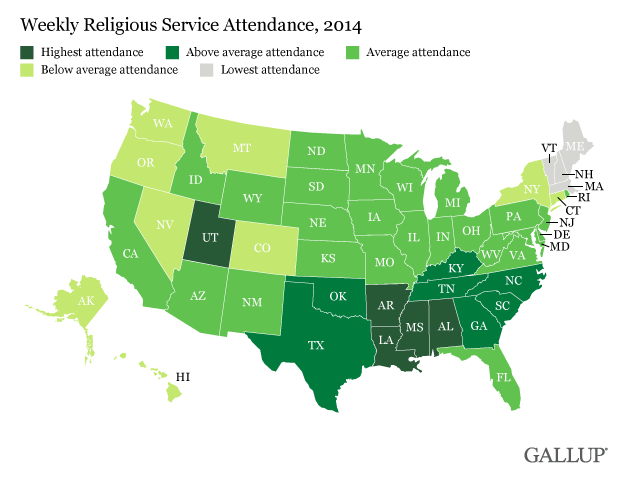
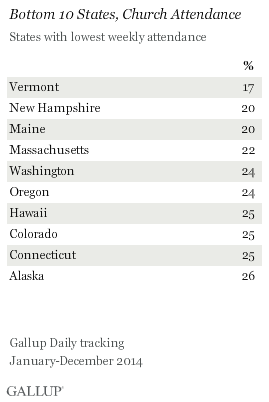
Connecticut residents rank #41 in the nation in regular church attendance, according to a new survey.  The state had plenty of company from New England neighbors at the bottom of the list.  The bottom four slots were occupied by New England states – Vermont at #50, New Hampshire at #49, Maine at #48 and Massachusetts at #47. Rhode Island ranked at #34. In the survey by the Gallup organization throughout 2014, slightly more than half of Utah residents say they attend religious services every week, more than any other state in the union. Residents in the four Southern states of Mississippi, Alabama, Louisiana and Arkansas are the next most likely to be frequent church attendees, with 45 percent to 47 percent reporting weekly attendance.framed church Lee, MA

At the other end of the spectrum is Vermont, where 17 percent of residents say they attend religious services every week.  In Connecticut, 25 percent say they attend religious services weekly.  In addition, 19 percent say they attend nearly weekly or monthly, and 54 percent say they seldom or never attend religious services.

The results are based on Gallup Daily tracking interviews throughout 2014 with 177,030 U.S. adults, and reflect those who say "at least once a week" when asked, "How often do you attend church, synagogue or mosque -- at least once a week, almost every week, about once a month, seldom or never?"

Church attendance self-reports are estimates, Gallup notes, and “may not reflect precise week in and week out attendance, but provide an important measure of the way in which Americans view their personal, underlying religiosity.”

Gallup concludes that “within the U.S. there religious services mapare stark geographic differences in religiosity. In some states of the union -- Utah and Southern states -- roughly half of residents report attending religious services weekly, while in others -- mostly in the Northeast and the West -- a fourth or less of residents attend weekly.”
Ten of the 12 states with the highest self-reported religious service attendance are in the South, along with Utah and Oklahoma, according to the Gallup survey. “The strong religious culture in the South reflects a variety of factors, including history, cultural norms and the fact that these states have high Protestant and black populations -- both of which are above average in their self-reported religious service attendance,” Gallup noted in an analysis of the data.zonvslpedusjhk_03s9f8g

Utah's No. 1 position on the list, Gallup indicated, “is a direct result of that state's 59% Mormon population, as Mormons have the highest religious service attendance of any major religious group in the U.S.”

In Vermont, 71 percent of respondents indicated they “seldom or never” go to religious services.  That percentage was 65 percent in Maine, 63 percent in New Hampshire, 59 percent in Massachusetts, 54 percent in Connecticut and 53 percent in Rhode Island.

More US Cities Seek to Join Stamford in Commitment to Energy, Water Usage Reductions in Commercial Buildings

Efforts are underway this year for seven additional cities, from Albuquerque to Ann Arbor, to follow Stamford and seven others across the nation, in making a long-term commitment to reduce energy and water consumption in commercial buildings and reduce emissions from transportation, while increasing competitiveness in the business environment and owners' returns on investment. The “2030 District” initiative began with Seattle in 2011, grew by two cities in 2012, to four in 2013, and then to eight in 2014 when Stamford joined Seattle, Pittsburgh, Cleveland, Los Angeles, Denver, Dallas, and San Francisco as a 2030 District.  Now working towards the designation, in addition to Albuquerque and Ann Arbor, are Detroit, San Antonio, Ithaca, Toronto and Portland.Stamford---Website

Across the United States and Canada, 2030 Districts are forming with greater frequency to meet incremental energy, water and vehicle emissions reduction targets for existing buildings and new construction called for by Architecture 2030 in the 2030 Challenge for Planning.  Districts are generally private/public partnerships that commit to dramatic reductions in water consumption and energy and greenhouse gas (GHG) emissions, as well as adaptation and resiliency actions that address projected climatic impacts.

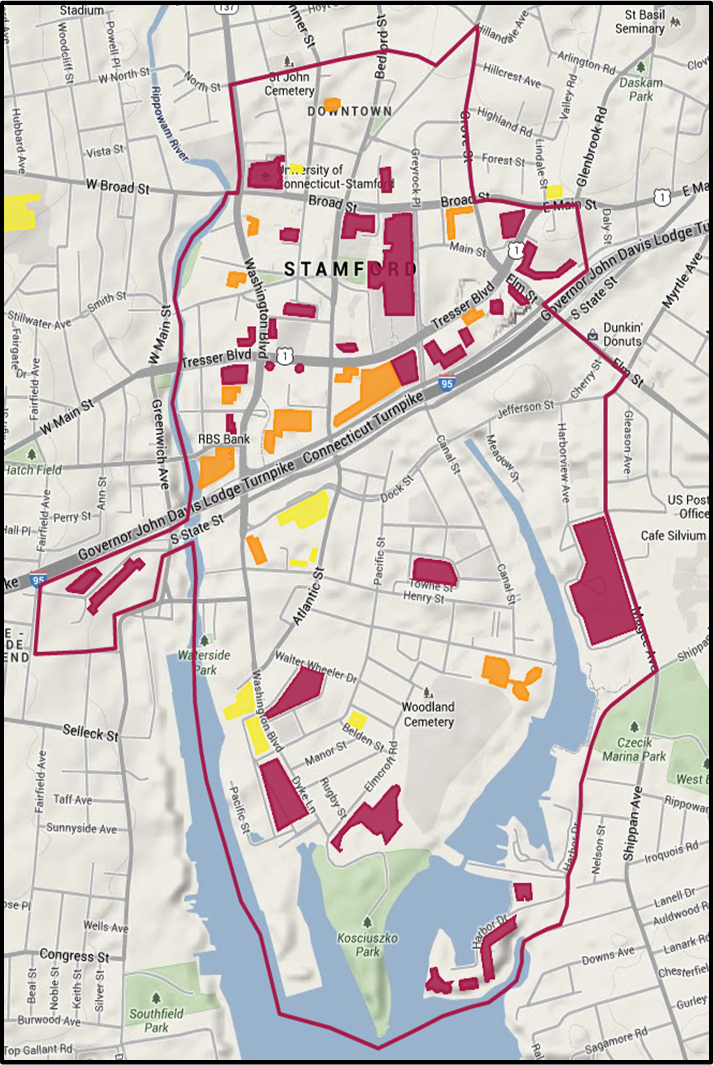
The Stamford 2030 District – launched this past  November - is an interdisciplinary public-private-nonprofit collaborative working to create a groundbreaking high performance building district in downtown Stamford.  Leading the way in the Stamford 2030 District are the Business Council of Fairfield County and Connecticut Fund for the Environment. As Stamford is a coastal city, its 2030 District will also implement a proactive vision to ensure resiliency against projected sea-level rise and storm surge.

The Stamford 2030 District – the first in New England - began with 23 founding members, including 11 property owners and 12 prominent professional and community stakeholders committed to meeting the 2030 Districts goals and targets. High performance buildings have proven track records of simultaneously increasing business and property profitability, reducing environmental impacts, and improving occupant health.Stamford

Now in the process of assessing the District’s current building performance levels, one-on-one assistance is provided to property owners and managers in benchmarking their buildings.  In addition, a first-time webinar will be held this week, on Wednesday, February 18, with several founding members highlighting best practices and procedures:

  • Jay Black of SL Green Realty/Reckson Properties will offer industry perspective through his experience with benchmarking buildings in both NY and CT.
  • WegoWise will present an overview of their web-based software that is able to benchmark a portfolio and provide deeper analytics into a buildings’ energy performance to find savings opportunities.
  • Steven Winter and Associates will demonstrate how to take benchmarking a step further with tools such as building energy audits to help identify opportunities within the building.
  • New Neighborhoods, Inc. will serve as a case study project in Stamford that has contracted with WegoWise for their benchmarking and will share their experience.

Officials indicate that District Members develop realistic, measurable, and innovative strategies to assist district property owners, managers, and tenants in meeting aggressive goals that keep properties and businesses competitive while operating buildings more efficiently, reducing costs, and reducing the environmental impacts of facility construction, operation, and maintenance.

Stamford2030boundary“These collective efforts will establish the Stamford 2030 District as an example of a financially viable, sustainability focused, multi-sector driven effort that maximizes profitability and prosperity for all involved. Through collaboration of diverse stakeholders, leveraging existing and developing new incentives and financing mechanisms, and creating and sharing joint resources, the Stamford 2030 District will prove the business case for healthy and high performing buildings.”

Property owners and managers are voluntarily committing their properties to Stamford 2030 District goals; they are not required to achieve the District goals through legislative mandates or as individuals.

“Stamford is already a business leader in Connecticut. The Stamford 2030 District will make the city a sustainability leader nationwide,” said Megan Saunders, Executive Director of the Stamford 2030 District. With over 170 million square feet of commercial building space (including 6 million thus far in Stamford), 2030 Districts are rapidly emerging as a new model for urban sustainability, officials indicate.

The Stamford 2030 District provides members a roadmap and the support they need to own, manage, and develop high performance buildings by leveraging Community and Professional Stakeholders, market resources, and by creating new tools, partnerships, and opportunities to overcome current market barriers. This type of collaborative action is not only a strategic undertaking to keep Stamford competitive in the year 2030, but also represents a major investment in Stamford's future and reflects the collaborative nature of our region.

State Report Calls for Tax Incentives, Better Insurance, Greater Flexibility to Improve Care for Rapidly Growing Older Population

A new report by the state legislature’s Commission on Aging, examining state funding and support for home and community-based care for older adults and individuals with Alzheimer’s Disease, has issued more than a dozen recommendations, including establishment of a Dependent Care Tax Credit, release of funds to support home modifications, and extension of paid sick leave to cover care of elderly relatives.  Incentives for employers to offer long-term care insurance coverage are also suggested. The Commission on Aging is a nonpartisan public policy and research office of the Connecticut General Assembly.  A law passed by the legislature last year charged the Commission with studying private sources of funding available to elderly persons and persons with Alzheimer's disease in need of home or community-based care, including the cost effectiveness of such programs funded by the state with recommendations on which state programs should be expanded.aging report

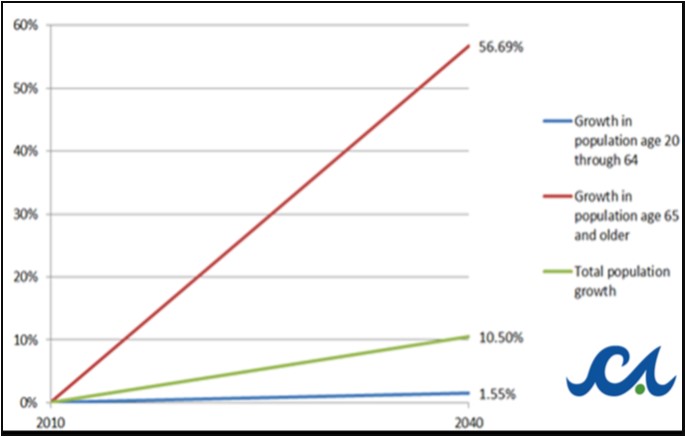
Connecticut is the 7th oldest state in the nation.  Over 70,000 people age 65 and older live with Alzheimer’s Disease or another dementia, and disabilities affect 10.4 percent of all Connecticut residents – nearly 400,000 people. Due to factors including aging demographics and consumer choice, demand for home-care based services is expected to “increase exponentially in coming decades,” according to the report. Between 2010 and 2040, Connecticut’s population of people age 65 and older is projected to grow by 57 percent, with less than 2 percent growth for people age 20 to 64 during the same period.seniors 2

The 23-page report noted that “informal caregivers are the backbone of the long-term service and support system. It is estimated that the economic value of the care provided by unpaid caregivers is $5.8 billion in Connecticut. Supporting caregivers is a cost effective means of reducing the reliance on costly formal care system.”  The report went on to caution that “without support, caregivers are likely to become emotionally and physically ‘burnt-out’ and find few options” short of turning to institutional care.

The report recommends amending the state tax code to include a Dependent Care Credit where the tax filer can receive a credit for care expenses incurred while a caregiver is working. Home care and adult day care costs are cited as examples of work‐related expenses that may be eligible.

To provide further support to informal caregivers, the report calls on the legislature to extend paid sick leave for those caring for an aging parent or other relative.  Connecticut’s law currently allows paid sick leave to be used for a worker’s own illness or injury, or to care for the worker’s child or spouse.  It does not extend to cover workers who care for a parent or other relative. aging population

Policies that “allow for flexibility” in work schedules are also urged, cited studies have shown such schedules not only are “an import way to support a caregiver but also… positively affect recruitment and retention efforts.”

The report urges the authorization of $6 million in bond money for home modifications and adaptive technology, which was allocated by last year’s legislature, and development of a list of “vetted home repair and home modification contractors and programs” to improve the likelihood that individuals would be able to “age in place.”

The goal, the report indicated, would be to “enable them to function with greater independence in the home, remain in the community and reduce the need for human assistance. Simple modifications include adding nonslip strips to bathroom floors or other smooth surfaces, improving lighting, providing telephones with large numbers and letters, and installing grab bars. More complex (and expensive) modifications include installing ramps, chair lifts, stair glides, widened doorways, roll-in showers, and lowered countertops.”

Among the other recommendations, the report urges professional development for those whose job it is to care for individuals with Alzheimer’s and dementia, to align with changing demographics in the state’s population.

seniorsThe report also suggests that policy makers “explore the possibility of incenting employer-based long-term care insurance coverage.”  In 2009 almost 25,000 employers in the U.S. offered long-term care insurance to their employees – just 35 percent of the 7.5 million insurance policies in effect.  In addition, the report encourages the Connecticut Congressional delegation to support a federal tax deduction for long-term care insurance, and urges policy makers to consider making reverse mortgages “a more viable option.”
Additionally, the report also considers advances in technology in the care of older residents.  It describes “telehealth” as a mode of delivering health care, public health and certain non-clinical services using electronic communications technology, stating that it “represents an opportunity for Connecticut to improve access to care, coordination, quality and outcomes for individuals, all while reducing cost, promoting local economic health, and offering a patient-centered approach.”  The Commission on Aging calls on Connecticut to join at least 21 other states that have telehealth parity laws for private insurance, meaning that providers can collect reimbursement for telehealth services.RdN-XMIb_400x400

The report, “Study of Funding and Support for Home and Community-Based Care for Older Adults and Persons with Alzheimer's Disease,” also recommends that the state “address service challenges specific to housing, transportation and behavioral health,” including conducting “walkability audits” to assess sidewalks, crosswalks, and pedestrian access to essential services.  It also suggests that the state “explore the use of taxi vouchers, public and private paratransit services, paid and volunteer driver services, on-demand car rental services and other forms of transportation in the growing “shared mobility” economy.


Mall Walking Is Alternative to Navigating Snow Banks, Frigid Temperatures

With wind chills hovering well below zero and snow and ice piled high just about everywhere, it is a tough season for joggers and walkers. The dangers of trudging along snow snarled streets is plainly evident, and every so often tragedy reminds us of the degree of danger. mallwalkers

Just over two decades ago, at age 33, a local television reporter at the pinnacle of her career, a popular, talented reporter for New Haven’s WTNH, was killed after being struck by a car while jogging in mid-March.  Ellen Abrams was “facing traffic while jogging west on the side of snow-banked Frog Hollow Road in Ellington,” according to published reports at the time.

Tragically, it would not be the last fatality involving someone looking to get some exercise on local roads before the snow banks had receded.  Last month, police in Torrington reported that a jogger was fatally struck by a snowplow.

Through the years, individuals looking for a safe alternative to outside conditions have turned to area shopping malls in their prior-to-opening hours.  While jogging may not be favored, walking is certainly an option.  And winter’s unrelenting cold makes the alternative even more attractive.

runningwithyaktrax2Officials at Waterford’s Crystal Mall indicate that their mall walking program is year-round, and has been running for over 10 years.  They have approximately 20 regular participants, and doors open for the program at 8 a.m. Monday through Saturday and 10 a.m. on Sundays.  Advance sign-up is required, and people who are interested can easily sign up at Guest Services or the mall office during regular shopping hours.

At the Enfield Square Mall, early walking hours are Monday – Saturday at 8 a.m. and Sunday at 10 a.m.  While The Shoppes at Buckland Hills does not have a formal mall walker program; the mall is open two hours before stores open to shoppers (8 a.m. Monday-Saturday, 9 a.m. Sunday) year-round for walkers seeking a climate-controlled environment, officials say.

Westfarms Mall on the West Hartford-Farmington line opens for walkers at 7 a.m. Monday through Sunday.  Individuals should enter through the main entrance. Coat racks are conveniently located on the upper level near the Security Dispatch Desk.  At Westfarms, by walking completely around the upper level (including all corridors) you will have walked .76/mile, and by walking completely around the lower level (including all corridors) you will have walked .72/mile, according to the mall’s website.  The mall walkers club is sponsored by Hartford HealthCare, which presents informational seminars with HHC doctors and nurses.Snow Banks - car

More than twenty years after her death, Ellen Abrams is remembered at the University of Hartford each year with  the Ellen Abrams Memorial Scholarship, a $1,500 scholarship awarded annually to a deserving junior or senior Communication major with demonstrated financial need.  Her family continues to attend the awards ceremony, sharing her commitment to journalism with students receiving the scholarship in her name.

School Suspensions Down, But Students of Color, Low Income Receive Disproportionate Share

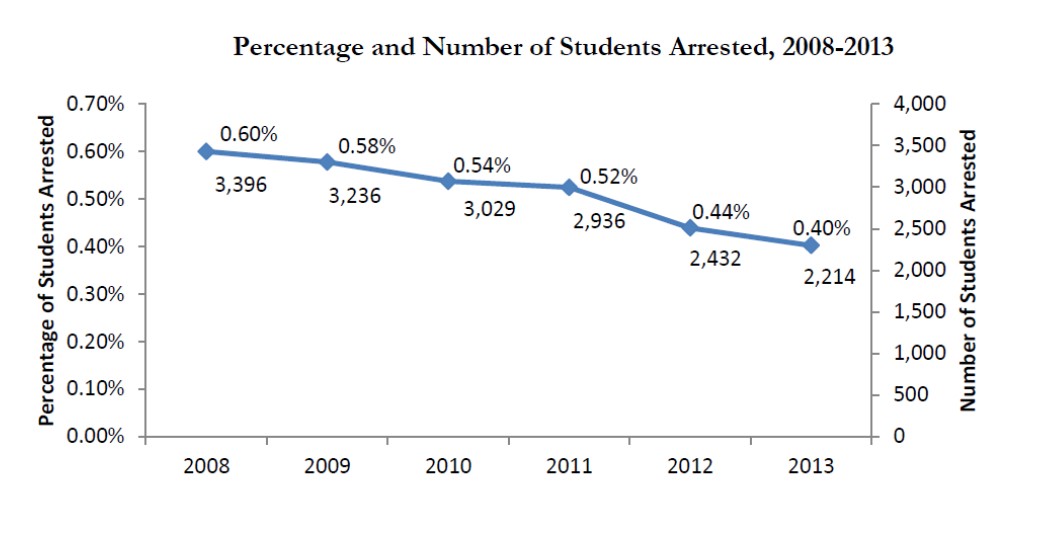
There’s good news and bad news in a new analysis of suspensions, expulsions, and arrests of students in Connecticut schools.  The report, by Connecticut Voices for Children, found that overall significantly fewer students have been excluded from the classroom in recent years, but that suspension, expulsion and arrest rates were much higher for minority students, special education students, and students from poorer districts.arrested The report also found that “many of these discipline measures were used for behaviors that were probably not criminal and could likely have been handled within the school.”  Stressing that “children learn best when they are in school,” the report indicated that “arrests, expulsions, and suspensions are often costly, ineffective, and unnecessary.”

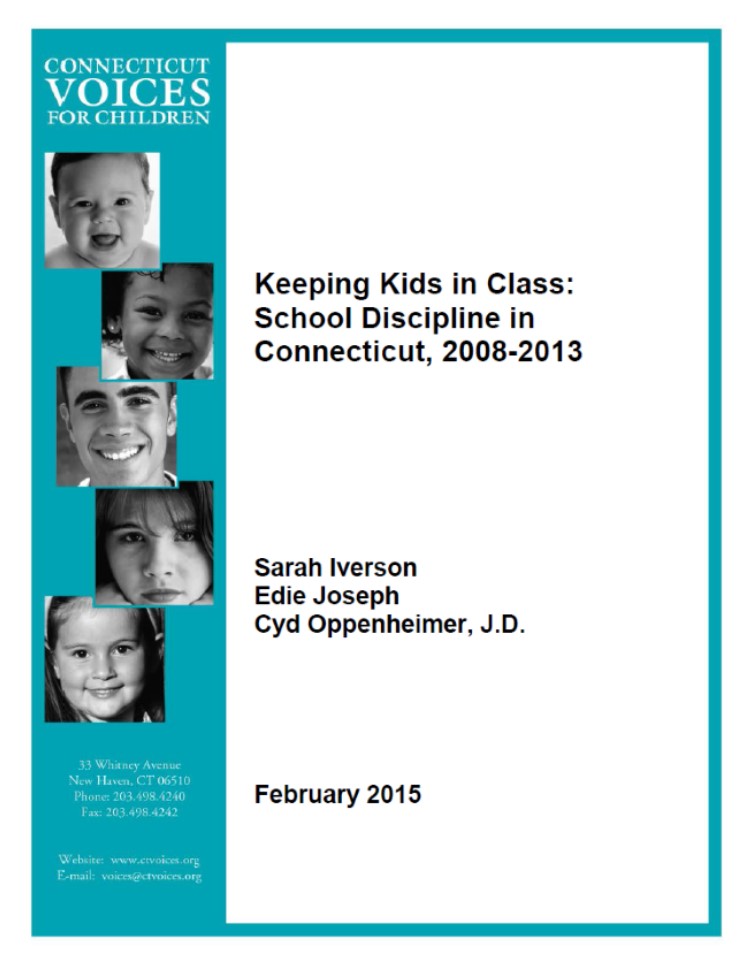
Connecticut Voices for Children is a research and advocacy organization that works to improve opportunities for the state’s children, youth and families. The report, “Keeping Kids in Class: School Discipline in Connecticut, 2008-2013,” uses data provided by local school districts, found that in 2013, 7.4 percent of all students received at least one expulsion or suspension, down from 8.5 percent as recently as 2011.

First, the good news:

  • The number of students arrested, expelled, and suspended in Connecticut has decreased significantly in recent years. In the 2013 school year, Connecticut schools arrested 35 percent fewer students, expelled 31 percent fewer students, and gave out of school suspensions to 47 percent fewer students than in 2008.

The not-so-good news:

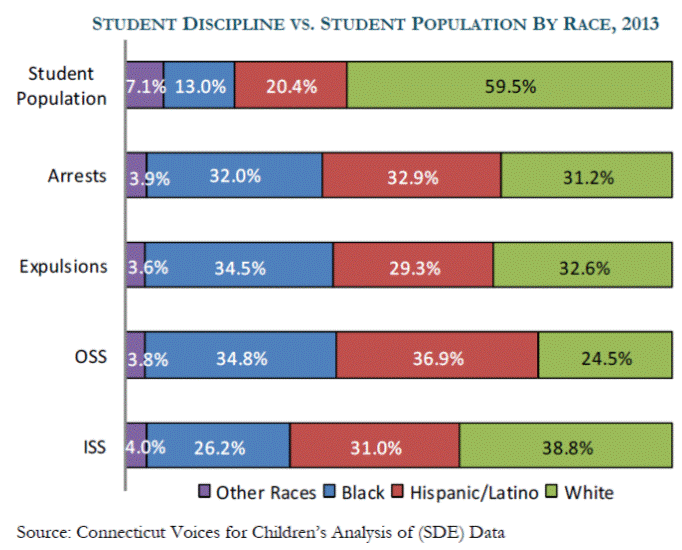
  • Despite the overall reduction in these “exclusionary” school discipline practices, many students are still removed from the classroom for non-criminal behaviors that could, in the view of Connecticut Voices, be managed in the classroom. “School policy violations” – such as skipping class, insubordination, or using profanity – were involved in 9 percent of student arrests, 6 percent of expulsions, 50 percent of out-of-school suspensions, and 79 percent of in-school suspensions in 2013.report

From 2008-2013 the percentage of students suspended out-of-school fell from 4.9% to 2.7%. During the same time period, the percentage of students suspended in-school increased from 4.9% to 5.2%.

Of particular concern was the data related to students of color and those with limited financial resources or disability:

  • In 2013, black students were 4.7 times more likely to be arrested, 4.9 times more likely to be expelled, and 6.5 times more likely to be suspended out-of-school than white students.
  • Hispanic students were 3.1 times more likely to be arrested, 2.6 times more likely to be expelled, and 4.4 times more likely to be suspended out-of-school than white students.
  • Special education students were arrested at 3 times the rate of general education students, and they were 1.8 times more likely to be expelled, and 2.6 times more likely to receive out-of-school suspensions.
  • Students in the poorest urban areas were arrested nearly 23 times more often, expelled over 17 times more often, and suspended out-of-school 24 times more often than students in the wealthiest suburban areas.suspensions

Based on the data, the report makes a series of recommendations for the state Department of Education and policymakers to consider, including:

  • Require districts with police stationed in schools to create a memorandum of agreement between the schools and police that sets ground rules concerning arrests. Promote police and educator training, such as that provided by the state’s Juvenile Justice Advisory Committee, which offers instruction to officers and educators in understanding and responding productively to adolescent behavior.
  • Implement preventive strategies and alternative discipline measures to reduce racial and other disparities and ensure those excluded from school are provided equal opportunities.
  • Establish and support community collaborations across the state. National studies show that engaging all stakeholders in the discipline process positively impacts student behavior and achievement.

The top 10 reasons for expulsion in 2013:  1) drug/alcohol/tobacco, 2) weapons, 3) fighting/battery, 4) personally threatening behavior, 5) school policy violations, 6) theft/theft related behaviors, 7) verbal confrontation/conduct unbecoming 8) violent crimes against persons, 9) sexually related behavior, and 10) property damage.

The report concludes that “the disproportionate rate by which students of color and students from poorer districts are excluded from school may in fact contribute to widening the achievement gap; students from less privileged backgrounds will continue to perform worse than their more advantaged peers if they are excluded from the classroom in the first place.”

The report also recommends expanding access to behavioral and mental health services and utilize Juvenile Review Boards (JRBs), locally-run groups that offer a diversionary alternative to the court system for youth who have committed minor delinquent acts or misdemeanors.  In addition, it calls for improving data collection by clearly defining “student arrests” (not currently defined by the state) and collecting and publishing data on all student arrests (currently not required for all incidents resulting in arrests).

“This report tells us that many schools in Connecticut have reformed their disciplinary practices and reduced student arrests, expulsions and out-of-school suspensions,” said Ellen Shemitz, Executive Director of Connecticut Voices for Children. “Yet these reforms have not benefited all children equally. How can we hope to reduce the yawning achievement gap when school disciplinary practices push minority children out of school at disproportionate rates?”