Wanna Buy A Ghost Town? Connecticut Has One Ready and Waiting

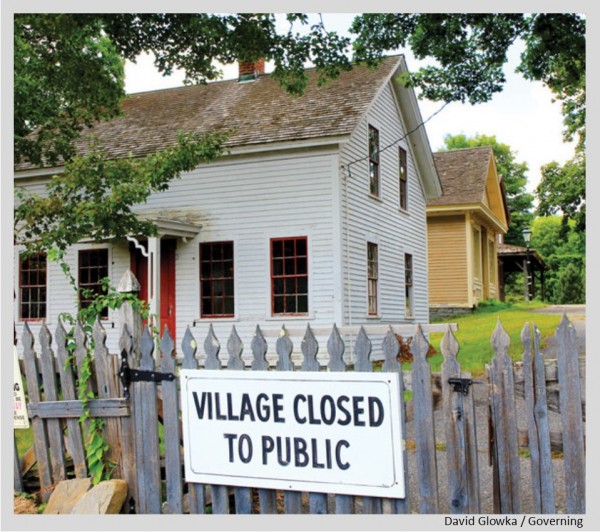
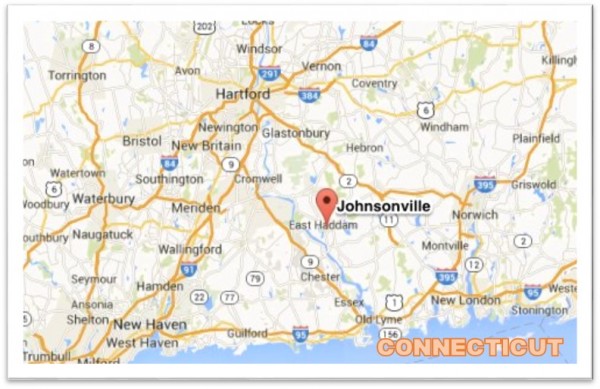
For $2.4 million, an adventurous buyer can become the proud owner of Johnsonville Village, Connecticut. The once bustling hamlet, now a virtual ghost town, is for sale -- again. Originally home to Connecticut’s twine industry in the 1830s, Johnsonville Village, which is located in the Moodus section of East Haddam, along Johnsonville Road just 30 minutes from Hartford and two hours from Boston and New York City, has sat mostly deserted since the Industrial Revolution put it out of business, according to Governing magazine.village

Industrialist Raymond Schmitt bought the property in the 1960s and began traveling New England looking for period buildings in an effort to turn the place into an 18th-century Victorian village, Governing reported. Today, its 62 acres house eight antique buildings, including a schoolhouse, general store, chapel and livery stable. All empty, and awaiting what’s next.

Johnsonville never took off as a tourist attraction, and after a disagreement with local officials, Schmitt abandoned the village in 1994.  It has had its moments, according to published reports.  Lightning struck the mill in the 1970s and burned it down. The village appeared in Billy Joel's music video for the 1993 song "The River of Dreams (In the Middle of the Night)," which topped Billboard’s music charts are received four Grammy nominations, according to Wikipedia.

The current owner, Meyer Jabara Hotels of Danbury, initially put the town up for auction last October. It sold for $1.9 million, but the winning bidder was unable to secure financing.

Now Johnsonville is back on the market, and according to the listing earlier this year, “presents a unique redevelopment opportunity to combine the historic value of the 19th-century village with 21st-century living.”map

"We've got buyers at the table, from developers to summer camps and beyond," the current owners told The Hartford Courant earlier this year.  But a sale and closing has yet to be announced.  The property has eight historic buildings on the western side of Johnsonville Road and, on the eastern side of the road, Johnsonville Mill Pond with a covered bridge, a wooden dam and a waterfall.

Interested parties run the gamut from individual investors to outdoor organizations and religiously affiliated summer camps. There was also an effort by “a bunch of people on Twitter, led by a man named Dan Sinker, trying to pool their money and buy Johnsonville,” according to a report published by Business Insider. The film industry, utility companies, local vineyards and hotel companies are thought to be among the possible buyers.

But not yet.

https://youtu.be/o6fTivyBNak

https://youtu.be/hSq4B_zHqPM

Will CT School Buses Be Required to Add Seat Belts? New Federal Policy May Spur Change

When word came down from the National Highway Traffic Safety Administration last week that the longstanding preference for school buses without three-point lap/shoulder seat belts was being reversed, one Connecticut town could say: been there, done that. Wilton, which has about 4,200 school children on busses each day, has had the three-point safety belt system installed on its school busses since August 2012.  They apparently were the first in the state to do so.every bus

Earlier this year, Massachusetts legislators considering a requirement for seat belts on school buses were told that passenger restraint systems would add between $11,000 and $13,000 to the cost of buses, which currently range from $90,000 to $105,000.

Frank Underhill, executive director of the School Transportation Association of Massachusetts, which includes more than 100 school bus contractors and municipalities who run their own school buses, told members of the legislature’s Public Safety Committee that six states require seat belts on school buses, but said that none of those states has fully implemented the requirement, due to a lack of funding.

Those states - California, Florida, Louisiana, New Jersey, New York and Texas -- have some sort of legislation in place requiring seat belts on school buses, according to Governing magazine. The states’ laws vary in levels of enforcement; some simply require two-point seat belts to be present on school buses, while others require that all passengers use the more secure, three-point belts.  Connecticut does not have a statewide requirement.students on the bus

Wilton Transportation Coordinator Mary Channing isn’t aware of other Connecticut communities that have followed her community’s lead.  The town included the three-point belt as an option in their most recent RFP, in 2012, for student transportation, and the winning bid included the lap/shoulder belts.  It is not a board policy.

Statewide, nearly 500,000 children are transported on buses to and from school each day.  National policy, based on numerous studies, has been that buses are designed to be inherently safer than cars because of the high backs/fronts creating a “compartmentalization” and providing better crash protection.  It has been noted, however, that when students lean outside the seating “compartment” – which can occur as students, backpacks, winter gear, overcrowd seats – their level of safety diminishes.

The National Highway Traffic Safety Administration is endorsing three-point seat belts on school buses for the first time.  NHTSA Administrator Mark Rosekind acknowledged that the agency "has not always spoken with a clear voice on the issue of seat belts on school buses. The position of the National Highway Traffic Safety Administration is that seat belts save lives," Rosekind said. "That is true whether in a passenger car or in a big yellow bus. And saving lives is what we are about. So NHTSA's policy is that every child on every school bus should have a three-point seat belt."

The issue of seat belts on schools buses garnered considerable attention in Connecticut in 2010 when 16-year-old Vikas Parikh was killed in a school bus accident. The Rocky Hill High School student sustained a traumatic head injury while riding a school bus that tumbled down an embankment off of I-84 after hitting another car.  As a result, state lawmakers reopened the debate on whether to require Connecticut's roughly 10,000 school buses to install three-point seatbelt systems.  They did not.

CT state lawInstead, Public Act 10-83, created a Connecticut School Bus Seat Belt account to help school districts respond to the cost of equipping school buses with lap/shoulder (3-point) seat belts, should they choose to do so.  In June 2010, the office of then-Gov. M. Jodi Rell announced that “under the law, the Department of Motor Vehicles will begin offering a program in July 2011 that offsets a portion of the sales tax bus companies pay for school buses equipped with three-point seatbelts. The program will be funded through a $50 increase in the fees paid for restoring suspended or revoked driver’s licenses, commercial driver’s licenses and vehicle registrations. The program will run through at least 2018. During the 2018 legislative session, lawmakers will hold a hearing on the program and decide whether it should be continued.”

Said Rell: “This law provides a modicum of state assistance to districts wanting to add seat belts to their fleet but does not impose a costly new mandate on all districts –- striking a good balance between incentive and choice.”

It is unclear if funds have accumulated in that account, or if any towns or companies have sought the assistance.  Some published reports suggest that the funds have been diverted to other uses in recent years.  The law requires that “school district participating in the program shall provide written notice concerning the availability and proper use of such seat belts to a parent or legal guardian of each student who will be transported on such school bus,” and that participating  school districts “instruct such students on the proper use, fastening and unfastening of such seat belts.”

A 2010 editorial in The Hartford Courant noted that “A study of emergency room visits by Columbus (Ohio) Children's Hospital found 17,000 schooschool-seat-beltsl bus injuries in the U.S. every year — two to three times National Highway Traffic Safety Administration estimates, which use only a sampling of data and exclude field trips like the one on which Vikas Parikh died.  Seat belts work best in rollover and side-impact collisions in which students are thrown out of their seats, as Vikas was. The American Academy of Pediatrics supports restraints on buses.”

The website of the Connecticut School Transportation Association (COSTA) points out that a three-point system, “similar to the ones in automobiles, works with compartmentalization and, according to NHTSA, could provide some additional benefit to occupants of school buses, if it is consistently and properly used. But the federal government does not believe that a mandate for lap/shoulder belts is justified, because the safety benefits are very small and the cost is high. Furthermore, there are several potential negative factors, such as children wearing the shoulder portion improperly, that could mitigate the benefits of the restraints and result in a net loss of safety.”

The organization goes on to “emphasize that school buses without restraints are still safer than any other current mode of transportation—whether it’s walking to school, riding bikes, or traveling in parents’ cars,” adding “the biggest mistake that districts could make is to reduce the number of students who qualify for transportation in order to afford new buses with restraint systems. Any possible benefit of the restraints would be completely overshadowed by the increased risk to students who were denied school bus transportation.”

Last week, however, the Parikh family was among those lauding the federal change and looking for follow-through from Connecticut policy makers.  Vikas’ mother told NBC Connecticut, “If it can save at least one life, it is worth it.”

https://youtu.be/LGqmgUy2BrM

Local Nonprofits Receive Funding From First Niagara As Bank Prepares for Sale to Key Bank

First Niagara Foundation’s Mentoring Matters™ program has announced it will be providing grants  that support local nonprofit organizations throughout Connecticut.  With the pending sale of First Niagara to Cleveland-based Key Bank, the fate of the Foundation’s local support seems strong, as Key Bank has announced it will make a $20 million contribution to the First Niagara Foundation “to continue its important community initiatives.” The charitable not-for-profit entity of First Niagara Bank  allocates $1 million annually in charitable grants specifically targeted to support quality mentoring programs across the bank’s seven regional market centers, including its New England and Tri-State regional offices, which between them share coverage of Connecticut.logo-lockup

The New England Region receives $150,000 in grant money for distribution, and for a region that includes Greater New Haven, north into Western Massachusetts.  The foundation’s Tri-State region receives $50,000 and covers the service footprint in Fairfield County and the lower Hudson Valley.

In each region, the Foundation partners strategically with mentoring organizations that offer “the best impact with our mentoring dollars, and grant decisions are made by local leaders in each market,” according to foundation officials.  In Connecticut, the organizations that received 2015 Mentoring Matters grants were:awarded grants

  • Governor’s Prevention Partnership for the CT Mentoring Partnership, which serves a network of more than 150 mentoring programs across Connecticut -- $75,000
  • New Haven Reads to fund their summer tutor camp program which serves more than 300 low and moderate income New Haven students-- $15,000
  • Norwalk Community College Foundation for the ConnCAS Program, a College Pathway Program that mentors disadvantaged NCC students to successfully transition from high school to college -- $28,000
  • Junior Achievement of Southwest New England to support financial literacy and business entrepreneurship mentoring - $10,000
  • Stamford Public Education Foundation to support their Mentoring and Career Readiness program - $5,000
  • Bridgeport Public Education Foundation to support the Mentoring for Academic Achievement and College Success (MAACS) program -- $5,000
  • Norwalk Human Services Council to support the Norwalk Mentor Program -- $5,000

In addition, the Foundation’s New England region also granted $50,000 in Western MA and the Tri-state region granted $20,000 in Hudson Valley, NY.

Along with the $200,000 in Mentoring Matters funding, the two regions have been allocated a combined additional $935,000 in charitable funding from First Niagara Foundation for distribution this year. Many of the grant recipients are other youth and education organizations, along with economic development, neighborhood revitalization, health and human services, and arts/cultural organizations serving local communities.

KeyCorp, the holding company for KeyBank, recently announced an agreement to acquire First Niagara Financial Group for $4.1 billion. First Niagara, headquartered in Buffalo, N.Y., has $39 billion in assets and $29 billion in deposits and 394 banking offices in New York, Pennsylvania, Connecticut and Massachusetts. With approximately $135 billion of assets, the combined bank would be the 13th largest commercial bank headquartered in the U.S.

Based in the mid-west, Key Bank has branches in Alaska, Colorado, Idaho, Indiana, Kentucky, Maine, Michigan, New York, Ohio, Oregon, Utah, Vermont, and Washington. The transaction is expected to close in the third quarter of 2016, according to Key Bank officials. Its roots trace back to Commercial Bank of Albany, New York in 1825 and Cleveland's Society for Savings, founded in 1849, according to Wikipedia.

First-Niagara-Foundation“Key and First Niagara are a powerful combination, driven by a shared commitment to the clients and to the communities we serve,” KeyCorp Chairman and CEO Beth Mooney said.  “This transformational opportunity will bring compelling and complementary capabilities to our shared three million clients, while driving meaningful synergies and enhancing shareholder value. KeyBank and First Niagara both have values-based cultures and a long-term commitment to and experience with the region.”

Mooney, who began her banking career as a secretary at Republic Bank in Dallas, rose through the ranks in Texas before landing at Key Bank as a vice chair focused on community banking, next being named as CEO in 2011, making her the first female chief of a top-20 U.S. bank and quickly earning a slot at No. 96 on the Forbes list of the world’s 100 most powerful women.

The First Niagara Foundation is a not-for-profit charitable entity. Founded in 1998, the First Niagara Foundation is committed to supporting organizations in the communities in which we live and work, with specific focus on Youth and Education, Community Development and Neighborhood Revitalization.

“We have known First Niagara for a long time and have always been impressed by the quality of their people and their commitment to the community. We look forward to welcoming First Niagara clients and employees to Key,” added Mooney.

Seven CT Financial Institutions Earn Federal Designation to Assist Low Income Communities

Across the country, there are 963 institutions designated by the U.S. Department of the Treasury’s Community Development Financial Institutions Fund as having earned CDFI Certification.  Seven of them are based in Connecticut’s urban centers, the focus of their financial activities. CDFIs are specialized community-based financial institutions with a mission to promote economic development by providing financial products and services to people and communities underserved by traditional financial inTiny CDFI Fund logostitutions, particularly in low income communities and to people who lack access to financing.  By offering tailored resources and innovative programs that invest federal dollars alongside private sector capital, the CDFI Fund serves mission-driven financial institutions that take a market-based approach to supporting economically disadvantaged communities. The institutions to receive CDFI Certification in Connecticut are in the state’s major cities:CT

CDFIs include regulated institutions such as community development banks and credit unions, and non-regulated institutions like loan and venture capital funds. By building the capacity of a nationwide network of CDFIs, the CDFI Fund works to empower low-income and underserved people and communities to enter the financial mainstream.

Certified CDFIs are eligible to apply for awards through a variety of programs offered by the CDFI Fund. These awards enable CDFIs to finance a wide range of activities—including mortgage lending for first-time homebuyers, flexible underwriting for community facilities, and commercial loans for businesses in low-income areas. Through varying strategies, each CDFI contributes to the cultivation of a healthy and stable local economy, the CDFI website points out.

Speaking last week in Detroit, where CDFI Certified institutions are involved with the city’s rebound, CDFI Director Annie Donovan said “CDFIs have always led the way, demonstrating to mainstream investors that there are opportunities in communities that have been overlooked, or judged to be too risky. If mainstream financial institutions move into markets behind us, we must continue to blaze new trails, to find the next community that is even harder to serve than the last one.”

The Housing Development Fund, Inc. was established in 1989 as a nonprofit organization to finance the development of affordable housing in Stamford, CT. Today, with offices in Stamford, Bridgeport, and Danbury, HDF provides lending and homeownership counseling services to the entire state of Connecticut as well as Nassau, Suffolk, Rockland, and Westchester counties in New York.

Community logoCapital Fund facilitates the flow of capital and expertise into housing and economic developments that “benefit low and moderate income people in the Greater Bridgeport Area.”  It was formed in 2005 from the merger of two loans funds.

The 27-year old Greater New Haven Community Loan Fund’s mission is to create and sustain vibrant neighborhoods and communities. Through its lending and investment, the Loan Fund is the flexible source of alternative financing for affordable housing and community development in the greater New Haven area.

Since 1975 HEDCO Inc. has helped clients and their communities improve, achieve and succeed by supporting their growth and progress. They “build productive partnerships, create new programs that meet the changing needs of entrepreneurs and increase the funds available to help people build and improve their business and non-profit organizations.”

Formerly tlogo (1)he Middlesex Credit Union, Seasons Federal Credit Union was renamed in 2006 after expanding into New Haven County. Over the years, the credit union has “broadened its services beyond simple share savings and small loans to meet the increasingly diverse financial needs of its growing membership.”

The First City Fund Corporation (FCFC), Start Community Bank’s parent company, was formed in 2004 as a result of a challenge of the city of New Haven to New Haven Savings Bank’s conversion to a public company. In the fall of 2012 the bank received certification as a Community Development Financial Institution, (CDFI). There are only 100 CDFI certified banks in the country, and Start Community Bank is the only bank so designated in New Haven.

The work of the Hartford Community Loan Fund is to provide and promote just and affordable financial services that benefit low-wealth residents of Hartford.  HCLF helps borrowers overcome barriers—logosuch as credit history, language, cultural differences, financial literacy, or lack of economic assets--that can isolate people from the financial mainstream.  As the Fund’s slogan indicates, “We Finance Hope.”

Providing access to affordable financial products and services in underserved communities is a vital part of the CDFI Fund’s mission. By building the capacity of a nation-wide network of specialized financial institutions serving economically distressed communities, low- income people are empowered to enter the financial mainstream, the CDFI website emphasizes.

Donovan, in her Detroit speech last week, underscored that “CDFIs do connect their strategies with many community stakeholders, but let’s make sure we aren’t leaving out the important voices of the people who live in the communities we serve. If we are to deepen our impact and increase economic opportunity, we must know and serve our target markets from the bottom up.”


Landing People on Mars, Searching for Life in the Universe: Topics at SCSU Forum

Two of the most ambitious projects ever undertaken by the National Aeronautics and Space Administration (NASA) -- the human exploration of Mars and the search for Earth-like planets outside the solar system -- will be the subject of a forum on Monday, Nov. 16, at Southern Connecticut State University (SCSU). The forum, which is free and open to the public, will be attended by hundreds of high school students, SCSU students and faculty, and members of the community.  It is being held just two months after new findings frompia19921-main_blaney1_sol-0938_ml NASA's Mars Reconnaissance Orbiter (MRO) provided the strongest evidence yet that liquid water flows intermittently on present-day Mars.

The program, “Missions Possible: A Manned Flight to Mars; Finding ‘New Earths’ in the Milky Way Galaxy,” is scheduled for 9:30 a.m. to 11:30 a.m. in the Lyman Center for the Performing Arts on Southern’s campus.

Steve Howell, project scientist for the Kepler Mission, will be the keynote speaker. Kepler has identified more than 1,000 planets that are in a “habitable zone,” – an area that is neither too close nor too far away from their suns to support life. Most recently, a planet dubbed “Earth’s older, larger cousin,” named Kepler-452(b), was found 1,400 light years away.speakers

Jennifer Stern, a space scientist for NASA at the Goddard Space Flight Center in Greenbelt, Maryland, will speak about the plausibility of human exploration of Mars, as well as what the recent discovery of water on the planet suggests for the possibility of life existing on its surface. She is a member of the science team for the Mars Science Laboratory Rover Curiosity, which landed on Mars in August 2012.

“It took multiple spacecraft over several years to solve this mystery, and now we know there is liquid water on the surface of this cold, desert planet,” Michael Meyer, lead scientist for NASA’s Mars Exploration Program, said recently. “It seems that the more we study Mars, the more we learn how life could be supported and where there are resources to support life in the future.”

nasaNASA is developing the capabilities needed to send humans to an asteroid by 2025 and Mars in the 2030s – goals outlined in the bipartisan NASA Authorization Act of 2010 and in the U.S. National Space Policy, also issued in 2010.  While a human landing is challenging, the development of a reliable return flight is a more difficult technologically hurdle. The colonization of the Red Planet is also being considered by some, but would require means to deal with the planet’s thin atmosphere, lack of oxygen and barren keplerearthscold weather.

nsmrlAs part of the preliminary preparation for such a flight, the nation’s space agency is working with a military laboratory at the submarine base in Groton to measure how teams cope with stress during month-long simulations of space flight.  The Navy research that piqued NASA's interest started about five years ago when the Groton-based Naval Submarine Medical Research Laboratory, at the request of the submarine force, began examining ways to make tactical teams work together better, the Associated Press reported earlier this year.

In addition to the featured speakers,  a panel discussion will follow, to include:

  • Elliott Horch, SCSU professor of physics and a noted astrophysicist, has developed a cutting-edge camera for the National Science Foundation that is used on telescopes to dramatically improve the clarity of cosmic images and has been used as part of the Kepler Mission.
  • Jim Fullmer, SCSU associate professor of earth science; and a veteran astronomer whose expertise includes understanding the weather on celestial bodies, such as Mars.
  • Tabetha Boyajian, post-doctoral fellow at Yale University and a member of the citizen astronomy organization, “Planet Hunters.” Boyajian is the lead author of a recent article published in a scientific journal about the lack of conclusive evidence that a natural cause was responsible for a dimming of light in front of a faraway star. It has led some – including many in the scientific community – to believe the dimming is caused by a superstructure orbiting around that star, perhaps created by an advanced alien civilization, though Boyajian said it is still only a longshot possibility.

A question-and-answer period will conclude the program.

https://www.youtube.com/watch?v=MDb3UZPoTpc

Safety in Sharing the Road Urged for Drivers, Cyclists, Pedestrians

Bike Walk Connecticut, the statewide organization that works for active transportation and making Connecticut a better place to bike and walk, has released a new brochure to remind drivers, cyclists, and pedestrians on the rules for sharing the road, as the organization prepares for its annual fundraising dinner and awards ceremony. Entitled Give Respect, Get Respect:  Share the Road, Connecticut, the brochure is available for download at www.bikewalkct.org. Connecticut's roads are traveled by walkers, runners, and cyclists who are welcome and expected to use the roads for transportation, fitness, and recreation, the organization emphasizes.

colleenMarking the launch of the new Share the Road campaign, this year's featured speaker is Colleen Kelly Alexander.  Bike Walk Connecticut officials describe her remarkable story:  After undergoing brain surgery in 2007 for a chiari malformation, Colleen overcame a lupus and cryoglobulinemia diagnosis in 2009, pushing forward to become a successful, competitive triathlete. In 2011, while on a routine bike ride, she was run over by a freight truck. Crushed, ripped apart and bleeding out, she flatlined twice, spent five weeks in a coma and has since endured over twenty surgeries. Defying diagnoses, dire predictions and death, Colleen stunned doctors by bucking the odds and coming back to run more than 50 races and complete 15 triathlons, including 4 half Ironman events since her trauma. Colleen and husband Sean Alexander were elected to the Bike Walk Connecticut board of directors in 2015.  bike respect

The annual event will be held November 20 at Central Connecticut State University.  Proceeds fund Bike Walk Connecticut's work to make Connecticut "a great place to bike and walk."  Regarding the Share the Road initiative, Bike Walk Connecticut officials point out that "with common courtesy, common sense, and respect for the rules to share the road, Connecticut's roads can be safer for everyone."  The brochure urges state residents to “please do your part whether you're driving, cycling, walking, or running.”  The brochure includes the following guidelines:

For Drivers:

  • Please slow down.  Obey speed limits.  A pedestrian hit by a car going 40 mph has an 85% chance of being killed.  At 20 mph the risk is 5%.  Drive at a speed that's safe for all.
  • Expect cyclists, walkers, runners and others on the road.
  • Yield to pedestrians at or in any crosswalk.  It's been the law since 1978, but it's not widely observed in Connecticut.  Every intersection is a crosswalk, even if it's not marked.  "Yield" means slow down or stop.
  • Come to a complete stop at stop signs and red lights.  Be vigilant at intersections.
  • Signal your turns and look both ways before changing lanes, turning, and at driveways.
  • Expect the unexpected around curves and over hills, where visibility is limited.
  • Let cyclists ride as far to the right as is safe.  Cyclists should ride as far to the right as they judge to be safe.  Give them space to avoid hazards like potholes, debris and drain grates.
  • Expect cyclists in the travel lane.  Cyclists may ride in or near the middle of the travel lane when it's not safe to ride on the far right side of the road.  Cyclists should ride in the travel lane to avoid hazards and when the road is too narrow for cars and bikes to proceed safely side by side.
  • Pass with care.  Give cyclists at least 3 feet.  It's the law since 2008.  Keep at least 3 feet of space between your vehicle and a cyclist.  You may cross the center line to pass a cyclist if it's safe.
  • Mind the door zone.  Check for approaching cyclists before opening your car door so you don't hit them.
  • Avoid distracted driving, aggressive driving, and driving under the influence of alcohol or drugs.
  • 2014 Vu3 feetlnerable User Law Mandates $1000 Fine.  Connecticut requires a fine of up to $1000 on drivers who cause the death or serious injury of a pedestrian, cyclist or other vulnerable road user who used reasonable care.


For Cyclists:

Bike Walk Connecticut urges all cyclists to be good ambassadors for cycling and always follow these rules to share the road in Connecticut. Cyclists who follow the rules of the road are visible, predictable, safer, and earn respect from other road users.

  • Follow the rules of the road.  Obey stop signs and traffic signals.  Ride on the right in the direction of traffic.  Riding on sidewalks is prohibited in many Connecticut towns.
  • Ride as far to the right as is safe.  If there's no bike lane, ride in the travel lane when necessary for your safety.  The extreme right edge of the road isn't always the safest place to ride.  Riding in the travel lane makes it easier for drivers to see you and reduces the chance that a driver may pass too close.
  • Be visible.  Always ride with lights at night.  Wear bright clothes during the day and reflective materials at night.  For night riding, Connecticut requires a headlight visible from at least 500 feet and a red tail light visible from 600 feet.
  • Be predictable.  Ride in a straight, predictable manner.  Don't weave, swerve, or stop suddenly.
  • Signal all turns.  Use proper hand signals in advance to tell others where you are going.
  • Ride single file in traffic.  You may ride two abreast if traffic can pass you safely.  Common courtesy usually requires riding single file in traffic, except when passing others.
  • Stay out of the "door zone."  Ride 3-4 feet away from parked cars so you don't get hit by an opening car door.
  • Alert others that you're approaching or passing.  Allow plenty of space when passing others.  Cyclists must yield to pedestrians in or at crosswalks.
  • Don't ride distracted.  Distracted riding is dangerous riding.  Wait to use your cellphone until you're off the road.  Riding with headphones is unsafe if you're distracted and can't hear other road users.
  • Wear a helmet correctly on every ride.

yieldFor Pedestrians:

  • Be aware.  Watch for cars that are turning, at driveways, or backing up.  Never assume a driver sees you or will stop or slow down at an intersection.
  • Use sidewalks.  No sidewalk?  Walk facing traffic.
  • Use crosswalks and obey crosswalk signals.  No Crosswalk?  Yield to Traffic.
  • Be Alert.  Don't be distracted by devices that take your eyes and ears off the road, especially at intersections.  Distracted walking is dangerous walking.
  • Be Visible.
  • Wear Bright, Reflective Clothing. 
  • Runners are Pedestrians Too.  Like walkers, runners should run against traffic, cross at crosswalks whenever available, and obey crosswalk signals.

State Economy Stagnating, Residents Have Less Optimism but Fewer Plans to Leave, Survey Shows

Connecticut residents generally view the state’s economy as stagnating, even as a majority consider the state a good place to live and raise a family, and fewer residents say it is likely that they will move out of the state. According to the latest quarterly Connecticut Consumer Confidence Survey, those who view the Connecticut economy as improving has dropped by 10 points between the end of March and the end of September, from one-third of those surveyed (33%) to less than one quarter (23%).

An increasing percentage of state residents consider business conditions as having worsened during the past six months, and fewer think business conditions will improve in the next six months, as compared with the March survey.  Only 22 percent believe that conditions have improved during the past six months, and 74 percent believe business conditions will stay the same or worsen during the next six months (53% stay the same, 21% worsen).CTConsumConfSurveyLOGO

Administered for InformCT by the Connecticut Economic Resource Center, Inc. (CERC) and Smith & Company, the analysis is based on the responses of residents across Connecticut and addresses key economic issues such as overall confidence, reactions to housing prices, upscale consumer purchases, leisure spending and current investments. The research provides a measure of the strength of the Connecticut economy as well as a gauge of select economic factors, officials said.

Reflecting the diminishing consumer confidence in the state’s economy, the percentage who would make a major consumer expenditure has also dropped 10 points since the end of the 1st quarter – from more than 1/3 to just one-quarter (26%).  Nine in ten state residents believe that there are not enough jobs in Connecticut or that jobs are very hard to get, and those percentages have nudged upwards through the year.business condidtions chart

“A higher percentage of respondents have accepted the fact that business conditions “are what they are” and are not going to change soon. This feeling is also reflected in the ‘not improving’ job market,” said Alissa DeJonge, Vice President of Research at CERC.

Nonetheless, those who live in Connecticut are more inclined to stay, according to the survey.  Those who say it is likely they’ll move out in the next 5 years has shifted dramatically between March and September. At the end of the first quarter, in March, there was an even split, 39%-39% on the likely to stay or go question.  The latest data indicates that a 12 point differential has developed, with 46 percent saying it is unlikely (either somewhat unlikely or very unlikely) that they will move out in the next five years, and only 34 percent respond that moving is likely.  The largest segment, one-third of those surveyed, say a move out of Connecticut is very unlikely.

The survey also found that a narrow majority agree that Connecticut is a good place to live and raise a family (51 percent), although the percentage who "strongly agree" has declined by 2 percentage points in each of this year’s quarterly surveys and now stands at 14 percent.

Among other economic indicators, the percentage concerned about being able to afford health insurance has edged up slightly, from 53 percent to 55 percent, those who anticipate refinaQ3 chart 2ncing or purchasing a home in the next six months dropped from by one-third, from 18 percent in the first quarter of the year to 12 percent by the end of the third quarter.   Interestingly, buying a car appears immune to economic outlook – the percentage who anticipate that purchase in the next six months  has been nearly identical in each quarterly survey this year.

“Many feel that they are worse off now than 6 months ago and this downward spiral may continue through the next 6 months,” added Stephen A. Smith, President of Smith & Company. “In addition, many do not feel that the Connecticut economy is improving and over half continue to express concern about their ability to retire comfortably.”  In the survey, 55 percent indicated they do not believe they will “have enough money to retire comfortably,” up from 51 percent in March and 53 percent in June.

As the state moves forward with major investments in transportation, the percentage who believe traffic congestion is severe enough to justify tolls on major highways hasn’t budged all year – only one-quarter agree.  The percentage of those who disagree has decreased slightly – from 56 percent to 50 percent, with 6 percent shifting to the “not sure” category between the first quarter and third quarter surveys.movin out

InformCT is a public-private partnership that currently includes staff from CERC and the Connecticut Data Collaborative.  CERC, based in Rocky Hill, is a nonprofit corporation and public-private partnership that provides economic development services consistent with state strategies, leveraging Connecticut’s unique advantages as a premier business location. Smith & Company LLC is a market research firm.  More information about the survey, and subscribing, can be found at www.informct.org.

Three Connecticut Cities Among Nation’s Top 300 Fastest Growing Economies

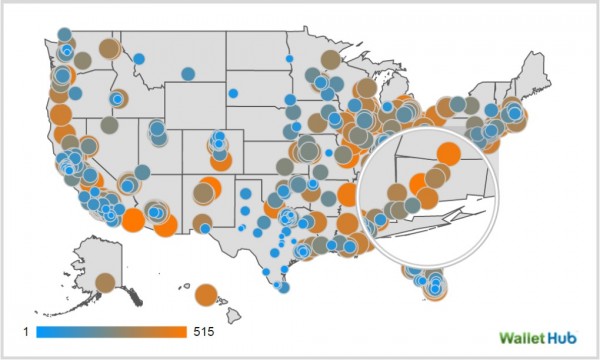
Bridgeport is not only Connecticut’s largest city by population, it is the city which has expanded – in socioeconomic terms – more than any other in the state between 2008 and 2014, according to an analysis released by WalletHub. Bridgeport ranked at number 230 nationally, one of three Connecticut communities – all in Fairfield County – that reached the top 300 across the country.  The others are Stamford, ranked at number 265, and Norwalk, at number 293.Bridgeport_CT

In 2014, the U.S. recorded its lowest population gain since the Great Depression. Growth stood at .73 percent, largely in contrast with the 5 percent of the 1990s, a period of prosperity, WalletHub pointed out.  Demographer William H. Frey of the Brookings Institution attributed the decline to the economic downturn. Not only did the crisis deter job-seeking migrants from flocking to the U.S., but it also discouraged couples from having children, he noted. Meanwhile, population numbers shifted across states, creating short- and long-term effects on local economies, WalletHub indicated.

In order to identify the cities that have expanded most rapidly in socioeconomic terms between 2008 and 2014, WalletHub compared 515 U.S. cities of varying sizes across 10 key metrics, ranging from population growth to unemployment rate decrease.

The other Connecticut cities that ranked on the overall list of cities were New Britain (344), Danbury (355), Hartford (374), New Haven (425), and Waterbury (504).

Eleven of the twelve top-ranked cities – regardless of size - were all in Texas, led by Odessa, Frisco, Midland, Mission College Station, and Killeen.  When the list was broken down by city population, Connecticut did not have a top-100 city in economic growth.wh-best-badges-150x1503

On the list of small cities, Norwalk ranked at 109, New Britain at number 129 and Danbury at number 132.  Among mid-size cities, Bridgeport was ranked at number 110, Stamford ranked at number 123, Hartford was at number 187 and New Haven and Waterbury were at 212 and 239 respectively.  Midsize cities are those with between 100,000 and 300,000 people; small cities have fewer than 100,000 people.

Large cities with the most growth were Austin, Miami, Fort Worth, Denver and Corpus Christi.  At the bottom of the large city list were Mesa, St. Louis, Tucson, Cleveland and Detroit.  Leading the list of mid-size cities were five Texas communities; on the list of small cities Texas had four of the five top-ranked communities exhibiting the most growth.

The factors considered included socio-demographic landscape (population growth, working-age population growth, and poverty rate decrease), and jobs and economic environment (median household income growth, unemployment rate decrease, job growth, ratio of full-time to part-time jobs, and growth of regional GNP per capita).

mapJoan Fitzgerald, Professor of Public Policy and Urban Affairs at Northeastern University, told WalletHub: “It is not an accident that many of the fastest growing cities have thriving high tech and biotech sectors along with financial services and usually a strong health care sector.  But another priority has to be balance.  In many cities, manufacturing loses out over other uses.”

Added Boston University Professor of Economics Kevin Lang: “it is not so much that population growth encourages employment as that employment opportunities encourage population growth.  Of course, this, in turn, creates further employment opportunities.”

Last month, the  Bridgeport, Norwalk and Stamford metro area ranked second nationally among the top ten best places for female entrepreneurs, in an analysis by  Nerdwallet, a personal finance information service geared toward helping consumers make informed financial decisions.  That ranking analyzed the U.S. Census Bureau’s survey of business owners and data from the Small Business Administration to come up with the national rankings. The top ranked city for female entrepreneurs was Boulder.  Joining Norwalk-Stamford-Bridgeport in the top five were Denver-Aurora-Lakewood, Santa Cruz -Watsonville, and Santa Rosa.  Researchers found that seven of the top 10 metro areas for female business owners -- based on business climate, local economic health and financing opportunities -- are in California or Colorado.

The data sources used in the WalletHub analysis included the U.S. Census Bureau, Bureau of Labor Statistics and Bureau of Economic Analysis.


Driver Distraction Continues Almost 30 Seconds After Text is Sent, Research Reveals

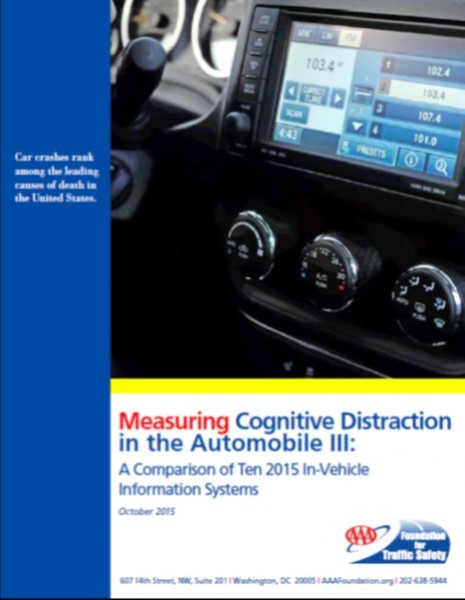
Groundbreaking research by the AAA Foundation for Traffic Safety reveals that the distraction drivers experience using voice activated technology - or their smartphones - to make a call, change music or send a text can linger for almost 30 seconds after the task is complete. “This should be a wakeup call to anyone who feels safe texting while sitting at a red light”, says AAA spokesperson Amy Parmenter. “Just because you can hit the gas when the light turns green, doesn’t mean you’re good to go.”report

Researchers studying various push-to-talk technologies found that potentially unsafe levels of mental distraction lasted for as long as 27 seconds after completing a task in the worst-performing systems. And, at the 25 MPH speed limit in the study, drivers traveled the length of nearly three football fields during this time. Using the least distracting systems, drivers still remained impaired for more than 15 seconds.

The researchers discovered the residual effects of mental distraction while comparing the voice activated technology in ten 2015 vehicles and three types of smart phones. The analysis found that all systems studied increased mental distraction to potentially unsafe levels.

“Automakers often promote everything their connected cars can do, but this research paints a frightening picture of what drivers can’t do if they use the popular features” Parmenter says. “Hands free does not mean risk free. It’s that simple”.Phase-III-Social-Media-Graphic-1

Last month, CT by the Numbers reported that in-car electronics that allow drivers to listen to, read and send text messages while at the wheel may be skirting the spirit, if not the letter, of Connecticut law.  In Connecticut, Public Act 10-109, enacted in 2010, states that “no person shall operate a motor vehicle … while using a hand-held mobile telephone to engage in a call or while using a mobile electronic device while such vehicle is in motion. An operator of a motor vehicle who types, sends or reads a text message with a hand-held mobile telephone or mobile electronic device while such vehicle is in motion shall be in violation of this section.”

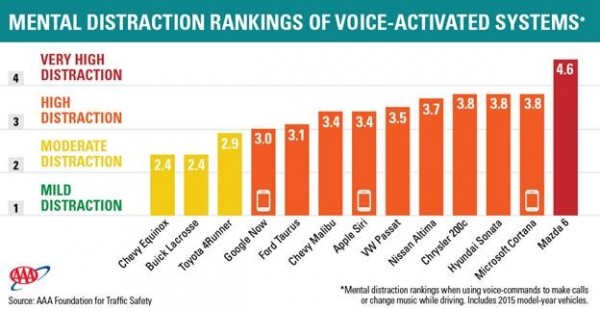
In the AAA study, researchers rated driver distraction on a scale of 1-5, with 1 being relatively safe, about equal to listening to the radio, and 5 being highly challenging in such a way as to overload the driver’s attention. The best performing system was the Chevy Equinox with a cognitive distraction rating of 2.4, while the worst performing system was the Mazda 6 with a cognitive distraction rating of 4.6.

The systems that performed best generally had fewer errors, required less time on task and were relatively easy to use.  The researchers also studied voice activated smartphone technology and found that Google Now outperformed Apple Siri and Microsoft Cortana but, they say, all were dangerously distracting with ratings of 3.1, 3.4 and 3.8 respectively.

Dr. David Strayer and Dr. Joel Cooper of the University of Utah conducted the research. A total of 257 drivers ages 21-70 participated in the study of 2015 model-year vehicles, while 65 additional drivers ages 21-68 tested the three phone systems. Over the last two weeks, AAA has shared its findings with policymakers, safety advocates and manufacturers in hopes of improving the safety of future technology.


AAA chart

Fledgling "Businesses with Impact" Recognized, Receive Funds to Propel Start-Up

When reSET, the Social Enterprise Trust, whose mission is advancing the social enterprise sector, revealed the winners of its annual Impact Challenge last week, the top award recipient was FRESH Farm Aquaponics, with Movia Robotics, Planet Fuel Beverage Company, Hartford Prints! and Parrot MD rounding out the top five. While the businesses may not be household names, they do represent an increasing number of start-up businesses that are not only seeking a foothold in their respective industries, but are looking to contribute to their community – locally or globally – along the way.reSET

Based in Hartford, FRESH Farm Aquaponics is devoted to providing “the best quality aquaponic food to our community sustainably, teaching a new generation with aquaponics, and engaging the community to develop a local food ecosystem.” The company proclaims “expect from us the best produce available locally, year round in the Hartford County area. You will also see us engaging local schools in pioneering aquaponic experiments from elementary schools to universities.” (see video below)

Planet Fuel is a news-othersustainable lifestyle beverate brand for teens and tweens.  The company's goal is to inspire young people to realize the power of consumer choices to effect social and environmental change.
MOVIA Robotics provides an innovative approach in educating children with autism to "form connections inside the world we live in today." The company uses robots and develops "our own software based on interactions with therapists and children."003

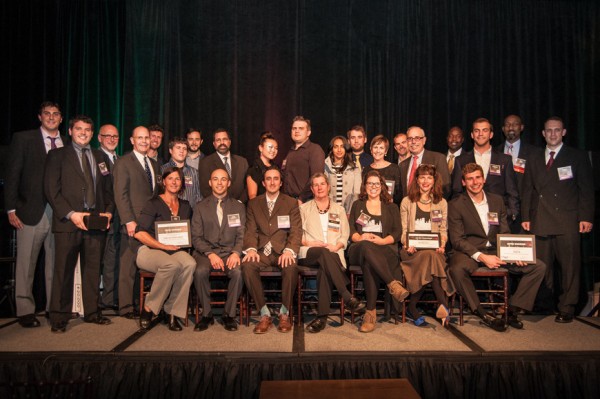
Now in its fifth year, the reSET Impact Challenge recognizes the most innovative and impactful early stage ventures and start-ups from all industries throughout New England.  The event, held at The Society Room of Hartford, saw a record, sellout crowd of 300 in attendance.

Diamond Level - $20,000 + Professional Services Package (1 Winner)

FRESH Farm Aquaponics (http://www.freshfarmct.org)

Gold Level - $10,000 + Professional Services Package (2 Winners)

Movia Robotics (www.moviarobotics.com)

Planet Fuel Beverage Company (http://www.planetfuel.com)

Silver - $5,000 + Professional Services Package (2 Winners)

Hartford Prints! (hartfordprints.com)

Parrot MD (parrotmd.org)

People’s Choice - $1,500 + Professional Services Package (1 Winner)

BookBugs (www.bookbugs.net) 

Investor’s Choice - $1,500 (1 Winner)

Send Help Back Home (www.sendhelptoday.com)

Bronze - $500 (7 Winners)

Asarasi, Inc. (www.asarasi.com)

Beautiful Day / Providence Granola Project (www.providencegranola.com)

BookBugs (www.bookbugs.net)

Daily General Counsel (www.dailygeneralcounsel.com)

Dream See Do (https://www.dreamseedo.org)

Hugo & Hoby (www.hugoandhoby.com)

LOTUS Alliance LLC (www.lotusalliance.org)

logoThe five awards judges - Sherrell Dorsey of Uber and Triple Pundit, Adam Dotson of Ironwood Capital, Claire Leonardi, an advisor to reSET's Social Enterprise Investment Fund and former CEO of Connnecticut Innovations, Anthony Price of LootScout and Paul Witinski of Ironwood Capital - narrowed down more than 100 applicants to 12 honorees.  The People’s Choice winner was selected via more than 1,800 online votes.

Since its inception, reSET’s Impact Challenge has awarded more than $180,000 to scaling entrepreneurs. reSET is a nonprofit organization whose mission is advancing the social enterprise sector. Its strategic goals are threefold: to be the “go-to” place for impact entrepreneurs, to make Hartford known as Impact City, and Connecticut the Social Enterprise state.  In addition to providing co-working space, accelerator and mentoring programs, reSET aims to inspire innovation and community collaboration, and to support entrepreneurs in creating market-based solutions to community challenges. reSET’s goal is to meet entrepreneurs wherever they are in their trajectory and to help them take their businesses to the next level.

reSET’s Impact Accelerator recently was a winner of the U.S. Small Business Administration Growth Accelerator Competition, the only Connecticut growth accelerator to receive the award this year.

https://youtu.be/A03RH_htQ88