Hate Words in School Setting Increasingly Target Race, Ethnicity and Sexual Orientation

It has been estimated that 160,000 teens nationwide skip school every day because of bullying.  Words of hate are a reason why. A recent report by the U.S. Department of Education indicates that among students ages 12 through 18 who reported being called a hate-related word at school, the percentage of students called a gender-based hate word decreased from 2001 to 2013, while the percentages of those students called race-, ethnically-, and sexual orientation-based hate words increased.

The report found that:

  • The percentage of students who were called hate words associated with race was greater in 2013 (50 percent), as compared to 2001 (34 percent).
  • The percentage of students who reported being called ethnically based hate words was greater in 2013 (29 percent), as compared to 2001 (22 percent).
  • The percentage of students who reported being called a hate word associated with sexual orientation was greater in 2013 (16 percent), as compared to 2001 (10 percent).
  • The percentage of students who were called gender-based hate words was lower in 2013 (15 percent), as compared to 2001 (23 percent).

hate-wordThe U.S. Department of Education July 2016 Data Point report from the National Center for Education Statistics includes data from the School Crime Supplement (SCS) to the National Crime Victimization Survey, a nationally representative sample survey of students ages 12 through 18, which were used to analyze trends in hate-related words. The SCS study is completed every other year.

In the study, students were asked if they had been called a hate-related word in the school building, on school property, on the school bus, or going to or from school, or if they had seen hate-related graffiti in school. Specifically, students were asked if during the school year anyone called them an insulting or bad name at school having to do with their race, religion, ethnic background or national origin, disability, gender, or sexual orientation (hate-related words). Students were also asked if they had seen any hate-related words or symbols (graffiti) written in school classrooms, school hallways, or outside of the school building.

The Southern Poverty Law Center (SPLC) has reported this year that “the gains made by years of anti-bullying work in schools have been rolled back in a few short months,” due to comments made as part of the Presidential campaign.  “Teachers report that students have been ‘emboldened’ to use slurs, engage in name-calling and make inflammatory statements toward each other,” explaining that “students have been emboldened by the divisive, often juvenile rhetoric in the campaign. Teachers have noted an increase in bullying, harassment and intimidation of students whose races, religions or nationalities have been the verbal targets of candidates on the campaign trail.”

The federal government’s stopbullying.gov website defines bullying actions to include “making threats, spreading rumors, attacking someone physically or verbally, and excluding someone from a group on purpose.”  The Bullying Prevention and Response Training and Continuing Education Online Program develschool-wordsoped by the federal Health Resources and Services Administration notes that “indirect bullying” includes “rumor spreading or encouraging others to exclude a peer.” Bullying is described as “a public health problem and requires a coordinated community response.”

“Harassing conduct may take many forms, including verbal acts and name‐calling” the U.S. Department of Education Office of Civil Rights pointed out in 2010 correspondence to the nation’s schools from Assistant Secretary of Civil Rights Russlynn Ali. The information provided pointed out that such behavior “fosters a climate of fear and disrespect that can seriously impair the physical and psychological health” of those subjected to it, and can “create conditions that negatively affect learning, thereby undermining the ability of students to achieve their full potential.”

The SPLC highlights the impact on students: “Every student, from preschoolers up through high school, is aware of the tone, rhetoric and catchphrases of this particular campaign season. Students are hearing conversations at home. They’re chatting, posting and joking on social media. Whether teachers decide to bring it into the classroom or not, kids are talking about it, modeling their behavior on that of political candidates and bringing heightened emotion to school along with their backpacks.”

Back to the Future: Permanent Commission on Status of Women Resurrected as Nonprofit

When the state legislature surprisingly eliminated the landmark Connecticut Permanent Commission on the Status of Women (PCSW) on the heels of one of the agency’s most successful advocacy efforts on an array of pivotal issues, the dismay from an array of organizations across the state was strident and unified, but ultimately unsuccessful. The 2016 Legislative Session, which ended in June, had seen four of the largest gains for women’s rights. Bills to protect women from human trafficking, intimate partner homicide, campus sexual assault, and being forced to parent with a rapist all passed with bi-partisan support, with PCSW among the organizations leading the fight.

The agency, active and effective for 43 years, was no longer “permanent.”  It was history.  Unfazed, the legislature, pressed to find budgetary savings, merged it into a new structure, combined with former commissions on children and the elderly. For those involved with, and committed to, the work of the former PCSW, the legislature's approach fell short.  So they took matters into their own hands.  pcsw

The tone was considerably more upbeat this week as it was announced that PCSW was back in business, new and improved, with an educational nonprofit and a companion advocacy organization formed to continue the work on issues that remain on the front burner – or ought to.

A group of former State Commissioners and former key employees of the previous PCSW, dismantled at the start of the new fiscal year on July 1, announced the formation of a new non-profit initiative to advance the work of the former state agency, which was among the oldest and largest women’s commissions left in the United States.

The Commission’s legacy of developing landmark legislation and research in the areas of sexual harassment, domestic violence, family medical leave protections, pay equity, and human trafficking will continue, advocates stressed, only now emanating from outside of state government.

“We will partner with leaders in Hartford, CWCS, and organizations around the state to ensure that the public policy agenda for women and girls addressed by the former PCSW continues to move forward. We will provide expertise, research, resources, and advocacy to improve the lives of women and girls in this state,” said Mary Lee Kiernan, former Chair of the PCSW and President of the newly formed Permanent Commission on the Status of Women in Connecticut Education Fund, Inc. (PCSW Education Fund, Inc.). PCSW Education Fund, Inc. is applying for 501(c)(3) tax status with the IRS.

A new website, www.ctpcsw.org, was launched along with the new organizations.  The new initiatives were announced at a State Capitol news conference, alongside the statue of Prudence Crandall, Connecticut’s state heroine. news-conf

“Our new initiative will advocate in the same key policy areas addressed by the former PCSW, including economic security; health and safety for women of all ages; discrimination in all forms; education; and women’s leadership,” explained Carolyn Treiss, Executive Director of the former PCSW and President of the newly formed Permanent Commission on the Status of Women in Connecticut, Inc. (PCSW, Inc.). PCSW, Inc. is applying for 501(c)(4) tax status with the IRS and intends to advocate for an annual legislative agenda in these key policy areas. 501(c)(4) tax status allows for unlimited advocacy on legislation.

The board members of these two entities currently consist of eleven of the sixteen former PCSW commissioners, the former PCSW Executive Director and the former PCSW Policy Director. These individuals provide expertise on a wide variety of issues affecting women and girls, and they represent all regions of the state.

“I am impressed with the expertise that our board members bring, particularly around the intersection of gender with issues of race, ethnicity, age, religion, and socio-economic status,” explained Catherine Ernsky, President of the Ernsky Group and Vice President of the PCSW Education Fund, Inc. Board members also bring experience in the areas of law, finance, medicine, insurance, communications, philanthropy, health equity, criminal justice, state and local government, legislation, education, environmental justice, organized labor, and non-profit leadership.

An advisory board to the PCSW Education Fund, Inc. has been established that includes Senator Richard Blumenthal; Congresswoman Rosa DeLauro; former PCSW Executive Director and current President of the Ms. Foundation, Teresa Younger; former PCSW Honorary Commissioner and Executive Director of the Women’s Campaign School at Yale, Patricia Russo; former PCSW Honorary Commissioner Patricia Hendel; and former PCSW Honorary Commissioner Barbara DeBaptiste.  Pro-Bono legal services are being provided by Wiggin & Dana, LLP. PFK O’Conner Davies, LLP will serve as auditors.

PCSW Education Fund, Inc. and PCSW Inc. intend to collaborate with non-profit partners from around the state, the new CWCS, and state leaders to “continue the long legacy of progress for women and girls” that characterized the former state agency.

“Collaboration in this space is key,” explained Fran Pastore, President of the Women’s Business Development Council, a frequent collaborator with the former PCSW. “The board members of these entities are well-known for building effective coalitions. I hope to work with them to improve financing for women-owned businesses and workplace practices impacting women. Ultimately, these issues spur economic growth and improve the lives of everyone in the state.”

In 1973, the CT General Assembly passed, and Governor Thomas Meskill signed into law, Public Act 73-559, establishing the Permanent Commission on the Status of Women. The PCSW was charged with providing research and analysis on issues related to gender discrimination, women’s health and safety, and economic security. “In its 43 year history, the PCSW has informed many important public policies that make Connecticut a desirable place for women to live and work today,” the Commission explained in its final legislative report, issued in June.  The list of highlight legislative victories runs six pages, single spaced, in small type.

Back in February, Kiernan testified at the legislature, explaining that "The empirical evidence on gender in Connecticut is very clear. Women still face widespread discrimination in the workplace and beyond. Women continue to face far greater barriers to educational success than men. Women face wage inequality, occupational segregation and barriers to credit in the business sector. Women still struggle for basic economic self-sufficiency and fail to build the assets needed for retirement at greater rates than their male counterparts. And women and girls face increasingly complex threats to their health and safety. All of these issues are compounded and complicated by race and ethnicity."

Now, a new chapter begins, with experienced hands at the helm.


Leadership Greater Hartford Launches New Brand Identity As 40th Anniversary Approaches

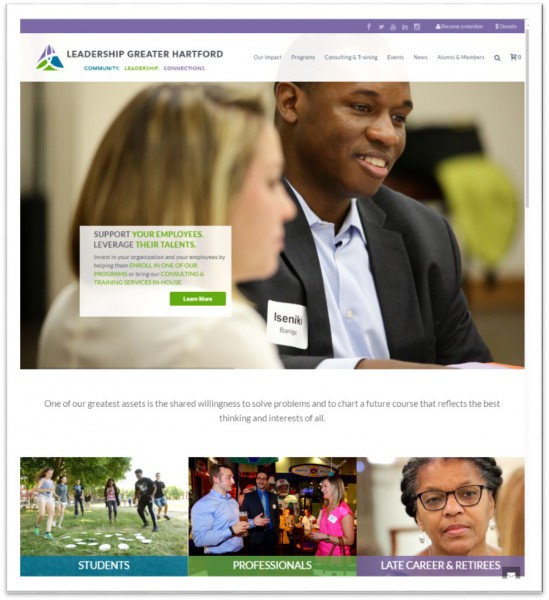
Leadership Greater Hartford (LGH), the region's highly regarded go-to source for tackling community challenges through knowledge and cooperation, has unveiled its new logo and visual identity, which reflects the organization’s growth and prominent role in strengthening community leadership connections. Three pillars, “Community. Leadership. Connections,” informed the design of the organization’s new logo and form the backbone and structure of the new website, www.leadershipgh.org. "We are proud of our past and look forward to the future. While our logo is changing, one thing that will never change is our purpose and lgh-websitemission,” said Ted Carroll, President of Leadership Greater Hartford. “It is important that our brand reflect the organization we have become and where we will continue to be headed in the future - making our communities better and stronger.”


The website points out that “more than 600 employers have enriched the development of their staff and become involved with civic progress; 2500+ students from four dozen schools across the region have gained broader perspectives and wider circles of friends; more than 500 seniors gained the opportunity to continue giving back to the communities they’ve seen undergo so much change in their lifetimes.”

As Leadership Greater Hartford has grown and evolved, broadening participation and developing an array of effective programs and initiatives, the organization notes that the business landscape has changed, including in market demographics, competitive environment, and the acceleration of social media.

LGH will celebrate its 40th anniversary on November 15, with their annual Polaris Awards Gala.  As the organization enters its milestone fortieth year, it is “well-prepared and firmly engaged to be a relevant, forward-thinking resource for the community – both the private and public sectors – for the next 40 years,” officials said, as the website highlights that “our program participants have completed more than 200 community impact projects, we have trained and placed more than 450 individuals on more than 125 nonprofit boards, and program graduates volunteer at a rate of 137% higher than that of the rest of the country.”

The web redesign and visual identity was developed by MRW Connected, Inc. “All of us at MRW Connected engaged with Leadership Greater Hartford in the exciting process of re-branding and re-messaging this important organization in their 40th anniversary year,” explained MRW Connected president and founder Tom Willits.lgh-logo

Officials indicated that LGH staff, organization leadership and Board members, program participants as well as the Greater Hartford community, were involved in the process “to better understand their organizational objectives and accomplishments.  In this way we helped Leadership Greater Hartford realize their goals of creating an updated look and responsive, engaging website that truly represents the inspired leadership development work they do and allows the community-at-large easier access to their programs and their network," Willits added.

Leadership Greater Hartford (LGH) is a mission-driven, nonprofit organization that supports and strengthens the local community by training and connecting aspiring and established leaders.  The well-known LGH programs for professionals include Quest, Executive Orientation, Hartford Encounters, Leaders on Board and Summit.  Encore Hartford and Third Age Initiative are aimed at late-career individuals and retirees; Common Ground, Leading Off Campus and Summer Nexus are designed for high school and college students.

For more information about how to be a participant or sponsor, or to inquire about customized training with Leadership Greater Hartford, call 860-951-6161 (x1800), email info@leadershipgh.org visit .leadershipgh.org, or follow LGH on Facebook and Twitter @leadershiphtfd.


Connecticut Public Accounting Firms Reach National Rankings

The largest Connecticut-based public accounting firm, BlumShapiro, earned the #54 position in the nation’s top 100, according to the publication Inside Public Accounting.  It is one of a handful of Connecticut firms to make the annual top 300 list, in addition to regional firms with offices in Connecticut. BlumShapiro is the largest regional business advisory firm based in New England providing accounting, tax and business consulting services. The firm serves clients from six offices offices in Connecticut (West Hartford and Shelton), Massachusetts and Rhode Island. BlumShapiro ranked #53 last year. 2016_ipa-300_web-147x150

Noted among the nation’s top 200 public accounting firms is Hartford headquartered Whittlesey & Hadley.  The firm, ranked at #155 this year, up from #178 a year ago, and #192 in 2014, has two additional offices, located in Hamden, CT and Holyoke, MA. The firm provides a comprehensive array of accounting, auditing, tax, and advisory services to a broad range of businesses and individuals.

Ranked #285 is Reynolds & Rowella LLP, which maintains offices in Ridgefield and New Canaan.  “We are proud to be counted among the top-ranked accounting firms nationwide on a list that includes Deloitte, PwC, Ernst & Young and KPMG,” Frank Rowella, Reynolds & Rowella’s managing partner, told the Fairfield County Business Journal. “The IPA list is known as one of the most thorough and accurate sets of rankings in the accounting profession. Our inclusion reflects our determination to provide the very best quality compliance and financial services solutions to our valued clients.”

blum At #296 is Glastonbury-based Fiondella Milone & LaSaracina.  FML was founded in 2002 “for the purpose of providing professional auditing, tax and business consulting services to a wide range of clients and industries throughout the Northeast,” the company’s website indicates.  After working together at Ernst & Young, the firm’s founding partners, Jeff Fiondella, Frank Milone and Lisa LaSaracina launched FML.
Inside Public Accounting (IPA), founded in 1987, is published by The Platt Group. The Platt Group publishes both the award-winning Inside Public Acwhcounting newsletter and the award-winning National Benchmarking Report.
Beginning in 1994, INSIDE Public Accounting’s Survey and Analysis of Firms and the resulting national benchmarking report on the nation’s largest accounting firms has served as a barometer of the overall health, challenges and opportunities of the profession, according to the publication.

Annually more than 500 accounting firms across the North America complete the in-depth financial and operational survey. The data is then used to compile the annual ranking of the nation’s largest accounting firms, which is unveiled in August of each year. The annual IPA rankings are considered to be among the longest-running, most accurate and up-to-date for the nation’s largest accounting firms.

Leading the list nationally were Deloitte, PricewaterhouseCopers, Ernst & Young, KPMG, RSM, and Grant Thornton.  Ranked at #11 is New York based CohnReznick, which has offices in Hartford.  Marcum LLP ranked #16, Citrin Cooperman & Company, also based in New York and ranked #21, has offices in Fairfield County.

Opioid Epidemic Leads Conference Marking 100 Years of Public Health in CT

Tackling the opioid epidemic at the federal, state, and local levels will be the focus of the featured panel when the Connecticut Public Health Association (CPHA) celebrates 100 years of public health in Connecticut at the 2016 CPHA annual conference in November. photoIn addition to the expert panel on opioid abuse, there will be more than 30 presenters on public health topics, a presentation on the history of CPHA and public health in thelogo state, and a look forward to the future and innovations on the horizon in health research, policy, and community programs.
“Today, more than ever, the value of public health in saving lives and reducing health care costs is at the forefront of public policy,” the organization’s website points out.  Members represent a wide variety of disciplines, and “are united in the goal of protecting and promoting the public's health.”

Keynote speaker will be Camara P. Jones, MD, MPH, PhD, President of the American Public Health Association (APHA).  Dr. Jones is a research director on social determinants of health and equity in the Division of Adult and Community Health, National Center for Chronic Disease Prevention and Health Promotion and President of the American Public Health Association (APHA).

cpha-logo_2She seeks to broaden the national health debate to include not only universal access to high quality health care but also attention to the social determinants of health (including poverty) and the social determinants of equity (including racism). As a methodologist, she has developed new ways for comparing full distributions of data (rather than means or proportions) in order to investigate population-level risk factors and propose population-level interventions.
Opioid abuse has hit record levels in the United States, with drug overdose deaths quadrupling over the last 15 years, the CPHA points out. According to the Centers for Disease Control, Connecticut is experiencing a death rate for drug and opioid overdoses that surpasses the national rate and has reached epidemic proportions.

The conference is being held at Anthony’s Ocean View in New Haven on November 10.  The theme is “Back to the Future – 100 Years of Public Health in Connecticut and Beyond.” The annual meeting is the oldest and largest gathering of public health professionals in Connecticut, attracting hundreds of attendees each year.

“State of Innovation” Specialty License Plate Is Latest to Join List of Choices

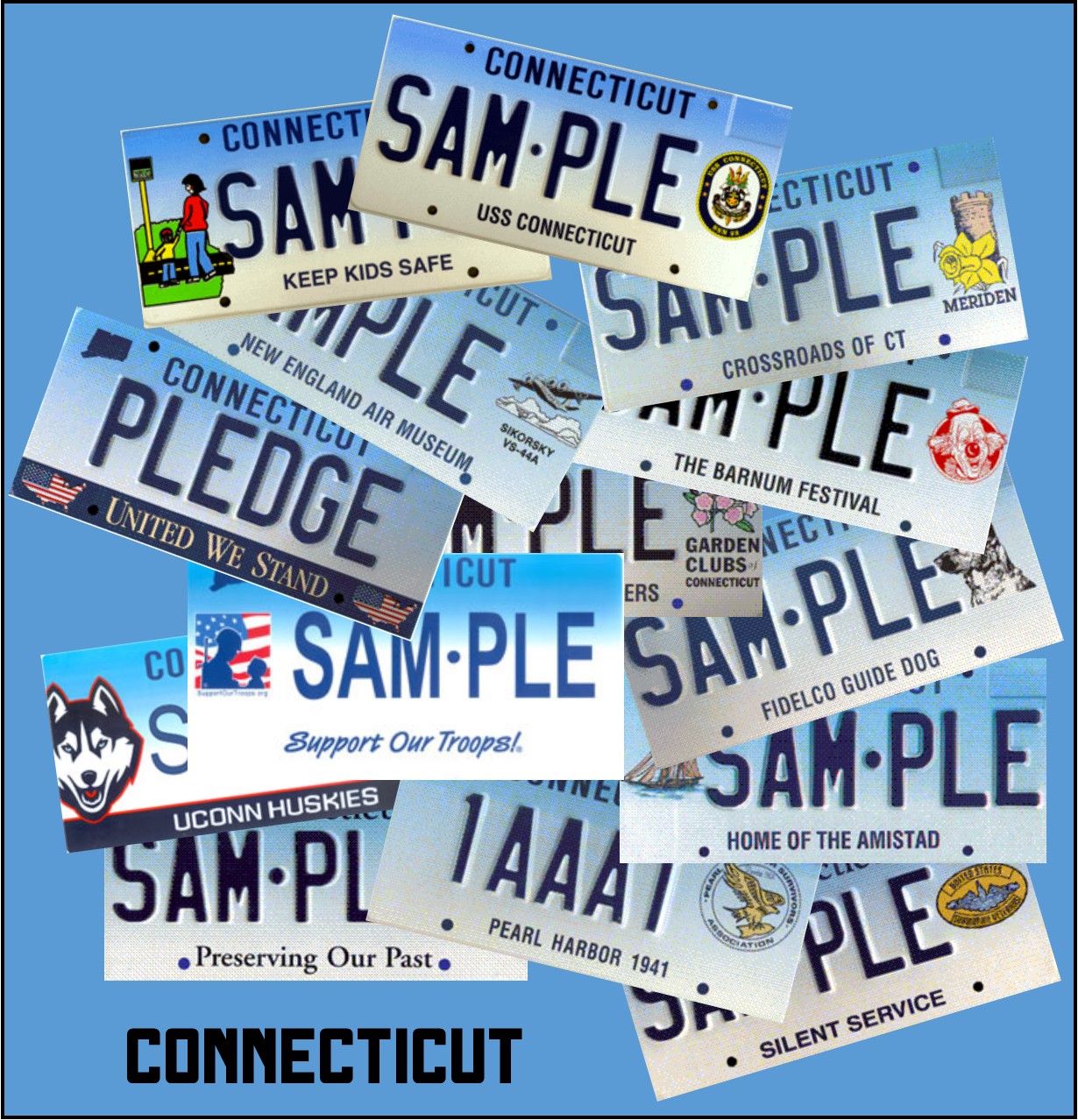
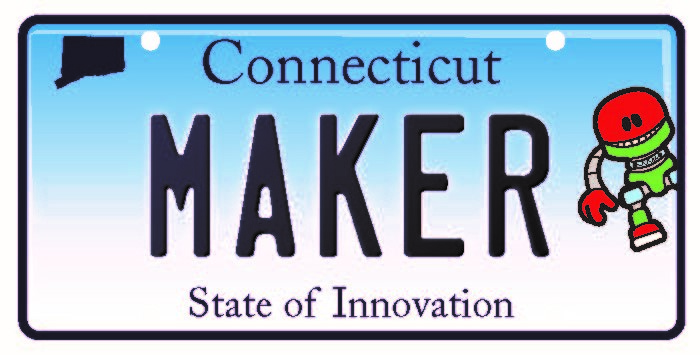
Connecticut, with more than 50 special license plates featuring everything from animals to war survivors, now has one more available for purchase by state residents. At the fifth annual Westport Mini Maker Faire earlier this year, it was announced that a new “State of Innovation” license plate was being developed by a non-profit organization, Remarkable STEAM.   The organization has now announced that their design has been approved, and sales of the new plate are underway.

Individuals can transfer an existing plate or obtain a vanity plate.  A portion of the proceeds goes to Remarkable STEAM, Inc, a 501(c)(3) not for profit corporation, best known for the Westport Mini Maker Faire.  Remarkable STEAM initiatives support job creation and educational programs.license-plates-ct

State law allows the Department of Motor Vehicles to issue of special background plates on behalf of non-profit organizations. The organization must be non-profit, must submit a copy of the organization's charter or by-laws, provide a letter of good standing from the State of Connecticut Secretary of State’s Office (if required) and supply any Internal Revenue Service ruling on their non-profit tax exemption status.

The logo production and cost incurred will be the responsibility of the organization. The logo prototype design, preferred in PDF format, must be submitted to the DMV. The logo can be no larger than 2 inches wide and 3.5 inches high. DMV has final approval on all the plate and logo designs.

A liaison for the organization must be appointed. This individual will be responsible for all communications with the DMV as well as certifying and authenticating (by signature) each member’s application, submitting the logo design to DMV for approval, submitting 400 applications with the required fee prior to the manufacturing of the special background plates, and submitting a Special Interest Plate disclaimer.

Many organizations in Connecticut offer license plates to their members and the general public.  General categories include animals, colleges, environment, organizations, police and fire, cities and towns, and recreation.

Organization vanity plates include Amistad, Benevolent & Protective Order of the Elks, IUOE Local 478, Grand Lodge of Connecticut, Knights of Columbus, Olympic Spirit, P.T. Barnum Foundation Inc., Preserving Our Past CT Trust for Historic Preservation, Red Sox Foundation, Lions Eye Research Foundation, Special Olympics, Federated Garden Clubs, Fidelco Guide Dog Foundation, Keep Kids Safe, New England Air Museum and the U.S.S. Connecticut Commissioning Committee.

All fees established and collected pursuant to the United We Stand plate (except moneys designated for the administrative costs of the DMV) shall be deposited in the United We Stand commemorative account.  Funds are directed to the United States Department of State Rewards for Justice program and is used solely to apprehend terrorists and bring them to justice. The account will also be distributed to the Secretary of the Office of Policy and Management for the purpose of providing financial support and assistance to the former spouses and dependents of persons killed as a result of the acts of terrorism committed on September 11, 2001.

innovation-license-plateWhen individuals purchase a Keep Kids Safe plate, a portion of the fee goes to the Keep Kids Safe Fund, which “makes many worthy projects happen for youngsters.”  The fund awards grants to schools, hospitals, municipalities and other non-profit organizations working to make all Connecticut children safer from severe and preventable injuries, according to the DMV website.
In most cases, remake of a current plate is $70; a new vanity plate is $139, a new series plate is $50.  For others, including the UConn Huskies plate, the price tag is somewhat different.  Off-the-shelf license plates cost $55, remake of a current plate is $75, a new vanity plate costs $144, according to the DMV website.

The Support Our Troops plate sends a portion of the fee to provide funding for programs to assist Connecticut troops, their families and veterans. When you buy a Red Sox plate, a portion of the fees support and help fund academic scholarship programs in Connecticut.

Also included are 17 varieties of military specialty plates, including Disabled American Veteran, Gold Star Family, Iwo Jima Survivor, Korean War Veterans Association, Marine Corps League, Laos Veterans of America, Military Order of the Purple Heart, Pearl Harbor 1941, U.S. Submarine Veteran, National Guard Association of Connecticut, First Company Governor’s Foot Guard, First Company Governor’s Horse Guard,

Colleges with designated plates include Central Connecticut State University, Penn State Alumni, University of Hartford, University of Connecticut, and University of New Haven.  Cities with available plates include Meriden, Norwich, and Stafford.

Organizations interested in launching a new special plate, should contact the DMV Special Plate Unit at (860) 263-5154 for further information.

CT Residents Concerns About Health Care Affordability, Job Prospects Increase; More Expect to Leave, Even as Optimism Grows

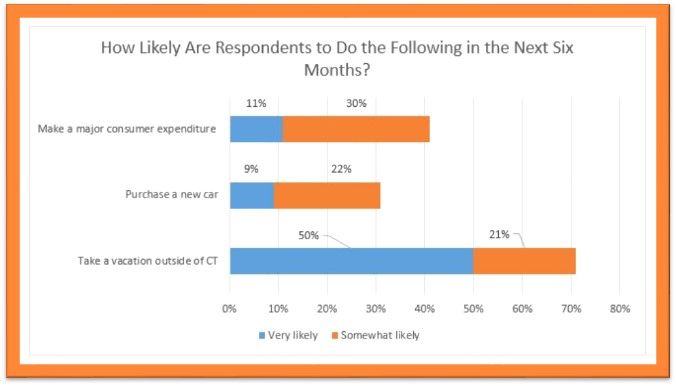
Nearly two-thirds of Connecticut residents are concerned about the affordability of health insurance, a jump of 12 percentage points in just the past year, and the highest level since the quarterly Inform CT Consumer Confidence Survey began 18 months ago. And slightly more than 4 in 10 Connecticut residents now say it is likely that they will move out of the state within the next five years, reflecting concerns about a lack of jobs, declining business conditions and health insurance costs. Yet, many residents continue to say that Connecticut is a good place to live and raise a family, and some optimism is evident in consumer spending expectations.  The survey found that:CTConsumConfSurveyLOGO

  • 41% say it is likely they will make a major consumer expenditure (for furniture or other products) during the next six months.
  • 31% say it is likely they will purchase a car in the next six months.
  • 71% indicated they expected to take a vacation outside of Connecticut in the next six months.

All are the highest percentages since the quarterly survey began in 2015.

The quarterly survey is released by InformCT, a public-private partnership that provides independent, non-partisan research, analysis, and public outreach to help create fact-based dialogue and action in Connecticut.  Administered by researchers from the Connecticut Economic Resource Center, Inc. (CERC) and Smith & Company, the analysis is based on the responses of residents across Connecticut and addresses key economic issues, providing a glimpse of the public’s views.

Despite qualms about the state’s economy, residents are increasingly optimistic about their own financial circumstances.  One-third (32%) say they are better off now than six months ago, and 42 percent believe they will be better off six months from now than they are today.  Both numbers are 5 percentage points higher than they were a year ago.  The overall view of the state’s fiscal picture differs:

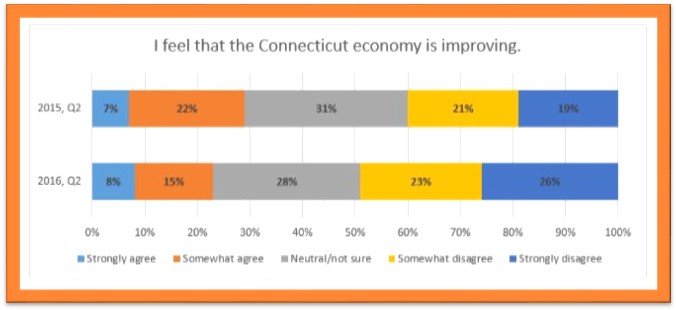
  • A year ago, 40 percent of those surveyed disagreed with the statement that the Connecticut economy is improving. That percentage has now climbed – one year later – to 49 percent, nearly half the state.
  • The percentage who believe that the state’s economy is improving has dropped from 29% a year ago to 23% during the second quarter of this year.
  • Residents of New London and Fairfield County most strongly believed that business conditions had improved over the previous six months, with Middlesex, Windham and Litchfield more likely to say that business conditions had worsened.

c1Increasingly, residents believe that jobs are “very hard to get” in Connecticut compared with six months ago (from about one-quarter to one-third of those surveyed in Q2 2016 versus Q2 2015), and are, in growing numbers, saying they would rather leave than stay.
  • A year ago, 32 percent of those surveyed said it was very likely or somewhat likely that they would move out of Connecticut within the next five years.
  • A year later, that percentage has climbed by 10 points to 42 percent.

At the same time, about half of those surveyed say that “Connecticut is a good place to live and raise a family” – a number that has remained consistent for the past year and a half.  Only 1 in 4 disagree.  More than half of 18-21 year-olds and 22-25 year olds say they are likely to leave in the next five years; in all other age categories it is less than half, with those age 56-65 the least likely.

Concerns about having “enough money to retire comfortably” have remained steady for six consecutive quarters, with about less than 1 in 4 expressing the opinion that they anticipate having sufficient funds. And 1 in 4 now say it is likely that they will refinance their home or purchase a new home in the next six months, the highest percentage since the quarterly survey began.

With increasing calls for regional support of Hartford and regional approaches to tackling budget challenges, the survey found that an increasing number of residents in Connecticut believe that a range of services “could be effectively delivered regionally.”

c2Forty-three percent, an increase from 40 percent in the year’s first quarter, answered “all of the above” when asked if education, libraries, public health, public safety and animal control could be provided regionally.  Among those services individually, there was slightly greater support for a regional approach to public safety, slightly less for each of the others.  The largest increase was for “all” of the services.

The question of what residents in the region consider to be the “best way to grow the economy” saw a preference for investing in schools and community features over recruiting companies, by an increasing margin.  In this year’s first quarter, the margin was 52% to 48%. In the most recent quarter that margin had grown by 9 percentage points to 61%-39%, from just over half to more than 6 in 10.

Veteran-Owned Small Businesses Will See Expanded Price Preference for State Work, Beginning Oct. 1

Applications are available for a new Connecticut initiative designed to “spur veterans to start a business and to help small veteran-owned businesses to flourish.”  The law, which takes effect on October 1, is the most generous of it’s kind in the nation, and provides veteran-owned businesses with a price preference of up to 15% for certain state Department of Administrative Services open-market orders or contracts. These businesses must have a gross revenue of up to $3 million in the most recently completed fiscal year, and at least 51% of the ownership must be held by one or more veterans. Under existing law, a “veteran” is anyone honorably discharged or released from active service in the U. S. Armed Forces or their reserve components, including the Connecticut National Guard performing duty under Title 32 (such as certain Homeland Security missions).branches

The legislation, which began as Senate Bill 2 in the 2016 session of the state legislature, was unanimously approved by the Veterans Affairs Committee and Government Administration and Elections Committee, before gaining unanimous approval in the Senate and House and the Governor’s signature.

The National Veteran-Owned Business Association, in testimony before the state legislature in March, said passage of the new law would “make Connecticut the most ‘Vetrepreneur-Friendly”state” in the U.S.  The organization noted that 27 states have programs in place “to create opportunities for veteran-owned businesses, and that New Mexico had recently increased its preference to 10 percent.  At the time, Connecticut’s veterans preference also stood at 10 percent.

Senate leaders Martin Looney (New Haven) and Bob Duff (Norwalk) said the move to 15% was part of a multi-year effort by the legislature to “improve the lives of our vets, and help them earn a living.” State Comptroller Kevin Lembo, testifying in support of the proposal, told the legislature it would “decrease a bit of the burden on those veterans who are doing much more than just getting by.  These veterans have not only re-entered their communities as productive taxpayers, but have taken the risk of starting up their own business to realize their piece of the American dream.”form

“We applaud your leadership of the important piece of legislation that will enhance and expand opportunities for the small businesses” owned by veterans, said Matthew Pavelek, Vice President of the national organization, NaVOBA, based in Pittsburgh.

To receive the fifteen per cent price preference, a bidding business must first obtain a Veteran-owned Micro Business certification from the Connecticut Department of Veterans Affairs. The Certification is valid for six months or until such time as the business is no longer in compliance with the statutory requirements, whichever occurs first.  Applications for the certification are now available from the state Department of Veterans Affairs.


Childcare Costs Continue to Outpace Inflation, Low Income Families Hit Hardest; CT 6th Most Expensive

One of the more notable aspects of the latest data on consumer prices provided this month by the U.S. Bureau of Labor Statistics is the striking increase in childcare and nursery school prices.  That data, along with statistics that reflect the impact of those increasing costs on families ability to afford such care, highlight the struggles and disparities that continue to exist, in Connecticut and nationwide. Over the past 25 years, childcare and nursery school costs have risen 177 percent, while prices more generally have risen just 77 percent.  Childcare and nursery school costs have been outpacing general inflation for at least 25 years (the data do not go back any further than 1991);  this is putting a significant strain on the budgets of low-income families.

child care costsThe Center for Economic and Policy Research points to an August 2014 study by the U.S. Department of Agriculture that found a two-parent, middle-income family (those making between $62,000 and $107,000 per year) will spend an average of $245,000 (in 2013 dollars) on their kids between the ages of zero and 17.

Significantly, due to rising income inequality, poor families are finding it harder to give their children the same opportunities afforded to rich children, the study points out. At present, families in the top fifth of the income distribution spend seven times as much on their children as families in the bottom fifth.

“This inequality can also be observed for paid leave: about 23 percent of workers in the top tenth of the wage distribution have access to paid family leave, compared to just four percent of workers in the bottom tenth,” the findings show.

Child care in Connecticut, the Economic Policy Institute points out, “is expensive.” Connecticut is ranked 6th out of 50 states and the District of Columbia for most expensive infant care.

  • The average annual cost of infant care in Connecticut is $13,880—that’s $1,157 per month.
  • Child care for a 4-year-old costs $11,502, or $959 each month.

Childcare is also “unaffordable” for a large percentage of Connecticut famiies.  The Economic Policy Institute indicates that infant care for one child would take up 16 percent of a typical family’s income in Connecticut, noting that according to the U.S. Department of Health and Human Services (HHS), child care is affordable if it costs no more than 10% of a family’s income. By this standard, only 28.1% of Connecticut families can afford infant care.

costsA minimum-wage worker in Connecticut would need to work full time for 36 weeks, or from January to September, just to pay for child care for one infant. And a typical child care worker in Connecticut would have to spend 63.6% of her earnings to put her own child in infant care, according to the data.

CEPR points out that other costs for raising children have increased as well, also outpacing the inflation rate. For instance, elementary and high school tuition and fees have risen 3.2 percent over the past year (four times the overall inflation rate of 0.8 percent); college tuition and fees are up 2.7 percent. At the same time, infant care in Connecticut costs $3,752 (37.1%) more per year than in-state tuition for 4-year public college, according to the Economic Policy Institute.

According to the Organisation for Economic Cooperation and Development (OECD), public expenditure on pre-primary education and childcare is just 0.4 percent of GDP in the United States; this is far lower than the rates of spending in Denmark (2.0 percent of GDP) or Iceland and Sweden (1.6 percent). By this measure, the U.S. comes in 33rd out of the 36 countries surveyed by the OECD, according to the CEPR report.up

Public expenditure on pre-primary education spending is 0.3 percent of GDP in the U.S. but averages 0.5 percent in the other OECD countries; even more shockingly, public expenditure on childcare is just 0.06 percent of GDP, well short of the 0.4 percent average from the rest of the OECD. Nor do differences in GDP make up for the latter gap.  In 2011, public expenditure on childcare was $794 per child in the U.S., less than one-third of the OECD average. By contrast, public spending on childcare is $7,100 per child in Finland, $6,400 in Norway and Denmark, $5,900 in Sweden, and $5,700 in Iceland — despite the fact that the U.S. is substantially richer than all those countries except Norway.

In a separate survey, the OECD found that just 14 percent of all public spending on children in the U.S. went to children age five and under — dead last among the 32 OECD countries in the sample. In the United States, 14 percent of all public spending on children goes to children ages zero to five; 41 percent goes to children ages six to 11; and 45 percent goes to children ages 12 to 17. For the other 31 countries (data were not available for Canada and Turkey), 26 percent of all public spending on children went to children ages zero to five; 35 percent went to children ages six to 11; and 39 percent went to children ages 12 to 17, the Center for Economic and Policy Research explained.

Prompted by Economy, Only Half of Nation's Millennials Plan to Work for Same Company Next Year, Gallup Survey Says

Millennials are entering the workforce in increasing numbers, and are the intense focus both of governments – including Connecticut – and businesses seeking to attract and retain them.  As Connecticut’s economic ranking among the states continues to hover near the bottom, the job choices of millennials become increasingly important to future economic vitality. Even amidst less than favorable comparisons in recent rankings, Connecticut has managed to achieve recent employment figures that show improvement. Last month, the state added some 3,000 jobs in the private sector and wages have also risen slightly in recent reports after a period of stagnation, WNPR reported recently.

Heather Ziegler, managing partner for Deloitte in Stamford, told WNPR that in her view the state is doing some things right, like encouraging high technology industries and fostering entrepreneurship. "But what I think is most effective, and one of the challenges at the same time," she told WNPR, "is getting individuals with the right skill sets interested in staying in the area and staying in Connecticut, versus moving on to the larger metropolitan areas that we are right between."66nbc

Millennials are already in a tough situation – they’re better educated, yet earning less than their counterparts in 1990, points out Christine Schilke of Young Energetic Solutions (YES CT), a statewide initiative seeking to empower young people to create a vibrant Connecticut.  She indicates that “while 28% of millennials hold bachelor’s degrees compared to 24% in 1990, only 67% are employed, compared to 74% two decades ago.  Those who are working earn an average $40,849, versus $46,569 by their predecessors.”

“Today’s millennials,” Schilke adds, “are also burdened with college debt, and are less likely to be married, live alone or drive. Adding to these challenges is the fact that Connecticut has some of the highest homeownership and rental costs in the nation (6th and 8th most expensive, respectively), creating a tough living environment for today’s young adults.”

Nationwide, according to a recent Gallup poll, six in 10 millennials say they're open to different job opportunities, and only 50% plan to be with their company one year from now. Millennials are cracking under the weight of too much debt, according to Merrill Lynch's 2016 Workplace Benefits Report, which points out that only 24% of millennials surveyed say that they are in control of their finances.

Technology is the primary facilitator of millennials' job research: 81% of millennials indicate that they view the websites of organizations they're interested in, and a majority (62%) report that they conduct a general web search to learn about job opportunities, Gallup reports.millennials

Not surprisingly, “millennials are extremely digitally connected, and smartphones have become a ubiquitous accessory for them.” Gallup found that 91% of millennials owned smartphones in 2013, compared with 83% of those in older generations. And compared with other generations, millennials are:

  • almost 40% more likely to say they sent or read email messages "a lot" within the past day
  • 2.5 times more likely to say they posted or read messages on Facebook, Instagram or another social media site "a lot" within the past day
  • 11 times more likely to say they used Twitter, including posting or reading tweets, "a lot" within the past day
  • more than 2.5 times more likely to say they sent or read text messages "a lot" within the past day

To attract the best workers, Gallup suggests, “organizations need brand strategies that account for millennials' motivation and ability to find the best employers -- especially considering that millennials currently make up 38% of the U.S. workforce, and some estimate that they will make up as much as 75% of it by 2025.”

https://www.youtube.com/watch?v=OkOmyg5lJbQ