State Population Expected to Grow Slowly During Next Two Decades; Most Growth in Windham, East Windsor, Avon, Oxford, Ellington, As Other Towns Likely to Lose Population

Connecticut’s total population is projected to increase by about 60,714 between 2015 and 2040, a growth rate of 1.7% over the 25 year period.  Simultaneously, some towns in Connecticut are projected to slowly gain population as others diminish, according to an analysis of all 169 towns by the Connecticut State Data Center at the University of Connecticut. The new projections show that multiple towns are approaching a demographic shift due to an aging population, a near net zero overall migration rate, and a relatively low, but stable, birth rate. 

Windham, East Windsor, Avon, Oxford, Ellington, Sterling, Norwich, West Haven, Rocky Hill, and Manchester are expected to experience the largest percentage of increase in overall population between 2015 to 2040.

On the opposite side of the spectrum, the towns of Sherman, New Fairfield, Bridgewater, Sharon, Monroe, Cornwall, Salisbury, Old Saybrook, Washington, and Weston are projected to experience the largest percentage of decline in the overall population from 2015 to 2040, according to the analysis.

The changing demographics by age cohort for towns in Connecticut provides a more complete picture of the overall trends within towns over time. 

The comparison between are largest percentage of population gain (Windham) versus the largest percentage of population decline (Sherman) highlights the shifts in age cohorts within these towns.

Connecticut’s eight most populous towns will see a growing or stable population based on the projections from 2015 to 2040, following an overall trend for several of these towns since 2000.

While Connecticut is projected to gain 1.7%, Maine is projected to lose 0.5%, Massachusetts is projected to gain 10.4%, New Hampshire is projected to gain 6.6%, New York is projected to gain 2.2%, Rhode Island is projected to gain 1.7%, and Vermont is projected to gain 7.1% in population, according to projections produced by each of the respective states.

The Connecticut State Data Center has developed an interactive data dashboard to accompany the projections, which enables users to view demographic changes town by town with data from 1970 to 2040.  When reviewing the age cohort data, long-term trends in demographics shifts within towns, and more broadly across the state when comparing multiple towns, indicate which towns are experiencing stable or declining births by examining the under 5 age cohort, as well as visually presenting the demographic shift between age cohorts as individuals age 55 to 64 age into the 65+ age cohort.

New Haven Chamber Recognizes Business Success Stories, Starting with "Juice"

The annual Greater New Haven Chamber of Commerce awards luncheon on Thursday, September 28  will celebrate the diverse accomplishments of members of the region’s business community – including an entrepreneurial business with the “juice” to grow from a home-based start-up in Wallingford to employ more than 120 people in New Haven in less than a decade. The company - FreshBev LLC - produces two primary lines of beverages - RIPE Craft Juice and RIPE Craft Bar Juices, bringing real fresh juice to the market, and connecting local farmers to consumers by using only ingredients that could be traced back to the grower and region.
“We don’t heat our juice, we don’t pasteurize it. It’s cold-pressed,” founder Michel Boissy told NewsChannel 8 earlier this year. “We use an amazing new technology called high-pressure processing, which does everything that pasteurization does minus the heat. So we’re not heating the juice, we’re not killing the color, flavor, aroma, nutritional profile and all of what fresh juice is.”

The company’s website explains that “In the fall of 2008, tired of being subjected to the big ol’ bottle of day glow “margarita” mix, childhood friends and founders Michel Boissy and Ryan Guimond came to the conclusion that they had no choice but to create the first line of legit, handcrafted bar juices. With Mike's experience in high end kitchens and behind the bar, coupled with Ryan’s picky palate and a shared love of a good cocktail, these drink mix mercenaries set forth to create the nation's first pure squeezed, cold pressed, Bar Juice™.

The results are making local history, and spreading.  RIPE Craft Juices are available nationally through Whole Foods and select regional grocery chains.

The Chamber’s business leadership event is highlighted by the presentation of the Community Leadership Award to an individual who has made an outstanding contribution to the Greater New Haven Community.   That award will go to longtime Quinnipiac University President John Lahey, who has announced his retirement.  The other awards to be presented by the Greater New Haven Chamber of Commerce include:

Small Business Achievement Award  Four Flours Baking Company

Legislative Leadership Award   First Selectman Mike Freda, Town of North Haven

Achievement in Manufacturing Award  Cowles & Company

Leadership in Healthcare Award  Cornell Scott-Hill Center

Community Partnership Award  Easter Seals Goodwill Industries

Developer Investment Award  Randy Salvatore, RMS Companies

Alumnus of the Leadership Center Award  Paul Bartosic, Harvard Pilgrim Health Care

Volunteer of the Year Award  Mary Grande, New Reach

The awards will be presented on September 28 at the Omni Hotel in New Haven.


https://youtu.be/X56KIS8TEd0

“Museum Day Live” Event to Include 18 Connecticut Museums

Eighteen Connecticut museums in twelve communities will be participating in Museum Day Live! On September 23, offering free admission in a national initiative led by Smithsonian magazine and supported by Microsoft, to increase awareness of the assets that museums have to offer residents throughout the country. Museum Day Live! is described as “an annual celebration of boundless curiosity.” Participating museums and cultural institutions across the country provide entry to anyone presenting a Museum Day Live! ticket. Individuals can get tickets on-line to any of the participating museums, simply by indicating the museum they intend to visit.  A ticket specific to that museum is then downloaded, and recipients can either print the ticket or show it on their smart phones in many of the museums.

To get free admission, guests must present an official Museum Day Live! Ticket, which provides general admission for the ticketholder plus one guest.  It is not valid for special exhibits, parking, IMAX film screening or any other offer.

Across the country, there are nearly 1200 participating museums, including 457 museums in the Northeast, 188 across the South, 402 in the Mid-West and 136 in the Western U.S.

Participating museums in Connecticut include:

BRISTOL

DANBURY

Danbury Museum and Historical Society Authority

FAIRFIELD

Fairfield University Art Museum 

GREENWICH

Bruce Museum

HARTFORD

MASHANTUCKET

Mashantucket Pequot Museum & Research Center 

NEW HAVEN

NEW LONDONCustom House Maritime Museum

RIDGEFIELD

The Aldrich Contemporary Art Museum

TOLLAND

WEST HARTFORD

Art Museum, University of Saint Joseph 

WOODBURY

Glebe House Museum & Gertrude Jekyll Garden


New Haven's “SeeClickFix” Selected by National Mag, Set to Host User Summit as Hurricane Residents Use Service

When Fast Company magazine developed a feature article entitled “United States of Innovation” for its most recent issue, they selected one business in each state to highlight.  Connecticut’s representative was SeeClickFix, a New Haven-based business that began a decade ago with a basic premise and has expanded steadily since. As Fast Company described it:  “A Help Desk for Citizens – New Haven resident Ben Berkowitz created the SeeClickFix app to allow locals to quickly report non-emergency issues (broken meters and streetlights, potholes, and even excessive noise from ice-cream trucks).  Officials can track, manage and reply within the app.  It has since expanded to some 300 municipalities across the country.”

There have been a total of more than 3 million “issues fixed” according to the SeeClickFix website, in communities including Chicago, Minneapolis, St. Petersburg, Detroit, Oakland, Albany, Albuquerque, Washington, D.C. Of particular interest this during the past two weeks - SeeClickFix in numerous Florida communities, and in Houston.

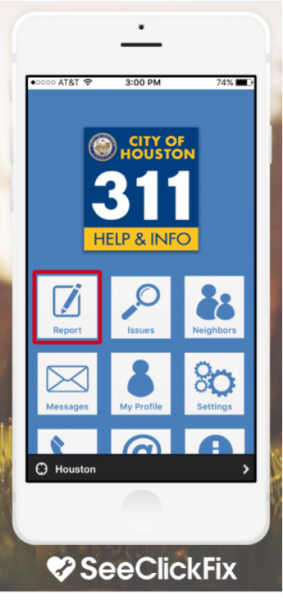
In the aftermath of Hurricane Harvey, the efforts with Houston instantly intensified.  Berkowitz said SeeClickFix has worked with the city of Houston and several of its neighboring suburbs since 2009, handling an estimated 30,000 residents.  Those numbers will likely jump when the totals for 2017 are tallied.  Berkowitz told CTNewsJunkie that will be especially true in the coming weeks as operations shift from emergency calls handled by police and other emergency personnel to calls that are SeeClickFix specialties, such as power outages, downed trees and other types of “more routine” assistance.
In Florida, St. Petersburg is among the 10 communities with SeeClickFix in operation, and the site is filled with reports of downed trees, storm debris, broken water mains, non-working street lights, and other hazards, with many accompanied by photos illustrating the danger or dilemma.  Other communities include Pinellas County (which includes Clearwater), Seminole, Gainsville, and Venice, which signed on a year ago.

The company’s website continues to proudly boast “Made in New Haven” and Berkowitz’ company profile explains “The inspiration for SeeClickFix came from a desire to improve his own community with his neighbors and his government.”

Even before the hurricane in Houston this year, the company's growth has continued, with the first city in Kentucky signing on recently, and communities in Georgia and Michigan also added.  A workshop, with municipal attendees from more than 80 communities, was held in Detroit.  Next, a SeeClickFix User Summit is scheduled for September 13 & 14 in New Haven.

Fast Company summed up “50 projects that are really making America great again” noting that “Change doesn’t have to happen from the top down” as the publication highlights “some of the most promising projects, initiatives, and companies that are springing up in every state of the union. Together, they present a portrait of the country today—its concerns and responses, and its enduring capacity for progress.”




State’s Money Woes Earn National Spotlight

The cover of the national magazine depicts a waterfront home in Mystic Seaport, under the headline that reads “The fiscal mess in America’s richest state.”  Connecticut, without an approved state budget for all of July and August and nearly half of September, is earning some notice.  And it is not particularly friendly. The article, in the September issue of Governing, begins with the question, “How could the nation’s wealthiest state become a fiscal basket case?”  The answer is complex, and the magazine devotes a full six pages to walking through how the state got into this mess, and how it might navigate its way out.

Along the way, the magazine suggest that the state “may be too rich for its own good,” pointing out that “long blessed with a disproportionate number of high-income residents, the state has entertained lavish spending habits for decades.” It also cites statistics that underscore the problems and challenges:

  • Over the past 20 years, job creation numbers have ranked in the bottom five among the 50 states
  • Connecticut has the nation’s second-highest rate of income inequality, after New York
  • The state has lost population for three years running
  • Last year, Greater Hartford ranked fourth and New Haven fifth in population loss among the nation’s 100 largest metro areas

The ineffective state spending cap, approved by voters more than 20 years ago but routinely circumvented since, is cited as a contributor to the fiscal cliff the state sits on, along with an overreliance on the income tax, political infighting, increased taxes, the lack of regionalism and a host of other decisions made by Governors and legislatures for decades.

One glaring example cited:  “Connecticut, which is home to 3.6 million people, has 111 police dispatch centers.  By comparison, Houston, which as 2.3 million residents, has just one emergency dispatch center, which handles fire as well as police.”

With a circulation of 85,000 in print and a widely viewed website, Governing is described as "the nation's leading media platform covering politics, policy and management for state and local government leaders." It is among the most widely read and most influential among government leaders - with an audience that also includes "journalists, academics, advocates and activists."

The article did point to some silver linings, past and present.  “Connecticut clearly has the means to change course. Not only is its median income still high, but the state boasts assets such as proximity to Boston and New York, amiable coastlines and river valleys, and notable institutions of higher education.  In addition to the continuing presence of a thriving financial sector, Connecticut is home to aerospace and defense contractors and other advanced manufacturers who can’t hire help fast enough, as well as a growing medical and life sciences sector.”

On the other hand, the publication points out, “Connecticut is 80 percent white, but its population of white children under the age of 10 is falling faster than in any other state.  Racial and ethnic minorities already make up more than 50 percent of infants and toddlers and are about to become a majority of 3- and 4-year olds.”  There is, the publication adds, “a pronounced achievement gap among racial groups and by geography.”

The conclusion reached by the Governing article?  “Connecticut is not in a death spiral but it has failed to position itself to react to changing demographics and location preferences… it’s clear that what’s worked so well for Connecticut in the past isn’t working now.”

Summed up House Speaker Joe Aresimowicz, one of many political leaders, including the Governor and legislators from both political parties, as well as city officials and economic analysts, who were interviewed for the article: “We are the land of steady habits and the world has changed around us.”

How Connected is Connecticut? State Ranks 6th in the USA

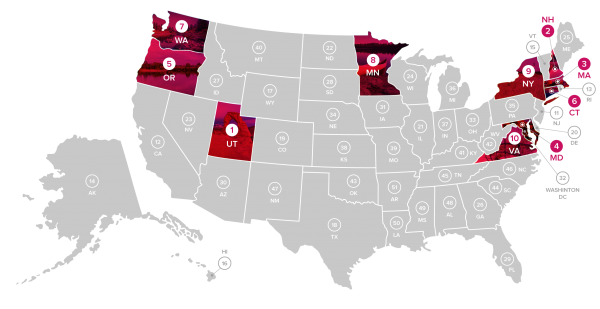
Internet access is as good in Connecticut as just about anywhere else in the country.  A new report on the Top Connected States in America ranks Connecticut as the 6th most connected state in the nation. The analysis, by USDish.com, found that the top 10 states showing excellent connectivity to broadband all value connecting rural citizens to the resources they need to succeed economically, both in school and at work. “Overall we found that the most important factor in these states’ ability to connect rural citizens to the internet were the use of government funded broadband task forces, infrastructure maintenance, and local support. The states that listened to the community were more likely to connect them to proper resources and economic growth flourished.”

While Connecticut ranked 6th overall, the state’s ranking varied in each of the categories of the analysis:  Connecticut ranked 10th in Access, 1st in Rural Access, 12th in Speed, and 21st in Support (by government).

Analysts compiled and ranked the report using data from the American Community Survey, conducted by the U.S. Census Bureau, the EducationSuperHighway non-profit, Fastmetrics, the National Conference of State Legislatures (NCSL) and the Institute for Local Self-Reliance.

Connecticut ranked 10th in Access, 1st in Rural Access, 12th in Speed, and 21st in Support.  The top five states for Rural Access were all in the Northeast – Connecticut, Massachusetts, New Hampshire, New Jersey, and Rhode Island. “Perhaps the emphasis on education and communication makes it easier to access the internet as a student, even in a rural area like Connecticut,” the analysis stated.

The analysis points out that a main reason why people don’t have access to broadband internet is due to a lack of income. Cited is a Pew Research poll that found 23 percent of people making under $30,000 per year don’t use the internet, possibly because of the high price for something they don’t consider a basic need. Most rural schools across the country still lack access to fiber and pay more than twice as much for bandwidth.

In contrast, Minnesota, New Hampshire, Oregon, and Maryland all have state government broadband task forces which promote the expansion of internet access throughout their rural areas, the analysis points out.

For internet access per state, the USDish team analyzed the percentage of school districts meeting a minimum of 100 Kbps per student.  They also examined the percentage of those with an internet subscription, and the total percentage of users with any access to the internet at all, be it in the form of a community library, town hall, or school.

Speed was analyzed by the average Mbps per state, and they evaluated states on whether they had a stimulus project, broadband task force, or whether the state had barriers preventing them from expanding the connectivity of those living in the area (i.e. laws, infrastructure support, prohibitions, etc.). As for rural area access, data on the number of households that had broadband internet in both urban and rural areas was used.  USDish.com is an authorized retailer of DISH Network.

National Immunization Month Concludes as School Year Begins

National Immunization Awareness Month (NIAM) is an annual observance held in August to highlight the importance of vaccination for people of all ages, and communities throughout Connecticut are responding with local initiatives aimed at increasing public awareness and understanding. NIAM was established to encourage people of all ages to make sure they are up to date on the vaccines recommended for them. Communities nationwide – including in Connecticut - have continued to use the month each year to raise awareness about the important role vaccines play in preventing serious, sometimes deadly, diseases.

NPHIC, in collaboration with CDC’s National Center for Immunization and Respiratory Diseases, developed information focusing on various age populations, including Babies and young children (July 31-August 6); Pregnant women (August 7-13); Adults (August 14-20); Preteen/Teen (August 21-27); Back to School (July/August).

Among the Connecticut communities participating through the end of the month are Bridgeport, Danbury, Hartford, Naugatuck Valley, New Britain, New Haven, Norwalk, Stamford, Torrington, Waterbury and West Haven.  In West Haven on Thursday, for example, there will be an information table at the West Haven Farmer’s Market.  That same day in New Haven, immunization coordinators will be on hand at the New Haven Health Department offices. Other communities have been utilizing social media, meeting with parents and students to assist with immunization information at the start of the school year, providing explanatory materials and making health department staff available for public information sessions.

The Connecticut Department of Public Health (DPH) explains that most vaccine-preventable diseases are caused by germs that are called viruses or bacteria. Vaccines to help prevent these diseases generally contain weakened or killed viruses or bacteria specific to the disease. Vaccines help your body recognize and fight these germs and protect you each time you come in contact with someone who is sick with any of these diseases.

There are a series of steps that your body goes through to develop immunity through vaccination, the DPH website explains:

  • a vaccine is given by a shot (influenza vaccine may be given by a nasal spray and rotavirus vaccine is given by mouth).
  • over the next few weeks your body makes antibodies and memory cells against the weakened or dead germs in the vaccine.
  • the antibodies can fight the real disease germs if you are exposed to the germs and they invade your body. The antibodies will help destroy the germs and you will not become ill.
  • antibodies and memory cells stay on guard in your body for years after vaccination to safeguard you from the real disease germs.

The Connecticut Vaccine Program is Connecticut’s childhood vaccination program. It ensures all children in the state get the vaccinations they need, when they need them, to stay healthy. The state buys vaccine at the lowest possible price through a government contract, and gives the vaccines at no cost to clinics, private doctors, and other health care providers. These providers then vaccinate children without charging patients for the cost of the vaccine (health care providers may still charge an administration fee). Without this program, some insurance companies may not cover the full cost of vaccine, making it too expensive for some families.  There are hundreds of health care providers enrolled in the Connecticut Vaccine Program (CVP) throughout the state, according to the department.

Most vaccines are given to babies and young children, DPH points out, but “some are needed throughout your lifetime to make sure you stay protected. This protection is called immunity. Vaccines are an important and safe way to keep you healthy.”

Former CT Sportscaster Handling Weather Reporting Duties During Hurricane in Houston

Khambrel Marshall, who once delivered the evening sports news on Hartford’s Channel 3, has accomplished the rare broadcast trifecta – he has been a sports anchor, news anchor, and weather reporter during his career – all in some of the nation’s largest media markets.  It is a career with heightened visibility in recent days, as a Hurricane Harvey barrelled in on Houston, where Marshall is an on-air member of the NBC affiliate’s “Severe Weather” team, as well as the host of a weekly public affairs program on KPRC-TV. Joining the WFSB sports team in 1980 at age 27, Marshall spend five years at channel 3, moving from the nation’s number 23 TV market to number 13 when he relocated to Miami in 1985.  At the time, he became the first black sports anchor in South Florida, according to published reports.  He had received his broadcasting degree from Arizona State University while working in his first job in television as weekend sports anchor in Phoenix, prior to arriving in Hartford. He remained in sports until news captured his attention while he was sports director in Miami and was called upon to anchor during Hurricane Andrew.

In a 1980 interview published in Hartford Sports Extra, Marshall said “I’m an honest person.  And I have a great rapport with people.”  That has been evident at each stop in his career, because, Marshall explained three decades ago, “I like to rub elbows. I really like to meet the folks.”  He was one of 12 recipients to receive the National Community Service Award from the Westinghouse Corporation and was named "Outstanding Young Floridian" by the Fort Lauderdale Jaycees for his humanitarian efforts in the wake of Hurricane Andrew.

Marshall later joined KPRC in Houston in 1999 as a news anchor after 13 years in Miami.  He left the air in 2006 to accept a producer's position.  He then returned as a member of the station’s "Severe Weather Team."  He also airs a weekly public affairs program, Houston Newsmakers, that airs on Sunday mornings, just after Meet the Press.   He is approaching his 2oth anniversary at the Texas station, just a couple of years away.

A self-proclaimed "weather geek" since high school, he earned his Broadcast Meteorology Certification from Mississippi State University – after his broadcasting career was already underway.  Living through and reporting on Hurricane Andrew solidified his thirst for meteorological knowledge, specifically tropical weather phenomena.   It is an interest, and experience, that has been on display over the weekend in Houston.

Among his numerous honors is one of broadcasting's top awards, the Emmy, for a feature series titled "Guardians at Sea," chronicling the efforts of the U.S. Coast Guard to rescue Cuban and Haitian refugees crossing the Florida Straits.

He almost came to Hartford two years earlier, after the president of Post Newsweek, then the owner of WFSB, saw him on the air in Phoenix.  The station’s news director got in touch.

“He said the president of Post Newsweek stations saw in Phoenix for a convention or something, saw me on the air, and would like me for the Hartford station.”  Marshall recalled that although he liked Hartford, he decided to stay in Phoenix.  Two years later, after a brief stint in Detroit, Marshall and Hartford connected as he became the sportscaster on the 11 PM newscast, joining a team led by veteran sportscaster Dave Smith.

Marshall has made his mark supporting local nonprofit organizations in addition to his on-air work.  He supports Big Brothers Big Sisters, and was March of Dimes Texas Communications volunteer of the year twice.  He is a past Chairman of the Executive Committee of Big Brothers Big Sisters of Southeast Texas, and recent board member of Collaborative for Children.  In addition, he is a Senior Fellow in the "American Leadership Forum: Houston/Gulf Coast Chapter." The intense ALF one-year program is designed to join and strengthen diverse leaders in the community to better serve the public good.  Marshall was married in 1979 – just months before landing at WFSB in Hartford - to his wife Debbie, and they have two daughters.


Stamford Taking Strides to Respond to Student Mental Health Concerns; Research Recommendations Lead to Progress

Stamford Public Schools, acting on recommendations developed by the Child Health and Development Institute of Connecticut (CHDI), is making strides in addressing students mental health needs that may provide effective approaches for schools systems in Connecticut and nationwide that are looking to better address mental health issues, especially in light of increased public attention on issues from suicide prevention to trauma response. “While appreciating that the schools’ primary role is to educate children, many districts such as Stamford are increasingly seeking ways to address behavioral health concerns as an important way of supporting academic achievement, school climate and overall well-being,” said Dr. Jeana Bracey, Director of School Community Initiatives at CHDI.

Results reported in an Issue Brief published by CHDI highlight some of the measurable “improved outcomes” in Stamford Public Schools following an intensive study and systemic recommendations for what is described as a “trauma-informed model for school mental health”:

  • Data from 76 Stamford students who completed specific programs in FY 17 and 31 students in FY 16, showed significant reductions in PTSD symptoms and problem severity symptoms.
  • Feedback from parents and teachers indicate a decrease in the severity of behavioral concerns in the classrooms and at home.
  • School personnel report important changes in culture and climate that reflect an understanding of trauma, how it impacts students, and how to better address students’ needs using supportive and restorative approaches, rather than punitive measures.

The review of Stamford’s mental health services and supports for K-12 students, initiated in 2014   following a series of student suicides and an increase in the number of students experiencing suicidal thoughts and hospitalization, included an examination of the behavioral health needs of students, as well as the districts’ strengths and areas of concern in addressing these needs.  The process included focus groups and interviews and led to recommendations for improving Stamford’s school-based and school-linked mental health services and supports in four priority areas initially:

  • Ensuring Sufficient Clinical Staff Capacity
  • Providing Professional Development in Mental Health
  • Engaging in Mental Health Planning and Oversight
  • Promoting Data Collection and Evaluation

In the 2 ½ years since CHDI began to work with Stamford, the local school district has expanded the number of evidence-based services for students from zero to four, implemented district-wide trauma and behavioral health training and supports for staff, and collaborated to build internal capacity and integrate community and state resources and services for students.

Overall, officials report positive feedback from parents, teachers and other school personnel to the changes, and their impact on students and the school communities.

The Issue Brief notes that “Lessons learned in Stamford can help guide other districts seeking to improve their mental health services and supports.”  Among the recommendations to achieve a system “that is more responsive to the needs of their students,” are a commitment from district administrators and school board members, a comprehensive needs assessment, an examination of public and private funding sources, a blending of school-based and community-based services, establishment of peer groups to support mental health staff, and creating small pilot projects that would provide information that would inform subsequent efforts.

In Stamford, CHDI assisted in training school social workers and psychologists to deliver Cognitive Behavioral Intervention for Trauma in Schools (CBITS), a school-based group intervention for grades 5-12, and its counterpart for younger elementary school children, Bounceback.  CBITS began in July 2015 and has been used in 46 schools across the state, reaching more than 800 students.  The results in Stamford mirrored those in other communities utilizing the approach; it has been shown to reduce PTSD and depression symptoms and psychosocial dysfunction in children who have experienced trauma.

Significantly, of the children who likely met the criteria for PTSD prior to treatment, approximately half of them no longer met the criteria for PTSD after 10 sessions of CBITS/Bounce Back.

The Child Health and Development Institute (CHDI)’s goal is to improve the health and well-being of Connecticut’s children by building stronger and more effective health and mental health systems that result in better outcomes for all children in Connecticut, especially the underserved.  The organization pursues these objectives with research, evaluation, training and technical assistance and support for demonstration projects that inform system change.

CT Educator Named to Key Post in International Dyslexia Organization

The International Dyslexia Association (IDA) has named Fairfield University’s director of Reading and Language Development, Jule McCombes-Tolis, PhD, as the organization’s new chief academic officer for Educator Training Initiatives.  McCombes-Tolis will continue to serve as director of the Reading and Language Development program at Fairfield as she takes on new responsibilities with the IDA. The mission of the IDA is to support individuals who struggle with dyslexia and other related reading differences around the world. The 63-year-old organization provides current and reliable research to educate families and professionals about dyslexia, and to identify policy changes needed to deliver effective instruction to all students. 

Dr. McCombes-Tolis has been an advocate for student literacy growth throughout her career, including faculty positions at University of Saint Joseph (USJ) and Fairfield University. In addition to holding credentials in both special education and remedial reading, she has served families and school districts across the state of Connecticut - from Bloomfield to Norwalk - as an independent educational evaluator specializing in the identification and remediation of reading disorders. That dual expertise is essential, she explained, as she helps special and general education teachers better understand the literacy needs of diverse student populations.

“IDA’s Educator Training Initiative strives to ensure that all students have access to classroom teachers who are knowledgeable about the principles and practices of structured literacy, and that students who require additional practice — or who require individualized remediation — have access to nationally credentialed specialists who have proven, through their supervised clinical training experiences, that they are able to positively and meaningfully impact students’ reading outcomes," said Dr. McCombes-Tolis.

The National Institutes of Health estimates that between six to 17 percent of school-age children have some form of dyslexia, although not all of those students have been identified by their schools.

"Dr. McCombes-Tolis brings not only her significant expertise, but also her visible passion for assuring that teachers across our country and globally have better tools to recognize, understand, and reach students with dyslexia and other reading differences," said Rick Smith, chief executive officer of the IDA.

With academic degrees from the University of Connecticut (Ph.D.) and Southern Connecticut State University (Sixth-Year Degree) and university teaching experience at USJ prior to joining the faculty at Fairfield, McCombes-Tolis has provided expert testimony at the State Capitol, collaborating with the Commission on Children to advocate for policy geared toward reducing the achievement gap, and has served on several key state advisory panels.

In a previous interview, she emphasized, “all of my professional endeavors are focused on helping to ensure that future and current educators are provided with the necessary training and supports to serve the ever-changing needs of children, their families, and their communities.”

Recently, McCombes-Tolis partnered with Norwalk’s Superintendent of Schools (and former Hartford Superintendant) Steven Adamowski on a grant to develop a summer dyslexia training program in an effort to help the district meet their teacher training and student intervention needs in the area of dyslexia. The first cohort of six Brookside Elementary School teachers is receiving training needed to earn certifications with the IDA as dyslexia practitioners.  The educators are serving 12 students this summer and will continue to work with them over the course of the next school year. In addition, five Norwalk school psychologists will receive training by Fairfield University in how to diagnose dyslexia.

Earlier this month, Dr. McCombes-Tolis presented Fairfield University’s new Remedial Reading and Remedial Language Arts Certification program to the Connecticut State Board of Education, which received unanimous approval to award the certification as a stand-alone endorsement, and in the context of both a master’s degree and a sixth-year certificate.