The Difference A Dollar Makes: UConn Research Finds Minimum Wage Increase Reduces Maltreatment of Children

It has been nearly a year since a study co-authored by UConn Assistant Professor of Public Policy Kerri M. Raissian appeared in the academic journal Children and Youth Services Review, but the interest hasn’t waned.  In fact, it now tops the list of downloaded articles in the past 90 days from the journal’s website. The article, which Raissian co-authored with Lindsey Rose Bullinger, asks – and answers – this question:  Does the minimum wage affect child maltreatment rates?

Short answer, according to their research:  yes. 

Raising the minimum wage by $1 per hour would result in a substantial decrease in the number of reported cases of child neglect, according to a study co-authored by Raissian and Bullinger.  They reviewed eleven years of records on child abuse and neglect and found that increases in the minimum wage correlate with declining child maltreatment rates.

A $1 increase would result in 9,700 (9.6 percent) fewer reported cases of child neglect annually as well as a likely decrease in cases of physical abuse, Bullinger explained on the website sciencedaily.com, where their study was featured earlier this year. This decline is concentrated among young children (ages 0–5) and school-aged children (ages 6–12); the effect diminishes among adolescents and is not significant, the study’s abstract points out.

“Our results suggest that policies that increase incomes of the working poor can improve children's welfare, especially younger children, quite substantially,” the authors conclude in their 70-page article on the study.

"Money matters," Bullinger noted on sciencedaily.com. "When caregivers have more disposable income, they're better able to provide a child's basic needs such as clothing, food, medical care and a safe home. Policies that increase the income of the working poor can improve children's welfare, especially younger children, quite substantially."

More than 30 states had minimum wages exceeding the federal requirement by an average of $1 during the study period, allowing the researchers to track changes in the number of reports to child protective service agencies with increases in the minimum wage.  Data from the National Child Abuse and Neglect Data System was used in the research.

The substantial decrease in child neglect cases is concentrated among toddlers and school-age children, but changes in the minimum wage had little impact on reports of neglect of teenagers. The researchers found no variation based on a child's race.

“Families with low incomes have a great ability to make a dollar go a long way. On average, the weekly SNAP (Supplemental Nutrition Assistance Program) food stamp benefit for a family of three is about $30. That’s about what a one dollar an hour minimum wage increase translates into for full-time workers. Other studies show that a $1,000 tax refund results in similar declines in child maltreatment – neglect, specifically. So for really low-income families that probably have pretty severe material deprivation or economic hardship, that extra dollar can make a really big difference,” Raissian told UConn Today.

Raissian’s research interests are linked by a common focus on child and family policy, according to the university’s website.  Her dissertation, “Assessing the Role and Impact of Public Policy on Child and Family Violence,” evaluated the efficacy of policies designed to reduce violence directed towards intimate partners, children, and other family members. Her professional background includes nearly 10 years of government and nonprofit sector experience, which focused on serving abused adults and children.

Bullinger is associate instructor in the school of public and environmental affairs at Indiana University at Bloomington.  Both attended Syracuse University’s Maxwell School of Citizenship and Public Affairs.

“Most of the states don’t have a minimum wage at or above $10; Connecticut does. It’s possible Connecticut may be at the threshold,” Raissian said in an interview featured in UConn Today. “It’s also really important to note that, while our study looks at the minimum wage, this could really be an income story – remember other studies find similar results when incomes are increased in other ways. Our very low-income families might be facing other reductions in their incomes that will be costly to us as a state. We should consider that, moving forward.”
 

Local Museums, CRIS Radio, Collaborate to Bring Audio Narration to the Art

CRIS Radio and the New Britain Museum of American Art (NBMAA) are working together to offer CRISAccess™ at the museum, which offers instant, on-demand audio descriptions of selected masterpieces on display by using a personal smartphone and QR Code reader.  The new initiative launched earlier this month. The goal of CRIS Radio and NBMAA’s collaboration is to provide its museum visitors with disabilities the same experience and access enjoyed by their friends, classmates and family, officials explained.

CRIS (Connecticut Radio Information System) is a 39-year-old nonprofit and is Connecticut’s only radio-reading service, providing audio access 24/7 to news and information for people who are blind or print-challenged, including those unable to read due to a medical condition/treatment, physical, learning, intellectual or emotional disabilities.

The New Britain Museum of American Art’s founding in 1903 entitles the institution to be designated the first museum of strictly American art in the country. The singular focus on American art and its panoramic view of American artistic achievement make the NBMAA a significant teaching resource available to the local, regional, and national public.

CRIS Radio is integrating QR Code technology to instantly “link and play” audio files of information posted on signs or other printed materials for people who are blind or print-handicapped. Visitors can access the audio files with any mobile device downloaded with a QR Code Reader application.

CRISAccess™ is part of CRIS Radio’s new Adaptive Audio Accessibility services initiative that promotes access to information at museums for people who have difficulty reading posted signs. The audio displays are triggered by QR code (Quick Response Codes) apps downloaded onto smartphones. A patron simply captures the QR code with the camera phone. The QR code apps are available for download on most online app stores, like Apple or Google.

Michelle Hargrave, Deputy Director at the NBMAA, said, "The New Britain Museum of American Art is thrilled to partner with CRIS Radio in this endeavor to bring greater accessibility to the institution. The Museum is committed to being a welcoming, dynamic, distinguished, and educationally ambitious art museum, and we are very excited that this opportunity will open our galleries to a broader audience."


CRIS Radio’s state-of-the art broadcast center is headquartered in Windsor, where numerous audio recordings are produced. CRIS also operates regional studios located in Danbury, Norwalk, Norwich, Trumbull, and West Haven.

National studies report that only 11 percent of people with disabilities visit museums. The collaboration between the two nonprofits provide a low-cost and simple approach to enhance the visitor experience for people with visual or other print disabilities. CRIS Radio based its CRISAccess program on the recommendations of a focus group comprised of people with visual disabilities convened by the Smithsonian.

CRIS has already been working with leading museums in the state and region, with more to come.  Plans are underway to add the Mark Twain House & Museum to the QR code portfolio. Those already up and running include:

The recently re-opened Jonathon's Playground, in Bloomfield, is the first outdoor venue to use the technology.  CRIS provided audio descriptions of the playground equipment.

The core of CRIS services is the daily recording of articles featured in more than 70 newspapers and magazines, including the most extensive line-up in the nation of award-winning children’s magazines featuring human narration, all available online and on demand.

CRIS also provides streaming CRIS programs directly to hospitals and other health care facilities through their in-house systems, or through Internet radios installed at assisted living facilities or nursing homes.

The Connecticut Valley Tobacco Museum also recently launched special digital audio guides for the sight impaired, or for patrons who have reading difficulties, as part of the CRIS museum initiative.  The project was funded by the Windsor Lions Club, with the assistance from the Connecticut Radio Information System (CRIS).

Programs powered by CRIS Radio include: CRIS Radio; CRIS Listen Now (online streaming); CRIS Listen On Demand; CRISKids™ and CRISKids™ for Schools;  CRISAccess™ (for museums); and CRIS En Español (featuring Spanish-language newspapers and magazines). CRISKids and CRISKids for Schools offer teachers a low-cost tool to help improve student literacy and reading ability.

CRIS employs a staff of four full-time and three part-time people. Operations rely on approximately 300 volunteers statewide to help with the production, programming and the day-to-day operations of CRIS.

PHOTO:  At left, Michelle Hargrave, deputy director of the New Britain Museum of American Art, watches as Diane Weaver Dunne, executive director of CRIS Radio, demonstrates CRISAccess, which provides audible information about selected masterpieces on display at the New Britain Museum of American Art.

Feds Urged to Complete Study Assessing Safety of Crumb Rubber Playing Fields, Playgrounds

If at first you don’t succeed, try, try again.  That’s not only a well-worn adage from youth, it is apparently the game plan for Connecticut U.S. Sen. Richard Blumenthal and his multi-year quest for a comprehensive federal study of the health risks of crumb rubber turf, a surface made of recycled tires that is widely used on playgrounds and athletics fields in Connecticut and nationwide. Blumenthal, along with colleagues in the Senate, are this week urging a federal task force to finish a long-overdue study into potential health risks.  The crumb rubber used in artificial turf fields is mainly composed of recycled tires, which contain man-made and natural rubber, according to the state Department of Public Health.  Chemicals called polycyclic aromatic hydrocarbons (PAHs) and volatile organic compounds (VOCs) can be found in the crumb rubber.  Crumb rubber can also contain heavy metals such as zinc and copper.

After a year and a half, WTNH-TV reported, the Senators are convinced progress on a comprehensive federal study has stalled.

It isn’t the first time that Blumenthal has been a lead voice to prompt action.  In November 2015 Blumenthal and Senate colleague Bill Nelson of Florida urged the Consumer Product Safety Commission to conduct a study.  In March 2016, Blumenthal was among those urging Congress and the President to allocate sufficient funds to conduct the study.  “Parents deserve to know if there is a danger to their children playing on these fields,” he said that month at a news conference held at Yale University.

A synthetic turf study was undertaken in 2016 by four United States agencies  — EPA, Consumer Products Safety Commission, the Centers for Disease Control and Prevention/Agency for Toxic Substances and Disease Registry — which has yet to be finalized.

With it’s completion in doubt, Blumenthal is highlighting the imperative to get scientific answers to guide communities that are considering how best to replace natural grass or other types of field surfaces.  It is estimated that there are more than 10,000 artificial-turf surfaces in use across the country.

Earlier this year, plans for a crumb rubber synthetic turf field in North Haven brought local opposition. The town decided to go forward with the less controversial encapsulated crumb-rubber infill over the traditional crumb rubber option, according to an article on the controversy published this month in The Atlantic.

Last year, Hamden opted not to go ahead with plans for crumb rubber, switching to a mix of cork shavings and coconut husk, called “GeoFill,” along with a “shock pad” in response to safety concerns. Bloomfield High School installed a synthetic turf field, South Windsor decided to use acrylic-coated sand instead of crumb rubber.  Madison and Guilford are also among the communities with crumb rubber surfaces for fields or playgrounds, according to published reports.

Testifying at the Connecticut State Capitol earlier this year, medical staff from the Children’s Environmental Health Center at the Icahn School of Medicine at Mount Sinai in New York City, urged that “Until the findings of these studies are available and conclusively demonstrate the safety of recycled rubber playground surfaces, we recommend a ban on the use of these materials where children play.”

Legislation that would have prohibited the installation of ground cover that contains shredded or ground rubber recycled from motor vehicle tires in municipal and public school playgrounds in Connecticut was approved by two legislative committees (Committee on Children, Committee on Planning & Development) in March, but the proposal was not considered by the full legislature in the session that concluded in June.

Blumenthal first became concerned about the artificial surface when his children were playing on the crumb-rubber athletic fields.  “I became concerned as a parent, as much as a public official, ten years ago, and at first was somewhat skeptical, but now very firmly believe that we need an authoritative, real study about what’s in these fields,” Blumenthal told ABC News two years ago.

The state Department of Public Health (DPH) website points out that “the advantages of these fields include less maintenance costs, ability to withstand intense use and no need for pesticides.”  To address public safety concerns, four Connecticut state agencies collaborated in 2010 to evaluate the potential exposures and risks from athletic use of artificial turf fields, the DPH website explains.

A two year investigation of releases from five fields during active play was conducted by the Connecticut departments of Public Health, Energy and Environmental Protection, University of Connecticut Health Center, and The Connecticut Agricultural Experiment Station. The study was peer-reviewed by the Connecticut Academy of Science and Engineering.

The overall conclusion of the report, according to the DPH website, is that “use of outdoor artificial turf fields does not represent a significant health risk.”  A news release issued by the department did note “higher contaminant levels at one indoor field indicate that ventilation of indoor fields should be considered.  Storm water run off findings indicate that proper management of this run off is prudent to address possible environmental effects.”


New Wallingford Rail Station Opens Ahead of Next Year's Hartford Line Expansion

The next step in the development of the Hartford line, which will significantly expand daily passenger rail service between New Haven and Springfield, takes place on Monday with the opening of a newly constructed passenger station in Wallingford. The Connecticut Department of Transportation (DOT) will officially open the new CTrail Hartford Line Wallingford Station to the public on Monday afternoon. The new station is located at 343 North Cherry Street, approximately one mile north of the existing station.

It will be opening in advance of the May 2018 launch of CTrail Hartford Line passenger rail service. Gov. Malloy and state officials announced last month that a one-way trip between Hartford and New Haven will run $8 when the expanded commuter service gets underway next spring. A trip along the entire length of the rail line — Springfield to New Haven — will cost $12.75.

The Wallingford station features amenities “aimed at providing a high-quality passenger experience,” officials point out, including high-level platforms on both sides of the track as well as elevators, stairways with an overhead pedestrian bridge to cross the tracks, and canopies covering approximately 50 percent of the platform length. There will be parking for approximately 221 vehicles in two surface parking lots at the station. There is also a passenger information display system, security cameras, electric vehicle charging, and bicycle racks. Limited seating on the platform is also available.

Construction began in December 2014 and cost approximately $21 million.  New rail stations in Meriden and Berlin are under construction, and are expected to come on line prior to the launch of the expanded passenger service in the spring. DOT officials have previously indicated that all stations will be compliant with the Americans with Disabilities Act, and none of the stations will have bathrooms.

Once underway, the new daily service will mean that from New Haven to Hartford, trains will increase from six to 17 per day. Between Hartford and Springfield, trains will increase from six to 12 per day. A new station in North Haven station is currently being designed, and is not due to be built and open until 2020. Stations in Enfield, Newington, West Hartford, Windsor and Windsor Locks stations are also part of the Hartford Line plans. Trains will arrive at stations in New Haven, Wallingford, Meriden, Berlin and Hartford every 45 minutes during peak hours and every 60 to 90 minutes during off-peak periods.

The DOT is accepting comments on the new fares through Nov. 27 by email (dot.hartfordlinecomments@ct.gov) or mail.  In addition, there will be three public comment forums: at 5 p.m. on Nov. 13 at the New Haven Hall of Records; 4 p.m. on Nov. 14 at Capital Community College in Hartford; and 5:30 p.m. on Nov. 15 at the Pioneer Valley Planning Commission in Springfield.

There is more than a rail station at work in Wallingford.  The town has completed a Transit-Oriented-Development (TOD) Plan that features shifting existing industrial development to the north, freeing up space for mixed-use and retail development in Downtown, officials said. The existing Parker Place apartment complex near the station offers a precedent for TOD and is expanding 200 units. The Town is also making efforts to encourage and support TOD by creating a new Town Center zoning district and reducing off street parking requirements. Transit-Oriented-Development refers to a high density, pedestrian oriented, mixed-use development located within a short walk of transit stations. TOD plans are also anticipated at the other stations along the Hartford line.


Longstanding Coverage of State Government to End; Drastic Reduction in Funding, Imposition of Content Limitations Cited

CT-N, which has provided coverage of State Senate and House sessions and all three branches of state government for nearly two decades, will cease operations on Friday, November 3, due to severe budget cuts and limitations on coverage being imposed by the legislature on the network’s operator, the Connecticut Public Affairs Network (CPAN). CPAN has operated the network, under a series of contracts with the legislature’s Joint Committee on Legislative Management (OLM), since March, 1999, and was among the first in the nation to provide comprehensive coverage of state government.

“CPAN was created with a nonpartisan, educational mission to run CT-N as a three- branches network, at arm’s length from the government,” CPAN Executive Director Paul Giguere wrote in a letter notifying the non-partisan OLM that CPAN would be ending coverage. “It was a mission and purpose once supported by the Leadership of the General Assembly. Even the state statute governing CT-N’s revenue intercept refers broadly to coverage of ‘state government deliberations and public policy events.’ The thinking has clearly changed.”

At least one of those contracts, covering November 2003 - October 2006, clearly delineates that CPAN’s operation of CT-N would provide coverage of “the legislature, events of public interest in the Executive and Judicial Branches and other events of statewide interest.”  That contract also indicates that “many of the executive branch events to be covered will be taking place at locations away from the Capitol Complex.”  A subsequent contract, which ran through last year, also stated that “CPAN retains full editorial discretion regarding day-to-day programming.”  CT-N broadcasts seven days a week, 24 hours a day.

CPAN’s most recent contact expired in September, was extended through October, and was on a day-by-day basis this week. The 33-person staff worked with an annual operating budget that was unexpectedly reduced by 65 percent in the budget approved by the legislature this week for the current fiscal year.  At the same time, the legislature sought reductions in coverage of state government outside the State Capitol, limitations on editorial content decisions, and cutbacks on public affairs programming.  Those changes, which were revealed in the RFP for a new five-year in April, drew sharp criticism at that time, which were renewed this week.
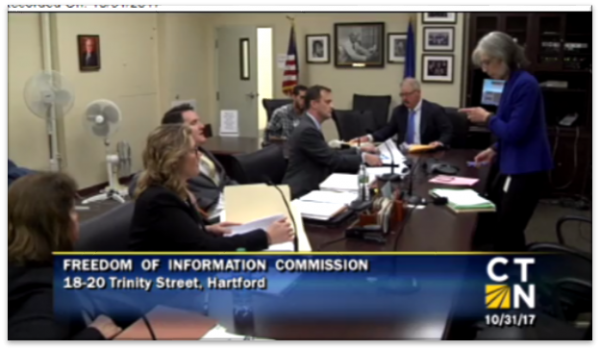
“For some time now, we have contended with encroachments on our editorial independence, despite our best efforts to be responsive to concerns while continually working to improve the CT-N service and over-delivering on every contract we have ever signed,” Giguere wrote.

The National Alliance of Public Affairs Networks (NAPAN), points out that while many variations exist in programming and operating models among state public affairs networks, a series of “Best Practices” can be drawn from “the most effective strategies used by highly regarded networks across the country.”

NAPAN points out that “citizens’ trust in all three branches of government is at all-time lows,” and “while the judicial, executive and legislative branches actively operate in states daily, the understanding of what and how decisions are being made at the highest levels go largely unreported and consequently unnoticed by the general public.”  CT-N coverage was available on television and on-line, both live and in archives that are easily accessible to the public.  CPAN also has provided educational materials for classroom teachers and the general public.

In his letter, Giguere, who brought the concept for such a network to the Connecticut legislature in the 1990’s and led its launch and development, said “the scope at which we would be obliged to operate CT-N would cease to provide any meaningful level of transparency:  even less so, if the few coverage decisions we would have the opportunity to make were controlled by the CGA (Connecticut General Assembly) to the extent that recent events convince us they would be.”  He continued:  “at best, CT-N would provide the façade of transparency, cloaked – at least temporarily – in the credibility and reputation that CPAN has spent 18 years building.  We will not abet that course of action by the CGA by participating in it.”

In recent days, CT-N has provided coverage of Gov. Malloy’s news conference announcing he had signed the state budget into law, a news briefing on state infrastructure and resiliency improvements since Super Storm Sandy, meetings of the Connecticut Board of Firearms Permit Examiners and the Governor’s Nonprofit Health & Human Services Cabinet, and a hearing by the legislature’s Judiciary Committee considering nominations of individuals to serve on the State Supreme Court and Appellate Court.

Earlier this year, Danbury State Rep. Bob Godfrey cited the role of CT-N in providing the public with access to government, noting that "The General Assembly itself has provided more public access to lawmaking through both our web site (www.cga.ct.gov) and the Connecticut Television Network (CT-N, at www.ct-n.com)."

-----

Five best practices for state public affairs networks are described on the NAPAN website:

1. Accessible to All: 24/7 programs on a dedicated channel across multiple platforms

A state public affairs network is most effective in connecting citizens to state government when it is available full-time to the maximum number of citizens possible, including a robust online presence with strong searchable streaming and on-demand content, accessibility enhancements such as closed captioning for the hearing impaired and a permanent archive of programming produced.

2. All Three Branches of State Government

A state public affairs network is most effective in connecting citizens to state government when it provides a nonpartisan, unbiased and unfiltered window on all official state business.

3. Operating at Arm’s Length

A state public affairs network is most effective in connecting citizens to state government when it is structured with an independent governing body using a set of agreed-upon operating guidelines to make programming and operational decisions free from political influence.

4. Citizen Engagement

A state public affairs network is most effective in connecting citizens to state government when it seeks to demystify the process of governing by providing additional information and context through on-screen graphics, online reference materials and links to other resources.

5. Programming Breadth

A state public affairs network is most effective in connecting citizens to state government when it provides a broad range of high-quality public affairs programming beyond gavel to gavel coverage of government proceedings, as well as official emergency information from appropriate state public safety agencies.


More Changes Proposed as Enrollment Drops at State Colleges, Universities; Feedback Sought on Consolidation Plan

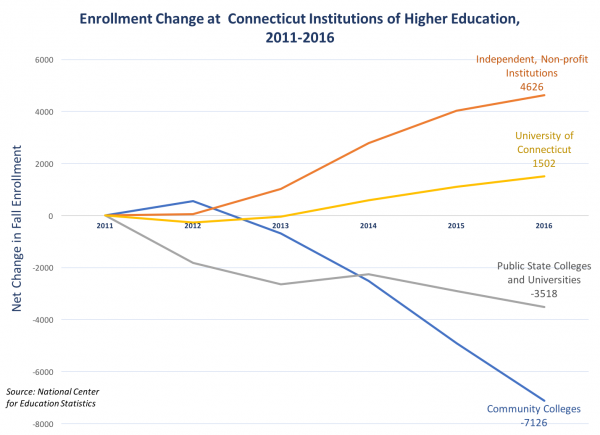
The recent decision by the Board of Regents of the Connecticut State Colleges & Universities (CSCU)  to begin offering students from New York and New Jersey the considerably lower in-state tuition rates in an effort to stem an increasing drop in enrollment at Western Connecticut State University may be the tip of the iceberg. Since 2011, enrollment numbers at higher education institutions in Connecticut have been moving in very different directions, according to data developed by the Connecticut Conference of Independent Colleges (CCIC) from the National Center for Education Statistics.

The data show that the state’s community college system has experienced a net loss of 7,126 students, and the state’s four regional universities – Western, Central, Southern and Eastern Connecticut – saw a net loss of 3,518 students between 2011 and 2016.

Trending in the opposite direction has been the University of Connecticut, with a net increase of 1,502 students, and the independent, non-profit institutions, was an increase of 4,626 students.

CCIC member institutions include Albertus Magnus College, Connecticut College, Fairfield University, Goodwin College, Mitchell College, Quinnipiac University, Rensselaer at Hartford, Sacred Heart University, St. Vincent's College, Trinity College, University of Bridgeport, University of Hartford, University of New Haven, University of Saint Joseph, Wesleyan University and Yale University.

Currently, in-state students pay $10,418 in annual tuition at Western, while out-of-state students pay $23,107.  Published reports indicate that enrollment at the university has dropped by more than 700 students over the past six years.  The university serves about 5,700 students, with more than 90 percent of them coming from Connecticut.

Similar initiatives at the other three colleges are less likely, as they are located in Willimantic, new Haven and New Britain, not adjacent to any state line.  Central Connecticut State University is the largest of four universities within the CSCU system, serving nearly 11,800 students--9,800 undergraduates, and 2,000 graduate students.

Last year, in a program that was promoted with radio advertising, the CSCU board approved a plan that permitted Asnuntuck Community College in Enfield to admit students from Massachusetts to enroll at in-state rates. And last spring, the board allowed six other community colleges located near state borders to do the same starting this fall.  The plan boosted enrollment at Asnuntuck; data on the other colleges is not yet available. 

Earlier this year, the CSCU system proposed merging the 12 community colleges into one college with 12 branch campuses, as a cost-saving measure, and, officials say, to direct more resources to students.  That plan is pending.  If approved, the change would make the newly named Connecticut Community College the fifth largest in the country with more than 52,000 students, reports indicate.  Officials indicate that "Only a few of these recommendations will require policy changes by the Board of Regents. The majority of the administrative recommendations can be implemented as soon as time and resources are available to complete."

Currently, the system is soliciting feedback on the proposal with an on-line poll on the CSCU website.  The survey asks respondents to offer opinions on the plans, as well as suggestions and opinions on strengths of the 12 into 1 plan.  The survey is open until Nov. 20.


Varied Economic Development Projects, People and Programs to be Celebrated by State

The Connecticut Economic Resource Center, Inc. (CERC) has named top economic development projects, programs and leaders from throughout the state to be honored at the annual CELEBRATE CT! event on November 30, 2017 at The Bushnell in Hartford. The 21 honorees were selected by economic development officials in each of 10 regions across Connecticut for their contribution to the state’s economy – such as consistent or growing employment levels, playing a critical role in changing the character of its community or civic engagement, strong public/private collaboration to encourage new investment, or leadership resulting in growth or improvements.

The honorees include initiatives, businesses, organizations and individuals that are widely known in their communities, and some that are less well-known.  Reflecting the growth of the craft beer industry in Connecticut, the honorees include three breweries: Stony Creek Brewery in Branford,  Beer'd Brewing Company in Stonington, Alvarian Beer Company in New Britain. 

“These awards acknowledge key people, programs and projects that are stimulating new jobs and investment in our economy,” said CERC President and CEO Robert Santy. “They are well earned and well-deserved, and CERC is proud to recognize the 2017 honorees and their noteworthy accomplishments that are having a positive impact on Connecticut’s business environment.”

The 2017 honorees also include the UCONN Hartford Campus, which began operations this fall in downtown Hartford, the long-running Goodspeed Musicals, and the Heirloom Food Company in Danielson, an organic cafe and juice bar.  The state's increased emphasis on rekindling the manufacturing industries is reflected in the selections of Pegusus Manufacturing and Hurley Manufacturing.

This is the eighth year the event is being hosted by CERC, a nonprofit corporation and public-private partnership that provides economic development services, working closely with an extensive network of state, regional, local and utility partners to leverage Connecticut’s unique advantages as a premier business location.

Nearly 200 economic development and business professionals from around the state are expected to attend CELEBRATE CT! (To register or sponsor the event, visit www.cerc.com/celebratect)

The 2017 CELEBRATE CT! award honorees:

  • Capitol Region/Hartford Joining Technologies UCONN Hartford Campus
  • Central/New Britain Alvarium Beer Company Jasko Development LLC
  • South Central/New Haven Stony Creek Brewery Mike Freda (for Amazon Fulfillment Center, North Haven)
  • Southeastern/New London Beer’d Brewing Sean Nugent (for Preston Riverwalk)
  • Lower CT River Valley/Middlesex Goodspeed Musicals Pegasus Manufacturing
  • Naugatuck Valley/Waterbury Basement Systems Bristol Centre Square Project
  • West/Danbury-Fairfield BRT General Corporation Ferguson Library (1 Million Cups) Inspira Marketing Group
  • Metropolitan/Bridgeport Corvus Capital Partners LLC Future Health Care Systems
  • Northeastern/Windham Heirloom Food Company Thompson Branding Plan
  • Northwest Hills/Torrington Hurley Manufacturing Whiting Mills


Innovation Drives Start-Up Businesses to Receive CTNext Funding

When CTNext, described as state’s leading resource for entrepreneurial support, distributed $54,000 to five Connecticut-based businesses at the annual CTNext Entrepreneur Innovation Awards, they instantly became five to watch. The fledgling businesses are among a growing number of start-ups that are being encouraged by state and private funding sources as Connecticut seeks to become a place where innovation, often driven by millennials, can thrive.  Such financial support aims to increase the odds of a business succeeding, while at the same time making it more likely that the company founders would stay in the state, at a time when many millennials are heading elsewhere.

The companies, selected from 10 that sought the CTNext funding of $10,000 per company, were:

  • FallCall Solutions (Stratford): Creating a telemonitoring system for Apple Watch and other mobile systems for elders and caregivers
  • Rumble Helmet (Bridgeport): Developing a smart bicycle helmet that has embedded features designed to communicate the cyclist’s intentions to other road users
  • Sitrep (Cheshire): Creating a system for better communication of heating, ventilation and air conditioning (HVAC) problems
  • Deo2Go (Norwalk): Creating a topical delivery device that can be filled with a variety of products, such as deodorant, lip balm and sunscreen
  • EZ ICE: Manufacturing a kit for a custom and portable backyard ice rink that can be assembled in under an hour, with no tools and on any surface

For the second consecutive EIA, Deo2Go took home the $2,000 Crowd Favorite award. Rumble Helmet won an additional $2,000 as Judges’ Favorite, at the awards ceremony held in Hamden.

Rumble Helmet, founded in January 2017, is a smart bicycle helmet that has an embedded adaptive light system consisting of front flash light, back light, turn signals, and uniquely designed sidelights to communicate the cyclists' intentions to other road users, according to a GoFundMe page, now seeking financial support. The light system can be activated using hand signals. The smart helmet can detect vehicle presence in the cyclist's blind spot. Moreover, it can be paired with a mobile navigation application. This invention has a utility patent and design paten granted.  CEO Reem AlAttas, a University of Bridgeport Ph.D. candidate, is a co-founder.

Sitrep, based in Cheshire, was founded in 2014 to “develop monitoring systems that are intuitively usable.”  Principals are Harland Christofferson, Gary Martin and Michael Byrne.

The mission of Stratford-based FallCall Solutions, LLC is “to become the premier innovator in simplified communication solutions for the geriatric population and their caregivers.” The company website explains that the company aims to maximize elder independence and caregiver peace of mind by “building software based solely on the needs of the consumer rather than the trying to create and introduce new ecosystems into our customers’ lives.”

EZ ICE began in 2010 as a small Rhode Island company constructing ice skating rinks in families’ backyards in the Providence and Boston Suburbs, according to the company’s website.

Since launching the Entrepreneur Innovation Awards in 2014, CTNext has now held 13 total events in the state, awarding a total of $642,000 to 58 unique companies.  All companies – including the most recent selections - must be registered with the Secretary of the State’s Office in Connecticut before receiving any grant dollars from CTNext.

“It’s exciting to see the innovative ideas moving toward commercialization by our state’s entrepreneurs, and we are so pleased to be able to provide support to help progress those ideas to the next level,” said Glendowlyn Thames, Executive Director of CTNext.

Population Health Topics to Be Focus of Statewide Public Health Conference

“From Patient to Population Health - Disparities Matter” is the focus this year as the Connecticut Public Health Association (CPHA) expects approximately 300 public health practitioners from around the state to gather at the CPHA Annual Meeting and Conference, being held on October 30. The day-long conference will include more than 30 sessions on various public health topics, along with two keynote speakers and a range of professional development opportunities for attendees.  The keynote speakers will be Mark Masselli, Founder/President/CEO of Community Health Center, Inc., based in Middletown, and State Senator Doug McCrory of Hartford, Democratic Deputy President Pro Tempore, elected to the Senate this past year. 

Conference objectives include:

  • Understand how public health policies and programs influence health disparities throughout life for patients and populations.
  • Identify evidence-based strategies that can reduce health disparities and improve community health outcomes
  • Influence health policies in state and country through disparities research and dissemination of evidence
  • Promote the formation of collegial professional networks and the exchange of ideas among members of the public health community

Among the topics to be discussed in sessions throughout the day are youth suicide prevention, pregnancy screening in community-based settings, addressing the needs of people with complex social and health needs, substance abuse, health disparities, healthy eating and hunger, and nutrition education.  Sessions will also focus on early intervention, asthma, drinking water safety, intimate partner violence, and the impact of Federally Qualified Health Centers in improving health outcomes.

Represented among the presenters are the Community Health Center Association, UConn, the state Departments of Public Health and Mental Health and Addiction Services, the Connecticut Data Collaborative, Institute of Living, March of Dimes Foundation, Western Connecticut Health Network, Connecticut Hospital Association and the State Innovation Model Program Management Office.

A welcome address, via video, will be offered by U.S. Sen. Chris Murphy.

The Connecticut Public Health Association, which celebrated its 100th anniversary last year, has been committed to improving the quality of the public health profession and advocating for policies and programs that promote health and prevent disease.  The organization provides professional development and education, public health advocacy, mentorship and communications to members and the public. This year’s conference is being held at AquaTurf in the Planstville section of Southington.

Award-Winning Accelerator Prepares for Next Cohort of Start-up Businesses

reSET, a Hartford-based non-profit organization supporting entrepreneurs, has opened applications for its highly regarded business accelerator program for 2018. Tailored for impact-driven businesses but available to early-stage ventures across all industries, reSET’s Impact Accelerator was a winner of the U.S. Small Business Administration Growth Accelerator Competition, and was the only Connecticut accelerator to receive the award, in 2015. Running from next January through May, the five-year old program will provide entrepreneurs with access to the knowledge and resources they need to grow their businesses and impact. Applications are being reviewed on a rolling basis; the final deadline is December 8, 2017.  Applicants are not limited to the Hartford area or Connecticut; in previous cohorts, participants have been from other states and nations.

reSET is a nonprofit organization whose mission is advancing the social enterprise sector. Its strategic goals are threefold: to be the “go-to” place for impact entrepreneurs, to make Hartford known as Impact City, and Connecticut the Social Enterprise state. reSET meets entrepreneurs wherever they are in their trajectory and aims to help them take their businesses to the next level.

The accelerator program has graduated 80 businesses to date. Recent participants have experienced success in advancing their businesses, including competitor acquisition, venture capital investment, and nationwide sales and recognition. 

Among the businesses are Almasuite, CareerPathMobile, Phood, Pelletric, Eureeka, Save America, and Genius Box. Kate Pipa, co-founder of Genius Box, which develops and sends science kits to elementary and middle-school age children, credits the Impact Accelerator with helping her business gain traction.

“reSET’s Impact Accelerator was a great stepping stone for getting introduced to and more involved in Connecticut’s startup scene.  Just being in reSET’s community allowed for access to workshops, mentors and service providers to answers questions and provide advice on different challenges that can come up when starting your business.”

Over the course of four weekend summits during the accelerator program, participants selected for the 2018 cohort will be connected to customers and industry-specific mentors. Up to 20 entrepreneurial teams will have access to:

  • 20+ optional workshops covering a range of topics in business and social enterprise
  • Numerous structured and unstructured opportunities to engage with investors and advisors
  • 1-year reSET membership (includes access to co-working, programming and the on-site Entrepreneur-in-Residence)
  • Exclusive discounts on business software packages and other resources

The accelerator will be free for accepted entrepreneurs and no equity will be taken from their operations. Graduates will also have an opportunity to compete for $20,000 in unrestricted funding at a culminating Venture Showcase in Spring 2018.

“As an entrepreneur myself, I have experienced the ups and downs of launching a new business,” said Jeremy Szechenyi, reSET’s Programs Manager. “Between reSET’s physical office and programs, we give entrepreneurs the resources and network that is critical to surviving and bringing their work to the next level.”

An information sessions will be held at reSET  (1429 Park Street, Hartford) on October 26 from 12:30-1:30pm, and November 15 from 5:30-6:30pm.  The sessions will be informal and meant to address prospective candidates questions.

reSET serves all entrepreneurs, but specializes in social enterprise ― impact driven business with a double or triple bottom line. In addition to providing co-working space, accelerator and mentoring programs, reSET aims to inspire innovation and community collaboration, and to support entrepreneurs in creating market-based solutions to community challenges.