Income Inequality Increasing Faster in CT Than US; Among Largest Disparities in Nation

In Connecticut, to earn a place in the top one percent would require making $700,800, the highest threshold in the nation.  The average annual income of the top one percent is also among the highest in the nation at $2,522,806.  That is 37 times the annual income of the bottom 99 percent, which is $67, 742, according to data analyzed by the Economic Policy Institute. The data reveal that the top one percent take home 27.3 percent of all the income in Connecticut, and that the share of income by the top one percent has increased at a faster rate in Connecticut in recent years than in the nation as a whole.

Connecticut ranks #3 of the 50 states in income inequality, based on the ratio of top one percent to bottom 99 percent income.  (New York’s top one percent makes 44 times the bottom 99 percent; Florida 39 times; Connecticut 37 times)  The Bridgeport-Stamford-Norwalk metro area is the most unequal metro area in Connecticut, the data indicate. The top 1 percent make 62.2 times more than the bottom 99 percent.

Overall in the Northeast, the top 1 percent take home 24.7 percent of all the income in the Northeast.  The average annual income of the top one percent is $1,777,756 compared with $54,662 for “everyone else,” the other 99 percent.  Nationwide, the top one percent take home an annual income of $1,316,985 versus $50,107 for the other 99 percent.   The most unequal metro area in the U.S. is Jackson, WY, where the top one percent make 132 times the rest of the population.

The data is based on an Economic Policy Institute report published this summer. EPI is an independent, nonprofit think tank based in Washington, D.C. that researches the impact of economic trends and policies on working people in the United States.

The report used 2015 data, the most recent available, finding that the top 1 percent of families in the U.S. earned, on average, 26.3 times as much income as the bottom 99 percent—an increase from 2013, when they earned 25.3 times as much.

Eight states plus the District of Columbia had gaps wider than the national gap. In the most unequal—New York, Florida, and Connecticut—the top 1 percent earned average incomes more than 35 times those of the bottom 99 percent.

The report found that income inequality has risen in every state since the 1970s and, in most states, it has grown in the post–Great Recession era. From 2009 to 2015, the incomes of the top 1 percent grew faster than the incomes of the bottom 99 percent in 43 states and the District of Columbia.

(Infographics:  Economic Policy Institute; howmuch.net)

Housing and Health - Foundations Fund Research in CT to Examine Relationship

Housing and health are increasingly the focus of study, to better determine how one impacts and influences the other.  Foundations at the state and national level are among those devoting resources in Connecticut to seek answers that can ultimately guide future public policy. With a $125,000 grant from the Connecticut Health Foundation, the Open Communities Alliance will work to create better links between housing and health care and set the stage for a two-year pilot program to enable interested families of children with acute asthma to move to healthier neighborhoods.

The “Healthy Housing Vouchers” project aims to use housing policy to improve health outcomes for low-income families and reduce health disparities, tying together clinical and nonclinical factors that affect people’s well-being. 

The Open Communities Alliance project will create a streamlined process for low-income families of children with asthma to help them access affordable housing in healthier communities if they choose. It will include referrals, counseling on the impact of environmental conditions on health, help identifying potential rental locations, and assistance with security deposits, moving expenses, and supportive services as they adapt to a new community. The initial participants in the pilot program will be low-income families who receive government-funded housing vouchers and have children with acute asthma.

The Connecticut Health Foundation will also be providing a $100,000 grant to support Connecticut Voices for Children’s work to promote policies that advance health equity for children and families. The work will include conducting policy research, producing educational materials and analyses to inform policymakers about issues affecting children and families, bringing together state agencies and advocates through the Covering Connecticut’s Kids and Families Coalition, and participating in state-run councils to represent research-based policy solutions.

These projects are among  11 awarded a total of $535,000 - announced this month - by the Connecticut Health Foundation, based in Hartford.  It is the state’s largest independent health philanthropy dedicated to improving health outcomes for people of color.

Earlier this year, the Connecticut Data Collaborative and the Liberal Arts Action Lab were awarded a 500 Cities Data Challenge grant by the Urban Institute and the Robert Wood Johnson Foundation. The joint proposal was one of 10 selected from a large competitive pool of applications submitted by organizations from cities across the United States.

The one-year $148,000 grant will support local research and educational outreach on housing conditions, health outcomes, and neighborhood disparities in the capital city of Hartford.

The Connecticut Data Collaborative is a nonprofit organization focused on providing public access to data, creating an ecosystem of data users, and increasing data literacy. The Liberal Arts Action Lab, launched in early 2018 by Trinity College and Capital Community College, investigates problems posed by Hartford community partners, with teams of undergraduate students and faculty fellows who conduct semester-long research projects to strengthen the city.

The Urban Institute and the Robert Wood Johnson Foundation designed this challenge grant to encourage communities to delve into the 500 Cities open-access dataset, to design innovative solutions on social factors that influence health, and to guide local organizations on how to effectively use neighborhood-level data. The broader goal is to promote more comprehensive cross-collaborative approaches to foster a broader “Culture of Health” in urban areas.


Hartford, New Haven Rank 73, 74 Among Best U.S. Cities to Retire

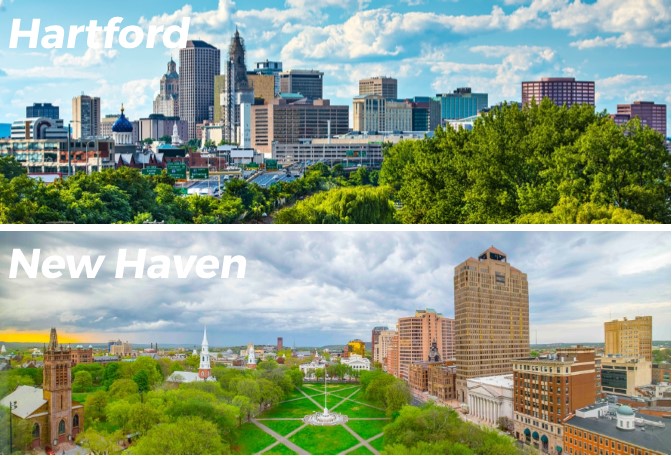
Even as Hartford and New Haven spend considerable time and attention directed at attracting millennials, a new national survey finds that the two Connecticut cities are ranked in the nation’s top 100 best places to retire. Hartford ranked 73rd on the list with an overall score of 6.35. New Haven came in 74th with a score of 6.33.  Among New England cities, only Boston and Springfield scored higher. U.S. News evaluated the country's 100 largest metropolitan areas based on how well they meet Americans' retirement expectations.  Perhaps not surprisingly, three Florida cities placed in the top 10.  It was Lancaster, Pennsylvania, that earned the No. 1 on the 2019 list. According to U.S. News, Lancaster moved to the No. 1 spot after placing No. 2 last year thanks to increases in housing affordability and overall happiness of its residents.

Fort Myers, Florida, moved from No. 15 to No. 2, driven by "increases in desirability and happiness scores." Last year's top place to retire — Sarasota, Florida — fell to No. 3 because of a decline in overall happiness and desirability, U.S. News reported.

Of Hartford, U.S. News said “Don't let the historic architecture fool you – even as one of the oldest metro areas in America, Hartford, Connecticut, has a lot to offer, both old and new.”  The Capitol City scored 5.3 in Housing Affordability and 8.5 in Healthcare, the two components of the overall score.

New Haven is described as “home to one of the most walkable city centers between New York City and Boston,” with “centuries-old architecture” which “houses the galleries, concert venues and coffee shops that help make New Haven the cultural capital of Connecticut.”  New Haven earned a 5.2 in Housing Affordability and 8.8 in Healthcare.

The top ranked New England city was Boston at #25.  Springfield, MA ranked #69,  Worcester was #77, and Providence was #85.  New York’s state capitol, Albany, ranked #61.

The top 10 places to retire, according to U.S. News, are: Lancaster; Fort Myers; Sarasota; Austin; Pittsburgh; Grand Rapids; Nashville; San Antonio; Dallas-Fort Worth; and Lakeland, Florida.

The rankings, according to U.S. News,  “offer a comprehensive evaluation of the country's 100 largest metropolitan areas based on how well they meet Americans' expectations for retirement, with measures including housing affordability, desirability, health care and overall happiness.” Data sources include the U.S. Census Bureau and the Bureau of Labor Statistics, as well as U.S. News rankings of the Best Hospitals.

CT Office of Early Childhood Receives Global Recognition for Effective Communication

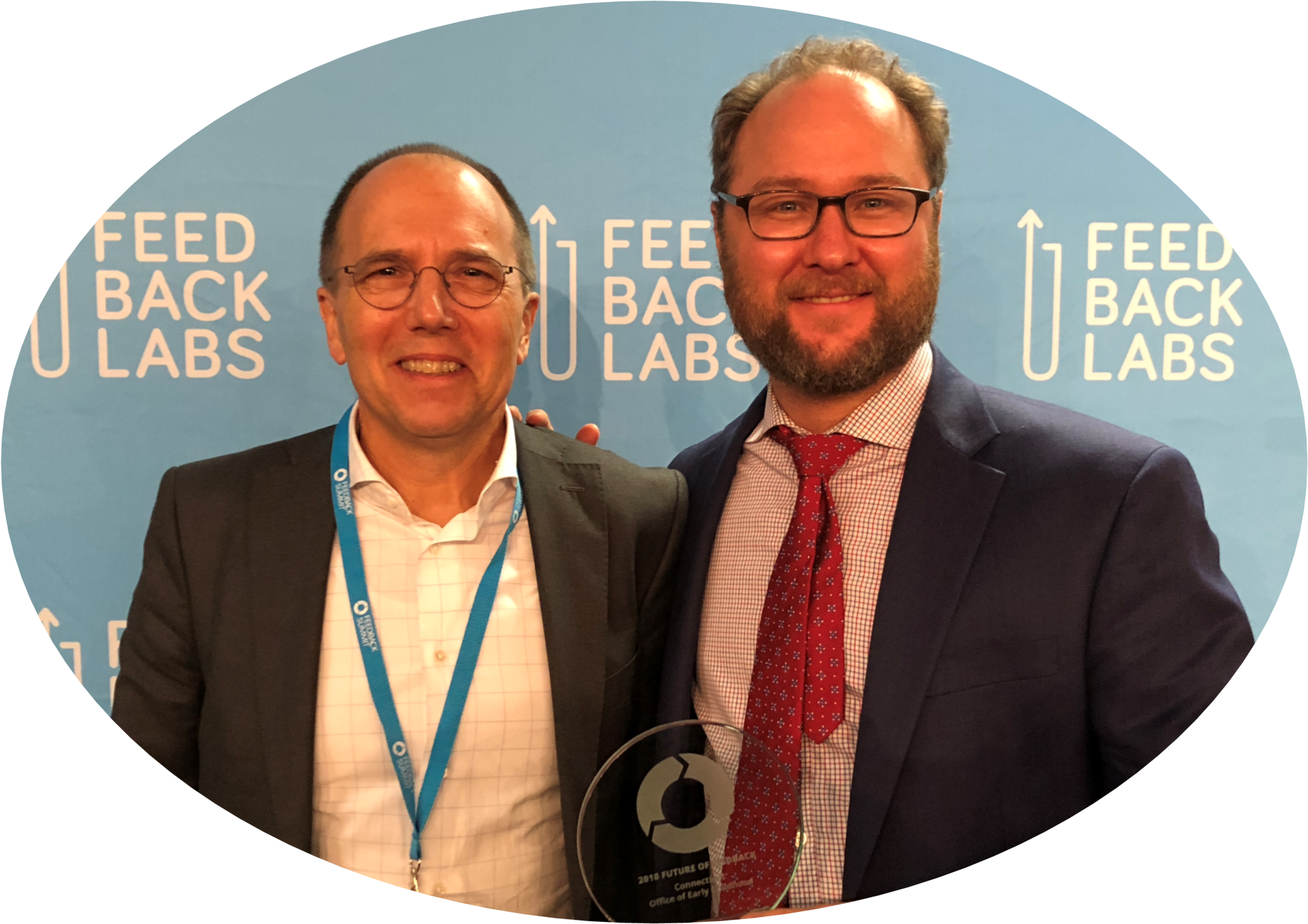
The Connecticut Office of Early Childhood (OEC) – a state agency that didn’t exist just over five years ago - has earned global recognition for success and innovation in serving the state’s youngest children and their families. The agency was chosen to receive the “Future of Feedback Award” at the annual Feedback Summit in Washington, D.C.   The award was presented last week to OEC Commissioner David Wilkinson for his agency’s efforts at effective listening to the people it serves and the nonprofit providers who serve them.

“The Office of Early Childhood is honored to be recognized for its efforts in communicating effectively with Connecticut’s families and providers, and for finding strategies to meet their needs,” said Commissioner Wilkinson. “The parents we serve and the community providers we support are the best experts in what they need to succeed, but too often they don’t have a seat at the table.  OEC is trying a new approach to put parents and our hardworking providers at the center of our policymaking.  We’re saying, ‘nothing we plan for you should be done without you.’’
"Connecticut’s Office of Early Childhood is pioneering innovative ways of both listening and acting.  OEC’s outreach to families – and frontline service providers – is creating conversations about what matters most, and what they can all do together," said Dennis Whittle, Co-Founder of Feedback Labs and GlobalGiving.

Feedback Labs, the organizer of the Summit, is a global network of over 400 leading aid, philanthropy, and governance organizations around the world.  Feedback Labs was conceived in 2013 and launched in connection with the Obama White House. Whittle also co-founded GlobalGiving, a leading marketplace connecting social, environmental, and economic development projects to individual and corporate donors. Since its inception GlobalGiving has facilitated $335 million in funding to over 20,000 projects in 170 countries.

Established in 2014 through a bipartisan effort of Gov. Dannel Malloy and the legislature, OEC oversees and funds Connecticut’s early childhood programming – including child care, pre-K, early intervention for children with developmental delays, and family support services for at risk families – components that once were housed in five disparate state agencies.
Among the 10 largest state agencies in Connecticut, OEC’s goal is to keep the state’s children safe, healthy, learning and thriving. Through its innovative feedback efforts, the agency is acting on evidence that engaging providers and parents in policymaking yields better results.  Officials said that the agency combined data from 1,700 family surveys, another survey shared with all providers in the state, and 400 community and provider meetings in order to build a draft plan to transform the ECE system in the state, which serves 200,000 children.

Wilkinson added that “An award like this is an encouraging validation of our efforts to listen to families and providers, and then do all we can to act on their advice.  We believe that by listening and responding, we will provide better, more effective services for Connecticut families with young children – and in so doing help create a brighter future for the state.”

"OEC’s approach contains key ingredients of more responsive, innovative, and effective government.  OEC’s leadership in asking for and responding to feedback has the potential to spread widely through the public sector,” Whittle added.

“Child care centers work hard every day for children,” Said Dr. Monette Ferguson, Executive Director of ABCD, Inc., a nonprofit operating several leading child care centers in and around Bridgeport. “Usually the state tells us what to do and by the time we share any concerns, it’s too late.  I am not used to a state agency asking what I think before it acts.  It’s good to feel heard and to see OEC acting on our advice.”

David Wilkinson was named Commissioner by Gov. Malloy in April 2017 to serve as the second Commissioner of the state’s Office of Early Childhood (OEC). He previously served as Director of the White House Office of Social Innovation and Civic Participation under President Barack Obama. While at the White House, Wilkinson worked closely with the Malloy Administration on signature early childhood efforts, including a first-of-its-kind initiative – scaling a program proven to reduce parental substance use and child welfare interaction – for which the administration has achieved national acclaim.  He has also served as an advisor to the Yale Child Study Center, a leading collaborator with the state and its early childhood service providers.

Christine Johnson-Staub is the Interim Director of Child Care and Early Education at CLASP, a 50-year-old national nonprofit based in Washington, D.C., that focuses on shaping policy to support families living in poverty. She said, “OEC’s approach to setting its policy direction was unique because not only did it build on input from the community and existing research and data, but it went back to a wide range of impacted people, including parents, providers and other stakeholders, to make sure they got it right.”

“Parents and child care providers know the challenges facing the early care system better than anyone but rarely does anyone from state government ask our opinion,” said Merrill Gay, Executive Director of the nonprofit Early Childhood Alliance, a state consortium of providers and advocates. “That's why it was so refreshing to have the Office of Early Childhood ask us: ‘What are the pain points?  How do we make this system work better for you?’  I'm really excited to see OEC now turning that agenda for improvement into concrete action to better serve children and families.”

The strategy of communicating successfully with a target audience, and then acting upon that communication, is known as a “feedback loop” – an approach widely studied and increasingly appreciated by thought leaders, initially gaining traction in international development, but seen to have powerful implications for advancing more responsive, cost-effective and impactful government services in the US. The 2018 Feedback Summit was attended by over 150 feedback pioneers and leaders from around the U.S. and the world.

“They speak. We listen. We make change. It’s about being responsive to the needs of the young children in our state and, of course, their parents and caregivers,” Wilkinson said.  To contact the Office of Early Childhood, visit www.ct.gov/oec or call (860) 500-4412.

UConn Adds Major in Arabic and Islamic Civilizations; Southern Expands Drone Applications to Academic Minor

If you’re wondering about the degree to which Connecticut universities are keeping up with world trends, the University of Connecticut and Southern Connecticut State University seem to indicate the answer is yes. UConn has approved a new major in Arabic and Islamic civilizations, developed to equip students with a working knowledge of the Arabic language, and allow them to explore classical Islamic civilizations, as well as the literature, culture, heritage, and intellectual life of the modern Arab world.

The program, housed in the Department of Literatures, Cultures, and Languages in the College of Liberal Arts and Sciences, stresses the many different aspects of the Arab world, and the different linguistic, cultural, and religious traditions that shaped it.

At Southern, a new interdisciplinary minor in Drone Applications has a decidedly journalistic flavor, but extends to provide a basis for careers utilizing the rapidly unfolding drone technology.

Approved by the UConn Board of Trustees this summer, the Arabic and Islamic civilizations major appeals to students who are studying in many other areas, including the sciences. Some students are native speakers of Arabic or have a Muslim background; others are not sure what it means to be “Arab” or to be “Muslim,” and so come to learn, according to program director and assistant professor of literatures, cultures, and languages Nicola Carpentieri, who spoke recently with UConn Today.

UConn is unusual in offering such a robust program in the language.  “The program is unique in the U.S. in that we delve so much into Arabic literature, poetics, and other cultural aspects such as music, science, art, and architecture,” Carpentieri noted. “That’s what sets it apart.”

“Students in our classes come from all majors, but they are curious and motivated students,” Carpentieri said. “They may have seen bad press about the Arab world. But they’re open-minded, and aware that simplistic divisions are fabrications. We want to shatter the binaries of East and West.”

Students in the program take courses in both classical Arabic, or the formal version of the language used in education and literature, and other dialects, like Media Arabic and Levantine Arabic. It’s especially useful to learn these types of “street language,” Carpentieri points out.

Unlike most other languages, Arabic gives its speakers access to many different nations and cultures, including Egypt, Lebanon, Morocco, Saudi Arabia, Tunisia, and others. In addition, students in the major will learn about the many influences that Muslim conquests had on the Europe we know today.

The Journalism Department at Southern now offers an interdisciplinary minor with the Geography Department in Drone Applications. Students study how drones (small unmanned aerial systems) are employed for geography, environmental sciences, journalism and other industries. This interdisciplinary minor prepares students with the fundamental knowledge, skills and experience in the technological, legal and ethical considerations and applications of drones in various fields.

The minor is aimed at students who are interested in learning about emerging drone technologies and how they can be applied to professional settings. It complements environmental sciences, geography, journalism and communication programs.

The 18-credit minor requires courses such as Basic Drone Technology, Drone Journalism, Introduction to GIS and Remote Sensing or Advanced Drone Journalism.

The coursework focuses on flying drones for the purposes of news gathering in both image and data applications and includes the legal, ethical, and safety requirements for flying drones and reviewing necessary requirements for getting licensed by the FAA.

The drone courses are taught by Assistant Professor of Journalism Vern Williams, who has more than two decades in news photography and served as photo director of the New Haven Register for 15 years, where he supervised the photographic and video coverage of the news. His teaching experience includes work at Southeastern Associated Press Managing Editors Association, University of South Carolina, and Cornell University.

CT's Rare Disease Report Card Reflects Good Grades, Not-so-Good Grades

Thanks to innovative new treatments, diseases that were once fatal are now being treated as chronic conditions. But these breakthrough treatments will be out of reach for many patients, according to the National Organization for Rare Diseases, because health plans are using deductibles and coinsurance to shift more of the cost of medication onto the patients who rely on those treatments. The national organization, which is headquartered in Danbury and Washington, DC, explains that taken together, those out-of-pocket costs are outpacing wages, and patients are left struggling. To assist patients who find themselves in this difficult situation, several states have passed legislation mandating a limit on out-of-pocket costs for medications. These limits can be applied in different forms, such as a per-drug cap or by mandating a copay-only structure in certain health plans.  Those are just some of the areas of particular interest to NORD, which advocates for patients – and their families – facing the challenges of rare diseases.
What is a rare disease? Any disease, disorder, illness or condition affecting fewer than 200,000 people in the United States is considered rare. It is estimated that 7,000 rare diseases exist, and fewer than 500 have FDA-approved treatments.  Patients with rare diseases are frequently misdiagnosed or undiagnosed. Currently, only 5 percent of rare diseases have treatments, NORD points out.

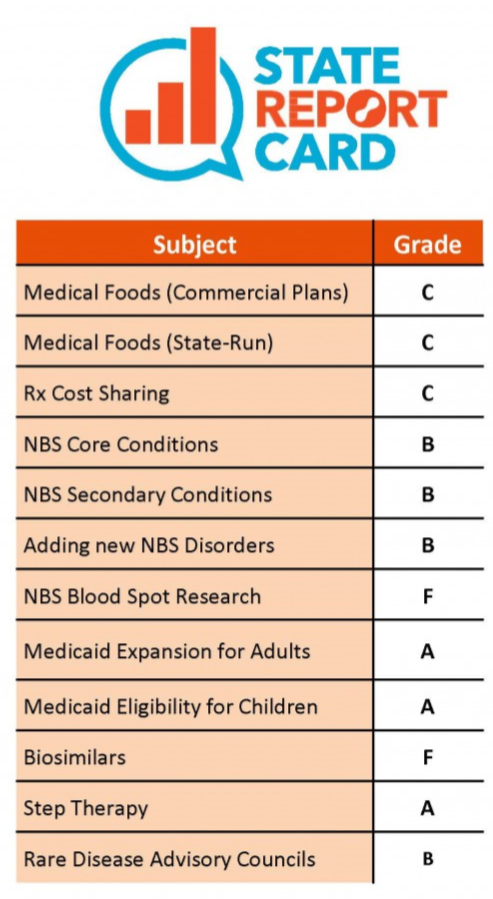
A majority of states are not measuring up on legislative solutions that reduce the burden of rare diseases affecting 30 million Americans, according to a new report released by the the NORD Rare Action Network® (NORD RAN). The 2018 “State Report Card” indicates that progress in several areas of health policy is slow, according to the report.

The third annual edition of the State Report Card rates states on the strength of policies including coverage of medical foods and newborn screening, prescription drug cost-sharing limits, policies supporting biosimilar prescriber communications, protections against step therapy protocols, and the establishment of rare disease advisory councils. New this year, according to NORD, the report also looks at Medicaid Waivers (including proposed work requirements, lifetime limits, drug formulary restrictions, and other proposed changes to benefits), storage and research consent for dried blood spot samples used in newborn screening, and state Right-to-Try laws.

Connecticut earned grades all across the scale - three A's and four B's, as well as three C's and two F's.   Overall, the report found nationally that:

  • Fifteen states earned an F for failing to mandate adequate coverage of medical foods
  • Thirty-six states earned an F for failing to enact prescription drug cost-sharing limits, despite third-party analysis showing these cause little to no impact on overall plan premiums for all beneficiaries
  • Newborn screening has saved tens of thousands of lives, yet more than half of states fail to meet federal recommendations
  • Fifteen states (including Connecticut) earned an A or B for protecting patients against step therapy, a procedure by which insurers (public or private) interfere with and delay appropriate care for patients that ultimately increases costs

“The intent with this report is to share valuable information that will enable advocates to affect change in their state,” said NORD Director of State Policy, Tim Boyd. “Our goal is to provide actionable steps for states that will improve people’s lives, so the report presents findings as well as tools for individuals to act on.”

Under the Affordable Care Act, many people with rare diseases can now access affordable health insurance. However, NORD officials point out, some insurance policies place orphan therapies on the so-called “specialty-tier” of a drug formulary. For drugs placed on this tier, enrollees often must meet cost sharing requirements that can be as much as 50% of the actual cost of the medication.

Later this month, NORD marks its 35th anniversary with a Summit in Washington, DC.  A 501(c)(3) organization, NORD is a patient advocacy organization dedicated to individuals with rare diseases and the organizations that serve them.  NORD, along with its more than 280 patient organization members,  is committed to the identification, treatment, and cure of rare disorders through programs of education, advocacy, research, and patient services.

Manufacturing Day Highlights Changes for Next Generation of Workers

There are 25 Manufacturing Day events planned in Connecticut in 2018, with most taking place this week and many open to the public.  Manufacturers across the country and across Connecticut use MFG Day (October 5 this year) as “an opportunity to inspire and recruit the next generation of manufacturers,” according to organizers, with hundreds of students across the state expected to participate.  Nationwide, more than 2500 events are planned.  Manufacturing Day is observed annually on the first Friday in October.

  • Manufacturing is responsible for $42 billion in economic activity annually, officials underscore.  Among the participants: Associated Spring in Bristol will offer a detailed tour of their plant on Friday midday, to include presentations on careers in manufacturing, to include apprenticeship programs, engineering, and the role of machinists.  Associated Spring is business of Barnes Group Inc.
  • Chester-based CHAPCO, the Small Business Administration’s Connecticut and New England Manufacturer of the Year, will also be offering tours to the public on Thursday which will showcase the company’ s equipment, employees and overall capabilities.  The company has been providing metal fabrication, assembly, product development and engineering services since 1964.
  • Marion Manufacturing Company, located in Cheshire, will offer visitors a “first-hand look at manufacturing in today’s high tech world.”  Marion Manufacturing, which began operations in 1946, was started as a progressive die stamper and remains that today, enjoying a worldwide customer base, company officials indicated.
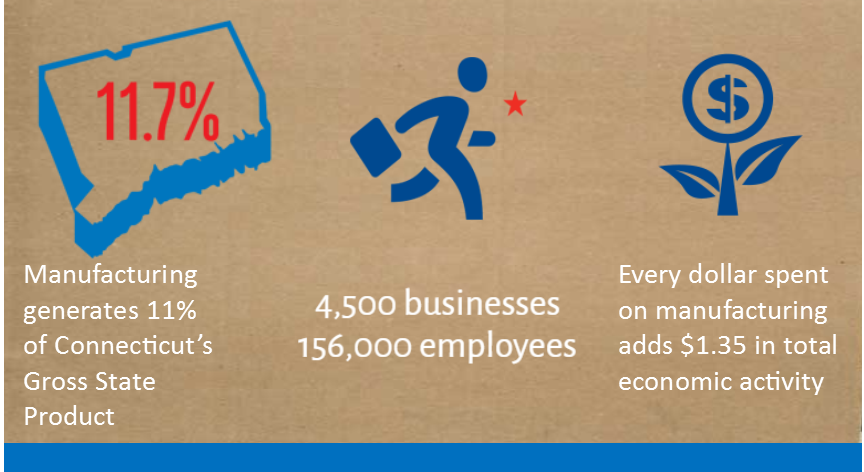
State officials highlight a series of statistics to underscore manufacturing's importance to the state economy:

  • 4,500 businesses and more than 160,000 employees
  • Every dollar spent on manufacturing adds $1.35 in total economic activity
  • Manufacturing generates 11% of Connecticut’s Gross State Product
  • Connecticut manufacturers export $15B+ each year, representing 96% of the state’s exports.

Among the other businesses that will be providing the public with a glimpse of modern-day manufacturing are Dymotek in Ellington (October 5 Interactive tour), HoloKrome in Wallingford (October 5 facilities tour), Click Bond in Watertown (October 18 Open House), Mastercam in Tolland (October 5 tour to include explanations of environmental practices), and Fisher Unitech in East Hartford (October 30).

Organizers point out that Manufacturing Day - which began in 2012 - addresses common misperceptions about manufacturing by giving manufacturers an opportunity to open their doors and show, in a coordinated effort, what manufacturing is — and what it isn’t. By working together during and after MFG DAY, manufacturers will begin to address the skilled labor shortage they face, connect with future generations, take charge of the public image of manufacturing, and ensure the ongoing prosperity of the whole industry.

Manufacturing Day is produced by the National Association of Manufacturers (NAM) and the Manufacturing Institute. The NAM is the nation’s largest industrial trade association, representing small and large manufacturers in every industrial sector and in all 50 states.

The full list of participating manufacturers in Connecticut can be seen here.


https://youtu.be/jcUsrdTbZU0

Advancing Racial Equity in Nonprofits to be Among Themes for National Conference This Month in Hartford

When members of the Alliance for Nonprofit Management, a national association now based in New York City, hold their 20th anniversary conference later this month, they will be gathering in Hartford.  The conference, “Re-envisioning Our Field:  Advancing Racial Equity & Leading Innovation in Capacity Building,” will be held October 10-12 at the Hartford Hilton. The organization’s Board Chair is Anne Yurasek, Principal of Fio Partners, which is based in Chester, CT.  Yurasek has been an organizational development consultant and trainer for over twenty years in the nonprofit and private sector.

The Alliance is the “national voice and catalyst for the field of capacity building.”  The organization’s mission is to “increase the effectiveness of the individuals, groups and organizations that help nonprofits and communities achieve positive social change.”  The Alliance seeks to “create spaces for professional dialogue and learning by amplifying research in the field and promoting its implications for effective practice.”

More than 250 attendees are anticipated, to include consultants, coaches, funders, academics, and executives from across the country. The conference intends to “convene the diverse perspectives that shape and advance our field.”

The conference provides participants with the chance to “convene, dialogue, learn, shape and advance our field for the good of the nonprofits and communities we serve,” official explained.  The theme was selected because now “is a critical time for our field to reflect, to learn together, and to consider how our work should evolve to address racial inequities in our society. From amplifying emerging approaches to reflecting on research and exploring its implications for practice,” participants are urged to “bring your perspectives, experiences, and energy” to the annual conference.

The three-day event includes presentation opportunities with local nonprofits, work-sessions for Affinity & Interest Groups, twenty-plus workshop sessions “curated for capacity builders by capacity builders, and thought provoking plenary sessions.”  Among the session leaders and speakers:

  • Jay Williams, President, Hartford Foundation for Public Giving
  • Sam Cobbs, Chief Program Officer at Tipping Point Community  
  • Oscar A. Chacón, Co-Founder and Executive Director of Alianza Americas
  • Cyndi Suarez, Senior Editor, The Nonprofit Quarterly
  • Cynthia Silva Parker, Interaction Institute for Social Change
  • Trina Jackson, Community Engagement Manager of TSNE/Mission Works 

The Alliance for Nonprofit Management is the result of the 1997 merger of the Nonprofit Management Association and Support Centers of America. The organization is described as unique as a cross-sector professional association of individuals and organizations that are devoted to increasing the effectiveness of the individuals, groups and organizations that help nonprofits and communities achieve positive social change.

The 2017 conference was held in Grand Rapids, Michigan.

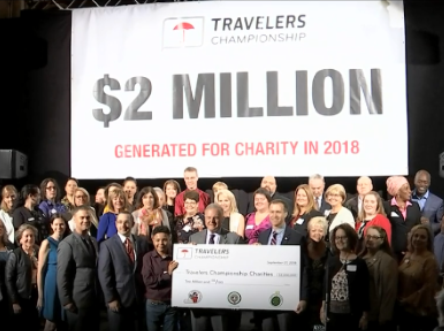
Record-Setting Travelers Championship Nets $2 Million for Charity

The 2018 Travelers Championship generated $2 million for more than 150 local charities throughout the region, the largest amount for charity generated in the history of Connecticut’s premier sporting event.  The record-setting total includes a $200,000 contribution from three-time Travelers Championship winner and 2018 champion Bubba Watson. Charity representatives joined officials from Travelers and the tournament in Hartford this week for the annual Travelers Championship Charity Celebration, where funds were distributed to each organization.

“This is always a special day because it signifies the hard work everyone puts into the tournament,” said Travelers Championship Tournament Director Nathan Grube. “Through the support we receive from volunteers, fans, players and businesses, we’re able to help charitable groups across the region make the community a better place.”

This year’s effort brings the total amount generated for charity by the tournament to more than $16.7 million since Travelers became title sponsor in 2007. The tournament donates 100 percent of its net proceeds to charity.

“Reaching the $2 million mark is an important milestone, and it will have such a meaningful impact on so many local organizations,” said Andy Bessette, Executive Vice President and Chief Administrative Officer at Travelers. “Bubba’s generosity mirrors our charity-first approach, and follows a similar sentiment that runs through the PGA TOUR and many of its players.”

Watson, who became just the second player to win the Travelers Championship more than twice – he also won in 2010 and 2015 – is representing the United States this week at the Ryder Cup in France. He recorded a video message that was played during the Charity Celebration.

“Wish I could be there. I just want to say thank you to Travelers for their hard work and their dedication to the community and all the charity dollars they’ve raised over the years,” Watson said. “Especially this year; $2 million dollars, what an achievement.”

The Hole in the Wall Gang Camp was the primary beneficiary of this year’s tournament, with three campers also serving as honorary co-chairs. Watson directed his $200,000 donation to Camp, which is naming the trading post at the Travelers Mini Golf Course on its campus in Ashford, Connecticut, as “Bubba Watson’s Trading Post,” in recognition of the 12-time PGA TOUR winner. Back in December, the 2017 Travelers Championship was honored by the PGA TOUR winning the prestigious “Tournament of the Year” award, along with recognition as the “Most Fan-Friendly Event,” “Best Sales” and the inaugural “Players Choice.” Award.  With approximately 4,000 volunteers working over 80,000 hours, the 2017 event generated more than $1.7 million for 165 deserving charities – totals that were exceeded this summer at the 2018 tournament. 

An economic impact study last year found that The Travelers Championship has an annual economic impact on the state of Connecticut of $68.2 million.  The study, conducted by the Connecticut Economic Resource Center, Inc. (CERC), found that the economic impact had more than doubled between 2011 and 2017, due to two primary factors; a much larger total number of spectators, especially the increased number of individuals from outside the state, and increased spending by the tournament in preparing for and administering the increased number of events that occur during the tournament week.

At least 750 charities have benefited over that time. Since the tournament’s debut in 1952, more than $40 million has been distributed to local charities.

Never an effort to reset on its laurels, preparation has already started for the 2019 Travelers Championship, which will be held June 17-23 at TPC River Highlands.


CT Is 6th Oldest State in the Nation, with Projections Pointing to Even Older Population, Economic Ramifications

Considered the 7th oldest state in the nation for the past few years, Connecticut is getting older relative to other states, according to newly released analysis.  The state is now seen as being the 6th oldest in the nation, following Maine, New Hampshire, Vermont, West Virginia, and Florida. The analysis, by S&P Global Ratings, found that the median age of the U.S. increased to 38.0 from 37.2 from 2010-2017. It is projected that by 2030, all baby boomers will be older than 65, and the size of the older population will be such that one in every five residents will be of retirement age.

Connecticut’s median age is 40.9, among a list of “oldest states” that is dominated by New England.  S&P declared that “Northeast States Face A Substantial Old-Age Wave That Is Verging On A Crisis,” highlighting the economic impact of the aging population.

“This aging population has contributed to diminished economic growth, with Connecticut being one of only four states in the country with contracting output. This occurred while its population growth was nearly at the bottom for all states, along with having one of the largest contractions of prime working-age adults,” S&P noted in their analysis.  “The outlook is equally dim. We expect the state's higher concentration of middle-aged and elderly residents compared with young adults and children to worsen.”
Connecticut’s State Department on Aging (SDA), re-established in 2013, is a cabinet-level agency, which developed in August 2017 the state’s 2018-2020 State Plan on Aging, entitled “Growing Older Together”, to serve as a blueprint for the agency’s work. It outlines the activities and strategies the state will pursue to navigate the issues arising from a growing older population.

Citing U.S. Census Bureau data, the report pointed out that “the nation’s population is aging, but not as fast as Connecticut’s.”  At the time, it noted “Connecticut is the 7th  oldest state in the nation, in terms of median age, with the third longest lived constituency.”

The 100-page report described Connecticut as “one of the slowest-growing states. The state’s total population grew by only 11,169 people from 2010 to 2015. Connecticut had just fewer than 3.6 million residents last year” (2016).

It went on to explain that “upon further look, there is a profound distinction among the projected population shift when broken down by age. Between 2010 and 2040, Connecticut’s age 65 years and over population is on pace to increase by 57%. However, its population between the ages of 20-64 is projected to grow less than 2% and the population age 18 and under is projected to decline by 7%.”

The Connecticut Commission on Women, Children and Seniors, in a presentation titled “Connecticut’s Aging Landscape: State Policy Overview” issued last year, also noted the state’s 7th oldest status.  Looking ahead, the report cited data developed by the former Legislative Commission on Aging and the Connecticut State Data Center that shows that by 2020, the vast majority of Connecticut municipalities will have populations that include more than 20 percent individuals age 65 and older.  Only six towns are projected to have less than 13 percent of their populations in that age bracket, reflecting the anticipated aging of the population throughout the state.

By 2050 the number of people in Connecticut aged 85 and older is projected to increase to 260,052, according to an analysis by the AARP Public Policy Institute in 2015. This age cohort will more than double in 2050 when it will represent 6.3 percent of state’s overall population compared to 2.6 percent in 2015.