

CT Ranks 20th in Dependence on Gun Industry, But 3rd in Firearms Output, 2nd in Industry Wages
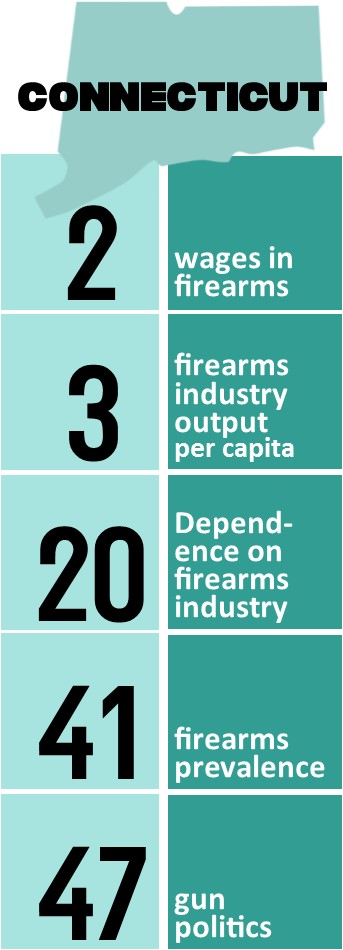
/Connecticut’s place in the ongoing national debate about guns is reflected in a new analysis which ranks the state 20th in the nation in overall dependence on the gun industry, but also ranks the state 3rd in total firearms industry output per capita and 2nd in highest average wages & benefits in the firearms industry.
 With the gun debate center-stage in the presidential primaries and in Washington, D.C., the website WalletHub analyzed which states depend most on the arms and ammunitions industry both directly for jobs and political contributions and indirectly through firearm ownership. WalletHub’s analysts compared the 50 states and the District of Columbia across three key dimensions: 1) Firearms Industry, 2) Gun Prevalence and 3) Gun Politics and eight metrics.
Connecticut also came in 41st in its "firearms prevalence rank" and 47th in "gun politics rank."
The states Most Dependent on the Gun Industry were Idaho, Alaska, Montana, South Dakota, Arkansas, Wyoming, New Hampshire, Minnesota, Kentucky and Alabama.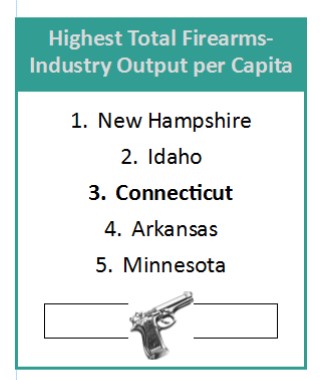
Officials point out that the gun industry plays an important role in the U.S. economy, and Connecticut is no exception. By one estimate, firearms and ammunitions contributed a total of nearly $43 billion to the national economy in 2014. That figure accounts for more than 263,000 jobs that paid $13.7 billion in total wages, according to the report from the Connecticut-based National Shooting Sports Foundation. In the same year, federal and state governments collected from the industry more than $5.79 billion in business taxes, plus an additional $863.7 million in federal excise duties, the WalletHub report indicated.
In the overall rankings, the states determined to be least dependent on the gun industry are Maryland, New York, New Jersey, Rhode Island and Delaware.
The analysis also found:
- The number of firearms-industry jobs per capita is highest in New Hampshire, which is seven times greater than in the District of Columbia, where it is lowest.
- The average wages & benefits in the firearms industry is highest in the District of Columbia, which is three times greater than in New Mexico, where it is lowest.
- The total firearms industry output per capita is highest in New Hampshire, which is 18 times greater than in Hawaii, where it is lowest.
- The total taxes paid by the firearms industry per capita is highest in Montana, which is six times greater than in Delaware, where it is lowest.
- Gun ownership is highest in Alaska, which is 12 times greater than in Delaware, where it is lowest.
The eight relevant metrics utilized in the analysis and their corresponding weights were as follows: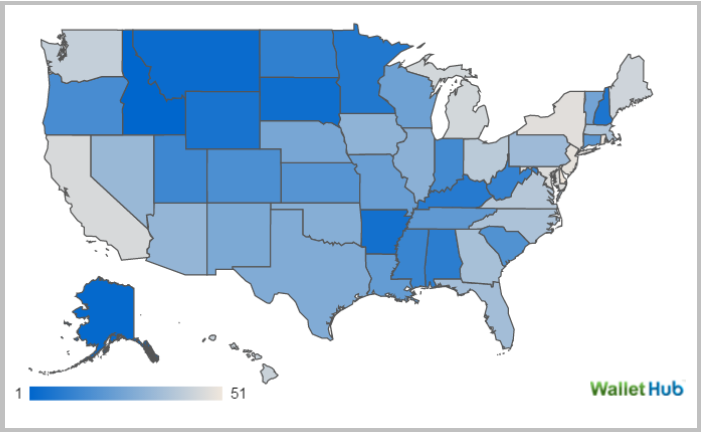
Firearms Industry – Total Points: 35
- Number of Firearms-Industry Jobs per 10,000 Residents: (~14 Points)
- Average Wages & Benefits in the Firearms Industry: (~7 Points)
- Total Firearms Industry Output per Capita: (~7 Points)
- Total Taxes Paid by the Firearms Industry per Capita: (~7 Points)
Gun Prevalence – Total Points: 35
- Gun Ownership: (~17.5 Points)
- Gun Sales per 1,000 Residents (approximated by using National Instant Criminal Background Check System data): (~17.5 Points)
Gun Politics – Total Points: 30
- Gun-Control Contributions to Congressional Members per 100,000 Residents: (~15 Points)
- Gun-Rights Contributions to Congressional Members per 100,000 Residents: (~15 Points)
Data used to create these rankings were collected from the U.S. Census Bureau, the National Shooting Sports Foundation, the Federal Bureau of Investigation, the BMJ Publishing Group and the Center for Responsive Politics, according to WalletHub.


 hat their children will struggle with anxiety or depression.
 The final

 On July 13, 2015, President Obama hosted the sixth White House Conference on Aging, joining older Americans and their families, caregivers, and advocates at the White House and virtually through hundreds of watch parties across the country.

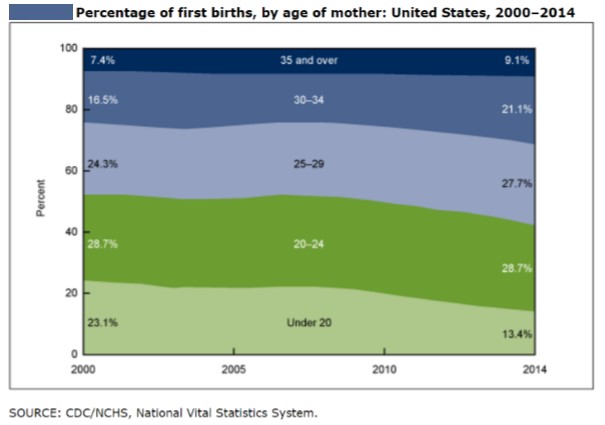

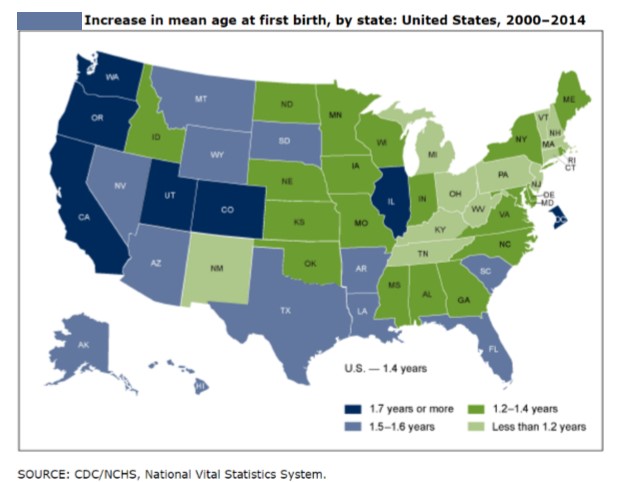 The report emphasized that over the past several decades, the United States continued to have a larger number of first births to older women along with fewer births to mothers under age 20. “This trend and the more recent uptick in delayed initial childbearing can affect the number of children a typical woman will have in her lifetime, family size, and for the overall population change in the United States,” the federal agency pointed out.


 Nearly 25 million children— 35% of the country’s children — lived in single-parent families in 2014, the latest full-year data. That is an increase of 392,000 since 2010.


 cent of children live in mother-only households and 8 percent live in father-only households. Those numbers are virtually unchanged since 2010. Back in 2000, however, 69 percent of children lived in married-couple households, 25 percent in mother-only homes and 6 percent in father-only households.
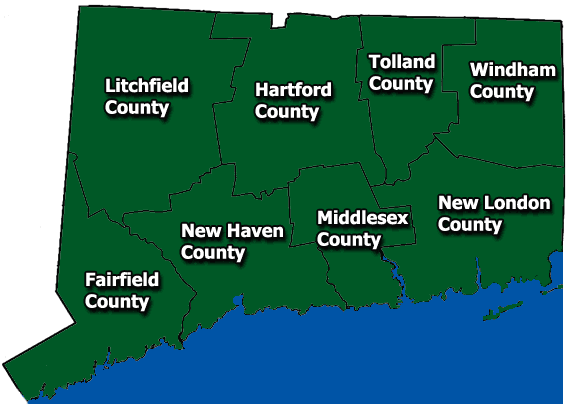 Congressional Districts, with the exception of the Fourth District, did better than the national average in the degree of income inequality.




 Thus far, eight leading funding institutions in Connecticut have expressed their intentions to commit financial contributions in support of the Collaborative goals utilizing their institutional grant-making process. Those organizations include Fairfield County’s Community Foundation, Hartford Foundation for Public Giving, Hispanic Federation, Perrin Family Foundation, Progreso Latino Fund (a committee-advised fund at CFGNH), Tariq Farid Foundation and The Community Foundation for Greater New Haven.