Connecticut Ranks 33rd in College Funding, Tuition, Burden; Grade: D
/The Student Impact Project, an initiative of the youth advocacy group Young Invincibles, tracked trends in higher education finance in states across the country, and graded each state based on tuition levels, state funding per student, state aid to students, the financial burden to families and higher education spending as a portion of the total state budget. Connecticut's report card grade: D.
In state-by-state reports published this week and reported by US News & World Report, the group found that on average, tuition at four-year public colleges and universities increased 37 percent between 2007 and 2013, which is three times the rate of inflation. The data indicated that 47 states spend less per student today than they did before the Great Recession.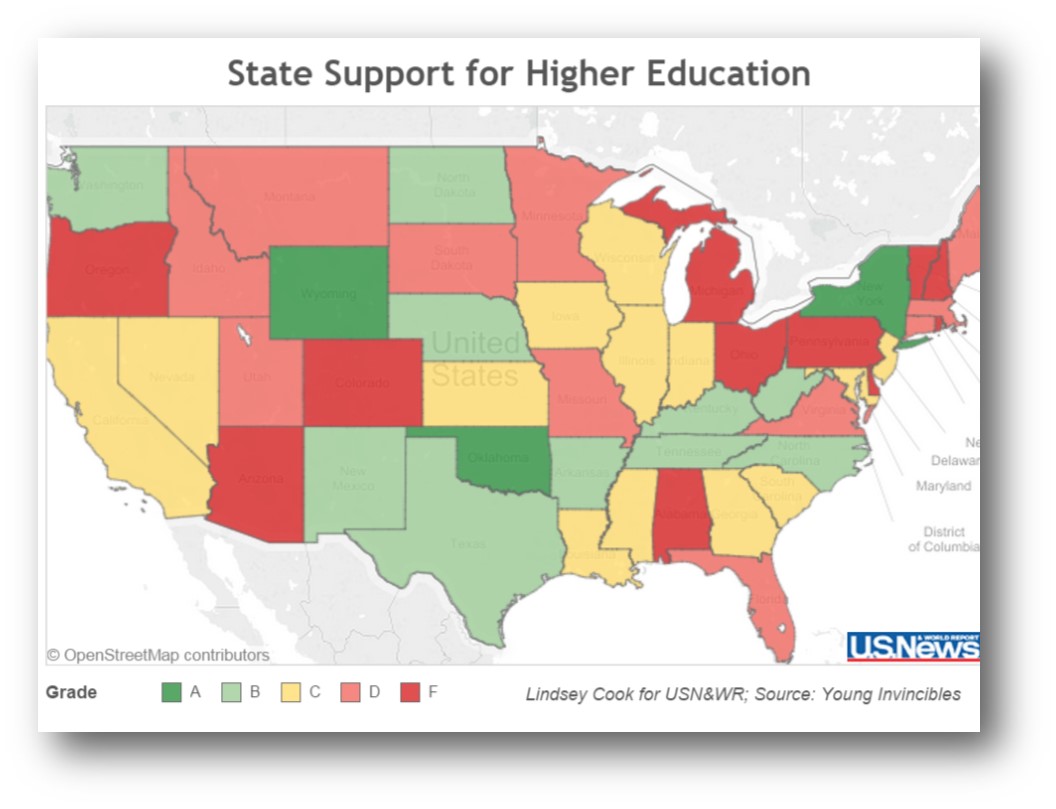
Connecticut ranks 33rd among the nation’s 50 states in support for higher education. Overall, just four states – Wyoming, New York, Alaska and Oklahoma – received a total grade equivalent to an A, while 10 got a B, 13 got a C, 12 got a D and 11 received an F, US News reported.
Overall, the state’s average in the five categories was 63 percent, which placed it ahead of only 16 states, including New Hampshire, which placed last, and Vermont, Colorado, Michigan and Oregon. Connecticut received an F in the “aid for students” category, D in “state appropriation average” and “tuition” categories, C- in “Higher Ed as a Priority,” and the state's highest grade, C+, in “Burden on Families Average.”
New Hampshire, which at a 17 percent overall grade scored lowest in the country, spends the least amount of money per student than any other state ($1,708), and has cut the budget almost in half since the recession, according to the report. New Hampshire also provides no state aid to students, and spends 2 percent of its overall budget on higher education. In Connecticut, the report indicated, that figure is 11 percent.
A report issued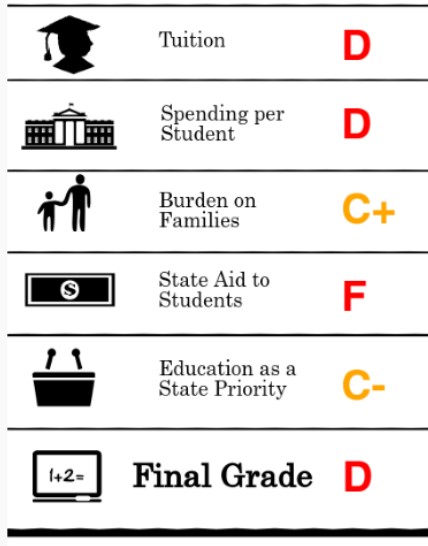 last month by the General Accounting Office in Washington, D.C. for the U.S. Senate found “persistent state budget constraints have limited funding for public colleges” across the country. The result, according to the GAO report: “Students and their families are now bearing the cost of college as a larger portion of their total family budgets.”
A report by Connecticut’s Office of Higher Education in March 2014 found that for the 2013-14 academic year, “UConn’s increase of 5.8 percent for in-state commuting students compares to a national average of 3.7 percent for state flagship institutions. CSCU’s increase of 5.4 percent for in-state commuting students attending its State Universities compares to a national average of 4.1 percent for similar types of institutions; the Community Colleges’ increase of 5.5 percent for in-state commuting students compares to a national average of 4.5 percent for like institutions.”
The Connecticut report also noted that “from 2009 to 2014, tuition and fees for in-state undergraduates have increased 24.7 percent at the Connecticut State Universities, 26.9 percent at the Community Colleges, and 28.7 percent at UConn.” Last fall, Connecticut’s largest public college system (CSCU) said it will need an 11 percent increase in its base-level state funding for the next fiscal year if they are to keep an anticipated tuition-and-fee hike to 2 percent. If additional state funding is not provided, steeper tuition hikes are possible.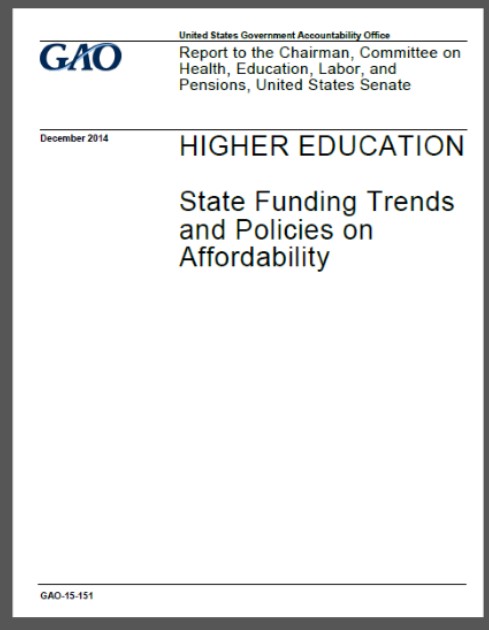
From fiscal years 2003 through 2012, the GAO report outlined, state funding for all public colleges decreased, while tuition rose. Specifically, state funding decreased by 12 percent overall while median tuition rose 55 percent across all public colleges. Tuition revenue for public colleges increased from 17 percent to 25 percent, surpassing state funding by fiscal year 2012 (see chart below).
In their report, “State Funding Trends and Policies on Affordability,” GAO identified several potential approaches that the federal government could use to expand incentives to states to improve affordability, such as creating new grants, providing more consumer information on affordability, or changing federal student aid programs. “Each of these approaches may have advantages and challenges, including cost implications for the federal government and consequences for students,” the report noted.
The report also indicates that 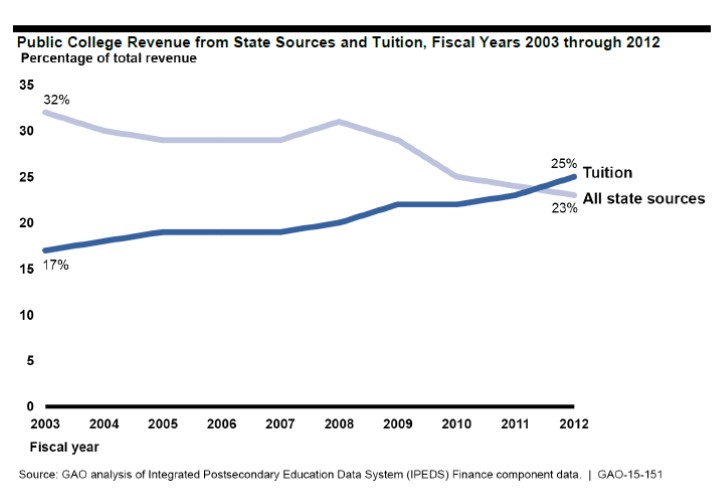 “state grant aid directly affects students in that it can reduce their out-of-pocket expenses for college… state grant aid, both merit- and need-based, has positive effects on enrollment.” The results of one program, in Washington State, cited by GAO “suggests that receiving the aid increased a student’s probability of enrolling in college by nearly 14 to 19 percentage points.”
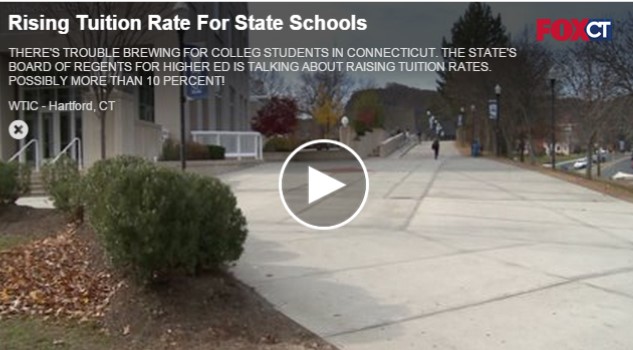
Footnote to the story: to underscore the data, US News is running a video news story broadcast on FOX Connecticut, reporting on possible tuition increases at the Connecticut State Colleges & Universities. The story, which is not referenced by date, was aired two years ago.

 oblems for the state.”
 83, which exposed a poor record of road and bridge maintenance in the state, with creation of a Special Transportation Fund to set aside money to maintain and repair the state's bridges.
 ll station that killed seven people and galvanized public opinion. The state had collected tolls at 14 locations - eight on the Connecticut Turnpike between Greenwich and Plainfield, three on the Merritt and Wilbur Cross Parkways, and at three bridges in the Hartford area. The tollbooths generated $66 million a year, The New York Times





 “With more than 540 firms participating in the IPA annual Survey and Analysis of Firms this year, along with many CPA firm associations contributing to the search to identify the IPA 200, this (is) the definitive ranking of the nation’s largest public accounting firms,” said Kelly Platt, principal of The Platt Group, the publisher of IPA.
 mong the industry trends cited by the publication are tighter margins, leadership changes, globalization, new regulations, acquisition pressures, evolving technology, cultural shifts, fierce competition, and commoditization of services (firms struggling to differentiate in the marketplace).
 nt and work closely with stakeholders in developing the conference, viewed as “an opportunity to look ahead to the issues that will help shape the landscape for older Americans for the next decade.”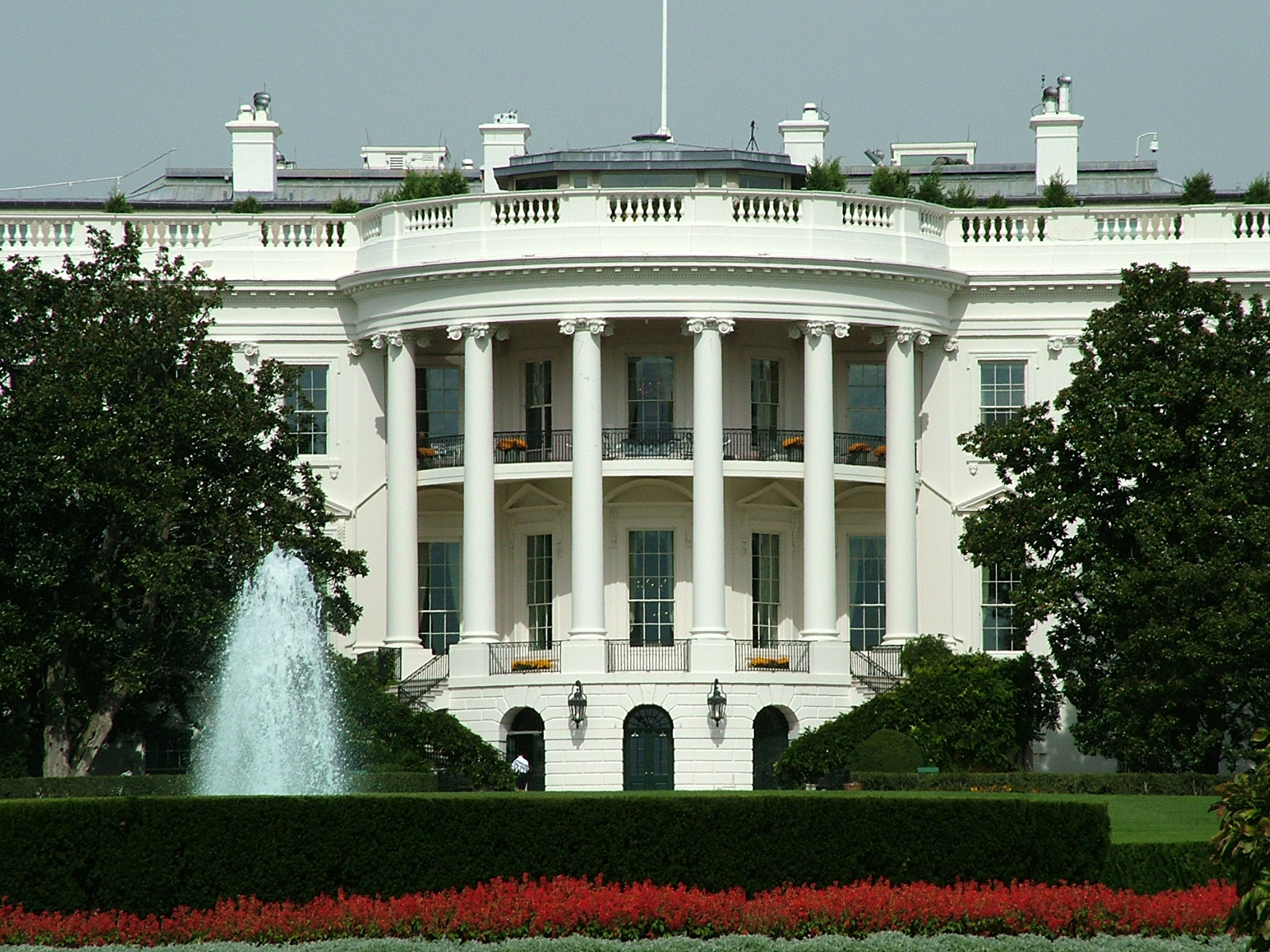
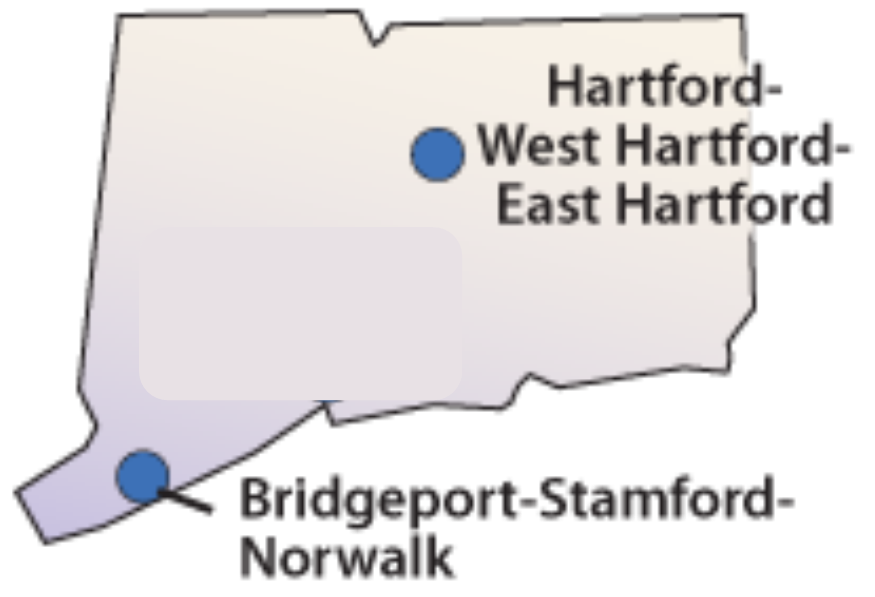 me in the Bridgeport-Stamford-Norwalk metropolitan area was $42,757, and the Hartford-West Hartford-East Hartford region was $42,322 for 18-34 year olds working full-time, according to the data, highlighted in an article posted to The Atlantic’s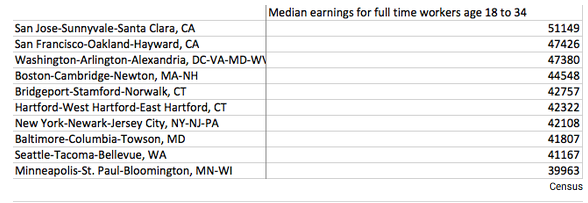
 “looking remarkably attractive.”
 the U.S. Championships, which will also be held in different cities. The men’s championships will be held in Hartford, June 3-5, 2016. The women will also be in town, competing in the Secret Classic – a major pre-Olympic event. The women will move on to their national championships three weeks later in St. Louis.

 Recognized programs and organizations include the Rowley Spring Adult Education Diploma and Certificate Program, Billings Forge Community Works, Northwest Connecticut Manufacturer's Coalition, the Southeastern Connecticut Cultural Coalition, Fiddleheads Natural Food Co-op and the Putnam Business Association's First Fridays event.

 “Many preliminary competition events would need to take place outside of the main Olympic Park areas so events may occur as far away as Connecticut. This also is an opportunity for more people to get involved with the Olympic Spirit,” Garcia adds.


 An Olympic games in Boston would utilize existing sports venues of both professional teams and area colleges, which could reduce potential costs. Infrastructure improvements, such as in transportation, are already on the drawing board, and could accelerate with a Boston bid.