More Passengers Flying at Bradley; Atlanta Growing As Top Destination
/If you’re flying out of Bradley International Airport (BDL), you’re probably flying to Atlanta. According to data from the United States Department of Transportation, the top five destinations from Bradley are Atlanta, Baltimore, Charlotte, Orlando, and Chicago.
If a recent trip to the airport has left you with the impression that the terminal in Windsor Locks has been more crowded than it used to be, you’re right. More people are flying in and out of BDL in recent months, as compared with the same period a year ago.
The other destinations reaching the top ten from Bradley are Detroit, Fort Lauderdale, Tampa, Philadelphia and Washington, DC. In eight of the top ten destinations, with the exception of Detroit and Philadelphia, the number of passengers grew during the past year (October 2013 through September 2014) as compared with the previous 12-month period.
Recent additions to their schedules by carriers operating at Bradley may be influencing the numbers. United started daily nonstop service to Houston in October. JetBlue added flights to Tampa and Fort Myers and expanded service to Washington, DC earlier in the year and Southwest has added flights to Atlanta, heightening competition with Delta.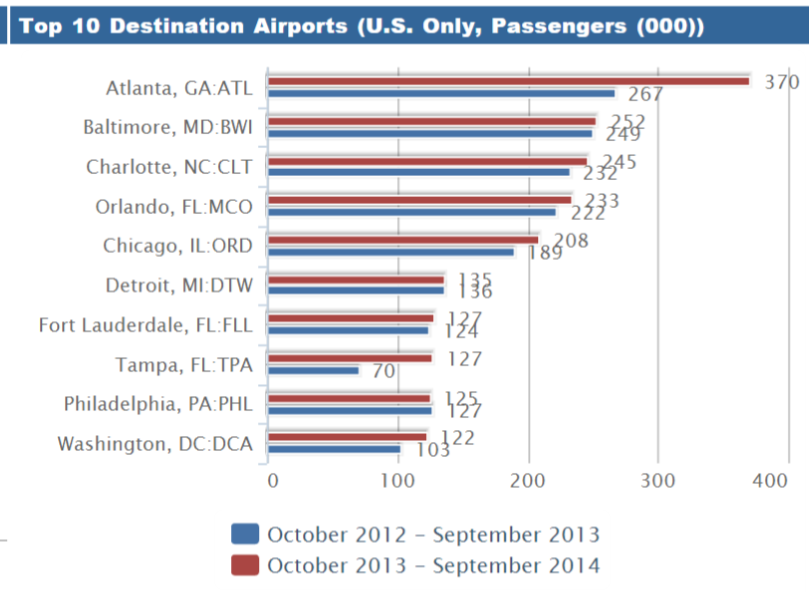
The total number of “enplanements” has increased at Bradley in month-over-month comparisons for the first five months of the fiscal year that began on July 1, 2014, according to data provided on the Bradley airport website. The number of passengers arriving on flights at Bradley were up 11.59 percent in July from the same month the previous year, and up 12.62 percent in August, 9 percent in September, 4.7 percent in October, 3 percent in November. Data for December has not yet been published.
Between July 2013 and June 2014, the most popular months for travel from Bradley were the months of April (258,756), May (257,627) and December (255,144). If recent trends continue, this spring may bring record-setting months to the airport.
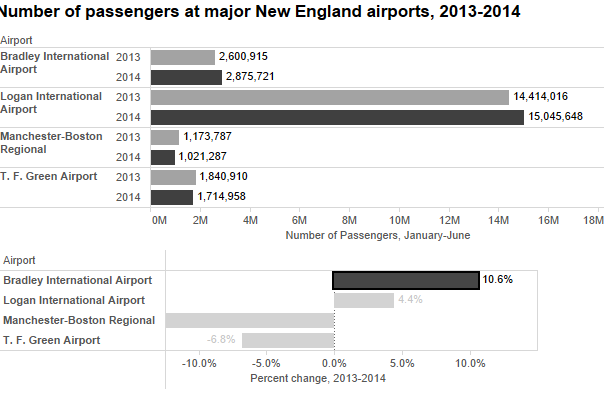
During the first six months of 2014, about 2.9 million passengers used Bradley. That was a 10.6 percent increase from the 2.6 million passengers who used the airport in the first half of 2013, according to published reports.
Southwest carries the largest percentage of passengers at Bradley, 26.4 percent. Delta is next with 16 percent, followed by JetBlue at 12.1 percent, US Airways with 9 percent and American with 7.7 percent. An assortment of smaller carriers carry 28 percent of the passengers, arriving and departing, at Bradley.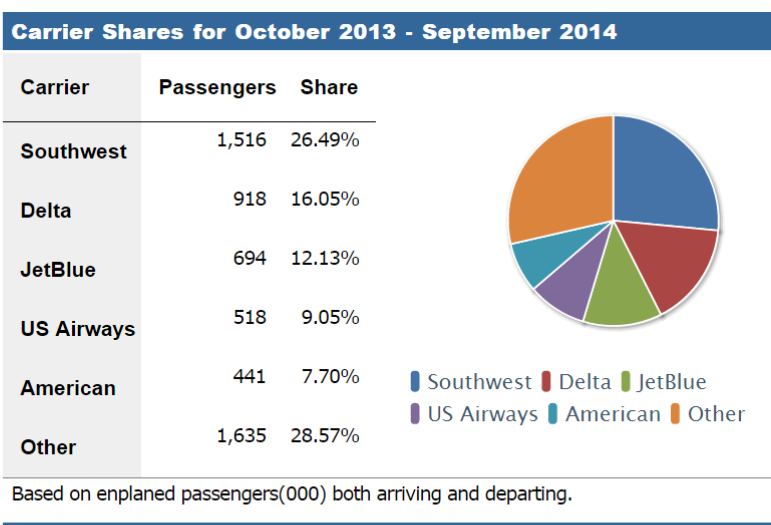
The on-time performance of the airlines at Bradley remained virtually identical between November 2013 and October 2014, at 81 percent, compared with 82 percent a year ago. Among flights that have been delayed, the average duration of the delays has declined, from just over to just under an hour.
Bradley International Airport is the second largest airport in New England. According to the most recent economic impact analysis, Bradley contributes $4 billion in economic activity to the state of Connecticut and the surrounding region, representing $1.2 billion in wages and 18,000 full-time jobs.
 The Preservation of Place grant program provides a source of funding for new initiatives that can be integrated into, and leverage, comprehensive Main Street preservation and revitalization programs. The funds are meant to be flexible to meet individual community need.

 USOC board members chose Boston, with its promise of frugality and temporary, reusable venues, over Los Angeles, San Francisco and Washington. Boston joins Rome as the only other city that has officially decided to bid. Germany will submit either Hamburg or Berlin, with France, South Africa and Hungary among those also considering bids, according to published reports.

 Last fall, a promotional video advocating a Boston bid was released, and a website was launched. With an eye toward innovation and efficiency, the video highlights Boston’s bid “to create a sustainable model for hosting the Olympic and Paralympic Games that can become the blueprint for future host cities.”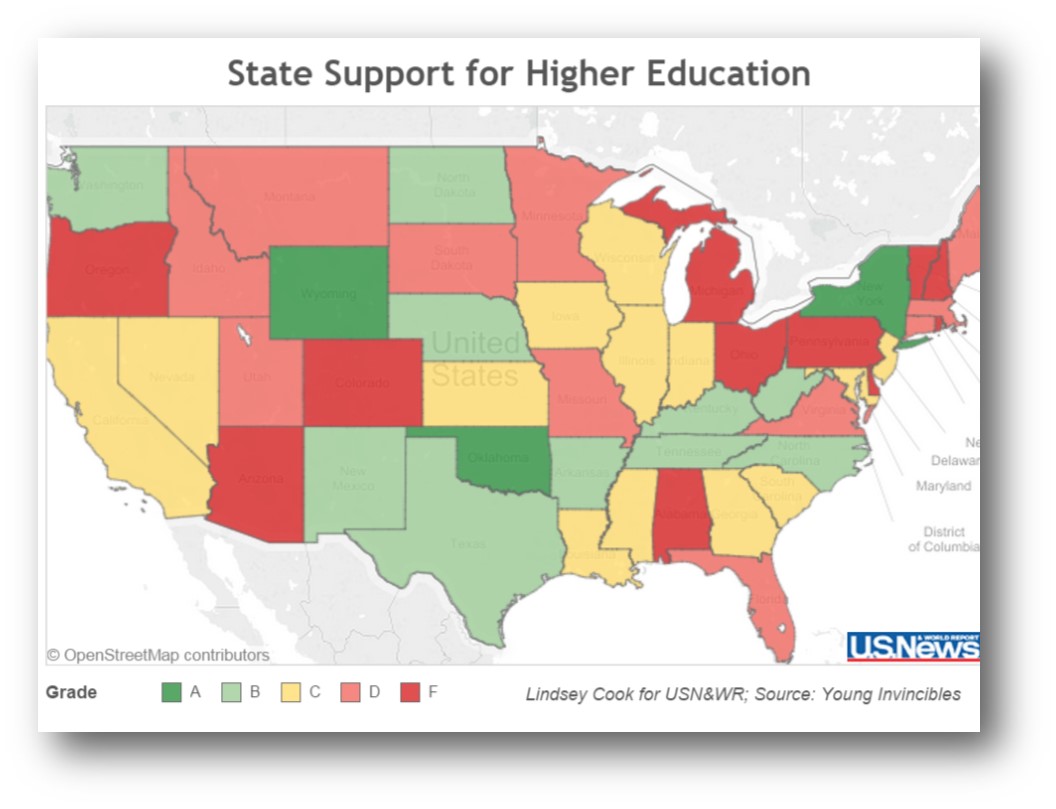
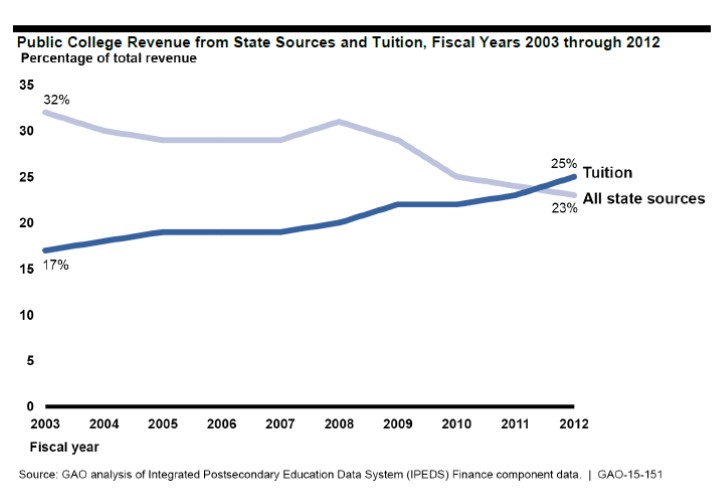
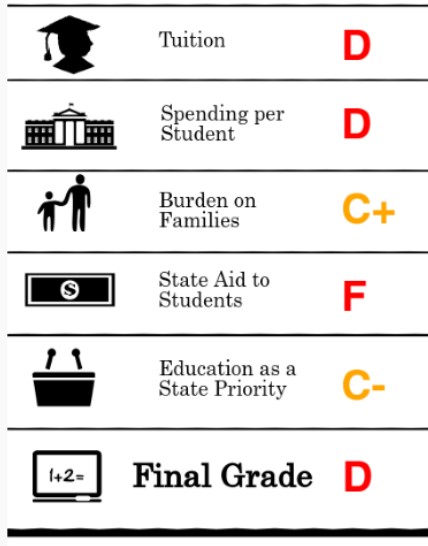 last month by the General Accounting Office in Washington, D.C. for the U.S. Senate found “persistent state budget constraints have limited funding for public colleges” across the country. The result, according to the GAO report: “Students and their families are now bearing the cost of college as a larger portion of their total family budgets.”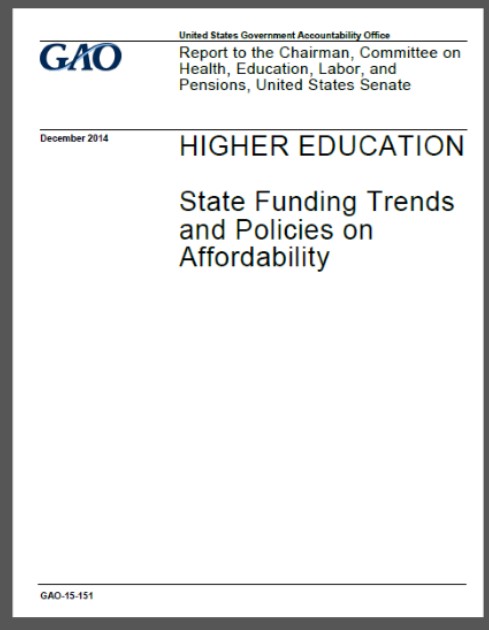
 “state grant aid directly affects students in that it can reduce their out-of-pocket expenses for college… state grant aid, both merit- and need-based, has positive effects on enrollment.” The results of one program, in Washington State, cited by GAO “suggests that receiving the aid increased a student’s probability of enrolling in college by nearly 14 to 19 percentage points.”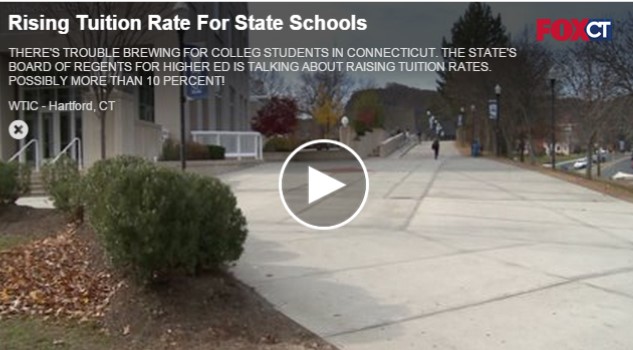

 oblems for the state.”
 83, which exposed a poor record of road and bridge maintenance in the state, with creation of a Special Transportation Fund to set aside money to maintain and repair the state's bridges.
 ll station that killed seven people and galvanized public opinion. The state had collected tolls at 14 locations - eight on the Connecticut Turnpike between Greenwich and Plainfield, three on the Merritt and Wilbur Cross Parkways, and at three bridges in the Hartford area. The tollbooths generated $66 million a year, The New York Times






 “With more than 540 firms participating in the IPA annual Survey and Analysis of Firms this year, along with many CPA firm associations contributing to the search to identify the IPA 200, this (is) the definitive ranking of the nation’s largest public accounting firms,” said Kelly Platt, principal of The Platt Group, the publisher of IPA.
 mong the industry trends cited by the publication are tighter margins, leadership changes, globalization, new regulations, acquisition pressures, evolving technology, cultural shifts, fierce competition, and commoditization of services (firms struggling to differentiate in the marketplace).
 nt and work closely with stakeholders in developing the conference, viewed as “an opportunity to look ahead to the issues that will help shape the landscape for older Americans for the next decade.”
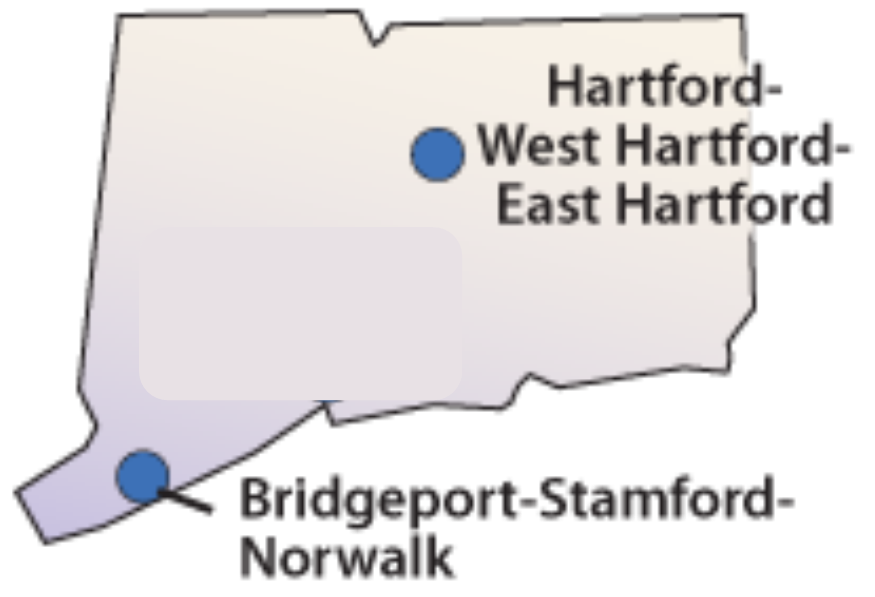 me in the Bridgeport-Stamford-Norwalk metropolitan area was $42,757, and the Hartford-West Hartford-East Hartford region was $42,322 for 18-34 year olds working full-time, according to the data, highlighted in an article posted to The Atlantic’s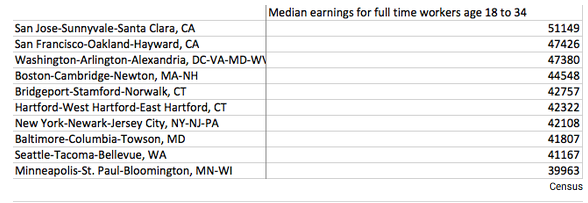
 “looking remarkably attractive.”