Hartford, Bridgeport Turn to Splashy Websites, Slogans to Promote Cities

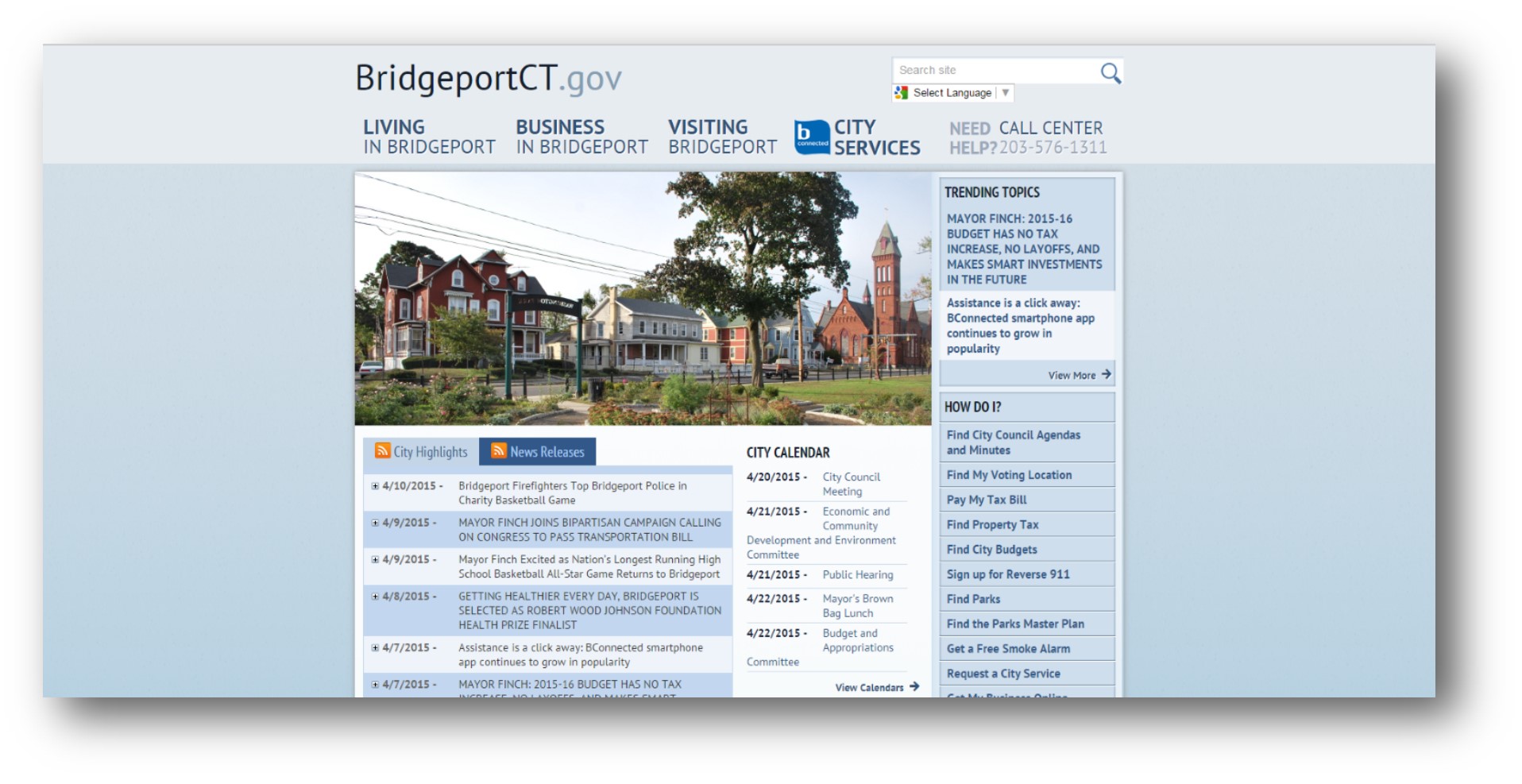
Connecticut’s major cities have dual personalities on the internet – one aimed primarily at city residents, the other at potential visitors and prospective residents.  While one site is chock full of detailed information that is the lifeline for locals – with listings of city agencies, services, and department contacts – the other is dominated by splashy photographs, engaging messages, and enticing activities. Such is the mhartfordarketing of urban cores in the age of the internet, mobile technology and social media – with an eye towards economic development and young professionals seeking an urban address.

In Hartford, the government site is www.hartford.gov and the event-laden site is www.hartford.com   The marketing site currently features a photo of the National Champion UConn Huskies basketball team, which fills the entire home page, save for links to Upcoming Events and Restaurants & Bars.  The menu includes Things to Do, Places to Go, and Everything Else (such as a category named Awesome Things).  The theme Hartford Has It, the city’s tagline, appears on both sites.

The www.hartford.gov site is led by an announcement of road closures in the city due to construction, and features links to government agencies, business services and visitors information, and police.  Hartford history highlights and facts about the city are included, along with a heading called “residents,” which includes a directory of city services, public health, public safety, family services and a link to “Pay Your Taxes.”hartford.gov

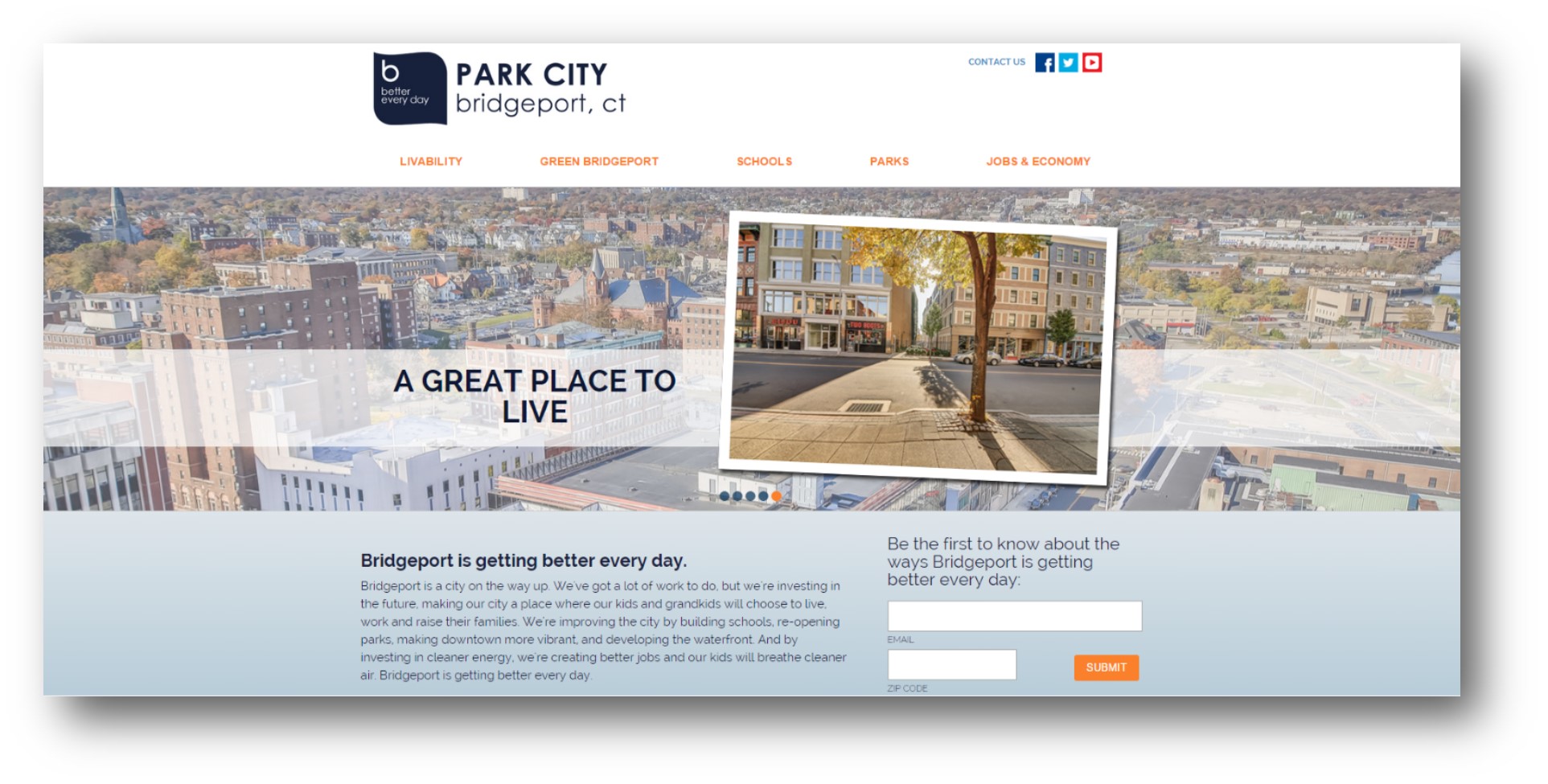
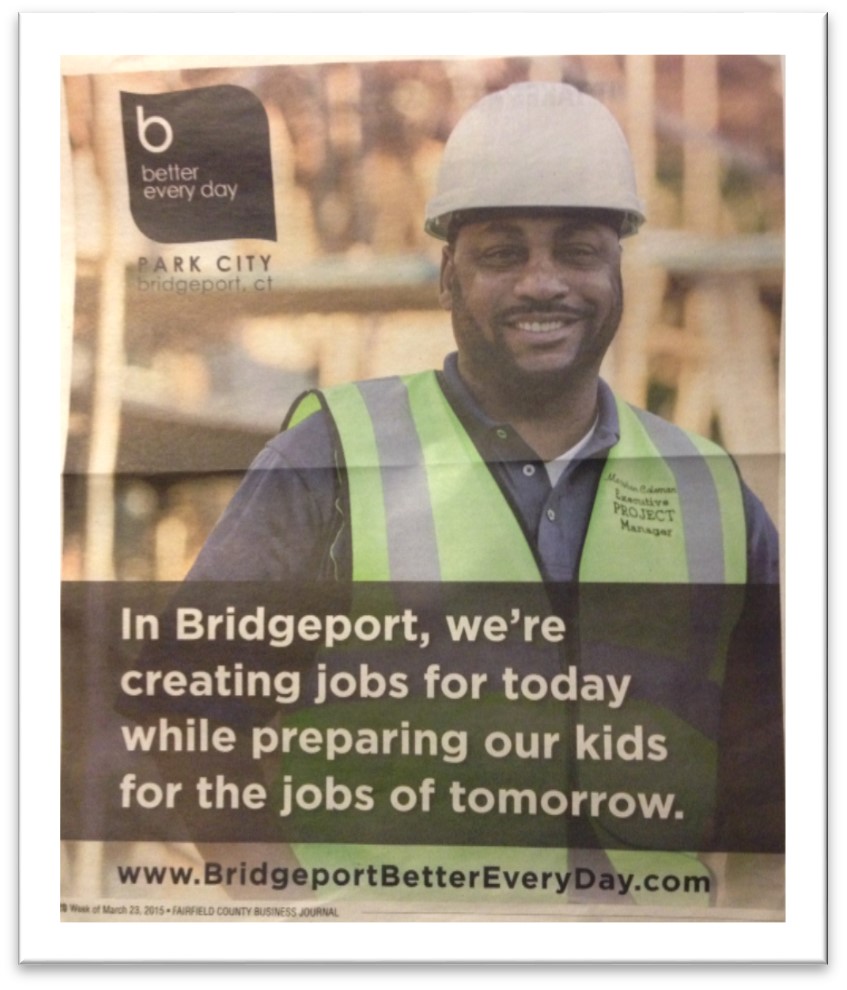
In Bridgeport, the city services site is  www.bridgeportct.gov but most of the advertising, including a full-page ad in the latest issue of the Fairfield County Business Journal, is for www.bridgeportbettereveryday.com   The site, which features the headline “Park City” above “bridgeport, ct” highlights livability, green Bridgeport, schools, parks and jobs & economy.  The theme of the site, “Bridgeport is getting better every day,” is reflected in the site’s URL, and the text featured on the home page:

“Bridgeport is a city on the way up. We've got a lot of work to do, but we're investing in the future, making our city a place where our kids and grandkids will choose to live, work and raise their families. We're improving the city by building schools, re-opening parks, making downtown more vibrant, and developing the waterfront. And by investing in cleaner energy, we're creabridgeport govbridgeportbetterting better jobs and our kids will breathe cleaner air. Bridgeport is getting better every day.”
Individual can sign up for emails from the city in order to “Be the first to know about the ways Bridgeport is getting better every day.”  Material on the site is copyrighted by the City of Bridgeport.

The site points out that:bridgeport ad
  • Bridgeport is becoming one of America’s greenest cities.
  • We’ve got a long way to go, but schools in Bridgeport are getting better every day.
  • Bridgeport’s been known as “Park City” for well over a century. And for good reason.
  • Bridgeport is a great place to live for families, young professionals, seniors, and everyone in between.

In New Haven, the city government website, www.cityofnewhaven.com, includes a home page message from Mayor Toni Harp, and an array of links to various city services.  Although not produced by the city, the websites www.infonewhaven.com and www.visitnewhaven.com offer information, events, and entertainment information about the city.

new haven


Museum Store Association Brings National Conference to Hartford; Wadsworth Atheneum Is Award Finalist

The Wadsworth Atheneum’s Museum Store is one of five nominees for the 2015 Museum Store Association (MSA) Visual Merchandising award, which recognizes excellence in visual merchandising by a museum institution. The award will be given on Sunday, April 19 in Hartford – on the final day of the Museum Store Association’s national conference, being held this weekend at the Connecticut Convention Center. Nominations were evaluated based on creative use of resources, collaboration and how well the display extends the museum experience.  The other finalists are the Columbia River Maritime Museum, Fine Arts Museums of San Francisco, Eastern National and Virginia Museum of Fine Art.Balancing-Act-600x175-indd.jpg

The 2015 MSA Retail Conference & Expo, organizers point out, is designed to help nonprofit retail professionals succeed by offering dynamic learning sessions and opportunities to connect with select MSA vendors who offer products matched with the museum store industry.

In Hartford for the annual conference are approximately 300 museum store professionals and more than 200 select vendors who offer products and services for nonprofit and independent retailers. When the conference location in Hartford was announced 15 months ago, it was expected to bring in 900 participants downtown utilizing an estimated 1,130 room nights, according to organizers.

Learning sessions throughout the conference are presented by “the leading thinkers in nonprofit retailing who share the knowledge you need to run your store, meet the needs of management, make the most out of challenges, be a leader and through retailing contribute to your institution’s brand and extend the experience of your visitors.”

It is the first time the national conference is being hosted in Hartford.  In recent years host cities have been Houston, Los Angeles, New Orleans and Chicago.  The national meeting also includes a “retail boot camp” and a tour of the Mark Twain House and Harriet Beecher Stowe House in Hartford.

The outstanding line-up of speakers includes Roderick Buchanan, the director of buying and retail sales at the British Museum Company, where he has overseen the redevelopment of the stores, products and customer service culture and increased profits four-fold since 2008.  Buchanan will deliver the conference opening keynote on Saturday morning.  The closing keynote speaker on Sunday will be Dick Durrance, described as one of the most versatile photographers of his generation. His well-known portfolio includes images from Vietnam combat, National Geographic stories, global advertising campaigns, National Parks and the world’s great golf courses.

Sessions for industry attendees include Open To Buy Workshop, Retail Boot Camp, 7 Habits of Highly Effective Retailers, Sales Guaranteed: The Only Four Things You Need to Know to Improve Museum Store Sales, Perspectives On Fair Trade, 29 Tech Tools to Create Cool Content for Social Media, Looking at Business Through Your Customers’ Eyes and eCommerce A to Z: Selling the Museum Experience Online.

In addition to the Wadsworth Atheneum, other MSA member institutions in the area include the Connecticut Historical Society Museum & Library, Harriet Beecher Stowe House, New Britain Museum of American Art and Friends of Dinosaur State Park and Arboretum. Manager of the Museum Shop at the Wadsworth Atheneum Museum of Art, Stacey Stachow, is immediate past MSA Board President.Hartford-Square

“Retailers often find themselves doing a balancing act every day, performing a variety of functions and responsibilities,” said Jama Rice, MSA Executive Director/CEO. “They balance inventory control, staffing, merchandising, displays, financial management, marketing and even event planning, and at the same time they must stay apprised of all that’s happening at their institutions and stores. The 2015 Conference & Expo will provide tools to help balance the balancing act.”

Now in its 60th year, the Museum Store Association is a nonprofit, international association dedicated to advancing the success of nonprofit retail professionals in extending the brand and contributing to the bottom lines of their institutions. MSA serves over 1,500 members in the U.S., Canada, Mexico, Asia and Europe.

CT Is Second-Tier State in Innovation Ranking of States; Earns Top Grades in Investment, Internet

Connecticut is among the second tier of states, described as an “innovation leader,” in the inaugural Innovation Scorecard compiled by the Consumer Electronics Association (CEA).  The first-of-its-kind innovation performance index is based on ten criteria, and evaluates all 50 states and Washington, D.C., according to the conduciveness of their legal, regulatory and overall business environments to welcome and encourage innovation. The Innovation Scorecard’s first group of Innovation Champions – those states that earned the highest grades – are Delaware, Indiana, Massachusetts, Michigan, North Carolina, South Dakota, Texas, Utah and Virginia, as well as the District of Columbia.CT grades

Connecticut’s grades range from A- in the “attracts investment” and “fast internet” categories to a C in “tax-friendliness,” D in “innovation friendly sustainable policies,” and F in “right to work.”  The state also received a B in four categories:  entrepreneurial activity, tech workforce, grants STEM degrees and innovation momentum.

The analysis notes that in Connecticut, “the public and private sector are funding incubators including the Connecticut Enterprise Center, Institute of Technology & Business Development and UConn Technology incubation Program to help startups launch their businesses and become financially viable companies.”

The Innovation Scorecard assesses the progress of state policies intended to advance innovation and improve business climates, while also tracking states’ responsiveness to disruptive innovation. Using established economic, educational and legislative data, the report issues grades across ten categories, including: right-to-work laws; policies that support new business models; tax friendliness; Internet speed; and size of the tech workforce.

After the innovation champions group that tops the list, the next category (innovation leader) includes Connecticut and 19 other states, including Vermont and New Hampshire in New England and Washington and Oregon on the West Coast.USA

Connecticut is one of only five states to receive an A, A- or A+ in the “attracts investment” category.  The others are California, Washington, Massachusetts, and Delaware.  Nine states and Washington, D.C. receive an A, A- or A+ for “fast internet.”  Among them are Connecticut, New Hampshire, Rhode Island and Massachusetts.

Among the CEA report’s key findings:

  • Delaware leads the nation in providing the fastest average Internet speed, at 16,200 kbps;
  • The District of Columbia leads the nation in tech jobs per capita;
  • Massachusetts and California bring in the most venture capital investment dollars, more than $500 per capita, in the U.S; and
  • Massachusetts, California, Washington, Connecticut and Delaware received higher R&D investment than other states.

Plans are for the Innovation Scorecard will be annually updated to reflect states’ evolving policies and any changes in measuring innovation.

CEAGary Shapiro, president and CEO of CEA, said “The future of growth and economic prosperity in this country is most vibrant in places where policies and political climates serve to unleash the entrepreneurial spirit and can-do attitude that is part of our American DNA. Our hope is that states will use our Scorecard as a measurable guidepost to improve their policies supporting innovation.”

The Consumer Electronics Association (CEA), with more than 2,000 member companies, is the technology trade association representing the $286 billion U.S. consumer electronics industry.

Millennials Present New Challenges to Insurance Industry Seeking Customers

Just as recently appointed Connecticut Insurance Commissioner Katharine L. Wade settles in to her job, the insurance industry is facing new challenges from a new generation. A former Cigna executive, Commissioner Wade has more than 20 years of industry experience and oversees a regulatory agency with jurisdiction over one of the largest insurance industries in the United States.  Hartford has long been considered the nation’s Insurance Capitol, so changes in the industry reverberate across the Constitution State.

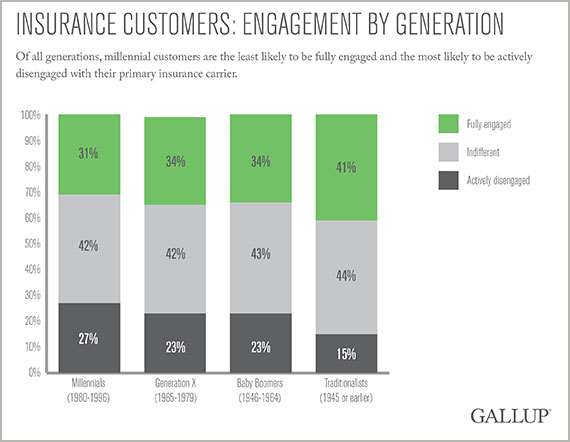
It seems insurance companies have their work cut out for them when it comes to engaging their millennial customers. Of all the generations, millennials (born in 1980 to 1996) are the least likely to be fully engaged -- and the most likely to be actively disengaged -- with their primary insurer, according to a recent Gallup survey.

3siww10abkcj3m39d9khgaMillennials are the largest generation in the U.S. and will grow to dominate the market in the years to come, Gallup points out, adding that “insurance executives who neglect to take steps to engage this age group do so at their own peril.”

Insurance companies see substantial business gains when they engage customers of any generation, Gallup finds. Compared with their actively disengaged counterparts, engaged insurance customers are less sensitive about pricing when selecting and retaining a primary insurance carrier. They spend more and buy a wider variety of products, including financial offerings, from their insurer than do actively disengaged customers. They also stay with the company longer and are more likely to recommend it to others.insurance_1

But building and maintaining customer engagement can be challenging -- especially for insurance companies with a diverse customer base. To raise millennials' engagement -- and thereby ensure a more engaged customer base in the future -- Gallup indicates that "leaders must understand how these young customers differ from others in their engagement and consumer behavior."  And they do differ, in substantial ways.

In its 2014 Insurance Panel study, Gallup uncovered insights into what drives millennials to start a relationship or stay in one with an insurance company. The analysis revealed many similarities across generations, but it also uncovered two important approaches to build relationships with millennials, and key factors that differ with past generations.

  1. Family is key. Millennials are significantly more likely than other generations to have insurance coverage under a family member who chose the company. When their family members value an insurance company's brand, millennials follow suit. This finding contrasts sharply with older generations' prioritization of factors such as cost and company reputation.
  2. Millennials are more likely to buy insurance online. Millennials are more than twice as likely (27% vs. 11%, respectively) as all other generations to purchase their policies online rather than through an agent. Online purchasing is far from the mainstream among insurance consumers overall -- 74% originally purchased with an agent vs. 14% online -- but if this trend among millennials continues to grow, it could substantially change the way insurance companies interact with customers in the coming years.

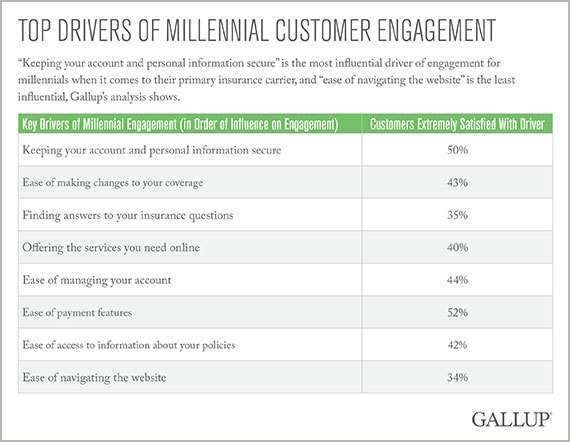
The bad news?  Millennials are least satisfied of any generation with the online experience, which could contribute to their generally low engagement overall with their primary insurer. Improving interactions with customers online is, therefore, a smart investment toward building strong relationships within this future mainstream customer base, Gallup points out.

As insurance companies consider ways to improve those relationships with millennial customers, Gallup suggests seven key areas worthy of attention:  information security, family incentives, specialized services,  ease of making changes to coverage online, ease of finding answers online, easy access to a range of online services, and overall ease of use in areas including account management, payment and website navigation.

Millennials’ distinctive attitudes also extend to car insurance and long-term care insurance, according to other recent surveys.

Cars are increasingly being rejected by many millennials in favor of public transit or other modes of transportation, including increasingly popular ride-for-hire services.  As a consequence, car insurance is taking a backseat among some, the website NerdWallet reported this month. 42kr-vntpuuvwukbr__grqAccording to a study by the U.S. Public Interest Research Group, Americans are driving fewer total miles today than eight years ago, and driving fewer miles per person than we did in 1996.  It is a reversal after decades of steady growth.

Millennials are less likely to drive — or even have a driver’s license — than previous generations. From 1983 to 2008, the percentage of Americans age 20 to 24 with a driver’s license fell from about 90 percent of that age group to ju3147d6ba926618732903732fd442b68est over 80 percent, according to a University of Michigan study, the website noted.  If you don’t own a car, you don’t need car insurance.
In addition, Forbes recently reported that many of the nation’s millennials think their boomer parents are doing a lousy job planning for their long-term care needs, according to a survey from Genworth Financial, a leading seller of long-term care insurance policies.

The Aging Across Generations study, conducted with the J&K Solutions research firm, found that 27 percent of millennials would give their parents or loved ones a “failing grade” due to not planning for, or talking about, their long-term care needs.  And the kids say they’ll do better, with more than half (56 percent) of millennials surveyed expressing the view that they will plan for their long-term care needs more effectively than previous generations.

Time will tell.  Other impacts on the industry are likely to be more noticeable more quickly.

As Income Inequality Grows Nationwide, CT's Top 1% Earn More Than in Any State

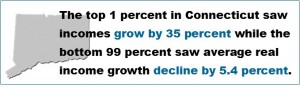
Connecticut's top 1 percent earned an average of $2.7 million, compared to an average of $52,000 for the rest of the taxpayers -- a ratio of about 51 to 1, according to a report from the Economic Analysis and Research Network (EARN). The data indicate that the top 1 percent of taxpayers in Connecticut earn more than $677,608 — the highest 1-percent income threshold in the nation, according to the report issued earlier this year, based on 2012 data.  In addition, Connecticut has the largest income gap between the top 1 percent of taxpayers and the bottom 99 percent, according to a recent study, and a AP-GfK poll found that 68 percent of Americans believe that wealthy households pay too little in federal taxes. It is little wonder that some describe the nation – as well as Connecticut – as separate and disparate lands.  Income inequality drives the conversation.

CT statThe top 1 percent in Connecticut saw incomes grow by 35 percent between 2009 and 2012, while the bottom 99 percent of Connecticut taxpayers saw average real income growth decline by 5.4 percent during the same period, according to the report. In fact, the states in which all income growth between 2009 and 2012 accrued to the top 1 percent include not only Connecticut, but Delaware, Florida, Missouri, South Carolina, North Carolina, Washington, Louisiana, California, Virginia, Pennsylvania, Idaho, Massachusetts, Colorado, New York, Rhode Island, and Nevada.pulldata
A recent article in the Boston Globe, Divided Nation, included the following:

  • The nation’s 100 richest families have as much wealth as the 80 million families who make up the bottom 50 percent in wealth, according to the University of California, Berkeley.
  • By the late 1970’s the wealth gap in America had substantially closed over the previous five decades, with the top .01 percent of Americans holding 7 percent of the nation’s wealth. The trend then reversed. By 2012, the top 0.1 percent controlled 22 percent of the nation’s wealth.  Projections are the percentage will reach 25 percent by next year.
  • An estimated 7 million families have lost their homes to foreclosure since 2007, according to Moody’s Analytics. And 6.5 million families still hold mortgages larger than the value of their home.pay chart

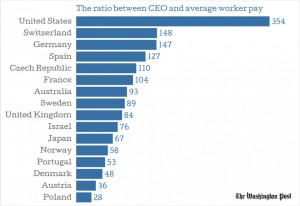
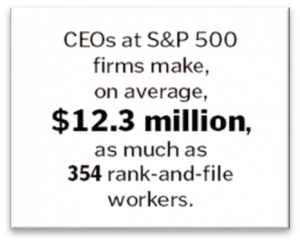
A study conducted at Harvard Business School last fall found that Americans believe CEOs make roughly 30 times what the average worker makes in the U.S., when in actuality they are making more than 350 times the average worker.  A previous analysis estimated that it takes the typical worker at both McDonald's and Starbucks more than six months to earn what each company's CEO makes in a single hour.

The average Fortune 500 CEO in the United States makes more than $12 million per year, which is nearly five million dollars more than the amount for top CEOs in Switzerland, where the second highest paid CEOs live, more than twice that for those in Germany, where the third highest paid CEOs live, and more than twenty one times that for those in Poland, the Harvard report indicated.

EARN reportThe wealth disparity is also on full display in politics, the Globe points out, noting that 100 super-wealth Americans accounted for 41 percent of contributions in 2012 to so-called Super Political Action Committees (PACs).

Widely reported estimates suggest that compensation of CEOs was about 20 times as much as the typical worker in the 1950s, rising to 42-to-1 in 1980 and 120-to-1 in 2000. In 2013, the ratio stood at 204-to-1 for the S&P 500, with the average of the top 100 companies at nearly 500-to-1, according to a 2013 Bloomberg Businessweek report cited a study by researchers at Rice University and the University of Houston last month, which found that for the vast majority of United States commercial banks, the ratio of CEO-to-employee pay was lower than at the top echelons of the S&P 500.

The EARN report concludes by starkly pointing out that “Policy choices and cultural forces have combined to put downward pressure on the wages and incomes of most Americans even as their productivity has risen. CEOs and financial-sector executives at the commanding heights of the private economy have raked in a rising share of the nation’s expanding economic pie, setting new norms for top incomes often emulated today by college presidents (as well as college football and basketball coaches), surgeons, lawyers, entertainers, and professional athletes.”

Economic Report Finds “Significant Shift” in Destinations for State Exports

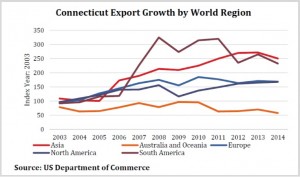
Connecticut has become more reliant on exports to drive gross state product growth during the past decade, according to a new report prepared by the Connecticut Economic Resource Center (CERC). In 2003, Connecticut exports as a percent of Gross State Product (GSP) stood at 4.5 percent, increasing to 6.6 percent of GSP in 2013. That growth, CERC points out, makes it “important to analyze Connecticut exports trends to understand how exports will impact Connecticut’s economy in the future.”commerce chart

In 2014, approximately 46 percent of Connecticut exports were comprised of transportation equipment merchandise, which includes aerospace equipment. And approximately 45 percent of Connecticut exports went to four countries: France, Canada, Germany, and Mexico, according to the report, Eye on Economics – Export Trends for Connecticut.

Although Connecticut still has strong trade ties with Europe and the North American Free Trade Agreement (NAFTA) countries (Canada, Mexico), there has been “an obvious shift in export growth among its trading partners.”   From 2013 to 2014, Connecticut exports to South America and Asia increased overall, while exports to Europe, Oceania, and the rest of North America (mostly Canada and Mexico) were “generally flat.”

From 2003 to 2014, Connecticut exports to Asia increased by 182 percent, faster than exports to any other region, according to the data.   Economic growth in Asia was primarily driven by growth in China.exports

The shift in Connecticut export locations “can be partially explained by demand changes in regions that Connecticut trades with,” the report explains, citing changes in the appetite for exports in Europe and Asia. Europe, for example, has “experienced economic weakness since 2008 and has not fully recovered. It has been particularly hit hard by credit market constraints and unemployment, which has reduced consumptions levels, and thus demand for imported merchandise, the CERC report pointed out.

Looking ahead, the CERC analysis anticipates that Connecticut exports “may slow or remain flat” because of “weaker demand in Europe, where the majority of Connecticut exports currently go to; and Asia, which received the second largest amount of Connecticut exports in 2014.”

CERC logoCERC is a nonprofit corporation and public‐private partnership that provides clients with objective research, marketing and economic development services. The organizations mission is to “provide services consistent with state strategies, leveraging Connecticut’s unique advantages as a premier business location.”


The report was developed by the CERC Research Department, including Alissa DeJonge, Carmel Ford and Matthew Ross.

Norwalk Among 15 Finalists for City Livability Awards; Energy Program Highlighted

The City of Norwalk and Mayor Harry Rilling have been chosen as one of fifteen finalists for the U.S. Conference of Mayors City Livability Awards in the national division of cities with populations under 100,000.  The awards recognize mayoral leadership for developing and implementing programs that improve the quality of life in America’s cities. The program is characterized by the U.S. Conference of Mayors as “the most competitive award program” sponsored by the organization, and honors mayors and city governments for developing innovations that enhance the quality of life in urban areas.        livibity

In its application, the City of Norwalk recognized the work of the Mayor’s Energy and Environment Task Force, chaired by Council member John Kydes, according to city officials.  Mayor Rilling created the Task Force in February 2014 to promote environmentally responsible use of energy and natural resources among citizens and businesses in Norwalk, and to offer them green energy alternatives.

As a finalist, The City of Norwalk has been invited to submit a second application to the judges for the final round of decisions, which will take place in late spring.  A first-place city and four runners-up will be announced at the organization’s annual meeting in June.

The other cities reaching the second round are Aguadilla, PR; Camuy, PR; Carmel, IN; Davie, FL; Hattiesburg, MS; Norcross, GA; Orland Park, IL; Pontiac, MI; Renton, WA; Rochester Hills, MI; Sumter, SC; Sunrise, FL; Warren, OH; and Westland, MI. NorwalkSeal

Last year, New Orleans, LA Mayor Mitch Landrieu and West Sacramento, CA Mayor Chris Cabaldon were awarded first place honors – for cities above and below 100,000 population respectively -  in the 2014 City Livability Awards, from a pool of over 200 applicants. Honorable mention for cities with populations of less than 100,000 was given to Beverly Hills (CA), Braintree (MA), Roanoke (VA) Tamarac (FL) and York (PA).

Mayor Bill Finch and the City of Bridgeport were recognized with an Outstanding Achievement Award among cities with populations over 100,000 in 2012, for the city’s Brownfields Remediation and Redevelopment Program – the City’s focus on reclaiming dormant brownfields to spur redevelopment.  That same year, Hartford and Mayor Pedro Segarra also earned an Outstanding Achievement Award.

Established in 1979, the City Livability Awards are given annually to ten mayors and their cities--a first-place award and four Outstanding Achievement Awards for cities under 100,000 population, and a first-place and four Outstanding Achievement Awards for cities of 100,000 or more inhabitants.

The U.S. Conference of Mayors is the official nonpartisan organization of cities with populations of 30,000 or more. There are nearly 1,400 such cities in the country today, and each city is represented in the Conference by its chief elected official, the mayor.

Connecticut Ranks #39 Among States for Retirement; Lowest In New England

Connecticut, ranking 39th overall and lowest among the six New England states, came away with a mixed bag of results on a list of the “Best and Worst Places to Retire,” compiled by the financial data website bankrate.com and published this week. The good news:  Connecticut ranked #6 in crime rate, the state’s highest ranking among the six categories included in the survey, and just outside the top ten at #12 for health care quality.  Undeterred by the challenging February weather this year, Connecticut ranked #14 for weather among the nation’s 50 states.  Not so good – Connecticut ranked near the bottom, at #48, in cost of living, and at the middle-of-the-pack, at #24, for community well-being.

The survey of around 1,000 adults in the U.S. questioned what Americans' priorities are when it comes to retirement. Nearly a quarter of those surveyed said being close to family was the deciding factor. But when it came to climate, while around a quarter prefer being close to a beach, nearly 40 percent of people want access to the great outdoors, rivers and mountains, according to published reports highlighting the survey results.retrirement

The top 10 states were Wyoming, Colorado, Utah, Idaho, Virginia, Iowa, Montana, South Dakota, Arizona and Nebraska.  The highest ranked New England states were Maine at #12, Vermont at #15 and New Hampshire at #16.  Massachusetts came in at #18 on the list, and Rhode Island was just ahead of Connecticut at #38.

By category, Minnesota topped the list in health care quality, Hawaii was #1 in community well-being, New Mexico was #1 in weather, and Mississippi (which ranked #36 overall) had the lowest cost of living.   Vermont had the lowest crime rate and Wyoming the lowest tax rate.

Bankrate provided the following breakdown of the origin of the data used in compiling the rankings:  The cost-of-living data was provided by the Council for Community and Economic Research, a Virginia-based group that tracks retail prices in more than 300 communities around the country. Crime statistics include property and violent crimes reported by police departments to the FBI.senior man

Health care quality scores come from the Agency for Healthcare Research and Quality, a federal office that measures each state's performance on about 160 different health-related issues. The National Oceanic and Atmospheric Administration provided weather data, including readings on temperature, humidity and sunshine. The "well-being" scores for seniors were from Healthways, a research group that works with the Gallup polling service to survey the public about their happiness and general satisfaction with their surroundings.

There are worse places than Connecticut to retire, according to the survey.  Among them:  Oklahoma, Oregon, Missouri, Kentucky, Louisiana, West Virginia, Alaska, and Arkansas, as well as New York and New Jersey.  Hawaii also ranked in the bottom 10, largely due to its highest-in-the-nation cost of living.

Women at Disadvantage in Seeking IPO Investments, Research Study Finds

A new study by academic researchers into decisions regarding the financing of Initial Public Offerings (IPO) of fledgling businesses has found "one significant and persistent effect on investor perceptions that did influence those evaluations—the gender of the CEO.” Even though women-owned firms represent almost half of U.S. new businesses, female founders and CEOs of start-ups fared poorly in an IPO simulation involving MBA students, the researchers found – a result of interest to Connecticut’s business start-up, venture capital, and entrepreneurial communities, at a minimum.IPO

The study found that the amount of money that participants recommended for investment in a fictionalized initial public offering for a cosmetic-surgery company was almost 4 times higher if the CEO was identified as male.  In fact, the anticipated share price of IPOs led by male CEOs was approximately 11 percent higher than those of female-led IPOs, suggesting that bias explains why successful female-led IPOs are an "extremely rare phenomenon," the researchers point out.

The paper,recently  published and now available through the Social Science Research Network, was conducted by Lyda S. Bigelow, Leif Lundmark and Robert Wuebker of the University of Utah and Judi McLean Parks of Washington University in St. Louis.McLean Parks, JudiLyda Bigelow

Skirting the Issues: Experimental Evidence of Gender Bias in IPO Prospectus Evaluations,” stresses that “given the impact of entrepreneurial activity around the world, the question of how entrepreneurs finance their ventures is a crucial question, as adequate capitalization for a new venture can make the difference between firm survival and failure. Whether a spin-off or start-up, firms that seek to grow beyond initial size at founding rely on the decisions of potential investors for the necessary financial resources.”

Given that women executives are present in the top management teams of IPO firms in increasing numbers, the lack of female-led IPO firms is a “curious fact, especially since women-owned private businesses represent almost half of the new businesses formed in the United States, with patterns of founding similar to male-owned businesses.”

In the study, using a sample of MBA students the researchers constructed a simulated initial public offering (IPO) manipulating the gender demographics of the top management team. Their results suggested that female CEOs “may be disproportionately disadvantaged in their ability to attract growth capital when all other factors are controlled.”

Despite identical personal qualifications and firm financials in the scenario, the study results indicated that:

  • firms led by females were seen as having a poorer strategic position than those led by males,
  • female Founder/CEOs were perceived as less capable than their male counterparts, and
  • IPOs led by female Founder/CEOs were considered less attractive investments.

“The disparity is significant, as is its potential economic and social impact,” the researchers state. “If companies led by females are disadvantaged in their ability to raise cash through the stock market, it can impact the viability and financial health of their companies, their ability to expand and compete in an increasingly global and competitive environment, and if they are unable to remain viable, their employees’ livelihoods.”

The 43-page research report also suggests that gender bias may extend beyond IPO’s to other disciplines within the financial world, and urge additional study.

Future research, they suggest, “could explore whether or not these findings extend to financial professionals such as bank loan officers or venture capital investors, and could investigate the role that prior experience plays in that process. This is an important question, as financial professionals, making investment decisions for individuals and institutions, control enormous amounts of money (for example, the combined assets of the nation’s mutual funds exceed $7.4 trillion, retirement funds exceed $2.7 trillion, closed end funds exceed $20 billion and exchange traded funds weigh in at $174 billion,” the research team pointed out.

Photos:  Judi Parks (left), Lyda Bigelow

Questionable Patent Claims Push Small Businesses to Pay Rather Than Fight; Congress to Again Consider Reforms

The odyssey began with a letter.  The owner of an Old Lyme small business, providing employment services for people with disabilities, was told that by scanning documents into emails, she was violating a patent.  In fact, every scan meant a $1,000 fine.  Pay $75,000, she was told, or face legal action. She ignored the first letter, hoping it was junk mail.  When a second, “scarier, and more threatening” arrived, she contacted an attorney, who put her in touch with a patent attorney.

What was happening was a phenomenon described as patent trolling.  The New York Times has described patent trolls as “people who sue companies for infringement, often using patents of dubious value or questionable relevance, and then hold on like a terrier until they get license fees. In recent years, patent trolls — they prefer “patent assertion entities,” or P.A.E.’s — have gone from low-profile corporate migraine to mainstream scourge.”Patent  Defined

Roberta Hurley, the small business owner in Connecticut, describes them as “creepy people,” intentionally frightening business owners with a “big scam.”  They depend on the unknowing to pay the outrageous demands, afraid of being taken to court.

The company making the demand could not be reached by phone, and the letter had nothing more than a Post Office box for an address.  But the tone was nonetheless daunting.

“If you’re scared, you don’t understand patent infringement, don’t have the funds to hire an attorney, which is true of many mom and pop businesses, it’s easier to write a check to stop them,” Hurley observed.

She couldn’t afford the $75,000 being demanded – “I would have had to close my doors” – and decided she would fight, and did.  “I wasn’t doing it,” she recalled.

It took time, effort and energy, and a bill from her attorney, but ultimately the demands stopped.  The entire process went on for nearly a year and a half, ending in 2013.  Along the way, she testified in Washington, went public to the news media, and told everyone she could what was happening.

Patent trolls may not have succeeded in this instance, but often do.  As The Atlantic pointed out in an article on the subject, “Given the cost, many defendants are willing to pay the troll to avoid a lawsuit even if the suit is not justified.”

In 2013, American courts saw six times as many patent lawsuits as in the 1980s, a Boston Globe op-ed by the authors of “Patent Failure” reported last fall.  “Over the past decade, there has been a 900 percent increase in the number of businesses facing patent litigation.”  They added that “recent research estimated that defendants spent at least $29 billion per year in out-of-pocket costs to defend or settle claims brought forth by patent trolls in 2011. Patent lawsuits by these entities drain an estimated $60 billion every year from the economy.”

trollLast month, a bipartisan group of 20 members of Congress reintroduced legislation aimed at reining in "patent trolls." A similar bill last year was approved by the House, but stalled in the Senate.  The legislation would express a sense of Congress that sending purposely evasive demand letters should be considered a fraudulent and deceptive practice, according to a published report in The Hill, a website that reports on Congress and the nation’s Capitol.

The Credit Union League of Connecticut is among the local and national consumer organizations urging approval of safeguards against patent trolls.  "Patent trolls often allege that the use of necessary everyday technology violates the patent holders' rights, state vague or hypothetical theories of infringement, often overstate or grossly reinterpret the patent in question, and make allegations of infringement of expired or previously licensed patents," the organization said in urging Congressional action.

The Connecticut Retail Merchant Association has also called for federal action, noting that “patent trolls are entities that threaten main street businesses with frivolous lawsuits over vaguely crafted or poorly worded patents. Usually, the patent troll wins a settlement because small businesses do not have the resources to fight it out in court. In fact, most trolls wouldn’t stand a chance to win and so they rely on scare tactics to extract a settlement, said Executive Director Tim Phelan in an op-ed published last year.  The National Retail Federation has pointed out that patent trolls "lose more than 90 percent of the cases that make it to trial. But the cost of defending companies against the claims is so high — the average case costs $2 million and can take 18 months — that many victims settle out of court. The cases cost legitimate businesses close to $30 billion a year in direct costs and $80 billion indirectly, amounting to $943 a year for the average household when passed on to consumers."

Authors Michael J. Meurer and James Bessen indicate, based on their research, that "there is no question that patent trolls cause immense harm. A recent survey of software startups found that nearly half reported “significant operational impacts” from patent troll lawsuits. These included a wholesale change of strategy or a shutdown of certain lines of business. Another survey found that roughly three of every four venture capitalists were adversely impacted by patent litigation."

Hurley, who has grown her Eastern Connecticut business (Southeastern Employment Services) from less than a handful of employees to 80 employees in just over a dozen years, says her advice to other small business owners is simple:  “don’t give them a penny.”  And she hopes that this will be the year that Congress approves patent reforms that will protect unsuspecting small business owners from “paying because they’re scared.”