Different Shelf Positions Prompt Different Types of Thinking, Buying by Consumers
/If you ever wondered why store shelves are stocked as they are, or whether the location of various items impacts which ones make it into your shopping cart, new academic research is providing some answers. It turns out that looking up and looking down to survey store shelves can influence your purchasing decisions. When people have to look downward to see a product, their thinking becomes more concrete; when they have to look upward, it becomes more abstract, according to a research team led by Anneleen van Kerckhove, a researcher at Ghent University in Belgium.
 Abstract processing has several effects on consumers, such as increasing their willingness to pay. The presumed source of the effect is that people are accustomed to looking downward to process nearby, concrete information and upward to absorb distant, more-abstract information, the researchers say.
Knowing how looking up or down impacts consumers can help businesses manage product displays. A product placed on a low shelf in a store may be evaluated in terms of specific features, cost, or the likelihood that the product will deliver on its promises. On the other hand, a product placed on a high shelf is more likely to be evaluated in terms of the general purpose it serves.
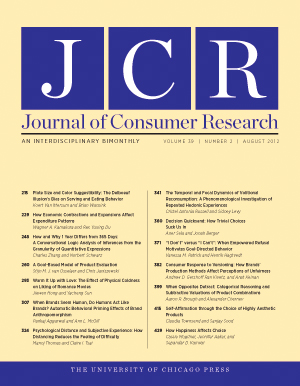
The research , “The Floor Is Nearer than the Sky: How Looking Up or Down Affects Construal Level,” is published in the April 2015 edition of the Journal of Consumer Research.
“Consumers pay attention to different aspects of products depending on whether they are looking down or up when choosing between available products. People are used to paying detailed attention when looking down because everything that happens close to them could be important or dangerous. However, people are more likely to think about the big picture when looking up because they are used to looking at things from more of a distance (to get the full picture),” the researchers, Anneleen Van Kerckhove, Maggie Geuens, and Iris Vermeir, conclude.
Ghent University is one of the major Belgian universities with over 41,000 students and 9,000 employees. It was founded in1817, current faculty conduct in-depth research in both exact and social sciences.
 A year ago, the website BizShifts-Trends pointed out that “Some of the hottest real estate in the country these days is on retail store shelves. Shelf space allocation is a serious issue in retail business. It’s an important tool for attracting customers’ attention, but getting a product on the shelf is no guarantee that it will sell.” The website also noted that “most vendors are willing to pay significant premiums to obtain preferred retail locations on both a promotional and everyday basis.”
In addition, the website Real Results magazine reports that “Paired with growing private-label popularity, manufacturers are realizing that they must quickly differentiate themselves from their closest competitors by becoming more consumer centric at the shelf level.”
Now research suggests that the difference between looking up and looking down can also impact the chance of products moving off the shelf and into the grocery cart.


 The
The 


 Fixed route transportation operates along a prescribed route and on a fixed schedule, and includes buses and light rail. In 2014 in Connecticut, buses provided over 43 million passenger trips and rail provided over 39 million passenger trips. Demand-responsive transportation provides routes and scheduling more individually tailored to the needs of the user. The Americans with Disabilities Act (ADA) requires transit agencies to provide paratransit service, subject to certain parameters, to people with disabilities who cannot use the fixed route services. Paratransit ridership in Connecticut in fiscal year 2014 under the ADA totaled over one million rides, and dial-a-ride ridership neared 100,000 rides.
 ommunities are located within a reasonable distance of quality, dependable public transportation.” In addition, policy makers were urged to “identify funding streams to sustain, coordinate, grow and make more convenient both fixed route and demand-responsive transportation options (including providing door-to-door service), and provide technical assistance to support regionalization efforts.”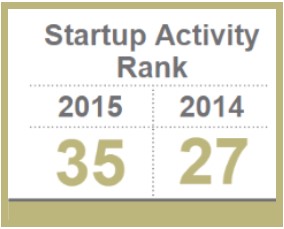
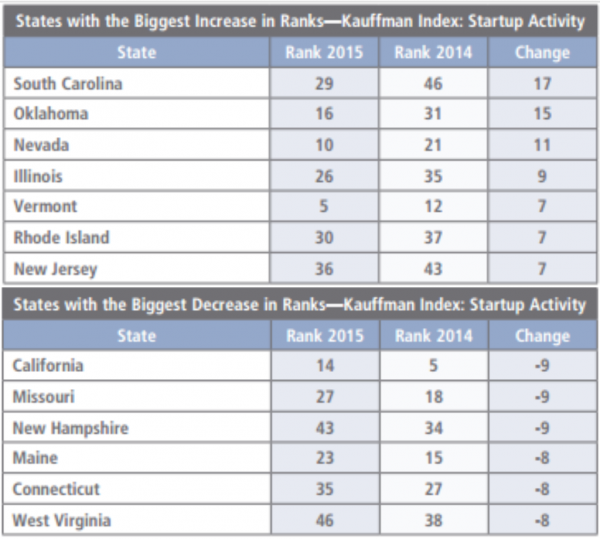 The top ranked states were Montana, Wyoming, North Dakota, Colorado, Vermont, South Dakota, Alaska, Idaho, Florida, Nevada and New York.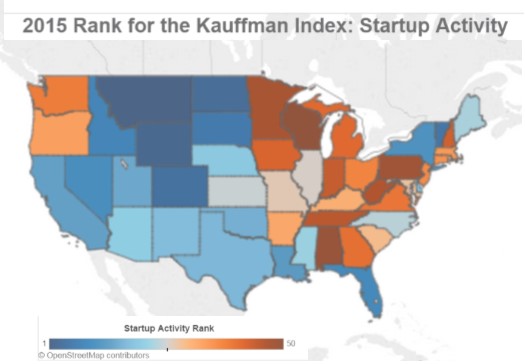
 6.8 million employees in all, more than ever, according to Fortune, whose issue with the 61st annual ranking is out this week.
 One of the two new entries on this year’s list that are headquartered in Connecticut is
 Amphenol World Headquarters
 Idaho recorded the largest percentage increase over the four-month period (+2.2 percent), followed by Utah (+1.8 percent). The other leading job growth states, by percentage, were Washington, Oregon, Michigan, South Carolina, Florida, Nevada, California, North Carolina, Arizona and Vermont. In West Virginia, Louisiana and Maine, average monthly employment declined slightly.
 Much of how state economies are performing is due to the individual sectors making up their employment base, Governing reported, as several industries experienced weak growth to start the year. Nationally, construction and manufacturing employment expanded little over the first four months, and government employment (local, state and federal), similarly remained essentially unchanged since January, the analysis pointed out.
 Iowa Governor Terry Branstad provided opening remarks at Wednesday’s session, followed by Malloy’s keynote address. Branstad, a Republican, and Malloy, a Democrat, were re-elected by voters in their respective states last fall.


 For the first time in the history of the awards program, a state agency was also selected to receive an award. The CT Department of Transportation received a special award for Starting a Revolution: Integration of Land Use and Transit in recognition of the progressive nature of CTfastrak, the bus rapid transit system opened earlier this year. The awards jury that selected the winners gave the award because they felt the new busway represents a cultural shift in how Connecticut views transit, and wanted to acknowledge the future promise of transit oriented development that will hopefully result around the station locations.



 The organization also accepts
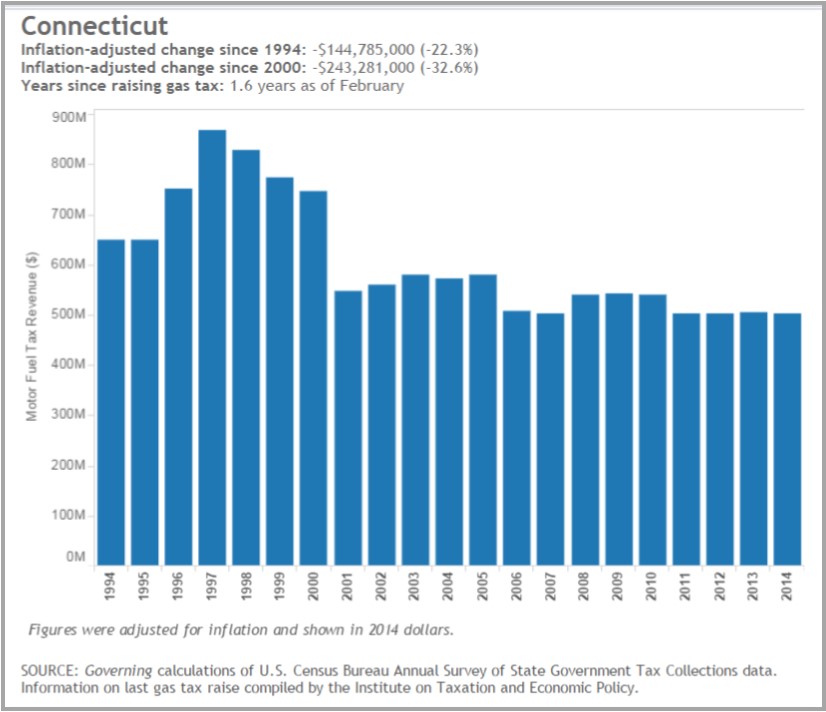 In Connecticut, the inflation-adjusted change is a reduction of in the value of the dollars provided by the tax of 32.6 percent since 2000 and 22.3 percent since 1994, according to the Governing analysis, using data from the U.S. Census Bureau and the Institute on Taxation and Economic Policy. Earlier this year, Governor Malloy announced a two-part transportation plan consisting of a