University of New Haven Named a “Best for Vets” College

The University of New Haven (UNH) has been ranked among the nation’s best colleges for veterans.  The 2014 “Best for Vets Colleges” list, developed by Military Times, places New Haven among the top 80 institutions in the nation, ranking at number 59.  UNH is the only higher education institution from Connecticut to earn a place on the list.

In addition to ebfv-colleges-2014valuating schools’ veteran-focused operations, the publication considered more than a dozen different measures of academic success, quality and rigor, as reported by schools and the Education Department, to develop the rankings.

Representatives of about 600 schools responded to the Best for Vets: Colleges 2014 survey, comprising of 150 questions that delved into school operations in unprecedented detail, according to the publication.

The results indicated that many more schools are tracking the academic success of their military and veteran students — but the majority still do not.  Last year, fewer than 11 percent of school representatives responding to the survey said they track completion rates for current and former service members. This year, more than a third said they track similar academic success measures for such students, the publication’s website pointed out.660556

Military veterans of UNH (MVUNH) is a Student Group formed to both support current UNH Veteran student and encourage a UNH "Veteran friendly" campus to attract new Veteran students.  The university’s purpose is to create a community of veterans who will use their knowledge and experiences to educate the university community and advocate on behalf of student veterans.  Members meet once a month to discuss current events and provide new information.

The newly renovated and furnished Veterans Success Center on the UNH campus serves as common place for students to study, gather for MVUNH club meetings and relax.  The Center has four computers with access to printing, a microwave and refrigerator available to student veterans to use during breaks between classes.  The Veteran Success Center is heralded as a great place to meet fellow veterans and find out about veteran programming on campus and within the community.

In an effort to strengthen support for student veterans, Veteran Services and the University of New Haven have created a Student Veteran Emergency Fund.  Entirely dependent upon donations, the Student Veteran Emergency Fund has been established to assist student veterans who encounter an unforeseen financial emergency throughout the semester, including a delay iLove Your Country1n benefits, BAH and book stipends from the VA.

The University of New Haven is also a partner of the VA Connecticut Healthcare System, located in West Haven.  VITAL is a VA initiative aimed to support student veterans on campus in their successful transition to academia and in completion of their educational goals.  The University also participates in the Yellow Ribbon Program for veterans.

Fuel Companies, Home Contractors Top List of Consumer Complaints in 2013

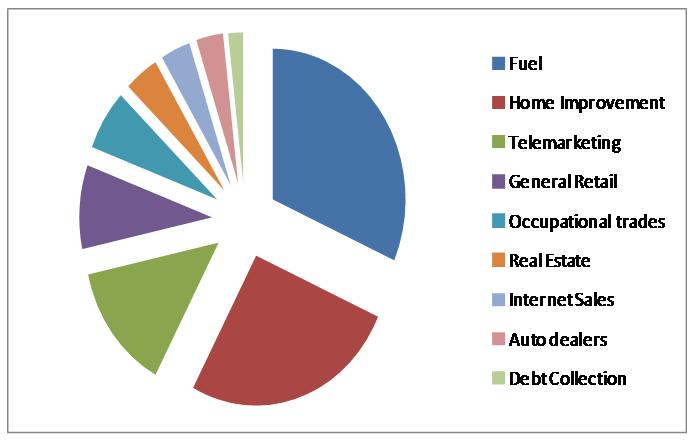
Complaints about home improvement contractors, the perennial front-runner among Connecticut consumers, were eclipsed in 2013 by complaints about fuel-related companies, according to the state Department of Consumer Protection (DCP).   The two categories made up nearly one-third of all consumer complaints to the department.

The agency’s annual “Top Ten” list of consumer complaints, based on  a review of more than 6,000 written consumer complaints received in 2013, saw fuel-related complaints rise to the top for the first time.   Fuel companies were the subject of 17.5 percent of consumer complaints, while home improvement contractors caused 14.5 percent of complaints fiiled during the year.

Telemarketing, retail and Internet complaints, real estate and auto dealer complaints retained their place on the list, and some business closures also led to increased complaints in some areas, officials said.  Telemarketing continued to rank third, as it has in recent years.

consumer-complaints2The state agency received a total of 6,008 written complaints in 2013, while the number of phoned-in complaints and questions numbered in the tens of thousands.  The areas included in the ten leading causes of consumer complaints accounted for nearly 60 percent of the written complaints during the year.

The Top Ten categories for consumer complaints received by DCP in 2013:

1. Fuel – gasoline, propane, oil  (17.5% of all complaints) –  The sudden closure of a home heating oil delivery company earlier last year helped to fuel a spike in consumer complaints involving fuel and fuel related categories. Gas pump “jumps,” bad or short firewood, gas pump signage and propane delivery were topics described in consumers’ complaints last year.  The agency is proposing legislation this year to further improve consumer protections under pre-paid fuel contracts.

2. Home improvement/New home (14.5%) – Up slightly from 2012, complaints about home improvement contractors and new home builders are common and typically involve issues such as unfinished work, improper contracts, damage to home or property, shoddy materials, non-return of deposit.  Contractors should be registered with the Department of Consumer Protection and consumer contracts should indicate that consumers have three business days to cancel the contract.

3. Telemarketing (7.6%) – This category often includes complaints about some entities not currently covered by the Do Not Call law, and includes complaints about numerous businesses flouting the Do Not Call law. Where a number can be traced to a Connecticut business, the Department enforces the Do Not Call law. However, non-traceable numbers, out of state and out of country numbers are provided to the Federal Trade Commission for enforcement.  consumer complaint chart

 4. General retail (5%) – These complaints involve bricks and mortar stores, and generally include problems with refunds, exchanges, warranties, rebates, advertising, or service.

5. Occupational trades (3.6%) – DCP investigates complaints related to the occupations that it regulates, including work performed by tradespersons such as plumbers, electricians, home inspectors, well drillers, heating and cooling contractors, and others.

 6. Real estate (3.3%) – DCP licenses and regulates real estate salespersons, brokers and appraisers, and it also responds to consumer complaints about contract errors, misleading advertising, buyer/seller agreement violations, alleged fraud, and property valuation.

7. Restaurant (2.3%) – In 2013, closures led to a spike in restaurant complaints which is not usually a major category of consumer complaints. A major wedding reception facility in the Hartford area closed, leaving brides-to-be without their deposits or a venue for their reception. Smaller restaurant closings and consumers’ subsequent loss of gift card value also contributed to a higher than normal complaint tally in 2013.CT DCP Logo

8. Internet Sales (2%) –  Problems in this category include include non-delivery of items or overcharges, companies that engage in repeat billings, unauthorized charges or ACH withdrawals, or that do not respond to “opt out” requests from consumers.

9. Auto Dealer  (1.8%) –  Issues include non-delivery of ordered vehicles, over-charges, warranties, rebates, advertising, or aggressive sales tactics.

10. Debt collection (less than 1%) –  Consumers report harassing behavior on the part of debt collectors. Sometimes consumers complain that they will not pay the debt for a service or product that doesn’t work.  Anyone who has a problem with something that they owe payments on must complain to the original seller about the problem, not to the debt collection agency, officials advised. Debt collectors are not allowed to be abusive, nor threaten any action that they cannot or will not reasonably undertake. Consumers have the right to dispute a debt in writing.

World Language Teachers Meet Amidst Growing Interest in Language Fluency

It’s a busy week at Central Connecticut State University.  With the aura of a presidential visit not quite faded, the university is preparing to host the 8th annual CCSU Conference for Language Teachers.  The one-day conference brings together teachers of world languages from across the state at a time when the global interdependency of businesses continues to ramp up the need for students fluent in languages – and cultures - beyond their own.

The conference, Teaching World Languages Today: Skills, Resources and Methodologies, will be held Saturday, March 8, 2014 from 8:00 a.m. to 4:00 p.m., and featuresWorld-Languages presentations focused on innovative techniques and new technology for teaching Spanish, Chinese, French, and Italian in the classroom.

Among the more than two dozen presentations, topics range from the use of social media to boost language acquisition, creating a literature-based Mandarin Chinese curriculum, developing cultural competence, how a Japanese “boot camp” was used to teach English to students in that nation, advantages of on-line technology to advance language skills, and the use of literature to impart language skills and cultural knowledge.

Connecticut is now two years away from the start of a graduation requirement in world language for all high school graduates in the state.  The new mandate, which was to begin this fall, was pushed back by last year’s state legislature and now will take effect with the class of 2020 – high school freshmen in 2016, according to officials at the Council of Language Teachers (COLT)

Connecticut General Statutes Section 10-221 requires that beginning that year, students must have two credits in world languages in order to graduate.  The National Journal has reported that only 10% of native-born Americans can speak a second language, compared to 56% of European Union citizens. Writing in Forbes magazine, strategy consultant Dorie Clark  noted a year ago that "the ability to speak a second (or third) language is clearly important for becoming a global leader."CCSU-Logo.fw

Those making presentations at the CCSU Conference include middle school, high school and college language teachers from across the state as well as some from beyond Connecticut, ranging from the East Hampton Middle School and Glastonbury High School to the United States Military Academy at West Point and the Consulate General of Italy in London.

Connecticut is not alone in looking at world language in the schools.  The state of Utah is currently in the midst of seeking public comment on revised world language core standard requirements for grades K-12.  In California , state legislators approved a seal of biliteracy , beginning in January 2012, that high school graduates can earn for their diplomas to indicate fluency in two or more languages. The Connecticut State University System, which has since become part of the Connecticut State Colleges and Universities under the state's reorganization of high education, had approved plans to institute new admission requirements beginning in 2015 at the four state universities to include two years of world languages.  header_1

The conference will focus on inter-disciplinary approaches and innovative trends in language education, incorporating new technologies into language teaching, and "flipping" the language classroom  It affords an opportunity for language teachers to share their knowledge, perspectives, and expertise, as World Language education evolves to meet the needs of a more intertwined and interdependent world economy - and the opportunities that presents for students.

Conference sponsors include the CT Council for Language Teachers (COLT), CCSU Department of Modern Languages, Chinese Culture Center, Confucius Institute, CT Italian Teachers Association, Italian Resource Center, and Summer Institutes for Language Teachers.

Want a Snow Day off from School? It Takes Less Snow in Southern CT

The forecast calls for snow Sunday night into Monday morning, and with it comes the possibility of school cancellations.  Whether or not students receive a snow day – in Connecticut and across the country – has everything to do with where they live, more than the depth of the snowfall.

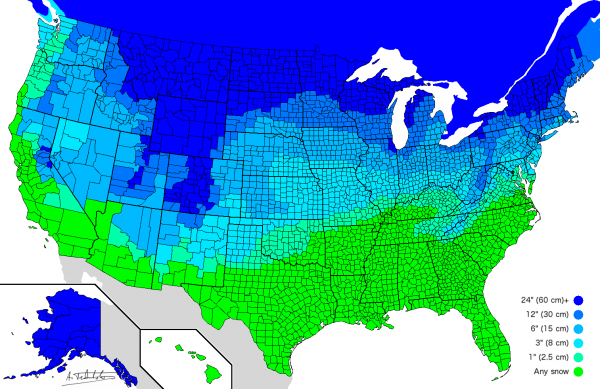
Connecticut, more than many states, seems to have varying standards across the state, if data recently published by the website flowingdata.comconnecticut snow, based on a nationwide map developed using county-by-county data, is to be believed.

The data indicates how much snow, on average, it takes to close schools across the country.  Not surprisingly, in the northern states it takes quite a bit, while in the southern U.S. even the slightest snowfall can keep school children home.

In Connecticut, however, there appears to a less than uniform standard.  In the states’ southernmost counties – including Fairfield, New Haven, Middlesex and New London - it generally takes 3 - 6 inches of snow to close schools.  In the counties across the upper tier of the state – including Litchfield, Hartford, and Tolland, it takes 6 to 12 inches.

Windham Country, in the northeastern corner of the state, tends more toward the 3-6 inch line of demarcation.  State law in Connecticut  requires at least 180 school days per year, but individual districts—including those experiencing identical weather—often have vastly different ways of accommodating cancellations within the academic calendar.  A morning review of the school closing list on any of the major television stations demonstrates the inconsistencies beyond doubt.

The data does not account for ice storms and other winter conditions that can impact when local school superintendents decide to postpone a day’s school.  The data also does not reflect early dismissals or delayed arrivals due to weather conditions.

Across the nation, in much of the Midwest and Great Plains, school closing often depends more on wind chill and temperature than on snow accumulation. It has also been pointed out that school closures tend to say more about an area's infrastructure than the toughness of its citizens.  The recent impact on Atlanta and other Southern cities when hit with a relatively modest storm reflected that reality.

According to the Connecticut Department of Energy and Environmental Protection, the month of March brings, on average, 4.2 inches of liquid precipitation and 9.3 inches of snowfall.  In 1994, however, a record 83.1 inches of snow fell, the most since record-keeping began in 1905.

  snow cancel

The map was developed by Alexandr Trubetskoy.

CT Historical Society Kicks off Community History Tour 2014

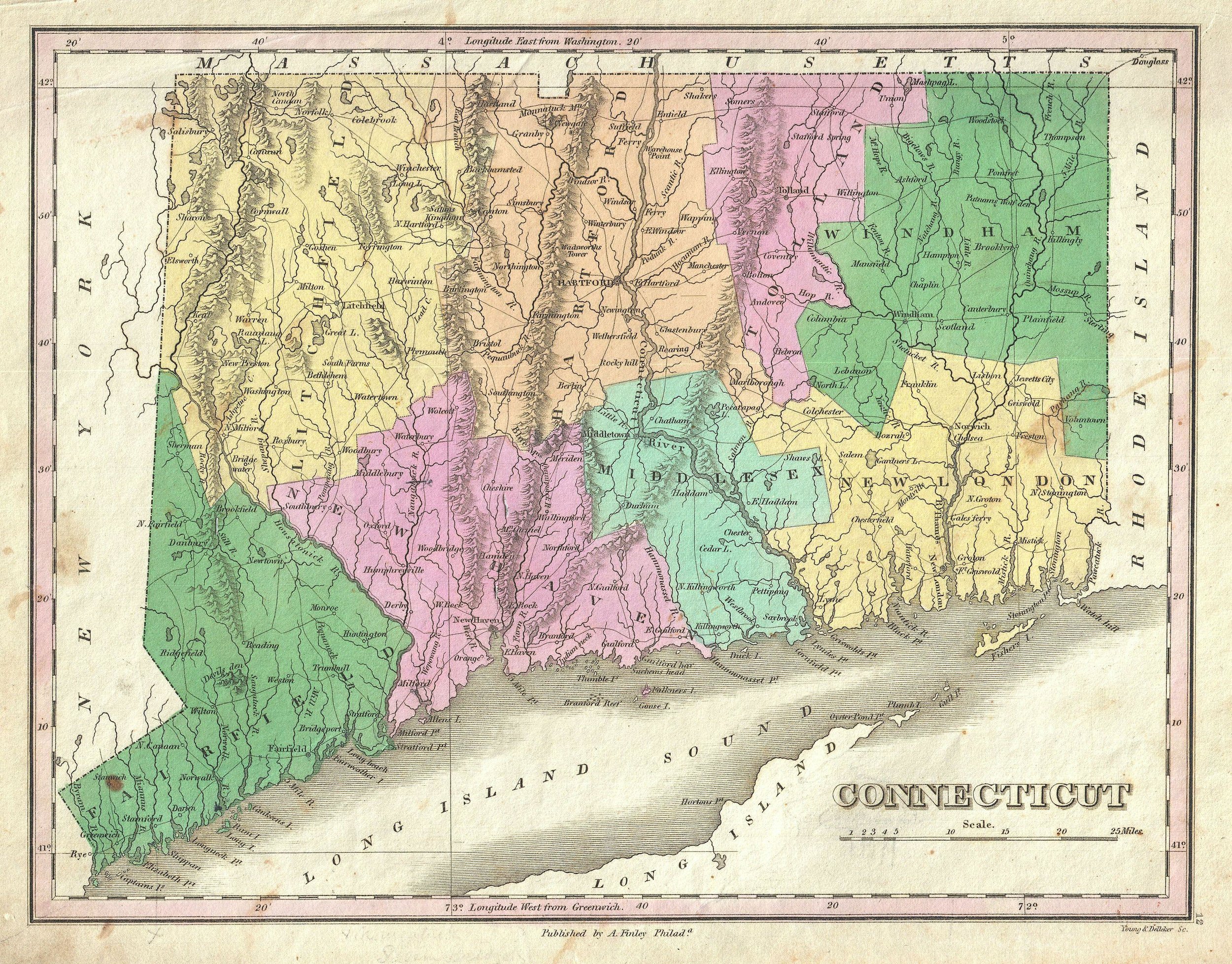
Connecticut residents with an opinion on how the state – and its local communities - can best celebrate Connecticut’s history are being given an opportunity to share their views by the Connecticut Historical Society (CHS), which has launched Community History Tour 2014 in an effort to build deeper relationships with local communities throughout the state.

CHS is conducting nine regional town hall-style discussions, hosted by local organizations, with the public and area organizations with an interest in history encouraged to participate. With an active heritage organization in nearly every one of the state's 169 towns, the CHS has aspirations to build stronger bridges with local Connecticut residents throughout the state. chsmllogo

The purpose of the listening tour is to engage local organizations and residents in a broad statewide conversation exploring how to celebrate the state’s history in ways that are relevant to today’s audiences.

The sessions kicked-off on February 11 at the Stanley-Whitman House in Farmington, and the next session will be on Monday, March 3 in Hartford at CHS.  It will be followed by open meetings in New Haven, Willimantic, Fairfield, Greenwich, Waterbury, Old Lyme and Litchfield over the next two months.

"Connecticut is a state rich in history," says Jody Blankenship, director at CHS, "and we know people like to experience history in different ways. We want to better understand how the state's communities feel about that. Do they want to see more or less of it? How do they want to see that happen, and how can we help? We're ready for a no-holds-barred conversation."map CT  Connecticut-finley-1827

The Connecticut Historical Society is a private, not-for-profit museum, library, research and educational center. The organization’s mission is to inspire and foster a life-long interest in history through exhibitions, programs, and Connecticut-related collections.  The CHS website notes that “improving knowledge of the past enhances understanding of the present and the ability to meet the challenges of the future.”

Founded in 1825, the Connecticut Historical Society houses an extensive and comprehensive Connecticut-related collection of manuscripts, printed material, artifacts and images that document social, cultural, and family history.  It is located in Hartford.

"Our goal is to better understand what makes each community special and how the history of that town or area is integrated into the Connecticut fabric. The best way to do that is ask those who are passionate to tell us," Blankenship added.


Community History Tour 2014 Dates and Locations: (All meetings occur at 4:30pm, unless otherwise indicated.)calendar

February 11: Stanley-Whitman House, Farmington March 3: Connecticut Historical Society, Hartford March 10: New Haven Museum, New Haven March 15: Windham Textile Museum, Willimantic, 11:00am March 31: Fairfield Museum, Fairfield April 7: Greenwich Historical Society, Greenwich April 8: Mattatuck Museum, Waterbury April 15: Florence Griswold Museum, Old Lyme April 21: Litchfield Historical Society, Litchfield

Hartford as Global City: Immigrant Civic Engagement Initiative Gains Recognition

Hartford is quite an international city, a melting pot of cultures and backgrounds that most assume is the exclusive province of major metropolitan areas such as New York and Boston.  But in language, nation of origin, and cultural traditions, virtually every corner of the globe is represented in Connecticut’s Capitol City, and its surrounding communities.

In fact, Hartford is a popular resettlement city, with about 25 percent of the city’s population recent immigrants.  To respond to the significant need among the various immigrant communities for assistance and guidance in navigating language barriers and cultural differences and more fully integrating into their new home community, a partneHartfordPublicLibraryPicturership of Hartford-based organizations stepped up in a way that has proven quite effective, and is gaining national recognition.

The Hartford Public Library received funding in 2010 for an Immigrant Civic Engagement Project through the Institute of Museum and Library Services (IMLS), to develop a comprehensive program to promote immigrant civic engagement.  The initiative had two goals:globe

  • Facilitate the transition of newly arrived immigrants into the community and build trusting relationships of mutual understanding between new and longtime residents
  • Engage established immigrants in civic integration and facilitate their involvement in broader community building efforts

At the annual conference of the international Association for Research on Nonprofit Organizations and Voluntary Action (ARNOVA), hosted recently by Hartford and held at the Connecticut Convention Center, the leaders of the ground-breaking Hartford partnership were called upon to lead a session to outline their work for those who may seek to emulate it in other communities across the country.

Among the presenters was Richard Frieder, Director of Community Development & Civic Engagement within the Cultural Affairs & Public Programming Department and Center for Civic Engagement of the Hartford Public Library.  Frieder was joined by Homa Naficy, Chief Adult Learning Officer and Nancy Caddigan, Intercultural Liaison of the Hartford Public Library, and Kyle Barrette and Rebecca Thomas of the UConn School of Social Work.

Innovative Approaches, Impactful Outcomes

Their session, called “Innovative Approaches to Community Development in a Challenging Economy and Changing Society,” was well-received by conference participant from across the country.  They focused on “effectiveness, evaluation and programs,” outlining what was done and why – and how it all worked.

  • They described an effort that engages immigrants and “receiving” community members, social service providers and other immigrant advocates, highlighting the importance of building networks of trusting relationships.
  • The initiative provided an opportunity to address immigrant voices isolated from the mainstream, respond to language and economic barriers, and address the lack of engagement in community and civic associations.
  • The program featured “cultural navigators” – some of them bilingual - and community dialogues – held at the Library’s American Place - all aimed at improving the immigrant experience in Hartford.

Most of all, it created bonds between existing members of the community – many of them retired teachers and social workers who volunteered to be “cultural navigators” – and immigrants looking to adcivic engagementjust to their new land.

New connections were developed between city officials, organizations and service providers to the immigrant and refugee community, and both the immigrant community and receiving community became engaged in community building.  There was also outreach to churches, community centers and other neighborhood organizations.

Over three hundred people were involved across all activities of the three year project.

The outcomes were substantial, and included the development of strong relationships, an increased awareness of immigrant issues, integration of immigrant and refugee families within their local communities, and increased social capital for immigrant as well as receiving communities.  In addition, action teams focused on new community projects, municipal and organizational investment in immigrant and refugee issues was enhanced, and a City Commission on Immigrant Affairs was established.Hartford_CT

UConn School of Social Work students, as part of the grant-funded initiative, served as program evaluators, maintaining a rigorous evaluation of outcomes, and an audit trail of activities so that the entire project could be replicated.

At the end of the day, organizers hope that the program has effectively “changed the way that people think about immigrants – and the Capitol City.”  Hartford is a global community.  And it has produced a program that can help immigrants here and elsewhere to settle in and excel.

Concern Over Concussions Changes Playoff, Practice Plans in CT High School Football

Concern over concussions is impacting the high school football playoff calendar, and the practice regimen throughout the season.  The Connecticut Interscholastic Athletic Conference has voted to increase to one week the minimum time between playoff games a high school team can play.  Previously, high school football games could play two games in less than a week, at times with as little as three days between games.  In making the revisions, which eliminated a quarter-final round next season, the CIAC indicated it would “continue to evaluate possibilities for changes to the regular season and postseason schedule for the 2015 season and beyond.”

In addition, the organization’s Sports Medicine Committee approved policy changes that cut back on “permitted allotment of person-to-person contact time in practice” aciacnew-300x230nd are “intended to limit live action,” including:

  • Prior to the start of the regular season a coach may conduct person-to-person contact drills up to 120 minutes during practice plus conduct one full scrimmage or seven-on-seven scrimmage per week under game-like conditions.  If a second scrimmage is conducted the time (60 minutes) must be deducted from the 120 minutes allowed.
  • From the start of the regular season through Thanksgiving a coach may conduct person-to-person contact drills up to 90 minutes per week.
  • During the post season a coach may conduct person-to-person contact drills up to 60 minutes per week.

The Hartford Courant reported that “for the first time, there will be limitations on contact drills in practice throughout the season.”football

Guidelines on the Web

The CIAC website includes an 8-page document developed  by the National Federation of State High School Associations, “A Parent’s Guide to Concussion,” which includes the admonition  (in bold type) “when in doubt, sit them out!”.  The policy was revised and approved in April 2013. CIAC is a member of NFHS, which also offers a free on-line course on the subject for coaches and administrators.

The guidelines indicate that “following a concussion, many student-athletes will have difficulty in school.  These problems may last from days to months…”   The guidelines also explain that “At this time we do not know the long-term effects of concussions (or even the frequent sub-concussive impacts) which happen during high school athletics.”

The CIAC website includes a link to the “Sports Medicine & Concussion” information under two drop-down menu categories on the organization’s website: “CIAC for Students & Parents” and “CIAC for Administrators. “  It is not listed among the “CIAC for Coaches” links.

Regarding the schedule changes, Ledyard head coach Jim Buonocore, who serves on the committee that approved the revisions, told the New London Day, "You had teams playing three games in 10 days, which is not healthy." The Day reported that quarterfinal and semifinal games were played the Tuesday and Saturday after Thanksgiving because the playoffs had to be completed in two weeks. The CIAC didn't want to extend the season another week due to weather concerns, and because it would further interfere with winter sports.

The CIAC has changed its high school football playoff format in 2010, and intends to revisit the issue, balancing the traditional Thanksgiving conclusion of the regular season with the health interests of students on teams reaching the playoffs, the realities of New England winters, and the academic and school sports calendars.

Additional information about concussions and high school sports is available from the Centers for Disease Control and Prevention.

Nation's Mayors Award Hartford, Waterbury for Work Promoting Youth Jobs, Exercise

The mayors of two of Connecticut’s major cities – and their communities – had moments in the spotlight at the just-concluded annual meeting of the U.S. Conference of Mayors (USCM)  in Washington, D.C.

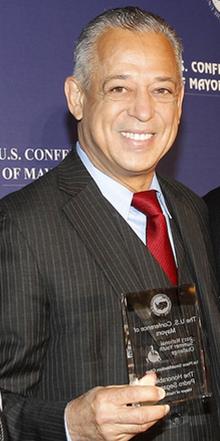
Hartford Mayor Pedro E. Segarra won first place for medium/small cities in the organization’s 1st Annual National SummerYouth Jobs Challenge. The award honors the outstanding achievements in innovative partnerships between cities and local business and non-profit communities to help provide youth with meaningful summer job experiences.

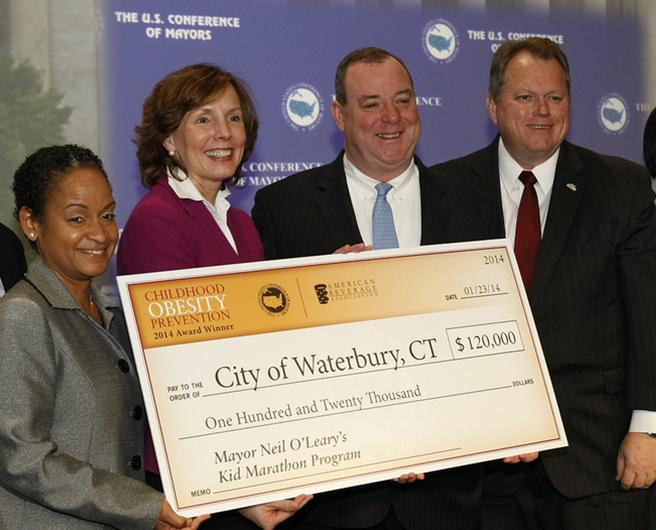
Mayor Neil M. O’Leary accepted a first place award for Waterbury’s Kid’s Marathon Program.  The organization gave six awards to mayors of cities with outstanding programs that encourage healthy weight through balanced diet choices and regular physical activity.  As the top selection, Waterbury receives a $120,000 grant that will support the 2014 Kid’s Marathon Program, a partnership between the YMCA, City of Waterbury, Department of Education, Boys and Girls Club, Police Activity League (PAL) and Connecticut Association of Schools, aimed at introducing the sport of running to youth ages 7-12, over a 12-week period and at no charge to the participants.mayors conf

Approximately 250 mayors, USCM business council members, USCM Workforce Development Council members and other workforce development professionals from major cities across the country attended the annual meeting.  The award was presented to Hartford at Thursday morning’s plenary session, which included remarks by Segarra, Louisville Mayor Gwaterburyreg Fischer, U.S. Labor Secretary Thomas Perez and Wendy Spencer, CEO of the Corporation for National and Community Service.

Since taking office in 2010, Segarra has invested regularly in youth employment programming, leverageing state and foundation funds to further expand work opportunities for young people. In 2013, the Mayor secured $1.25 million that put nearly half of the 2,056 youth in the region to work, officials said.  Additionally, in conjunction with four other regional mayors, he spearheaded an “unsubsidized” youth employment campaign, aligned with the Obama administration’s Youth Jobs + effort, which resulted in an additional 208 employer-paid positions.

Segarra was joined at the mayor’s conference by  Capital Workforce Partners President and CEO, Tom Phillips who was the 2012 President of the U. S. Conference of Mayor’s Workforce Development Council, and whose organization is instrumental in finding worksites and providing career competencies for over 2,000 youth in the North Central Connecticut region each summer.

Among the ten Connecticut Mayors registered to attend the conference in addition to Segarra and O’Leary were Bridgeport Mayor Bill Finch, Stratford Mayor John Harkins, West Haven Mayor Edward O’Brien, Trumbull Mayor Tim Herbst, Shelton Mayor Mark Lauretti, East Hartford Mayor Marcia Leclerc, Fairfield Mayor Michael Tetreau, and Stamford Mayor David Martin.  The U.S. Conference of Mayors is the official nonpartisan organization of cities with populations of 30,000 or more.  There are 1,399 such cities in the country today, and each city is represented in the Conference by its chief elected official.

segarraThe Kid’s Marathon Program is designed to target city youth lacking in physical activity and good nutrition habits.  Students run 1-2 miles, two or three times per week, completing a cumulative 26.2 mile marathon over the course of the program.  They also receive positive and practical guidance on nutrition that helps foster long-term healthy eating behaviors.  In 2013, the program’s first year, 438 students participated, with the culminating 1-mile run occurring at Crosby High School before a crowd of family, friends and supporters.

USCM also recognized Eugene Morton, a Hartford resident who participated in employment opportunities created through Segarra’s youth initiatives. A 2007 graduate of Hartford’s Sports and Medical Sciences Academy, Morton is a Marketing major at Central Connecticut State University with a 4.0 average. In 2013, he took advantage of a summer employment opportunity at St. Francis Hospital and Medical Center and was one of 13 college students who participated in the summer youth employment program offered at St. Francis Hospital and Medical Center in partnership with the Blue Hills Civic Association.

Mayor O’Leary and Waterbury were recognized with the first place award for their collaborative efforts on launching the Kid’s Marathon Program with the Rod Dixon Kid’s Marathon Foundation. The grant awards were divided into small, medium and large city categories, with first place and second place awards given in each category.  Waterbury placed first in the “medium city” category; the second place finisher was Little Rock, AR. The grant program is the result of a partnership between USCM and the American Beverag06-09-12-kids_05-300x229e Association (ABA), to support and/or enhance mayors’ ongoing childhood obesity prevention programs in their cities.    A total of $445,000 in grants was awarded to support both new and existing programs.  Denver, CO and Dallas, TX (large cities) and York, PA and Monrovia, CA (small cities) were the other recipients.

Last fall, the U.S. Conference of Mayors and Partner America awarded Hartford Mayor Pedro E. Segarra their small business advocate of the year award.  The USCM presented Segarra with the award during the Greater New England Minority Supplier Development Council Expo, at the Connecticut Convention Center.  The organization credited Segarra for launching the iConnect storefront revitalization project, quickening the pace of city permit approvals, investing $500,000 in façade improvements and awarding over $100,000 to 16 local artists and small businesses.  At the time, the mayor's office said the city has gained 134 small business and 200 jobs since 2010.


Nonprofit Seeks Support for STEM Mentoring Initiative Focused on Women, Underserved

It is, after all, National Mentoring Month.  It makes perfect sense, therefore, for a fledgling Connecticut-based nonprofit devoted to mentoring young women and students of color to increase their presence in the STEM fields (science, technology, engineering and math) to launch a fundraising initiative.

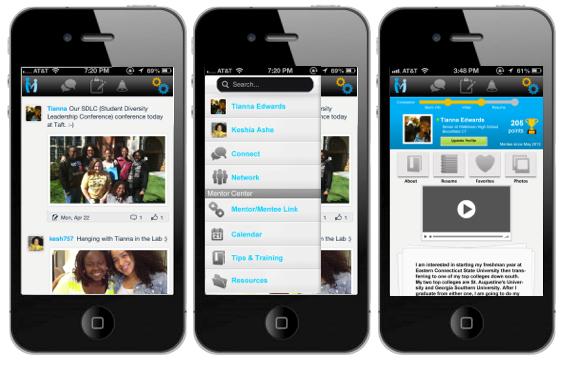
ManyMentors, a nonprofit that promotes peer mentoring to increase the interest, pursuit and attainment of STEM degrees among underrepresented students, has kicked-off an Indiegogo crowdraising campaign aimed at supporting the development of “the world’s first mobile mentoring app and complementary online platform,” according to the campaign’s website.  mentors logo

Online contributions will also support the ongoing outreach and advocacy activities of ManyMentors in Connecticut, and support outreach activities planned for establishment of student chapters at universities nationwide.  The fundraising initiative runs through February 10, 2014.

The organization’s website notes that “of the 20 fastest growing occupations projected for 2014, 15 of them require significant mathematics or science preparation.”  The nonprofit hopes to “make STEM mentoring more mainstream among middle and high school students, college and graduate students, as well as working professional.”  As their slogan emphasizes, “If they never know, they will never go!”

Keshia Ashe, co-founder and CEO of ManyMentors, gave a well-received TEDx talk in Springfield, MA last fall about the important role of mentors and role models to encourage our young people to pursue degrees and careers in STEM. Keshia Ashe is a University of Virginia alumna, and current Ph.D. candidate in Chemical Engineering at the University of Connecticut. Since the age of 11 she has been actively involved in several youth-serving groups and advisory boards, and has had many opportunities to travel nationally and internationally as a speaker and trainer. mentors app

The ManyMentors program primarily serves middle and high school students located in the state of Connecticut. The organization currently implements onsite mentoring opportunities with local community partners, and is piloting the mobile mentoring with a select number of mentor/mentee pairs.  Supporting organizations of ManyMentors include the CBIA Education Foundation, Granville Academy of Waterbury, and CPEP (Catalysts Powering Educational Performance).

Tiffany St. Bernard, the co-founder and Chief Operating Officer of ManyMentors, is a University of Connecticut alumna, and current Ph.D. student in Genetics at Cornell University. She is passionate about ManyMentors because she has experienced first-hand the positive benefits of having many mentors guide her through academic life, beginning during her years at Tunxis Community College.

Using social networking, ManyMentors aims to connect students from a wide variety of academic and ethic backgrounds with the hopes that these relationships will stimulate, sustain, and support students’ interest in, pursuit, and attainment of STEM degrees.

Among the upcoming activities ManyMentors is sponsoring this year are a series of “STEMinars” at UConn, beginning in February, aimed at “Preparing Tomorrow's Female STEM workforce, Today.”  The sessions are designed to “increase awareness of female STEM workplace issues by being exposed to female STEM professionals mentors photowho will discuss topics such as career placement basics, salary and promotions, communication, creating support groups, being culturally aware, finding a work/life balance, and appreciating the value of staying true to oneself in male-dominated fields.”

ManyMentors is moving forward with three central efforts:

  • Creating partnerships between K-12 students, institutions of higher education and STEM professionals to stimulate and sustain student interest in the STEM fields.
  • Selecting college mentors with a vested interest in sharing their best advice, wisdom, and insight to support the academic, professional, and cultural development of their mentees.
  • Providing ongoing trainings for mentors to share best practices and cultivate a community of STEMentors.

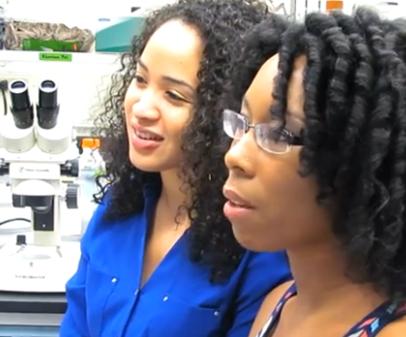
 Photo:  Keshia Ashe (left) and Tiffany St. Bernard

UConn Applications Climb; Board of Regents Makes Commitments on Remediation at White House Summit

Who is attending college in Connecticut – and who is not – was the central topic of conversation in Storrs and at the White House Thursday.

At a White House summit on expanding college opportunity, the Connecticut State Colleges and Universities (ConnSCU) system was among more than three dozen colleges, universities and systems issuing promises of specific policy steps to be taken to improve college access and completion rates, with a particular focus on low-income students.   Connecticut Board of Regents President Gregory W. Gray was among those in attendance.

As part of the day-long summit, the White House released a 90-page “Commitments to Action” summary that included new commitments from over 100 colleges and universities and 40 organizations “to build on their existing efforts.”  The steps the institutions will be taking follow calls from President Obama, Education Secretary Arne Duncan and others to improve higher education opportunity in the United States, in response to the nation’s diminishing standing compared with other nations.

As education, business awhite hosuend nonprofit officials were meeting in Washington, the University of Connecticut, the state’s flagship institution, announced that the number of high school students seeking admission to UConn’s Storrs campus next fall has jumped significantly over last year’s figures, comprising a pool of potential freshmen with even higher average SAT scores and more diversity than previous years’ applicants.
More than 29,500 students applied as of Wednesday’s due date, a 10 percent increase over last year’s number, according to UConn officials. The number of minority applicants also increased by 16 percent – described as an important consideratiouconn-new-logon in UConn’s commitment to diversity.   Officials pointed out that the jump in UConn applications runs counter to national and regional trends in which declines in the number of high school graduates have caused many universities to see their applications and enrollments level off or decrease.
Enrollment Moving in Opposite Directions

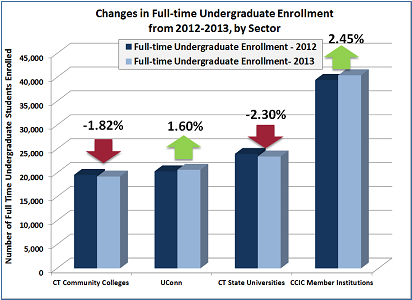
The Board of Regents system – which includes more than 90,000 students attending the state’s 17 public colleges and universities (except UConn, which is outside the system) – has seen the largest drop in students among the state’s public and private higher education sectors. At Connecticut's four state universities (Central, Eastern, Southern, Western), enrollment was down 2.2 percent to 34,062 this year compared to 2012, reflecting the continued losses in the number of part-time graduate students. Enrolllogo-connscument at the community colleges fell 2.1 percent to 56,977, reflecting losses in both full and part time students.
Full-time undergraduate enrollment among member institutions of the private Connecticut Conference of Independent Colleges (CCIC) rose by nearly 2.5 percent this past fall. In fact, nine of the 16 CCIC member institutions had an increase in enrollment and five of these institutions hit new enrollment records: Goodwin College, Quinnipiac University, Sacred Heart University, University of New Haven, and the University of Saint Joseph. In contrast, only five of twenty three public institutions showed an increase in enrollment.CCIC
According to Thursday’s newly released White House document, “Connecticut commits to planning an evaluation of pilot data to assess and improve upon efforts to implement remediation redesign throughout post-secondary institutions in the state.  Efforts will support improvements to remediation curriculum and practices on campuses.”  One of the panel discussion Thursday in Washington D.C. focused on the remediation issue, in which students graduating high school but not quite ready for college have traditionally taken non-credit bearing courses to prepare for college.

Focus on Remediation

The Connecticut legislature in 2012 passed a new law that requires public colleges to embed remedial education in credit-bearing courses, with extra tutoring and assistance for students who need remedial help. The bill had concerned some faculty at the institutions, who felt that abolishing all remedial classes would be unworkable, considering the learning deficiencies of some incoming students. Beginning with the Fall 2014 semester, the new law allows institutions to offer a student no more than one semester of non-embedded remedial support.

Connecticut wiCommitments to Actionll be hosting two upcoming events focusing on the remediation issue, the White House report indicated:
  • A“Multiple Measures Summit,” which will offer information and applicability of various methods of placement assessment for consideration of state community colleges and universities.
  • A “Remediation Conference,” which “will serve as an opportunity for state-wide collaboration outlining best practices of the piloting of intensive, embedded and transitional remedial education initiatives.  Data results will be shared along with ideas for scalability.”

The “Commitments to Action” document also notes that “The Board of Regents is currently conducting 139 pilots consisting of both math and English, intensive and embedded programming across the 17 ConnSCU institutions… Data will be analyzed by institution and system faculty/administration to highlight challenges for adaptation and strengths for duplication.”   It has been estimated that by 2020, 70 percent of Connecticut’s jobs will require post-secondary education.

Among UConn’s larger applicant pool, several stand-out programs – including engineering, business, digital media, and allied health sciences – are among the disciplines that saw significant increases in interest from the potential new UConn students who applied for admission.  With substantial financial support from the Governor and state legislature, UConn is investing in new faculty, updating its academic plan, and planning for the Next Generation Connecticut initiative to revolutionize its STEM (science, technology, engineering acollege enrollmentnd math) curricula.
UConn will begin notifying this year’s applicants with offers of admissions starting March 1, with the targeted new class of Storrs freshmen estimated to be around 3,550 students. The number of applicants has more than doubled since 2001, when the University received about 13,600 applications.

UConn’s Next Generation Connecticut initiative, a $1.5 billion 10-year state-funded investment, is expected to attract $270 million in research dollars, $527 million in new business activity, and fund the hiring of 259 new faculty members and the enrollment of an additional 6,580 undergraduate students, as well as the construction of new labs and facilities, expansion of digital media and risk management degree programs and development of student housing at UConn’s Stamford campus.

President Obama has set a goal of having the United States achieve the highest proportion of college graduates in the world by 2020.  The U.S., which was once ranked #1 in the world, has fallen from the top 10, and current projections indicate that decent will continue without corrective actions, such as those outlined by participants in the White House-led effort.