Putnam High School Student Earns Spot on National Student Advocacy Board
/As many Connecticut students are honored with end-of -year school awards for community accomplishments, Putnam High School Junior Jozzlynn Lewis has earned a coveted spot on a national teen board. She has been selected by Students Against Destructive Decisions (SADD) to join an advocacy-training program called SADD SPEAKs, the only youth from Connecticut to earn the distinction for the coming year.
SADD state coordinator for Connecticut, the Governor’s Prevention Partnership, announced Lewis’ appointment: “Jozzlynn was one of only 15 young people from across the country who was chosen. It is quite an honor!” said Jill Spineti, President & CEO, The Governor’s Prevention Partnership (The Partnership). “This is also significant for The Partnership because this is the first time in ten years that we have had a youth from Connecticut involved in a national SADD initiative.”
Lewis’ appointment to SADD Speaks was announced recently at the Partnership’s Annual Governor’s Residence Reception, a private event at the Governor’s home, which recognizes the organization’s top corporate investors. She addressed CEOs, Commissioners and other high level officials at the event hosted by Governor Malloy and other members of the Partnership’s Board of Directors.
Lewis, 17, underwent a competitive selection process which focused on her experience, leadership qualities, public speaking ability, and other criteria, officials said. She was recognized as a dynamic student leader who has also been involved in her local substance abuse prevention coalition, Putnam PRIDE, for many years, along with her mother, Cheryl. Her interest in SADD stems from seeing alcohol and substance use in her own school.
“Sometimes kids come to class under the influence,” explains Lewis, who will begin her senior year in the fall. “This has a negative influence on all of the students, not just the ones who use. I became involved in SADD in order to make a difference and do my part to make things better.”
Spineti notes that “More than 50 percent of Connecticut's youth continue to deal with issues of drug use, family alcoholism, bullying and child abuse. We partner with SADD and exemplary students such as Jozzlynn to help children avoid all substances to ensure a healthier future.”
Although progress has been made, Spineti stresses that efforts need to be intensified. According to the Substance Abuse and Mental Health Services Administration, nationally each month 26.4 percent of underage persons (ages 12-20) used alcohol, and binge drinking among the same age group was 17.4 percent. And nearly three quarters of students (72%) have consumed alcohol (more than just a few sips) by the end of high school, and more than a third (37%) have done so by eighth grade, according to the National Institute on Drug Abuse.
New data released this month reflected some results from efforts to reduce underage drinking during the past decade – from 2005 to 2015, there was a 15.1 percent drop in reported use by high school students. This is better than the national average for the same time period, which shows a 10.5 percent decrease in youth alcohol use (CDC’s Youth Risk Behavior Survey), officials said.
 Lewis’ commitment and dedication impressed the judging panel.
“Jozzlynn is deserving of this high honor. Her deep desire to empower her peers and change her community will serve her well, as she works to implement policy change at the local, state, and national level,” said Dawn Teixeira, SADD president and chief executive officer. “Motivated young people are a true catalyst for social change.”
“I am so very proud of Jozzlynn and her dedication to SADD, as well as her commitment to wanting to make Putnam High School and our community a safer place to learn and live,” adds Lisa Mooney, School Social Worker and SADD Advisor at Putnam High School.
SADD SPEAKs (Students for Policy, Education, Advocacy, & Knowledge) is an initiative of SADD National, funded by State Farm, that focuses on addressing an impaired driving issue. The participants will have a positive and lasting effect on public policy, demonstrating the power of America’s young people to speak persuasively on critically important issues. They will be trained in coalition building, public speaking and advocacy skills.
This year’s SADD SPEAKs delegates will develop an advocacy plan to address an impaired driving issue (distracted, drowsy, drugged or underage drinking and driving). The group will then lead the national organization’s efforts on Capitol Hill and before their own state and local governments, as well as mobilize thousands of SADD students across the country.
The SADD National Conference, held later this month in Pittsburgh, will include some attendees from Connecticut – nearly a dozen students, teachers and officials from New London will be among those on hand.
At the Governor’s Residence, The Partnership also shared its new strategic plan with the attendees who generously support the non-profit organization. The plan is focused on The Partnership’s mission to equip and connect community groups, business leaders and families to prevent substance abuse, underage drinking and violence among youth.
Created in 1989, the Governor’s Prevention Partnership is a not-for-profit partnership between state government and business leaders with a mission to keep Connecticut’s youth, safe, successful, and drug-free. The organization focuses on positive school climate, mentoring, and the prevention of underage drinking and substance abuse.
Founded as Students Against Driving Drunk in 1981 in Wayland, Massachusetts, SADD has grown to become the nation’s leading peer-to-peer youth education and prevention organization with thousands of chapters in middle schools, high schools and colleges. In 1997, in response to requests from SADD students themselves, SADD expanded its mission and name and now sponsors chapters called Students Against Destructive Decisions.
PHOTO: Jozzlynn Lewis, left, newly appointed to the National SADD teen advocacy board with Jill Spineti, President & CEO of The Governor’s Prevention Partnership.

 xpert guest lecturers from Connecticut companies will speak regarding subjects and crafts not included in the general curriculum. Officials indicate that upon successful completion of the DMCT, trainees will have completed a portfolio worthy project consistent with their selected track and representative of their work and learning. They will also receive a certificate of completion from the Connecticut Office of Film, Television & Digital Media for their selected track.
 The state’s Office of Film, Television and Digital Media supports and enhances Connecticut’s film, television and digital media industry. The film office is the statewide contact for motion picture, television and digital media production and serves as liaison between production companies, state agencies, municipalities, production facilities, local crew and vendors. The Office also administers the tax credit programs designed to incentivize the development of the industry here in Connecticut.

 To qualify for the Best Communities designation, school districts provided detailed information about funding, graduation requirements, music class participation, instruction time, facilities, support for the music program, and community music-making programs.

 Among the nation’s top businesses for new dad, an analysis by the website Fatherly, determined that two Connecticut-based companies – alcoholic beverages producer Diageo and financial data and analysis provider FactSet, earned slots in the top 50. Fatherly is a digital lifestyle guide for men entering parenthood.
 were Netflix, Spotify, Facebook, Patagonia, Bank of America, Pinterest, Google, Microsoft, Twitter, Airbnb, Johnson & Johnson, Accenture, MasterCard, Intuit and Intel.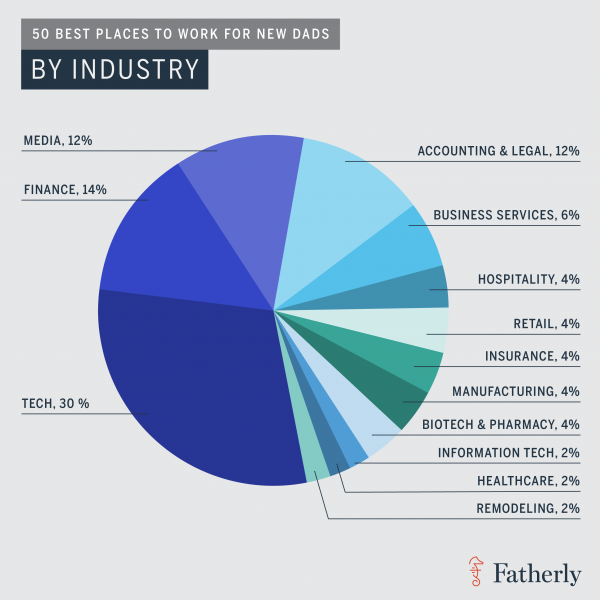
 rs Commission. Replacing them will be the Commission on Women, Children and Seniors and a Commission that merges the Latino, African-American and Asian Pacific American Commissions.
 The Latino and Puerto Rican Affairs Commission (LPRAC) was created by an act of the Connecticut General Assembly (CGA) in 1994. This 21 member non-partisan commission is mandated to make recommendations to the CGA and the Governor for new or enhanced policies that will foster progress in achieving health, safety, educational success, economic self-sufficiency, and end discrimination in Connecticut. As of 2014, the state’s Hispanic population exceeded 500,000, about 15 percent of the state’s overall population.
 ”
” “This is an effort to reassert Connecticut as one of the strongest economies in the nation and in the world,” State Representative William Tong recently told WNPR. He's co-chair of the state’s
 Another Connecticut school has received national recognition, as Military Times ranked the School of Business at Quinnipiac University as the best business school for veterans in Connecticut and the 24th best in the nation, according to its Best for Vets: Business Schools 2016 rankings.


 tion into one composite indicator of entrepreneurial business growth.”



 The quarterly survey is released by