

Hartford’s Innovation, Manufacturing History Highlighted in Exhibits at Smithsonian and State Capitol
/On Wednesday, July 13, the Smithsonian Institution’s National Museum of American History will make public a special portion of their collection with “Objects Out of Storage: Hartford, CT.” The special exhibit, led by curator Susan Tolbert and historian Eric Hinz, will take place at noontime in the Lemelson Center for the Study of Invention and Innovation in the nation’s Capitol. Describing Hartford’s prominent manufacturing history, Hinz said “Hartford, CT, is a classic story in the history of American technology. If you have ever wondered why people refer to “Yankee ingenuity,” this is what they are talking about.” He adds, “In the mid and late 1800s, the United States overtakes Great Britain as the world’s foremost economic superpower, largely on the strength of its prowess in inventing and manufacturing new technologies. Hartford is at the center of that revolution.”
Hartford, described as “one of the birthplaces of American mass production,” is well represented in the ongoing exhibit, Places of Invention, which “takes visitors on a journey through time and place to meet people who lived, worked, played, collaborated, adapted, took risks, solved problems, and sometimes failed—all in the pursuit of something new.”
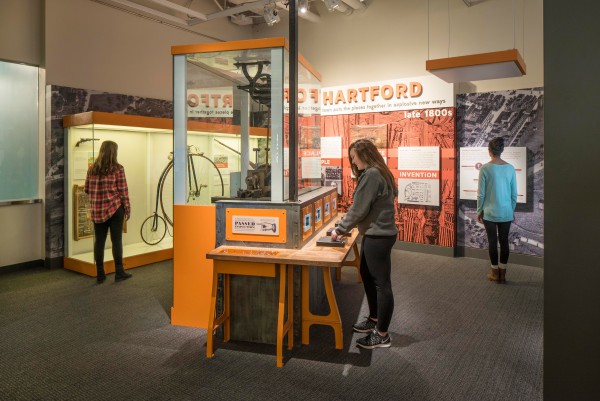 The exhibit notes that by the 1850’s “Hartford became the center of production for a wide array of products—including firearms by Colt, Richard Gatling and John Browning; Weed sewing machines; Royal and Underwood typewriters; Columbia bicycles; and even Pope automobiles.”

The Lemelson Center is located at the Smithsonian's National Museum of American History, Constitution Avenue between 12th and 14th Street NW, in Washington, DC. The Lemelson Hall of Invention and Innovation is located on the Museum's first floor in its Innovation Wing. In the exhibit, which debuted last summer, Hartford is featured with Silicon Valley and just four other locations: Hollywood, home of Technicolor; the Medical Alley of Minnesota, where cardiac innovations of the 1950s flourished; the Bronx, N.Y., birthplace of hip-hop in the 1970s; and the current, clean-energy innovations of Ft. Collins, Colo.
Among the featured innovations on display is the bicycle, manufactured for the first time in the United States in Hartford. As the Smithsonian historian explains, “sensing a commercial opportunity, Albert Pope began importing bicycles from England and hatched a plan to produce them domestically in 1877. Within a year, Pope rode the train from Boston to Hartford, then, ‘to the amazement of the city’s onlookers, 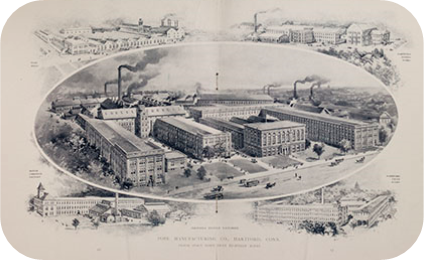 rode his high-wheeler from the station down Capitol Avenue to the Weed Sewing Machine Company.’”
The history continues: “Pope approached factory superintendent George Fairfield with a proposal: would Weed agree to build a test run of 50 bicycles under contract? When Fairfield agreed, Pope (via the Weed Sewing Machine Company) became the first domestic manufacturer of bicycles in the United States. By 1895, Pope’s expanded Hartford operations included five factories set on 17 acres, employing 4,000 workers, making him Hartford’s largest employer.” Pope manufactured bicycles, motorcycles, and automobiles.
That chapter in Hartford history has recently captured the imagination of a well-known Hartford artist, whose cut-paper recreations of that chapter of the city’s transportation and recreation breakthrough is now available for display, having just completed an exhibition at the Connecticut State Capitol.
 Jeanne Manzelli, a resident of Windsor, has a
 BFA in Sculpture from the Massachusetts College of Art and her MED in Art Education from the University of Massachusetts, Amherst. Her experience includes a 20 year career in design, manufacture, appraisal and sale of jewelry, two decades as mural artist working closely with interior designers as an industry professional, and 14 years teaching basic and advanced drawing, sculpture and 3D design as well as color theory at Tunxis Community College.
Her latest endeavor is a departure, and a salute to an innovation from a century and a half ago. The intricate designs, accompanied by information panels highlighting the history, are now available to be displayed at public facilities, such as schools, libraries, and community centers. Manzelli looks forward to sharing her work (and is seeking a sponsor to underwrite the exhibit), as well as stimulating a conversation about innovation in Hartford, then and now.




 A recent report in Business Insider indicated that one in three new businesses in the U.S. were started by an entrepreneur age 50 or older. Describing “running a business as the new retirement,” the news report cited an infographic in easylifecover that highlighted those aged 55-64 in the U.S. have actually had the highest rate of entrepreneurial activity in the last 10 years, noting that the founders of McDonald's, Coca Cola, and Kentucky Fried Chicken – among others - were all over 50 when they established their businesses.
 The interactive “Boot Camp” event at reSET – open to people of all ages with a special focus on the 50 and over –included short presentations from local resource organizations, networking opportunities and valuable information on the programs and tools available to potential business owners. Attendees were updated on the necessary steps and tools to launch a business, and had opportunities to talk one-on-one with local mentoring organizations, lenders, small business advisors and community leaders for advice and assistance.
 hand at the reSET event in mid-June were representatives of the Office of Secretary of State (where new businesses are registered),
 reSET serves all entrepreneurs, but specializes in social enterprise ― impact driven business with a double and sometimes triple bottom line. In addition to providing co-working space and accelerator and mentoring programs, reSET aims to inspire innovation and community collaboration, and to support entrepreneurs in creating market-based solutions to community challenges. The organization’s goal is to “meet entrepreneurs wherever they are in their trajectory and to help them take their businesses to the next level.”


 In recent years, the Connecticut program, coordinated by Connecticut’s Old State House with support from Connecticut Humanities, has grow in numbers and in the quality of the students’ work, organizers point out. This year, Connecticut History Day had 10,600 points of contact with Connecticut students, teachers, parents and history professionals, including workshops for 4,500 students—twice last year’s number.



 Lewis’ commitment and dedication impressed the judging panel.


 xpert guest lecturers from Connecticut companies will speak regarding subjects and crafts not included in the general curriculum. Officials indicate that upon successful completion of the DMCT, trainees will have completed a portfolio worthy project consistent with their selected track and representative of their work and learning. They will also receive a certificate of completion from the Connecticut Office of Film, Television & Digital Media for their selected track.
 The state’s Office of Film, Television and Digital Media supports and enhances Connecticut’s film, television and digital media industry. The film office is the statewide contact for motion picture, television and digital media production and serves as liaison between production companies, state agencies, municipalities, production facilities, local crew and vendors. The Office also administers the tax credit programs designed to incentivize the development of the industry here in Connecticut.


 To qualify for the Best Communities designation, school districts provided detailed information about funding, graduation requirements, music class participation, instruction time, facilities, support for the music program, and community music-making programs.



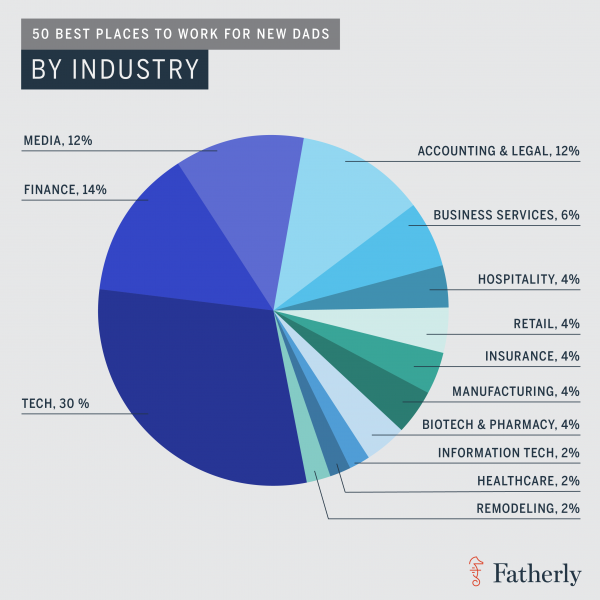
 Among the nation’s top businesses for new dad, an analysis by the website Fatherly, determined that two Connecticut-based companies – alcoholic beverages producer Diageo and financial data and analysis provider FactSet, earned slots in the top 50. Fatherly is a digital lifestyle guide for men entering parenthood.
 were Netflix, Spotify, Facebook, Patagonia, Bank of America, Pinterest, Google, Microsoft, Twitter, Airbnb, Johnson & Johnson, Accenture, MasterCard, Intuit and Intel.
 rs Commission. Replacing them will be the Commission on Women, Children and Seniors and a Commission that merges the Latino, African-American and Asian Pacific American Commissions.


 The Latino and Puerto Rican Affairs Commission (LPRAC) was created by an act of the Connecticut General Assembly (CGA) in 1994. This 21 member non-partisan commission is mandated to make recommendations to the CGA and the Governor for new or enhanced policies that will foster progress in achieving health, safety, educational success, economic self-sufficiency, and end discrimination in Connecticut. As of 2014, the state’s Hispanic population exceeded 500,000, about 15 percent of the state’s overall population.
 ”
 “This is an effort to reassert Connecticut as one of the strongest economies in the nation and in the world,” State Representative William Tong recently told WNPR. He's co-chair of the state’s