AMA Policy, UConn Professor Raise Concerns About Municipal Conversions to LED Lighting
/An article authored by UConn professor of Community Medicine and Health Care Richard G. Stevens, which highlights red flags being raised by the American Medical Association regarding the safety of LED lighting being installed in cities around the country, is gaining notice. The article first appeared on an international website, theconversation.com, which features articles researched and written by college faculty from the U.S. and around the world. The site’s tagline, “Academic rigor, journalistic flair,” reflects its approach. The article has since been re-published on the CNN website, and it gaining traction on dozens of other internet sites.
The article revolves around a policy statement issued by the AMA this month that suggests “conversions to improper LED technology can have adverse consequences.” Stevens, who has written about the health risks of electric lighting for more than two decades, indicates that the policy statement comes "in response to the rise of new LED street lighting sweeping the country.” 
The new "white" LED street lighting which is rapidly being retrofitted in cities throughout the country has two problems, according to the AMA, Stevens highlights. “The first is discomfort and glare. Because LED light is so concentrated and has high blue content, it can cause severe glare, resulting in pupillary constriction in the eyes. Blue light scatters more in the human eye than the longer wavelengths of yellow and red, and sufficient levels can damage the retina. This can cause problems seeing clearly for safe driving or walking at night.” The AMA goes on to point out that blue-rich LED lighting can decrease visual acuity and safety, resulting in concerns and creating a road hazard.
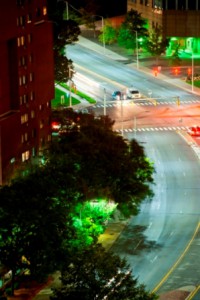 In addition to its impact on drivers, the AMA notes that blue-rich LED streetlights operate at a wavelength that most adversely suppresses melatonin during night. It is estimated that white LED lamps have five times greater impact on circadian sleep rhythms than conventional street lamps, the AMA indicated. Recent large surveys, according to the AMA, found that brighter residential nighttime lighting is associated with reduced sleep times, dissatisfaction with sleep quality, excessive sleepiness, impaired daytime functioning and obesity.
The AMA points out that “converting conventional street light to energy efficient LED lighting leads to cost and energy savings, and a lower reliance on fossil-based fuels. Approximately 10 percent of existing U.S. street lighting has been converted to solid state LED technology, with efforts underway to accelerate this conversion.”
Although no comprehensive list is available, among the communities in Connecticut making the switch to LED lighting are Stamford, Plainville, East Hartford, Southington, and Berlin, according to published reports. Cheshire launched a streetlight replacement program earlier this year, indicating that “the new LED fixtures will provide the appropriate amount of lighting for locations across the town and will focus light directly downward on the sidewalks and roadway. The fixtures have a ten-year product warranty, but are anticipated to have a much longer life. The project is expected to be completed in July 2016.”
"Despite the energy efficiency benefits, some LED lights are harmful when used as street lighting," AMA Board Member Maya A. Babu, M.D., M.B.A. "The new AMA guidance encourages proper attention to optimal design and engineering features when converting to LED lighting that minimize detrimental health and environmental effects."
The AMA encourages communities to minimize and control blue-rich environmental lighting by using the lowest emission of blue light possible to reduce glare. Stevens, however, says that “the AMA's recommendation for CCT below 3000K is not quite enough to be sure that blue light is minimized. The actual spectral irradiance of the LED -- the relative amounts of each of the colors produced -- should be considered, as well.”
Stevens concludes that “there is almost never a completely satisfactory solution to a complex problem. We must have lighting at night, not only in our homes and businesses, but also outdoors on our streets. The need for energy efficiency is serious, but so too is minimizing human risk from bad lighting, both due to glare and to circadian disruption. LED technology can optimize both when properly designed.”
The Hartford Courant reported last year that ESCO Energy Services is working with the Connecticut Conference of Municipalities to implement its municipal Street Light LED Conversion Program to buy the current streetlights from utilities and replace them with more efficient LED fixtures.
Stevens proposed in 1987 what was then seen as a radical new theory that use of electric lighting, resulting in lighted nights, might produce "circadian disruption" causing changes in the hormones relevant to breast cancer risk, according to the UConn Health website. Accumulating evidence has generally supported the idea, the site indicates, and it has received wide scientific and public attention. For example, his work has been featured on the covers of the popular weekly Science News (October 17, 1998) and the scientific journal Cancer Research (July 15, 1996). His most recent paper, “Shift work as a harbinger of the toll taken by electric lighting,” was published in Chronobiology International, The Journal of Biological and Medical Rhythm Research, in January 2016.
 The Conversation website is a collaboration between editors and academics to provide "informed news analysis and commentary that’s free to read and republish." It launched as a pilot project in the U.S. in October 2014 after starting in Australia in March 2011 and the UK in May 2013. Boston University’s College of Communication is are hosting the operation in the U.S.
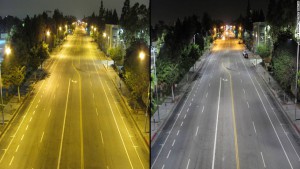 PHOTO: Traditional street lighting (left) vs. LED lighting (right).




 Also making the list were Evariant of Farmington, a software developer, at number 272, and HP One, a software company in Trumbull at number 307. Biopharmaceutical company Alexion, in the midst of moving its headquarters from Cheshire to New Haven, was ranked at number 349, and etouches, a Norwalk software company ranked at number 357. Rounding out the Connecticut companies on the list is Wallingford oil extraction technology company APS Tecnhology, at number 466.
 rough technology’s continued disruption and proliferation across industries,” said Sandra Shirai, principal, Deloitte Consulting LLP and US technology, media, and telecommunications leader.
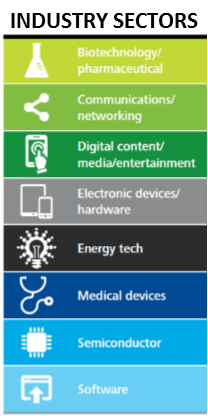 Overall, 283 of the 500 companies were in the software sector, and 67 percent of the 500 companies have received venture capital funding at some point in their company’s history. Topping the list was StartApp, with a growth rate of 21,984 percent from 2011 to 2014. Based in New York and founded in 2010, StartApp provides a free monetization and distribution platform that integrates with applications on mobile devices.



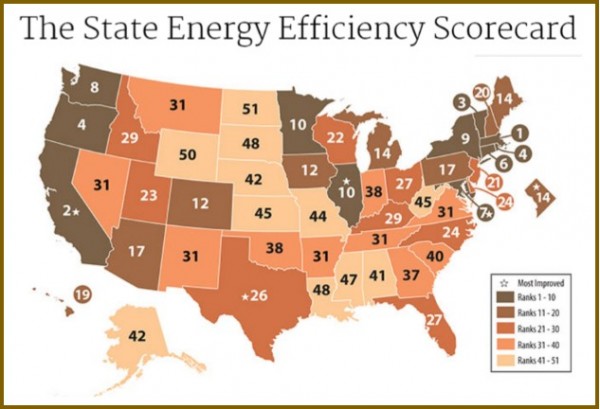 nd compliance efforts, earned 3 points out of 4 for its combined heat and power policies and programs, 5.5 out of 7 points for state-led energy efficiency initiatives, and 1 point out of 2 for appliance standards.
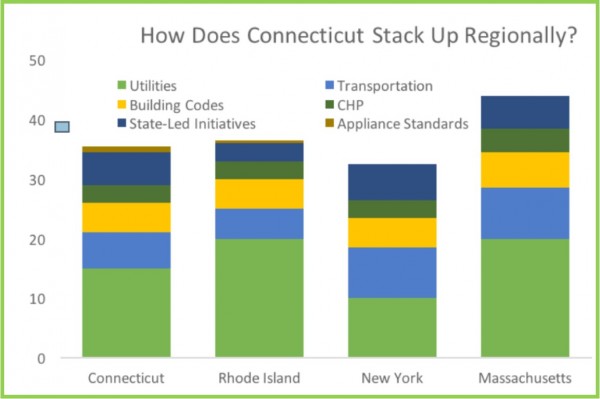 olar power in Connecticut has grown 221 percent per Capita since 2012, ranking the state 13th in the nation, the report points out. The top solar growth states in the nation, like Connecticut, have adopted renewable energy requirements, strong laws allowing solar customers to sell their excess power to the electric grid, and other policies encouraging growth of the industry, the report indicates. The industry is also adding jobs much faster than the overall economy, employing 1,600 people in Connecticut last year, according to
  ."
."
 “I would like to congratulate all of the members of Stamford 2030 for joining together to make vital changes for our community," said Stamford Mayor David Martin. "The partners in Stamford 2030 have really stepped up for the success and sustainability of our city and the surrounding area. And they are not alone. For our part, the city is committed to improving storm resiliency and moving forward with the Energy Improvement District. We believe these efforts are tied to our economic development and ability to attract people to Stamford while conserving important natural resources, all necessary for sustained growth and prosperity.”
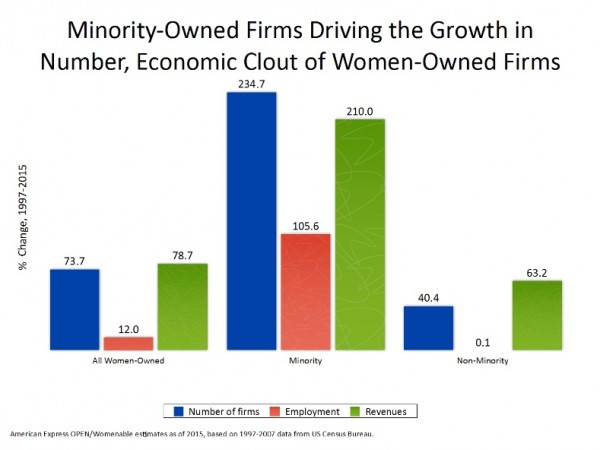
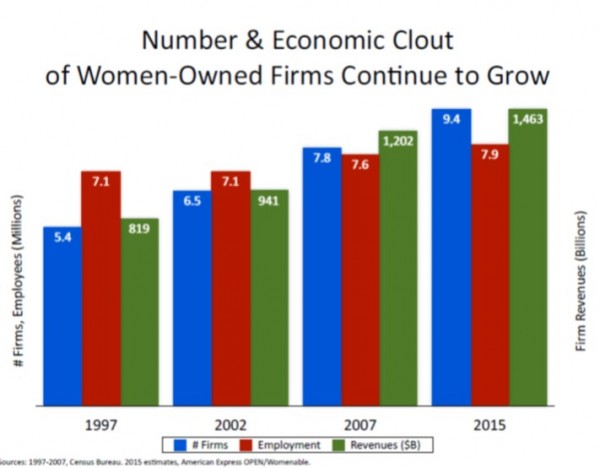 Of the nation’s women-owned businesses, African-American women own 1.3 million, Latinas 1 million, and Asian women more than 700,000. Businesses owned by women of color tend to be smaller in terms of their average employment and revenue, the report indicated. But their growth, both in numbers and in their economic clout—the combined average of their growth, revenue, and employment—continues to outpace that of their white peers, the data indicates.
 ow, there are an estimated 3.1 million minority women-owned firms, representing one in three (33 percent) women-owned firms,” pointed out Julie Weeks, President and CEO of

 Fixed route transportation operates along a prescribed route and on a fixed schedule, and includes buses and light rail. In 2014 in Connecticut, buses provided over 43 million passenger trips and rail provided over 39 million passenger trips. Demand-responsive transportation provides routes and scheduling more individually tailored to the needs of the user. The Americans with Disabilities Act (ADA) requires transit agencies to provide paratransit service, subject to certain parameters, to people with disabilities who cannot use the fixed route services. Paratransit ridership in Connecticut in fiscal year 2014 under the ADA totaled over one million rides, and dial-a-ride ridership neared 100,000 rides.
 ommunities are located within a reasonable distance of quality, dependable public transportation.” In addition, policy makers were urged to “identify funding streams to sustain, coordinate, grow and make more convenient both fixed route and demand-responsive transportation options (including providing door-to-door service), and provide technical assistance to support regionalization efforts.”
 For the first time in the history of the awards program, a state agency was also selected to receive an award. The CT Department of Transportation received a special award for Starting a Revolution: Integration of Land Use and Transit in recognition of the progressive nature of CTfastrak, the bus rapid transit system opened earlier this year. The awards jury that selected the winners gave the award because they felt the new busway represents a cultural shift in how Connecticut views transit, and wanted to acknowledge the future promise of transit oriented development that will hopefully result around the station locations.



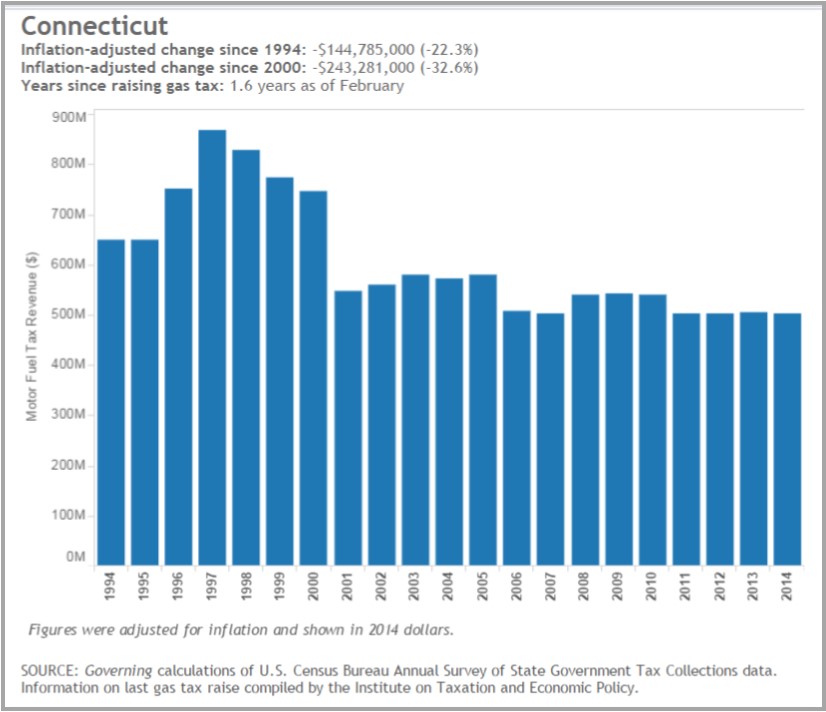 In Connecticut, the inflation-adjusted change is a reduction of in the value of the dollars provided by the tax of 32.6 percent since 2000 and 22.3 percent since 1994, according to the Governing analysis, using data from the U.S. Census Bureau and the Institute on Taxation and Economic Policy. Earlier this year, Governor Malloy announced a two-part transportation plan consisting of a