Task Force Report on State Response to Alzheimer’s Nears Completion
/
Thirty-one states have published a plan to respond to what advocates describe as the “escalating crisis” of Alzheimer’s Disease. Connecticut may be next, and is one of 13 states currently in the midst of developing plans.
The Connecticut Chapter of the Alzheimer’s Association was among the leaders in crafting and shepherding legislation in the 2013 General Assembly session to create a task force to study the care provided to persons diagnosed with Alzheimer's disease and dementia in the state. That Task F orce has been up and running throughout the fall, and is poised to announce its recommendations next month, just ahead of the start of the 2014 legislative session in February.
The 23-member task force of key agencies and community stakeholders convened in September, under the auspices of the Legislative Commission on Aging, to prepare findings and recommendations on ways to improve early detection, better coordinate health care services, set training requirements for health care providers and other professionals, services for early-stage and younger onset, and support to family caregi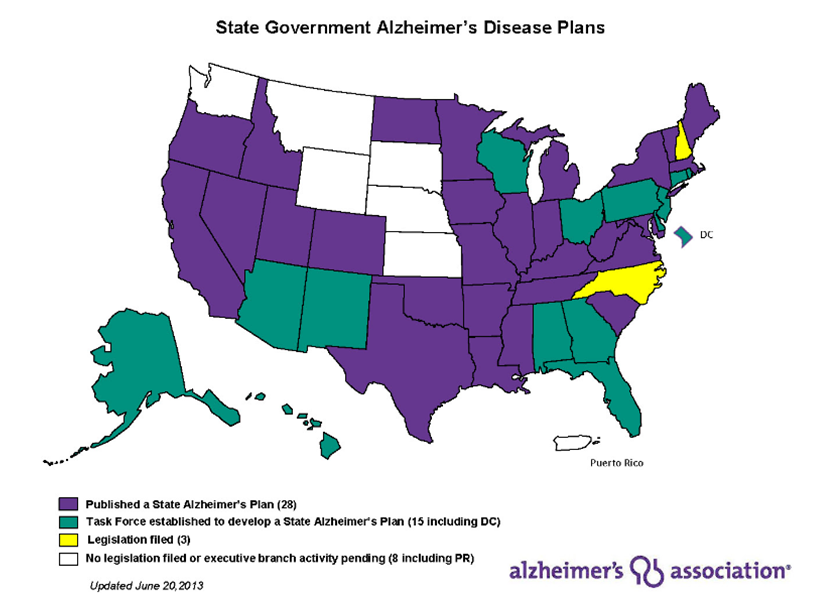 vers.
vers.
The Task Force was co-chaired by State Commissioner on Aging Edith Prague and Rep. Joseph Serra of Middletown. Members included Laurie Julian of the Alzheimer’s Association in Connecticut and other diverse community stakeholders appointed by legislative leadership and representatives from state agencies including the Department of Public Health, Department of Emergency Services, Department of Banking, Department of Labor and Department of Social Services, as well as six current legislators.
Over 5 million Americans are living with Alzheimer’s, and as many as 16 million will have the disease in 2050. Nearly one in every three seniors who dies each year has Alzheimer’s or another dementia. The cost of caring for those with Alzheimer’s and other dementias is estimated to total $203 billion in 2013, increasing to $1.2 trillion (in today’s dollars) by mid-century. Between 2000 and 2010, nationally, the number of people who died as a result of breast cancer, prostate cancer, heart disease, stroke and HIV all declined, while the number of people who died with Alzheimer’s increased by 68 percent.
In Connecticut, there were 820 deaths due to Alzheimer’s Disease in 2010, there are more than 63,000 individuals with Alzheimer’s in nursing homes in the state and it is estimated that 68% of nursing home residents have a cognitive impairment. As of 2010, there were an estimated 2,800 people between age 65-74 with Alzheimer’s in Connecticut, 30,000 between 75 and 84, and 37,000 age 85 or older.
The task force, in accordance with the legislation, will make recommendations in areas including: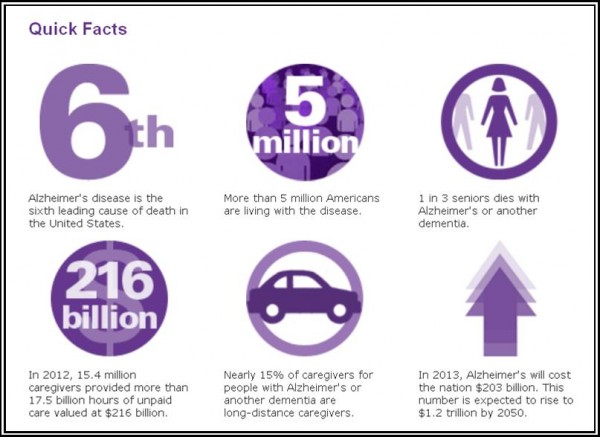
- services provided to persons diagnosed with Alzheimer's disease and dementia; including persons with early-state and early-onset of Alzheimer's disease, and such persons' family members and caregivers
- legislative policy changes to better serve such persons, family members and caregivers;
- coordination between state agencies and private community-based health care providers to serve such persons, family members and caregivers;
- case management services for such persons, family members and caregivers;
- the transition of such persons from one health care facility to another; and
- the placement of such persons in community-based settings or health care facilities other than nursing home facilities, when feasible.
The state legislature acknowledged the growing numbers of residents impacted by the disease, passing the bill unanimously earlier this year, with 67 co-sponsors. It was signed into law in June by Gov. Malloy. The Alzheimer’s Association has been actively involved in the effort. The organization’s Connecticut chapter is based in Rocky Hill, with regional offices in Hamden, Norwalk, Norwich and New Milford.
In accordance with the legislation, the task force report is due to be published early next month, according to officials at the State Legislative Commission on Aging.
 ervices and treatments, and provide much needed education to those impacted by mental illness.
 may be a lifelong condition, like diabetes. “However, as with diabetes, proper treatment enables many people with a mental illness to lead fulfilling and productive lives. By helping combat the stigma associated with mental illness, we can help increase the number of people that seek treatment.”
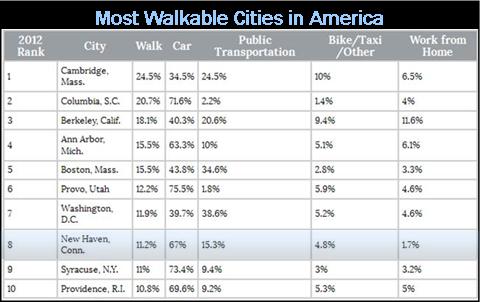
 The top cities were Cambridge, MA (24.5%), Columbia , SC (20.7%), Berkeley, CA (18.1%), Ann Arbor, MI (15.5%), Boston, MA (15.5%), Provo, UT (12.2%), Washington, DC (11.9%), New Haven, CT (11.2%), Syracuse, NY (11%) and Providence, RI (10.8%).
 ne-minute educational video
 produced in the opening weeks of school, just prior to the mid-September entry deadline.
 pecifically designed to remove pain from the injection.
 ales. Baxter is one of Inc. Magazine’s Top Women in Tech to Watch, and is asked all over the world to educate physicians, nurses, Child Life specialists, and others about the importance of
 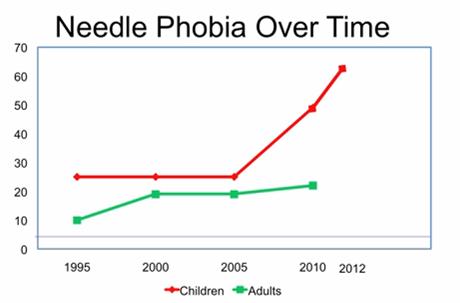 f needle-averse adults will have on their own health and the health care system.
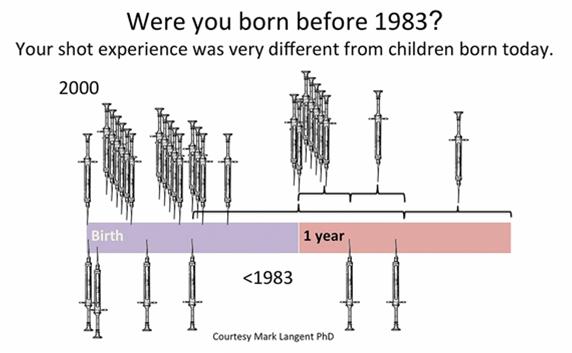 away from the very remedies that can improve their individual health and the health of entire populations, warning that “by ignoring pain we’re endangering the future of health care.”
 ich Time
 they immediately got involved. School administrators in Manchester last month suspended four Manchester High School students suspected of creating and posting degrading descriptions of female students,
  Young people are drinking more coffee than in recent years, according to the data compiled by the
  he National Coffee Association data indicates that 76 percent of adult Hispanic-Americans said they drank coffee yesterday, 13 percentage points ahead of the total population. By comparison, 47 percent of African-Americans and 64 percent of Caucasian-Americans said they drank coffee yesterday.

 are Month (National Association for Home Care & Hospice) and National Hospice Month (National Hospice and Palliative Care Organization), as well as Great American Smokeout Month. November 21 is designated by the American Cancer Society as the Great American Smokeout Day.