
Jewel Mullen: Public Health Commissioner At Center of State's Ebola Response
/Described on the Yale School of Public Health website as “a leader in building effective community-based chronic disease prevention programs,” Connecticut’s Commissioner of Public Health, Dr. Jewel Mullen, has a long academic association with Yale, even as both were catapulted into the breaking news spotlight with a possible case of the Ebola virus in a patient under care at Yale-New Haven Hospital.
Mullen is also well-acquainted with the U.S. Centers for Disease Control and Prevention, having served on public health advisory committees, appointed by the CDC and the U.S. Department of Health and Human Services. Little known by state residents outside of the public health community, she is well regarded within those circles.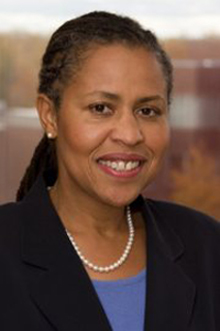
She is the New England regional representative to the Association of State and Territorial Health Officials (ASTHO) Board of Directors and chairs ASTHO’s Prevention Policy Committee. In 2013, she was appointed to the Institute of Medicine’s Committee on Quality Measures for the Healthy People Leading Health Indicators.
Appointed as Commissioner by Governor Dannel Malloy at the start of his administration in 2011, Dr. Mullen has combined clinical work, research, teaching and administration throughout a career focused on improving the health of all people, especially the under served. Board certified in internal medicine, Dr. Mullen received her Bachelor (1977) and Master (1996) of Public Health degrees from Yale University where she also completed a post-doctoral fellowship in psychosocial epidemiology.
Earlier this month, Malloy declared a public health emergency in Connecticut, issuing a precautionary and preparatory order that allows state public health officials to coordinate a targeted quarantine in case Ebola arrives in the state, with decision-making authority residing in Commission Mullen. Without the Governor’s declaration, there would not be a statewide ability to isolate or quarantine – instead, the authority would have remained with individual local public health directors.
Prior to joining the Department of Public Health, Dr. Mullen was director of the Bureau of Community Health and Prevention at the Massachusetts Department of Public Health. In 2012 the CDC appointed Dr. Mullen to its advisory committee on health disparities, a subcommittee of the Advisory Committee to the Director. Earlier in her career, she was the medical director of Baystate Mason Square Neighborhood Health Center in Springfield, Massachusetts. She graduated from the Mount Sinai School of Medicine where she was elected to AOA, the National Medical Honor Society, after which she completed her residency at the Hospital of the University of Pennsylvania.
In addition to being a physician, Mullen is also an educator, who has taught medicine at several different universities including New York University, the University of Virginia, Yale and Tufts University. . She also holds a Master in Public Administration degree from Harvard University’s John F. Kennedy School of Government. She is currently listed as a lecturer in epidemiology (chronic diseases) and in public health by the Yale School of Public Health and is an ex-officio member of the state Board of Regents for Higher Education.
Her priorities at the Connecticut Department of Public Health, according to the Department website, include chronic disease and injury prevention, health care quality and safety, health equity, and supporting local efforts to create healthy communities. She has lived in Connecticut since 1992.

 ss are Torrington, Danbury, West Hartford, Cheshire, Guilford, Greenwich, Plainville, Middlebury, New London, Killingly, Middletown, Fairfield, Madison, Branford, Farmington, Glastonbury, Windsor, Orange and East Hartford.


 ber 1, 2013, to March 31, 2014, the federal government was the major funder of in-person assistance, providing over $2.5 million in funding to the program. The reported noted that “This level of funding is no longer available, yet, the need for assistance, both for the upcoming open enrollment period (November 15, 2014, to February 15, 2015) and beyond, is great.” Plans for continuing in-person assistance, offered at store-front facilities, are under consideration according to
 r recent study found that nursing homes under private equity ownership are cited for more deficiencies and have fewer registered nurses on staff than other for-profit facilities.
 The “number of students with non-English home language” according to data on the website of the
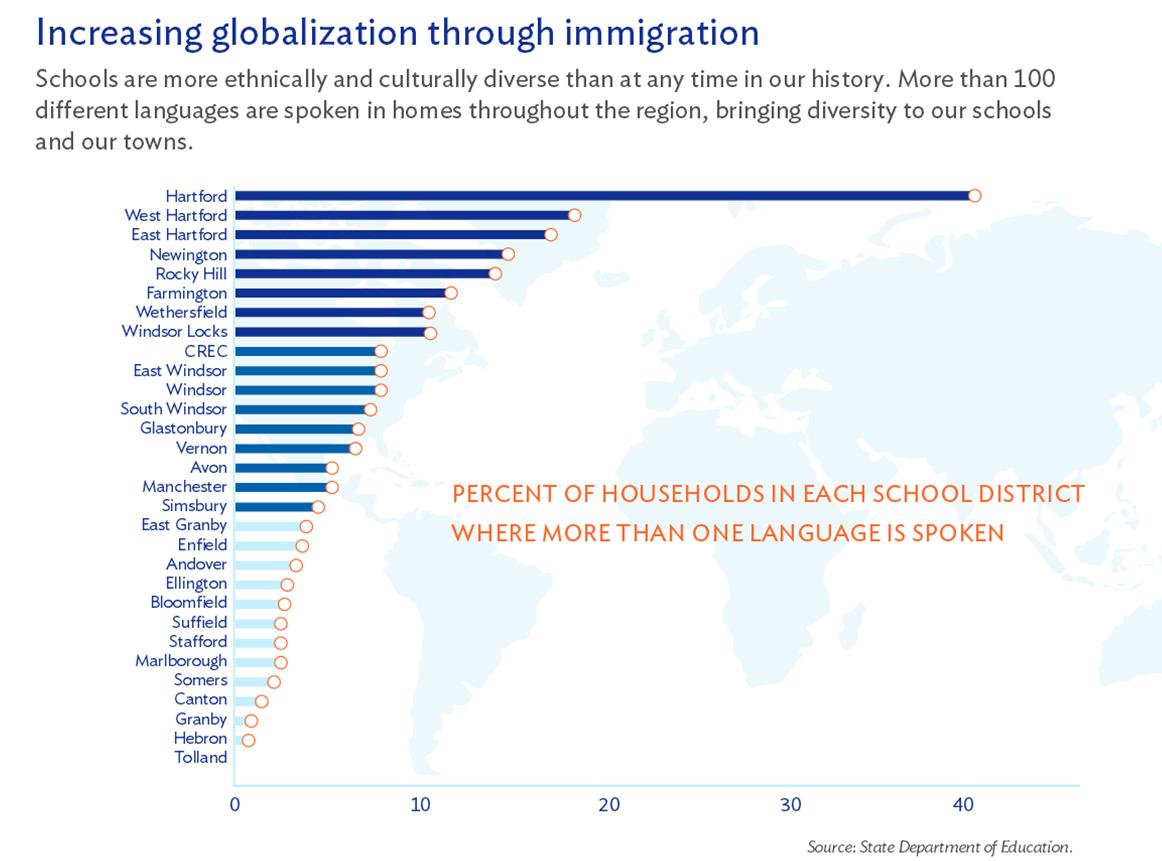 tudents.
 h school students - participants in week-long journalism workshops at UConn, Quinnipiac and Yale universities led by C-HIT - have been producing news stories that target issues facing a demographic they are not only familiar with, but, in most cases, part of. The students are learning research methods intrinsic to journalism and the results of their work have been eye-opening. Some of the highlights:
 Of the young people who reported cyber bullying incidents against them, one in three reported that they experienced threats online. Well over half of young people do not tell their parents when cyber-bullying occurs, the website says. Surveys show that girls are twice as likely as boys to be both victims and perpetrators of cyber bullying.
 ht) Mackenzie Brayman, a student at North Stonington High School; Julyanna Schreider and Shamoya Hanson, students at the Journalism & Media Academy, Hartford; Talon Cooper, a student at Hillhouse High School, New Haven; and Conner Fritchley, a student at Wilton High School. Information included in this article was researched and developed by the students for their news stories.

 was
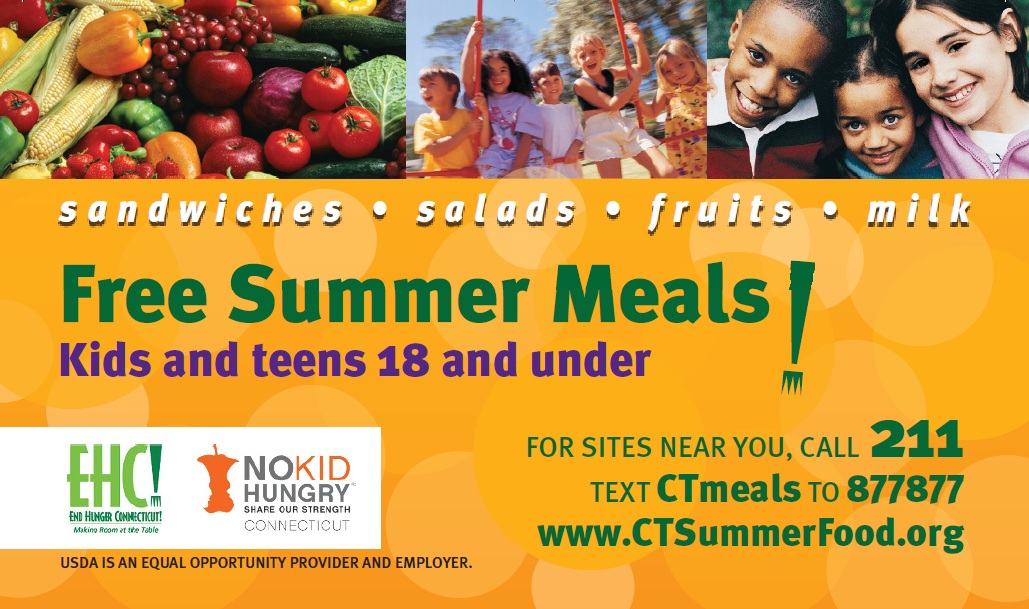 The numbers are increasing nationally as well as in Connecticut. In 2013, for the first time in a decade, the number of low-income children eating summer meals saw a substantial increase year-over-year, according to a
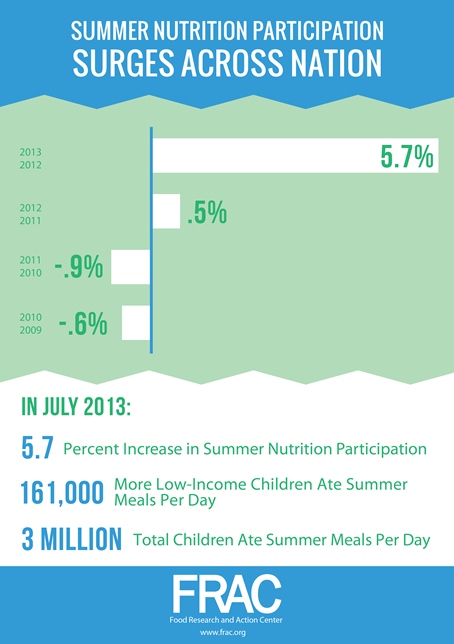
 The Summer Nutrition Programs, which include the Summer Food Service Program and the National School Lunch Program, are designed to fill the food gap for the thousands of low-income Connecticut children who rely on school breakfast and lunch during the school year. These programs provide free meals at participating summer sites at schools, parks, other public agencies, and nonprofits for children under 18.