Support of American Heart Association Brings Benefits to Connecticut
/The Greater Hartford Heart Walk, a noncompetitive 5K walk held annually each fall by the local affiliate of the American Heart Association, is one of many similar endeavors around the state by nonprofit organizations seeking to raise awareness and raise funds – and one of three organized annually by the American Heart Association in Connecticut. What is often overlooked, especially when the sponsoring organization bears a well-known national name, are the array of benefits that result close to home. The American Heart Association is a case in point.
Cardiovascular diseases and stroke are the #1 cause of death in Connecticut. Last fall, just over 1,500 walkers at the Greater Hartford walk helped to raise nearly $190,000 to support research, advocacy and awareness of cardiovascular disease and stroke. That money does not simply disappear into a giant national pool of funds – much of it finds its way back to Connecticut.
The organization currently supports 43 research studies in Connecticut with awards totaling $9,300,533, officials report. The grants and fellowships help to advance discovery, interpretation and delivery of new knowledge to spur improvements in cardiovascular health. Among those supported by awards from the American Heart Association are researchers on the University of Connecticut campus in Storrs, the UConn Health Center in Farmington, Yale University and the Yale University School of Medicine.
The organization’s Greater New Haven Heart Walk will take place on Saturday, May 2 at Savin Rock. The event is hoping to raise over $340,000. [Walk registration will begin at 9:00 a.m. and the walk will kick off at 10 a.m. with a walk along Savin Rock Beach.] The Greater New Haven Heart Walk is part of the American Heart Association’s national healthy living initiative, My Heart. My Life. The program focuses on improving nutrition, physical activity and children’s health, helping individuals and families understand how to make incremental changes for a substantial long-term health impact.
The American Heart Association also urges employers to “create a culture of physical activity and wellness so that we may all live longer, heart healthy lives.” The local chapter, based in Wallingford, works with Connecticut corporations to become a Fit Friendly Worksite.
Through the Fit-Friendly initiative, the American Heart Association provides free tools for worksites and employees including a Healthy Workplace Food and Beverage Toolkit, walking and physical activity programs, worksite wellness materials, and more. Eligible worksites can then receive recognition by the American Heart Association at local events and in recognition program communication materials including an Annual Honor Roll published on the organizations website and other amenities. In Connecticut, 40 companies have been designated as Fit Friendly Companies and in Massachusetts, 78 companies are committed to better employee health.
“More than two-thirds of American adults are overweight or obese putting them at risk for heart disease and stroke”, said American Heart Association Connecticut and Western Massachusetts Executive Director Dina Plapler. “Making healthy changes in the workplace, where many adults spend much of their day, is an important way to help people be healthier”.
The annual Greater Hartford Go Red For Women Luncheon, another well-attended education and fundraising event, celebrated its 10th anniversary this year. The March 18 event at the Connecticut Convention Center included survivor speaker, Leigh Pechillo. A native of Connecticut, Leigh experienced sudden cardiac arrest on Mother’s Day, May 11, 2014. She was fortunate that her husband knew CPR and helped to save her life. Her husband, daughter and son were presented with a Heart Saver Award by American Heart Association President, Nancy Brown at the event. The event raised over $400,000 to benefit women’s heart health.
The Go Red For Women initiative is dedicated to making an impact in the community through education and fundraising to fight the number one killer of women, heart disease. Heart disease and stroke account for 31.1 percent of all female deaths in Connecticut and on average, nearly 13 women die from heart disease and stroke in Connecticut every day.
For more information on the Greater New Haven Heart Walk go to www.newhavenheartwalk.org. Other Heart Walks taking place in Connecticut this year include the Rocky Neck Heart Walk on Sunday, September 27 at Rocky Neck State Park and the next Greater Hartford Heart Walk on Saturday, October 3. For more information on these events and more, visit www.heart.org/connecticut.
 S. approximately 48 people will have a cardiac arrest event outside of the hospital. Nine out of ten people will not survive. However, if lifesaving CPR is performed, a victim’s chance of surviving can double, or even triple, according to the American Heart Association.
 national initiative.


 Among the students participating in the project were William Pritchard, interaction design and project management; Somaiyeh Ghaffarnia, animation and character development; Sean Dexter, 3D animation; Kevin Richetelli, 2D animation; Samantha Menza, game design; Tom Lee, game design and music composition; and Tiffany Hoang, game design. Prtichard and Ghaffarnia began working on the project as undergrads and continued while pursuing their graduate degrees. The other students were undergrads.

 motorized transportation networks and safety. Communities that routinely collect walking and biking data, they point out, are better positioned to track trends and prioritize investments.

 ll, there were “approximately 800 healing experiences with children and families throughout the week, bringing the safety, respect and love of Camp to many families” in Philadelphia.

 iagnose, treat, and ultimately, cure NEC. Named after Morgan, it celebrates his survival, courage and strength. Morgan and his twin brother were born at 28 weeks, nearly three months early and each weighing less than 2.5 pounds. At four days old, Morgan developed NEC and lost approximately 20 percent of his small intestine. Morgan not only survived but has also thrived since his bout with NEC. The fund is his family’s way of paying it forward.

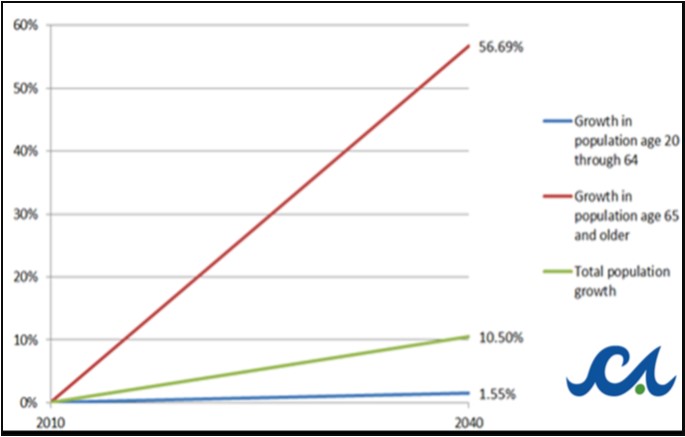
 The report also suggests that policy makers “explore the possibility of incenting employer-based long-term care insurance coverage.” In 2009 almost 25,000 employers in the U.S. offered long-term care insurance to their employees – just 35 percent of the 7.5 million insurance policies in effect. In addition, the report encourages the Connecticut Congressional delegation to support a federal tax deduction for long-term care insurance, and urges policy makers to consider making reverse mortgages “a more viable option.”
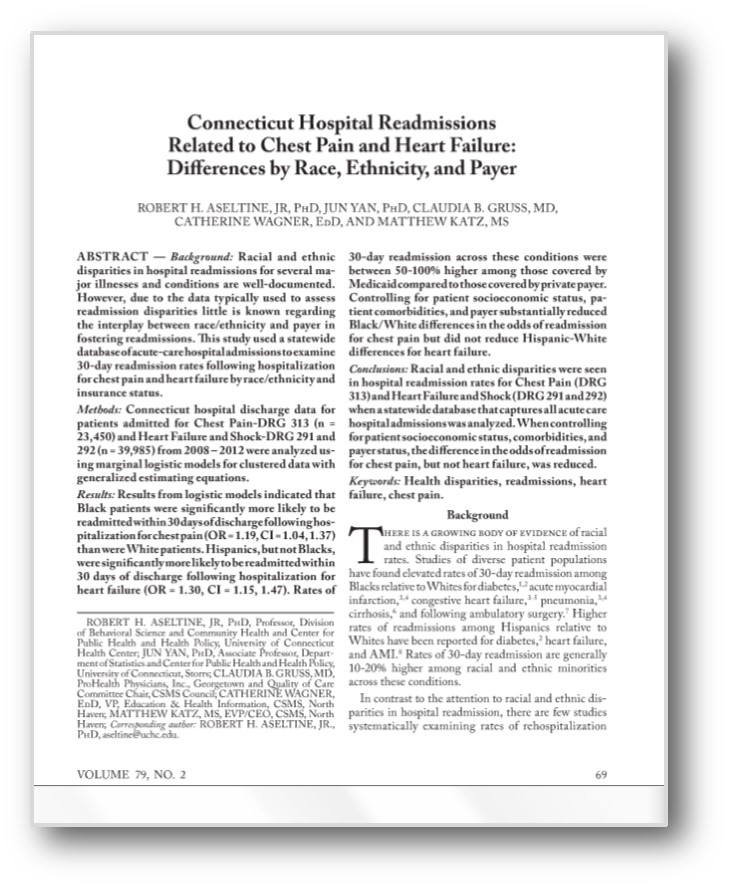
 The study also noted that “barriers to accessing community based care among Connecticut Medicaid beneficiaries are well-documented, often leaving such patients with few options other than hospital care for both urgent and non-urgent conditions.”
 ocations in Connecticut are in Bridgeport, Danbury,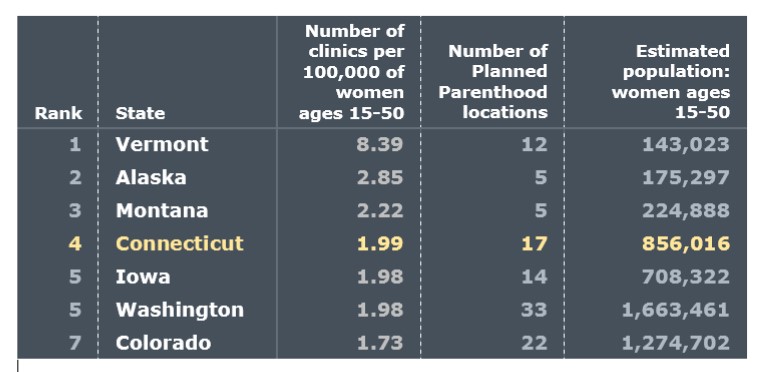
 for Disease Control and Prevention (CDC) recently released new data showing that while cervical cancer screenings have been proven to save lives, about eight million women ages 21 to 65 have not been screened for cervical cancer in the past five years. More than 12,000 women in the U.S. are diagnosed with cervical cancer each year, and more than half of these cases are in women who have never been screened or in those who haven’t been screened in the past five years, according to Planned Parenthood.