Health Care Providers, Insurers Need to Collaborate to Improve Care, Rein in Costs
/When Eric Schultz began his keynote remarks, the President and CEO of Massachusetts-based Harvard Pilgrim Health Care made sure to alert his audience to his homegrown pedigree. Whether his youth in the Naugatuck Valley, college years (five of them) at UConn, or graduate work at Yale contributed to Harvard Pilgrim’s more-than-solid inaugural years doing business in Connecticut isn’t certain, but the above-expectations numbers are indisputable. And Schmitt made clear that his nonprofit health insurance company is looking for even greater achievements in his home state. Since entering the Connecticut market in the summer of 2014, the company has been aggressively growing its customer base in a competitive market while working diligently to grow and expand its network of doctors. Harvard Pilgrim Health Care announced recently that its Connecticut membership has grown to more than 24,000, exceeding expectations for 2015. It now serves more than 800 Connecticut businesses. Twenty-nine of the state’s 30 hospitals are now in-network.
 With more than 500 business leaders in attendance at an annual Economic Summit & Outlook last week, brought together by the Connecticut Business and Industry Association and MetroHartford Alliance, Schmitt spent some time touting a new model launched in the state of New Hampshire that he believes may be a glimpse into the direction the industry is moving. Harvard Pilgrim Health Care’s footprint in New England now covers “where 90 percent of New Englanders live,” in Massachusetts, Connecticut, Maine and New Hampshire.
Schultz, who succeeded now-Massachusetts Governor Charlie Baker in leading the organization five years ago, pointed to what he described as “a practical example of how an insurance company and groups of providers can work together to get control of medical cost trends and to help improve medical outcomes and help create better experiences for physicians and their patients.”
The goals, Shultz explained, are to reduce insurance premium trends by 10 to 15 percent, to improve clinical outcomes, to create a better “practice environment” for medical staff and to grow business. The partnership is driven to “produce something that’s better than what we have today, because we know the financing of health care is largely broken in the U.S.”
 Launched in October 2015 and in business as of January 1, Benevera Health, a joint venture led by senior leadership at Harvard Pilgrim Health Care and Dartmouth-Hitchcock, is a population health company, centered around “clinical and medical informatics.” Dartmouth-Hitchcock, a nonprofit academic health system that serves a patient population of 1.2 million in New Hampshire and Vermont, is led by Dr. James Weinstein, recently named as one of “100 Physician Leaders to Know” by a national health care trade publication.
“We are combining insurance data with clinical data,” Schultz said, “from their electronic medical records and our claims system, and creating a very powerful source of information.” That information, he stressed, could be used to better understand what’s happening in regards to patient care, and it can help to redesign and improve clinical care. This has the potential to be especially important in chronically ill patients, noting that 10 percent of patients drive 50 percent of health care costs. “It is a great financial opportunity and a great clinical opportunity.”
“The magic,” Shultz noted, is in having the provider and the payer sit down together and figure out” what should be done. Too often in the past, he said, providers and insurers haven’t gotten together – a lack of cooperation and collaboration that contributes to higher costs and to disconnects regarding patient care. His expectation is the Benevera will “reduce headaches” that insurance companies often cause providers, reduce duplication and costs, and improve patient care. 
In fact, when the new venture was launched last fall, officials from the two companies stressed that the groundbreaking entity, “will take health care coordination to a new level by bringing together clinical, financial and operational data from across partner institutions to provide actionable analytics for clinicians to further improve the quality and efficiency of patient care.” They added that “at the center of this approach will be locally-based care advocates who will identify early opportunities to engage patients – especially those with chronic, complex or emerging conditions - and provide them with one-on-one support.”
Schultz noted that insurance companies tend to resist providers suggesting how insurance plans ought to be designed. He disagrees with that resistance. “If more insurers took more input from providers on plan design, we’d be a lot better off.”
Harvard Pilgrim is the only not-for-profit, regional health plan operating in four contiguous New England states. Harvard Pilgrim’s flagship health plans in New England provide health coverage to 1.3 million members, while another 1.4 million individuals are served through Health Plans, Inc., a subsidiary that provides integrated care management, health coaching and plan administration solutions to self-funded employers nationwide. Schultz holds an MBA in Health Care Leadership from Yale University’s School of Management, as well as a bachelor of science degree in biology and a bachelor of arts degree in economics from the University of Connecticut.
“We’re about change and driving change,” Schultz told those attending the Hartford summit, “and I believe we need to do more of that.” He’s hoping to build a similar structure in Connecticut, and in other states around the country, because “it’s exactly what we need to do.”
Link to CT-N video of Economic Summit & Outlook.




 MassChallenge, an independent nonprofit organization, envisions “a creative and inspired society in which everyone recognizes that they can define their future, and is empowered to maximize their impact.” They note that “novice entrepreneurs require advice, resources and funding to bring their ideas to fruition. Currently there is a gap between the resources these entrepreneurs need and the ability of the entrepreneurial ecosystem to provide them.” To bridge that gap, the organization’s primary activities include running an annual global accelerator program and startup competition, documenting and organizing key resources, and organizing training and networking events. They “connect entrepreneurs with the resources they need to launch and succeed immediately.”
 The news came just weeks after it was announced that Laurencin is the recipient of the 2016 Founders Award, the highest honor of The Society For Biomaterials. He will be honored at the 2016 World Biomaterials Congress in Montreal, Canada on May 18, 2016.
 The APNA Annual Conference delivers more than 100 varied educational sessions and invaluable networking opportunities to the more than a thousand psychiatric-mental health RNs and APRNs who attend each year. The organization has more than 10,000 members nationwide.
 In Florida last month, more than 1,800 attendees were on hand for a program “packed with psychiatric-mental networking, updates, and continuing education targeted to psychiatric-mental health nurses.” Session recordings from the Annual Conferences are made available in the APNA eLearning Center in podcast form, along with up-to-date session slides and other relevant materials.
 In Connecticut, the average rate between 1999 and 2001 was 4.1 per 100,000. Between 2010 and 2013, the drug overdose rate had risen to 8.3, above the national aver
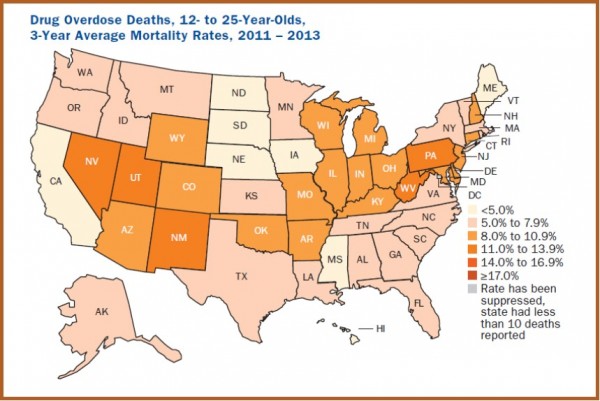 age but unchanged from a previous three-year period, 2005-2007. The data was compiled from the Centers for Disease Control and Prevention. Males are 2.5 times as likely to overdose as females (10.4 vs. 4.1 per 100,000), according to the report.
 s to help practitioners identify potential abuse that leads to over prescribing by requiring them to check patient history to verify if patients seeking certain prescriptions have recently received these medications from multiple other prescribers or pharmacists.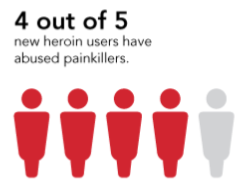


 Instead,
  l bus injuries in the U.S. every year — two to three times National Highway Traffic Safety Administration estimates, which use only a sampling of data and exclude field trips like the one on which Vikas Parikh died. Seat belts work best in rollover and side-impact collisions in which students are thrown out of their seats, as Vikas was. The American Academy of Pediatrics supports restraints on buses.”
 In
In 


 sustainable lifestyle beverate brand for teens and tweens. The company's goal is to inspire young people to realize the power of consumer choices to effect social and environmental change.
 The five awards judges - Sherrell Dorsey of Uber and Triple Pundit, Adam Dotson of Ironwood Capital, Claire Leonardi, an advisor to reSET's Social Enterprise Investment Fund and former CEO of Connnecticut Innovations, Anthony Price of LootScout and Paul Witinski of Ironwood Capital - narrowed down more than 100 applicants to 12 honorees. The People’s Choice winner was selected via more than 1,800 online votes.