Average Age of Mothers Increasing in CT and Nationwide, Federal Data Reveals
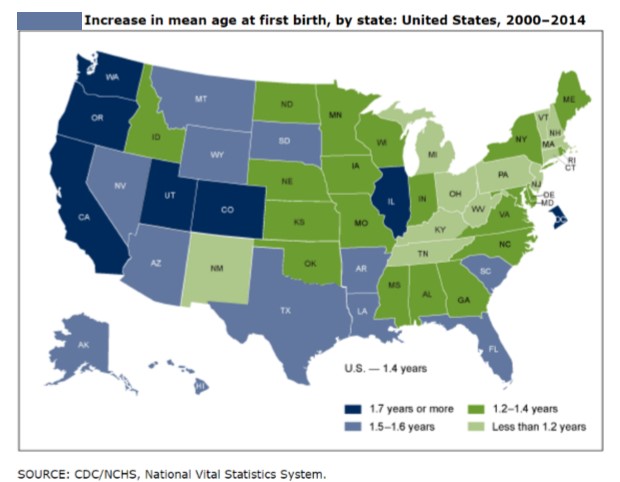
/First-time mothers are older than ever, new federal data has revealed. Since 2000, the average mother’s age at the birth of her first child has increased in every state in the nation, rising 1.9 years or more in D.C., California, Oregon, and Utah, while increasing by less than a year in Connecticut, Michigan, New Hampshire, and West Virginia.
Overall, the average age of mothers has increased from 2000 to 2014 for all birth orders, with age at first birth having the largest increase, up from 24.9 years old in 2000 to 26.3 years in 2014, according to newly released data compiled by the Centers for Disease Control and Prevention. Connecticut is among a dozen states with the smallest increases in the average age of first-time mothers. 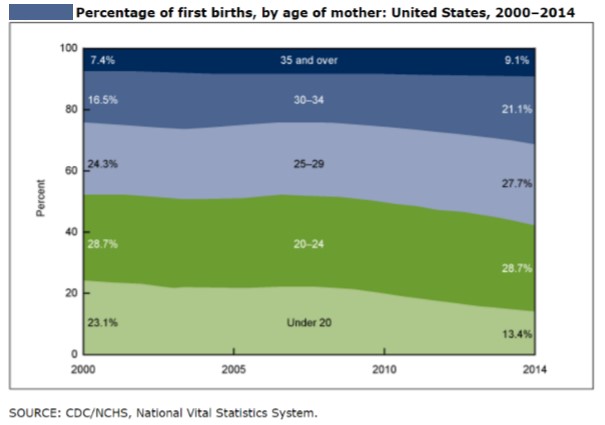
The federal agency points out that “a mother's age at birth, and particularly the average age when a mother has her first child, is of interest to researchers and the public. Mean age can affect the total number of births a mother has over a lifetime, which in turn impacts the composition and growth of the U.S. population. Age of mother is associated with a range of birth outcomes, such as multiple births and birth defects, the agency noted.
The largest factor in the rise a mother’s average age when her first child is born is the decline in the proportion of first births to mothers under age 20, down 42 percent from 2000 to 2014, or from approximately 1 in 4 births to 1 in 7.
Increases in the average age for all birth orders were most pronounced from 2009 to 2014, according to the data. While the average age at the birth of a mother’s first child was fairly stable for the first half of this time period, greater increases were observed from 2009 (25.2 years) to 2014 (26.3 years).
Increases from 2000 to 2014 in average age for higher birth orders were less than those for first births, rising 1.4 years for first births, 1.0 years for second births, 0.8 years for third- and fourth-order births, and 0.5 years for fifth- and higher-order births. As a result of the different rate of increases by birth order, the gap in the average age between sequential birth orders is less than previously. For example, the difference in a mother’s average age at first birth compared with the mean age at second birth was 2.8 years in 2000 and fell to 2.4 years in 2014.
States with larger increases (1.7 years or more) in the average age at first birth tended to be in the western United States (California, Oregon, Washington, Utah, and Colorado), the data indicated. Greater increases were also seen in Illinois, Arkansas, and D.C.
 The report emphasized that over the past several decades, the United States continued to have a larger number of first births to older women along with fewer births to mothers under age 20. “This trend and the more recent uptick in delayed initial childbearing can affect the number of children a typical woman will have in her lifetime, family size, and for the overall population change in the United States,” the federal agency pointed out.
This report contains data from the birth data set, which is part of the National Vital Statistics System (NVSS). NVSS contains all live births reported in the United States. The birth data set is the primary data set for analyzing birth trends and patterns in the United States.



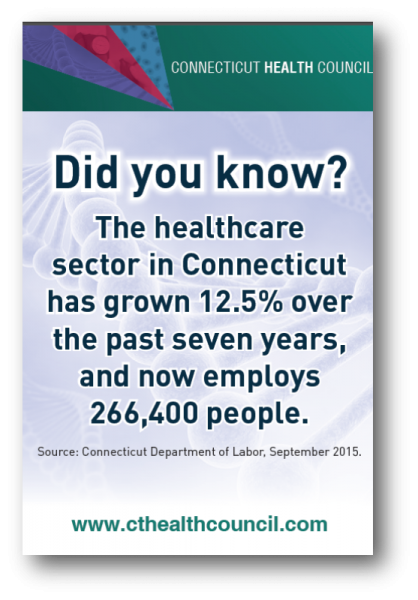
 In addition, the marketing campaign also highlights that thee of the top 10 fastest growing companies headquartered in Connecticut in 2014 were healthcare related companies, and that Connecticut’s healthcare sector has the fifth highest number of sole proprietorships of any sector in the state, with the seventh highest revenues. Connecticut’s “unique base of health sector assets” include health insurance companies, hospitals, medical schools, research capacity, and specialty practices, according to the organization’s website.
 The Council's primary activity is to host programs focused on health sector topics that feature speakers of regional, national and international renown, the website points out. The Council also provides “a forum for a robust network of experts, professionals and other parties interested in promoting Connecticut as a center of health excellence and the health sector as a primary driver of economic and employment growth in our State.”
 Since entering the Connecticut market in the summer of 2014, the company has been aggressively growing its customer base in a competitive market while working diligently to grow and expand its network of doctors. Harvard Pilgrim Health Care announced recently that its Connecticut membership has grown to more than 24,000, exceeding expectations for 2015. It now serves more than 800 Connecticut businesses. Twenty-nine of the state’s 30 hospitals are now in-network.
 With more than 500 business leaders in attendance at an annual Economic Summit & Outlook last week, brought together by the Connecticut Business and Industry Association and MetroHartford Alliance, Schmitt spent some time touting a new model launched in the state of New Hampshire that he believes may be a glimpse into the direction the industry is moving. Harvard Pilgrim Health Care’s footprint in New England now covers “where 90 percent of New Englanders live,” in Massachusetts, Connecticut, Maine and New Hampshire.
 Launched




 MassChallenge, an independent nonprofit organization, envisions “a creative and inspired society in which everyone recognizes that they can define their future, and is empowered to maximize their impact.” They note that “novice entrepreneurs require advice, resources and funding to bring their ideas to fruition. Currently there is a gap between the resources these entrepreneurs need and the ability of the entrepreneurial ecosystem to provide them.” To bridge that gap, the organization’s primary activities include running an annual global accelerator program and startup competition, documenting and organizing key resources, and organizing training and networking events. They “connect entrepreneurs with the resources they need to launch and succeed immediately.”
 The news came just weeks after it was announced that Laurencin is the recipient of the 2016 Founders Award, the highest honor of The Society For Biomaterials. He will be honored at the 2016 World Biomaterials Congress in Montreal, Canada on May 18, 2016.
 The APNA Annual Conference delivers more than 100 varied educational sessions and invaluable networking opportunities to the more than a thousand psychiatric-mental health RNs and APRNs who attend each year. The organization has more than 10,000 members nationwide.
 In Florida last month, more than 1,800 attendees were on hand for a program “packed with psychiatric-mental networking, updates, and continuing education targeted to psychiatric-mental health nurses.” Session recordings from the Annual Conferences are made available in the APNA eLearning Center in podcast form, along with up-to-date session slides and other relevant materials.
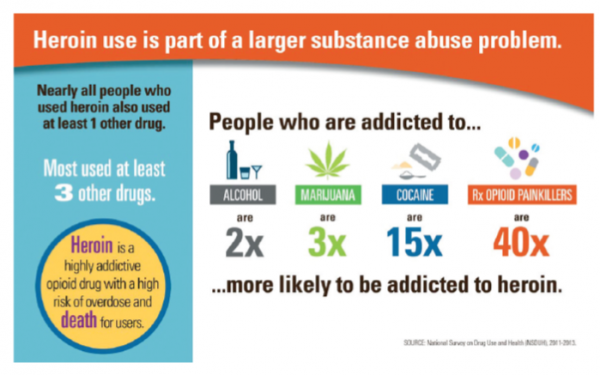
 In Connecticut, the average rate between 1999 and 2001 was 4.1 per 100,000. Between 2010 and 2013, the drug overdose rate had risen to 8.3, above the national aver
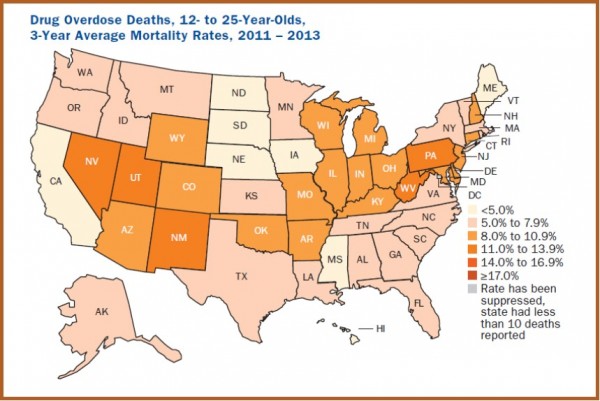 age but unchanged from a previous three-year period, 2005-2007. The data was compiled from the Centers for Disease Control and Prevention. Males are 2.5 times as likely to overdose as females (10.4 vs. 4.1 per 100,000), according to the report.
 s to help practitioners identify potential abuse that leads to over prescribing by requiring them to check patient history to verify if patients seeking certain prescriptions have recently received these medications from multiple other prescribers or pharmacists.