WTIC License Renewed by FCC Following Nearly 3-Year Odyssey
/Concluding a process that dragged on for nearly three years, the Federal Communications Commission (FCC) has renewed the broadcast license of Hartford’s WTIC-AM.
The FCC action, confirmed to CT by the Numbers, comes three months after a federal appeals court upheld former Gov. John G. Rowland’s conviction for violating federal campaign laws. Just days after that ruling, the FCC lifted a years-long enforcement hold on the station’s license renewal, which then allowed the agency to consider the long-pending license renewal.
The station’s broadcast license expired 2 ½ years ago, on April 1, 2014. In accordance with FCC procedures, the station filed a license renewal application on November 27, 2013. By September 2014, the FCC’s enforcement division placed the renewal application on “enforcement hold.” It remained on enforcement hold – which precluded consideration of the application – until June of this year.
The license was renewed on September 13, 2016 for the customary period of eight years, retroactive to the expiration date of the previous broadcast license in 2014. It comes at a time when CBS Radio, which owns WTIC-AM, is seeking to sell or spin off its radio holdings. The agency’s renewal of the WTIC-AM broadcast license is scheduled to expire on April 1, 2022.
“We’re pleased with the FCC’s decision to renew the station’s license and look forward to many more years of providing the Hartford community with local news and engaging talk radio,” WTIC-AM 1080 Program Director Jenneen Lee said.
At the time that Rowland was accused of secretly accepting pay as a political consultant, he was also an afternoon radio host on WTIC-AM. His use of the airwaves in order to favor the candidate, Lisa Wilson-Foley, whose spouse was paying Rowland at the time, was raised during his trial. Rowland recently retained a new legal team and appears to be planning to pursue an appeal this fall at the U.S. Supreme Court.

The station could – and did - continue broadcasting while the FCC held the renewal application. Stations in such a status routinely continue to operate without any interruption until a decision on license renewal is made. As the agency’s Enforcement Bureau considered “an alleged violation of FCC rules,” the agency’s Media Bureau could not proceed with a decision on whether or not to renew the station’s broadcast license.
FCC officials have indicated that most often enforcement holds are instituted due to a complaint being filed that requires investigation, but they would not confirm whether that was true in this instance. That information is only made available to the licensee or their attorney, according to an FCC official. Hartford Attorney Ken Krayeske filed an informal objection on October 1, 2014 to WTIC’s broadcast license renewal, alleging that the station “demonstrated serious malfeasance” and “helped conceal violations of federal law.” The FCC confirmed the receipt of that objection.
Rowland resigned from his drive-time talk show on WTIC-AM in April 2014. The station currently airs a locally-originated sports talk program in that time slot.
CBS Radio operates 117 radio stations in 26 U.S. markets, including Hartford’s WTIC-AM, WTIC-FM, WRCH-FM, and WZMX-FM.
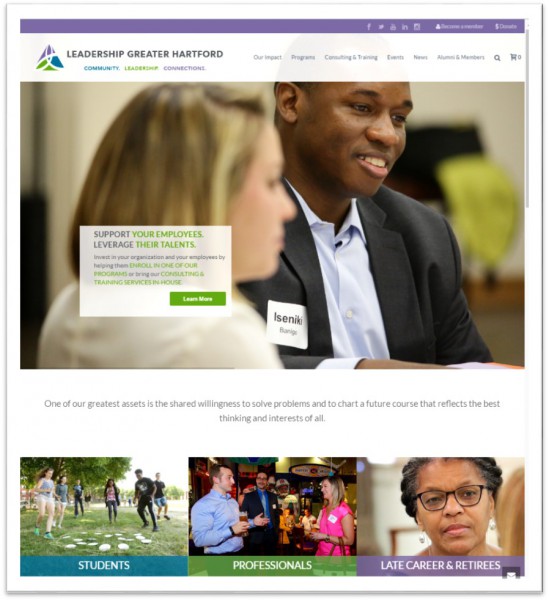 mission,” said Ted Carroll, President of Leadership Greater Hartford. “It is important that our brand reflect the organization we have become and where we will continue to be headed in the future - making our communities better and stronger.”
 In addition to the expert panel on opioid abuse, there will be more than 30 presenters on public health topics, a presentation on the history of CPHA and public health in the
 state, and a look forward to the future and innovations on the horizon in health research, policy, and community programs.
 She seeks to broaden the national health debate to include not only universal access to high quality health care but also attention to the social determinants of health (including poverty) and the social determinants of equity (including racism). As a methodologist, she has developed new ways for comparing full distributions of data (rather than means or proportions) in order to investigate population-level risk factors and propose population-level interventions.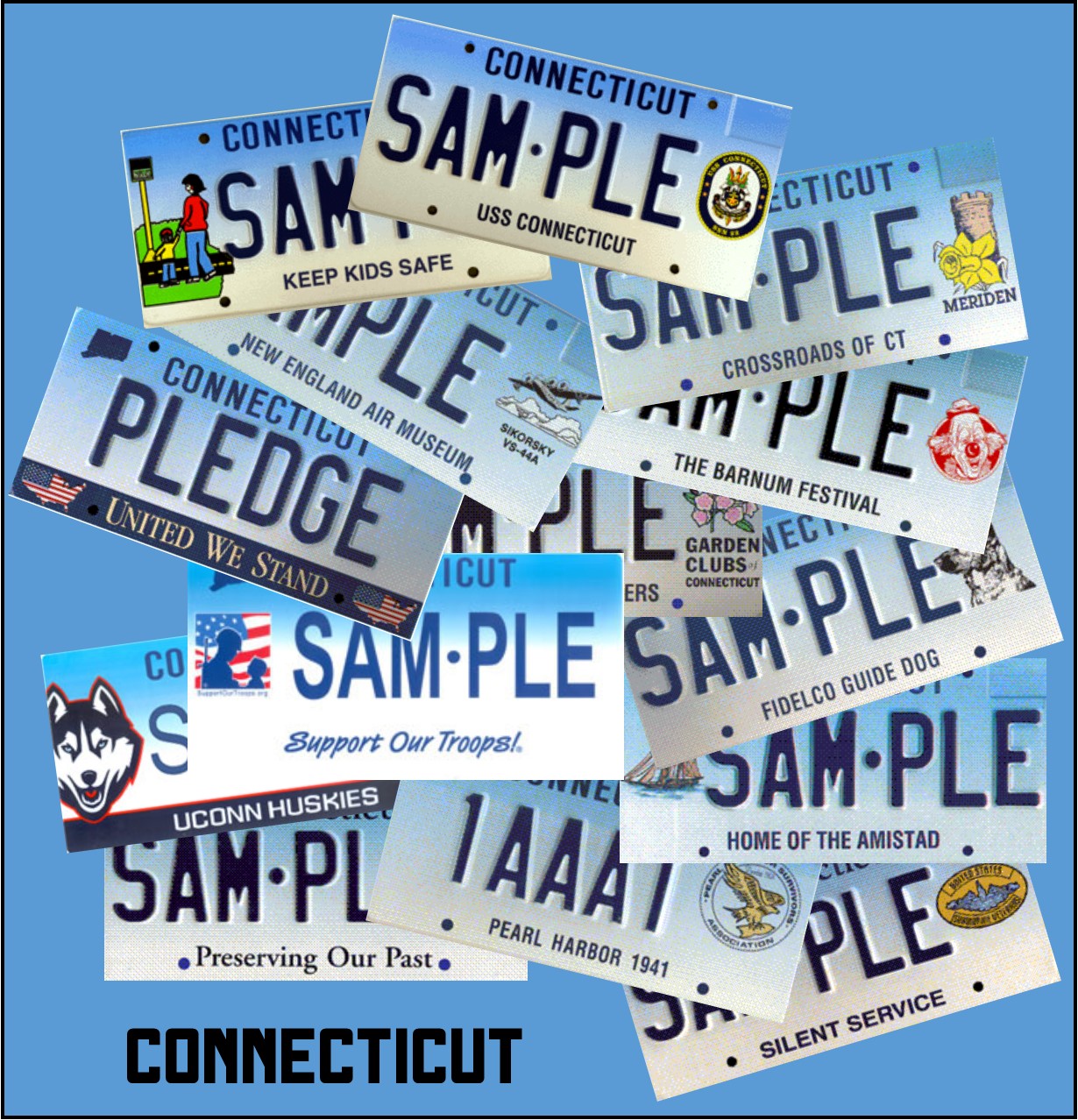
 When individuals purchase a Keep Kids Safe plate, a portion of the fee goes to the Keep Kids Safe Fund, which “makes many worthy projects happen for youngsters.” The fund awards grants to schools, hospitals, municipalities and other non-profit organizations working to make all Connecticut children safer from severe and preventable injuries, according to the DMV website.
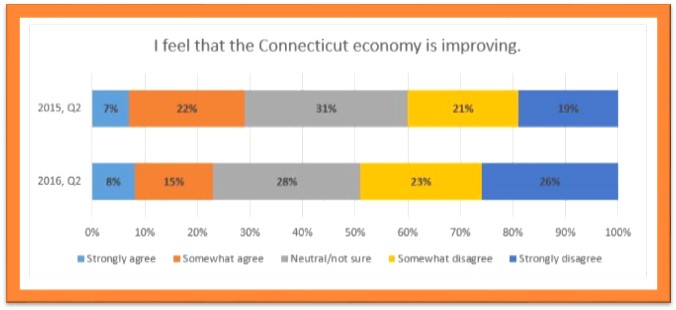
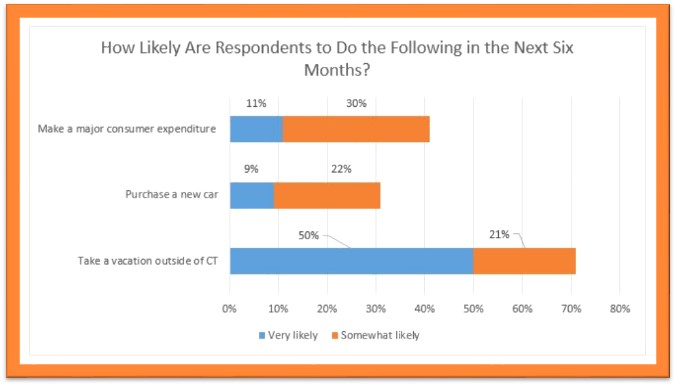 Increasingly, residents believe that jobs are “very hard to get” in Connecticut compared with six months ago (from about one-quarter to one-third of those surveyed in Q2 2016 versus Q2 2015), and are, in growing numbers, saying they would rather leave than stay.
 Forty-three percent, an increase from 40 percent in the year’s first quarter, answered “all of the above” when asked if education, libraries, public health, public safety and animal control could be provided regionally. Among those services individually, there was slightly greater support for a regional approach to public safety, slightly less for each of the others. The largest increase was for “all” of the services.
 The
The  A minimum-wage worker in Connecticut would need to work full time for 36 weeks, or from January to September, just to pay for child care for one infant. And a typical child care worker in Connecticut would have to spend 63.6% of her earnings to put her own child in infant care, according to the data.




 Participating schools will be encouraged to take innovative approaches to teaching civics in the classroom and to consider involving extracurricular activities that promote civic and community engagement.
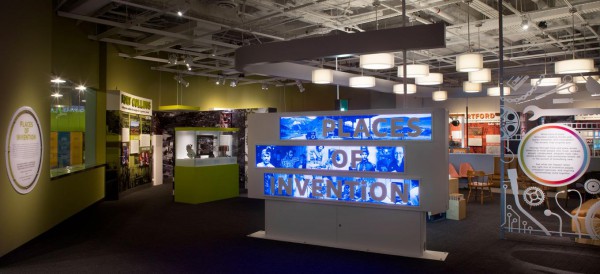 Describing Hartford’s prominent manufacturing history, Hinz said “Hartford, CT, is a classic story in the history of American technology. If you have ever wondered why people refer to “Yankee ingenuity,” this is what they are talking about.” He adds, “In the mid and late 1800s, the United States overtakes Great Britain as the world’s foremost economic superpower, largely on the strength of its prowess in inventing and manufacturing new technologies. Hartford is at the center of that revolution.”
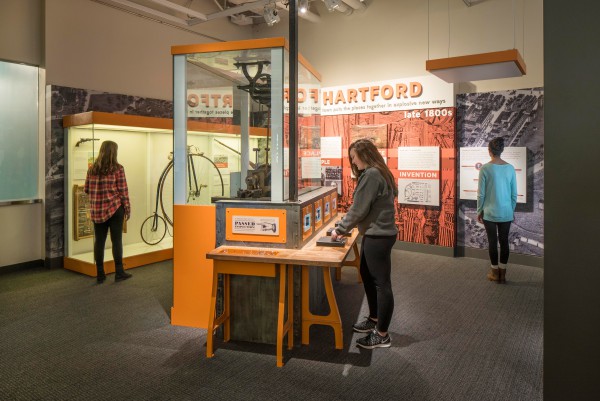 The exhibit notes that by the 1850’s “Hartford became the center of production for a wide array of products—including firearms by Colt, Richard Gatling and John Browning; Weed sewing machines; Royal and Underwood typewriters; Columbia bicycles; and even Pope automobiles.”
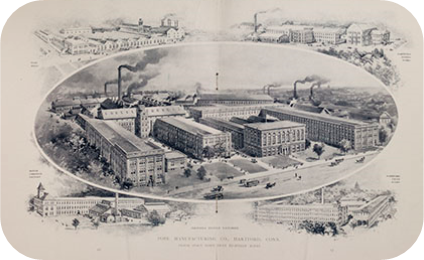 rode his high-wheeler from the station down Capitol Avenue to the Weed Sewing Machine Company.’”
 Jeanne Manzelli, a resident of Windsor, has a
  BFA in Sculpture from the Massachusetts College of Art and her MED in Art Education from the University of Massachusetts, Amherst. Her experience includes a 20 year career in design, manufacture, appraisal and sale of jewelry, two decades as mural artist working closely with interior designers as an industry professional, and 14 years teaching basic and advanced drawing, sculpture and 3D design as well as color theory at Tunxis Community College.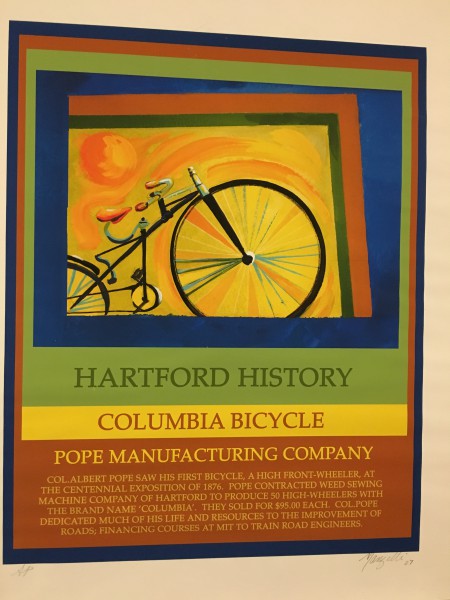

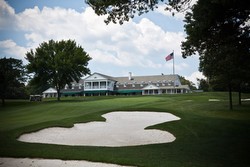 Des Moines Golf and Country Club was the site of the 1999 U.S. Senior Open Championship which drew a record 252,800 spectators.