Another Federal Agency Says School Buses Should Have Lap/Shoulder Belts; Most States, Including CT, Don't
/The National Transportation Safety Board (NTSB) this week recommended to states that all new large school buses be equipped with both lap and shoulder seatbelts, the first time such a recommendation has been issued for the vehicles by the agency. The board also recommended requiring collision-avoidance systems and automatic emergency brakes on new school buses, but the follow-through on the recommendations falls to states and local jurisdictions. The NTSB recommendation is not a federal requirement, and comes three years after a similar call by the National Highway Traffic Safety Administration (NHTSA).
Connecticut, as most states, does not require lap and shoulder seat belts in school buses.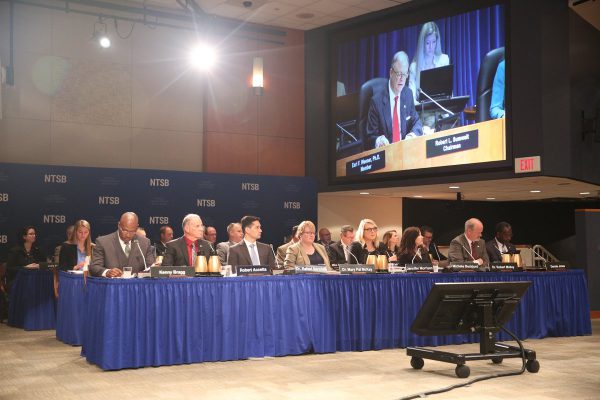
The NTSB recommendations, made to the 42 states, the District of Columbia, and Puerto Rico, all of which lack requirements for lap/shoulder belts on large school buses, were accompanied by a recommendation to the states of Florida, Louisiana, New Jersey, and New York to amend their statutes to upgrade their seat belts requirements from lap-only belts to lap and shoulder belts.
Connecticut’s legislature has previously debated a lap-and-shoulder belt requirement on school buses, but has failed to pass such a requirement, including, most recently, last year. Legislation that would have imposed a requirement in Connecticut, effective in 2022, failed to gain approval from the Transportation Committee after a public hearing.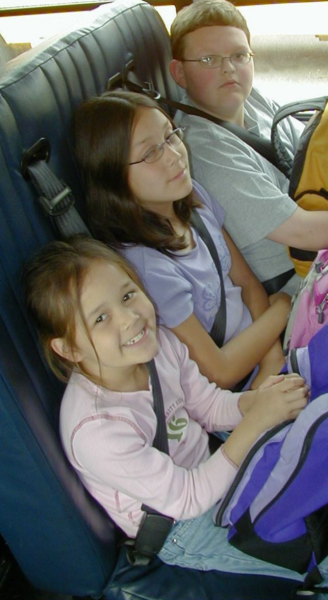
Last summer, Nevada joined California, Florida, Louisiana, New Jersey, New York and Texas in enacting laws requiring seat belts. The law in Louisiana requires school buses be equipped with seat belts, but this is subject to appropriation for the purchase of such buses and the state legislature has not provided funding to trigger the requirement. Similar language in Texas’ law was removed in 2017, according to the National Conference of State Legislatures.
NTSB Chair Robert Sumwalt said at the close of Tuesday’s NTSB meeting this week, which included a review of two 2016 school bus crashes that killed 12 and injured 37, “The recommendations that we issued and reiterated today, if acted on, will help ensure that new school buses are manufactured with tried and true occupant protection such as lap-shoulder belts, as well as collision avoidance technology such as automatic emergency braking.” The meeting was held just days after a school bus accident in New Jersey that killed a young student and teacher.
The recommendation comes three years after a similar stance from the then-Administrator of NHTSA, Mark Rosekind: "The position of the National Highway Traffic Safety Administration is that seat belts save lives," Rosekind said in November 2015. "That is true whether in a passenger car or in a big yellow bus. And saving lives is what we are about. So NHTSA's policy is that every child on every school bus should have a three-point seat belt."
“The main hold up continues to be funding,” State Rep. Fred Camillo of Old Greenwich, who introduced Connecticut legislation to accomplish that objective, told CT by the Numbers last year. Passage has been elusive here, and elsewhere, despite the change in position by NHTSA more than two years ago. The federal agency previously viewed school buses as safe without seat belts, because of their construction.
That changed in 2015. Since then, as Connecticut’s Office of Legislative Research noted in a 2016 report to the legislature, “NHTSA has been exploring ways to make seat belts on schools buses a reality.” NHTSA points out that seat belts have been required on passenger cars since 1968; and 49 States and the District of Columbia have enacted laws requiring the use of seat belts in passenger cars and light trucks.
The Connecticut Association of Public School Superintendents testified against the measure last year, calling for approval to be “postponed” until a series of questions – ranging from the use of bus monitors to the cost of seat belt maintenance to district liability from unused seat belts – could be answered.
The Connecticut Association of Boards of Education (CABE) – representing local elected school boards across the state – also voiced their opposition at a January 30, 2017 public hearing. CABE officials expressed concern about “years of busses” that would “need to be replaced or retrofitted.” They also noted that lap belts “would not work best for 5-year-olds and 18-year-olds alike.” In addition, questions were raised about students who might “unclick the belt” and the liability of bus drivers if they did.
Camillo initially proposed the bill in 2011 after a Rocky Hill student was killed in a school bus crash. Last year in Connecticut, in March, after a school bus accident in Canterbury sent five students to the hospital, public discussion on the pending proposal was renewed, but the legislature ultimately did not take action. “This accident today is just another reminder that we really need to do something regarding this issue. We don’t want to wait for another tragedy to occur,” Camillo told the Norwich Bulletin. Later that month, five people were injured after a crash involving a school bus in North Haven.
At NTSB, Robert L. Sumwalt was sworn in as chairman last August, after being nominated by President Trump and confirmed by the U.S. Senate. He began his tenure at the NTSB in August 2006 when President Bush appointed him to the Board and designated him as Vice Chairman. In November 2011, President Obama reappointed him to an additional five-year term as Board Member.
The NTSB this week also called for “facial recognition data to catch driver license fraud at every opportunity, with data shared across states. It demands that certified medical examiners effectively play their role in denying medically unfit drivers a medical certificate.” Added Sumwalt: “Action on the safety recommendations issued and reiterated today will constitute a crackdown, but only from the point of view of drivers who put the safety of our children and other road users at risk. Such a crackdown is long overdue.”
 The top five female names in Connecticut in 2017 were Olivia (230), Emma (219), Ava (169), Mia (162) and Sophia (159). The leading names selected for boys were Noah (222), Liam (208), Logan (189) Jacob (187), and Michael (175).


 Honored at the event, and participating in a conversation moderated by CBS News medical correspondent Dr. Max Gomez, highlighting their work in the field, were:

 y contracted by 0.9 percent annually while Massachusetts and New York grew by 1.6 percent and Rhode Island by .6 percent, according to data from the U.S. Bureau of Economic Analysis.
 numbers has not meant economic growth.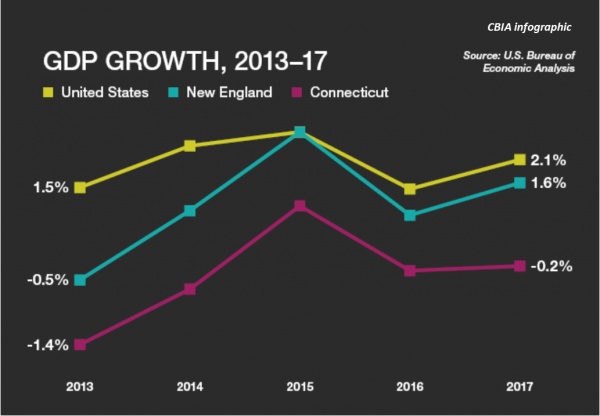


 Manufacturing, the sector with the most losses since 2012, is down 8,600 jobs in the five-year period. Educational Services employment (public and private) which has long been a sector with employment growth, declined during the 2015 to 2017 period, influenced by decreases in school-aged population and state and local budget issues.
 nanostructures, or Netflix. They did, however, have a vision that the academy would be dedicated to new knowledge—and these new members help us achieve that goal.”
 Also being inducted in this year's class are John J. Collins of the Yale Divinity School and Gerald I. Shulman and Haifan Lin of the Yale School of Medicine.

 “At Pratt & Whitney, we are in a very competitive industry and our continued success depends on our people driving innovation into every part, process and service,” said Carter. “Our customers have depended on Pratt & Whitney innovators literally for generations, and with the GTF, they can continue to count on us for the next generation.”
 nation at the forefront of global technology and economic leadership.
 The five dimensions, mentioned above, were weighted to determine an overall score on a 100 point scale using thirty relevant metrics including the cost of living, rate of home ownership and insurance, average student loan debt, voter turnout rate, unemployment rate, percentage diagnosed with depression and the average price of a latte at Starbucks.
 In comparing the average annual opioid-related death rates per 100,000 population in 2012-13, 2014-15, and 2016-17, the dramatic increases across communities statewide is quite evident. The data analysts point out that data are where deaths from 'any opioid' (meaning some type of opioid were found in the person) take place. Therefore, they explain, one would expect to see higher rates in places with large hospitals (hence high rates in cities). They add that one can also not discount that these places are also seeing higher rates among its residents.
 The Connecticut Data Collaborative has posted on its