Local Nonprofits Receive Funding From First Niagara As Bank Prepares for Sale to Key Bank
/First Niagara Foundation’s Mentoring Matters™ program has announced it will be providing grants that support local nonprofit organizations throughout Connecticut. With the pending sale of First Niagara to Cleveland-based Key Bank, the fate of the Foundation’s local support seems strong, as Key Bank has announced it will make a $20 million contribution to the First Niagara Foundation “to continue its important community initiatives.”
The charitable not-for-profit entity of First Niagara Bank allocates $1 million annually in charitable grants specifically targeted to support quality mentoring programs across the bank’s seven regional market centers, including its New England and Tri-State regional offices, which between them share coverage of Connecticut.
The New England Region receives $150,000 in grant money for distribution, and for a region that includes Greater New Haven, north into Western Massachusetts. The foundation’s Tri-State region receives $50,000 and covers the service footprint in Fairfield County and the lower Hudson Valley.
In each region, the Foundation partners strategically with mentoring organizations that offer “the best impact with our mentoring dollars, and grant decisions are made by local leaders in each market,” according to foundation officials. In Connecticut, the organizations that received 2015 Mentoring Matters grants were:
- Governor’s Prevention Partnership for the CT Mentoring Partnership, which serves a network of more than 150 mentoring programs across Connecticut -- $75,000
- New Haven Reads to fund their summer tutor camp program which serves more than 300 low and moderate income New Haven students-- $15,000
- Norwalk Community College Foundation for the ConnCAS Program, a College Pathway Program that mentors disadvantaged NCC students to successfully transition from high school to college -- $28,000
- Junior Achievement of Southwest New England to support financial literacy and business entrepreneurship mentoring - $10,000
- Stamford Public Education Foundation to support their Mentoring and Career Readiness program - $5,000
- Bridgeport Public Education Foundation to support the Mentoring for Academic Achievement and College Success (MAACS) program -- $5,000
- Norwalk Human Services Council to support the Norwalk Mentor Program -- $5,000
In addition, the Foundation’s New England region also granted $50,000 in Western MA and the Tri-state region granted $20,000 in Hudson Valley, NY.
Along with the $200,000 in Mentoring Matters funding, the two regions have been allocated a combined additional $935,000 in charitable funding from First Niagara Foundation for distribution this year. Many of the grant recipients are other youth and education organizations, along with economic development, neighborhood revitalization, health and human services, and arts/cultural organizations serving local communities.
KeyCorp, the holding company for KeyBank, recently announced an agreement to acquire First Niagara Financial Group for $4.1 billion. First Niagara, headquartered in Buffalo, N.Y., has $39 billion in assets and $29 billion in deposits and 394 banking offices in New York, Pennsylvania, Connecticut and Massachusetts. With approximately $135 billion of assets, the combined bank would be the 13th largest commercial bank headquartered in the U.S.
Based in the mid-west, Key Bank has branches in Alaska, Colorado, Idaho, Indiana, Kentucky, Maine, Michigan, New York, Ohio, Oregon, Utah, Vermont, and Washington. The transaction is expected to close in the third quarter of 2016, according to Key Bank officials. Its roots trace back to Commercial Bank of Albany, New York in 1825 and Cleveland's Society for Savings, founded in 1849, according to Wikipedia.
 “Key and First Niagara are a powerful combination, driven by a shared commitment to the clients and to the communities we serve,” KeyCorp Chairman and CEO Beth Mooney said. “This transformational opportunity will bring compelling and complementary capabilities to our shared three million clients, while driving meaningful synergies and enhancing shareholder value. KeyBank and First Niagara both have values-based cultures and a long-term commitment to and experience with the region.”
Mooney, who began her banking career as a secretary at Republic Bank in Dallas, rose through the ranks in Texas before landing at Key Bank as a vice chair focused on community banking, next being named as CEO in 2011, making her the first female chief of a top-20 U.S. bank and quickly earning a slot at No. 96 on the Forbes list of the world’s 100 most powerful women.
The First Niagara Foundation is a not-for-profit charitable entity. Founded in 1998, the First Niagara Foundation is committed to supporting organizations in the communities in which we live and work, with specific focus on Youth and Education, Community Development and Neighborhood Revitalization.
“We have known First Niagara for a long time and have always been impressed by the quality of their people and their commitment to the community. We look forward to welcoming First Niagara clients and employees to Key,” added Mooney.
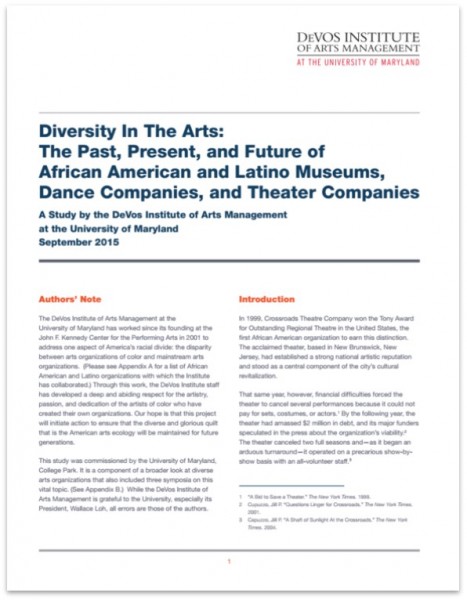
 A survey to which 29 of the 60 black and Latino arts groups in the study replied showed that the median percentage of donations coming from individuals was 5%. The norm is about 60% for big mainstream arts organizations. “This is the most important single statistic in the study,” the report says. Minority arts organizations also trailed when it came to box office receipts and other earned revenue. Earned money accounted for 40% of their revenue, compared with 59% for the big mainstream groups.
 “I would like to congratulate all of the members of Stamford 2030 for joining together to make vital changes for our community," said Stamford Mayor David Martin. "The partners in Stamford 2030 have really stepped up for the success and sustainability of our city and the surrounding area. And they are not alone. For our part, the city is committed to improving storm resiliency and moving forward with the Energy Improvement District. We believe these efforts are tied to our economic development and ability to attract people to Stamford while conserving important natural resources, all necessary for sustained growth and prosperity.”


 When asked in the survey about factors that influence their giving, the biggest portion, 68 percent, said it is very important the charity has evidence that its programs are effective. The other factors, in addition to the 50 percent who favored low overhead spending: the charity gets good ratings from watchdogs, 54 percent; it works on a cause that has affected me or my loved ones, 39 percent; it only occasionally asks for money, 27 percent; and I know people who work there, 24 percent.
 Recognizing that families and caregivers are the first teachers— and homes and neighborhoods are the first learning environments – the EDI process strives to discern what works best. The EDI is an assessment that provides population-level data by neighborhood on school readiness, and has been used in over 40 communities in the United States and extensively internationally.
 dren and families in their neighborhoods.”
 on for Public Giving
 Addams said that “to guide us as we work to help remove these barriers,” the trustees adopted a new mission: The mission of the William Caspar Graustein Memorial Fund is to achieve equity in education by working with those affected and inspiring all to end racism and poverty.



 Later this month, Bike Walk CT is offering the League of American Bicyclist-designed Traffic Skills 101 program, a comprehensive day long course to give cyclists the skills, knowledge and confidence to handle on-road cycling.