Diversity Lacking Among Nation's Philanthropic Organization Leaders; Graustein Memorial Fund Cited As Model of Progress
/Five years ago, America’s philanthropic community recognized it had a problem, not uncommon in board rooms nationwide – a lack of diversity. More than a dozen organizations with connections to thousands of grantmakers came together to found the D5 Coalition to advance diversity, equity, and inclusion (DEI) in philanthropy. Now, the coalition’s final report on progress is out, and the picture is barely encouraging.
In an op-ed published this month in the Chronicle of Philanthropy, the co-chairs of the D5 initiative Robert Ross, Luz Vega-Marquis and Stephen Heintz said bluntly that “philanthropy remains on a par with country clubs when it comes to exclusivity,” observing that “there have been pockets of progress in the last five years, but philanthropy still does not adequately reflect the diversity of our nation.”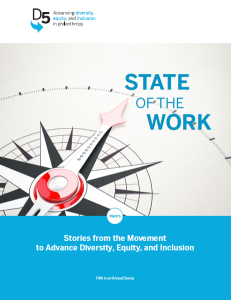
“The only source we have on foundation demographics, shows that the proportion of CEOs of color among respondents has remained flat over the past five years at eight percent. The corresponding figure for senior executive staff is a tad more positive – 17 percent, compared to 14 percent five years ago – but there’s been a slight decline in program officers of color.”
The status quo, they emphasized, “is unacceptable.” They point out that “as matters of inequality in income, employment, housing, public education, justice systems, and health care stake a growing claim on the national agenda, philanthropy must set the tone and pace for inclusiveness, and for who plays a key role in deciding where money goes.”
Robert Ross is the President and CEO of the California Endowment; Luz Vega-Marquis is the President and CEO of the Marguerite Casey Foundation; Stephen Heintz is the President of the Rockefeller Brothers Fund. Heintz, a former Connecticut resident, served as a state commissioner in the 1980’s in the administration of Gov. William O’Neill at the outset of his career.
 The D5 final report features stories about leaders in foundations and other philanthropic organizations taking meaningful action to advance DEI. “Storytelling is one of the most powerful ways to inspire action and change. We hope people working within foundations—whether they are a CEO, an HR manager or a program officer—draw on the important lessons from these stories, and apply them to their own unique situations,” said Kelly Brown, D5 Director. Kelly also cited statistics indicating that “when companies commit themselves to diverse leadership, they are more successful. Foundations and nonprofits,” she said, “have the opportunity to take a page from successful business playbooks.”
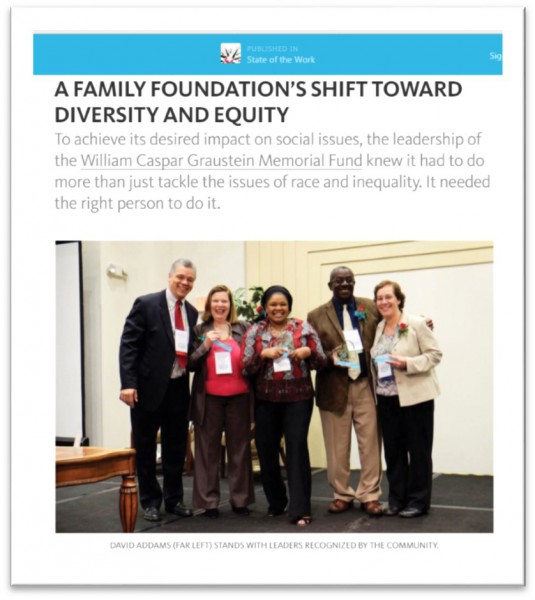
Among eight stories included in the final report which point to progress being made is one focused on Hamden-based William Caspar Graustein Memorial Fund, headlined “A Family Foundation’s Shift Toward Diversity and Equity.” The story explained that “Bill Graustein and his trustees had come to feel that the Fund would not make the desired progress addressing social issues unless it more explicitly addressed issues of race and inequality. To oversee that transition, in 2014 it hired as executive director David Addams, a former director of diversity at the ACLU and Vice President of Special Initiatives at the New York Urban League, who had made a mark running the Oliver Scholars in New York City, which identifies promising minority students and prepares them to succeed in top independent high schools and colleges.”
The report goes on to highlight that “a new mission statement, unveiled in 2015, pledges the Fund “to achieve equity in education by working with those affected and inspiring all to end racism and poverty.” The article indicates that they “will continue to attack barriers to achievement within schools and school districts, but, in an interview, Addams says a new focus will be ‘the barriers outside schools that undermine kids and undermine communities.’ Board members and staff members are thinking hard about how to translate the mission statement into new programmatic activity; they hope to present guidelines for the next phase of grant giving by mid-2016.”
Asked in the feature story whether it was important that the Graustein Fund turn to a leader of color at this juncture, Addams, who is African American, responded: “I don’t know if it has to be an African American person, but it has to be someone who can bring a missing perspective to the Fund. Part of that is understanding racism as well as — for me — having had the direct experience of coming up from poverty, and experiencing the barriers, and having been raised by a single black mother.” Addams, the article indicated, “grew up on the South Side of Chicago, in a neighborhood that was, and remains, nearly all black.”
The co-chairs of the D5 initiative note that “proponents of diversity and inclusion are successfully broadening the definition of diversity, which has evolved from a focus primarily on race and gender to include sexual orientation and disability. This strengthens our ability to have constructive conversations and help everyone understand how to get more perspectives into philanthropy.”
D5 has worked to help foundations and other philanthropic organizations recruit diverse leaders, identify the best actions for organizations to take, increase funding to diverse communities and improve data collection and transparency. Launched in 2010 as a five-year initiative, D5 has worked to help foundations and other philanthropic organizations recruit diverse leaders, identify the best actions for organizations to take, increase funding to diverse communities and improve data collection and transparency.
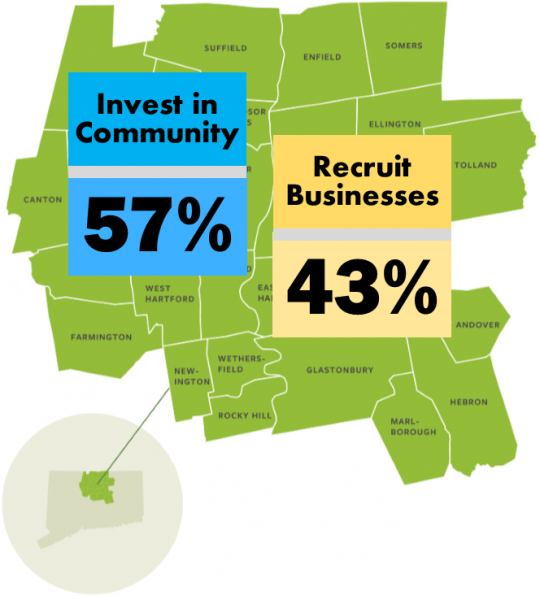 The data from the survey reflect a difference of opinion among older residents of the region. Individuals over age 46 took the opposite view from younger residents, with a majority expressing a preference for spending skewed toward recruiting companies. The reversal was dramatic, with two-thirds of those age 36-45 preferring investing in communities, by a margin of 67%-33%, and individuals age 46-55 expressing a preference for resources to be aimed at recruiting companies, with two-thirds holding the opposite view, 63%-38%.
 Since entering the Connecticut market in the summer of 2014, the company has been aggressively growing its customer base in a competitive market while working diligently to grow and expand its network of doctors. Harvard Pilgrim Health Care announced recently that its Connecticut membership has grown to more than 24,000, exceeding expectations for 2015. It now serves more than 800 Connecticut businesses. Twenty-nine of the state’s 30 hospitals are now in-network.
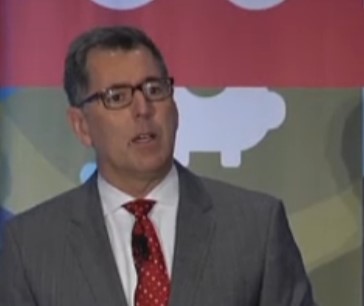
 With more than 500 business leaders in attendance at an annual Economic Summit & Outlook last week, brought together by the Connecticut Business and Industry Association and MetroHartford Alliance, Schmitt spent some time touting a new model launched in the state of New Hampshire that he believes may be a glimpse into the direction the industry is moving. Harvard Pilgrim Health Care’s footprint in New England now covers “where 90 percent of New Englanders live,” in Massachusetts, Connecticut, Maine and New Hampshire.
 Launched

 However, survey data appears inconsistent on whether the trends are good or bad.




 “Key and First Niagara are a powerful combination, driven by a shared commitment to the clients and to the communities we serve,” KeyCorp Chairman and CEO Beth Mooney said. “This transformational opportunity will bring compelling and complementary capabilities to our shared three million clients, while driving meaningful synergies and enhancing shareholder value. KeyBank and First Niagara both have values-based cultures and a long-term commitment to and experience with the region.”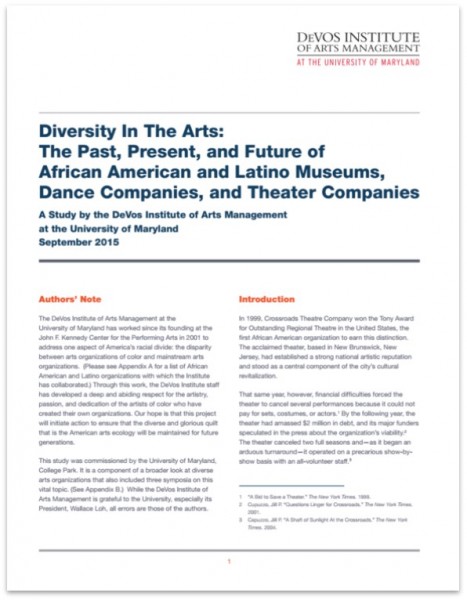
 A survey to which 29 of the 60 black and Latino arts groups in the study replied showed that the median percentage of donations coming from individuals was 5%. The norm is about 60% for big mainstream arts organizations. “This is the most important single statistic in the study,” the report says. Minority arts organizations also trailed when it came to box office receipts and other earned revenue. Earned money accounted for 40% of their revenue, compared with 59% for the big mainstream groups.
 “I would like to congratulate all of the members of Stamford 2030 for joining together to make vital changes for our community," said Stamford Mayor David Martin. "The partners in Stamford 2030 have really stepped up for the success and sustainability of our city and the surrounding area. And they are not alone. For our part, the city is committed to improving storm resiliency and moving forward with the Energy Improvement District. We believe these efforts are tied to our economic development and ability to attract people to Stamford while conserving important natural resources, all necessary for sustained growth and prosperity.”