CT Spending on Tobacco Prevention Goes Up in Smoke; E-Cigarettes Raise New Public Concerns

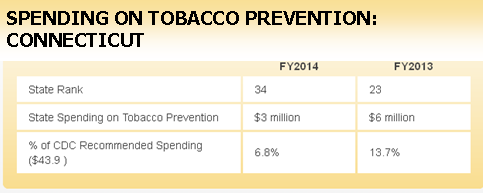
Fifteen years after the landmark state tobacco settlement in which Connecticut played a key role, the state now ranks 34th in the nationdown from 23rd a year ago - in funding programs to prevent youth from smoking and help smokers quit, according to a national report by a coalition of public health organizations.

In the current fiscal year, Connecticut is spending s $3 million on tobacco prevention and cessation programs, which is 6.8 percent of the $43.9 million recommended by the Centers for Disease Control and Prevention (CDC). Other key findings for Connecticut include:

  • Connecticut this year will collect $466.1 million in revenue from the 1998 tobacco settlement and tobacco taxes, but will spend just 0.6 percent of it on tobacco prevention programs. This means Connecticut is spending less than a penny of every dollar in tobacco revenue to fight tobacco use.
  • Connecticut has cut funding for tobacco prevention programs in half, from $6 million last year to the current $3 million; from 13.7 percent of the CDC recommended spending level down to 6.8 percent.
  • The tobacco companies spend $78.1 million a year to market their products in Connecticut. This is 26 times what the state spends on tobacco prevention.

The annual report on states' funding of tobacco prevention programs, titled "A Broken Promise to Our Children: The 1998 State Tobacco Settlement 15 Years Later," was released by the Campaign for Tobacco-Free Kids, American Heart Association, American Cancer Society Cancer Action Network, American Lung Association, the Robert Wood Johnson Foundation and Americans for Nonsmokers' Rights.

The report comes as evidence increases that tobacco prevention anstate spending CTd cessation programs work to reduce smoking, save lives and save money. Florida, which has a well-funded, sustained tobacco prevention program, reduced its high school smoking rate to just 8.6 percent in 2013, far below the national rate.  One study found that during the first 10 years of its tobacco prevention program, Washington state saved more than $5 in tobacco-related hospitalization costs for every $1 spent on the program.
In Connecticut, 15.9 percent of high school students smoke, and 2,900 more kids become regular smokers each year, the organizations in the coalition pointed out. Tobacco annually claims 4,700 lives and costs the state $1.6 billion in health care bills, officials said.

"Connecticut once again is one of the most disappointing states when it comes to protecting kids from tobacco and needs to increase its investment in tobacco prevention," said Matthew L. Myers, President of the Campaign for Tobacco-Free Kids. "Tobacco prevention is a smart investment that saves lives and saves money by reducing tobacco-related health care costs. States are being truly penny-wise and pound-foolish when they shortchange tobacco prevention programs."

In 1997, when the settlement was announced, then-Attorney General Richard Blumenthal - a key negotiator in the tobacco settlement talks – described the accord as “a sweeping public health initiative to protect children from the lure of tobacco, save lives, and reimburse states for billions of taxpayer dollars spent on tobacco-related illnesses.”
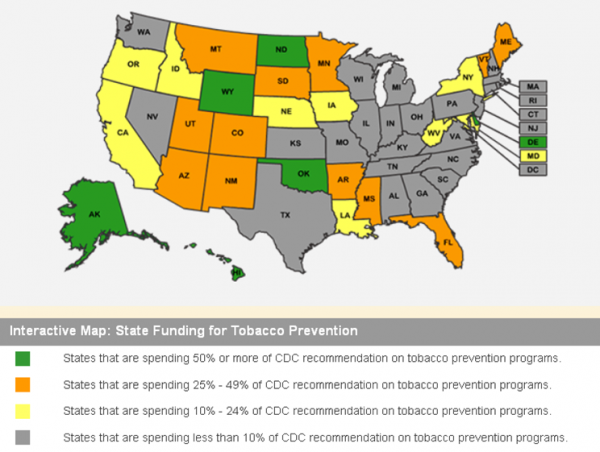
tobacco mapThe national report assesses whether the states have kept their promise to use a significant portion of their settlement funds – estimated to total $246 billion over the first 25 years – to fight tobacco use.  The states also collect billions more each year from tobacco taxes. Tobacco use is the number one cause of preventable death in the U.S., killing more than 400,000 people and costing $96 billion in health care bills each year.  Nationally, about 18 percent of adults and 18.1 percent of high school students smoke.

The report reveals that most states are failing to adequately fund tobacco prevention and cessation programs. Key national findings of the report include:

The states this year will collect $25 billion from the tobacco settlement and tobacco taxes, but will spend just 1.9 percent of it – $481.2 million – on tobacco prevention programs. This means the states are spending less than two cents of every dollar in tobacco revenue to fight tobacco use.

States are falling woefully short of the CDC's recommended funding levels ftobacco free kidsor tobacco prevention programs.  Altogether, the states have budgeted just 13 percent of the $3.7 billion the CDC recommends. Only two states – Alaska and North Dakota – currently fund tobacco prevention programs at the CDC-recommended level.
Public Expresses Concern Over E-Cigarettes

Within days of the report on tobacco prevention efforts, a national survey reflected public concerns about a new and increasingly popular alternative to traditional cigarettes, called e-cigarettes.  Adults nationwide are concerned about the use of e-cigarettes by children and teens, with 44 percent indicating worries that the devices will encourage kids to use tobacco products, according to a new poll from the University of Michigan.

According to the latest University of Michigan Mott Children's Hospital National Poll on Children's Health, nearly half of parents are concerned their child will try e-cigarettes, which are battery-operated devices that look like cigarettes but don't burn tobacco.  E-cigarettes have replaceable cartridges of liquid containing nicotine, which is inhaled as a vapor along with flavors like chocolate, fruit, candy or even tobacco.

"This poll shows high levels of concern about e-cigarettes and the possibility that kids who try them could start smoking tobacco," says Matthew M. Davis, M.D., M.A.P.P., director of the C.S. Mott Children's Hospital National Poll on Children's Health.

In the poll, which was administered in November 2013 to 2,124 adults age 18 and over, arguments were presented both for and against e-cigarettes.  Then adults were asked for their opinions about the devices and possible regulations and laws.

Advocates of e-cigarettes say they are a healthier alternative to tobacco smoking and argue it may help smokers to quit.  Critics counter that e-cigarettes may have health risks and may encourage people and kids or teens to smoke tobacco. Currently, e-cigarettes are not regulated by the U.S. Food and Drug Administration. Twenty-six states have regulations prohibiting sale to minors; Michigan's legislature currently has bills pending that prohibit those sales.UniversityofMichigan

In the poll, 86% of adults said they have heard of e-cigarettes, while only 13% have ever tried one. Among parents, 48 percent said they are very or somewhat concerned that their children will try e-cigarettes.  Meanwhile, 65% of adults think e-cigarettes should have health warnings like tobacco cigarettes and nicotine products.

Adults also expressed widespread support for new laws regarding e-cigarettes: 88% think manufacturers should be required to test e-cigarettes for safety and 86% favor prohibiting the sale of e-cigarettes to minors. 71% of adults support restricting the marketing of e-cigarettes on social networking sites.

"E-cigarettes are a relatively new product, with little information about safety or long-term health effects. However, the public is clearly aware of the devices and concerned about their impact, according to this month's poll results," says Davis, who is professor of pediatrics and internal medicine at the U-M Medical School and professor of public policy at U-M's Gerald R. Ford School of Public Policy. "In 2010, the poll also asked about e-cigarettes and at that time only one-third of adults had heard of the product. In this poll, that number jumped to 86 percent."

Earlier this year, CT by the Numbers reported that state Attorney General George Jepson and U.S. Senator Richard Blumenthal were among those calling for regulation of e-cigarettes.

Percentage of Drivers Age 85 and Older: Connecticut Leads USA

Connecticut has more than double the percentage of licensed drivers age 85 and older than any other state in the nation, according to data compiled by Bloomberg.

In the Land of Steady Habits, 5.1 percent of all drivers – a total of 152,233 people – were age 85 or older, ranking Connecticut at the top of the state-by-state ranking.  The second place state, Maine, had 2.34 percent of its licensed drivers in that demographic.

The Insurance Institutolder driverse for Highway Safety reports that 29 states and the District of Columbia have additional license renewal procedures for older drivers, often age 65 or 70 and older.  In Connecticut, people 65 and older may choose a 2-year or 6-year renewal cycle. A personal appearance at renewal generally is required. Upon a showing of hardship, people 65 and older may renew by mail. There are no additional requirements for older drivers, according to the Insurance Institute.

Bloomberg ranked the U.S. states and the District of Columbia on the percentage of licensed drivers ages 85 and older, using data from the Federal Highway Administration.  (The data was for 2011, the most recent year available.)

The Age 85+ Rankings (percent of licensed drivers)elderly-driver

  1.  Connecticut        5.10%
  2. Maine                   2.34%
  3.  Alabama              2.23%
  4. Vermont              2.22%
  5.  Minnesota          2.11%
  6. New York            2.09%
  7. Nebraska             2.02%
  8.   South Dakota     1.99%
  9.  Florida                  1.98%
  10. Pennsylvania     1.98%

Rhode Island ranked #11, New Jersey was #15, Massachusetts was #17 and New Hampshire was #28 among states in our region.

Although they only account for about 9 percent of the population, National Highway Traffic Safety Administration statistics show senior drivers account for 14 percent of all traffic fatalities and 17 percent of all pedestrian fatalities, ABC News reported last year.

The network cited a report by Carnegie Mellon University in Pittsburgh and the AAA Foundation for Traffic Safety that found the rate of deaths involving drivers 75 to 84 is about three per million miles driven – on par with teen drivers. Once they pass age 85, vehicular fatality rates jump to nearly four times that of teens.  The Insurance Institute reports that the increased fatal crash risk among older drivers is largely due to their increased susceptibility to injury, particularly chest injuries, and medical complications, rather than an increased tendency to get into crashes.

An Institute study of a Florida vision test requirement for drivers 80 and older found that 80 percent of those eligible to renew their licenses attempted to do so, and 7 percent of them were denied renewal because they failed the vision test. Of those who did not seek renewal, about half said they thought they would fail the vision test.

Newtown High School Students Win International Public Health Education Contest

Each year, about 3.5 million children die before their 5th birthday due to preventable diseases, mainly diarrhea and acute respiratory diseases.   According to survey data from the Global School-based Student Health Survey, over 15 percent of schoolchildren in some countries say they rarely or never wash their hands before eating.

Those facts spurred a group of Newtown High School student to action.  They participated in the World Health Organization’s Touching Lives School Talent International Contest.  The onewtown highne-minute educational video they produced was selected by a jury of international experts as the winning entry in the middle/high school age category (age 10-16) and was the only United States-based entry to win its category.

The Newtown Public Health class submitted the video at the start of the school year, and it was selected this fall among the winners in various age categories.  Their video now appears on the website of the Pan American Health Organization, and has begun to appear on other public health websites, including the Connecticut Public Health Association.  It was designed, written and pan americanproduced in the opening weeks of school, just prior to  the mid-September entry deadline.

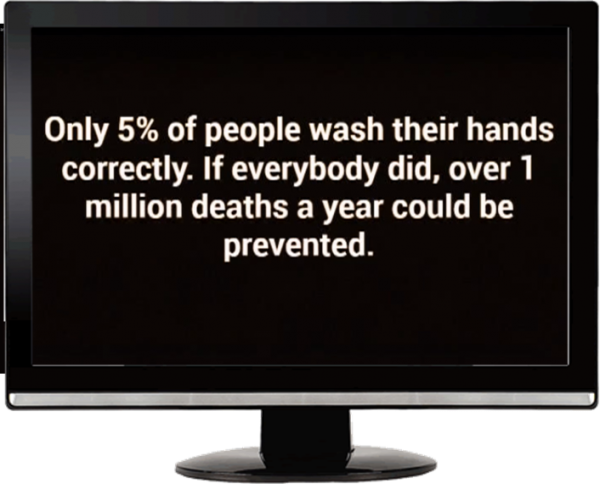
Experts point out that “just rinsing your hands is not washing.” In order for hands to be clean, soap and water must be used, for at least 20 seconds. Handwashing with soap is the most effective and inexpensivsinke way to prevent diarrheal and acute respiratory infections. Together, they are responsible for the majority of all child deaths, officials report.

Turning handwashing with soap before eating and after using the toilet into an ingrained habit could save more lives than any single vaccine or medical intervention, cutting deaths from diarrhea by almost half and deaths from acute respiratory infections by one-quarter, experts predict.  They also point out that a vast change in handwashing behavior is critical to meeting the Millennium Development Goal of reducing deaths among children under the age of five by two-thirds by 2015.

The educational video is preceded with the words “A Message from Newtown High School’s Public Health Class” filling the screen. It then begins with a male student gently singing over a strumming guitar, reminding viewers of the importance of hand-washing in rhyming lyrics, including urgintv monitorg viewers to “always think, 20 seconds at the sink.”  The video then features a variety of voices repeating “20 seconds” in nearly a dozen world languages.  It concludes by suggesting “don’t be part of the problem, be part of the solution.”

The video was edited by Amylee Anyoha.  Students in the Newtown High Public Health Class included Jess Amante, Maddie Erhardt, Enea Musaka, Sarah Craig, Kelly O’Connell, Chris Beaurline, Sydney Allen, Gabby Durkin, Tim Krapf, Amanda Paige, Taylor Strolli and Heather McKeown.

In the 2013 #TouchingLives School Talent International Contest, students could work individually or in a group, and all the countries in the Americas, were eligible and encouraged to develop songs, videos, illustrations, written compositions or any other expression of art promoting hand washing. The contest was, according to organizers, “about giving your personal touch to change the world.”

Pediatrician’s Invention to Stop Pain of Injections Could Improve Public Health

Many parents bring their infants and young children to the doctor for injections and leave muttering “there’s got to be a better way,” their child in tears or traumatized by the shot – or shots – administered to prevent illness and disease.  When Amy Baxter left the pediatrician’s office with her youngster, she resolved to find that better way.

Baxter, who attended Yale University as an undergraduate, Emory Medical School, and is now an emergency pediatrician, pain researcher and inventor in Atlanta, successfully developed  - with financial support from the National Institute of Health – a game-changing  device that combines high frequency, low amplitude vibration and a unique reusable ice pack a combination sAmy Baxter ATLpecifically designed to remove pain from the injection.

By stimulating competing sensations, nerve transmission of sharp pain, itching, or burning is blocked.  Simply put, the shots don’t hurt – and independently verified research indicates that it works.

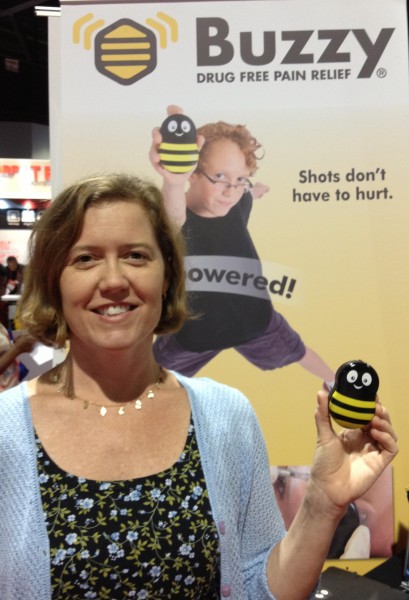
As inventor of the unique needle pain blocking device - called Buzzy - Baxter founded a company that manufactures and distributes the product nationwide.  It is now in 1,200 children’s and adult hospitals across the country, including Yale-New Haven Hospital, Connecticut Children’s Medical Center, and Lawrence & Memorial Hospital in New London,  and it is being used in Connecticut, with varying frequency, by about 100 physicians in medical practices all across the state, from Ashford to Westport.

Buzzy is a bee-shaped palm sized device (wings included) that appears as cute as a toy but has a more important mission – to alleviate pain, thus eliminating the onset of fear. Baxter’s company, Georgia-based MMJ Labs, produces the fast, effective solution– which has applications beyond children, and beyond injections, to other ailments and sources of quick, sharp pain.

Since its launch in 2009, Buzzy has amassed more than 36,000 users, $1 million in annual revenue, and rapidly increasing sbuzzy shotales.  Baxter is one of Inc. Magazine’s Top Women in Tech to Watch, and is asked all over the world to educate physicians, nurses, Child Life specialists, and others about the importance of pain management.
“I invented Buzzy after experiencing first-hand the indifference of the healthcare system to the pain and suffering of children. As a pediatric emergency physician and pain researcher, I have learned that pain relief is not just a luxury; it actually improves the outcomes of procedures,” Baxter explains.

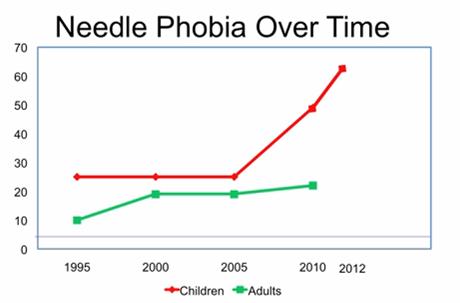
Data indicates that fear of needles is growing among children and the general population, and Baxter says that’s reason for concern.  Especially troubling is the long-term impact of a growing population oneedle phobia over timef needle-averse adults will have on their own health and the health care system.
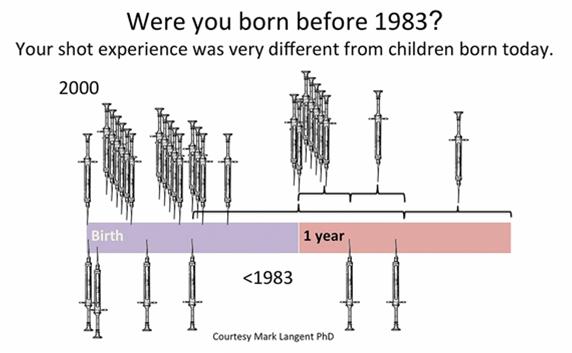
She cites statistics that reflect a dramatic increase in the number and frequency of shots children receive as youngsters – as much as four times higher than 50 years ago – and sometimes as many as four or five shots in a single doctor’s office visit.  And she stresses that pediatricians generally do little or nothing to try to diminish the pain that accompanies those injections.  That, Baxter says, has dramatic and long-lasting effects, on children as well as their parents.   The youngsters come to view the visits as more about pain than health, and the parents begin to have second thoughts about continuing to inflict the pain of needles on their children, often regardless of the potential benefits.

In a TEDx talk in Atlanta last month, Baxter discussed the public health repercussions of having populations whose fear of vaccinations could turn them shotsaway from the very remedies that can improve their individual health and the health of entire populations, warning that “by ignoring pain we’re endangering the future of health care.”

In the talk, titled “Pain, Empathy and Public Health,” Baxter warned that “the number and the way were giving shots is causing needle fear” which may lead to today’s children electing to stay away or delay visits to doctor’s offices as adults – at considerable potential health peril.

In the face of a potential “public health tsunami,” Baxter says “the solution is not to stop vaccinating, it’s to start making the shots better— vaccines shouldn't have to hurt.”

Two-Thirds of Drivers Use Cell Phones While Driving Despite Dangers, Survey Says

It turns out that the problems is much greater than just teens.  Texting while driving – like texting – is cutting across the population, presenting dangers that are well-documented and increasingly ignored.  And it’s not only texting – it is the use of phones while driving as well that is causing concerns among safety experts.

New research from the AAA FoundOLYMPUS DIGITAL CAMERAation for Traffic Safety indicates that high school-aged teens report using their phones or texting while driving substantially less often than adults do.  The AAA survey found that adult drivers ages 25-39 were the most likely to admit engaging in these risky behaviors behind the wheel.
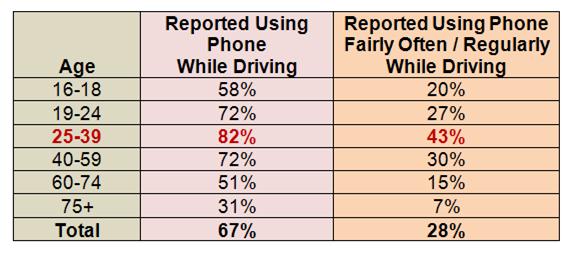
Though the practice is hazardous at any age, two out of three drivers reported using a cell phone while driving within the past month. Forty-three percent of adults ages 25-39 reported doing so fairly often or regularly while driving, compared to only 20 percent of teens.  Motorists age 60 and up were the least likely to report using a phone.

“Using your phone while driving may seem safe, but it roughly quadruples your risk of being in a crash according to previous research,” said Stephen Rourke, manager of driving school administration for AAA. “None of us is immune from the dangers of distracted driving. The best advice is to hang up and drive.”AAA age

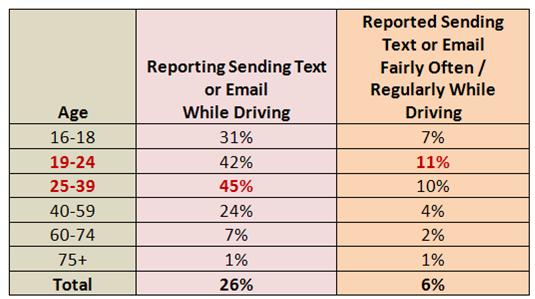
More than one-in-four motorists reported sending a text or email while driving within the past month. Adults ages 25-39 reported texting and driving most frequently, while those age 60 and up reported doing it the least.

According to the National Highway Traffic Safety Administration, one out of every ten fatal crashes involves distraction, resulting in more than 3,000 deaths per year, although experts agree the numbers are likely underestimated.

Previous research shows that hands-free cell phones offer no significant safety benefits over handheld phones – hands-free is not risk-free.  Earlier this year, Connecticut by the Numbers reported on a proposal in Connecticut to ban the useAAA text chart of electronic devices in vehicles.

The AAA Foundation for Traffic Safety collected the data as part of the 2013 Traffic Safety Culture Index. The data are from a sample of 2,325 licensed drivers, ages 16 and older, who reported driving in the past 30 days.

More Children Killed, Wounded by Guns Across US; Study Suggests Handguns in Households Key Culprit

The conclusions and the statistics, in a study presented to the American Academy of Pediatrics were stark and sobering:

  • Hospitalizations and in-hospital deaths for children with gun shot wounds are increasing in the U.S.  Currently, over 7,500 children are annually hospitalized for gun shot wounds, including over 500 in-hospital deaths.
  • While recent policy proposals to limit military-style semi-automatic assault weapons are important, handguns remain the leading injurious agent and may be a more efficacious target.
  • There was a significant relationship between percentage of household gun ownership and percentage of gun shot wounds occurring in the home.chart_gundeaths_article_0
  • Policies designed to reduce the number of household firearms, especially handguns, may reduce childhood gun shot wounds. Household gun ownership and safety practices vary widely by state.

In “United States Gunshot Violence—Disturbing Trends,” researchers from Boston and Michigan reviewed statistics from the Kids’ Inpatient Database (KID) from 1997, 2000, 2003, 2006 and 2009 (for a total of 36 million pediatric hospital admissions), and estimated state household gun ownership using the most recent Behavioral Risk Factor Surveillance System data (2004).

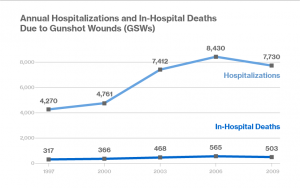
Between 1997 and 2009, hospitalizatichild, gunons from gunshot wounds increased from 4,270 to 7,730, and in-hospital deaths from 317 to 503, the researchers found.  The study also found a significant association between the percentage of gunshot wounds occurring in the home and the percentage of households containing any firearms, loaded firearms and unlocked loaded firearms.

“Handguns account for the majority of childhood gunshot wounds and this number appears to be increasing over the last decade,” said lead study author, Arin L. Madenci, MD, MPH, University of Michigan Medical School. “Furthermore, states with higher percentages of household firearm ownership also tended to have higher proportions of childhood gunshot wounds, especially those occurring in the home,” Madenci told MSNBC.  Madenci, and his colleague, Dr. Christopher Weldon, a surgeon at Boston Children’s Hospital, conducted the research.

Among homes with childrenacademy_of_pediatrics_logo, rates of gun possession ranged from a national low of 10 percent in New Jersey, for instance, to 62 percent in Montana, the researchers found.
According to the Connecticut Office of Child Advocate, between January 1, 2001 and December 31, 2012 (a 12-year period), 94 children in Connecticut died from gunshot wounds. During that period 924 children were injured by guns. Nearly half, 44 percent, died in Hartford, New Haven or Bridgeport, or towns nearby the report noted.  Just over one-third (36 percent) involved children between 2 and 14 years old.  The datawas issued a month after the murder of 20 school children and six adults in Newtown.  "The circumstances of the other 74 child deaths and the vast majority of injuries from guns in this state," the Child Advocate report said, " are very different - single incidents ... with roots in factors underlying community violence."

“Policies designed to reduce the number of household firearms, especially handguns, may more effectively reduce the number of gunshot injuries in children,” said Dr. Madenci.


Good News, Bad News as Connecticut Seeks Economic Rebound

The assessment of the Connecticut Economic Resource Center (CERC) is good news, bad news for Connecticut’s economic recovery.  In a presentation to The Alliance for Nonprofit Growth and Opportunity, CERC Vice President of Research Alissa DeJonge and Research Analyst Carmel Ford reached two central conclusions:

  •  Connecticut has structural problems that continue to make its economy recover more difficult.  Structural problems include workforce and industry compositions that are not particular strengths in the overall U.S. ecnoCERC-300x100my.
  •  Connecticut has advantages in some areas such as healthcare employment, and we may see improvements in the state’s housing market as forecolousres start to diminish and inventory supply inequities become smaller.

Among the key stats that contributed to the overall analysis from CERC:

  1. Connecticut ranked 5th lowest among the states in per capita energy consumption in 2010.  However, Connecticut ranked 3rd highest in total energy prices and had the highest energy expenditure among all New England states.ctcounties
  2.    Connecticut’s youth unemployment rate was 17.1 percent in July 2013, compared with the national rate of 16.2 percent.
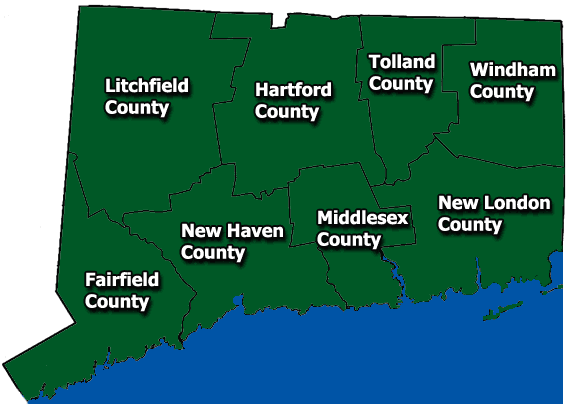
  3.   The unemployment rate in New London county hasn’t decreased significantly since 2010, and in Tolland County since 2011.  Overall, the states unemployment rate by county has been decreasing steadily in the state’s other six counties.
  4.   Median prices of single family homes in Connecticut increased 2.7% to $429,000, according to most recent data, and the inventory of single homes went down by 12.9% compared with a year ago.
  5. Newly issued housing permits in July 2013 incased slightly to 420 from 375 in July 2012.
  6. Connecticut remains the richest state with a per capita income of $58,908.

The CERC officials also pointed out that some of Connecticut’s leading industry categories, such as insurance and finance, are not performing well nationally, thus slowing the opportunities for the state’s economy to advance.

Based in Rocky Hill, CERC is a public-private partnership that provides economic development services consistent with state strategies, leveraging Connecticut’s unique advantages as a premier business location.  CERC was recognized earlier this month  for excellence in economic development marketing by key industry group, the Northeastern Economic Development Association (NEDA).  The award was presented at the recent NEDA annual conference in Portland, Maine among more than 130 economic development professionals from across the Northeast.

Motorcycle Accidents in CT and US Prompt Calls for Re-look at Helmet Laws

On August 2, Route 30 in Vernon was closed for a time following a serious motorcycle accident.  Emergency officials told WFSB-TV that the motorcycle and a dump truck collided.  Three days later, police confirmed to WTNH-TV that Lifestar responded to a motorcycle accident on Route 202 in Litchfield, closing that road.  Police described the injuries as being serious.

Yesterday, a Middletown motorcyclist was hospitalized after a traffic accident.  Middletown Police said “The motorcycle struck the struck the Pathfinder, the rider was ejected and he and the bike came to rest underneath a tow truck parked on the side of the road.”  In the latest incident, the injuries were said to be non-life threatening, the Middletown Press reported.

From the beginning of June through mid-July, however, motorcycles have been involved in three deaths in the Fairfield County according to the Greenwich Time — two in New Milford and one in Danbury – as well as several injuries. The paper reported that “the recent fatalities have thrown long-standing debates over Connecticut’s partial motorcycle helmet laws into a new light, prompting questions as to the efficacy of helmets and the future of statewide regulations requiring their use.”

In one incident – where the rider survived – the Time reported that “the bike burst into flames shortly after it collided with oncoming traffic, and its rider was thrown nearly 10 feet into the street.”

In Texas this week, the Fort Worth Star-Telegram reported that “While other traffic deaths have been on the decline, motorcycle fatalities have been rising in Texas, according to the Texas Department of Transportation. Although down slightly last year to 460 people killed compared with 488 in 2011, annual motorcycle deaths in the state have increased 56 percent since 2004.

In Minnesota, July 2013 was especially deadly, “with 18 motorcyclists killed. That total has pushed the number of motorcyclists killed so far this year to 39, compared to 24 riders killed by this time in 2012,” in that state, according to reports published in the Minneapolis Star-Tribune.

Nationally there were about 4,550 deaths in 2012, doubling the amount in the mid-1990s, according to USA Today.  A report by consumerreports.org in June indicated that “in motorcycle-rider-accident2010, 98 percent of motorcyclists riding in states with helmet laws were wearing them. In states without the laws, helmet use was just 48 percent.”

A 2011 Yale School of Medicine report analyzing state crash data between 2001 and 2007 found that two-thirds of the 358 riders killed in motorcycle accidents had not been wearing helmets. In an editorial last month, the Greenwich Time noted that “the National Highway Traffic Safety Administration estimated that in 2008, helmets saved the lives of 1,829 motorcyclists, and that 822 who died that year would have survived if helmets had been worn.”

The Insurance Institute for Highway Safety reports that:

  • Laws requiring all motorcyclists to wear a helmet are in place in 19 states (including New York, New Jersey and Massachusetts) and the District of Columbia
  • Laws requiring only some motorcyclists to wear a helmet are in place in 28 states (including Connecticut, which requires helmets be worn by individuals 17 and under)
  • There is no motorcycle helmet use law in 3 states (Illinois, Iowa, and New Hampshire)

National Highway Traffic Safety Administration research shows riders who wear helmets are three times less likely to suffer brain trauma than those without them. According to a 2012 study released by the Centers for Disease Prevention and Control, motorcyclists accounted for 12 percent of motor vehicle fatalities in 2010, despite making up less than 1 percent of vehicle miles traveled, the Greenwich Time reported.

Motorcycle helmets have not been uniformly required in decades.  In 1967, to increase motorcycle helmet use, the federal government required the states to enact helmet use laws in order to qualify for certain federal safety programs and highway construction funds. The federal incentive worked. By the early 1970s, almost all the states had universal motorcycle helmet laws.

Michigan was the first state to repeal its law in 1968, beginning a pattern of repeal, reenactment, and amendment of motorcycle helmet laws. In 1976, states successfully lobbied Congress to stop the Department of Transportation from assessing financial penalties on states without helmet laws. The Connecticut General Assembly overturned the universal helmet requirement here later that year. The state passed its partial helmet law in 1989, applying only to individuals age 17 and younger.

In April 2013, Insurers and medical groups urged Michigan Gov. Rick Snyder and the Legislature to reinstate Michigan's motorcycle helmet requirement , citing a University of Michigan study showing it would have prevented 26 deaths and 49 injuries last year.

The higher risk of serious injury or death that comes with optional helmets may also translate into economic losses. NHTSA data reportedly suggests that projected reductions in fatalities stemming from universal helmet laws could translate into savings in service costs and household productivity of up to $1,200,000 per avoided fatality.

The Connecticut Motorcycle Riders Association (CMRA) , formed in 1980, opposes helmet requirements, as it has for more than three decades.  In the organizations view, it is a matter of freedom of choice – whether or not to wear a helmet is a decision to be made by bikers, not government. It was that view that prevailed when the legislature changed the state’s mandatory helmet law in 1977.  In 1980, motorcyclists rallied in unprecedented numbers in Connecticut when a state legislator was involved in a motor vehicle accident in which a motorcyclist was killed.

Since then, the issue has been raised unsuccessfully at the state Legislature in bills or amendments 11 times. The CMRA website said, regarding the 2013 session, that “we are able to say that we have not had to fight any helmet laws this year,” and indicated that “we have repeatedly defeated attempts to reinstate the mandatory helmet law for adult motorcycle riders.”  The issue has not been considered since 2005, according to the Time.  The CMRA website also includes this tagline:  “Let Those Who Ride Still Decide.”  The organization has supported the creation of a self-funded rider education program and pushed for the adoption of a more comprehensive motorcycle license test throughout the state, the website points out.


Half of Eligible Teenagers Delay Drivers License, Study Finds

In an unexpected sign of the times, about half of the teenagers in the U.S. who are old enough to obtain a drivers license are waiting to do so, according to a new survey.  The most common reasons cited for delayed licensure were not having a car, being able to get around without driving, and costs associated with driving.

The study, by the AAA Foundation for Traffic Safety, found that less than half (44 percent) of teens obtain a driver’s license within 12 months of the minimum age for licensing and just over half (54 percent) are licensed before their 18th birthday. These findings mark a significant drop from two decades ago when data showed more than two-thirds of teens were licensed by the time they turned 18, accordidelayed licenseng to AAA.

The report found “Large social and economic disparities in licensing rates and in the timing of licensure.” Low-income, African-American and Hispanic teens are the least likely to obtain a driver’s license before age 18.

Only 25 percent of teens living in households with incomes less than $20,000 obtained their license before they turned 18, while 79 percent of teens were licensed by their 18th birthday in households with incomes of $100,000 or more.

 The findings for licensure by age 18 also differed significantly by race and ethnicity, with 67 percent for non-Hispanic white teens, 37 percent for non-Hispanic black teens, and 29 percent for Hispanic teens.

Some had suggested that teens were waiting simply to avoid graduated driver’s licensing (GDL), missing both the limitations and benefits of the laws, which vary across states, aimed at improving new driver training and safety, and causing some concern.  The survey, however, did not find this to be a prominent reason in delayed licensing.  A number of other reasons for delaying licensure were cited, including:

  • 44 %– Did not have a car
  • 39 % – Could get around without driving
  • 36 %– Gas was too expensive
  • 36 % – Driving was too expensive
  • 35 % – Just didn’t get around to it

Many states impose the GDL restrictions only for new drivers younger than 18.  The AAA report indicated that “Given the  large proportion of new drivers who are 18 years old or older, further research is needed to investigate their levels of safety or risk, to evaluate the potential impacts of extending GDL systems to new drivers aged 18 and older, and to explore other ways to address the needs of older novice drivers.”

In Connecticut, anyone 18 years of age or older must hold an adult learner’s permit for 3 months before obtaining a driver's license.  The state Department of Motor Vehicles website outlines the procedures in Connecticut, which have been revised as recently as January 2013 based on new laws approved by the state legislature.

The proportion of teens who were licensed varied strongly by geographic region, the AAA study found: licensing rates were much higher in the Midwest (82%) than in the Northeast (64%), South (68%), or West (71%).

The study did not discern major variations by gender among teens.  Although males were slightly more likely than females to obtain a license within six months of their state’s minimum age (33% vs. 28%), females were actually slightly more likely than males to obtain a license within 1-2 months of their state’s minimum age.

The researchers surveyed a nationally-representative sample of 1,039 respondents ages 18-20. The full research report and results are available on the AAA Foundation for Traffic Safety website.

First McCarthy and Comey, Now Schwartz and Handelsman: Four CT Nominees for Obama Administration

All roads have been leading to Connecticut lately as President Obama has sought top talent for his administration.  Among key Presidential appointments announced by the White House last week was Linda Spoonster Schwartz, as nominee for Assistant Secretary of Veterans Affairs for Policy and Planning, in the Department of Veterans Affairs.  Schwartz is the fourth Connecticut resident and second who previously led a Connecticut agency, to be nominated recently by President Obama.

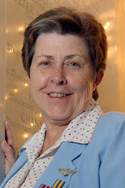
Linda Schwartz, a disabled veteran, has led the Connecticut Department of Veterans Affairs through Republican and Democratic administrations since 2003.  She concurrently serves as an Associate Clinical Professor of Nursing at the Yale School of Nursing, where she has been on Faculty since 1999 and was appointed Associate Research Scientist and Scholar.  From 1980 to 1993, she taught at several University and College Schools of Nursing and held leadership roles in Nursing organizations in Connecticut. Her nomination was sent to the Senate for confirmation on Aug. 1.

The White House alwhite hosueso announced last week that President Obama intends to nominate Jo Handelsman of Yale University as Associate Director for Science, Office of Science and Technology Policy.

 Dr. Jo Handelsman is the Howard Hughes Medical Institute Professor and Frederick Phineas Rose Professor in the Department of Molecular, Cellular and Developmental Biology at Yale University, a position she has held since 2010.  Previously, she served on the University of Wisconsin-Madison faculty as a Professor in Plant Pathology from 1985 to 2009 and Professor and Chair of the Department of Bacteriology from 2007 to 2009.

“The extraordinary dedication these individuals bring to their new roles will greatly serve the American people.  I am grateful they have agreed to serve in this Administration and I look forward to working with them in the months and years to come,” President Obama said in the formal announcement.

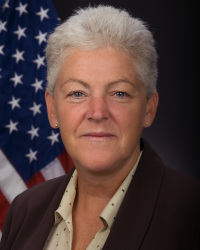
On July 17, the Senate confirmed the nomination of Gina McCarthy as Administrator of the Environmental Protection Agency.  McCarthy, gina-mccarthywhose nomination was held up for a time amidst political wrangling in Congress, has served as Connecticut’s Commissioner of Environmental Protection  prior to heading to Washington to join the EPA as assistant administrator earlier in the administration. McCarthy, is a 25-year veteran of state and local government in New England where she worked for Republicans including former Massachusetts Governor Mitt Romney and Connecticut Governor M. Jodi Rell.

The Boston Globe reported that the newly confirmed McCarthy told an audience at Harvard Law School that cutting carbon pollution will “feed the economic agenda of this country” and vowed to work with industry leaders on shaping policies aimed at curbing global warming.

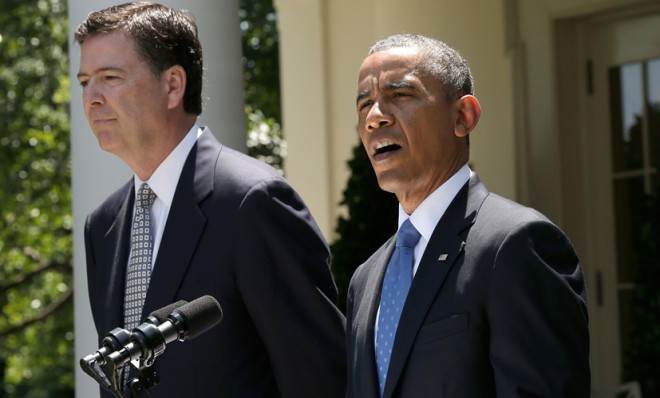
In June, the President nominated James B. Comey, Jr., of Westport, to be Director of the Federal Bureau of Investigation for a term of ten years.  Comey was confirmed as the seventh director of the FBI on July 29 by a vote of 93-1 in the Senate.  He served in the Justice Department official in the Bush administration.

“To know Jim Comey is also to know his fierce independence and his deep integrity,” Obama said in making the nomination. “He’s that rarity in Washington sometimes: He doesn’t care about politics, he only cares about getting the job done. At key moments, when it’s mattered most,president-obama-nominates-james-comey-as-the-next-fbi-director he joined Bob in standing up for what he believed was right.”

Before serving as deputy attorney general, Comey was the U.S. Attorney for the Southern District of New York, where he helped bring down the Gambino crime family, and served as the managing assistant U.S. attorney in charge of the Richmond Division of the U.S. Attorney’s office for the Eastern District of Virginia, according to news reports.Handlesman

Handelsman is currently President of the American Society for Microbiology.  In 2011, Dr. Handelsman received the Presidential Award for Excellence in Science Mentoring.  From 2002 to 2010, Dr. Handelsman was the Director of the Wisconsin Program for Scientific Teaching.  In 2004, Dr. Handelsman co-founded the National Academies Summer Institute on Undergraduate Education in Biology.  She received a B.S. from Cornell University and a Ph.D. from the University of Wisconsin-Madison.

If confirmed by the U.S. Senate, Handelsman will help advise President Barack Obama on the impact of science on both international and domestic affairs.  “This is an enormous opportunity that I felt I just could not pass up,” she told the Yale  News.

“In addition to being a superb biologist, Jo Handelsman is nationally recognized as an exceptional mentor of young scientists and an effective champion for increasing diversity in the scientific work force,” Steven Girvin, deputy provost for science & technology at Yale told the News. “Her energetic devotion to improving science education is of critical importance to the nation.”

LindaSpoonsterSchwartzU.S. Sen. Richard Blumenthal released a statement calling Schwartz "a champion of veterans and a national star."  From 1979 to 1980, Schwartz was a caseworker in the Office of the Field Director of the American Red Cross at Rhein-Main Air Base in Germany.  Dr. Schwartz served in the United States Air Force (USAF) Nurse Corps from 1968 to 1986, both on Active Duty and as a Reservist.  She retired as a Flight Nurse Instructor, with the rank of Major after sustaining injuries in a USAF Air Craft accident.

In 2001, she served on the Board of Directors of the American Nurses Association and was elected to the American Academy of Nursing.  From 1996 to 2000, she served as a Member and Chair of the VA Advisory Committee on Women Veterans.  She received a B.S. from the University of Maryland, an MSN from Yale University School of Nursing, and a Dr.P.H from the Yale University School of Medicine.