Putnam High School Student Earns Spot on National Student Advocacy Board
/As many Connecticut students are honored with end-of -year school awards for community accomplishments, Putnam High School Junior Jozzlynn Lewis has earned a coveted spot on a national teen board. She has been selected by Students Against Destructive Decisions (SADD) to join an advocacy-training program called SADD SPEAKs, the only youth from Connecticut to earn the distinction for the coming year.
SADD state coordinator for Connecticut, the Governor’s Prevention Partnership, announced Lewis’ appointment: “Jozzlynn was one of only 15 young people from across the country who was chosen. It is quite an honor!” said Jill Spineti, President & CEO, The Governor’s Prevention Partnership (The Partnership). “This is also significant for The Partnership because this is the first time in ten years that we have had a youth from Connecticut involved in a national SADD initiative.”
Lewis’ appointment to SADD Speaks was announced recently at the Partnership’s Annual Governor’s Residence Reception, a private event at the Governor’s home, which recognizes the organization’s top corporate investors. She addressed CEOs, Commissioners and other high level officials at the event hosted by Governor Malloy and other members of the Partnership’s Board of Directors.
Lewis, 17, underwent a competitive selection process which focused on her experience, leadership qualities, public speaking ability, and other criteria, officials said. She was recognized as a dynamic student leader who has also been involved in her local substance abuse prevention coalition, Putnam PRIDE, for many years, along with her mother, Cheryl. Her interest in SADD stems from seeing alcohol and substance use in her own school.
“Sometimes kids come to class under the influence,” explains Lewis, who will begin her senior year in the fall. “This has a negative influence on all of the students, not just the ones who use. I became involved in SADD in order to make a difference and do my part to make things better.”
Spineti notes that “More than 50 percent of Connecticut's youth continue to deal with issues of drug use, family alcoholism, bullying and child abuse. We partner with SADD and exemplary students such as Jozzlynn to help children avoid all substances to ensure a healthier future.”
Although progress has been made, Spineti stresses that efforts need to be intensified. According to the Substance Abuse and Mental Health Services Administration, nationally each month 26.4 percent of underage persons (ages 12-20) used alcohol, and binge drinking among the same age group was 17.4 percent. And nearly three quarters of students (72%) have consumed alcohol (more than just a few sips) by the end of high school, and more than a third (37%) have done so by eighth grade, according to the National Institute on Drug Abuse.
New data released this month reflected some results from efforts to reduce underage drinking during the past decade – from 2005 to 2015, there was a 15.1 percent drop in reported use by high school students. This is better than the national average for the same time period, which shows a 10.5 percent decrease in youth alcohol use (CDC’s Youth Risk Behavior Survey), officials said.
 Lewis’ commitment and dedication impressed the judging panel.
“Jozzlynn is deserving of this high honor. Her deep desire to empower her peers and change her community will serve her well, as she works to implement policy change at the local, state, and national level,” said Dawn Teixeira, SADD president and chief executive officer. “Motivated young people are a true catalyst for social change.”
“I am so very proud of Jozzlynn and her dedication to SADD, as well as her commitment to wanting to make Putnam High School and our community a safer place to learn and live,” adds Lisa Mooney, School Social Worker and SADD Advisor at Putnam High School.
SADD SPEAKs (Students for Policy, Education, Advocacy, & Knowledge) is an initiative of SADD National, funded by State Farm, that focuses on addressing an impaired driving issue. The participants will have a positive and lasting effect on public policy, demonstrating the power of America’s young people to speak persuasively on critically important issues. They will be trained in coalition building, public speaking and advocacy skills.
This year’s SADD SPEAKs delegates will develop an advocacy plan to address an impaired driving issue (distracted, drowsy, drugged or underage drinking and driving). The group will then lead the national organization’s efforts on Capitol Hill and before their own state and local governments, as well as mobilize thousands of SADD students across the country.
The SADD National Conference, held later this month in Pittsburgh, will include some attendees from Connecticut – nearly a dozen students, teachers and officials from New London will be among those on hand.
At the Governor’s Residence, The Partnership also shared its new strategic plan with the attendees who generously support the non-profit organization. The plan is focused on The Partnership’s mission to equip and connect community groups, business leaders and families to prevent substance abuse, underage drinking and violence among youth.
Created in 1989, the Governor’s Prevention Partnership is a not-for-profit partnership between state government and business leaders with a mission to keep Connecticut’s youth, safe, successful, and drug-free. The organization focuses on positive school climate, mentoring, and the prevention of underage drinking and substance abuse.
Founded as Students Against Driving Drunk in 1981 in Wayland, Massachusetts, SADD has grown to become the nation’s leading peer-to-peer youth education and prevention organization with thousands of chapters in middle schools, high schools and colleges. In 1997, in response to requests from SADD students themselves, SADD expanded its mission and name and now sponsors chapters called Students Against Destructive Decisions.
PHOTO: Jozzlynn Lewis, left, newly appointed to the National SADD teen advocacy board with Jill Spineti, President & CEO of The Governor’s Prevention Partnership.
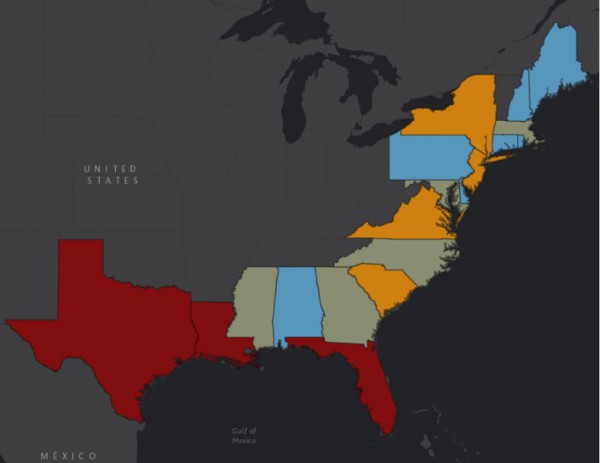
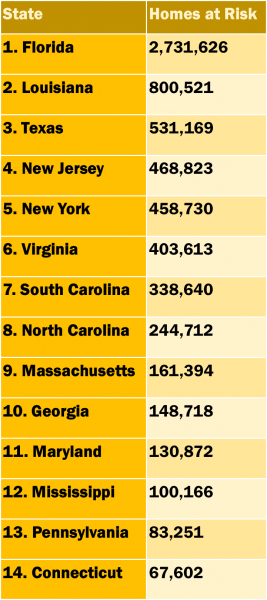 Among neighboring states, Connecticut ranked behind Massachusetts, New York and New Jersey.



 aulted.
 The highest rates were in New Mexico (31.5), D.C. (28.25), Oklahoma (24.52), Arizona (23.31), Nevada (21.85) and Wyoming (21.29).
 Looking at the rate at which Blacks were killed by police during the period January 2013 – April 2016, Connecticut was among the lowest, at 8.3, which reflects three deaths. In New Hampshire, Vermont, North Dakota, Maine, Idaho and South Dakota, largely reflecting the population in those states, there were no deaths of African Americans, according to the data.
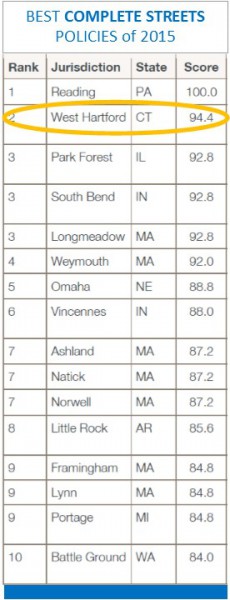 The U.S. Surgeon General and Secretary of Transportation both spoke out for more Complete Streets last year and Congress passed a transportation bill that included Complete Streets language for the first time ever.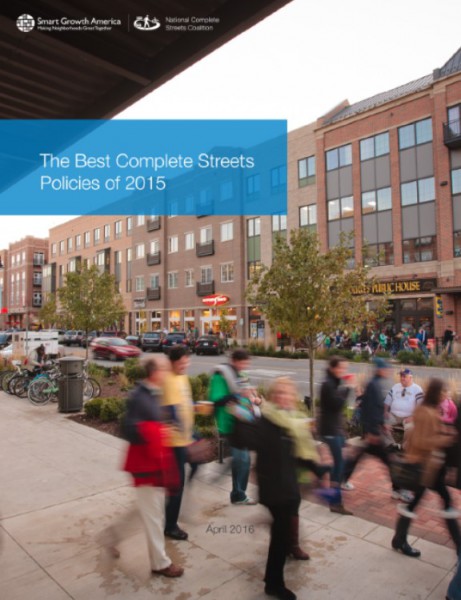

 arlier this year, the University of Connecticut released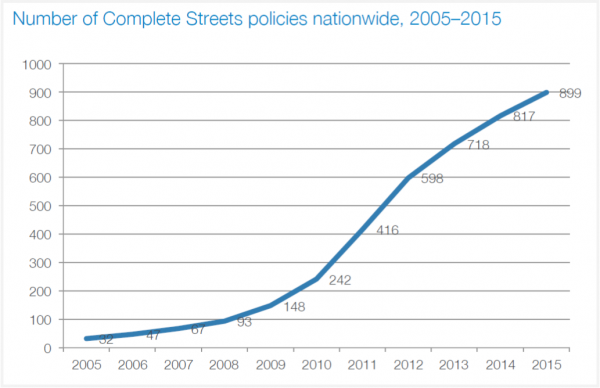


 “We are extremely proud of Dr. Ginsberg and congratulate him on this prestigious and well deserved award,” said Ellen Blaschinski, DPH’s Regulatory Services Branch Chief. “His expertise in toxic exposures and ability to consolidate vast amounts of science into easily digestible, useful information helps protect and inform Connecticut’s citizens.”
 Overall scores were based on eight categories: Search Capabilities, Complaint and Board Information, Identifying Doctor Information, Board Disciplinary Actions, Hospital Disciplinary Actions, Federal Disciplinary Actions, Malpractice Payouts and Convictions.

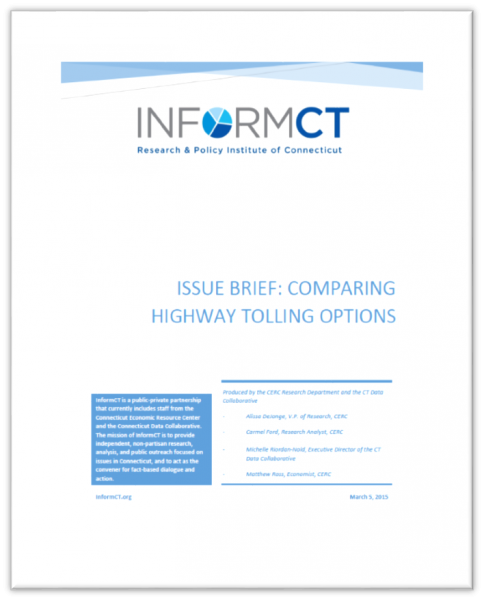
 The issue brief indicated that a disadvantage of a distance toll system on all limited access highways in Connecticut would be that it “could create an incentive for people to use alternative roadways. The increased use of these roadways could shift the burden of maintenance and congestion to municipalities.” The advantage would be that distance tolls “could help to more efficiently allocate the cost of these roadways to drivers who use them the most.”
 Congestion pricing, which provides for higher toll charges at peak traffic times, “helps to limit traffic on major roadways and create an incentive for people to use more environmentally friendly forms of public transportation,” the policy paper indicates. However, a congestion pricing system “could polarize roadway use by displacing low income commuters during peak driving hours. Congestion pricing could also create displacement effects whereby the increased use of local roadways could shift the burden of maintenance and congestion to municipalities.”

 In Connecticut, a person is guilty of trafficking in persons when such person compels or induces another person to engage in sexual contact or provide labor or services by means of force, threat of force, fraud or coercion. Anyone under the age of 18 engaged in commercial sexual exploitation is deemed a victim of domestic minor sex trafficking irrespective of the use of force, threat of force, fraud or coercion.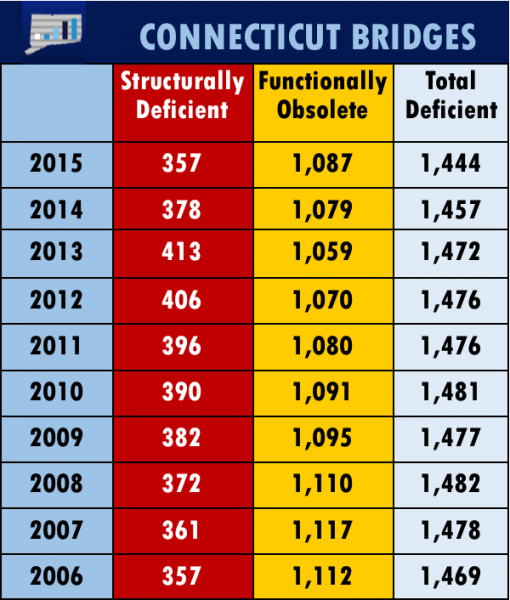
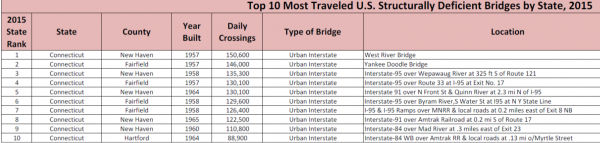
 tory Database. Functionally Obsolete does not communicate anything of a structural nature – it may be perfectly safe and structurally sound, but may be the source of traffic jams or may not have a high enough clearance to allow an oversized vehicle.