America’s Best States to Live In: Connecticut Ranks Second
/The only state that is a better place to live in than Connecticut is Massachusetts, according to a new survey of key data. Connecticut was ranked second when the website 24/7 Wall St. reviewed three statewide social and economic measures — poverty rate, educational attainment, and life expectancy at birth — to rank each state’s living conditions. Based on the data analyzed, the state’s motto could easily be “live long and prosper.” Massachusetts, home to one of the nation’s wealthiest and most highly educated populations, followed by neighboring Connecticut, lead the nation in quality of life. Mississippi, the poorest state in the country, trails the other 49 states.
Among the key stats for Connecticut:
- 10-year population growth: 5.8% (10th lowest)
- Unemployment rate: 5.1% (19th highest)
- Poverty rate: 10.5% (6th lowest)
- Life expectancy at birth: 80.4 years (2nd highest)
 Quality of life in the United States is heavily dependent on financial status, the survey summary points out. As a consequence, the nation’s best states to live in often report very high incomes. With a median household income of $71,346 a year, fifth highest of all states, Connecticut is the second best state to live in and an especially good example of this pattern, the description of Connecticut’s ranking explains.
The publication notes that “While satisfactory living conditions are possible with low incomes, this is true only to a point. Once incomes fall below the poverty line, for example, financial constraints are far more likely to diminish quality of life.”
Rounding out the top five: New Hampshire, Minnesota, and New Jersey. At the bottom of the list: Alabama, Arkansas, Louisiana, West Virginia and Mississippi.
Education levels are another major contributor to a community’s living conditions — not just as a basis of economic prosperity, but also as a component of an individual’s quality of life. Due in part to the greater access to high paying jobs that often require a college degree, incomes also tend to be higher in these states. In all of the 15 best states in which to live, the typical household earns more than the national median household income of $55,775, 24/7 Wall St. pointed out.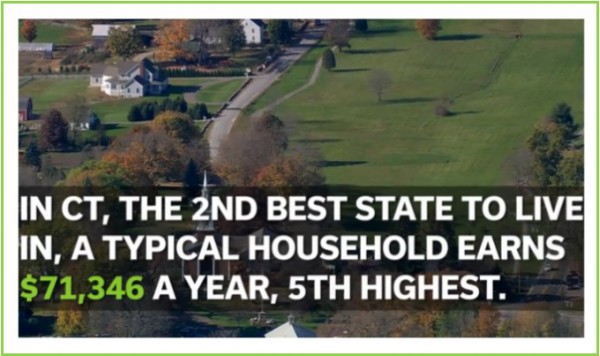
Like the vast majority of states on the higher end of the list, Connecticut is described as relatively safe. There were 219 violent crimes reported for every 100,000 state residents in 2015, among the lowest rates of all states, the survey stated. Housing markets are also indicative of quality of living. A high median home value, for instance, frequently means high demand for housing in the area. Nationwide, the typical home is worth $194,500. In most of the 25 top states, the median home value far exceeds the nationwide median.
The survey did not take into account more subjective conditions such as climate preference, the presence of friends and family, and personal history.
To identify the best and worst states in which to live, 24/7 Wall St. devised an index composed of three socioeconomic measures for each state: poverty rate, the percentage of adults who have at least a bachelor’s degree, and life expectancy at birth. The selection of these three measures was inspired by the United Nations’ Human Development Index. Poverty rates and bachelor attainment rates came from the U.S. Census Bureau’s 2015 American Community Survey. Life expectancies at birth are from the Centers for Disease Control and Prevention and are as of 2012, latest year for which data is available. Unemployment rates are from the Bureau of Labor Statistics, and are for October 2016, the most recent available month of data.

 Members of the Department of Motor Vehicles (DMV) Teen Advisory Board said the week is important for a variety of reasons, and encourages teens to play an active role in promoting safety behind the wheel. The risk of motor vehicle crashes is higher among 16-19-year-olds than among any other age group, CDC data indicates. In fact, per mile driven, teen drivers ages 16 to 19 are nearly three times more likely than drivers aged 20 and older to be in a fatal crash.
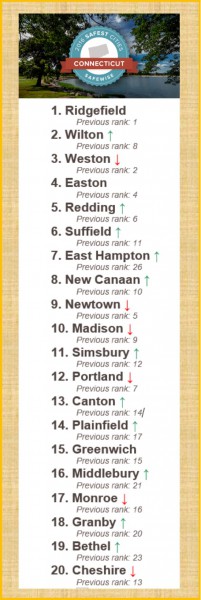 In 2014, roughly 30 out of every 1,000 people across the U.S. were victims of crime, while Connecticut’s crimes affected only 21 out of 1,000 people. Among the state’s 20 safest cities, however, only about three crimes were reported for every 1,000 citizens.

 FBI Special Agent Judy Eide, a 25-year veteran currently assigned to the Bureau’s New Haven Division Computer Crime squad and a coordinator of the Connecticut Chapter of InfraGard, will be one of the speakers. Also on the program is Mark Ramsey the Chief Information Security Officer for ASSA ABLOY – Americas and President of the Connecticut Chapter of InfraGard. Ramsey also teaches at Fairfield University, and previously held information security positions at Stanley Black & Decker and General Electric.
 “We want this to be a must-attend event for anyone responsible for strategic technical decisions within their organization,” says Steven Bulmer, Walker’s vice president of professional services. “Tech Impact is really a self-defining event based upon the intense interest and demand from our clients, especially for information security services.”

 The New Haven Register



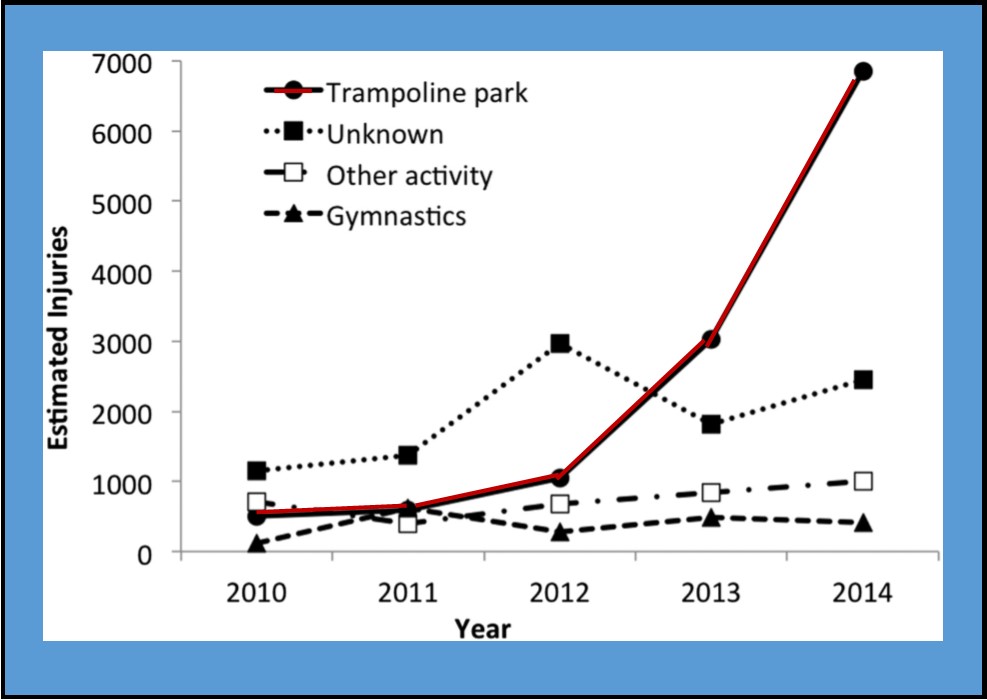 running in communities including Hartford, New Britain, Trumbull, Bethel, Stamford, Norwalk, Manchester, Milford, Danbury, New Milford, Ridgefield, Brookfield, Wallingford. Another is expected soon in East Haven.
 s," the organization said following publication of the study.



 The entire statewide system in Connecticut, purchased through A&T, cost $13.26 million with annual maintenance costs of about $3.2 million, Stephen Verbil, a telecommunications manager with the Division of the Statewide Emergency Communications,