Sciences at Southern Get Dynamic New Home; Local Companies Help Along the Way
/Students attending Southern Connecticut State University this semester are the first to use the campus’ new Academic Science & Laboratory Building, opened this fall, with local companies playing an integral role from design and construction to providing scientific equipment for the new facility.
Officials say Southern's ongoing expansion of its science programs has been greatly enhanced with the construction of the 103,608-square-foot, four-level academic and laboratory science building. Situated adjacent to Jennings Hall, the existing home for the sciences on the New Haven campus, the new building extends the university’s capacity to educate more students in the STEM disciplines – science, technology, engineering and mathematics.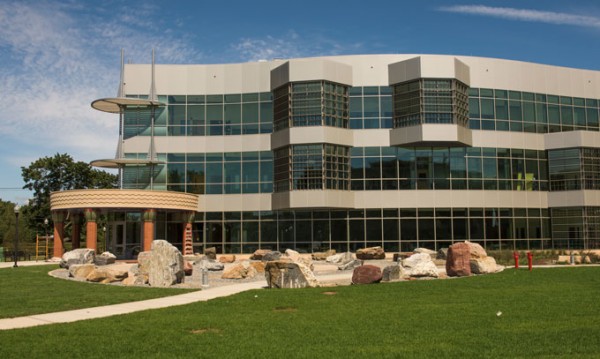
The new science building also features a high-performance computing lab for research in theoretical science, bioinformatics, and computer science, two aquaria, and six rooftop telescope stations. A collaboration between Southern and PerkinElmer, based in Massachusetts and with offices in Shelton, has also provided a boost. Equipment includes several analytical instruments to improve research capabilities and provide students with opportunities to do cutting-edge work.
Configured in the shape of an “L,” the new building works in concert with two pre-existing science buildings — Jennings and Morrill halls — to enclose a new “science enclave.” With very visible scientific displays and instrumentation inside and outside the building, the new center has quickly assumed a symbolic as well as actual role for the sciences on campus.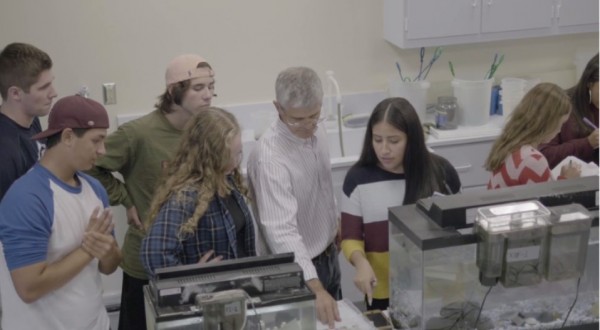
Embracing innovative sustainable design, it houses teaching and research training laboratories for nanotechnology, physics and optics, the earth sciences, the environmental sciences, cancer research, astronomy, molecular biology and chemistry.
“Built to the latest standards in sustainability, this signature building will truly enhance our ability to foster the next generation of Connecticut scientists,” Southern president Mary A. Papazian said at last month’s ribbon-cutting ceremony.
The Werth Center for Marine and Coastal Studies –named in honor of the Werth family following a $3 million gift from the Werth Family Foundation -- is housed on the second floor. The center will have several new labs, including an analytic lab (where mercury levels can be determined) and a sediment coastal science lab (where levels of sediment can be tested).
The Center for Nanotechnology will be located on the ground floor, where the laboratory space is designed to isolate the building's vibrations -- considered important when dealing with microscopic materials. A saltwater aquaria room with a touch tank is featured in the new building, providing a “centerpiece of outreach to area schools and the community.”
 The building includes expanded wings for Earth Science, Environmental Science, Molecular Biology, Chemistry, and Physics teaching and research laboratories. There are scientific displays throughout, illustrating the research interests of faculty and the students, including a replica of a nanotube — a focal point in the center of the building. Rain water collection, which is being used to water the science quad and faculty garden was also integrated into the design. Designed for LEED Silver certification, many sustainable design features can be seen throughout the building’s footprint.
PerkinElmer delivered instruments and services “designed to help improve human and environmental health,” Christine Broadbridge, SCSU’s director of science, technology, engineering and math initiatives, recently told the Fairfield County Business Journal. “At Southern, we are proud to have a strong relationship with PerkinElmer, an important leader of business and science here in Connecticut.”
Ted Gresik, senior director of PerkinElmer, expressed his appreciation in being given the opportunity to work with Southern and accelerating its science through access to its innovative technologies. At the ribbon-cutting, he said “We recognize the opportunity for Southern Connecticut State University and Perkin Elmer to work together on research, and technology initiatives toward developing programs where students can acquire a diverse set of scientific and technical skills which will facilitate a transition to career opportunities within the science industry.”
 Plans for the new Academic Science & Laboratory Building at Southern began back in 2007 with a comprehensive 10-year capital improvement plan, dubbed CSUS 2020, for upgrading the four institutions of the Connecticut State University System. Approved by the state legislature and signed into law by Gov. M. Jodi Rell, the plan was developed during the administration of Chancellor David G. Carter. It included upgrades and repairs to existing facilities, as well as construction of a new Visual & Performing Arts Center at Western Connecticut State University, which opened in September 2014, a new academic and classroom building at Central Connecticut State University, which opened two years ago, and a Fine Arts Instructional Center at Eastern Connecticut State University, scheduled to open early next year.
The Science Building at Southern was designed by Centerbrook Architect and Planners of Centerbrook, CT, with construction by FIP Construction of Farmington. (see video about the Academic Science & Laboratory Building)


 The celebration also included a tour of the lab’s research and development projects. Employees from Alstom’s nearby Windsor, campus, where the
  company employs more than 1,000 people, also attended tours of the new facility.

 NASA's Mars Reconnaissance Orbiter (MRO) provided the strongest evidence yet that liquid water flows intermittently on present-day Mars.
 NASA is developing the capabilities needed to send humans to an asteroid by 2025 and Mars in the 2030s – goals outlined in the bipartisan NASA Authorization Act of 2010 and in the U.S. National Space Policy, also issued in 2010. While a human landing is challenging, the development of a reliable return flight is a more difficult technologically hurdle. The colonization of the Red Planet is also being considered by some, but would require means to deal with the planet’s thin atmosphere, lack of oxygen and barren
  cold weather.
 As part of the preliminary preparation for such a flight, the nation’s space agency is working with a military laboratory at the submarine base in Groton to measure how teams cope with stress during month-long simulations of space flight. The Navy research that piqued NASA's interest started about five years ago when the Groton-based Naval Submarine Medical Research Laboratory, at the request of the submarine force, began examining ways to make tactical teams work together better, the Associated Press
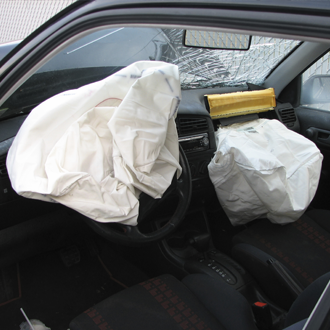
 The company, and impacted automakers, are making parts necessary to accomplish repairs available in regions of the country with humid climates first, because humidity has been said to increase the risk of air bag rupture. Connecticut residents, living in a region not known for its humidity, are not a priority for the repair, and continue to wait for word when repairs for their recalled vehicles can be made.



 sustainable lifestyle beverate brand for teens and tweens. The company's goal is to inspire young people to realize the power of consumer choices to effect social and environmental change.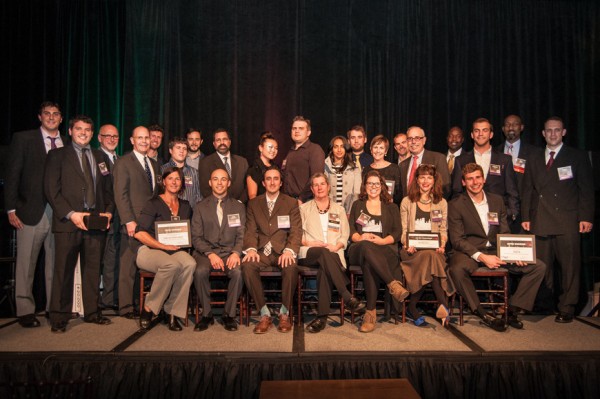
 The five awards judges - Sherrell Dorsey of Uber and Triple Pundit, Adam Dotson of Ironwood Capital, Claire Leonardi, an advisor to reSET's Social Enterprise Investment Fund and former CEO of Connnecticut Innovations, Anthony Price of LootScout and Paul Witinski of Ironwood Capital - narrowed down more than 100 applicants to 12 honorees. The People’s Choice winner was selected via more than 1,800 online votes.
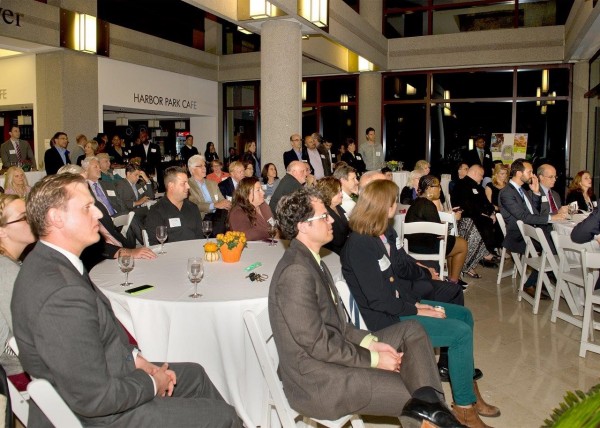 “I would like to congratulate all of the members of Stamford 2030 for joining together to make vital changes for our community," said Stamford Mayor David Martin. "The partners in Stamford 2030 have really stepped up for the success and sustainability of our city and the surrounding area. And they are not alone. For our part, the city is committed to improving storm resiliency and moving forward with the Energy Improvement District. We believe these efforts are tied to our economic development and ability to attract people to Stamford while conserving important natural resources, all necessary for sustained growth and prosperity.”




 k of Connecticut network.
 7 through 2006, and continues to consult. He has also served multiple terms as chairman of the NAB. Prior to founding NewCity Communications, he was president of Katz Broadcasting Co.