CBIA to Women: Drive a Truck
/The Connecticut Business and Industry Association’s Education and Workforce Partnership is turning its attention to the state’s increasing demand for drivers of trucks, buses, and heavy equipment – a demand which is expected to grow to 30,000 by 2024. And the focus of their attention is women, urging them to consider careers in transportation.
In an effort to showcase well-paying jobs in the industry, the partnership teamed up with Workforce Solutions Collaborative of Metro Hartford to create a video that highlights this growing industry.

Ellen Underwood, who now drives for the state Department of Transportation’s bridge crew, explains in the video that driving was a “natural pathway” because she enjoyed being outdoors, and driving. She’s been at it for 20 years, with a number of different employers, including a local municipality. She says state polices “make it easier for a woman to be treated as an equal,” adding that “if you’re willing to work hard and learn new things, you can do anything.”
A contract driver for CNS Transportation, Karen Roderick, says her career began “as a challenge to see if I could do it.” She recalls being “the only female” in truck-driving school. She has since earned Connecticut Driver of the Year, the only woman to do so.
CBIA notes some key facts about women in transportation:
- Women in historically male-dominated jobs earn an average of 25 percent more than women in historically female-dominated jobs.
- Women consistently do better with their paperwork, take better care of their trucks, and are often better with their customers.
- Women, especially when compared with young men, are generally safer drivers.
- There’s a huge shortage of heavy and tractor trailer drivers yet only 6 percent of truck drivers are female.
Daiana Soto, featured in the video, drives a big rig, and launched her career just four months ago. “My truck is my office,” she explains. The limited number of women in the field is quite evident, and Soto says it is a challenge she’s ready to take on. “You can do the same job (as men)… and maybe better.”
Ezzie Williams, a professional motorcoach driver for Town & Country in New Britain, began as a school bus driver. She says young people should consider the field, so that they can “get a career and make money.”
Two versions of the video are available—one a full-length video with interviews with six women in six different transportation careers and the other is a one-minute highlight reel. The project was supported by the Walmart Foundation. The Transportation partnership (Transportation, Logistics, and Distribution Partnership – TDL), convened by the CBIA Education & Workforce Partnership, aims to strengthens the transportation workforce pipeline, support on-the-job training, and improve retention rates among new hires.
https://youtu.be/pNRpQ16ZRNU



 rding to the Treasurer’s Office. Representing the Connecticut Treasurer’s Office at the annual meeting, and presenting the proposal, was Aeisha Mastagni, a Portfolio Manager in the Corporate Governance Unit of the California State Teachers’ Retirement System. Overall, according to a U.S. Securities & Exchange Commission filing, 74.7 million shareholders voted against the proposal, with 32.7 million voting in favor.
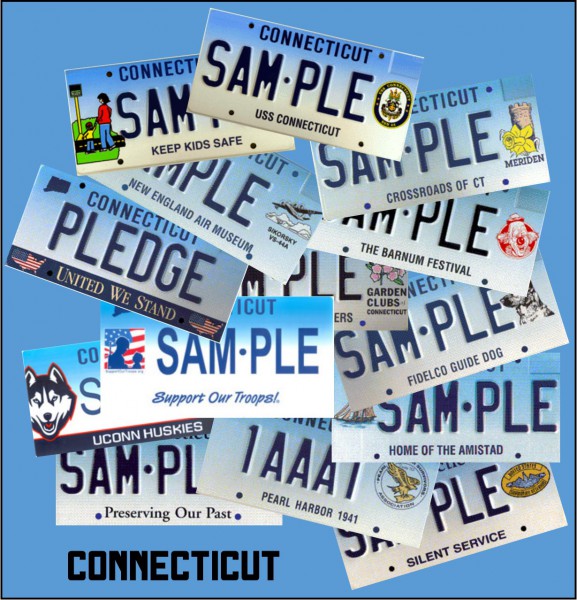
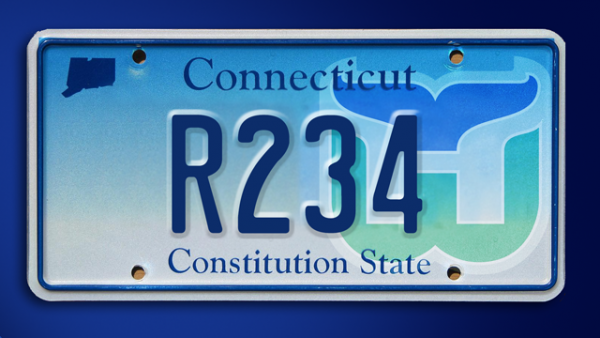 Organization vanity plates include Amistad, Benevolent & Protective Order of the Elks, IUOE Local 478, Grand Lodge of Connecticut, Knights of Columbus, Olympic Spirit, P.T. Barnum Foundation Inc., Preserving Our Past CT Trust for Historic Preservation, Red Sox Foundation, Lions Eye Research Foundation, Special Olympics, Federated Garden Clubs, Fidelco Guide Dog Foundation, Keep Kids Safe, New England Air Museum and the U.S.S. Connecticut Commissioning Committee.
 Only about 42 percent of motorcyclists in Connecticut wear helmets, according to Neil Chaudhary, PhD, leader of a Trumbull team of premier investigators on behavioral traffic safety-related issues at Preusser Research Group, Inc. In states where helmets are required, there is near 100 percent compliance, he recently told the Newtown Bee, adding professional driver training, offered throughout the state, can help riders to develop stronger defensive driving skills.


 wever, the state is among the worst for distracted drivers.
 The backdrop is offered by more than 700 global companies that have subsidiaries here, employing more than 100,000 people, the Organization for International Investment points out. The state’s convenient access to a variety of transportation options all provides access; there were 4.6 million tons of cargo carried on Connecticut rails in 2015, for example, and 11.4 million tons of freight shipped through Connecticut ports in 2013.
 l and freight movement by rail and highway makes Connecticut a prime location for domestic and international trade,” the report points out. Leading exports include: Aerospace/Transportation Equipment, Non-Electrical Machinery, Computers and Electronics, Chemicals, Electrical Equipment, Fabricated Metals Production, and Primary Metal Manufacturing.
 s specific to their industry.
 d childcare slots for fifteen percent of the county’s children ages 0 to 2, and enough subsidized slots to cover only twenty-two percent of these youngest children in low-income households.
 Traffic safety topics being tracked nationwide include: Aggressive Driving, Automated Enforcement/Photo Monitoring, Child Passenger Protection, Distracted Driving, Driver’s Licensing, Impaired Driving, Motorcycle Safety, Pedestrian and Bicycle Safety, School Bus Safety, Seatbelts and Occupant Protection, Senior Drivers Issues, Slow-Medium speed vehicles, Speed Limits, and Teen Driver Issues.