World Language Teachers Meet Amidst Growing Interest in Language Fluency

It’s a busy week at Central Connecticut State University.  With the aura of a presidential visit not quite faded, the university is preparing to host the 8th annual CCSU Conference for Language Teachers.  The one-day conference brings together teachers of world languages from across the state at a time when the global interdependency of businesses continues to ramp up the need for students fluent in languages – and cultures - beyond their own.

The conference, Teaching World Languages Today: Skills, Resources and Methodologies, will be held Saturday, March 8, 2014 from 8:00 a.m. to 4:00 p.m., and featuresWorld-Languages presentations focused on innovative techniques and new technology for teaching Spanish, Chinese, French, and Italian in the classroom.

Among the more than two dozen presentations, topics range from the use of social media to boost language acquisition, creating a literature-based Mandarin Chinese curriculum, developing cultural competence, how a Japanese “boot camp” was used to teach English to students in that nation, advantages of on-line technology to advance language skills, and the use of literature to impart language skills and cultural knowledge.

Connecticut is now two years away from the start of a graduation requirement in world language for all high school graduates in the state.  The new mandate, which was to begin this fall, was pushed back by last year’s state legislature and now will take effect with the class of 2020 – high school freshmen in 2016, according to officials at the Council of Language Teachers (COLT)

Connecticut General Statutes Section 10-221 requires that beginning that year, students must have two credits in world languages in order to graduate.  The National Journal has reported that only 10% of native-born Americans can speak a second language, compared to 56% of European Union citizens. Writing in Forbes magazine, strategy consultant Dorie Clark  noted a year ago that "the ability to speak a second (or third) language is clearly important for becoming a global leader."CCSU-Logo.fw

Those making presentations at the CCSU Conference include middle school, high school and college language teachers from across the state as well as some from beyond Connecticut, ranging from the East Hampton Middle School and Glastonbury High School to the United States Military Academy at West Point and the Consulate General of Italy in London.

Connecticut is not alone in looking at world language in the schools.  The state of Utah is currently in the midst of seeking public comment on revised world language core standard requirements for grades K-12.  In California , state legislators approved a seal of biliteracy , beginning in January 2012, that high school graduates can earn for their diplomas to indicate fluency in two or more languages. The Connecticut State University System, which has since become part of the Connecticut State Colleges and Universities under the state's reorganization of high education, had approved plans to institute new admission requirements beginning in 2015 at the four state universities to include two years of world languages.  header_1

The conference will focus on inter-disciplinary approaches and innovative trends in language education, incorporating new technologies into language teaching, and "flipping" the language classroom  It affords an opportunity for language teachers to share their knowledge, perspectives, and expertise, as World Language education evolves to meet the needs of a more intertwined and interdependent world economy - and the opportunities that presents for students.

Conference sponsors include the CT Council for Language Teachers (COLT), CCSU Department of Modern Languages, Chinese Culture Center, Confucius Institute, CT Italian Teachers Association, Italian Resource Center, and Summer Institutes for Language Teachers.

Volleyball to Overrun CT Convention Center Twice in 2015; New Event Coming to Hartford

2015 is shaping up as a banner year for the Connecticut Convention Center.  For the second time in the span of a few weeks, the convention center  has announced a new event will be coming to town.  The New England Region Volleyball Association (NERVA) will bring its first-ever Northeast Junior Championships to Hartford over Memorial Day weekend in 2015.

The tournament, featuring junior teams from throughout the Northeast, is expected to bring over 2,000 players, 400 coaches, 75 officials and volunteer tournament staff, and 3,500 family members and fans downtown, from Friday, May 22 through Monday, May 25, 2015.

Better yet, NERVA has committed to holding the event at the venue for the next three years, through at least 2017, with over 3,000 overnight rooms and 1,100 rooms anticipated for the new annual event. 2013 CTCC NERVA Winterfest

Tournament organizers are planning to fill the facility with 200 teams playing on 25 courts set up inside the Convention Center’s exhibit halls. They have experience in turning the space into an enormous multi-court facility, having held its annual Mizuno New England Winterfest at the facility in January over the long Martin Luther King, Jr. weekend, for each of the past five years.

Also on the docket at the Connecticut Convention Center in 2015 is the Museum Store Association national conference, to be held in Hartford for the first time next April.  It is the organization’s first conference in the Northeast in a decade.  They met in 2003 in Philadimage_logo1elphia, and will meet next month in Houston.

Other multi-year contracts continue.  ConnectiCon, which has been hosted at the Connecticut Convention Center since 2005, will return this year and next.  Mary Kay will return to the facility in 2015 and 2016.  And the National Association of Campus Activities (NACA), which has gathered at the Convention Center annually since 2007, will do so again this year and in 2015. The STITCHES-East regional knitting enthusiasts will be back every year through 2017.

“We have always valued our partnership with the Connecticut Convention Center and the Connecticut Convention and Sports Bureau,” states David Peixoto, NERVA Commissioner. “Our partnership has grown to develop Winterfest as the Premier Volleyball tournament in the Northeast. We look forward to making the Northeast Junior Championship just as successful.”6

The new four-day event does not require teams to qualify to participate. While it will serve as a season-ending tournament for some, the event will allow for additional preparation to teams continuing on to nationals. Participants are 12-18 years old, as NERVA follows USA Volleyball age guidelines.

Winterfest, which is the largest volleyball tournament held in New England, is designed to showcase female high school volleyball players to college coaches and recruiters from throughout the Northeast.  The event brings in around 6,000 visitors to the area every year.

The New England Region is one of many Regions in the United States that aid in the governing of the sport of volleyball. Regional Volleyball Associations (RVAs) are member organizations of USA Volleyball (USAV). The RVAs serve as the grassroots function for the USAV and individually and collectively serve as a catalyst for USAV functions.

The Connecticut Convention Center is the state’s premier meeting venue and the largest full-service convention facility between New York and Boston. Overlooking the Connecticut River, it features 140,000 square feet of exhibition space, a 40,000-square-foot ballroom and 25,000 square feet of meeting space, as well as ample sheltered parking.

Connecticut Gets An Additional Area Code - 959 to Join 860, Beginning in August

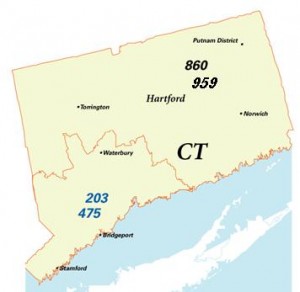
Some residents and businesses within Connecticut's 860 area code will have an additional area code to become familiar with beginning this summer.  The state Public Utilities Regulatory Authority (PURA) has announced that because of continuing local demand for telephone numbers, remaining unassigned telephone numbers in the 860 area code are expected to be exhausted by the end of this year.

To meet the continuing demand, the PURA approved a new area code, 959, to be assigned as an overlay to the 860 region. An overlay is the addition of an area code to the same geographic region as an existing area code. An overlay does not require customers to change their existing area code, personal telephone numbers, or the manner in which they dial local calls.

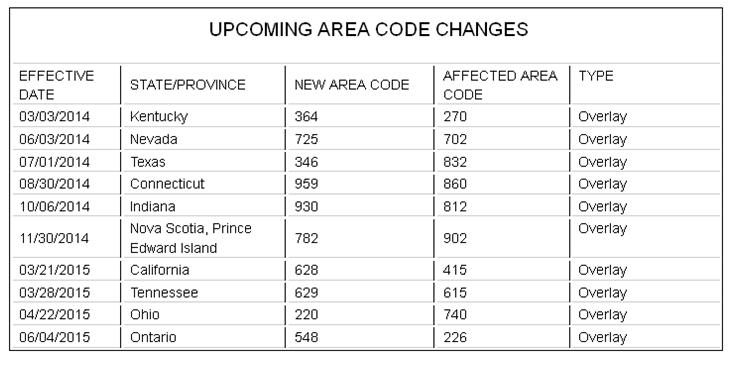
Connecticut is far from alone in the introduction of new area codes across the country, and it's not the first time for an area code overlay in the state.

Kentucky residents in the 270 area carea code mapode saw the introduction of an overlay area code this week, as the 364 area code was introduced for some new customers.  Indiana introduced 10-digit dialing last week to prepare for the introduction of an overlay area code this fall.

According to the North American Numbering Plan Administration, which handles the allocation of additional area codes nationwide, sixty percent of the U.S. state regulatory commissions – a total of thirty - have ordered overlays as the method of area code relief.  Throughout 2014, 25 states will have overlays in place with five more states in various stages of implementation of their overlays.  Three states (Indiana, South Carolina and Tennessee) t ordered their first overlay late in 2013, while California, the most populous state in the U.S., recently approved what will be their sixth overlay – the 415/628 combination coming to San Francisco.

Current plans call for the new 959 area code in Connecticut to go into effect August 30, 2014. After that date, customers requesting new service, an additional line, or in some cases, moving their service may be assigned a number in the new 959 area code.  According to NANPA, area code 203, in the southwestern portion of Connecticut, has had an overlay of area code 475 available since December 12, 2009.  The first 475 phone numbers have been issued within the past year, according to PURA officials.

In Nebraska, however, overlay day is said to be four years away.  Published reports indicate that demand for new phone numbers has slowed as fewer people become first-time cell phone customers.

For most customers, the new 959 area code should have minimal impact:upcoming area code changes

  • existing telephone numbers, including current area code, will not change;
  •  customers will continue to dial area code + telephone number for local calls, and 1 + area code + telephone number for long distance calls;
  •  local calling areas will remain the same;
  •  prices for calls and coverage areas will not change due to the overlay;
  •  customers will still dial services such as 911 (211, 411, 811, etc.) with just three digits.

The North American Numbering Plan Administratin (NANPA) is an integrated telephone numbering plan serving 20 North American countries that share its resources. These countries include the United States and its territories, Canada, Bermuda, Anguilla, Antigua & Barbuda, the Bahamas, Barbados, the British Virgin Islands, the Cayman Islands, Dominica, the Dominican Republic, Grenada, Jamaica, Montserrat, Sint Maarten, St. Kitts and Nevis, St. Lucia, St. Vincent and the Grenadines, Trinidad and Tobago, and Turks & Caicos.

The Atlantic reported last month that for a brief period in the 1990s, Lockheed Martin oversaw the administration of area codes; after Lockheed got involved with telecom concerns, however, the FCC decided that it needed a neutral and non-governmental body to administer the nation's numbers. Lockheed's numbering division divested itself and became Neustar, which remains under contract with the FCC, according to the magazine.

Local Connecticut customers should contact their respective carriers with questions about the new 959 area code, and are advised that they can check PURA's website (www.ct.gov/pura) for updates.

Millionaires? Connecticut Ranks #3 in the Nation

If you’re looking for millionaires, you’re in the right neighborhood.  More than 6 million households in the United States have liquid assets worth more than $1 million, according to newly released estimates.  And the greatest concentrdollar signation of wealth in the United States is along the Interstate 95 corridor – including in Connecticut, which ranked #3 in the nation.

The state of Maryland has the highest percentage of millionaires in the U.S., the report by Phoenix Marketing International Global Wealth Monitor found, while New Jersey and Connecticut come in second and third.  In all three states, more than 7 percent of households have a net worth in excess of seven figures.  In Connecticut, 7.32 percent of households hold more than $1 million in assets, just behind 7.70 percent in Maryland 7.49 percent in New Jersey.

Connecticut moved up one slot, ranking fourth in last year’s survey.

Massachusetts, Virginia, New Hampshire, Delaware and the District of Columbia all landed in the top 10. Hawaii, where 7.18 percent of households hold more than $1 million in assets, and Alaska, with 6.75 percent of households, are the only two states outside the Northeast to wealthreach the top 10.

Those high-worth households control almost three-quarters of the liquid wealth in the United States, David Thompson, who rI-95uns the Phoenix Global Wealth Monitor, told the Washington Post.
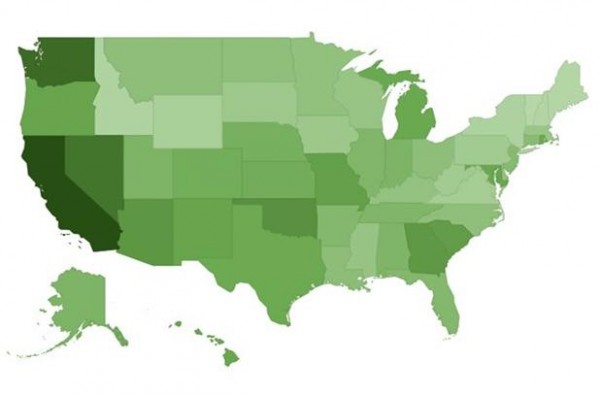
States in the South make up the bulk of the bottom of the list. Fewer than 4 percent of households in Tennessee, Kentucky, West Virginia, Arkansas and Mississippi are worth $1 million or more. Just 3.76 percent of households in Idaho held more than $1 million in assets.

California ranked #11 and New York was #12.  Among the other New England states, Rhode Island was #17, Vermont #18, and Maine #25,  Maine had the second biggest jump among the states, moving up 11 places from a year ago.  North Dakota moved up 14 positions to #29.

The Global Wealth Monitor estimates the number of millionaires based on the Survey of Consumer Finance and Nielsen-Claritas data.

Connecticut Ranks #22 in Motor Vehicle Thefts; Rate Drops 3 Percent

Connecticut ranks #22 in the nation in motor vehicle thefts, with 238 thefts per 100,000 registered vehicles, a one-year drop of 3.3 percent, according to the most recent full-year data.

The District of Columbia had the greatest theft rate, with a total of 3,661 vehicles stolen and 322,350 registered vehicles in D.C.  That reflected a reduction in thefts of 18 percent in 2012 as compared with 201auto theft map1, but still outdistanced all 50 states.

Rounding out the top 10 states with the highest rate of car thefts were California, Nevada, Washington, Maryland, Georgia, Arizona, South Carolina and Oklahoma.  Among the New England states, Rhode Island ranked #12, Massachusetts was #34, Maine was #47, New Hampshire was #49 and Vermont was #51, with 435 thefts and 606,941 registered vehicles – the lowest rate in the nation.

In Connecticut in 2012 there were 6,449 motor vehicle thefts.  The state has 2,706,459 registered vehicles.fbi-logo-large

The data was compiled by Bloomberg.com based on information from the Federal Bureau of Investigation (FBI) Uniform Crime Reports, and U.S. Department of Transportation Federal Highway Administration.

According to data compiled by the FBI and provided by the Criminal Justice Information Services Division:

  • There were an estimated 721,053 thefts of motor vehicles nationwide in 2012. The estimated rate of motor vehicle thefts was 229.7 per 100,000 inhabitants, placing Connecticut’s car theft rate  just above the national average.
  • The estimated number of motor vehicle thefts increased 0.6 percent in 2012 when compared with the 2011 estimates, but declined 24.8 percent when compared to the 2008 estimates, and 42.8 percent when compared to the 2003 estimates.
  • More than $4.3 billion was lost nationwide to motor vehicle thefts in 2012. The average dollar loss per stolen vehicle was $6,019.
  • In 2012, of all motor vehicles stolen, 73.9 percent were automobiles.

Want a Snow Day off from School? It Takes Less Snow in Southern CT

The forecast calls for snow Sunday night into Monday morning, and with it comes the possibility of school cancellations.  Whether or not students receive a snow day – in Connecticut and across the country – has everything to do with where they live, more than the depth of the snowfall.

Connecticut, more than many states, seems to have varying standards across the state, if data recently published by the website flowingdata.comconnecticut snow, based on a nationwide map developed using county-by-county data, is to be believed.
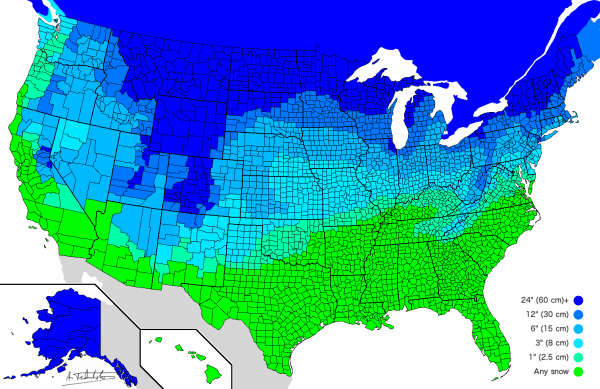
The data indicates how much snow, on average, it takes to close schools across the country.  Not surprisingly, in the northern states it takes quite a bit, while in the southern U.S. even the slightest snowfall can keep school children home.

In Connecticut, however, there appears to a less than uniform standard.  In the states’ southernmost counties – including Fairfield, New Haven, Middlesex and New London - it generally takes 3 - 6 inches of snow to close schools.  In the counties across the upper tier of the state – including Litchfield, Hartford, and Tolland, it takes 6 to 12 inches.

Windham Country, in the northeastern corner of the state, tends more toward the 3-6 inch line of demarcation.  State law in Connecticut  requires at least 180 school days per year, but individual districts—including those experiencing identical weather—often have vastly different ways of accommodating cancellations within the academic calendar.  A morning review of the school closing list on any of the major television stations demonstrates the inconsistencies beyond doubt.

The data does not account for ice storms and other winter conditions that can impact when local school superintendents decide to postpone a day’s school.  The data also does not reflect early dismissals or delayed arrivals due to weather conditions.

Across the nation, in much of the Midwest and Great Plains, school closing often depends more on wind chill and temperature than on snow accumulation. It has also been pointed out that school closures tend to say more about an area's infrastructure than the toughness of its citizens.  The recent impact on Atlanta and other Southern cities when hit with a relatively modest storm reflected that reality.

According to the Connecticut Department of Energy and Environmental Protection, the month of March brings, on average, 4.2 inches of liquid precipitation and 9.3 inches of snowfall.  In 1994, however, a record 83.1 inches of snow fell, the most since record-keeping began in 1905.

  snow cancel

The map was developed by Alexandr Trubetskoy.

CT Historical Society Kicks off Community History Tour 2014

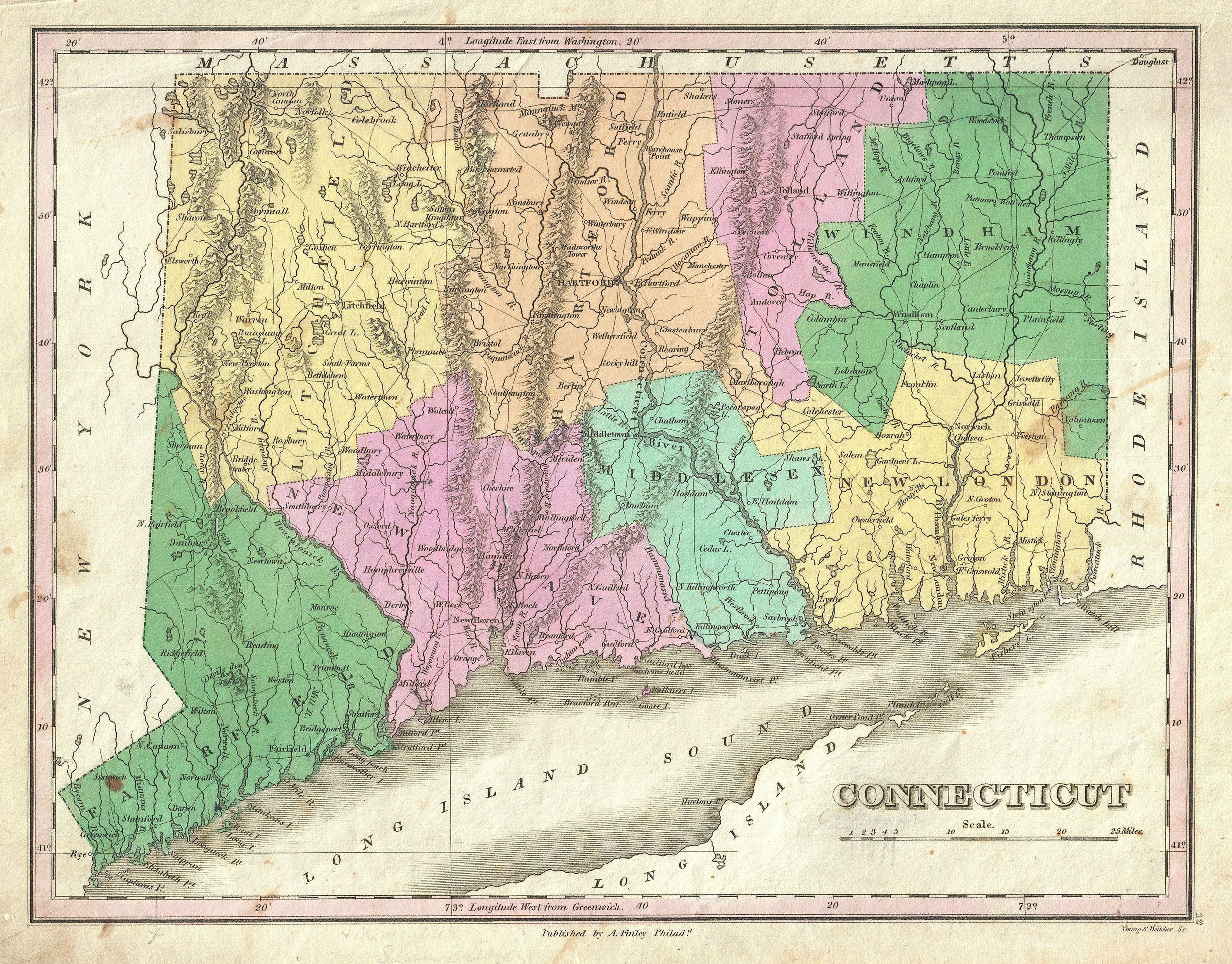
Connecticut residents with an opinion on how the state – and its local communities - can best celebrate Connecticut’s history are being given an opportunity to share their views by the Connecticut Historical Society (CHS), which has launched Community History Tour 2014 in an effort to build deeper relationships with local communities throughout the state.

CHS is conducting nine regional town hall-style discussions, hosted by local organizations, with the public and area organizations with an interest in history encouraged to participate. With an active heritage organization in nearly every one of the state's 169 towns, the CHS has aspirations to build stronger bridges with local Connecticut residents throughout the state. chsmllogo

The purpose of the listening tour is to engage local organizations and residents in a broad statewide conversation exploring how to celebrate the state’s history in ways that are relevant to today’s audiences.

The sessions kicked-off on February 11 at the Stanley-Whitman House in Farmington, and the next session will be on Monday, March 3 in Hartford at CHS.  It will be followed by open meetings in New Haven, Willimantic, Fairfield, Greenwich, Waterbury, Old Lyme and Litchfield over the next two months.

"Connecticut is a state rich in history," says Jody Blankenship, director at CHS, "and we know people like to experience history in different ways. We want to better understand how the state's communities feel about that. Do they want to see more or less of it? How do they want to see that happen, and how can we help? We're ready for a no-holds-barred conversation."map CT  Connecticut-finley-1827

The Connecticut Historical Society is a private, not-for-profit museum, library, research and educational center. The organization’s mission is to inspire and foster a life-long interest in history through exhibitions, programs, and Connecticut-related collections.  The CHS website notes that “improving knowledge of the past enhances understanding of the present and the ability to meet the challenges of the future.”

Founded in 1825, the Connecticut Historical Society houses an extensive and comprehensive Connecticut-related collection of manuscripts, printed material, artifacts and images that document social, cultural, and family history.  It is located in Hartford.

"Our goal is to better understand what makes each community special and how the history of that town or area is integrated into the Connecticut fabric. The best way to do that is ask those who are passionate to tell us," Blankenship added.


Community History Tour 2014 Dates and Locations: (All meetings occur at 4:30pm, unless otherwise indicated.)calendar

February 11: Stanley-Whitman House, Farmington March 3: Connecticut Historical Society, Hartford March 10: New Haven Museum, New Haven March 15: Windham Textile Museum, Willimantic, 11:00am March 31: Fairfield Museum, Fairfield April 7: Greenwich Historical Society, Greenwich April 8: Mattatuck Museum, Waterbury April 15: Florence Griswold Museum, Old Lyme April 21: Litchfield Historical Society, Litchfield

Weston, New Canaan Among Nation’s Richest Zip Codes

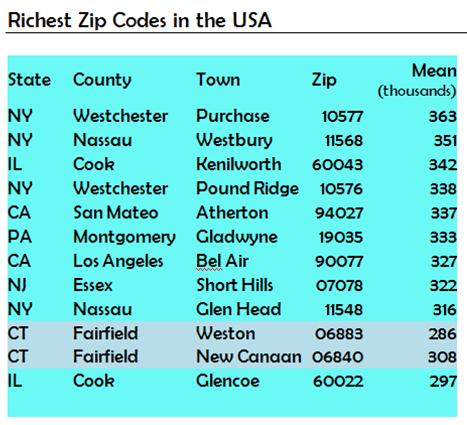
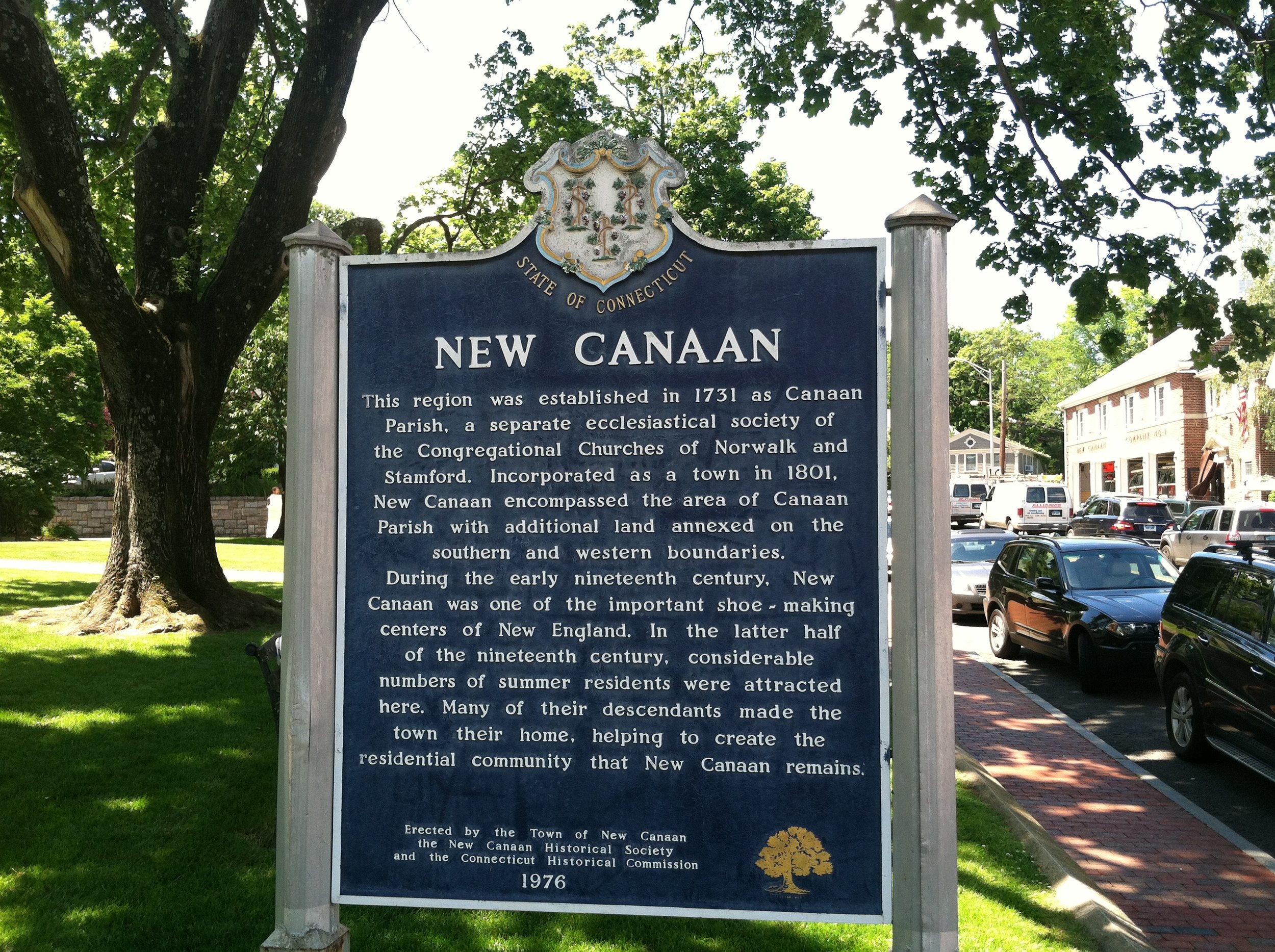
Weston and New Canaan are among the richest zip codes in the nation, according to an analysis by a University of Washington researcher.  Based on data from the U.S. Census Bureau’s American Community Survey, the batting order of the nation’s richest zip codes includes the two Fairfield County communities – Weston at #10 and New Canaan at #11.

zip codesThe zip code with the highest and the 4th highest incomes are in Westchester County, close to the Connecticut border. The second richest, Westbury, is in Nassau county, New York, which also has the 9th richest. Also in the New York City suburbs are the 8th, in New Jersey just 20 miles west of New York, while 10th and 11th richest are both located in Fairfield County, according to Richard Morrill, Professor Emeritus of Geography and Environmental Studies at the University of Washington, who outlined his research in newgeography.com.
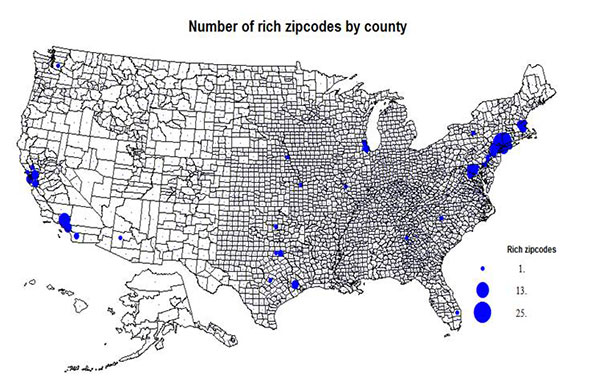
The top 10 communities, by zip codes, are Purchase, N.Y.; Westbury, Long Island; Kenilworth, Illinois, Pound Ridge, N.Y., Atherton, California; Gladwyne, Pennsylvania; Bel Air, California; Short Hills, New Hersey, Glen Head, Long Island; followed by Weston and New Canaan.

“The most astounding thing about the map,” (which shows the “rich” zip codes by the county they are part of) Morrill points out, “is their  concentration  in a few areas, led by the country’s premier global city, greater New York city, with 75 of the 170.”  New York is followed by Washington DC with 23, another sign of the growing wealth of the national capital.  Boston follows with 10, Los Angeles, 18, San Francisco (14), and Chicago (6) and then a scattering in other leading metropolitan areas.

Morrill also looked at unequal income zip codes, where income disparity was most pronounced, and poor zip codes, which often included areas with a large student population, such as Storrs, which masked thrich zip codese income level of the overall population of the zip code. Among the poorest of the inner city poor areas, the data indicated, were in Los Angeles, Waterbury, CT; Portland, OR; and Youngstown and Canton, OH.
 Morrill's research focuses on political geography (voting behavior, redistricting, local governance), population/demography/settlement/migration, urban geography, and planning, and urgan transportation.  He concluded that “the zip code data provide a partial, highly localized look at the geography of inequality,” adding that “if American society continues to accept extreme income, the geography of inequality will only become not only more extreme, but more pronounced in a diverse set of locations.”

new canaan

FI-weston-sign-lamp-flag-go1-300x180

More Children in Poverty, Less State Spending For Children, Reports Reveal

The percent of children in poverty in Connecticut increased to 13.2 percent, up from 10.4 percent in the 2000 Census, according to advocacy organization Connecticut Voices for Children, which analyzed data  in the U.S. Census Bureau’s American Community Survey (ACS) covering 2008-2012.  The statewide increase in poverty among children reflects significantly increased child poverty rates in 30 cities and towns, and decreased poverty rates for children in only 12 communities.

Income disparities among Connecticut’s communities are also clearly reflected in the data.  In Hartford, for example, the percentage of children in poverty reached a state high of 45 percent and the adult poverty rate hit 33 percent, while at the other end of the spectrum, the rate in Canterbury was less than 1 percent among children and less than 3 percent among adults.

After Hartford, the percentage of children living in poverty was at its highest in the state’s urban and rural communities:  New Haven topped 37 percent, in Waterbury 34 perckidsent, New London 29 percent, Cornwall, 27 percent, Norwich 23 percent, Meriden 22 percent, East Hartford and Preston, both at 21 percent, Stamford and Kent, both at 13 percent, and Danbury 12 percent.

The following 30 towns had statistically significant increases in the percent of all children in poverty: Ansonia, Avon, Berlin, Branford, Bridgeport, Cornwall, Danbury, Darien, Derby, East Haddam, East Hartford, East Haven, Enfield, Hartford, Harwinton, Litchfield, Meriden, Middletown, New Britain, New Hartford, New Haven, Norwich, Plymouth, Preston, Stamford, Vernon, Waterbury, West Haven, Windham, and Windsor Locks.

The following 12 towns had statistically significant decreases in the percent of children in poverty: Barkhamsted, Canterbury, Columbia, Granby, Hamden, Morris, Old Lyme, Salisbury, Sharon, Thomaston, Winchester, and Woodbridge. voices logo

The percent of all Connecticut residents in poverty increased to 10.0 percent according to the ACS data, up from 7.9 percent in Census 2000 (1999 figures).  Because the ACS is based on information gathered from a sample of local residents, the "sample size" in each town can be small in any one year.  The Census Bureau, therefore, averages together five years of data to create more reliable estimates.

In another report issued early this year, it was revealed that over the past two decades, Connecticut has committed less and less of its state budget to young people, according to the Fiscal Policy Center at Connecticut Voices for Children.

The report finds that spending on the “Children’s Budget” – state government spending that directly benefits young people – has dropped from 40% of the state budget in Fiscal Year 1992 to 30% in the current budget year (FY 2014). Spending on education has fallen by about a third -- from 26% of the state budget to 19% between Fiscal Years 19American Community Survey92 and 2014. The report, “Introducing the Children’s Budget,” is available on the Connecticut Voices for Children website at www.ctvoices.org

Connecticut Voices for Children is a research-based think tank that advocates for policies that benefit the state’s children and families.  Based in New Haven, the organization advances its mission through high quality research and analysis, strategic communications, community education, and development of the next generation of advocates.

Seven Communities Earn Grants to Strengthen Downtowns

Connecticut Main Street Center (CMSC), the downtown revitalization and economic development non-profit, has selected seven organizations and municipalities to receive a total of $70,000 in  Preservation of Place grants this year.

The 2014 grants will be used to provide Connecticut communities in Bridgeport, Canton, Essex, New London, Norwalk, the Northwest corner, and Willimantic with targeted resources to increase their capacity to plan for preservation and revitalization initiatives in their downtowns and neighborhood commercial districts.

The PreserCT Main Street LOGOvation of Place grant program provides a source of funding for new initiatives that can be integrated into, and leverage, comprehensive Main Street preservation and revitalization programs. The funds are meant to be flexible to meet individual community need.


"Historic preservation and the revitalization of our Main Streets create jobs, bring vacant buildings back on the tax rolls and add value and vitality to adjacent buildings and neighborhoods," said John Simone, CMSC President & CEO. "This year's winners are taking steps to implement these types of positive changes by proactively planning for the growth and improvement of their downtowns."

The selected organizations or initiatives will receive between $5,000 and $14,500 in Preservation of Place grant funds:

  • ·         Bridgeport Downtown Special Services District, for the creation of a plan that will use open spaces to facilitate creating placemaking in downtown Bridgeport
  • ·         Town of Canton, for the development of Collinsville Village Zoning Regulations;
  • ·         Town of Essex, for a Centerbrook Visioning & Action Plan;
  • ·         New London Main Street, for an organizational and leadership development and capacity-building plan,
  • ·         Norwalk 2.0, for the Freese Park Artist Village Plan;
  • ·         Northwest CT Regional Planning Collaborative, for Active Main Street: Enlivening Village Center Public Spaces;preservation of place
  • ·         Thread City Development, Inc. (Willimantic), for an organizational and leadership development plan.

"The diversity of locations, from the Northwest Corner of Connecticut to New London, matched with the diversity of projects, from creative placemaking in urban open spaces to organizational and leadership development that will improve the management function in downtown, will allow each community to respond to their greatest current need, actively creating their direction of growth," Simone said.

Since 2008, CMSC has awarded $376,130 through the Preservation new londonof Place grant program to twenty Connecticut communities, leveraging $842,727 in local Main Street initiatives. The program receives support from the State Historic Preservation Office with funds from the Community Investment Act.