Museum Retailers Headed to Hartford for National Conference

What do Houston, Los Angeles, New Orleans, Chicago and Hartford have in common?  Each has been selected to serve as host for the Museum Store Association’s annual Retail Conference & Expo.  Hartford will have the honors in 2015, having just been selected by the association’s site selection committee for their 60th Annual event.

The four-day conference, to be held at the Connecticut Convention Center April 17-20, 2015,  is expected to bring in 900 participants downtown, representing over 500 museums, other cultural institutions, and companies with products and services of interest to the museum store industry. Officials anticipate 1,130 room nights and 360 peak nights will be booked by attendees next spring.

It is the only conference and expo specifically created for retailers at museums, historic sites, botanic gardens, aquariums, zoos, libraries and more. The annual show provides a valuable opportunity for members of the association to network, learn and source vendors and products to complement their institutional collections.

Among the 11 institutions and nine vendors that are Hartford-area members of the association are the Wadsworth Atheneum Museum of Art, Connecticut Historical Society Museum & Lmusuem logoibrary, Harriet Beecher Stowe House, New Britain Museum of American Art and Friends of Dinosaur State Park and Arboretum.

The Museum Store Association (MSA) is bringing its annual conference to the Northeast for the first time in more than a decade.  They met in Philadelphia in 2003.  Given the number of members and vendor affiliates on the East Coast - and especially in the northeast - the organization’s  leadership determined it was time to head east. Within an 11-state region in the Northeast, there are more than 200 institutions and 100 industry vendors that are members of MSA.

Stacey Stachow, President of the Board of Directors of MSA and Manager of the Wadsworth Atheneum Museum Shop, was especially pleased with the choice. “Connecticut has so much to offer with its rich cultural history, so many museums and things to do that relate to our members.”stacey

It is expected that a Hartford-based committee will help plan activities that will involve the local members of MSA. Those plans will likely include educational sessions, networking events, tours to local museums, historical sites and other institutions of interest, and the organiation’s membership meeting and silent auction.

In selecting Hartford, MSA officials cited the convenience of travel, affordability, cultural institutions in and close to the city, and Hartford’s “pedestrian-friendly” layout as factors in the selection process.  Having a 4-star hotel interconnected with a modern Convention Center was also a plus.

MSA is a nonprofit, international association organized to advance the success of museum retail professionals. By encouraging high standards of professionalism, MSA helps cultural commerce professionals better serve their organizations. MSA also is focused on helping increase awareness about museum stores as unique shopping destinations for tourists and cultural travelers. The event features hundreds of booths showcasing the unique items for museum store and MSA-represented institutional buyers.

Jama Rice, MBA, CAE, Executive Director/CEO at MSA, reflected about the site-selection for the 2015 program: “I’d attended a conference in Hartford years back, and found it to be both charming and intimate.” Ms. Rice, who joined MSA in 2013, continued, “The area offers so many advantages from a rich museum culture to close proximity to both New York and Boston, a convenience for that concentration of institutional members and vendor affiliates across the Northeast. It’s also easily accessible to those traveling from across the country or coming in from overseas.”  logo

“We are excited to host the Museum Store Association for their 60th Annual Retail Conference & Expo next April,” statenew logod Michael Costelli, General Manager for the Connecticut Convention Center. “The program will utilize much of the meeting and exhibit space at the Center and we are confident attendees will appreciate the countless cultural attractions located right here in Hartford.”

Although this year’s conference in Houston is still months away, the MSA has already begun to promote next year’s event, highlighting Hartford on the organization’s website: “As the fourth-largest city in Connecticut, Hartford is not only home to the state’s capital, but it is the birthplace of the Boys & Girls Club, the first FM station to begin broadcasting in the world and President Theodore Roosevelt’s first automobile ride. An 18-square-mile city, Hartford is home to 125,000 residents, world-class dining, international cultural attractions and award-winning entertainment venues.”

Nearly Half of States Pushing Minimum Wage Higher Than Federal Level

Gov. Malloy’s proposal for Connecticut to raise its minimum wage to $10.10 by 2017 would extend the state’s longstanding status as consistently above the federal minimum wage.  But Connecticut is far from alone in outpacing the federal government.  The current federal minimum hourly wage is $7.25.

Data from the Pew Research Center and USA Today indicates that no fewer than 21 states have set higher minimums, ranging from $7.50 in Missouri to $9.32 in Washington State. Those states collectively include 45% of the nation’s working-age (16 and over) individuals, according to 2013 data compiled by Pew.  It is expected that by thestate wage rates end of 2014, an additional nine states may be above the federal minimum, marking the first time minimum pay in most states will be above the federal level, according to the National Employment Law Project, as reported by USA Today.

Thirteen states raised their minimum wage on January 1, 2014, including Connecticut.  On January 1, Connecticut's minimum wage moved from $8.25 to $8.70, the first of two scheduled increases in the state’s minimum hourly wage. A second increase is set to follow on January 1, 2015, bringing the state's minimum wage up to $9.00 per hour, based on legislation approved last year.   Malloy’s newly proposed three-year incremental increases would continue to bump up the hourly minimum through 2017.

Last February, a Pew Research Center survey found that 71% of people favored an increase in the federal minimum to $9.00/hour from $7.25. USA Today has reported that as many as 11 states and Washington, D.C., are expected to consider increases in 2014.

Adjusted for inflation, the federal minimum wage peaked in 1968 at $8.56 (in 2012 dollars), according to Pew researchers. Since it was last raised in 2009, tNewMinimumWageDistributiono the current $7.25/hour, the federal minimum has lost about 5.8% of its purchasing power to inflation, Pew points out.

Just over half (50.6%) of the 3.55 million U.S. workers who were at or below the federal minimum in 2012 were ages 16 to 24; an additional 20.3% were ages 25 to 34.  Pew indicated that both shares have stayed more or less constant over the past decade. The 3.55 million represents about 2.8% of all wage and salary workers.

An estimated 70,000 to 90,000 workers out of Connecticut’s total workforce of 1.7 million earn the minimum wage. It has been reported that a Connecticut resident working full time this year at minimum wage will make $18,096.  

The Bureau of Labor Statistics, which tracks the federal and state minimum wages, indicates that in 2000 the federal minimum was $5.15 and Connecticut’s was $6.15.  A generation ago, in 1972, the federal minimum wage was $1.65; Connecticut was at $1.85.

2014 increases

Number of Brewery Permits Nearly Doubles in CT in Past Five Years

The number of brewery permits in Connecticut has nearly doubled during the past five years, from 19 in 2008 to 36 in 2013, reflecting the rapid growth in the state – and nationwide – in the craft brewing industry.

Connecticut ranked #29 in the nation, between Georgia and New Jersey, in the state-by-state rankings, compiled by Bloomberg.com using data fbee brandsrom the Beer Institute and the Alcohol and Tobacco tax and Trade Bureau.  There were 3,699 permitted breweries in the United States last year, about 34 percent more than the previous year.
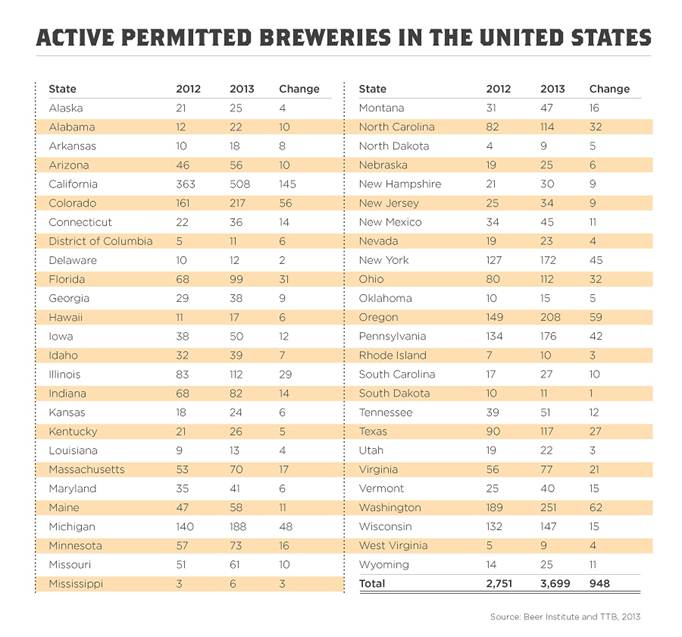
California led the nation with 508 brewery permits, followed by Washington State with 251, Colorado with 217, Oregon with 208 and Michigan with 188.  Rounding out the top ten were Pennsylvania (176), New York (172), Wisconsin (147), Texas (117), North Carolina (114) and Illinois and Ohio, each with 112 permitted breweries.  Every state in the nation saw an increase from 2012 to 2013.

According to the data, Connecticut had 19 permitted breweries in 2008 and 22 in 2012.  That number jumped to 36 last year.  In comparison to other states, Connecticut’s ranking dropped from 19th in 2012 to 29th in 2013, even as the number of permitted breweries increased by more than 50 percent.

 With 19 breweries and 16 in planning, according to the Brewers Association, Connecticut's economy and craft brewing industry could see tens of thousands of dollars of reinvestment.  In timage004.jpghe comparative survey, permitted breweries refer to manufacturers that have completed the appropriate paperwork and obtained the necessary permits to operate, though they may not be fully operational yet, according to Bloomberg.com .
Among our neighboring states, between 2008 and 2013, Massachusetts increased from 41 to 70 brewery permits, New York from 72 to 173, and Rhode Island, which ranked #48, from 5 to 10.   North Dakota, which had one permitted brewery in 2008, now has nine, moving from #50 to #49 in the nation.

The U.S. Department of Justice Bureau of Alcohol, Tobacco & Firearms (www.atf.gov) requires retailers and manufacturers of alcohol (i.e. brew pubs) to register. The Bureau also regulates the operation of distilleries, wineries, and breweries as well as, importers and wholesalers in the industry. In addition, the Liquor Control Division of the  Connecticut Department of Consumer Protection requires a liquor permit.

The state’s tourism website, “Still Revolutionary,” suggests that “Whether you’re looking for a relaxing Sunday afternoon with friends or a longer vacation with a significant other, take a few days to explore the Connecticut Beer Trail.”

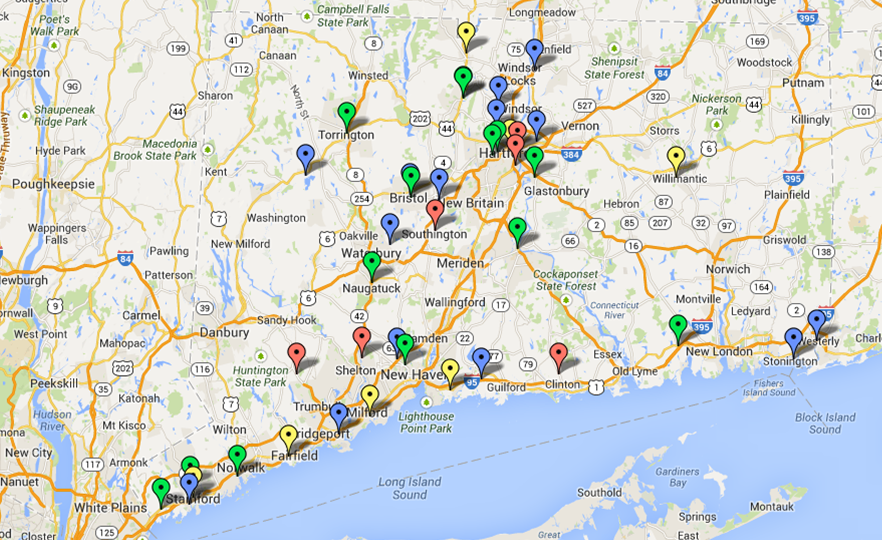
The site states unequivocally that “Connecticut is home to some of the best breweries in the country!  The Connecticut Beer Trail spotlights the high quality and creative diversity of fresh, hand-crafted, locally-brewed beer, linking together some of the best breweries in the nation.”

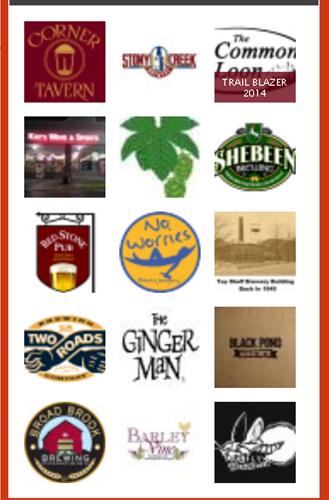
The Connecticut Beer Trail website, www.ctbeertrail.net, lists:

Other local brands included are:

Additionally, a number of breweries are in an early phase of development, according to the website:

CTBeerTrail.net was launched in 2010 by Byron Turner, according to the website ctbeerwine.com, to create a local craft beer social media community that was well-timed with Connecticut’s legislative push for a “Connecticut Brewery Trail.”  Gov. Malloy signed Senate Bill No. 464 into law on July 13, 2011, establishing a Connecticut Beer Trail by allowing the Department of Transportation to permit directional and other official signs or notices about facilities where Connecticut beer is made or sold, including signs or notices containing the words “Connecticut Brewery Trail”.  The website reports that as of December 2013, such signs have yet to be posted.     (Chart: Washington Post)

Soda Tax Won't Hurt Job Prospects, Tobacco Tax Offers Preview, New Studies Find

As the Connecticut legislature considers a proposal to implement a 2 percent tax on sodas, proposed by Senate Majority Leader Martin Looney at the suggestion of New Haven Mayor and former state senator Toni Harp, two new academic studies challenge the beverage industry’s view that state and local taxes on sugary drinks will hurt employment, and offer suggestions to policy makers based on the tobacco tax experience.

Harp has said the soda tax would discourage consumption of the sugary beverages – part of her campaign to combat obesity - and bring in public health logoan estimated $144 million in revenue for the state each year. It would tax all beverages “high in calories or sugar” by two percent, but does not specify how many calories or grams of sugar would trigger the tax.

The studies, appearing in the February and March issues of the American Journal of Public Health, argue, in one case, that claims of employment losses are off base because they focus only on the effects within the industry, ignoring the economic activity that comes with people substituting lower-priced goods for more expensive products as wellsoda as new spending from tax revenues.  The other study says that tobacco taxes offer a how-to road map for policy makers.

The study to be published in March, led by Jennifer L. Pomeranz, JD, MPH, while at the Yale Rudd Center for Food Policy and Obesity at Yale University, uses as its premise that “excise taxes on sugary beverages have been proposed as a method to replicate the public health success of tobacco control and to generate revenue.”

“Sugary Beverage Tax Policy: Lessons Learned from Tobacco”  indicates that “as policymakers increase efforts to pass sugary beverage taxes, they can anticipate that manufacturers will emulate the strategies employed by tobacco companies in their attempts to counteract the impact of such taxes.”  Pomeranz suggests that “policymakers should therefore consider two complementary laws—minimum price laws and prohibitions on coupons and discounting—to accomplish the intended price increase.”

Researchers at the University of Illinois, in a just-published study in the February issue of American Journal of Public Health, found that a 20 percent increase on the price of sugar-sweetened beverages would have an overall positive impact on the labor market.

The American Beverage Association has traditionally argued that manufacturers, distributors and small business owners, particularly grocers and convenience store proprietors, would suffer were soda taxes to be imposed, but the study says that’s not likely.

In recent years, proposals to tax those beverages fell short in California, Vermont, Hawaii, Massachusetts, Mississippi, New York and Rhode Island, Governing magazine reported.  In Maine voters passed a soda tax of 42 cents per gallon in 2008 but repealed it two years later amid a major lobbying effort from the American Beverage Association. Voters in Washington state similarly reversed their legislature in 2010.  As of the end of state legislative sessions in 2011, Governing reported, only four states had taxes specifically targeting sugary beverages, including Arkansas, Tennessee, Virginia, and West Virginia, according to the Tax Foundation.

In the study publstrawished this month, researchers ran a simulation of the impact of 20-percent soda tax in Illinois and California—selected for regional differences—and found slight employment increases would occur, but the net effect would be close to nothing. They found that people choose to spend their money on other things, not to forego spending entirely, and that employment gains in other sectors of the economy far outweigh the job losses for soda makers, National Journal reported.

“We find there are losses in the beverage industry, but when you’re talking about the whole economy suffering job losses, you can’t just talk about your own industry,” Lisa Powell, health policy professor at the University of Illinois at Chicago and the study’s lead author, told National Journal. “Using job loss as a scare tactic for the economy overall is misleading.”

Public health advocates have warned of a link between added sugar and illnesses ranging  from Type 2 diabetes and obesity to heart disease and osteoporosis. The caloric intake of sugary beverages increased dramatically from 1988 to the mid 2000s, though consumption has dropped across all age groups in recent years, Governing reported, with some citing the increased public attraction to teas and other beverages.  Like Harp and Looney in Connecticut, some elected officials around the country have proposed raising taxes on sugary drinks in order to reduce consumption.  The New Haven Register reported that Harp has pointed out that revenue from the cigarette tax has decreased, showing that the effectiveness of a tax in reducing consumption.Jennifer-Pomeranz

Pomeranz is a public health law and policy researcher focusing on marketing, labeling and youth access issues related to food and beverages, over-the-counter diet drugs, and dietary supplements, publishing on topics including discrimination, the First Amendment, public health preemption, and innovative regulatory strategies to address public health problems such as obesity. She is Assistant Professor at the Center for Obesity Research and Education in the Department of Public Health and at the College of Health Professionals and Social Work at Temple University, having served previously as Director of Legal Initiatives at the Yale Rudd Center for Food Policy & Obesity.  She is currently the Policy Chair of the Health Law Section of the American Public Health Association and the official liaison between the American Academy of Pediatrics and the American Public Health Association.lisa powell 2

Lisa Powell is a Senior Research Scientist in the Institute for Health Research and Policy and Research Professor in the Department of Economics at the University of Illinois at Chicago. She has extensive experience as an applied micro-economist in the empirical analysis of the effects of public policy on a series of behavioral outcomes.

A 2011 study by the Yale Rudd Center for Food Policy & Obesity found that young people are being exposed to a massive amount of marketing for sugary drinks, such as full-calorie soda, sports drinks, energy drinks, and fruit drinks.  The study, described as the most comprehensive and science-based assessment of sugary drink nutrition and marketing ever conducted, found that companies were marketing sugary drinks targeting young people, especially black and Hispanic youth.

Drive for More Electric Vehicles Continues to Gain Support, Funding in CT

The advance of electric cars continues, as does Connecticut’s encouragement of the trend.

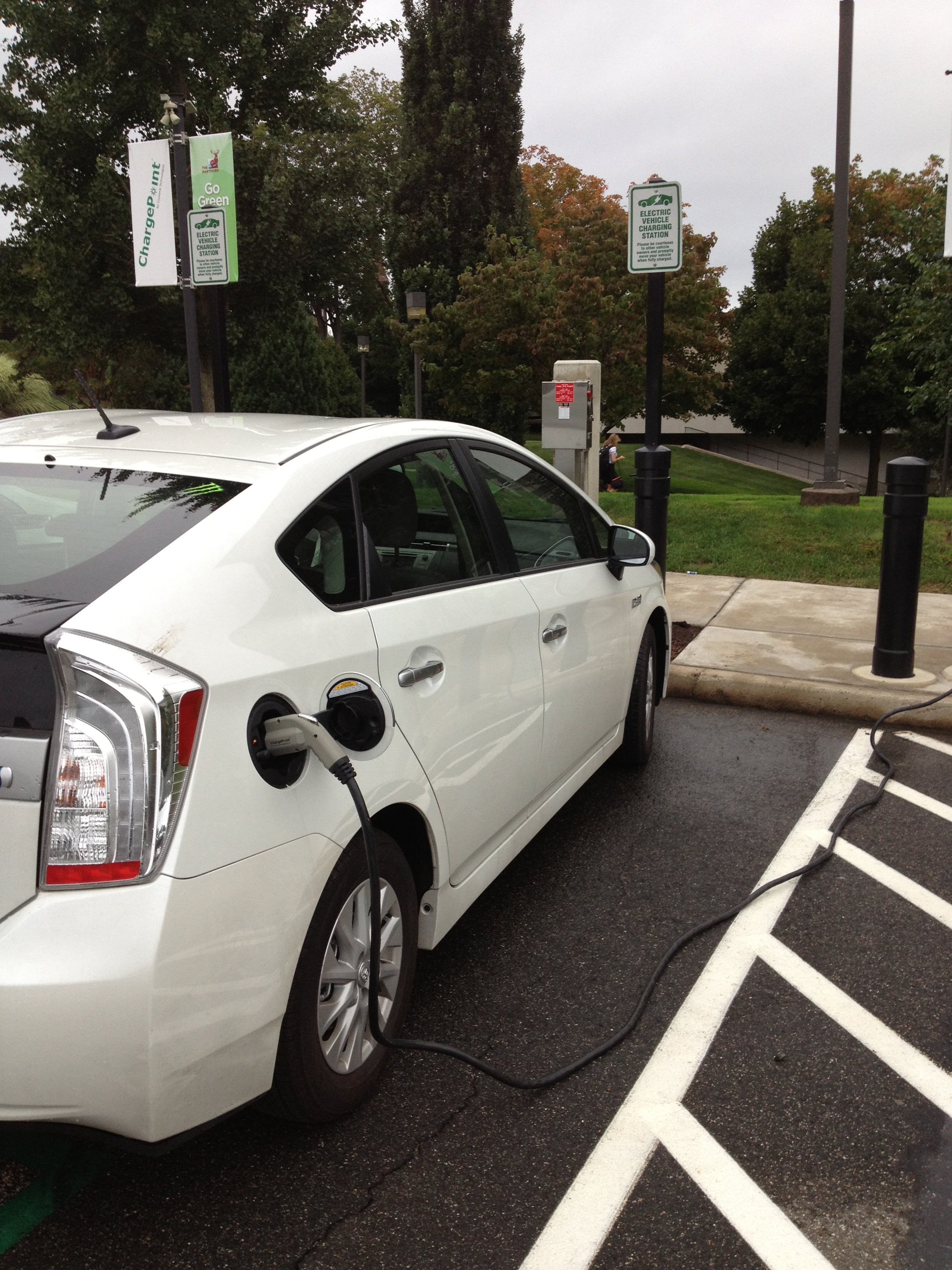
The Connecticut Department of Energy and Environmental Protection (DEEP) and the Connecticut Automotive Retailers Association (CARA) will recognize state automobile dealers who sell or lease the highest number of electric vehicles (EVs) between February 1 and July 31, 2014 with the first ever “Connecticut Revolutionary Dealer Award.”  One award will be presented to the dealer that sells or leases the highest number of new EVs – incevconnecticutbannerluding plug-in hybrids – and the other will go to the dealer who sells or leases the most EVs as a percentage of total sales during the period.
The announcement this week follows by just a few months the agreement by eight states representing nearly a quarter of U.S. auto sales – including Connecticut - to promote infrastructure and take other steps to increase the number of electric- and hydrogen-fueled cars, trucks and buses on the roads. The states involved are Connecticut, California, New York, Maryland, Massachusetts, Oregon, Rhode Island and Vermont.

By developing standards for charging stations, expanding financial incentives to buy the cars and lowering consumer electric rates, the states hope to make the vehicles more appealing, The goal is 3.3 million non-polluting cars on the road by 2025. Zero-emission vehicles include battery-electric vehicles and hydrogen fuel-cell-electric vehicles

State Funding Leads to More Charging Stations

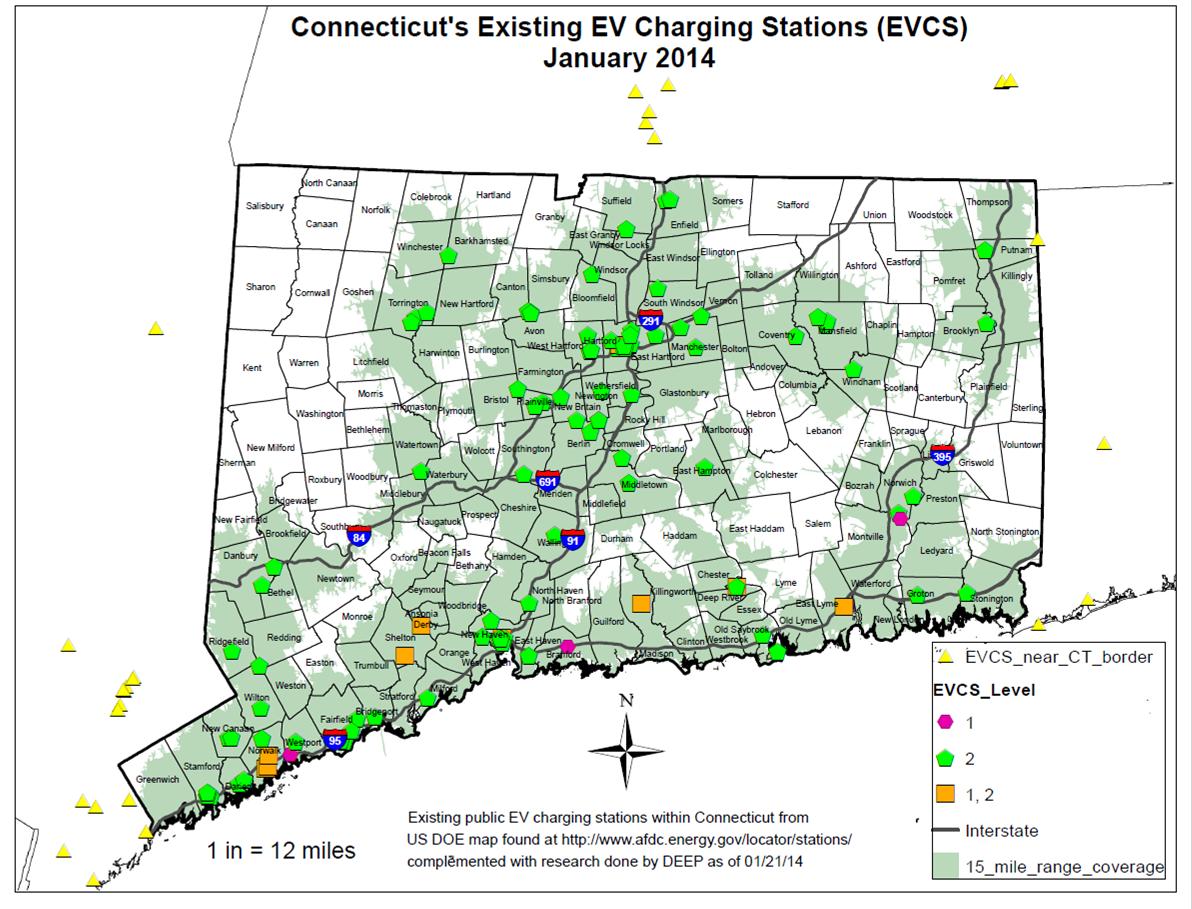
State officials said that Connecticut is leading the nation in developing ways to encourage residents and businesses to buy electric and other zero-emission vehicles when making transportation purchases.  Since July 2013, the state has provided $177,600 to 48 towns, businesses, and schools to build 75 electric vehicle charging stations throughout the state.  It is estimated there are already more than 164 publicly available charging stations in Connecticut, including many located at auto dealers.

The Department of Energy and Environmentcharging mapal Protection provides an up-to-date list of all the charging stations in Connecticut, as well as those near the state’s border in neighboring states.  Just over 50 of Connecticut’s 169 communities have at least one charging station.  Both Hartford and New Haven each have nine stations. Stamford has six, Bridgeport has one, Waterbury has none, according to the January 2014 data from DEEP.

Nationally, automakers are under pressure from the federal government to increase the average mileage of the vehicles they sell. Zero-emission vehicles are also supposed to make up at least 15% of sales by 2025. The Electric Drive Transportation Association told CNN Money said the market for electric and hybrid vehicles is growing steadily, especially as word of mouth spreads from satisfied customers.

 Electric vehicles are “a ‘win-win’ for our state because they can cut costs for motorists while improving our environment and public health,” said interim DEEP Commissioner Ronald Klee.  “Cars and trucks burning gasoline and diesel are one of the largest sources of harmful air pollution and greenhouse gases that contribute to climate change.” Expanding the number of publicly available charging stations in Connecticut is critical to meeting the goals of the eight-state agreement.”

Electric cars are powered entirely by an electric motor supplied by a large battery.  Unlike traditional hybrid cars, electric cars do not have a gasoline engine; they are “fueled” by plugging into an electric charging station.  A plug-in hybrid electric vehicle has an electric motor, an internal combustion engine and a plug to connect to the electrical grid.car charging

The Connecticut Automotive Retailers Association is a statewide trade association representing over 250 franchised new car and truck dealerships primarily engaged in the retail sale of new and used motor vehicles, both foreign and domestically produced.

Last fall, Luis Ramírez, CEO of GE Energy Industrial Solutions joined Governor Malloy in unveiling the GE Electric Vehicle (EV) Solar Carport in Plainville.  The project, one of the most expansive undertakings of its type in North America, uses GE’s new smart EV Charging Stations to charge electric vehicles.  DEEP’s stated goal, former Commissioner Dan Esty said at the time, is to provide “publicly accessible EV charging stations within a 15-minute driving radius of any location in Connecticut.”

U.S. electric car sales have more than tripled from 17,000 in 2011 to 52,000 in 2012, according to data from the DEEP. Motorists bought more than 40,000 plug-in cars in the first six months of 2013, the most recent data available.

State's Public Transportation Commission Calls for Service Improvements, Safeguards to Transit Fund

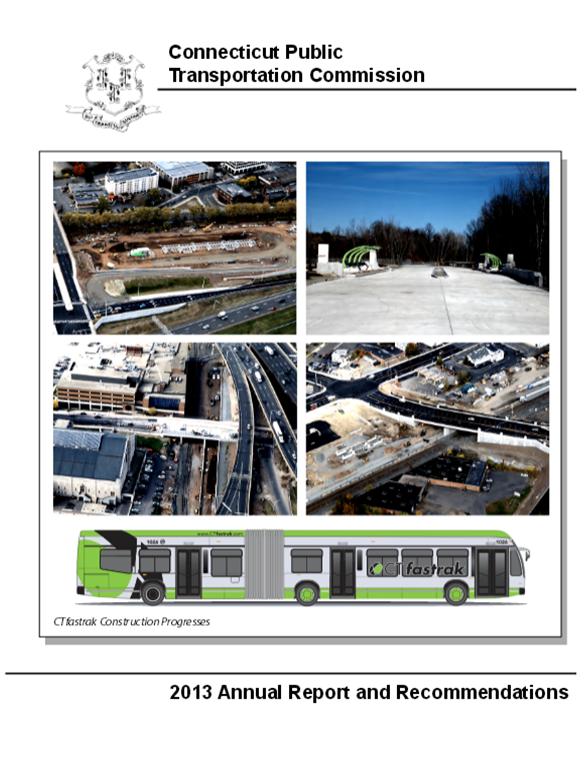
With the start of the legislative session, one of the many reports landing on legislators desks include a series of six recommendations for improving public transportation services, developed by the Connecticut Public Transportation Commission and outlined in their recently released 2013 Annual Report. The recommendations, according to Chair Kevin Maloney, “do not call for any major new State-funded initiatives, though some of the recommendations would require incremental expenditures to current projects or services.”

The Commission, a 14-member advisory body comprised of gubernatorial and legislative appointees, and including members from industry and the public, developed the recommendations following seven public hearings in Norwalk, Putnam, Bristol, Orange, New Milford, Enfield and New London, and monthly meetings throughout the year.  The Commission:

1.  Strongly supports efforts to safeguard the Special Transportation Fund, stating that resources of the fund “must be reserved to address the needs of Connecticut’s roads, bridges and transit systems.”  The report noted that:

  • transfer of Fund monies to the General Fund deprives Connecticut’s infrastructure and services of these much-needed resources
  • the transfer of Fund monies violates the trust that the Special Transportation Fund’s supporting revenues and user fees will benefit the transportation services and facilities upon which those who pay the gas tax, gross receipts tax, fares and license and permit fees rely
  •  “the continued deferred investment in our transportation infrastructure that the diversion of Special Transportation Fund resources causes will erode Connecticut’s attractiveness and make it harder to compete with other states for businesses and residents”

2. Recommends sustained support for adequate for the continued operation and growth of the Coastal Link bus service, operated by Greater Bridgeport Transit, Norwalk Transit and Milford Transit along the Route 1 corridor, be provided. The line – which the report describes as “highly successful” and “perpetually in jeopardy” due to insufficient funding - carries over 4,000 passengers per weekday and over 1.2 million passengers annually, and the butransportation reportses running this service are frequently at or above capacity with some occurrences where riders must be turned away.  “At a minimum,” the report recommends, “additional investment of state funds would be required to support additional buses to provide a consistent level of services and improve service quality.”

3. Commends ConnDOT for restoring funds to the Municipal Dial-A-Ride program – a “much needed program” that provides mobility to seniors and persons with disabilities across the state, and is “especially important to small rural communities.”  Funding had been reduced by 25 percent in 2011, which was restored in the FY2014 state budget, according to the report.  Approximately 130 municipalities apply for program funds each year.  The report notes that Connecticut is the seventh oldest state in the nation, with the over 65 population projected to grow by 64 percent by 2030. 

4. Encourages ConnDOT to apply the techniques used to inform the public about the progress and projected benefits of CT FastTrak (previously known as the Hartford-New Britain Busway) with information on other high profile projects such as the Stamford Transportation Center.   The report states that a “more vigorous and pro-active outreach effort...may pay dividends in lessening political headwinds and gain public support for these projects.”   Such actions “for other major transit projects such as the New Haven-Hartford-Springfield commuter rail service would also serve both ConnDOT’s and the public’s interests.”

5.  Urges State cooperation with an on-going effort by the Housatonic Railroad to develop a privately-run, unsubsidized passenger rail service between Danbury and Pittsfield.  With the commitment by Massachusetts of substantial funding for that state’s portion of the project, this proposal is starting to gain some momentum, the report indicates.

6.  Recommends “more effective dissemination of information about new and existing transit services,” recognizing that “the public does not have sufficient awareness of and information about existing transportation services to take full advantage of these services.”  The Commission indicated that this was a “recurring theme” at the Commission’s public hearings, and called for both high-tech and low-tech solutions.  The report noted that “addressing this need can be challenging,” because “ConnDOT has no dedicated marketing staff and no marketing budget,” and “marketing for individual services is often sporadic and inconsistent.” connecticut

Additional topics were noted in the Annual Report as a result of issues raised during public testimony, including:

  • the increasing popularity of cycling and the resulting demand for more bicycle amenities and facilities,
  • the desire of several smaller transit districts to implement designated and signed bus stops to increase system visibility and assist their riders,
  • the need for better communication on train platforms to alert riders as to which track an arriving train will be using,
  • the increasing demand for inter-regional bus services, repeated accounts of train fares going uncollected, and
  • the demand for bus and rail services which cross Connecticut’s boundaries into adjacent states.

The Commission is chaired by Kevin Maloney, President/CEO of Northeast Express Transportation, Inc. which operates NEXTAir, NEXTCourier and NEXTDistribution.  Commission members include Christopher Adams, Richard Carpenter, Morton Katz, William Kelaher, Yvonne Loteczka, Kevin Maloney, Edward McAnaney, Robert Rodman, Kiernan Ryan, Russell St. John, Richard Schreiner, Richard Sunderhauf, Alan Sylvestre, and John Zelinsky.  Among the ex-officio members are DOT Commissioner James Redeker, Sen. Andrew Maynard and Rep. Antonio Guerrera.

The Commission continues to meet monthly in accordance with state statute, with the next meeting scheduled for March 6 at New Haven’s Union Station.

Connecticut Talks Issues at Forums, Conferences Across State

The Connecticut legislature, now underway for 2014, is not the only place for conversation on key issues impacting Connecticut.  A range of news organizations, nonprofits, associations and community-based groups are sponsoring forums, summits and sessions to better-inform the public and bring interest and attention to specific issues.  Among them:

February 10  - Hartford’s Edgy Arts, Mark Twain House & Museum

The Hartford area attracts an array of creative people from actors to musicians, poets to painters.  What is it that so draws artists?  What to they need to flourish here?  A discussion of the creative economy, in the Capitol City.  Refreshments at 5:30; panel discussion at 6:15.  Advance articles published in The Hartford Courant; a program of Hartford Young Professionals & Entrepreneurs (HYPE), FOX Connecticut and The Hartford Courant.

February 20 - Pay-for-Success Informational Conference, Legislative Office Building

National leaders from the emerging field of Pay for Success will be speaking, with a focus on three key elements: 1) Offering high-quality preventative services; 2) Requiring rigorous measurement of results; and 3) Capturing savings or avoided costs. The 2014 Pay-for-Success (PFS) Informational Conference, 10:00-12:30 PM, will offer interested stakeholders the chance to discuss the field with leaders from around the country, while hearing about projects underway in the areas of early childhood, juvenile recidivism, health care and workforce development.  Sponsoring organizations include BlumShapiro, Connecticut Institute for the 21st Century, Capitol Region Council of Governments, Connecticut Center for Social Innovation, Community Impact Strategies Ltd, and Connecticut Association for Human Services.

February 24 -  The Knowledge Economy; Connecticut Conference of Independent Colleges, CT Mirror, Quinnipiac University

Connecticut is home to almost 50 colleges and universities and has created an industry in surrounding towns and cities. What is expected as we continue into the 21CCICst Century? Join the Connecticut Conference of Independent Colleges and The Connecticut Mirror in the lively discussion, "The Knowledge Economy," on Monday, Feb. 24 , from 7-9 p.m., in the auditorium at the Quinnipiac University Frank H. Netter MD School of Medicine. This event is free and open to the public. No registration is necessary.  Panelists include Sal Filardi - Vice President, Facilities & Capital Planning, Quinnipiac University; Rich Jacob - Vice President for Federal and State Relations, Yale University; Todd Andrews - Vice President for Economic & Strategic Development, Goodwin College and Jeff Seemann - Vice President for Research, UCONN.

February 26 - Vital Voices in Entrepreneurship, Goodwin College

A special speaGoodwin-College-B8665EC3ker series focused on the first-hand perspectives of leaders making a mark in business and the community. The next event at Goodwin College's Community Room on February 26 will feature Stew Leonard, Jr., President and Chief Executive Officer of the unique, family-owned and operated farm fresh stores, Stew Leonard's. The keynote address will commence at 6:00 p.m., preceded by a networking reception at 5:00 p.m. with wine, beer and hors d'oeuvres.

February 28 – Retrofitting Our Towns:  Can We Add Density, Affordability and Walk-ability to Help Municipalities Survive…And TPrinthrive?  The Lyceum, Hartford

Can suburbs and smaller towns reshape and respond to the demographic, economic and lifestyle pressures of the 21st Century?  One of the nation’s leading experts – Lynn Richards of the EPA Office of Smart Growth – assesses four Connecticut municipalities and offers lessons for all the others.  Program 9:00-111:00 AM.  Sponsored by the Connecticut Main Street Center, Partnership for Strong Communities and the American Planning Association - Connecticut.

March  Ct-forum7  - An Honest Look at Mental Illness, Connecticut Forum, The Bushnell

The Connecticut Forum presents a conversation about perceptions, realities, and what it’s like to work and live with the stigma of mental illness.  Panelists include journalist and mental health advocate Andrew Solomon, Dr. Hank Schwartz, Chief of Psychiatry at Hartford’s Institute of Living, former NBA player Royce White and bipolar disorder authority Dr. Kay Redfield Jamison.   Founded in 1992, The Connecticut Forum is a one-of-a-kind 501(c)(3) nonprofit organization serving Connecticut and beyond with live, unscripted panel discussions among renowned experts and celebrities, and community outreach programs including the award-winning Connecticut Youth Forum.

March 14 – Hartford Business Journal Municipal Collaboration Summit, Goodwin College

An opportunHBJity to learn about the benefits of collaboration which save money and leverage the purchases and agreements for towns.  The event will highlight people that are already implementing positive changes.   Panel discussions, workshops and Q&A with key leaders and a panel of experts.

March 26 - Student Debt and Financial Aid: What (if anything) can we do?, Southern Connecticut State University

Sponsored by the Center for Higher Education Retention Excellence, 9AM-3PM, at Southern Connecticut State University, featuring Sandy Baum, Research Professor of Education at the George Washington School of Education and Human Development and Senior Fellow at the Urban Institute, and  panel of Connecticut financial aid directors (representing a public university, community college and private college) and a student panel.  Registration now available; limit 75 attendees.

Land of Steady Habits: CT Ranks #37 in Divorce Rate

Connecticut’s divorce rate ranks the state #37 in the nation in the percentage of residents who are divorced.  According to the U.S. Census Bureau’s American Community Survey, 10.6 percent of state residents are divorced, 1.4 percent are separated, and 48.2 percent are married.

The highest divorce rate was in Nevada, at 14.6 percent.  Right behind Nevada are Maine (14.2 percent), Oklahoma (13.5 percent), Oregon (13.4 percent), Arkansas and West Virginia (13.3 percent), Florida and Kentucky (13.2 percent).

The lowest divorcDivorcee rates were in New Jersey, 8.6 percent, New York, 8.8 percent, and the District of Columbia, 9.2 percent.  Utah, Pennsylvania, and Hawaii were tied at 9.5 percent.

The state with the highest percentage of the population married was Utah, at 55.7 percent, followed by Idaho (55 percent) and Wyoming (52.9 percent).  Connecticut has the 31st highest percentage of married people among the states, at 48.2 percent.  The state was in a tie for 11th in percentage of population who were separated.

The U.S. Census data was from calendar year 2012, the most recent data available comparing states, and was reported by Bloomberg Visual Data.

Norwalk’s Rowayton Is Ranked #6 “Happiest Seaside Town” in America

What better time than in the midst of a three-snowstorm-week to learn of the top 10 “happiest seaside towns in America,” and discover  that Rowayton, Connecticut placed at #6 in the list compiled by Coastal Living magazine.  Rowayton – a section of Norwalk – was sandwiched between higher profile communities of Newport and Kennebunkport among the leading happy seaside towns, in the 2013 list.

“This picturesque, sophisticated New England coastal village at the mouth of Connecticut's Five Mile River is straight out of a Norman Rockwell illustration,” the magazine reported.  “No wonder Rosignpicwayton, with its clapboard and shingle homes perched along its rocky shorelines, has lured artists for centuries.  In fact, many New Englanders don't even know this gem, making it all the more dear for those 4,000 or so who call it home.”


The write-up about Rowayton concludes “But art—and beauty—does come at a price. It's one of the most expensive spots in the state (as well as the nation). And yet this village has a low-key sensibility, with pizza joints, ice-cream parlors, and a volunteer fire department.”

Rowayton is in good company, among higher profile locales earning a place amongst the top 10:

  1. Beaufort, South Carolina
  2. HarwichPort, Massachusetts
  3. Sanibel Island, Florida
  4. Sag Harbor, New York
  5. Newport, Rhode Island
  6. Rowayton, Connecticut
  7. Kennebunkport, Maine
  8. Pa’ai, Maui, Hawaiihappy-towns-rowayton-0613-l
  9. LaJolla, California
  10. Pescadero, California

The Rowayton section of Norwalk is located on Long Island Sound, just 45 miles from New York City. Formerly independent, today Rowayton is the Sixth Taxing District of the City of Norwalk. Norwalk is unique among the municipalities of Connecticut in its manner of governance - and the manner in which the various public utilities, cultural assets and tax structures of a half-dozen distinct communities were joined together to form the City of Norwalk in the 1920's, according to the Rowayton Library website.

Picturesque Rowayton lies at the mouth of the Five Mile River, adjacent to Darien.. With a population of under 4,000 in approximately 1,500 households, Rowayton has kept it's village-like character, including its volunteer fire department - the only remaining volunteer department in Norwalk.

With 10 issues published each year, Coastal Living introduces readers to homes, destinations, activities, and people along the Atlantic, Pacific, and Gulf shores of North America. Hawaii, Alaska, coastal Canada and Mexico, as well as the multi-national Caribbean islands and U.S. Great Lakes, are included in the magazine’s scope.  Coastal Living.com is described as “the No. 1 online authority for those captivated by the coast ―and your quintessential resource for celebrating its unique charm, customs, and way of living.”

Hartford as Global City: Immigrant Civic Engagement Initiative Gains Recognition

Hartford is quite an international city, a melting pot of cultures and backgrounds that most assume is the exclusive province of major metropolitan areas such as New York and Boston.  But in language, nation of origin, and cultural traditions, virtually every corner of the globe is represented in Connecticut’s Capitol City, and its surrounding communities.

In fact, Hartford is a popular resettlement city, with about 25 percent of the city’s population recent immigrants.  To respond to the significant need among the various immigrant communities for assistance and guidance in navigating language barriers and cultural differences and more fully integrating into their new home community, a partneHartfordPublicLibraryPicturership of Hartford-based organizations stepped up in a way that has proven quite effective, and is gaining national recognition.


The Hartford Public Library received funding in 2010 for an Immigrant Civic Engagement Project through the Institute of Museum and Library Services (IMLS), to develop a comprehensive program to promote immigrant civic engagement.  The initiative had two goals:globe

  • Facilitate the transition of newly arrived immigrants into the community and build trusting relationships of mutual understanding between new and longtime residents
  • Engage established immigrants in civic integration and facilitate their involvement in broader community building efforts

At the annual conference of the international Association for Research on Nonprofit Organizations and Voluntary Action (ARNOVA), hosted recently by Hartford and held at the Connecticut Convention Center, the leaders of the ground-breaking Hartford partnership were called upon to lead a session to outline their work for those who may seek to emulate it in other communities across the country.

Among the presenters was Richard Frieder, Director of Community Development & Civic Engagement within the Cultural Affairs & Public Programming Department and Center for Civic Engagement of the Hartford Public Library.  Frieder was joined by Homa Naficy, Chief Adult Learning Officer and Nancy Caddigan, Intercultural Liaison of the Hartford Public Library, and Kyle Barrette and Rebecca Thomas of the UConn School of Social Work.

Innovative Approaches, Impactful Outcomes

Their session, called “Innovative Approaches to Community Development in a Challenging Economy and Changing Society,” was well-received by conference participant from across the country.  They focused on “effectiveness, evaluation and programs,” outlining what was done and why – and how it all worked.

  • They described an effort that engages immigrants and “receiving” community members, social service providers and other immigrant advocates, highlighting the importance of building networks of trusting relationships.
  • The initiative provided an opportunity to address immigrant voices isolated from the mainstream, respond to language and economic barriers, and address the lack of engagement in community and civic associations.
  • The program featured “cultural navigators” – some of them bilingual - and community dialogues – held at the Library’s American Place - all aimed at improving the immigrant experience in Hartford.

Most of all, it created bonds between existing members of the community – many of them retired teachers and social workers who volunteered to be “cultural navigators” – and immigrants looking to adcivic engagementjust to their new land.

New connections were developed between city officials, organizations and service providers to the immigrant and refugee community, and both the immigrant community and receiving community became engaged in community building.  There was also outreach to churches, community centers and other neighborhood organizations.

Over three hundred people were involved across all activities of the three year project.

The outcomes were substantial, and included the development of strong relationships, an increased awareness of immigrant issues, integration of immigrant and refugee families within their local communities, and increased social capital for immigrant as well as receiving communities.  In addition, action teams focused on new community projects, municipal and organizational investment in immigrant and refugee issues was enhanced, and a City Commission on Immigrant Affairs was established.Hartford_CT

UConn School of Social Work students, as part of the grant-funded initiative, served as program evaluators, maintaining a rigorous evaluation of outcomes, and an audit trail of activities so that the entire project could be replicated.

At the end of the day, organizers hope that the program has effectively “changed the way that people think about immigrants – and the Capitol City.”  Hartford is a global community.  And it has produced a program that can help immigrants here and elsewhere to settle in and excel.