Support of American Heart Association Brings Benefits to Connecticut
/The Greater Hartford Heart Walk, a noncompetitive 5K walk held annually each fall by the local affiliate of the American Heart Association, is one of many similar endeavors around the state by nonprofit organizations seeking to raise awareness and raise funds – and one of three organized annually by the American Heart Association in Connecticut. What is often overlooked, especially when the sponsoring organization bears a well-known national name, are the array of benefits that result close to home. The American Heart Association is a case in point.
Cardiovascular diseases and stroke are the #1 cause of death in Connecticut. Last fall, just over 1,500 walkers at the Greater Hartford walk helped to raise nearly $190,000 to support research, advocacy and awareness of cardiovascular disease and stroke. That money does not simply disappear into a giant national pool of funds – much of it finds its way back to Connecticut.
The organization currently supports 43 research studies in Connecticut with awards totaling $9,300,533, officials report. The grants and fellowships help to advance discovery, interpretation and delivery of new knowledge to spur improvements in cardiovascular health. Among those supported by awards from the American Heart Association are researchers on the University of Connecticut campus in Storrs, the UConn Health Center in Farmington, Yale University and the Yale University School of Medicine.
The organization’s Greater New Haven Heart Walk will take place on Saturday, May 2 at Savin Rock. The event is hoping to raise over $340,000. [Walk registration will begin at 9:00 a.m. and the walk will kick off at 10 a.m. with a walk along Savin Rock Beach.] The Greater New Haven Heart Walk is part of the American Heart Association’s national healthy living initiative, My Heart. My Life. The program focuses on improving nutrition, physical activity and children’s health, helping individuals and families understand how to make incremental changes for a substantial long-term health impact.
The American Heart Association also urges employers to “create a culture of physical activity and wellness so that we may all live longer, heart healthy lives.” The local chapter, based in Wallingford, works with Connecticut corporations to become a Fit Friendly Worksite.
Through the Fit-Friendly initiative, the American Heart Association provides free tools for worksites and employees including a Healthy Workplace Food and Beverage Toolkit, walking and physical activity programs, worksite wellness materials, and more. Eligible worksites can then receive recognition by the American Heart Association at local events and in recognition program communication materials including an Annual Honor Roll published on the organizations website and other amenities. In Connecticut, 40 companies have been designated as Fit Friendly Companies and in Massachusetts, 78 companies are committed to better employee health.
“More than two-thirds of American adults are overweight or obese putting them at risk for heart disease and stroke”, said American Heart Association Connecticut and Western Massachusetts Executive Director Dina Plapler. “Making healthy changes in the workplace, where many adults spend much of their day, is an important way to help people be healthier”.
The annual Greater Hartford Go Red For Women Luncheon, another well-attended education and fundraising event, celebrated its 10th anniversary this year. The March 18 event at the Connecticut Convention Center included survivor speaker, Leigh Pechillo. A native of Connecticut, Leigh experienced sudden cardiac arrest on Mother’s Day, May 11, 2014. She was fortunate that her husband knew CPR and helped to save her life. Her husband, daughter and son were presented with a Heart Saver Award by American Heart Association President, Nancy Brown at the event. The event raised over $400,000 to benefit women’s heart health.
The Go Red For Women initiative is dedicated to making an impact in the community through education and fundraising to fight the number one killer of women, heart disease. Heart disease and stroke account for 31.1 percent of all female deaths in Connecticut and on average, nearly 13 women die from heart disease and stroke in Connecticut every day.
For more information on the Greater New Haven Heart Walk go to www.newhavenheartwalk.org. Other Heart Walks taking place in Connecticut this year include the Rocky Neck Heart Walk on Sunday, September 27 at Rocky Neck State Park and the next Greater Hartford Heart Walk on Saturday, October 3. For more information on these events and more, visit www.heart.org/connecticut.
 is to bring together professionals from every aspect of Connecticut’s tourism industry — including hotels, restaurants, casinos, tourist attractions, entertainment venues, historic sites, and cultural and arts institutions — to share best practices and learn from national tourism and travel experts. The statewide conference is managed by the DECD Connecticut Office of Tourism in partnership with the Connecticut Convention & Sports Bureau.
 igher education resources, a focus on New York City meeting planners, experts on capturing a share of the international tourist market, ways to maximize use of social media, Tourism Awards for outstanding industry leaders, and an array of workshops on areas including mobile marketing and group bus tours, as well as an exhibition of the most innovative products and services in the tourism sector, according to state officials. Cost for the conference is $99, for industry professionals.
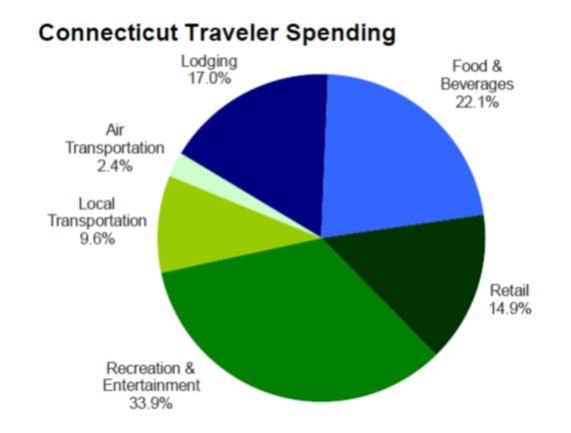 Traveler spending of $8.3 billion generated $14 billion in economic activity statewide in 2013, according to a study released recently by the office of Gov. Dannel P. Malloy. The study shows funds generated directly, through traveler spending, or indirectly, as employees, businesses and other beneficiaries turned around and paid for goods and services. Travelers to Connecticut destinations spent 3.0% more in 2013 than in 2012. Of all Connecticut travelers in 2013, nearly two-thirds were day travelers (66%). The tourism
sector supported more than 118,500 jobs in 2013, according to a recent state report.
Traveler spending of $8.3 billion generated $14 billion in economic activity statewide in 2013, according to a study released recently by the office of Gov. Dannel P. Malloy. The study shows funds generated directly, through traveler spending, or indirectly, as employees, businesses and other beneficiaries turned around and paid for goods and services. Travelers to Connecticut destinations spent 3.0% more in 2013 than in 2012. Of all Connecticut travelers in 2013, nearly two-thirds were day travelers (66%). The tourism
sector supported more than 118,500 jobs in 2013, according to a recent state report. irectors, a Greenwich-based live action production company, is producing a series of six on-air commercials for the Connecticut Office of Tourism, working in conjunction with Avon ad agency


 Often referred to as a Tech Ethicist,



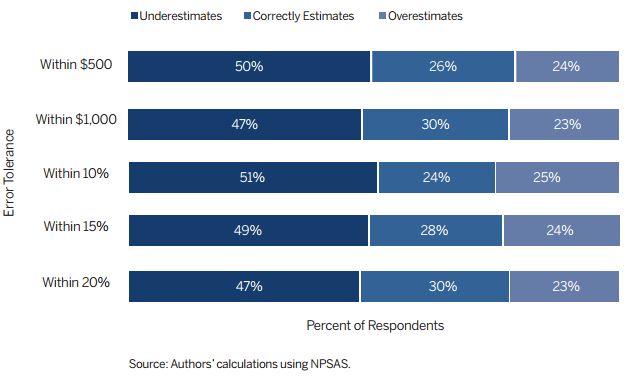
 The report also concludes by noting that “many students look back on their educational experiences with some regret about the financial circumstances. Some wish they had not gone to college in the first place, while others wish they had borrowed less or earned a different degree. The lack of literacy about the personal finances of college going is almost certainly leading some students into decisions that they later come to regret. The problem with the lack of financial savvy among enrolled college students is that the consequences of their decisions come as a surprise to them once it’s too late.”
 Choose Hartford is a comprehensive initiative to scale up businesses that will create a sustainable regional economy with long-term growth prospects and jobs. The plan aims to increase access to innovative capital options along with an across-the-board effort to ensure collaboration of local, regional, state and federal partners to create the best entrepreneurial ecosystem in the country.
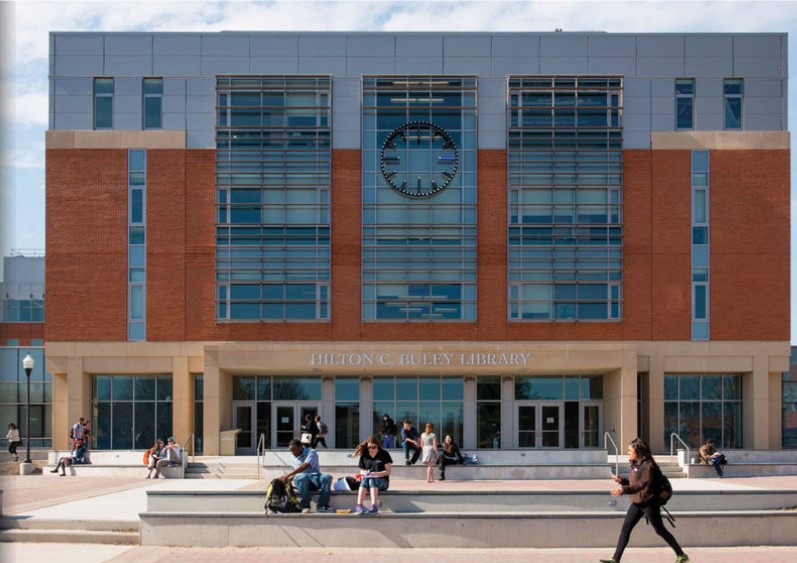 At Southern Connecticut State University in New Haven, students now have a first-rate, 21st century library in which to study, conduct research and meet with their friends and classmates, the university announced this week. A ribbon-cutting ceremony to mark the opening of the “new” Buley Library was held April 20. The event marked the completion of the $31 million project that renovated the original wing of the building. A 12,000-square-foot area that will serve as an atrium has been added to the older 98,000-square-foot wing as part of the project. When combined with the 135,000-square-foot addition that was completed in 2008, the library now encompasses 245,000 square feet.
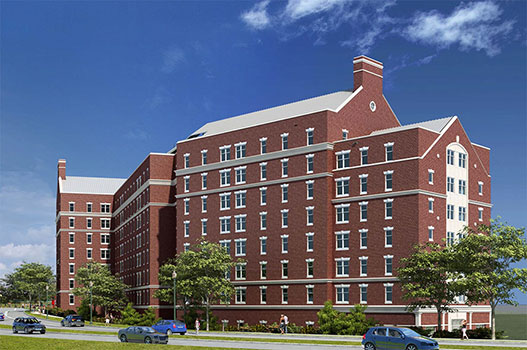 At Central Connecticut State University in New Britain, there is a Fall 2015 target date for completion of a new on-campus residence hall and food services dining facility. That will follow by just two years the opening of a major new classroom building on the CCSU campus. The four-story academic building houses classes and faculty offices for the sociology, history, anthropology, geography and political science departments, according to university officials. It includes 17 classrooms, five seminar rooms, seven labs and 71 offices for faculty and administrators. Now completing construction at the corner of Harold Lewis Drive and Ella Grasso Boulevard, the new $82.3 million, eight-story 220,000 square foot residence hall "will keep CCSU in the vanguard of higher education in operations and facilities," points out CCSU President Jack Miller, noting its ideal fit into the university's strategic plan for the recruitment and retention of new students.
 Opening this fall on the campus of Eastern Connecticut State University in Willimantic is a Fine Arts Instructional Center - a 118,000 square foot building that will contain three main performance venues; an auditorium; a procenium theater and a black box theater. In addition to the performance spaces there will be instructional labs and other spaces in support of the Performing Arts Department. There will be design studios for the Visual Arts Department including Printmaking, Sculpture, Painting and Drawing. The building will also have three general purpose classrooms and a gallery. Construction has been underway for the past two years.
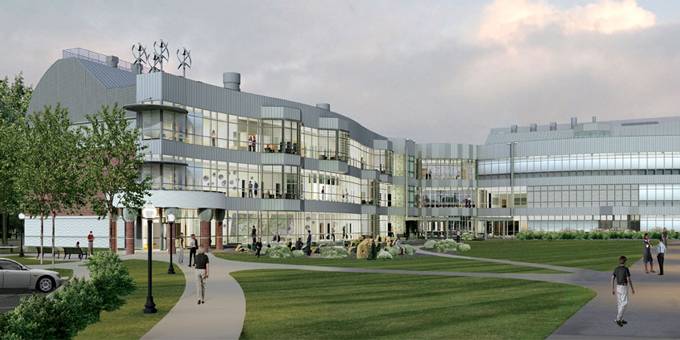 The next major opening among the CSCU institutions will likely be a Science and Laboratory Building at Southern Connecticut, due later this year. Southern's ongoing expansion of its science programs will be greatly enhanced with the construction of a 103,608-square-foot, four-level academic and laboratory science building. Situated adjacent to Jennings Hall, the current home for the sciences, the new building will enhance the ongoing expansion of Southern’s science programs and the university’s capacity to educate more students in the STEM disciplines – science, technology, engineering and mathematics.
 The global Save the Children movement currently serves over 143 million children in the US and in more than 120 countries.