

New Leadership, Funds Preserved at Connecticut Trust
/It has been a busy week for The Connecticut Trust for Historic Preservation. The organization has announced the hiring of a new Executive Director – the first in nearly two decades – and seen its lobbying efforts pay off at the Capitol as the planned government raid of its funds has been stalled.
The Trust has hired Daniel Mackay to be the organization’s Executive Director, to succeed retiring Executive Director of eighteen years, Helen Higgins. He will be responsible for furthering the Connecticut Trust’s mission of preserving, protecting and promoting buildings, sites, structures and landscapes that contribute to the heritage and vitality of Connecticut communities.
"We are extremely fortunate Helen Higgins has been our Executive Director for the past 18 years. We cannot thank Helen enough for strong leadership and the advances the Trust has made during her tenure," said Board Chairman, Charlie Janson.
 “We are equally fortunate in bringing Daniel Mackay to the Trust. Dan has tremendous experience, vision and a passion for historic preservation. We also know that he will nurture the relationships of the Trust with the Governor's office, our legislature and the other organizations we partner with. We are very excited for a bright future led by Daniel.”
That future began with good news. Governor Malloy had proposed a 100-percent sweep of Community Investment Act Funds from Jan. 1, 2016 to June 30, 2017 and in his deficiency bill proposed an additional sweep of $15 million. The budget that was approved Wednesday by the state legislature added back 50 percent of the cut that begins on Jan. 1, officials said. In addition, there is no sweep of funds to address the deficiency.
Mackay will come to Connecticut after fifteen years with the Preservation League of New York State as Director of Public Policy, where he was the lead advocate for implementation and expansion of the New York State Rehabilitation Tax Credit program, with key legislative victories along the way. He was also the lead author of extensive revisions and expansion of New York State model historic preservation law for local municipalities between 2012 and 2014. He holds an undergraduate degree in Geography from the University of Chicago and a Masters in Environmental Education from Lesley College.
Upcoming on the CT Trust calendar is a guided ride through historic Ivoryton, Essex and Deep River on June 13 for the Preservation Pedal, with a few scenic stops including a brunch break at Whistle Stop Cafe in Deep River before returning to Ivoryton. The event is a fundraiser and bike tour, honoring the organization's 40th anniversary.
The Connecticut Trust is a nonprofit, member supported organization, one of the foremost statewide preservation organizations in the country. The organization provides technical assistance, financial assistance, workshops, publications and advocacy in preservation matters and issues. The Trust receives daily requests for technical restoration information including the names of contractors, architects, consultants and craftsman who have experience with historic buildings, and has compiled a Restoration Services Directory for use by those seeking restoration professionals and suppliers in Connecticut and surrounding areas.
 Idaho recorded the largest percentage increase over the four-month period (+2.2 percent), followed by Utah (+1.8 percent). The other leading job growth states, by percentage, were Washington, Oregon, Michigan, South Carolina, Florida, Nevada, California, North Carolina, Arizona and Vermont. In West Virginia, Louisiana and Maine, average monthly employment declined slightly.
 Much of how state economies are performing is due to the individual sectors making up their employment base, Governing reported, as several industries experienced weak growth to start the year. Nationally, construction and manufacturing employment expanded little over the first four months, and government employment (local, state and federal), similarly remained essentially unchanged since January, the analysis pointed out.




 “Studies show that kids who are physically active have higher test scores, are more likely to go to college, and smoke and drink less,” he added. ”Sports can also help build life skills, including enhancing self-esteem, unifying teams and driving social inclusion. By driving support to entities enhancing access to sports, we can help.”
 er on the Kansas state assessments than non-athletes, in all subject areas. They are clearly learning something in their classes.”
 will also receive professional guidance and mentorship from TFI staff and select media professionals. Along with the monetary grant, the three filmmaking teams will participate in a two-day workshop in the fall with activities tailored to their needs and culminating with an industry showcase to both celebrate their work and introduce them to the filmmaking community at large.

 As one example, state officials are working on a plan to replace a swinging bridge over the Norwalk River, built in 1896. "As a piece of engineering, it's just amazing," John Bernick, assistant rail administrator for the state Department of Transportation told the AP. "But, it's certainly reached its retirement age.” The computer that operates the bridge is from the 1980’s, and replacing the bridge could cost as much as $650 million.

 At the risk of sounding ponderous, the First Amendment creates a lot of situations like this, although they often pose tensions that are much more treacherous.
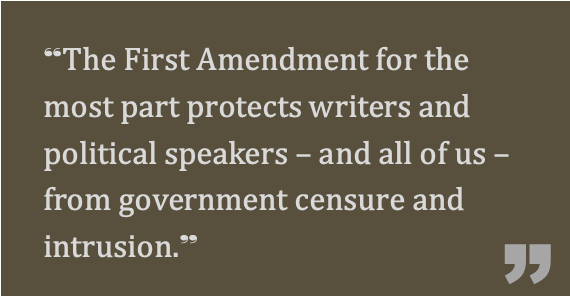 ent project on Twitter, where she is posting, one line at a time, the text of the novel “Gone With the Wind.” They object to the novel’s tolerance of racism.
 The July event is part of a year-long effort to listen, learn, and share with older adults, their families, their caregivers, community leaders, and experts in the aging field on how to best address the changing landscape of aging in the coming decade, officials said. Since the 1960’s the

 ment; how to remain healthy as we age; what types of services and supports can help older Americans remain independent in the community as we age; and how to support this care and the caregivers who provided it; and how to protect older Americans from financial exploitation, abuse and neglect.

 Iowa Governor Terry Branstad provided opening remarks at Wednesday’s session, followed by Malloy’s keynote address. Branstad, a Republican, and Malloy, a Democrat, were re-elected by voters in their respective states last fall.



 For the first time in the history of the awards program, a state agency was also selected to receive an award. The CT Department of Transportation received a special award for Starting a Revolution: Integration of Land Use and Transit in recognition of the progressive nature of CTfastrak, the bus rapid transit system opened earlier this year. The awards jury that selected the winners gave the award because they felt the new busway represents a cultural shift in how Connecticut views transit, and wanted to acknowledge the future promise of transit oriented development that will hopefully result around the station locations.



 mework, or take an elderly parent to a doctor’s appointment.” In half of all families with children, women are the primary or co-breadwinner, the report indicates, and low-income families are particularly likely to have all parents in the labor force.
 The analysis pointed out that nationally “many workers lack access to even the most basic supports such as earned sick days and job-protected paid parental leave. Quality child care is also out of reach for many families because it is not affordable. Women are the large majority of family caregivers, and in the absence of reliable family supports, too many women are forced to make difficult decisions between keeping their jobs and caring for their family members.”
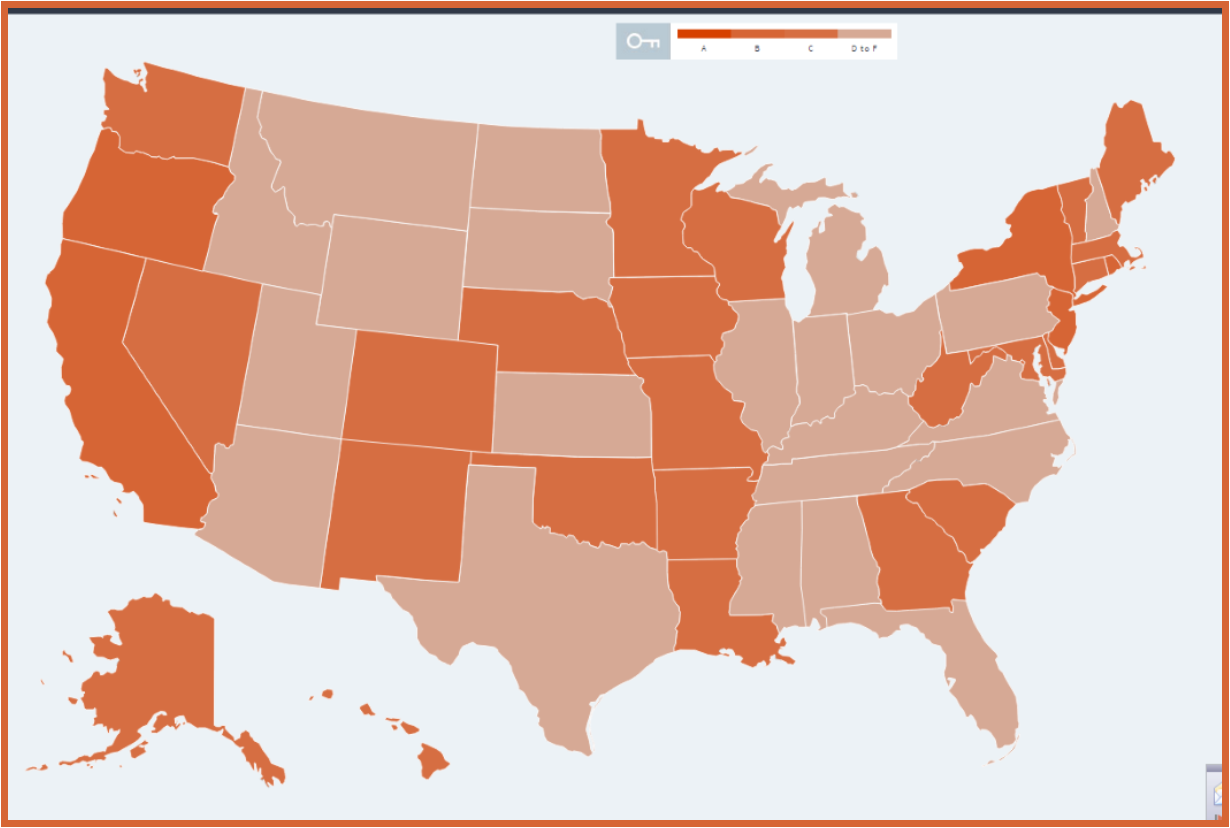 (U.S. Department of Labor Women’s Bureau 2015). The report indicates that Connecticut has 392,974 “breadwinner mothers in households with children under 18,” using 2013 data, ranking the state 25th in the nation at 29 percent.




















