Manufacturing Businesses, Not Only GE, Being Courted to Move As Fewer Praise CT's Quality of Life

Connecticut’s state government has been working diligently to boost manufacturing and manufacturers in the state, but the latest statewide survey suggests there remain significant obstacles on the road to realizing the goal of growing and sustaining a vibrant manufacturing sector. Among manufacturers, 94 percent handle their production in Connecticut, according to the just-released 2015 Survey of Connecticut Businesses by the Connecticut Business and Industry Association and BlumShapiro. While the survey analysis describes that number as encouraging, it also notes that 28% have production facilities in other parts of the U.S., and 24% in other countries—“which means they may be more likely to consider expanding or shifting more of their production elsewhere.”cover
The report indicates that the “factors that drive site location include access to key inputs; proximity to suppliers and customers; access to skilled labor; cost of labor; occupancy costs; affordable energy; and where companies are in their life cycle (e.g., mature companies are often likely to disperse geographically to reduce costs).

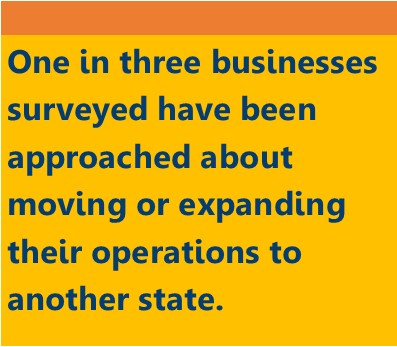
Although the courting by Governors from across the nation of General Electric’s corporate management has garnered much media and political attention, it is certainly not the only company that is the subject of someone else’s attention.  The CBIA-BlumShapiro report said that one in three businesses surveyed have been approached about moving or expanding their operations to another state.

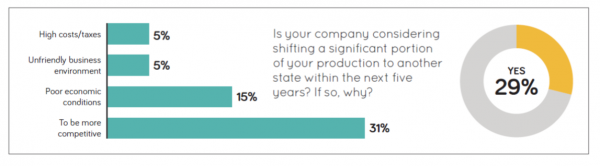
Of those, the analysis continued, “nearly one in four are planning on moving to that state, 29 percent are considering shifting significant production to another state within five years, and 31 percent are weighing expansion in another state within five years.aother state
Although the report shows that 63 percent of businesses surveyed showed a profit this past year—the best this survey has seen since 2006 - the report indicated that “a primary area of concern” is the expansion of businesses over the next five years, and whether that expansion will take place in Connecticut or elsewhere.
quoteWhether perception drives reality or reality is drives perception, the opinions stated by business surveyed are less than encouraging, according to the report.  Primary reasons cited for moving or expanding outside Connecticut are the state’s high costs (including taxes) and its “anti-competitive business environment,” reflecting an oft-stated CBIA viewpoint.  More than three-quarters say Connecticut’s business climate is subpar compared with other states in the Northeast, and the nation.

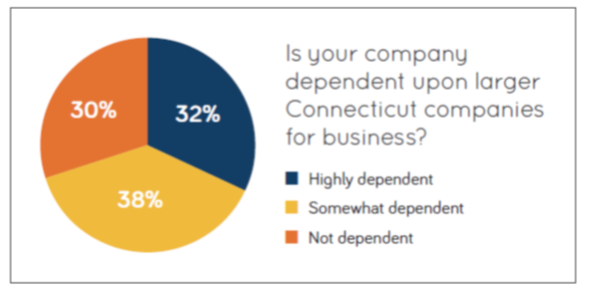
The report also noted the significant number of state companies that depend on other Connecticut businesses.  “The vast majority of companies surveyed (70 percent) are somewhat or highly dependent on larger Connecticut companies or businesses,” the analysis highlighted, “which raises concerns when tax hikes threaten to push large companies out of state.”

CBIA’s surveys consistently find that personal reasons also factor significantly in location decisions.  “Many business leaders point to Connecticut’s quality of life and the desire to work close to where they live as the main reason for locating and/or staying in-state. However, we are slipping here,” the report said.dependant
In a survey of Hartford-New Haven-Springfield businesses conducted earlier this year, quality of life—traditionally the number-one benefit to operating a business in this region— surprisingly emerged as less of a competitive advantage today.  In fact, there has been a steady decline in the percentage of company leaders citing quality of life as the greatest benefit of operating a business here: 47 percent in 2009, 43 percent in 2011, 40 percent in 2013, and just over a third (35 percent) in 2015.


Innovation Summit Seeks Companies to Showcase Entrepreneurship, Connect with Investors

It is billed as Connecticut’s “ultimate gathering of entrepreneurship and innovation,” as the Connecticut Technology Council honors tech and non-tech startups representing early stage and emerging growth companies at The Innovation Summit, to be held on November 10 featuring a Pitch Fest, Funding Fair, Poster Expo, and Awards Ceremony. The well-attended annual event includes 100 exhibiting Tech Companies To Watch, 40 pitching companies, and more than 400 attendees. The Council has begun  accepting applications and will continue selecting companies, on a rolling basis. The application deadline is September 30.

The  Innovation Summit is held in conjunction with Angel Investor Forum, BEACON, Crossroads Venture Group, CURE and Connecticut Innovations.

IS2012-logo_with CTC One of the key features at the 9th Annual Innovation Summit will be the Funding Fair, where angels, VCs, investment bankers, lenders, family offices, private investors, and other resources are on-hand to offer individual guidance and advice to attendees. The Funding Fair also offers fledgling businesses opportunities to connect with incubators and co-working spaces.

“Our Tech Companies To Watch are the focus of this event making it crucial that we offer a variety of valuable opportunities to those selected,” said Bruce Carlson, President and CEO of the Connecticut Technology Council. “Connecticut’s growing companies are looking for resources that will enable them to thrive in today’s economy. This year’s Innovation Summit is the place for them to find everything they’re looking for; a one-stop-shop for talent, funding, mentors, and peer support.”summit

In the Pitch Fest, selected Tech Companies To Watch will deliver a three-minute pitch to a live audience of investors, entrepreneurs, and other interested parties, and panel of judges.  The TCTW Expo affords an opportunity for entrepreneurs to show off their companies and ideas to potential partners, customers, investors, and talent.  The awards will be presented to the next generation of high-growth companies in Connecticut, honored for their potential in their respective industry categories.

Workshops will be offered in a variety of focus areas. “We’ve added workshops, some of which will focus on funding, raising alternative forms of capital, and understanding each stage of financing. Other workshop will be geared toward growth company needs like marketing and talent recruitment,” said Carlson.

Companies will be notified by October 9 if they are selected to participate. There is no charge to apply, however there is a discounted registration fee of $90 for admission and an exhibitor table.  The Innovation Summit will be held on Tuesday, November 10, 2015, 10:00am - 5:00pm, at the Connecticut Convention Center, a new location for the event reflecting the need for a larger venue as the number of participating companies increases.

The Connecticut Technology Council is a statewide association of technology oriented companies and institutions, providing leadership in areas of policy advocacy, community building and assistance for growing companies. Speaking for 2,500 companies that employ some 200,000 residents, the Connecticut Technology Council seeks to provide a strong and urgent voice in support of the creation of a culture of innovation.


https://youtu.be/EKpko3oppMk

Social Skills Increasingly Needed in Workplace, Study Finds

Between 1980 and 2012, the number of workplace tasks requiring social skills jumped 24%, those requiring math skills rose just 11%, and tasks requiring routine skills have steadily declined, according to Harvard Graduate School of Education associate professor David Deming. A faculty research fellow at the National Bureau of Economic Research, Deming shows that “the labor market increasingly rewards social skills. Since 1980, jobs with high social skill requirements have experienced greater relative growth throughout the wage distribution. Moreover, employment and wage growth has been strongest in jobs that require high levels of both cognitive skill and social skill.”NBERLogo-BlueLarge

The data show that social skill tasks grew by 24% from 1980 to 2012, compared to only about 11% for math-intensive tasks. While the latter has slightly declined since 2000, the importance of social skills has grown by about 2% since the turn of this century, as jobs characterized by routine work have continued to decline.deming_website2

Deming stresses ‘the growing return to social skills is pervasive and not restricted to management and other top-paying jobs. Moreover, the strongest wage and employment growth has been in occupations that require high math and high social skills,” he points out in describing the research on his website.

Harvard Business Review Associate Editor Nicole Torres writes on HBR.org in her roundup of the research that people with both social and math skills tend to be winners in today's job market. But ultimately, having social skills allows a person to be flexible and adapt to changing circumstances at work, which is a huge advantage.social skills

The research paper explains three things about the growing importance of social skills, according to HBR.org: 1) social skills are valued in jobs across the entire wage distribution, 2) social skill and cognitive skill complement each other, and 3) jobs that require low levels of social skills are also likely to be routine jobs (filing clerks, factory jobs) at high risk of automation.

Deming notes that “the slow growth of high-paying jobs in the U.S. since 2000 and rapid advances in computer technology have sparked fears that human labor will eventually be rendered obsolete. Yet while computers perform cognitive tasks of rapidly increasing complexity, simple human interaction has proven difficult to automate.”

While it still pays to be good at math in today’s labor market, Torres writes, it’s often no longer enough. “The days of being able to plug away in isolation on a quantitative problem and be paid well for it are increasingly over,” Deming told Torres. “You need of have both types of skills.”social skills e

Deming, an Associate Professor of Education and Economics,  has presented his research at universities throughout the country of economic and labor topics, including at Yale University and the University of Connecticut in recent years.

Norwalk Joins Stamford, Bridgeport in Rebranding Efforts to Attract Business

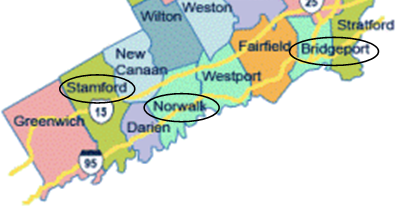
Norwalk Mayor Harry Rilling and Economic Development Director Elizabeth Stocker have selected South Norwalk-based branding and design firm, Zunda Group, to develop a strategic marketing plan that will include a brand implementation program.. With this week's announcement, Norwalk becomes the third major municipality in Fairfield County to turn to a rebranding initiative to boost business prospects and spark interest among potential developers. Bridgeport and Stamford have similar efforts either underway or in the planning stages.rebranding

Mayor Rilling said that “Norwalk recognizes the power of presenting the city with a strong brand image” and is moving forward as part of his recently released economic development action plan, which aims to capitalize on the city’s assets, attract and sustain new business, develop its workforce, and to continually improve its quality of life.

Rilling stated that “essential to the plan’s success is the city’s ability to communicate and build local pride around an ownable brand position that brings to life Norwalk’s unique personality and benefits.   Norwalk has an eye on the future and the new brand will elevate its position as a destination to live, work and play.”  The new branding and marketing communication is targeted to launch in early 2016.

Norwalk doesn’t need to look far to see other municipal branding efforts underway. map

Thomas Madden, Stamford’s economic development director, told the Fairfield County Business Journal this summer that the city Office of Economic Development is working on a multiphase plan to make Stamford more attractive to businesses in a nationally competitive market. Initiatives include conducting research on Stamford’s economic landscape, outreach, rebranding and improving digital resources, the business paper reported.

“It puts us on par with a lot of the economic development corporations to make sure we have the right information out there to make businesses look at Stamford,” Madden said, noting that it is the first time this type of project has been undertaken in Stamford. Planning began about a year ago, and the nonprofit Stamford Partnership, a civic organization, is leading the effort with Stamford-based brand development company Daymon Worldwide handling the marketing.

Daymon is to conduct surveys and focus groups in Stamford and in the tristate area exploring people’s views on Stamford. The data will guide which industries Stamford should focus on and provide guidance to the city’s Office of Economic Development regarding information about income level, incentives, taxes and transportation that can be highlighted in brochures to distribute to businesses considering Stamford as a location. It is anticipated that Stamford will begin using a new logo and launch a marketing campaign as part of the initiative.mq1

In Bridgeport, the administration of incumbent Mayor Bill Finch is already working with a pair of companies -- Mandate Media of Oregon and Gum Spirits of Maine – on an advertising campaign launched late last year, “Better Every Day.”  Mandate has created an economic development website, www.bridgeportbettereveryday.com, along with a digital and web-based marketing strategy for the city.  Ads have been seen not only locally but in statewide media, such as the website CT Capitol Report.  Gum Spirits was to develop radio and television spots focused on local success stories and revitalization efforts, according to plans for the initiative, and a series of videos are currently posted on the website.

According to the website, which touts the Park City as a “great place” to live, “Bridgeport is a city on the way up. We've got a lot of work to do, but we're investing in the future, making our city a place where our kids and grandkids will choose to live, work and raise their families. We're improving the city by building schools, re-opening parks, making downtown more vibrant, and developing the waterfront.”  The website is separate and distinct from the official Bridgeport government website, which features a range of city services traditionally highlighted on municipal sites.

In Norwalk, Zunda Group is owned and managed by longtime Norwalk business leaders Charles Zunda and Gary Seve Esposito. In announcing the selection, the city stressed that the firm “has enjoyed a 35 year history of building and positioning strong, relevant brands.”  Zunda Group has proven success with Connecticut based brands like Newman’s Own, start-up brands like Chobani, and global brands such as Dove, city officials pointed out.  The local Norwalk community is invited to share their feedback about Norwalk by completing a voluntary public survey that is available from September 8 through September 22 at www.norwalkct.org/survey


https://youtu.be/-77lj-hO2Xc

CT Ranks 35th in Economic Clout of Women-Owned Businesses

Connecticut ranks 35th in the economic clout of women-owned businesses over the past 18 years, according to a newly released analysis.  Women now run more than 9.4 million businesses in the United States, 30 percent of the nation’s businesses, with just over 100,000 of them in Connecticut Between 1997 and 2014, the number of women owned businesses in Connecticut grew by 42.1 percent, ranking the state 43rd in the nation.  Total revenue growth of 80.2 percent ranked Connecticut 28th, and employment growth of 20.9 percent among women owned business placed the state 22nd among the 50 states. cover

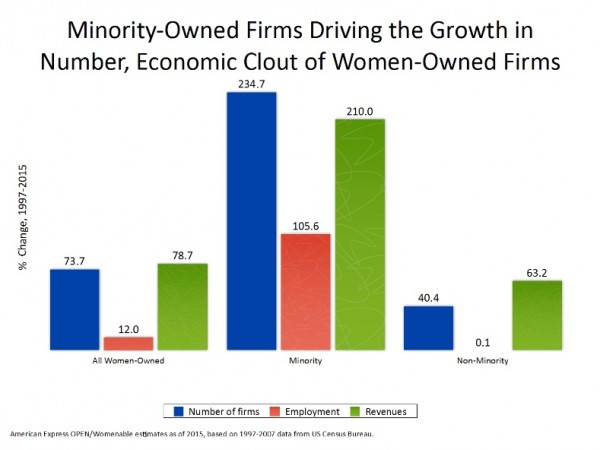
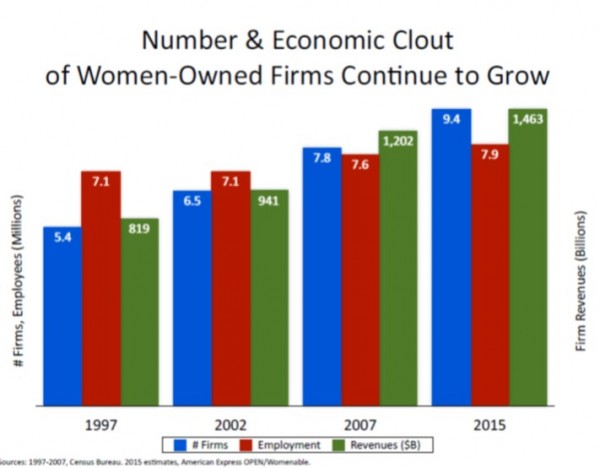
Nationwide, the number of women-owned firms grew from 5.4 million in 1997 to an estimated 9.4 million this year, an increase of 73 percent over the nearly two decades.  Employment in those businesses grew by 12 percent and sales by 78 percent, nationally.  The number of women-owned firms is increasing at a rate 1.5 times the national average.swob-report-weeks-openforum-embed1

In Connecticut, the number of businesses owned by women climbed from 72,393 in 1997 to 102.900 by this year.  Employment increased from 78,598 to an estimated 95,000, and sales grew from just over $9 million to nearly $17 million.

The industries with the highest concentration of women-owned firms nationally are healthcare and social assistance (53 percent of firms in this sector are women-owned, compared to a 30 percent share overall), educational services (45 percent), other services (42 percent), and administrative support and waste management services (37 percent).

The states with the fastest growth in the number of women-owned firms during the 18 year period are Georgia, Texas, North Carolina, North Dakota and New York.  The slowest growth has taken place in Alaska, West Virginia, Iowa, Kansas and Maine.

Since 1997, the number of female-run businesses has grown by 74 percent, well above the national growth rate of 51 percent for all firms. In 2014, women opened the doors of 887 new businesses every day, on average, up from 602 in 2011.

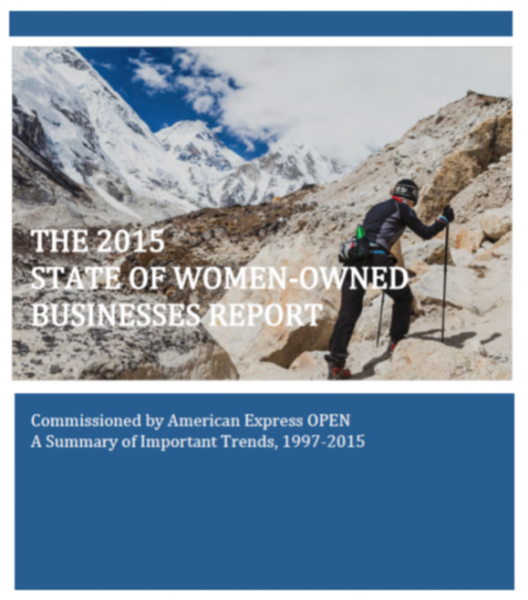
Women of color contributed to more than half of that growth last year, opening on average nearly 500 businesses daily, according to the new 2015 State of Women-Owned Businesses Report, prepared with U.S. Census data by Womenable, a research organization supporting women's entrepreneurship, and commissioned by American Express OPEN.

chartOf the nation’s women-owned businesses, African-American women own 1.3 million, Latinas 1 million, and Asian women more than 700,000. Businesses owned by women of color tend to be smaller in terms of their average employment and revenue, the report indicated. But their growth, both in numbers and in their economic clout—the combined average of their growth, revenue, and employment—continues to outpace that of their white peers, the data indicates.
“Back in 1997, there were just under one million firms owned by non-Caucasian women, representing one in six (17 percent) women-owned firms. Nlogoow, there are an estimated 3.1 million minority women-owned firms, representing one in three (33 percent) women-owned firms,” pointed out Julie Weeks, President and CEO of Womenable.  “The growing diversity of women-owned firms is one of the most remarkable trends of the past decade.”

CT High Schools Have Among Nation’s Smallest Gender Equity Gaps in Sports

High schools across the country are not providing girls with their fair share of spots on sports teams, according to data compiled by the National Women’s Law Center (NWLC), likely in violation of Title IX, which prohibits sex discrimination in schools that receive federal funds and has led, over the past 42 years, to significant increases in opportunities for girls in an array of academic and athletic programs in schools nationwide.  Despite the successes, there remain gaps in compliance, which led to the NWLC review. gender equity map While there is no set gap that constitutes a violation of Title IX, the federal law prohibiting sex discrimination in education, gaps of 10 percentage points or more indicate that schools are likely not complying with the law, according to NWLC.  The Center ranked states based on the percentage of their high schools that have large gender equity gaps in sports, and in some states more than 50 percent of high schools have such disparities.

Connecticut has the 11st smallest percentage of high schools with a large gender equity gap, 13 percent of high schools, which is well below the national average.  In the top-ranked state, Vermont, only 1.9 percent of high schools have a large gender equity gap, followed by Hawaii at 4.7 percent.  On the other side of the spectrum, in Georgia just over 66 percent of high schools – two-thirds of the state’s high schools – have a large gender equity gap.

Nationally, of the more than 16,000 high schools examined, nearly 4,500 schools — 28 percent — have large gender equity gaps.  In addition to George, states found to have more than 50% of co-ed public high schools with gender equity gaps of 10 percentage points or more include South Carolina, Louisiana, Tennessee, Mississippi, Alabama and the District of Columbia.text block

According to the NWLC, one way that a school can demonstrate compliance with Title IX is to show that the percentage of spots on teams allocated to girls is roughly equal to the percentage of students who are girls. The term “large gender equity gap” refers to a gap between the percentage of spots on teams allocated to girls and the percentage of students who are girls that is 10 percentage points or higher.


https://youtu.be/fQL4Ml49YR4


WTIC-AM License Renewal, Filed in November 2013, Remains on Enforcement Hold

The license renewal application of WTIC-AM, filed in November 2013, remains on “enforcement hold” at the Federal Communications Commission, as the agency’s Enforcement Bureau  considers “an alleged violation of FCC rules,” according to an FCC official. Until the enforcement hold is lifted, the agency’s Media Bureau cannot proceed with a decision on whether or not to renew the station’s broadcast license.  The Enforcement Bureau must first determine whether or not a violation of FCC rules has occurred.  If the allegation is substantiated, the agency has a range of options, such as warning that the violation not be repeated or imposing a monetary fine on the station, according to FCC officials.fcc-logo_dark-blue

An FCC spokesman said in late August that the FCC’s Enforcement Bureau began expediting its review of complaints that hold up license renewals last year.  That expedited review of a backlog of pending complaints enabled the Media Bureau to grant over 950 license renewals in the last few months of 2014.  WTIC-AM was not among them.  The accelerated pace has continued, but officials would not predict when the complaint filed related to the pending WTIC-AM renewal would be considered.

WTIC-AM, which is licensed to Hartford but operates from studios in Farmington, can continue broadcasting under the broadcast license that expired 17 months ago, on April 1, 2014, until the FCC acts on its renewal application.  The renewal application was filed by the station nearly two years ago, on November 27, 2013. Stations must file an application for license renewal four months prior to the expiration date of the station’s license.

Precisely what the allegation under review involves is not made known to the public.  That information is only made available to the licensee or their attorney, according to an FCC official. The agency can, and often does, communicate with the station as part of their review process.  WTIC has previously declined to comment on the ongoing review process at the FCC.

Officials say it is not unusual for a license renewal to be on enforcement hold for an extended period of time.  Stations in such a status routinely continue to operate without any interruption until a decision on license renewal is made.

WTIC-AM-2When the license renewal application does reach the agency’s Media Bureau, they will consider “how the allegation of violation was resolved,” as well as a range of other factors in deciding whether or not to renew the station’s license.  The other, more routine, factors include whether any other objections have been raised about the station, whether the station has been adequately serving the public in their area of license, their history of compliance with FCC regulations, and their overall performance.  License renewals for radio stations are issued by the FCC for a period of eight years.

Connecticut by the Numbers first reported the FCC’s enforcement hold nearly a year ago, in September 2014.  Subsequently, Hartford Attorney Ken Krayeske filed an informal objection on October 1, 2014 to WTIC’s broadcast license renewal, alleging that the station “demonstrated serious malfeasance” and “helped conceal violations of federal law,” related to former Governor John Rowland’s use of the WTIC radio program he hosted to promote the Congressional campaign of Lisa Wilson-Foley. Krayeske had filed a previous complaint in 2012 that did not result in FCC action against the station.

Middle Schools Use Lunchtime to Break Social Isolation, Prevent Bullying

No One Eats Alone is a lunchtime school event that seeks to reverse the trends of social isolation by asking students – for one lunchtime period - to engage in a simple act of kindness at lunch.  Students make sure that no one is eating alone and they make an effort to eat with new classmates and peers. Developed by a national organization – Beyond Differences - No One Eats Alone Day 2015, held in February, saw more than 400,000 middle school students participate -- in over 700 schools in 38 states, including Connecticut.

nooneeatsaloneIn 2015, just over a dozen participating schools in Connecticut included North St School (Windsor Locks), Broadview Middle School (Danbury), Eastern Middle School (Greenwich), O.H. Platt High School (Meriden), Fairfield Woods Middle School (Fairfield), Washington Middle (Meriden), Northeast (Stamford), Schaghticoke Middle School (Warren), King Street Intermediate School (Danbury), Dag Hammarskjold Middle School (Wallingford), Orville H. Platt High School (Meriden ), Avon Middle (Avon), and Moran Middle School (Wallingford).



Among the partner organizations from across the country is Sandy Hook Promise, based in Newtown.sandy hook

As the 2015-16 school year got underway, one Connecticut middle school decided not to wait for the annual observance, scheduled for February 13, 2016.

Derby students were greeted on the first day of school by staff all sporting red t-shirts with the logo and words "No One Eat Alone.”  The shirts signify the kickoff of a new program that several education organizations hope to launch across every district in the state, the CT Post reported.  Derby Schools Superintendent Matthew Conway told the CT Post that he would like to see “no one eats alone” practiced every day.

Involved in the project in Connecticut are the Connecticut Education Association, Connecticut Association of Public School Superintendents, Connecticut Association of Schools/Connecticut Interscholastic Athletic Conference, Beyond Differences and Derby Public Schools.

date 2016

California-based Beyond Differences (beyonddifferences.org) is a non-profit organization dedicated to ending social isolation in middle schools across the country and creating a culture in which all kids feel included, valued and accepted by their peers. The organization is based on the tenet that students are in charge of their own campus culture of inclusion.

Social isolation is a problem in every school, officials say, emphasizing that the problem of social isolation to be universal. They also “acknowledge the relationship between social isolation and bullying and violence. By reducing social isolation, we believe we can help end much bullying and violence.”

Beyond Differences we are dedicated to helping teens and schools make social inclusion the new reality. The organization was founded by the parents of Lili Smith who was born witSchool_Front_Wide_Webh a cranial facial syndrome and was socially isolated during her middle school years, the organization’s website explains.  After Lili died at the age of 15 due to medical complications from her syndrome, a group of teens from the local community banded together to bring change to their local schools. They had not realized that they had been leaving Lili out from all the fun social get-togethers. Upon hearing about Lili's feelings of being left out, they were determined to never let anyone feel that way again.  The initiative was born.

Officials stress that “school communities with a culture of inclusion will have far fewer instances of bullying and cruelty. We believe that much of the bullying and violence in our schools can be addressed by treating the underlying causes, rather than just the symptoms.”


https://youtu.be/VPH4OSMBr_c

New Mission for Graustein Memorial Fund Is Equity in Education, End to Racism and Poverty

The heightened racial unrest and unrelenting racial disparities that have risen in the public consciousness in recent years have prompted a mission shift for the New Haven-based William Caspar Graustein Memorial Fund, one of the state’s venerable family foundations. In an open letter to the community, Executive Director David Addams, who came to the fund just over a year ago, explained that “The Graustein family, trustees and staff, during our planning process, were confronted by the depth and persistence of racial and economic inequality, struck by the seeming acceptance of the status quo, concerned for the destructive effects of inequity on our individual and collective futures, and united in our resolve that rigorous attention to equity underlies our future work.”

WCGMF - Header LogoAddams said that “to guide us as we work to help remove these barriers,” the trustees adopted a new mission:  The mission of the William Caspar Graustein Memorial Fund is to achieve equity in education by working with those affected and inspiring all to end racism and poverty.
In recent years, the mission focus of The William Caspar Graustein Memorial Fund has been to “work collaboratively to improve education for Connecticut's children by strengthening the involvement of parents and the community in education, informing the public debate on critical policies, and improving educational practice.”  Connecticut’s children have been the focus of the Graustein Memorial Fund’s grantmaking, working with rural, urban and suburban communities, and both public and private schools.mission statement

Addams noted that the many accomplishments in that area have included providing help to increase access to early childhood learning, build community capacity, and create a new state office to support and grow the field.”  The Fund, and its supporters, have “moved Connecticut closer to the goal of ensuring that every child has what they need,” Addams said.

Referencing that “50 years after the passage of major civil rights legislation, racial disparities persist more in Connecticut than anywhere else in America,” Addams said that “these inequities are barriers for families of color and families living in poverty to reaching their full potential.”

Addams said that one of the state’s strongest assets – the families and neighborhoods that have direct experience in raising children and dealing with the barriers of racism and poverty – are underutilized, noting that “within all of us, and especially those most affected by racism and poverty, there are the strengths, determination, creativity and wisdom we need to succeed.”

Indicating that “real change takes a long-term commitment from many partners,” Addams said that the fund intends to “start slowly and co-create the path forward with those who would like to join us on this journey.”


https://youtu.be/ya2vq4dEhOs


CT Ranks 25th in Telecommuting Jobs; Nationwide 37 Percent Say They’ve Telecommuted

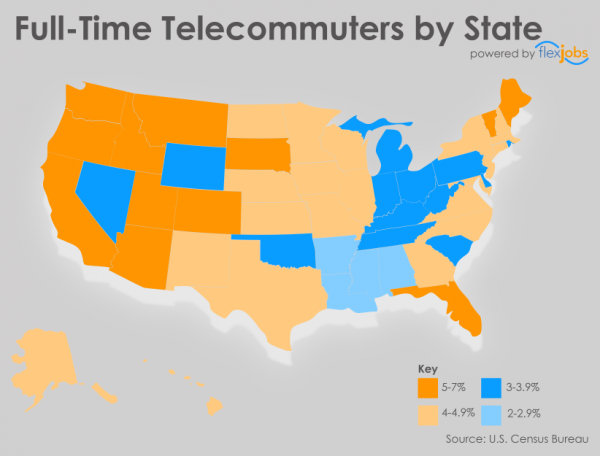
Thirty-seven percent of U.S. workers say they have telecommuted, up slightly from 30 percent last decade but four times greater than the 9 percent found in 1995, according to a newly released Gallup poll.  Connecticut ranks 25th in the nation in full-time telecommuters, data compiled by the website flexijobs.com indicates. The leading states for full-time telecommuters, based on percentage of workforce, are Colorado (6.9%), Vermont (6.8%), Oregon (6.3%), Montana (6%), Maine (5.7%), Arizona (5.5%), Idaho (5.5%) and New Hampshire (5.4%).  In Connecticut, 4.3 percent of the workforce are telecommuters.25th

Based on years of researching companies that hire for telecommuting, part-time, flextime, or freelance jobs, FlexJobs has compiled the best list of 100 of companies located in Connecticut that specifically have hired for jobs with at least one of these flexible working options.

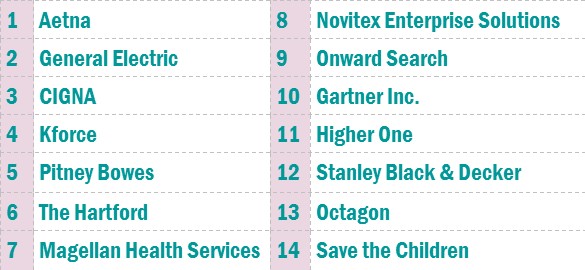
Connecticut’s top companies for flexible jobs are Aetna, General Electric, CIGNA, Kforce, Pitney Bowes, The Hartford, Magellan Health Services, Novitex Enterprise Solutions, Onward Search, Gartner Inc, Higher One, and Stanley Black & Decker.Full-Time-Telecommuters-by-State-by-FlexJobs-2015

The percentage of telecommuters nationwide is based on Gallup's annual Work and Education poll, conducted earlier this month, Aug. 5-9, 2015. Technology has made telecommuting easier for workers, and most companies seem willing to let workers do their work remotely, at least on an occasional basis if the position allows for it, the Gallup analysis points out. Even though telecommuting has become more common, the growth in the practice appears to have leveled off in recent years, according to Gallup.

The survey indicated that U.S. workers say they telecommute from home rather than go into the office about two days per month, on average. Nine percent of workers say they telecommutop companieste more than 10 workdays -- meaning at least half of all workdays -- in a typical month.  The majority of Americans, including both those employed and not employed, believe workers who work remotely are just as productive as those who work in a business office.