Meriden Re-Make Continues, Spurred by State Support; Additional Funds Sought to Implement Plan

The City of Meriden is seeking $2 million from the State of Connecticut to improve six roadway sections in downtown Meriden, to improve traffic flow, improve accessibility and increase safety for vehicles, bicyclists and pedestrians traveling within Meriden’s Transit Oriented Development (TOD) zoning district. The grant application is the latest effort as part of the city’s “Meriden 2020 Bringing It Together” initiative, which is focused on transit oriented development to recapture the luster of the “Silver City”  and has received a steady flow of state funds in recent months to boost the effort.

The roadway sections - including Colony Street, West Main Street, State Street, Perkins Square/South Colony and East Main Street - were selected and analyzed for improvements in prior studies and investigations.  The initiative is an outgrowth of a two State of Connecticut TOD Pilot grants, a US Dept. of Housing and Urban Development (HUD) Sustainable Challenge grant and a HUD Choice Neighborhoods Planning grant.Hub_site_Feb_2016

A website, meriden2020.com, highlights the numerous efforts underway to redevelop the city’s central business, including ways to resolve historic flooding issues, repurpose underutilized brownfield sites, remake the rail station area into a modern transportation center, and provide links to the regional trail system.

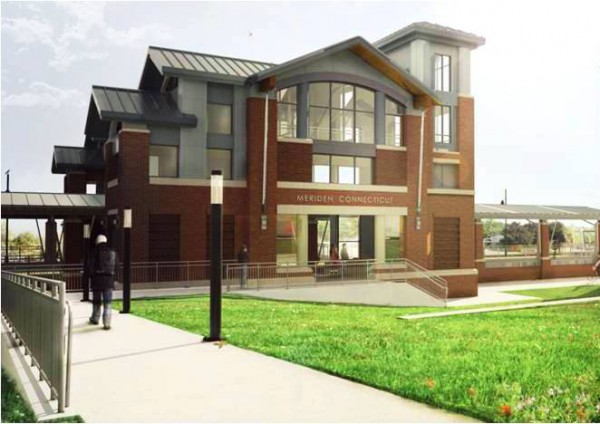
Meriden’s Transit Oriented Development program seeks to “transform the Meriden Transit Center (MTC) and the half-mile area around it into a vibrant neighborhood that includes new residential and commercial development, public spaces and improved access to public transportation.” Construction of the new transportation center is underway, and local officials recently initiated a study to examine planned ridership and usage by area residents and businesses.

Last week, the Connecticut Housing Finance Authority (CHFA) and Department of Housing (DOH) announced approval funds meridenfor a proposed mixed use development project at 161-177 State Street, which is phase one of a multi-phase project that includes demolition of the Mills public housing project and implementation of the Harbor Brook Flood Control project north of the Hub site.   The new building will be within walking distance of Meriden`s new Transit center.
The proposed project will have 75-units of mixed-income family housing, with ground level retail space and a preschool. The property will include eight supportive units and 60 units targeted for households with incomes of 60 percent or less of Area Median Income (AMI). In addition, 26 of the 60 units will be supported by project based Section 8.
sealsIn February, the Connecticut Small Business Development Center (CTSBDC), the City of Meriden and The Midstate Chamber of Commerce announced the opening of the newest CTSBDC office, to be located at Meriden City Hall.

The new office is offering professional, confidential business advising to entrepreneurs in every stage of business and all industry sectors in the City of Meriden. “This beneficial partnership between the Connecticut Small Business Development Center and the City of Meriden ensures that entrepreneurs of the city have access to the necessary resources available to assist with starting or growing their business. This allows for economic growth and job creation in this area,” said CTSBDC State Director Emily Carter. CTSBDC also has a “virtual” location at the Meriden Public Library, where individuals can connect with CTSBDC advisors online.

In January, Meriden was awarded $100,000 in state funds to further revitalization and redevelopment in the TOD and Choice Neighborhoods target areas. The funding came through the state Department of Economic and Community Development (DECD) Brownfield Area-Wide Revitalization (BAR) Grant program, a year-old state pilot program that encourages communities to consider areas such as neighborhoods, downtowns, waterfront districts, or other sections with multiple brownfields and develop strategies to assess, clean up, and reuse the parcels for business, housing, and public amenities that will generate jobs and revenues and revitalize the entire area.Transit Center
Weeks later, the Department of Economic and Community Development awarded the Meriden a $2 million grant for the demolition and remediation of the Mills Public Housing Complex.  The city plans to demolish the structures at 144 Mills Memorial as a prerequisite to implementing the Harbor Brook Flood Control Plan at the site.  While the 144 Mills Memorial site will be used for flood control purposes and will not be used for development, officials say the construction of the flood control plan at the site will allow for development to proceed at the adjacent sites, which include the Meriden Hub Site (located at 1-77 State Street) and at the Mills Megablock site (located at 161-177 State Street and 62 Cedar Street).

Meriden officials point out that commuter rail service to Hartford and New Haven is scheduled to begin later this year.  The new commuter rail service is expected to spur significant “transit oriented development” in the city center.  Once the rail service is operational, nearly 140,000 workers located within one mile of a rail station will be able to commute to Meriden within a 40-minute ride, the website points out.

Structural Problems Seen in the Connecticut Economy

In an analysis highlighted by the Connecticut Institute for the 21st Century, well-known economist Don Klepper-Smith, in a newsletter to clients of economic forecasting consultancy DataCore Partners, is voicing concerns about Connecticut’s economic prospects, short and long-term.  His views come as the legislature grapples with approximately a billion dollars in projected deficit, and the Institute is signaling a heightened profile in the state, with a new director visibly sharing the organization’s economic concerns. Klepper-Smith’s latest findings, headlined “Troubling Trends,” are the result of comparisons between economic activity in different parts of Connecticut and Massachusetts conducted over the last several years, the Institute website reports. Although both states share many of the same characteristics, Klepper-Smith notes the Massachusetts labor market is notably healthier than the Connecticut market and that seems to be a key factor holding back the Connecticut economy.logo

The job recovery rate in Connecticut since 2006 is 76.6 percent, according to DataCore, compared with the Massachusetts job recovery rate of 240.3 percent. The significantly lagging job recovery rate in Connecticut has “led to negative impacts in other parts of the Connecticut economy.” Examples cited include that the median price for single family homes in Connecticut dropped 3 percent in 2015, while it went up by 3 percent in Massachusetts during the same period.

Similarly, over the last six months, Connecticut’s unemployment rate has edged upwards, while the Massachusetts rate has dropped slightly. Technically, according to DataCore, this is a sign of a growth recession in which the local economy is not strong enough to prevent a rise in the jobless rate, the Institute indicates.

The website goes on to state that “The DataCorp findings, when combined with other recently published reports, provides continuing evidence of a fundamental shift in the basic foundations of the Connecticut economy.”

Scott Bates, a Connecticut native, has recently been named as executive director of the Connecticut Institute for the 21st Century.  He previously served in the administration of Virginia’s Governor, for the U.S. House Select Committee on Homeland Security, and as president of The Center for National Policy in Washington.Scott_Bates_400x400

quoteIn an article appearing in this week’s Hartford Business Journal, Bates describes Connecticut’s fiscal dilemma as both a spending problem and revenue problem, indicating that “our state will only return to a sustainable fiscal model when incremental changes - taken together – substantially reduce the cost of government.”
Bates adds that “the tax problem is a major issue that may take years to sort out,” suggesting that available savings be pursued immediately.  Among the suggestions, moving to embrace a policy of “aging in place,” a change in approach that could save more than $650 million over the next 20 years according to a recent report from the Institute and the Connecticut Economic Resource Center.

The Connecticut Institute for the 21st Century is a non-partisan non-profit organization of businesses and civic groups dedicated to identifying effective and efficient ways for state and local government to deliver services while reducing cost to the taxpayer and making Connecticut’s economy strong.

The organization researches best practices, publishes reports, and educates policymakers and the public on key spending and policy issues including transportation, public pensions, smart growth and social service spending.

PERSPECTIVE: Progress Made on Regional Cooperation During 2016 Session

by Mary Glassman The stroke of midnight on May 4 will signal the official close of Connecticut’s 2016 legislative session. Regardless of what bills pass during the last few days at the Capitol, this session clearly marks the beginning of a bold approach to regional cooperation, and it paves the way for us to meet the state’s growing needs and demographic changes.CT perspective

As the state wrestles with ways to close a $1.1 billion deficit that is projected for next fiscal year, it is clear that a strategic plan is needed to identify the state’s future goals and to ensure that the state is providing services and educating all of Connecticut’s children. The many bills introduced this session that focus on regional cooperation offer a glimmer of hope. Connecticut may be ready to do just that.quote 1

Even the titles of the bills introduced this session provide us with a clue that Connecticut is ready to move forward. Bills that made it out of committee and are waiting to be debated on the floors of the House of Representatives and the Senate include: “An Act Concerning Regional Education,” “An Act Concerning Regionalism,” “An Act Concerning Regional Technology,” and “An Act Concerning Regional Efficiencies.”

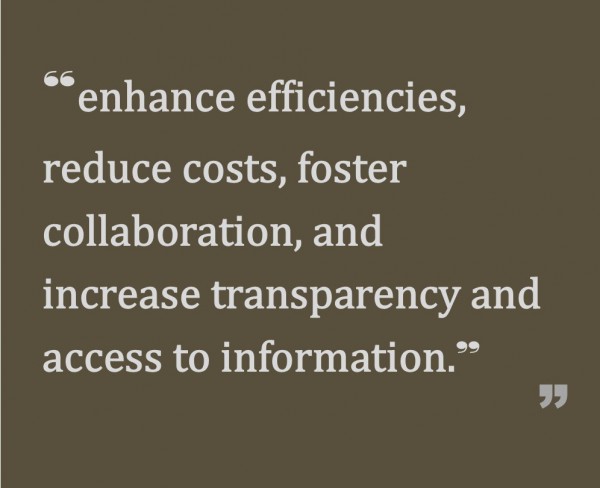
Ideas included in the various legislative proposals would allow for the expansion of cooperative purchasing for towns and school districts through existing regional organizations, such as the state’s six regional educational service centers and nine councils of governments. The bills would also provide incentive funds for towns and schools to combine non-educational, backroom functions like human resources, finance, or technology services, and they would encourage long-term technology planning, which would enhance efficiencies, reduce costs, foster collaboration, and increase transparency and access to information.

For example, a proposed education bill would provide town and school districts with startup costs when they combine non-educational, backroom functions. While some towns, such as Mansfield, West Hartford, and Waterford, already share those behind-the-scene functions, other towns could use a little extra help when evaluating whether local taxpayers would save money by having different entities working together.quote 2

Another bill would require future enrollment projections to be provided as part of a request for state funding for the construction of new schools. This would encourage neighboring communities to share enrollment needs and to examine ways the state can help municipalities work together.

As local officials face uncertainty about state funding in this year’s budget, and probably in subsequent budgets, doesn’t finding ways to reduce costs by working together make sense?

___________________

Mary Glassman is Manager of CREC’s Office for Regional Efficiencies.


PERSPECTIVE commentaries by contributing writers appear each Sunday on Connecticut by the Numbers.

LAST WEEK: Social Media Manipulation: Worse than Advertising?

Diversity Lacking Among Nation's Philanthropic Organization Leaders; Graustein Memorial Fund Cited As Model of Progress

Five years ago, America’s philanthropic community recognized it had a problem, not uncommon in board rooms nationwide – a lack of diversity.  More than a dozen organizations with connections to thousands of grantmakers came together to found the D5 Coalition to advance diversity, equity, and inclusion (DEI) in philanthropy. Now, the coalition’s final report on progress is out, and the picture is barely encouraging. In an op-ed published this month in the Chronicle of Philanthropy, the co-chairs of the D5 initiative Robert Ross, Luz Vega-Marquis and Stephen Heintz said bluntly that “philanthropy remains on a par with country clubs when it comes to exclusivity,” observing that “there have been pockets of progress in the last five years, but philanthropy still does not adequately reflect the diversity of our nation.”Sow15-231x300

“The only source we have on foundation demographics, shows that the proportion of CEOs of color among respondents has remained flat over the past five years at eight percent. The corresponding figure for senior executive staff is a tad more positive – 17 percent, compared to 14 percent five years ago – but there’s been a slight decline in program officers of color.”

The status quo, they emphasized, “is unacceptable.”  They point out that “as matters of inequality in income, employment, housing, public education, justice systems, and health care stake a growing claim on the national agenda, philanthropy must set the tone and pace for inclusiveness, and for who plays a key role in deciding where money goes.”

Robert Ross is the President and CEO of the California Endowment; Luz Vega-Marquis is the President and CEO of the Marguerite Casey Foundation; Stephen Heintz is the President of the Rockefeller Brothers Fund.  Heintz, a former Connecticut resident, served as a state commissioner in the 1980’s in the administration of Gov. William O’Neill at the outset of his career.

grausteinThe D5 final report features stories about leaders in foundations and other philanthropic organizations taking meaningful action to advance DEI.  “Storytelling is one of the most powerful ways to inspire action and change. We hope people working within foundations—whether they are a CEO, an HR manager or a program officer—draw on the important lessons from these stories, and apply them to their own unique situations,” said Kelly Brown, D5 Director. Kelly also cited statistics indicating that “when companies commit themselves to diverse leadership, they are more successful. Foundations and nonprofits,” she said, “have the opportunity to take a page from successful business playbooks.”
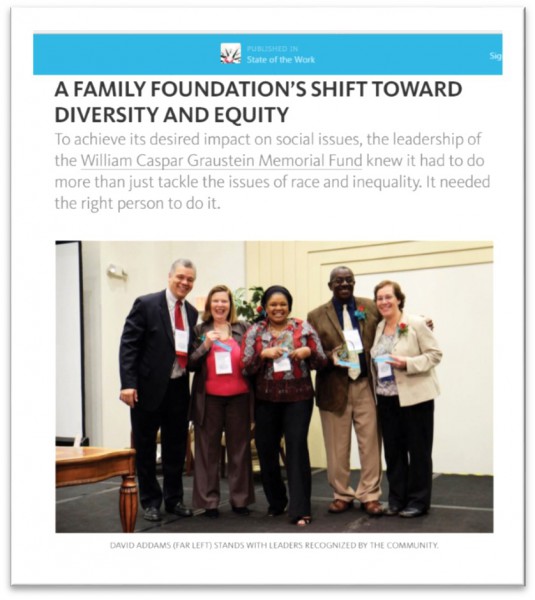
Among eight stories included in the final report which point to progress being made is one focused on Hamden-based William Caspar Graustein Memorial Fund, headlined “A Family Foundation’s Shift Toward Diversity and Equity.”  The story explained that “Bill Graustein and his trustees had come to feel that the Fund would not make the desired progress addressing social issues unless it more explicitly addressed issues of race and inequality. To oversee that transition, in 2014 it hired as executive director David Addams, a former director of diversity at the ACLU and Vice President of Special Initiatives at the New York Urban League, who had made a mark running the Oliver Scholars in New York City, which identifies promising minority students and prepares them to succeed in top independent high schools and colleges.”

The report goes on to highlight that “a new mission statement, unveiled in 2015, pledges the Fund “to achieve equity in education by working with those affected and inspiring all to end racism and poverty.” The article indicates that they “will continue to attack barriers to achievement within schools and school districts, but, in an interview, Addams says a new focus will be ‘the barriers outside schools that undermine kids and undermine communities.’ Board members and staff members are thinking hard about how to translate the mission statement into new programmatic activity; they hope to present guidelines for the next phase of grant giving by mid-2016.”

Asked in the feature story whether it was important that the Graustein Fund turn to a leader of color at this juncture, Addams, who is African American, responded: “I don’t know if it has to be an African American person, but it has to be someone who can bring a missing perspective to the Fund. Part of that is understanding racism as well as — for me — having had the direct experience of coming up from poverty, and experiencing the barriers, and having been raised by a single black mother.” Addams, the article indicated, “grew up on the South Side of Chicago, in a neighborhood that was, and remains, nearly all black.”D5

The co-chairs of the D5 initiative note that “proponents of diversity and inclusion are successfully broadening the definition of diversity, which has evolved from a focus primarily on race and gender to include sexual orientation and disability. This strengthens our ability to have constructive conversations and help everyone understand how to get more perspectives into philanthropy.”

D5 has worked to help foundations and other philanthropic organizations recruit diverse leaders, identify the best actions for organizations to take, increase funding to diverse communities and improve data collection and transparency. Launched in 2010 as a five-year initiative, D5 has worked to help foundations and other philanthropic organizations recruit diverse leaders, identify the best actions for organizations to take, increase funding to diverse communities and improve data collection and transparency.

West Hartford’s Newly Developed Complete Streets Policy is #2 in the Nation for 2015

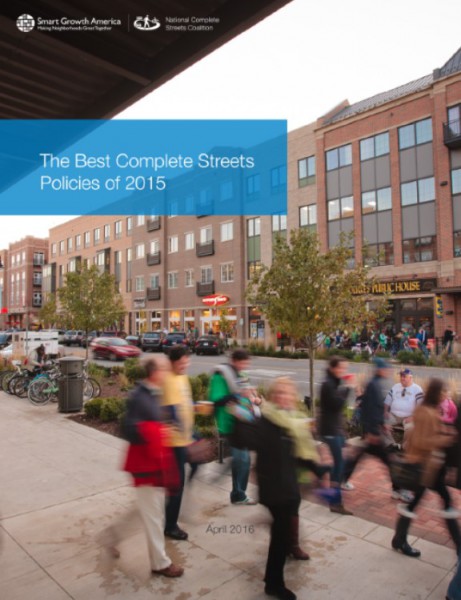
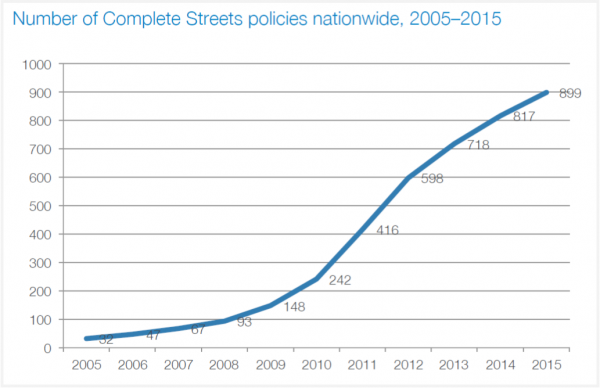
West Hartford’s Complete Streets policy, adopted in 2015, has been named the second best new policy in the nation by Smart Growth America and the Complete Streets Coalition. The coalition highlighted 16 communities nationwide for their outstanding new policies, among 82 communities that adopted Complete Streets policies during the year.  Nationwide, there are now a total of 899 Complete Streets policies in place in all 50 states, the organization announced this month. A Complete Streets approach creates an integrated transportation system that supports safe travel for people of all ages and abilities. This approach redefines what a transportation network looks like, which goals a public agency sets out to meet, and how communities prioritize their transportation spending. A Complete Streets policy is one of the best ways to set this approach into motion, Smart Growth American emphasized.

TOP 10 LISTThe U.S. Surgeon General and Secretary of Transportation both spoke out for more Complete Streets last year and Congress passed a transportation bill that included Complete Streets language for the first time ever.

The Complete Streets laws, resolutions, agency policies, and planning and design documents establish a process for selecting, funding, planning, designing, and building transportation projects that allow safe access for everyone, regardless of age, ability, income or ethnicity, and no matter how they travel.

Across the country, 32 state governments or agencies, 76 regional organizations, and 663 individual municipalities have all adopted such policies to create safer, multimodal transportation networks.

West Hartford’s policy is the result of a process that began in 2009 with the adoption of the Town’s 2009-2019 Plan of Conservation and Development,” according to town Deputy Mayor Shari Cantor.  She said the plan “promote[s] an integrated and balanced “complete street” transportation system which provides the best possible service, mobility convenience and safety while reinforcing a positive social, economic, and environmental influence on West Hartford.report

“Utilizing a comprehensive public participatory process, guided by the leadership of the Town Council; the advocacy efforts of various community groups in West Hartford including our Bicycle Advisory Committee, and the work of our Town staff; we were able to develop and adopt this tremendous Complete Streets Policy,” said Mrs. Cantor in response to the national recognition.

Each year, the National Complete Streets Coalition analyzes newly passed Complete Streets policies. The Coalition examines and scores policy language using the guidelines laid out in our ideal policy elements. Ideal policies state a community’s vision for transportation, provide for many types of users, complement community needs, and establish a flexible project delivery approach. Different types of policy statements are included in the Coalition’s review, including legislation, resolutions, executive orders, internal policies, and policies adopted by an elected board.

The Coalition ranks new Complete Streets policies to celebrate the people who developed exceptional policy language and to provide leaders at all levels of government with examples of strong Complete Streets policies.

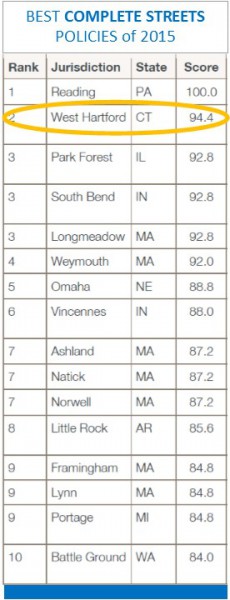
Sixteen agencies led the nation in creating and adopting comprehensive Complete Streets policies in 2015. Topping the list, with the first-ever score of 100, was Reading, PA, followed by West Hartford, Park Forest, IL and South Bend, IN.  Four of the next seven slots went to communities in Massachusetts:  Longmeadow, Weymouth, Ashland, Natick and Norwell.  The others were Omaha, NE and Incennes, IN.

Of the 663 municipalities with Complete Streets policies, 239 (or 36 percent) are suburban communities. Small towns, often in rural areas, have passed 111 policies, or 17 percent of all municipal policies. On the other end of the spectrum, 12 of the 15 most populous cities in the country have committed to Complete Streets with a policy, according to the organization’s 2015 report. Blue_Back_Square_in_West_Hartford,_Connecticut,_August_10,_2008

“A Complete Streets approach is about helping everyone stay safe on the road—no matter if they’re walking, biking, taking transit, using an assistive device, or driving,” said Emiko Atherton, Director of the National Complete Streets Coalition. “Passing a Complete Streets policy is one of the best actions communities can take toward achieving these goals.”

Connecticut became the 10th state in the nation to adopt a Complete Streets law, in 2009.  The law mandates “accommodations for all users shall be a routine part of the planning, design, construction and operating activities” of all state highways. Connecticut’s Complete Streets law has evolved, and now (Conn. Gen. Stat. §13-153f) requires pedestrians, cyclists, and transit users to be routinely considered in the planning, designing, construction and operation of all roads.

In 2014, Bike Walk Connecticut released a first-of-its-kind ranking of the state’s cities and towns on how bike- and walk-friendly they are. Simsbury (1), New Haven (2), New Britain (3), Glastonbury (4), and Middletown (5) claimed top honors as the five most bike- and walk-friendly communities.

Esga-logoarlier this year, the University of Connecticut released a study that shows how shared space, a design concept that encourages all users to share street space, can provide much greater vehicular capacity than conventional intersections and increases pedestrian convenience. The study found that by redesigning streets and intersections as human-scaled places and incorporating shared space concepts, communities of all sizes have successfully encouraged active transportation, stimulated their local economies, reduced accident severity, and lessened their environmental impacts. The study compared actual user delays at six shared space intersections to expected user delays using standard U.S. traffic modeling software.  The state Department of Transportation issued a policy document in 2014 consistent with the law.
The criteria used in the Complete Streets evaluation include:

  1. Vision: The policy establishes a motivating vision for why the community wants Complete Streets: to improve safety, promote better health, make overall travel more efficient, improve the convenience of choices, or for other reasons.
  2. All users and modes: The policy specifies that “all modes” includes walking, bicycling, riding public transportation, driving trucks, buses and automobiles and “all users” includes people of all ages and abilities.
  3. All projects and phases: All types of transportation projects are subject to the policy, including design, planning, construction, maintenance, and operations of new and existing streets and facilities.
  4. Clear, accountable exceptions: Any exceptions to the policy are specified and approved by a high-level official.
  5. Network: The policy recognizes the need to create a comprehensive, integrated and connected network for all modes and encourages street connectivity.
  6. Jurisdiction: All other agencies that govern transportation activities can clearly understand the policy’s application and may be involved in the process as appropriate.
  7. Design: The policy recommends use of the latest and best design criteria and guidelines, while recognizing the need for design flexibility to balance user needs in context.
  8. Context sensitivity: The current and planned context—buildings, land use, transportation, and community needs—is considered in when planning and designing transportation solutions.
  9. Performance measures: The policy includes performance standards with measurable outcomes.
  10. Implementation steps: Specific next steps for implementing the policy are described.

The National Complete Streets Coalition, a program of Smart Growth America, is a non-profit, non-partisan alliance of public interest organizations and transportation professionals committed to the development and implementation of Complete Streets policies and practices. A nationwide movement launched by the Coalition in 2004, Complete Streets is the integration of people and place in the planning, design, construction, operation, and maintenance of transportation networks.

national chart

CT Ranks As 7th Greenest State in the Nation, Analysis Says

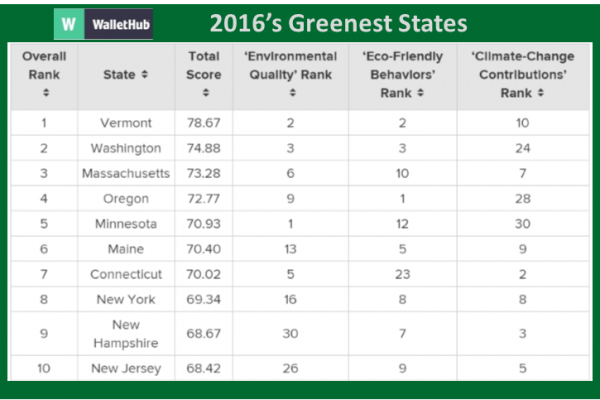
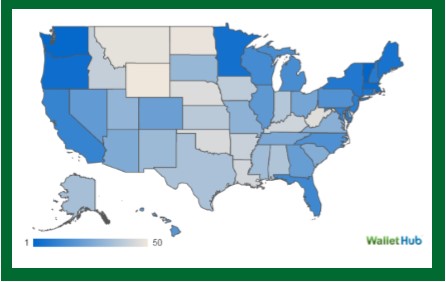
Earth Day 2016 – celebrated on April 22 – will be observed in communities throughout Connecticut this weekend, against the backdrop of a new state-by-state analysis that ranks Connecticut as the 7th “greenest” state in the nation. WalletHub’s analysts compared the 50 states across three key dimensions: 1) Environmental Quality, 2) Eco-Friendly Behaviors and 3) Climate-Change Contributions, including 17 key metrics that “speak to the health of the current environment as well as the environmental impact of people’s daily habits.”

Topping the list were Vermont, Washington, Massachusetts, Oregon, Minnesota, Maine, Connecticut, New York, New Hampshire and New Jersey.  The data set ranges from “Total Municipal Solid Waste per Capita” to “Energy Efficiency Score” to “Carbon Dioxide Emissions per Capita.”top 10

Connecticut’s highest ranking in the individual categories was in Water Quality, where the state ranked first.  Other top finished include Energy-Efficiency (6th), Carbon Dioxide Emissions per Capita (6th), and Gasoline Consumption per Capita (12th).

The state ranked in the middle-of-the-pack in Percent of the Population Not Driving to Work (22nd), Air Quality (24th) and Percentage of Recycled Municipal Solid Waste (25th).

In the three overall categories, Connecticut ranked 2nd in Climate Change Contributions, 5th in Environmental Quality, and 23rd in Eco-Friendly Behavior.

At the bottom of the WalletHub ranking were Oklahoma, Nebraska, West Virginia, Montana, North Dakota and Wyoming.


usa map rankings


Gary Ginsberg Receives Public Communications Award from the Society of Toxicology

Dr. Gary Ginsberg, a Senior Toxicologist with the Connecticut Department of Public Health (DPH) has been awarded the “Public Communications Award” by the Society of Toxicology, an international organization dedicated to enhancing the impact and relevance of toxicology. Dr. Ginsberg was recognized by the organization for his efforts in explaining complex toxicology issues to the public, with the conference program noting that “Dr. Ginsberg is able to consolidate vast amounts of science into easily digestible useful information to help protect consumers from potentially hazardous situations.”ginsberg

At DPH, Dr. Ginsberg regularly prepares educational material for citizens on emerging contaminant issues, such as arsenic in pressure treated wood, the hazards to children from mothballs, and chemicals in children’s products and toys.  He has represented DPH in the media on numerous topics ranging from mercury in fish to chemical spill emergencies. He has also appeared on television shows such as the Dr. Oz Show and had his own radio program covering environmental issues of the day.

The organization’s annual conference, attended by 6,500 toxicologists and 350 exhibitors from across the country, and held in New Orleans last month, honored Ginsberg, who has been employed by DPH for over 20 years and regularly communicates with the legislature, local health departments, the general public and other state agencies on a wide variety of toxic exposure issues.

The recognition comes as Connecticut and the nation mark National Public Health Week, April 4-10.sot_logo

Conference organizers pointed out that “his dedication to toxicology is evident though his tireless endeavors to educate the public and other health care professionals with accurate and practical knowledge.”  Also noted were his regular contributions to a Yale University blog on toxicology issues, and his website, www.whatstoxic.org, as well as writing on toxicology issues in state and national publications. Dr. Ginsberg evaluates human exposures to chemicals present in the air, water, soil, food, and in the workplace, and provides risk assessment expertise to state agencies in standard setting and site remediation projects.

Dr. Ginsberg was featured in a recent “Wastebusters” video produced by the CT Department of Energy and Environmental Protection and CT DPH on the importance of selecting green cleaning products in schools and homes.  He has drafted numerous fact sheets on chemical hazards in consumer products, such as sun screen and chemicals in hand sanitizers. In 2006, Dr. Ginsberg co-authored a book called “What’s Toxic What’s Not” (Berkeley Books, 2006).

book“We are extremely proud of Dr. Ginsberg and congratulate him on this prestigious and well deserved award,” said Ellen Blaschinski, DPH’s Regulatory Services Branch Chief.  “His expertise in toxic exposures and ability to consolidate vast amounts of science into easily digestible, useful information helps protect and inform Connecticut’s citizens.”
A resident of East Granby, Dr. Ginsberg received his PhD from UConn in 1986. In addition to working at DPH, Dr. Ginsberg is an assistant clinical professor at the UConn School of Community Medicine, an adjunct faculty member at Yale University and has served on a number of US EPA advisory committees and on the National Academy of Sciences.

The Society of Toxicology is a professional and scholarly organization of scientists from academic institutions, government, and industry representing the great variety of scientists who practice toxicology in the US and abroad. The Society’s mission is to create a safer and healthier world by advancing the science and increasing the impact of toxicology.

https://youtu.be/l1MIcvoWGMo

CT Unemployment Rate Highest in New England, Higher Since Year Began

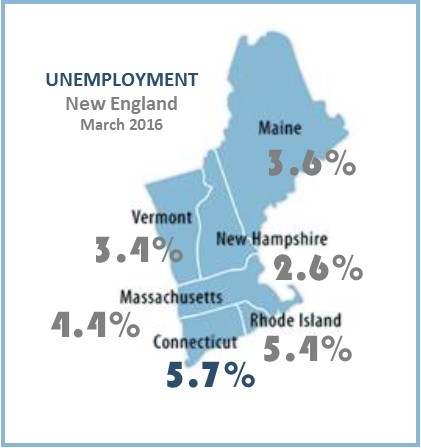
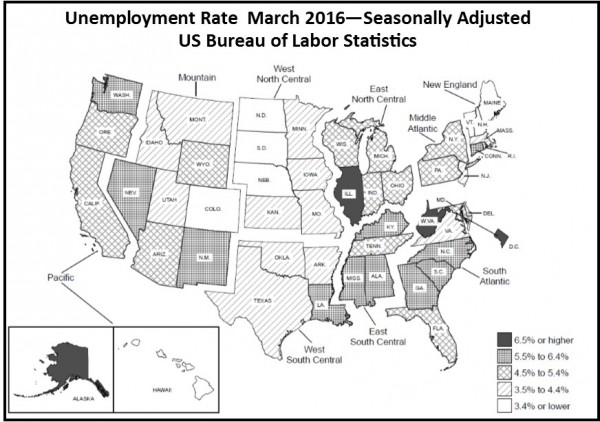
Unemployment in Connecticut nudged upwards in March from a month earlier, but remained slightly below a year ago.  The state’s jobless rate of 5.7 was higher than the national rate of 5.0 percent and the highest in New England. Nationwide, the regional and state unemployment rates were generally little changed in March, according to the U.S. Bureau of Labor Statistics:

  • 21 states had unemployment rate decreases from February,
  • 15 states including Connecticut had increases, and
  • 14 states and the District of Columbia had no change,

new englandThirty-six states including Connecticut (and the District of Columbia) had unemployment rate decreases from a year earlier, 12 states had increases, and 2 states had no change.
The national jobless rate, 5.0 percent, was little changed from February and was 0.5 percentage point lower than in March 2015. Job growth occurred in retail trade, construction, and health care. Employment fell in manufacturing and mining.

Connecticut’s unemployment rate was 5.9 percent a year ago in March 2015, dropped to 5.5 percent by January and February of 2016, and climbed to 5.7 percent in March.

Overall in New England, the unemployment rate was 4.5 percent in March, compared with 5.2 percent in March 2015.  Across the region, the unemployment rate has steadily declined during the past year.  The rate was 4.6 percent in January and 4.5 percent in February, according to the BLS data.2000px-Bureau_of_labor_statistics_logo.svg

Last month, the unemployment rate in Rhode Island was 5.4 percent, in Massachusetts was 4.4 percent, in Maine 3.4 percent, in Vermont 3.3 percent and in New Hampshire 2.6 percent.

The highest unemployment rates in the nation last month were in Alaska (6.6%), West Virginia (6.5%), D.C. (6.5%), Illinois (6.5%), Alabama (6.2%), New Mexico (6.2%), and Louisiana (6.1%).

South Dakota and New Hampshire had the lowest jobless rates in March, 2.5 percent and 2.6 percent, respectively, followed by Colorado, 2.9 percent.

“We are still struggling to come to terms with a stubborn new economic reality,” said economist Pete Gioia of the Connecticut Business and Industry Association. “We are adding back low-wage jobs at a much higher rate than high-paying jobs.”

Connecticut has now recovered 77 percent of jobs lost during the recession, CBIA reported, while the U.S. has recovered 161 percent of jobs lost during that same time, according to DataCore Partners.

usa map


PERSPECTIVE - Social Media Manipulation: Worse than Advertising?

by Carrie Titolo I want to preface this by saying I’m not that old, but I still clearly remember life before social media (I was in college just as Facebook was born). Social media came about because of a demand for a network and personal connections that defied physical location. Facebook originally started as an online networking site just for college students (you actually needed a .edu email address to register), but what it has morphed into is an entirely different beast.

CT perspectiveWhat was once grassroots and organic now feels contrived, forced and flashy. With more paid content on your news feed than actual posts from your friends, and the rampant use of photo editing software rendering images of ourselves unrecognizable, I can’t help but think that we should be just as skeptical and wary of social media as we are of traditional advertising.quote 1

Consumers and celebrities alike have maligned the mainstream media and advertising industry for decades, criticizing them for photo manipulation and perpetuating false and unrealistic beauty standards, especially for women. A 2011 study conducted by Dove found that 80% of women surveyed felt insecure when seeing photos of celebrities in the media. Of the woman surveyed, 71% of them did not believe their own appearances were attractive or stylish in comparison to cover models. In spite of our rampant criticism of these practices, we’ve begun using social media and photo editing apps to create the same deception.

Consider the slew of apps dedicated to photo editing and the sheer number of users employing them on a daily basis to shape up their selfies. There’s PhotoWonder with the tagline “Shaping charming faces and slim bodies in the easiest way” which has over 100 million users in 218 countries. Then there’s Spring, which helps manipulate photos to make the object more model-esque: taller, thinner and with a sharper jawline. FaceTune and CreamCam remove wrinkles, zits, and skin imperfections while SkinnyCamera promises to make you look 10 to 20 pounds lighter. There are so many ways to tweak and change a photo, we might as well use computer generated caricatures or animation and save ourselves the hassle.

quote 2With such an abundance of DIY image-altering resources, the deeper, more philosophical issue comes in the eyes of the beholder. Knowing what we now know, we can’t help but look at all photos with a critical eye. Whether it’s a vacation selfie your cousin posted or that photo of Ronda Rousey on the Tonight Show with Jimmy Fallon, we automatically assume what we’re seeing isn’t real and the image has been doctored (especially in the latter example). It is this skepticism that causes me to take pause. Didn’t we take to the Twitter-sphere because we wanted to avoid being misled and blatantly marketed to? That’s not what (Facebook) friends are for!


So what to do now that we’ve dug ourselves into a hole of disenchantment and cynicism? How do we reclaim the digital territory that once was ours? I wish I had the answer. I don’t think there’s a silver bullet that will fix everything, but perhaps we can start on an individual level by taking a vow of honesty when it comes to our social media accounts. Maybe if we all try to be genuine with the images we post and encourage our friends to do the same, we can turn this perfectly toned and blemish-free boat around. Maybe one day, we’ll even come to appreciate the imperfections that not only make us unique, but make us human. #nofilter.

_________________________________________

Carrie Titolo is a graduate of the Boston University College of Communication, and has a background in public relations, marketing and nonprofit communications. She loves to cook and bake, is an avid runner and enjoys spending time with her husband and two rescue dogs.


PERSPECTIVE commentaries by contributing writers appear each Sunday on Connecticut by the Numbers.


LAST WEEK: Survey Data: Not What It Used to Be